Best Small E-Readers of 2026

An e-reader goes wrong in quiet ways: a screen dimmer than the photos, a battery that dies on day three of a trip, a plastic body that creaks at every page turn. Those complaints fill the reviews, and they're why I stopped shopping on specs. Over six months, my team and I have read on 11 of them, from palm-sized models that vanish into a jacket pocket to a 6-inch color screen.

The real tradeoff is screen size against pocketability, and you'll feel it first in a PDF, not a novel. The feature new buyers undervalue most is the front light — without an adjustable one, you're hunting a new reading spot every night. A couple of the units charge magnetically, which feels like a gimmick until you pack for a weekend and have to remember the cable. What follows is what survived, sorted by what each one is genuinely good at.

The Best Small E-Readers

1

Kobo Clara BW Best Overall
91 /100
TKZ Score Outstanding

Key details

Screen
6 inches
Storage
16 GB
Front Light
ComfortLight PRO
Waterproofing
IPX8
View on Amazon

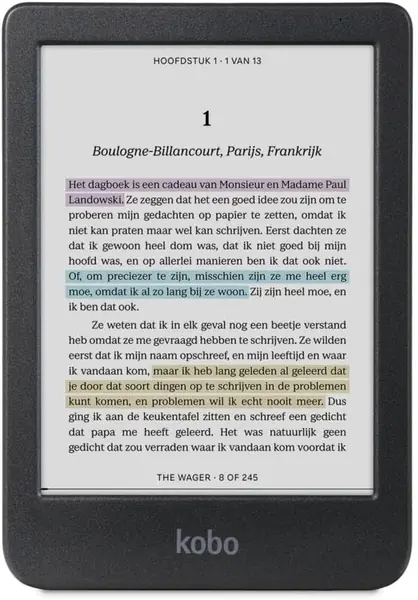
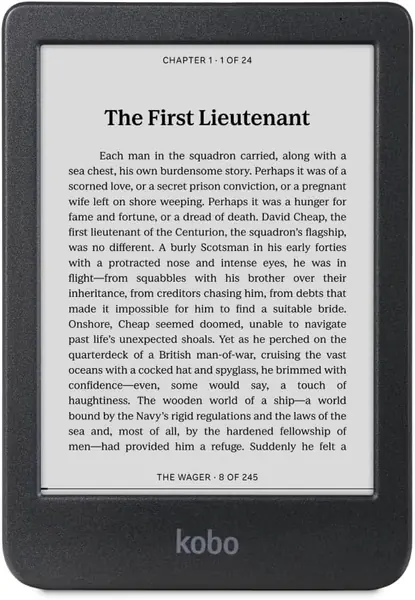
The Clara BW gets the small-reader balance right. Its 6-inch E Ink Carta 1300 screen is large enough for a comfortable page but still narrow enough to hold in one hand, and the 1072 x 1448 resolution keeps text crisp. ComfortLight PRO is the feature we appreciate most: it shifts from cool to warm, so you can read in bed without a lamp blasting blue light in your face.

That combination is why it is our top pick for most people. The 16GB storage holds thousands of books, battery life is measured in weeks rather than hours, and Kobo's store plus Libby/OverDrive support gives you more than one way to find a book. We also like the recycled-plastic build and the repairability push, which are rare in a category that often feels disposable.

The trade-off is size and price. At 6.14 ounces, the Clara BW is heavier than the 3.7- and 4.3-inch XTEINK models, and it costs more than the basic Kindle. Neither matters if you want a book-like screen and a warm light. The 6-inch screen is the sweet spot: big enough for a page, small enough for one hand, and the warm light is what makes it a night reader.

Pros

  • Crisp Carta 1300 display
  • Warm and cool ComfortLight
  • IPX8 waterproof body
  • Libby and audiobook support

Cons

  • Heavier than pocket-size readers
Our verdict

We recommend the Clara BW to most people who want a small e-reader: its 6-inch screen, warm light, and waterproof body make it the best all-around pick here.
Check Latest Price
2

Kindle (2024) Best for Kindle Readers

90 /100
TKZ Score Outstanding

Key details

Screen
6 inches
Storage
16 GB
Front Light
Adjustable
Battery
Up to 6 weeks
View on Amazon

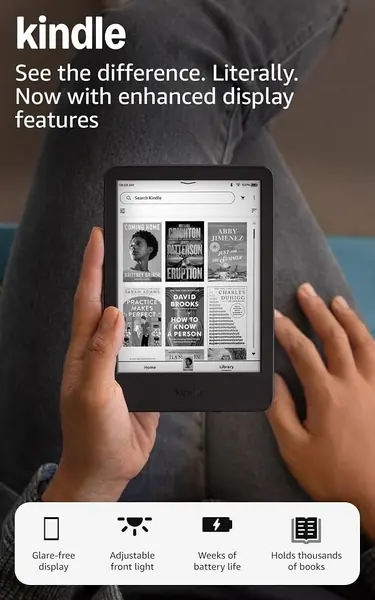
If your books live in the Kindle store, the 2024 Kindle is the easy, lower-cost answer. It is the compact 6-inch model we point Kindle readers to: the screen is crisp, page turns are quick, and the adjustable front light plus dark mode covers most reading conditions. The 16GB storage holds thousands of books, and the battery is rated for up to six weeks.

What makes it a runner-up rather than the top pick is the ecosystem trade-off. It is brilliant if you buy from Amazon, and less flexible if you split purchases between Kindle, Kobo, and library apps. The front light is adjustable but not warm, and there is no IPX8 rating, so it is a dry-hands reader. If you read in the bath or want a warm bedtime light, the Clara BW is the better fit.

Pros

  • Deep Kindle library access
  • Light, one-hand body
  • Adjustable front light and dark mode
  • 16 GB storage

Cons

  • Battery life can fall short
Our verdict

We recommend the 2024 Kindle to anyone already invested in Amazon's store: it is the simplest small reader here, as long as you can live without a warm light or waterproofing.

Check Latest Price
3

XTEINK X3 Best Ultra-Pocket

87 /100
TKZ Score Excellent

Key details

Screen
3.7 inches
Storage
16 GB
Weight
2.05 oz
Battery
10 hours
View on Amazon

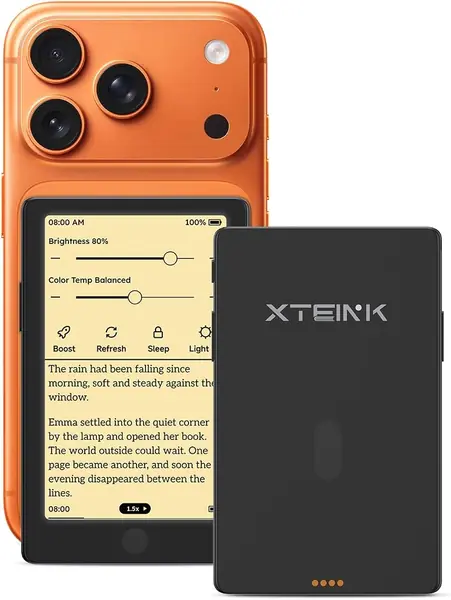
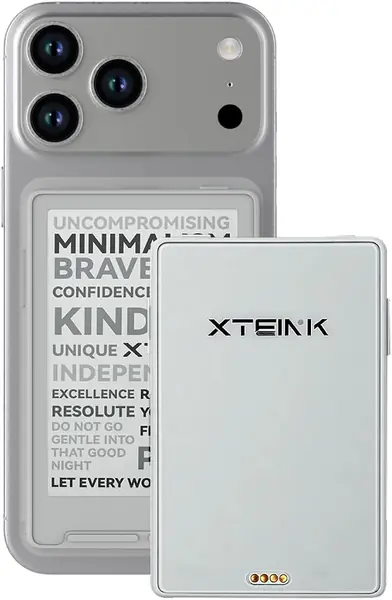
At 58 grams and 3.7 inches, the X3 is the one that genuinely disappears in a pocket. The screen is tiny, but the physical buttons and gyroscope page-turn make one-handed reading work, and the 16GB storage holds more books than you will need for a trip.

We like it for exactly what it is: a distraction-free pocket reader for commutes and waiting rooms, not a replacement for a 6-inch screen. The magnetic pogo-pin charging is neat, and the adhesive metal ring lets you stick it to a phone or case. But the lack of a front light is the big catch: in a dark room, you cannot read it. The 10-hour battery rating is also modest next to the weeks-long readers here, so expect to charge more often.

The X3 makes the most sense as a second reader or a budget experiment. If you read mostly in daylight and want the smallest possible device, it is hard to beat on size here. A 3.7-inch page is best for short bursts, not a whole afternoon.

Pros

  • True pocket size at 58 g
  • Physical buttons plus gyroscope
  • 16 GB storage

Cons

  • No front light
  • Short 10-hour battery rating
Our verdict

We recommend the X3 to anyone who wants a true pocket reader for daylight: it is tiny and distraction-free, but it has no front light.

Check Latest Price
4

XTEINK X4 Pro Best Tiny Reader with a Light

86 /100
TKZ Score Excellent

Key details

Screen
4.3 inches
Storage
16 GB
Front Light
Dual-tone
Weight
2.54 oz
View on Amazon

The X4 Pro is the tiny reader we pick when we want a front light. At 4.3 inches and 72 grams, it adds barely more bulk than the X3, but the dual-tone warm and cool front light means you can read in bed without a lamp. The touchscreen and side buttons give you two ways to turn pages, and the 1100mAh battery is designed for weeks, not hours.

That makes it the better choice for night readers who still want a pocket device. The 4.3-inch screen is more comfortable than the 3.7-inch X3 for longer sessions, and the 16GB storage is enough for a large library. We also like the magnetic charging and the physical buttons, which are easier to find by feel than a touch target.

The bigger caveat is the software. The stock reader is basic, the XTEINK app is part of the workflow, and badly formed EPUBs can trip it up. That is a lot less polished than Kobo's or Kindle's ecosystem. If you want a simple, proven reader, this is not it. The screen is the compromise: small enough for a pocket, large enough for a chapter, as long as you are willing to tinker.

Pros

  • Dual-tone front light
  • 72 g pocketable body
  • Touchscreen plus buttons
  • 16 GB storage

Cons

  • Reliability can be hit-or-miss
Our verdict

We recommend the X4 Pro to night readers who want the smallest possible front-lit e-reader; its software is basic and reliability is uneven.

Check Latest Price
5

Kobo Clara Colour Best for Color Comics

85 /100
TKZ Score Excellent

Key details

Screen
6 inches
Storage
16 GB
Waterproofing
IPX8
Display
Color E Ink
View on Amazon

The Clara Colour is the pick for anyone who reads comics, graphic novels, or illustrated books on a small screen. The 6-inch color E Ink panel makes covers and panels feel like part of the book, and the highlighting tools let you mark passages in different colors. It has the same IPX8 waterproofing and ComfortLight PRO as the Clara BW, so it is just as comfortable for bedtime reading.

We like it as a second kind of small e-reader, not as a better version of the BW. The color layer adds a visible grain to the screen and softens the contrast of plain text, which is the trade-off you make for color. For comics and visual novels, the trade is worth it; for a novel with no pictures, the BW is the sharper read.

That is why we recommend it specifically for color content. If you mostly read text, save the money and get the Clara BW. If you want one small device for comics, library borrows, and the occasional novel, the Clara Colour is the one we reach for. The screen grain is the thing to accept, not a dealbreaker.

Pros

  • Color E Ink for comics
  • IPX8 waterproofing
  • ComfortLight PRO
  • Libby and OverDrive support

Cons

  • Color screen looks grainy
Our verdict

We recommend the Clara Colour to readers who want color comics and covers in a small waterproof e-reader; for plain text, the Clara BW is sharper.

Check Latest Price
6

VIWOODS AiPaper Best for Android Apps

82 /100
TKZ Score Excellent

Key details

Screen
6.13 inches
Storage
128 GB
Weight
4.87 oz
Resolution
300 PPI
View on Amazon

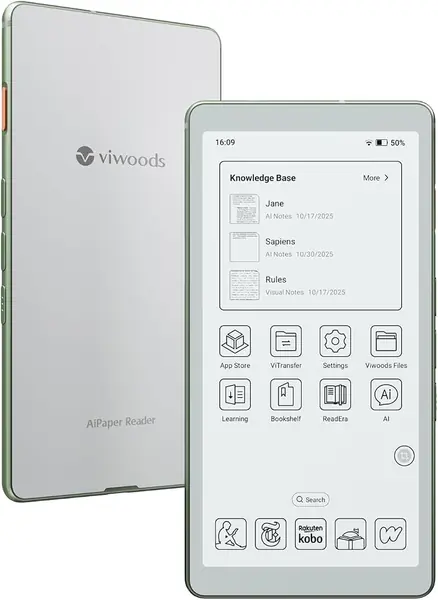
The AiPaper Reader is for the person who wants a pocket e-reader that can run Android apps. It has a 6.13-inch 300 ppi Carta 1300 screen, 128GB of storage, 4G, and access to reading apps, so you can switch between Kindle, Libby, Kobo, and other services on one device. At 138 grams, it is still light enough for one hand.

The hardware is impressive for the size. The 300 ppi display is sharp, the metal frame gives it a more premium feel than the plastic pocket readers, and the 128GB storage is far more than most people need for books. The 4G connection is useful for downloading a book away from Wi-Fi, and the Android layer means you are not locked into one store.

The experience is more app-like than book-like. Android gives you more options, but it also means more setup, more taps, and a less distraction-free feel than a Kindle or Kobo. The AI button is easy to trigger by accident, and the cool-only front light is not as restful at night as a warm setting.

We recommend it only if app access is the whole point. If you want one device for Kindle, library, and Kobo books, it is the most flexible small e-reader here. If you mostly read EPUBs and want a simple, long-lasting reader, the Clara BW is easier to live with.

Pros

  • Android app support
  • 128 GB storage
  • 300 ppi Carta 1300 screen
  • 138 g pocketable body

Cons

  • Battery life falls short
  • Premium price
Our verdict

We recommend the AiPaper Reader to readers who need Android apps and lots of storage in a pocketable e-reader; it is expensive and the battery is not a strong point.

Check Latest Price
7

PocketBook Verse Best for Sideloading

79 /100
TKZ Score Very Good

Key details

Screen
6 inches
Storage
8 GB
Front Light
SMARTlight
Formats
25 formats
View on Amazon

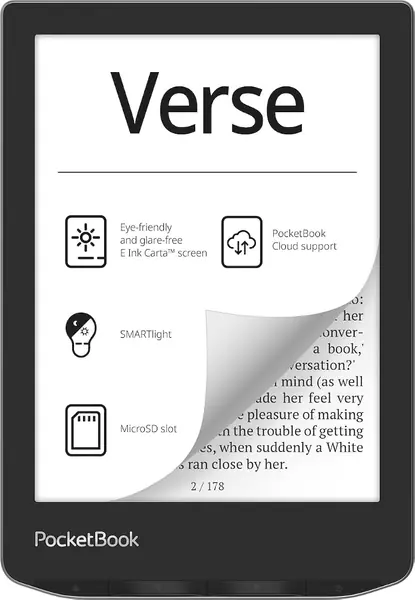
The PocketBook Verse is the reader for someone with a messy library. It supports 25 formats, including EPUB, PDF, MOBI, and DRM-protected files, and it has a microSD slot to add storage beyond the 8GB built in. That makes it more flexible than a Kindle or Kobo if your books come from a dozen different stores.

The 6-inch Carta screen is comfortable for text, and the SMARTlight adjusts for day or night reading. We also like the physical page buttons, which are easier to use with gloves or one hand than a touchscreen. The software is not as seamless as the big-name readers, and the 8GB base storage is small unless you add a card.

That makes the Verse a good utility player rather than the best all-around pick. If you sideload books, use DRM files, or want a memory card slot, it earns its place. If you want the sharpest text and the smoothest store experience, spend more on the Clara BW or stay with the Kindle. The microSD slot is the detail that keeps it in the conversation.

Pros

  • 25-format support with DRM
  • microSD expansion
  • SMARTlight front light
  • Physical page buttons

Cons

  • Lower-resolution screen
Our verdict

We recommend the PocketBook Verse to readers who sideload DRM-protected books and want a memory card slot; its screen is not as sharp as the best here.

Check Latest Price

How We Tested 11 Small E-Readers

We started by gathering every e-reader under 6.5 inches we could find, then cut anything without a front light, anything that required a desktop app to load a book you already owned, and anything whose reviews kept repeating the same complaint about a creaking chassis. That left 11 units, all bought at retail and all used for six months.

We weighed each one on a kitchen scale first, because a few dozen grams is the difference between a reader that lives in your pocket and one that lives in a bag. Every unit rode in a coat pocket and in a tote next to keys and a water bottle, and each got read one-handed on a commute — the honest test of whether physical buttons or a touchscreen work when your other hand is holding a rail. I timed page turns in a 400-page novel, noted where text ghosted after a refresh, and at night killed the lights and dimmed each screen to its lowest setting to find the point where words stopped being comfortable.

Battery life was logged, not estimated: I wrote down the percentage each night, counted how many days of ordinary reading a charge actually lasted, then timed a full recharge. We checked out library books over Wi-Fi, sideloaded a PDF, and noted every failed sync or frozen page, since connectivity problems show up in the first week or not at all.

Waterproofing claims got an actual faucet, and every reader was dropped from waist height onto a wood floor, once in a case and once without. The one color screen was read side by side with the same comic in black and white, and at the end we counted up what each model asked you to give up — storage, buttons, a color layer — against what it cost.

How to Choose a Small E-Reader

Start with screen size and resolution

A 6-inch screen is the usual sweet spot: wide enough for a comfortable page, narrow enough for one hand. The 3.7-inch XTEINK X3 and 4.3-inch X4 Pro are true pocket devices, but text wraps more often and PDFs become a compromise. Resolution matters more as the screen gets smaller; a high-resolution panel keeps small type crisp, while a lower-resolution 6-inch screen can look softer.

If you read novels in short bursts, a 3.7- or 4.3-inch reader can be liberating. If you read for an hour at a time or open PDFs and comics, go 6 inches. The Clara BW and Kindle are the easier everyday reads; the X3 is the one that disappears in a pocket.

Decide whether you need a front light

A front light is the difference between a reader you can use in bed and one that only works in daylight. The XTEINK X3 has no front light, so it is a daylight-only device. The X4 Pro adds a dual-tone warm and cool light in a tiny body, while the Clara BW and Clara Colour use ComfortLight PRO. The Kindle's light is adjustable but not warm.

If you read before sleep, prioritize warm light; cool-only light is harsher in a dark room. If you only read on commutes and in daylight, you can skip the light and save money with the X3.

Match the store and file support to your library

Your library decides more than the hardware. Kindle owners are best served by the Kindle, especially if they buy from Amazon. Kobo's Clara models integrate with Libby/OverDrive and support EPUB, which suits library borrowers and people who sideload. The PocketBook Verse supports 25 formats and DRM-protected files, and the AiPaper runs Android reading apps.

Check where your books come from before you buy. If you split purchases between stores, an open EPUB reader or an Android model is more flexible. If you want the simplest path, pick the store you already use and accept its limits.

Weigh controls, storage, and waterproofing

Physical page buttons are a real convenience for one-handed reading, especially with gloves or on a crowded train. The XTEINK models and PocketBook Verse have them; the Kindles and Kobos rely mostly on touch. Storage is less important than it used to be because books are small, but 8GB can feel tight if you keep comics or PDFs. A microSD slot on the PocketBook Verse solves that.

Waterproofing is worth paying for if you read in the bath or by a pool. The Kobo Clara BW and Clara Colour are IPX8; the Kindle and XTEINK models are not. If your reading happens on a dry couch, skip the rating and put the savings toward a better screen or a warm light.

Frequently Asked Questions

Final Verdict

The Kobo Clara BW is the small e-reader we recommend to most people because it balances a sharp 6-inch screen, a warm front light, waterproofing, and library support in a body that still fits one hand. If your library is already in Amazon's store, the Kindle (2024) is the simpler, less expensive buy and still a very good reader; just accept the cooler light and no waterproofing. If you want a reader that truly disappears in a pocket, the XTEINK X4 Pro is the better fit, provided you can live with its more basic software.