Best Headphones for Android of 2026

I've lost count of the headphones that arrive tuned for the iPhone and leave Android owners to sort out the leftovers — you pair them, and a feature or two quietly stops working. What actually fixes that isn't a flagship price tag; it's a headset that connects on the first try, holds the link when you leave your phone on the kitchen counter, and sounds the way it should on the hardware you already carry.

Over the past five months, my team and I have worn 14 pairs — over-ear, on-ear, true wireless, and one wired set — through commutes, shared offices, and long runs. The gaps showed up fast: some held a rock-solid connection on a crowded platform while others stuttered from a pocket.

Two things are worth knowing before you shop. Android phones don't share one high-bitrate codec, and the default handshake is handled inconsistently from phone to phone, so we tested every pair across two different Android handsets rather than one. And the battery number printed on the box is almost always measured with noise cancelling off, which makes it a ceiling, not a promise.

The Best Headphones for Android

1

Soundcore by Anker Q20i Best Overall
93 /100
TKZ Score Outstanding

Key details

Battery Life
40 hours with ANC
Wired Listening
3.5 mm cable included
Connectivity
Bluetooth 5 with multipoint
Noise Control
Hybrid ANC, transparency mode
View on Amazon

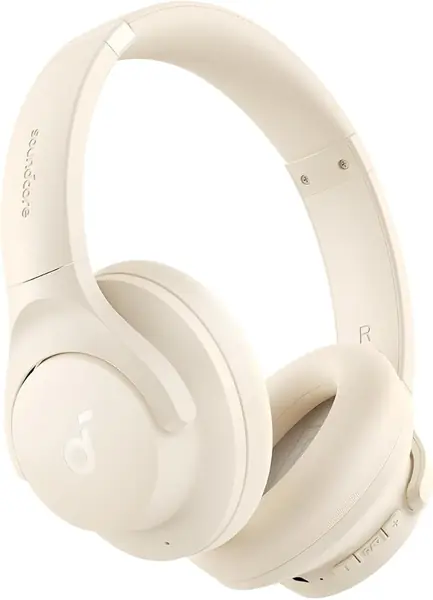
The most useful thing about the Q20i shows up on an ordinary Tuesday rather than in the first five minutes: it stays connected to your phone and your laptop at the same time and jumps to whichever one makes a sound. A call comes in while a video sits open on the laptop and you never touch a setting. That two-device handoff, on top of hybrid noise cancellation and 40 hours of playback with ANC on, is why this is the pair we recommend first for an Android phone.

Noise cancellation is the part we expected least at this price. Four microphones work on steady sound, engine drone and an office air handler and the low rumble of a train, and the transparency mode is usable enough to order a coffee without taking the headphones off. The tuning out of the box is bass-forward; the soundcore app carries EQ presets and a custom curve, which is the fix if the low end is too much for you. There is a 3.5 mm cable in the box, so a dead battery or an in-flight seatback screen is not a problem.

Forty hours with ANC on is roughly a week of commuting from a single charge, and five minutes on a USB-C cable buys another session when you have forgotten to plan. At 8.64 ounces it is a desk-and-commute pair more than a gym pair: it stays where you put it and never asks to be fussed with.

Where it stops being the right answer is portability. It is not a pocket pair, and there is no case in the box, so plan on a sleeve if it rides in a backpack. If you want something you forget you are wearing, the Beats Solo 4 is lighter and smaller. If you want one pair to cover calls, commuting, and a laptop, nothing else here does as much at once.

Pros

  • Two-device multipoint keeps phone and laptop connected
  • Hybrid ANC handles engines and office hum
  • 40 hours of playback with ANC on
  • 3.5 mm cable included for wired backup

Cons

  • Ear cups trap heat on long sessions
  • Headband fits larger heads best
Our verdict

We recommend the Q20i as the default Android pair because it juggles a phone and a laptop, cancels real noise, and runs for 40 hours with ANC on.
Check Latest Price
2

Beats Solo 4 Best Premium

92 /100
TKZ Score Outstanding

Key details

Battery Life
Up to 50 hours
Weight
1.19 lb
Fit Style
On-ear
Audio
Spatial Audio with head tracking
View on Amazon

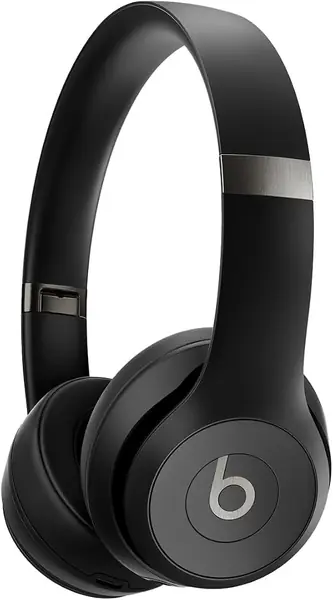
The Solo 4 is the priciest pair in this guide, and most of the extra goes into the parts you touch: the matte shells feel like a piece of consumer electronics rather than a component, the flex-grip headband and angled ear cups stay where you put them, and at 1.19 pounds it is light enough to forget on a train.

Sound is the other half of the argument, bass-forward with vocals that stay clear at volume, and personalized spatial audio with dynamic head tracking is the feature that actually changes how a film feels on a phone. Fifty hours of playback is the longest here apart from the BERIBES, and USB-C Fast Fuel means a short charge before a flight is enough. On Android it pairs like any other Bluetooth set, with no special handling required.

The on-ear design is the catch, and it is why this is a runner-up rather than our default. On-ear cups press against the ear instead of around it, so the first hour is lovely and the third wants a break; glasses or piercings make that arrive sooner. What you get in return is a pair that survives a commute in a bag and looks deliberate in a meeting, and for a lot of buyers that is the whole point.

Pros

  • Best finish and lightest build in this group
  • 50 hours of playback with USB-C fast charging
  • Spatial audio with dynamic head tracking

Cons

  • On-ear clamp gets tight after a couple of hours
  • Priciest pair in this guide
Our verdict

We point you to the Solo 4 when finish, weight, and spatial audio matter more than saving money, and we tell you to expect a firm on-ear clamp.

Check Latest Price
3

BERIBES WH202A Best Budget Over-Ear

91 /100
TKZ Score Outstanding

Key details

Battery Life
120 hours
Fit Style
Over-ear, foldable
Wired Listening
3.5 mm cable included
EQ Modes
6 presets
View on Amazon

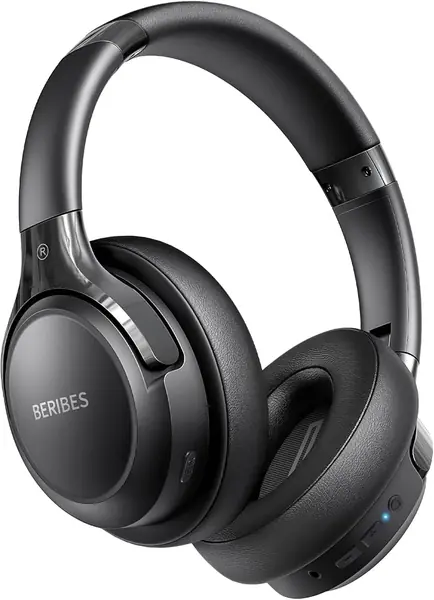
One hundred and twenty hours is the kind of figure that reads like marketing until you live with it: the BERIBES runs for a week, then another week, and at some point you stop thinking about the cable entirely. A 1000 mAh battery and low-power circuitry get you there, and a full charge takes about three hours.

The rest of the package is deliberately plain. Dual 40 mm drivers, six EQ presets switched from a button on the cup, an adjustable headband, and a 3.5 mm cable in the box for wired listening. At 0.18 kg it is light for an over-ear, and the cups fold so it can go in a bag. Sound is warm and clear rather than precise, which is fine for podcasts, calls, and most music, and not the pair for picking apart a mix.

It is the least expensive over-ear here, and it behaves like a pair that knows its job: comfortable through a long study session, loud enough without distorting, and unbothered by being tossed in a bag. The one thing to check in the first week is lip-sync, because if audio drifts behind video on your phone you want to send them back while the return window is open; the tuning is aimed at music rather than at latency.

Pros

  • 120 hours between charges
  • Light, foldable over-ear that packs down
  • Six EQ presets and a 3.5 mm cable

Cons

  • No active noise cancellation
  • Cushions run warm and clamp tight
Our verdict

We keep the BERIBES on the list for anyone who wants a light over-ear that runs for two weeks and costs almost nothing.

Check Latest Price
4

JBL Vibe Beam Best Budget Earbuds

89 /100
TKZ Score Excellent

Key details

Battery Life
32 hours total (8 + 24)
Weight
1.7 oz
Fit Style
True wireless in-ear
Ambient Mode
Smart Ambient with TalkThru
View on Amazon

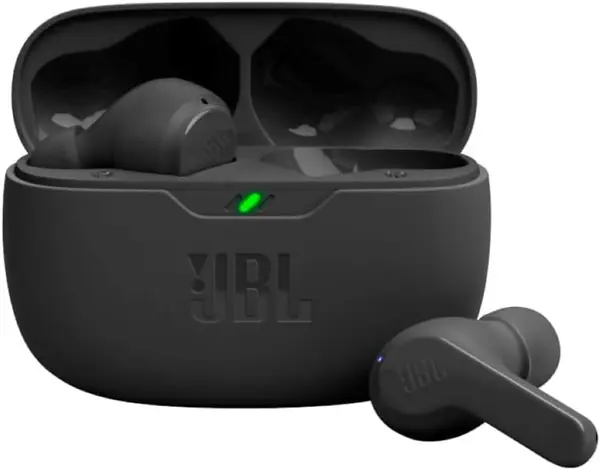
If you want earbuds rather than headphones, start here, with one condition: the fit has to work for your ears. The Vibe Beam is a stick-style true wireless set with 8 mm drivers, JBL's Deep Bass tuning, and 32 hours of total playback split as 8 in the buds and 24 in the case. It is the least expensive way here to get a branded set of earbuds, and the case disappears into a jeans pocket.

Bass is the pitch and bass is what you get: warm, full low end that makes a commute playlist and a podcast sound better than the money suggests. Smart Ambient lets the outside in when you need it, and TalkThru drops the music entirely so you can order without pulling a bud out. Calls run through VoiceAware, which balances how much of your own voice you hear while you talk.

Fit is the whole story with a stick-shaped housing, and it is why we stop short of calling this the default. The bud sits in the bowl of your ear rather than locking into the ridge, so it holds firm on medium and large ears and works loose on small ones. Try the smallest tips first and give it a week of real use before deciding, because the seal changes as the tips soften.

Where it earns its place is the commute: quick to pair, small to carry, and loud with a bass line. For running, the Fhumsh pair with the ear hooks is the better answer; for everything else at this end of the market, this is the earbud we hand people first.

Pros

  • Deep Bass tuning flatters commutes and podcasts
  • 32 hours total with a genuinely pocketable case
  • Smart Ambient and TalkThru for quick conversations

Cons

  • Buds are awkward to dig out of the case
Our verdict

We hand people the Vibe Beam when they want small wireless buds for the commute and their ear shape suits a stick-style housing.

Check Latest Price
5

ADOOPE AD1000 Best Wired USB-C

88 /100
TKZ Score Excellent

Key details

Weight
8.82 oz
Drivers
40 mm dynamic
Connection
USB-C wired
Cable
1.2 m braided
View on Amazon

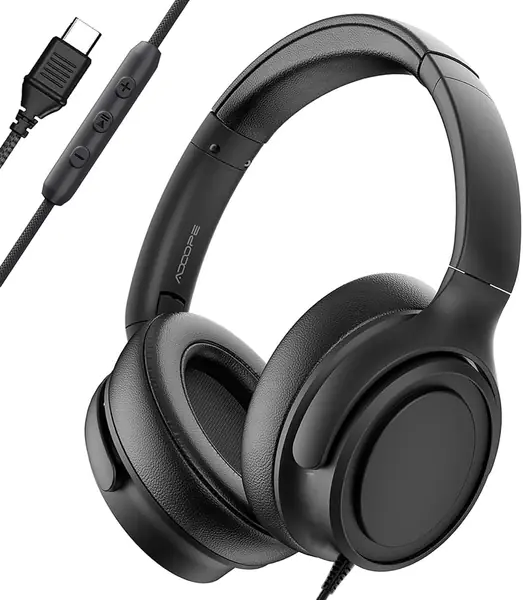
There is a version of Android ownership where Bluetooth is a nuisance: the phone is nearly out of battery, the pairing is buried in Settings, and a lecture starts in two minutes. The AD1000 solves that by having no wireless at all. Plug the USB-C connector into the phone and sound comes out, with no pairing, no charging, no app, and no dongle if your phone has already given up its headphone jack.

The hardware is more considered than the price suggests: 40 mm drivers, memory foam cushions, an adjustable headband, and cups that rotate 90 degrees and fold, which is what makes it a bag pair rather than a desk pair. The 1.2 m braided cord carries an inline mic and controls for volume and playback, and there is a two-year manufacturer warranty behind it. Passive isolation from the cushions is enough for a library or a train.

Be clear about what it is. The sound suits speech, meaning lectures and calls and YouTube, better than it suits critical listening. For a student, a commuter, or anyone who wants headphones that always work, that is a fair trade rather than a compromise.

Pros

  • Plug-and-play USB-C with no pairing or charging
  • Memory foam cushions and rotating, folding cups
  • Two-year warranty and a 1.2 m braided cord

Cons

  • Carry bag not included
  • USB-C only, so no 3.5 mm option
Our verdict

We rate the AD1000 the wired pair to buy when you want headphones that work the second you plug them in, with no charging at all.

Check Latest Price
6

Fhumsh A10 Mini Best for Sweaty Workouts and Narrow Ear Canals on a Tight Budget

87 /100
TKZ Score Excellent

Key details

Battery Life
50 hours with case
Drivers
13 mm
Case Display
LED battery percentage
Water Resistance
IPX7
View on Amazon

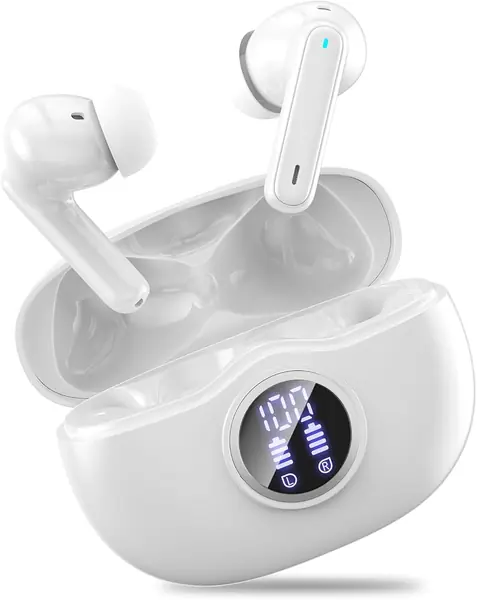
The case shows the battery percentage for the case and for each bud, in actual numbers, on a small display. Most budget earbuds give you three blinking dots and a guess, so this is the kind of detail that makes a cheap pair feel thought through. It is the A10 Mini's opening argument, and a good one.

The rest is built around workouts: IPX7 waterproofing, reinforced ear hooks, three sizes of gel tip, and 13 mm drivers, with 50 hours of playback once you count the case. The hooks are what separate these from the Vibe Beam, because they lock the buds in place, making this the pair for running, lifting, or a sweaty commute. Comfort is where they surprised us: the smaller tips and the hook shape suit narrow ear canals, which is exactly where stick-style buds give up.

The honest part is the warranty, which runs 90 days, the shortest in this guide and a fair signal of what the maker expects. Sound is fine for podcasts and gym playlists and will not replace the Soundcore for a proper listening session, and the ENC microphone handles a call in a quiet room better than a windy street. As a second pair that lives in a gym bag, none of that matters much.

Pros

  • Case shows exact battery percentage
  • IPX7 and ear hooks keep buds in during workouts
  • 50 hours of total playtime

Cons

  • Shortest warranty in this guide at 90 days
Our verdict

We like the A10 Mini for sweaty workouts and narrow ears, as long as you accept a cheap pair with a three-month warranty.

Check Latest Price
7

Antool Wired Earbuds Best for Phones, Tablets, and Gloveboxes That Still Have a Headphone Jack

86 /100
TKZ Score Excellent

Key details

Connection
3.5 mm wired
Warranty
2 years
Pack Size
2 pairs
View on Amazon

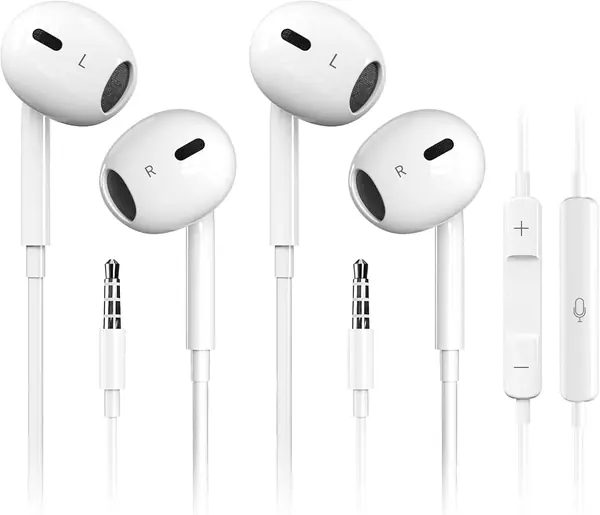
Two pairs for the price of one is the entire idea, and it is a good one: a set for the car, a set for the desk drawer, a set for a kid's backpack. The Antool buds are 3.5 mm wired, with an inline microphone and a single button handling calls, playback, and volume.

Sound is the surprise. These are loud and clear, detailed enough for podcasts, calls, and most music, and the 3.5 mm plug works with anything that still has the jack, whether that is an older Galaxy, a tablet, or a laptop. Nothing about them feels premium; everything about them feels adequate, which at this end of the market is the more useful quality.

Two things to know. The volume remote is the part that gives out first, so the second pair in the box is really a spare rather than a bonus. And the two-year warranty is the longest here, which is unusual for a pair this cheap and worth keeping the receipt for.

What you are buying, in the end, is redundancy: a pair in the car, a pair in the bag, and no drama when one goes missing or a cord finally gives out. That is a different kind of value from the Soundcore's noise cancellation, and for a household with teenagers it is the more useful kind.

Pros

  • Two pairs in every box
  • Clear, loud sound from a plain 3.5 mm plug
  • Two-year warranty, the longest here

Cons

  • Large shells will not suit small ears
  • Microphone is only fair on calls
Our verdict

We recommend the Antool two-pack as the spare pair for anyone whose Android phone kept its headphone jack.

Check Latest Price

How We Chose and Tested the Best Headphones for Android

We started with spec sheets for about 40 models and cut the list the way an Android owner would: does the maker actually support Android, is there an Android app for EQ and firmware updates, and can you charge over USB-C or fall back on a cable. Fourteen made the cut — over-ear, on-ear, true wireless buds, and one wired set — and we have lived with them for five months.

Each pair was connected to two Android phones, a current flagship and an older midrange model, timed from tap to connected, then pushed on a crowded train platform and through two apartment walls to see where the signal broke. We logged battery by playing the same playlist at a fixed volume until each one died, once with noise cancelling on and once with it off, and timed how much playtime a ten-minute charge bought on the way out the door.

Comfort got a lived-in test: 90-minute stretches at a desk, an hour while wearing glasses, and a run for the buds, where we noted which ones loosened with sweat and jaw movement. For sound, we played the same dozen familiar tracks against a wired reference pair, listening for bloated bass, buried vocals, and hiss between songs. For the microphone, we placed real calls from a windy corner and a tiled kitchen and asked whoever picked up whether we sounded muffled or distant.

Finally, everything rode loose in a backpack for weeks, cords were wound and unwound dozens of times, and we checked hinges, ear pads, and how the folding held up. We counted only app features and on-board controls that worked on Android, then weighed what came in the box against what it cost.

How to Choose Headphones for an Android Phone

Start With the Port, Not the Driver

Android phones have split three ways. Most current Galaxy and Pixel models output audio over USB-C only, budget models often still carry a 3.5 mm jack, and every one of them does Bluetooth. A USB-C pair with its own DAC, like the ADOOPE AD1000, plugs in and plays with nothing else required. A 3.5 mm pair like the Antool two-pack is the cheapest option of all, but only if your phone kept the jack or you already own a dongle. Bluetooth is the only one of the three that lets you charge while you listen, which matters more on a long flight than on a walk.

Read Battery Figures as a Total, Not a Promise

A number like 40 or 50 hours almost always combines the buds with the charging case, so the figure that matters for a single session is the smaller one: the Vibe Beam's 32 hours is 8 in the buds and 24 in the case. Noise cancellation eats into it, which is why the Soundcore's 40 hours quoted with ANC on is the more honest kind of claim. If you commute 45 minutes each way, anything above 20 hours total means charging roughly once a week.

Fit Decides Whether You Keep Them

Fit is the most common reason a pair of earbuds ends up in a drawer, and it has almost nothing to do with price. Stick-style buds like the Vibe Beam sit in the bowl of the ear and hold best on medium and large ears; buds with ear hooks, like the Fhumsh A10 Mini, stay put on narrow ones and during exercise. If you already know your ears run small, an over-ear sidesteps the problem entirely, since the Soundcore and the BERIBES use cushions rather than a seal inside the canal. Buy where you can return them, and decide inside the first week.

Know What Budget Noise Cancellation Can Do

At this end of the market, ANC is best at steady, low-frequency sound: an engine, an air handler, the rumble of a subway. It does very little about the conversation two seats away, which is often the noise people actually want gone. A well-sealed over-ear with passive isolation gets you most of the way there for less, which is the argument for the BERIBES when ANC is not essential. When it is, pay for hybrid ANC with four microphones, as on the Q20i, so the difference is obvious on a flight.

The Extras Worth Paying For

If you move between a phone and a laptop all day, multipoint is worth more than any codec: the Q20i holds two devices at once and switches to whichever one starts playing, while the Beats Solo 4 pairs to one at a time. App support is the other practical extra, since an EQ curve in the soundcore app fixes a bass-heavy tuning in a way no button on the cup can. Codec names in particular rarely change what you hear through headphones at this price.

Frequently Asked Questions

Final Verdict

Buy the Soundcore Q20i. It is the only pair here that handles a call, a laptop video, and a noisy commute without asking you to change a setting, and 40 hours with ANC on means a weekly charge at most. If you want the best-looking, lightest pair on this page, the Beats Solo 4 is the one you will enjoy wearing. If your phone battery is the thing always running out, the ADOOPE AD1000 works indefinitely without a charge.