Best Bose Over-Ear Headphones of 2026

Active noise cancellation is a clever trick: microphones sample the room, a processor inverts that sound wave, and a small speaker plays the inverted copy into your ear, where the two mostly cancel out. What separates one pair of Bose over-ear headphones from another isn't whether the trick works — it's how it handles messy sound: a train door slamming, a shared office, a seatmate who wants to chat.

I wear over-ear headphones most of the day, and the differences that matter never make a spec sheet — whether the clamp eases after an hour, whether your ears run hot on a walk, whether Bluetooth pairs on the first try, whether that pretty mint colorway still looks smart after a year in a tote bag. We spent six months with 10 pairs, including a refurbished one, to sort that out.

Two things worth knowing before you buy. Published playtime is usually measured with noise cancellation off, so a 24-hour claim lands closer to 18 with it cranked. And spatial audio is fun for about a song and a half — the modes that let you kill head tracking are the ones you'll actually keep. The pair that fits your week is below.

The Best Bose Over-Ear Headphones

1

Bose QuietComfort Headphones (2nd Gen) Best Overall
91 /100
TKZ Score Outstanding

Key details

Bluetooth
5.4
Battery Life
Up to 24 hours
Weight
8 oz
Listening Modes
Quiet, Aware, Immersion, Cinema, ANR off
View on Amazon

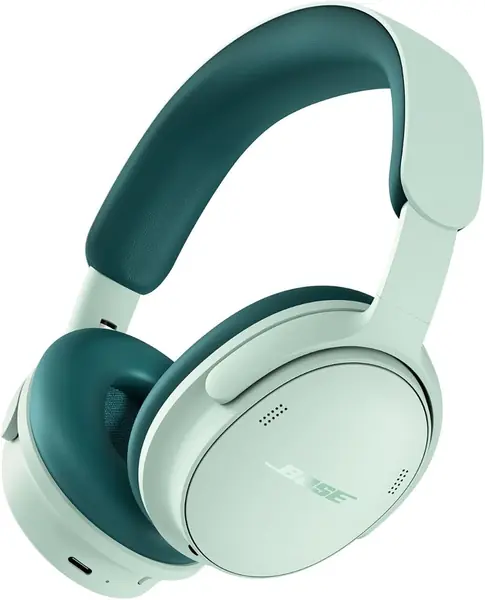
The pill-shaped earcups and wider headband are the first things you notice, and they are the reason this 2nd Gen model feels like more than a spec bump. Bose kept the soft synthetic-leather cushions and the hard-shell case, then added more room across the top of the head. That matters if you wear headphones for a full workday or a long flight: the pressure is spread across a broader strip instead of a single hot spot. The Dewdrop Mint finish is also a nice change from another black pair in a bag full of black gadgets.

We recommend this one as the default because it covers the most ground. You get active noise cancellation with Quiet and Aware modes, plus Immersion and Cinema modes for spatial audio, and Bluetooth 5.4 for a more current connection. The 24-hour battery is the same headline as the original QuietComfort, so the upgrade is really about comfort, features, and a cleaner design rather than more runtime. For a daily commute, open office, or frequent flying, that combination is easier to live with than the Ultra's extra modes and higher price.

The one fit note: the clamp is snug enough that a larger head may want to try before committing. That is the trade-off for the secure feel, and it is the reason we point bigger-headed shoppers to the original QuietComfort or the Ultra. The rest of the experience is polished: the case is sturdy, the controls are simple, and the app gives you enough adjustment without turning every listen into a project.

Pros

  • Wider headband spreads pressure
  • Spatial audio with Cinema and Immersion modes
  • 24-hour battery and Bluetooth 5.4

Cons

  • No on-ear track skipping
Our verdict

We recommend the 2nd Gen QuietComfort to most people: it pairs Bose's comfortable fit and strong noise cancellation with spatial audio and 24-hour battery.
Check Latest Price
2

Bose QuietComfort Ultra Headphones (2nd Gen) Best Noise Cancellation

90 /100
TKZ Score Outstanding

Key details

Bluetooth
5.4
Battery Life
Up to 30 hours (23 with Immersive Audio)
Charge Time
3 hours
Noise Cancelling Modes
Quiet, Aware, Immersion, Cinema
View on Amazon

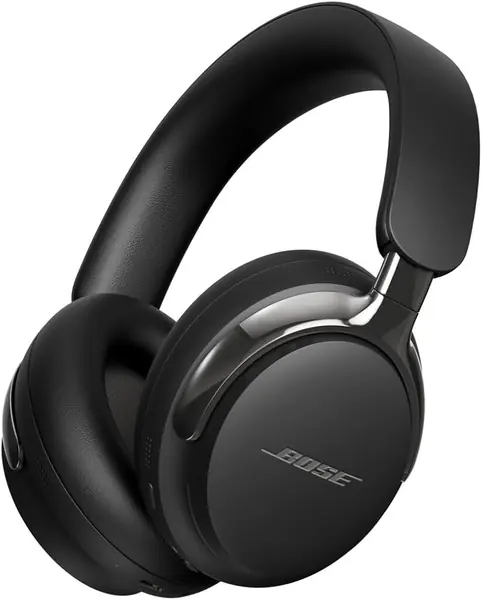
Compared with the standard QuietComfort, the Ultra 2nd Gen is the pair we take when the flight is long and the cabin is loud. Bose's Quiet Mode is the deepest cancellation in this group, and the 30-hour battery (23 with Immersive Audio) means you can leave the charger in the case for a weekend. For a long trip, that combination is hard to beat.

The spatial audio is the reason to step up. Immersion Mode places instruments in front of you instead of inside your head, and Cinema Mode does something similar for movies. The effect is the most convincing argument for the Ultra over the standard model, especially for video, and the button controls are easier to use by feel than a touch panel. The hard case is another small win for travel.

The snug fit is part of why it stays put on a commute, but it is not the pair we choose for a run. The headband and cushions are comfortable for long sessions, and the app gives you Quiet, Aware, and Immersion modes without much hunting. If you want the quietest Bose over-ear in this group and you travel often, this is the one; if you want the simplest value, the standard model makes more sense.

Pros

  • Bose's best noise cancellation
  • Up to 30 hours, 23 with Immersive Audio
  • Cinema and Immersion modes for video

Cons

  • Bluetooth pairing can be fussy
  • Premium price over the standard line
Our verdict

We choose the Ultra 2nd Gen for travel and maximum quiet: its 30-hour battery, immersive modes, and Bose's strongest noise cancellation justify the premium.

Check Latest Price
3

Bose QuietComfort Headphones Best Value

89 /100
TKZ Score Excellent

Key details

Bluetooth
5.1
Battery Life
Up to 24 hours
Weight
8.47 oz
Listening Modes
Quiet and Aware
View on Amazon

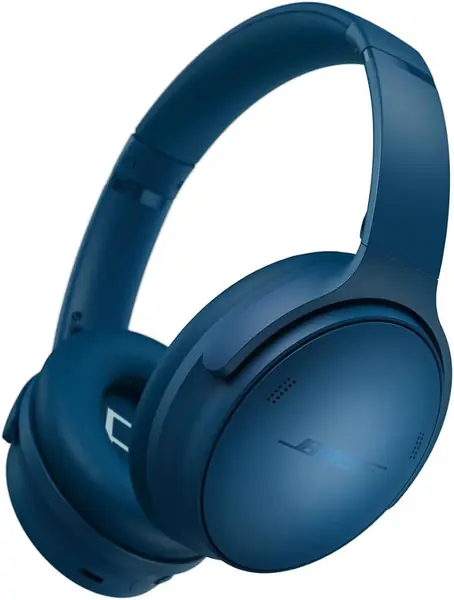
The original QuietComfort is the value pick in this group, and it gets there by keeping the parts that matter: soft over-ear cushions, a secure padded band, and a simple Quiet and Aware toggle. The Twilight Blue limited edition is a nice bonus if you want something other than black, but the appeal is not cosmetic. This is the pair that makes the Bose noise-canceling formula feel easy to recommend.

We keep coming back to it because it is the easiest Bose over-ear to recommend without a long explanation. The 24-hour battery matches the newer standard model, the 240-gram weight is light enough to forget about on a commute, and the included case makes it a sensible travel pair. The sound is the familiar Bose balance: enough bass to satisfy, enough clarity for podcasts and acoustic tracks. It is the pair we hand to someone who wants Bose sound without a learning curve.

The reason to choose it over the 2nd Gen is simple: you get the core Bose experience for less, and the differences are mostly in the extras. The 2nd Gen adds a wider headband and spatial audio; the original keeps the same 24-hour runtime and familiar fit. If those extras are not worth the step up for you, the original is the smarter buy.

Pros

  • 24-hour battery matches newer model
  • Light 240 g with protective case
  • Simple Quiet and Aware modes

Cons

  • Bluetooth 5.1 is a step behind
  • Microphone can be inconsistent on calls
Our verdict

The original QuietComfort remains our value pick: it delivers Bose's comfortable fit and 24-hour battery for less than the newer models.

Check Latest Price
4

Bose Headphones 700 Best for Calls

88 /100
TKZ Score Excellent

Key details

Bluetooth
5
Battery Life
Up to 20 hours
Weight
8.82 oz
Noise Cancelling Levels
11
View on Amazon

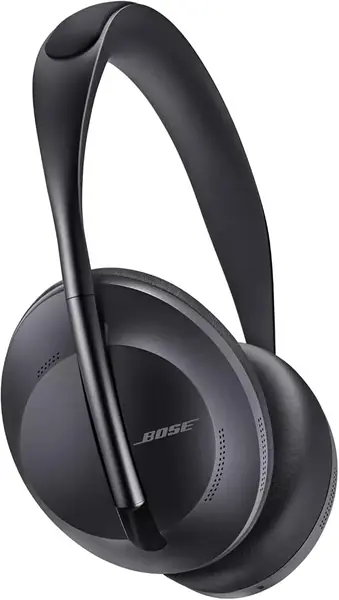
If your headphones spend more time on meetings than on music, the Headphones 700 is the Bose pair that makes the most sense. The microphone system is designed to adapt to noisy and windy environments, and the 11 levels of noise cancellation let you dial in exactly how much of the office you want to hear. That adjustability is the reason it stays in this roundup despite being an older design.

We like the 700 most for the flexibility. The touch controls on the right earcup are quick once you learn them, and the stainless-steel headband gives it a sturdier feel than the all-plastic QuietComfort models. The 20-hour battery is shorter than the QuietComfort and Ultra, but it is still enough for a week of commutes if you charge on the weekend. For a remote worker who lives in video calls, the trade is worth it.

The catch is that this is the oldest design here. For a call-heavy desk worker, that is an easy trade; for a frequent flyer, the newer QuietComfort models are easier to live with. The hard-shell case is a useful extra if you carry it between home and office.

Pros

  • 11 levels of noise cancellation
  • Microphone system adapts to noise and wind
  • 20-hour battery and stainless-steel headband

Cons

  • Bluetooth pairing can be unstable
  • Some units stop working over time
Our verdict

For call-heavy days, we point to the Headphones 700: its microphone system and 11 levels of noise cancellation are the most adjustable combination here.

Check Latest Price
5

Bose QuietComfort 35 II (Renewed) Backup Pair

84 /100
TKZ Score Excellent

Key details

Bluetooth
5
Battery Life
Up to 20 hours
Warranty
90 days
Noise Cancelling
Adjustable
View on Amazon

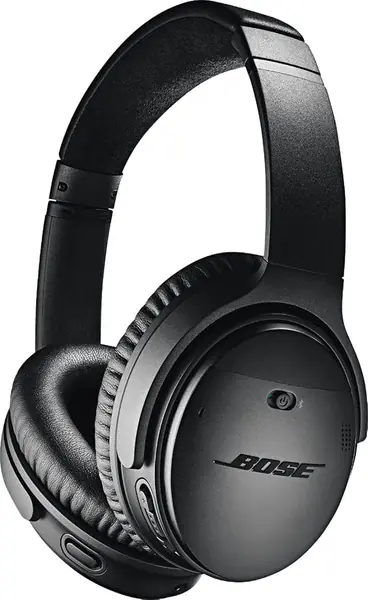
The renewed label is the first thing to understand about this pair. It is a certified refurbished QC35 II, which is why it sits in also-consider: the core Bose experience is intact, but you are shopping an older generation. That is not a dealbreaker for a backup pair, but it is the reason this is not the first pair we hand to a daily commuter.

What you get is the classic Bose over-ear formula: active noise cancellation you can adjust, a comfortable oval earcup design, Bluetooth 5, and up to 20 hours of battery. The dual-microphone system is there for calls, and the included case and cables make it a complete travel package. The oval earcups and padded band are the same shape that made the QC35 line a travel staple, and the controls are simple enough to use without looking.

The classic Bose fit and noise cancellation are the reasons to consider it, and the included case makes it easy to stash. It is a sensible second pair for a guest room, a commute bag, or a teenager who is not ready for a flagship.

Pros

  • Bose noise cancellation at a lower entry point
  • Up to 20 hours of battery
  • Includes case and cables

Cons

  • Only a 90-day warranty
  • Older Bluetooth 5
Our verdict

We see the renewed QC35 II as a backup or second-pair buy: it delivers Bose noise cancellation and 20-hour battery, with a 90-day warranty as the catch.

Check Latest Price

How We Tested Bose Over-Ear Headphones

We built the shortlist by combing through Bose's current over-ear lineup and pulling in a refurbished pair from an earlier generation, so we could see whether saving money costs you anything besides the newest features. Every candidate had to fold for travel, charge over USB-C, and list a playtime figure we could verify. That left 10 pairs, which we wore for six months — on subway platforms and cross-country flights, in a shared office, on dog walks, and through a Saturday of yard work.

To judge noise cancellation, I stood at the end of a busy platform and on a plane mid-cruise, noting whether the low rumble vanished or merely dropped, and whether nearby conversation stayed audible. Sound got the same five-song playlist on every pair, with notes on bass weight, vocal presence, and whether the in-app EQ moved anything meaningful. For comfort and fit, I wore each one through a full workday with glasses on, tracking clamp at the temples, heat after 90 minutes, and whether the headband left a mark.

Battery claims got checked the hard way: a full drain, a timed USB-C charge, then a run with cancellation on to see how close the rated hours came. For Bluetooth, I paired each pair to a phone and a laptop, walked two rooms away to find the dropout point, and switched between a call and a video to see whether re-pairing was needed. Durability meant a month of riding in a tote bag with keys and a water bottle, folding and unfolding the hinges, and watching how each colorway handled fingerprints. We also logged app disconnects and firmware updates over the six months, and recorded voice memos from a sidewalk with traffic passing to hear how the mics handled calls.

How to Choose Bose Over-Ear Headphones

Match the Noise-Canceling Mode to Your Day

Bose's noise cancellation is not one setting. Quiet mode is the full block-out for a plane or open office; Aware mode lets in announcements and traffic; Immersion and Cinema modes add spatial processing for music and video. More modes are not automatically better. If you mostly toggle between quiet and hearing your surroundings, the standard QuietComfort's two-mode setup is simpler to live with. If you watch a lot of video on a tablet or want the most adjustable quiet, the Ultra's extra modes earn their place.

Treat Comfort as a Fit Problem

Weight and cushion softness matter, but clamping force and headband width decide whether you can wear a pair for a full flight. A wider band spreads pressure across the top of your head; a narrow one concentrates it. Earcup shape matters too: oval cups suit more ear shapes, while round or pill-shaped cups can press on the wrong spot. Buy from a retailer with a return window, and try the headphones with glasses or a hat if that is how you will wear them. A snug pair is great for walking; it is not the pair for a workout.

Battery, Charging, and the Cable in the Case

Battery ratings in this group run from 20 to 30 hours, and the gap matters most if you travel without a charger. The larger number is not the whole story: spatial audio can cut runtime, and charging time varies. A wired cable is the feature that saves a trip when the battery dies, so keep the included cable in the case even if you plan to listen wirelessly. If you regularly forget to charge, a model with a longer rating and a quick top-up is worth the step up.

Bluetooth Stability Beats the Version Number

A newer Bluetooth number does not guarantee a stable connection. Across Bose over-ears, pairing and dropouts are the most common weak point, and the problem often shows up when you switch between a laptop and a phone. Before you commit, pair the headphones with every device you use and walk around your home or office during the return window. If you take calls all day, test the microphone on a real call, not just a voice memo. The model with the best specs can still be the wrong one if it will not hold a connection.

New vs Renewed and What the Warranty Covers

A renewed pair can be a sensible way to get Bose noise cancellation for less, but the warranty is part of the product. New models here carry a one-year manufacturer warranty; the renewed QC35 II we cover has a 90-day limited warranty. That shorter window changes the math: a renewed pair is better as a backup or second set than as the only headphones you rely on for work. If you buy renewed, inspect the ear pads and test the battery during the return period.

Frequently Asked Questions

Final Verdict

For most people, the Bose QuietComfort Headphones (2nd Gen) is the pair to buy. It keeps the comfort and noise cancellation that make the QuietComfort line easy to live with, then adds a wider headband, spatial audio, and newer Bluetooth without moving into Ultra territory. If you travel often and want the deepest quiet, the QuietComfort Ultra (2nd Gen) is the better spend; if you want the familiar Bose formula for less, the original QuietComfort is still the value pick.