Best Garmin Watches for Weightlifting of 2026

Weightlifting is hard on a watch in ways running never is. Your wrist spends the session bent back under a bar, wrapped in straps, pressed into a bench, and your heart rate spikes for forty seconds before sitting still for two minutes. A watch that nails pace and distance can still miss half your sets — and one that digs in under a wrist wrap ends up in your gym bag by week two. What you want is something that logs a set without a fight and shrugs off chalk and knurling.

I've lifted with a watch on for years, and over the past six months our team wore eight of them through real training blocks: heavy squat days, dumbbell accessory work, the occasional Olympic session. What surprised me was how much the display and the battery mattered. You glance at your wrist between sets with sweat in your eyes, and a watch you have to charge every night quietly stops getting worn on rest days.

The extras — suggested workouts, a flashlight, music on your wrist — only count once accuracy, comfort, and looks are settled. All eight below cleared that bar, and one of them will match the way you train.

The Best Garmin Watches for Weightlifting

1

Garmin Forerunner 165 Best Overall
94 /100
TKZ Score Outstanding

Key details

Weight
1.38 oz
Case Size
43 mm
Battery Life
11 days
Activity Profiles
25+
View on Amazon

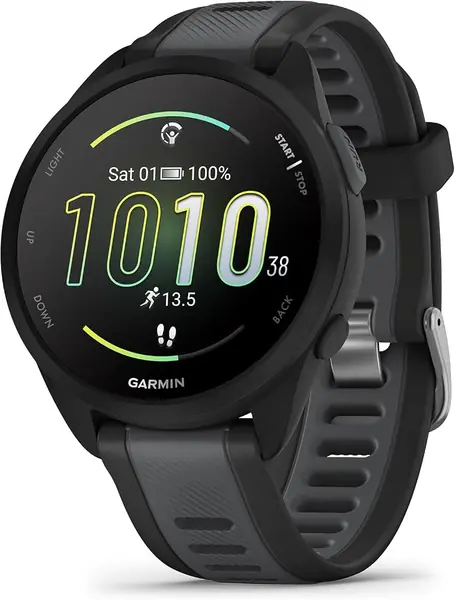
The detail that makes the Forerunner 165 our default for lifting is not a lifting-specific gadget; it is the combination of a 43mm case, 1.38 ounces, and a 25+ activity list that explicitly includes strength. That is the rare Garmin that feels like a training watch without feeling like a piece of gym equipment. We like it because it disappears under a long sleeve and does not crowd a wrist wrap.

The 1.2-inch AMOLED screen is bright enough for a dim gym, and the traditional buttons are easier to hit with sweaty hands than a touchscreen alone. We also appreciate the morning report: sleep, recovery, training outlook, and HRV status in one place. You do not need a premium model to get a useful read on whether to push a heavy session or back off.

Battery life is rated at up to 11 days in smartwatch mode, which makes charging a weekend habit rather than a nightly one. The 50-meter water rating covers sweat and showers. We wish the setup were friendlier; Garmin's menus take some patience. But the 165's smaller case and explicit strength profile are why it beats the bigger, more expensive training watches for a lifter who wants one watch for everything.

Pros

  • Strength profile in a light 43mm case
  • Bright AMOLED screen with physical buttons
  • Up to 11 days of battery life

Cons

  • Garmin menus take time to learn
Our verdict

If you want one Garmin that handles lifting, running, and daily wear without a premium price, we recommend the Forerunner 165.
Check Latest Price
2

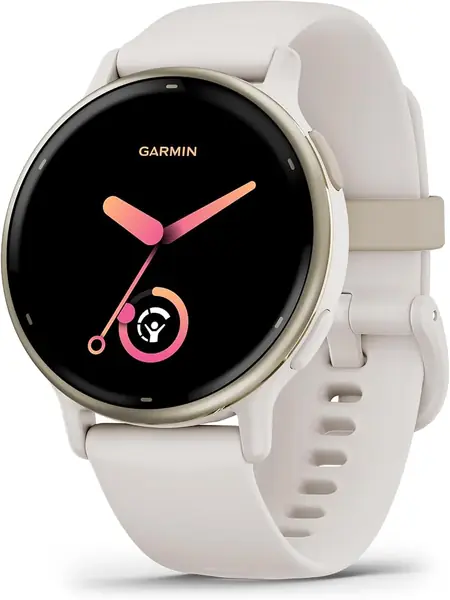
Garmin Venu 4 Best Premium Everyday Watch

93 /100
TKZ Score Outstanding

Key details

Weight
1.2 oz
Case Size
41 mm
Battery Life
10 days
Sports Apps
80+
View on Amazon

The Venu 4 is the one in this group that looks like a watch first and a fitness tracker second. The 41mm stainless steel case and 1.2-ounce weight are the reason we reach for it when a lifting session is followed by a workday; it sits closer to a dress watch than the plastic Forerunners. That matters if you want one watch to cover both.

We recommend it for lifters who want a smaller everyday watch and can live with a broad fitness app library rather than a strength-first label. The 80+ preloaded sports apps give you room for cardio, mobility, and the rest of a mixed week, and the 1.2-inch AMOLED display is easy to read indoors. The built-in flashlight is a small convenience that earns its place on early and late gym trips.

Battery life is rated at up to 10 days, and the 50-meter water rating handles sweat and showers. The trade-off is price and focus: the Venu 4 costs more than the Forerunner 165, and it does not make strength training its headline. If you want the most explicit lifting profile for less, the 165 is the better fit. If you want a stainless watch that does not look out of place at dinner, the Venu 4 earns the upgrade.

Pros

  • 41mm stainless case stays compact
  • 80+ sports apps for a mixed week
  • Built-in flashlight and bright AMOLED

Cons

  • Premium price
  • Strength training is not the headline
Our verdict

We recommend the Venu 4 for lifters who want a smaller stainless watch that looks at home outside the gym.

Check Latest Price
3

Garmin vívoactive 6 Best Midrange All-Rounder

92 /100
TKZ Score Outstanding

Key details

Weight
1.3 oz
Case Size
42 mm
Battery Life
11 days
Sports Apps
80+
View on Amazon

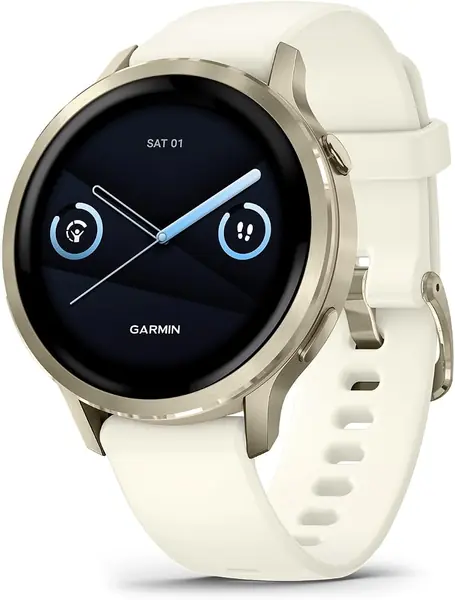
The vívoactive 6 is the middle child that makes a lot of sense: a 42mm case, 1.3 ounces, an 11-day battery rating, and more than 80 sports apps. We like it for the lifter who wants one watch for the gym, a lunch walk, and sleep tracking without stepping up to a premium Forerunner. The 1.2-inch AMOLED display is bright and the case is small enough to stay out of the way.

What separates it from the vívoactive 5 is the size of the app library and the newer health features: Body Battery, sleep coaching, and a smart wake alarm that gently vibrates. We found the recovery framing more useful than a pile of running metrics if your training is mostly weights. The 50-meter water rating covers sweat and showers.

The vívoactive 6 is still a strong midrange pick if you want the broader app library and the newer health tools, and it is comfortable enough to wear all day. Just go in knowing the Forerunner 165 is the safer default for a single gym watch. The 6 makes more sense if you want the extra apps and the newer sleep tools and do not mind paying for them.

Pros

  • 42mm, 1.3 oz case wears light
  • 80+ sports apps and AMOLED
  • Body Battery, sleep coach, smart wake

Cons

  • Reliability is less settled than our top pick
  • Costs more than the Forerunner 165
Our verdict

The vívoactive 6 is our pick for a midrange Garmin that covers lifting, cardio, and recovery in one comfortable 42mm case.

Check Latest Price
4

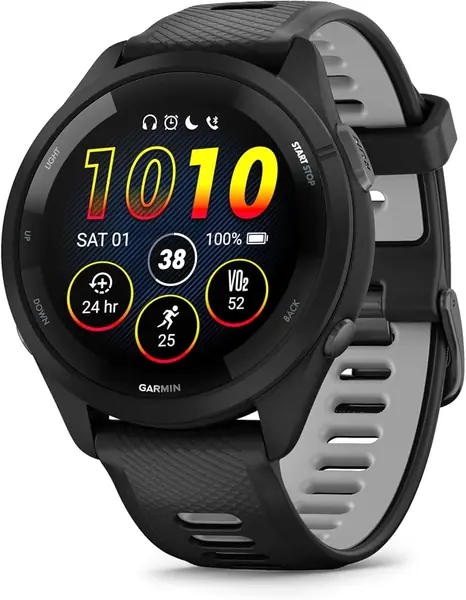
Garmin Forerunner 265 Best for Lifters Who Run

91 /100
TKZ Score Outstanding

Key details

Weight
1.66 oz
Case Size
46 mm
Battery Life
13 days
Training Readiness
Yes
View on Amazon

Training readiness is the feature that earns the Forerunner 265 a place here. It combines sleep quality, recovery, training load, and HRV status into a go-hard-or-back-off read, which is more useful to a lifter than another pace graph. The 1.3-inch AMOLED screen is easy to read, and the 46mm case is big but not as heavy as it looks at 47 grams.

We recommend it for the lifter who also runs seriously. The 13-day battery rating and 20-hour GPS mode mean you are not choosing between a gym watch and a running watch. The multi-band GPS is the part that makes it credible outdoors, and the buttons plus touchscreen give you options when your hands are sweaty.

The size is the thing to check. A 46mm case can feel large on a smaller wrist, and it is more likely to bump a wrist wrap than the 43mm Forerunner 165. If your lifting is the main event and running is occasional, the 165 is the cleaner choice. If you want training-readiness guidance and a bigger screen, the 265 justifies the step up.

Pros

  • Training readiness for hard-day decisions
  • 13-day battery and 20-hour GPS
  • Multi-band GPS and 1.3-inch AMOLED

Cons

  • 46mm case can crowd small wrists
Our verdict

Choose the Forerunner 265 if your lifting week also includes serious running and you want training-readiness guidance.

Check Latest Price
5

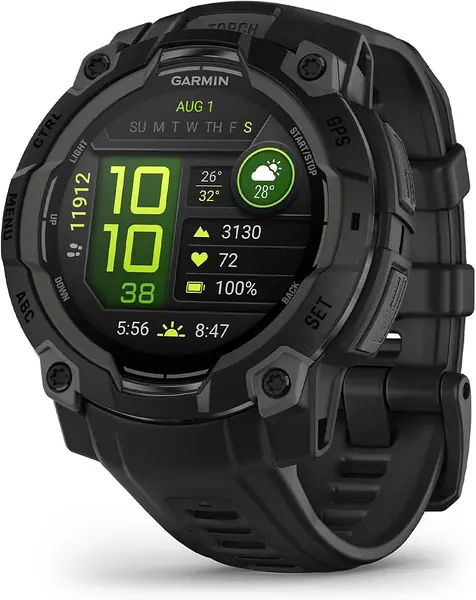
Garmin Instinct 3 AMOLED Best Rugged Gym Watch

90 /100
TKZ Score Outstanding

Key details

Weight
1.87 oz
Case Size
45 mm
Battery Life
18 days
Display
1.2-inch AMOLED
View on Amazon

The Instinct 3 AMOLED is the one we reach for when the gym is the least gentle part of the day. The button-only controls are the detail that decides it: they are easier to hit with chalky or gloved fingers than a touchscreen, but scrolling through data is slower. The 45mm fiber-reinforced case, metal-reinforced bezel, and 100-meter water rating make it the tough option in this group.

We like the 1.2-inch AMOLED display because it fixes the old Instinct complaint without turning the watch into a delicate smartwatch. The built-in flashlight is genuinely useful in a dim gym or a parking lot, and the 18-day battery rating means charging is infrequent. It weighs 53 grams, and the case feels substantial on the wrist.

The trade-off is size and interface. If you like a touchscreen and a compact 42mm case, the vívoactive 6 is easier to live with. If you want a watch that can take a knock and does not need a charge every week, the Instinct 3 AMOLED is the one we trust on a rough day.

Pros

  • Button controls work with chalky hands
  • Rugged 100m case with metal bezel
  • 18-day battery and built-in flashlight

Cons

  • Button-only navigation is slower
  • 53-gram case feels substantial
Our verdict

We like the Instinct 3 AMOLED for lifters who want a tough button-first watch with a bright screen and long battery.

Check Latest Price
6

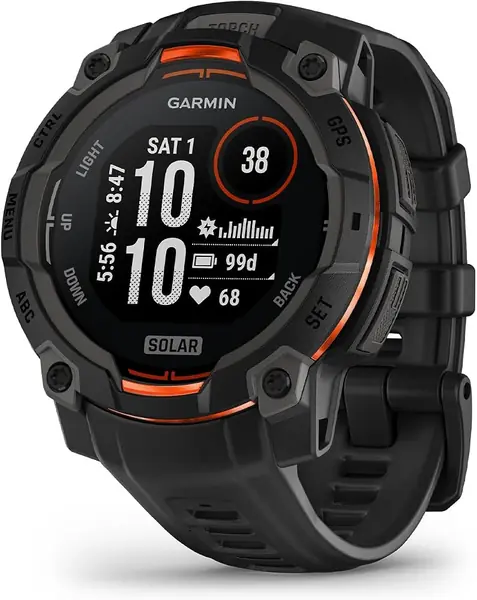
Garmin Instinct 3 Solar Best Battery Life

89 /100
TKZ Score Excellent

Key details

Weight
1.83 oz
Case Size
45 mm
Battery Life
28 days
Solar Charging
Yes
View on Amazon

The Instinct 3 Solar makes its case with a number: 28 days of battery life, with solar charging stretching it further in good light. That is the kind of spec that changes how you live with a watch; you stop budgeting a charger for every trip. The 45mm case is rugged, 100-meter water-rated, and button-operated, with the same built-in flashlight as the AMOLED model.

We recommend it for the lifter who wants a gym watch to disappear for weeks at a time. The solar lens is the reason to pick this over the AMOLED Instinct if battery life is your priority, and the button controls are easy to work with sweaty hands. The 0.9-inch monochrome display is the other half of the deal, and it is the part to see before you commit.

If you like a big, colorful display for reading workout data, the Instinct 3 AMOLED is the better fit. If you want a rugged watch that feels almost indifferent to charging, the Solar is the one. We like that it does not pretend to be a lifestyle watch; it is a tool, and it is good at being one.

Pros

  • 28-day battery with solar charging
  • Rugged 100m build and flashlight
  • Button controls for sweaty hands

Cons

  • Small 0.9-inch monochrome display
  • Button-only navigation is slower
Our verdict

The Instinct 3 Solar is for the lifter who wants to charge almost never and can trade a color screen for solar battery life.

Check Latest Price
7

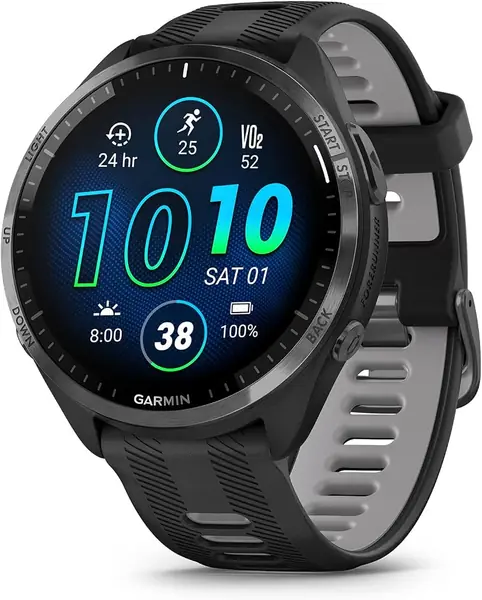
Garmin Forerunner 965 Best for Premium Runners

88 /100
TKZ Score Excellent

Key details

Weight
1.87 oz
Case Size
47 mm
Battery Life
23 days
Display
1.4-inch AMOLED
View on Amazon

The Forerunner 965 is the most watch here, and that is both the appeal and the problem. The 47mm titanium-bezel case, 1.4-inch AMOLED screen, and full-color maps are genuinely impressive, but this is not the watch we reach for first on a lifting day. It is big, and at 53 grams it makes its presence known when you rack a bar.

For a runner who lifts, though, the package is hard to argue with. The 23-day battery rating in smartwatch mode, 31 hours in GPS mode, and 32GB of storage make it a travel-and-training tool. The maps and multi-band GPS are the reasons to step up from the Forerunner 265, and the AMOLED screen is easy to read at a glance.

We like the titanium bezel for durability and the lighter feel it gives a watch this size, but the 47mm footprint is still the deciding factor. If your wrist is small or you wear wraps, the 43mm Forerunner 165 is the more practical gym watch. The 965 is for the lifter whose training is already run-heavy and who wants the maps and screen to go with it.

That makes it an also-consider rather than a default. It is a premium tool for a specific buyer, and it earns its place if you want one watch for long runs, travel, and the gym. If you are buying primarily for lifting, go smaller and simpler.

Pros

  • 1.4-inch AMOLED with full-color maps
  • 23-day battery and 31-hour GPS
  • Titanium bezel and 32GB storage

Cons

  • 47mm case is large for lifting
  • Premium price
Our verdict

The Forerunner 965 is a premium running watch first; buy it if maps and a big AMOLED screen matter more than a compact gym fit.

Check Latest Price
8

Garmin vívoactive 5 Budget Lifestyle

87 /100
TKZ Score Excellent

Key details

Weight
1.3 oz
Case Size
42 mm
Battery Life
11 days
Sports Apps
30+
View on Amazon

The vívoactive 5 is the budget option that still feels like a modern Garmin: a 42mm case, 1.3 ounces, a 1.2-inch AMOLED display, and an 11-day battery rating. We like it for someone who wants a comfortable gym watch and does not need the newest sensor package. It is small enough to stay out of the way during a set.

The 30+ sports apps are the main compromise against the vívoactive 6. You still get Body Battery and sleep coaching, and the 50-meter water rating covers sweat and showers, but the app library is thinner. For a lifter who mostly wants heart rate, duration, and recovery, that is a reasonable trade. The AMOLED screen is the part that makes it feel more expensive than it is.

We also appreciate that the 42mm case takes a 20mm band, so swapping to a nylon strap for the gym is easy. The watch is light enough to wear overnight for sleep tracking, which is where a lot of the recovery value sits. The vívoactive 5 is not the newest model here, and the vívoactive 6 has a broader feature set for not much more.

Still, if you want a low-cost Garmin that covers the basics and looks good doing it, the vívoactive 5 is a sensible place to start. It is not the watch we recommend for the newest training features, but it is the one we recommend for a lifter on a tight budget who wants a comfortable daily watch.

Pros

  • 42mm, 1.3 oz case is easy to wear
  • AMOLED screen and Body Battery
  • Up to 11 days of battery

Cons

  • Thinner app library than the vívoactive 6
  • Older model with a smaller feature set
Our verdict

The vívoactive 5 is a comfortable budget Garmin for someone who wants the basics and does not need the newest app library.

Check Latest Price

How We Tested Watches for Weightlifting

We built the shortlist the way a shopper would: watches with a dedicated strength activity, some way to log sets and reps, and a battery that could survive a week of training without a charger. That cut the field fast. Eight watches then went through six months of real lifting — three sessions a week each, from heavy squat and deadlift blocks to machine and dumbbell work, plus the warm-up cardio and weekend walks most lifters do alongside it.

Each watch stayed on the same wrist for a full week, rest days included. We counted reps by hand and compared them to what the watch recorded, and we wore a chest strap during squat sessions to see how close the wrist heart rate held during short, hard efforts. Because lifting wrecks a normal fit, we also wore every watch under wrist wraps and lifting straps and through a bench-press session, noting pressure points, sensor gaps, and whether we had to reposition mid-set. We started workouts with chalky hands to see how the menus handled sweat, and checked the screen in a dim corner of the gym.

Battery claims were tested straight: one full charge, everything switched on, and a tally of days until it died. Durability got barbell contact, chalk, and a rinse under the faucet after each session, and we noted scuffs on bezels and glass. Every watch was paired with a phone to catch dropped connections and failed syncs, and its morning sleep and recovery readouts were compared against how we actually felt walking in. Finally, we wore them to the office and on weekends, because appearance, reliability, and how much of the feature set you really use are what value comes down to.

How to Choose a Garmin Watch for Weightlifting

Start With the Strength Activity

Garmin's lineup is organized around running and outdoor use, so the model name tells you less than the activity list. A running-first watch can still have a strength profile; the Forerunner 165 lists strength among its 25+ activities, which is why it works here. If a watch only offers generic cardio, you can still wear it to lift, but the session will be labeled as something else and the data is less useful later. Look for strength in the sports apps before you buy.

Fit Beats Screen Size in the Gym

Lifting puts your wrist in positions that a desk job never does. A 41-43mm case and a weight near 1.3 to 1.4 ounces are the sweet spot for most lifters; the Venu 4 and Forerunner 165 sit close to the wrist, while the 45mm Instincts and 47mm Forerunner 965 are more likely to catch a wrap or a glove. If you have a larger wrist and want the battery or flashlight, the bigger case is manageable. Otherwise, choose the smaller watch and use your phone for the big screen.

Choose the Display and Battery Balance

AMOLED screens are easier to read indoors and make workout data pop, but they cost battery. The Forerunner 165 and vívoactive 6 are rated for about 11 days, the Venu 4 for 10, and the Forerunner 265 for 13. The Instinct 3 Solar goes the other way with a 0.9-inch monochrome display and a 28-day rating, plus solar charging. If you charge weekly and want color, pick AMOLED. If you want to forget the charger, pick the monochrome solar model.

Use Recovery Data to Manage Hard Sessions

Lifting is a recovery game as much as a work game. Training readiness, Body Battery, sleep coaching, and HRV status are the features that help you decide whether to push a heavy set or take a lighter day. The Forerunner 265 and 965 lean hardest into this, while the vívoactive 6 and Forerunner 165 give you a useful morning read for less. If you lift three or four hard days a week, these metrics earn their place. If you train casually, basic heart rate is enough.

Durability and Water Resistance

Fifty-meter water resistance is enough for sweat, a shower, and a gym wipe-down. The Instinct models step up to 100 meters and a metal-reinforced bezel, which matters if your watch regularly meets a kettlebell or a rack. For most lifters, the lighter case is the better trade; for a rough gym or outdoor training, the extra armor is worth it. Check the strap, too: a silicone band is easy to rinse, and a 20mm or 22mm lug width makes replacements simple.

Frequently Asked Questions

Final Verdict

For most lifters, the Forerunner 165 is the one we recommend. It has the explicit strength profile, the light 43mm case, and the 11-day battery to stay on your wrist without asking for attention. The Venu 4 is the upgrade if you want a smaller stainless watch that looks at home outside the gym. If charging is the thing you hate most, the Instinct 3 Solar is the one to choose.