Best Fitness Watches for Weightlifting of 2026

Wrist-based heart rate is easy to get right on a treadmill and easy to get wrong under a barbell. Close your grip on a bar and the tendons in your forearm press over the optical sensor, which is why a watch that reads perfectly on a run can lose the plot mid-set. A good lifting watch keeps up anyway — logging sets, counting reps, and telling you honestly whether you're recovered. I train four mornings a week, and our team has spent six months wearing 14 of them through heavy strength blocks and conditioning circuits.

The spec sheet won't settle it. Battery estimates assume you never touch GPS, and a watch advertised at 20 days will shed most of that once you log workouts and wear it overnight. The two things I'd check before buying: whether the screen stays readable in a dim gym, and whether the band is comfortable enough to sleep in, since sleep tracking only helps if you keep wearing it. We also weighed price, build quality, and how each one looks with a normal shirt.

The Best Fitness Watches for Weightlifting

1

Garmin vívoactive 5 Best Overall
90 /100
TKZ Score Outstanding

Key details

Workout Modes
30+ built-in sports apps
Battery Life
Up to 11 days
Case Size
42mm
Weight
1.31 oz
View on Amazon

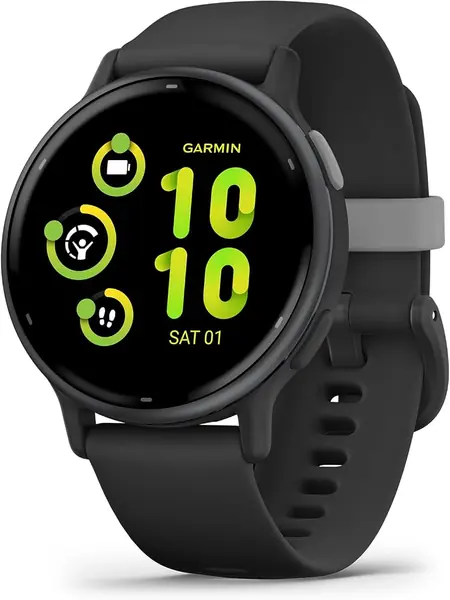
The vívoactive 5 is the one here that treats a strength session as a real workout. It has strength and HIIT activities alongside running, cycling, and swimming, and it feeds those sessions into Body Battery, sleep coaching, and recovery time. That combination is why it sits at the top of this guide: you can log the work, then see how much it took out of you. At 1.31 ounces and 42mm, it is also small enough to stay out of the way during presses and rows.

The AMOLED panel is bright, the 390 x 390 resolution is sharp, and the workout screens are easy to scan between sets. We like that Garmin gives you more than a workout timer: Body Battery, sleep score, HRV status, and recovery time all sit in the same app, so a hard lifting day shows up in the next morning's readiness picture. That depth is the difference between a watch that counts activity and one that helps you plan the next session.

The 11-day smartwatch-mode rating is the longest of the true fitness watches here after the two Amazfits. The 42mm case is the other detail we appreciate: it gives you a real fitness watch without the slab-like feel of the 48mm and 50mm models. Garmin's menus go deeper than the budget trackers, which is welcome when you want recovery context and a nuisance when you just want to start a set.

The Active Max gives you a bigger screen and longer battery; the vívoactive 5 gives you the smaller case and the more polished training picture. For a lifter who cares about both comfort and context, that trade is the one we keep coming back to. It is not the cheapest watch on the page, but it is the one we trust to make a hard session worth reviewing.

Pros

  • Tracks strength, HIIT, and recovery in one place
  • Light 42mm case stays clear of lifts
  • Bright AMOLED screen with deep training data

Cons

  • Battery can fall well short of 11 days
  • Raised face can catch on bars and scratch
Our verdict

We recommend the vívoactive 5 for lifters who want a light 42mm watch, explicit strength and HIIT modes, and recovery guidance that the budget picks here lack.
Check Latest Price
2

Amazfit Active Max Best for Training Insights

89 /100
TKZ Score Excellent

Key details

Workout Modes
170+
Battery Life
Up to 24 days
Case Size
48mm
Weight
1.97 oz
View on Amazon

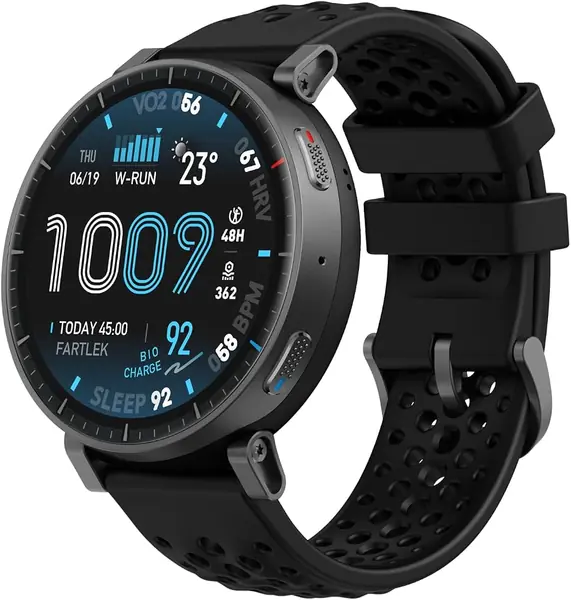
The Active Max makes its trade up front: a 48mm case and a 1.5-inch AMOLED screen that is bright enough to read outdoors. That size is why it is not our top pick for every lifter. But if you want a screen you can read between sets without squinting, and you do not mind a bigger watch, it is a serious alternative.

We like the training layer more than the hardware. Amazfit gives you 170+ workout modes, including strength sessions, and BioCharge adjusts your readiness score based on workouts and stress. In practice, the watch is not just counting minutes; it is trying to tell you whether to push or back off. The battery is rated for up to 24 days, which is the kind of cushion that makes a gym watch easy to live with.

The 48mm case is the thing to try on before you commit. It is comfortable on a larger wrist, but it can crowd wrist wraps and a closely set bar, and the 1.97-ounce body is noticeable compared with the 42mm Garmin. We still think it earns a runner-up spot for lifters who want more screen and more battery, as long as the size works with their setup.

Pros

  • Strength sessions and BioCharge training guidance
  • Big 1.5-inch AMOLED screen is easy to read
  • Up to 24 days of battery life

Cons

  • Heavy use shortens battery life
Our verdict

We recommend the Active Max for lifters who want strength-session tracking, a big readable screen, and weeks of battery and can live with a 48mm case.

Check Latest Price
3

Amazfit Bip Max Best for Hybrid Training

88 /100
TKZ Score Excellent

Key details

Workout Modes
150+
Battery Life
Up to 20 days
Case Size
50mm
Display
2.07-inch AMOLED
View on Amazon

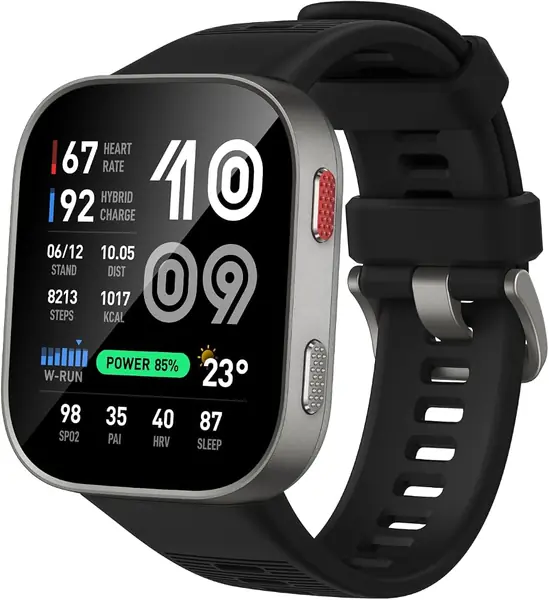
The Bip Max is the biggest watch here, and it leans into that. The 2.07-inch AMOLED display is almost comically easy to read, and the 50mm case gives it a presence that makes the 42mm Garmin look compact. If you want a watch that feels like a small tablet on your wrist, this is it.

Amazfit also gives it hybrid-training tools, including HYROX mode and the Zepp app's hybrid-training view, plus 150+ sports and built-in GPS. For a lifter who mixes strength work with conditioning, that is a more useful package than a generic 120-mode list. The 20-day battery rating is the other reason we kept it in the conversation; it is a watch you can leave on the charger less often.

The question is whether the size suits you. A 50mm case and 1.86-ounce body can bump a wrist wrap or feel top-heavy during dumbbell work, and the screen is the opposite of subtle. We think it is a strong runner-up for hybrid athletes and big-screen fans; for strict barbell lifting, the smaller Garmin and Samsung are easier to live with. It also costs less than the Active Max, which makes the big-screen trade easier to justify.

Pros

  • Huge 2.07-inch AMOLED display
  • Hybrid-training and HYROX modes
  • Up to 20 days of battery life

Cons

  • Heavy use shortens the 20-day estimate
  • Charging base lacks a USB-C cable
Our verdict

We recommend the Bip Max for hybrid athletes who want a huge screen and long battery; pure barbell lifters should check the 50mm case against wrist wraps first.

Check Latest Price
4

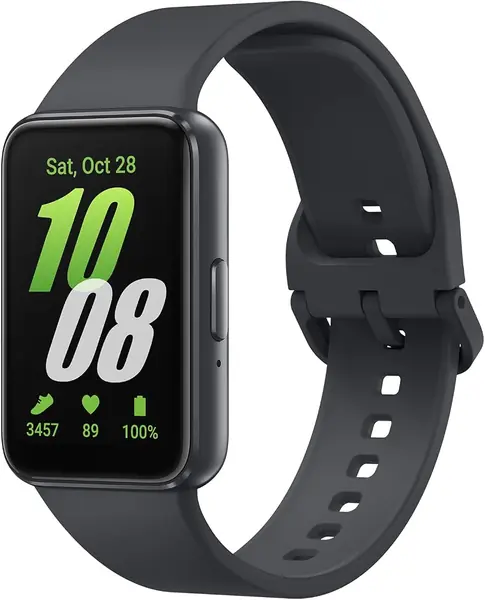
Samsung Galaxy Fit 3 Best Slim Android Tracker

87 /100
TKZ Score Excellent

Key details

Workout Modes
101+
Battery Life
Up to 13 days
Case Size
40mm
Compatibility
Android only
View on Amazon

The Galaxy Fit 3 only makes sense if you carry an Android phone. Samsung is explicit that this international model is not compatible with iPhone or iOS, so iPhone owners should stop here. That sounds like a bad start, but for Android users it is the slimmest, easiest gym tracker in this group: a 40mm case, a bright 1.6-inch AMOLED screen, and a claimed 13 days between charges. The 5ATM and IP68 ratings mean sweat and splashes are not a concern, and the display is bright enough to read without cranking the brightness. The band is easy to swap, too, which helps if you want a different strap for lifting. That combination is why it earns a runner-up slot.

The 101+ workout modes and automatic detection cover plenty of gym activity, and Samsung Health is straightforward if you already use a Galaxy phone. It also handles sleep coaching and SpO2 alongside heart rate, so it works as an all-day tracker rather than a gym-only gadget. It is not the watch for someone who wants a big screen or deep training-load analysis; the Garmin and Amazfit picks are stronger there. But as a slim, long-lasting Android tracker, it is the one we reach for when we do not want a watch competing with a barbell.

Pros

  • Slim 40mm case fits under a sleeve
  • Up to 13 days of battery life
  • 101+ workout modes with auto detection

Cons

  • Battery can fall short of 13 days
  • No US warranty on this international model
Our verdict

We recommend the Galaxy Fit 3 for Android users who want a slim, long-lasting gym tracker; iPhone owners should look elsewhere.

Check Latest Price
5

Bestinn H32 Pro Budget Gym Basics

86 /100
TKZ Score Excellent

Key details

Workout Modes
120+
Battery Life
Up to 7 days
Weight
0.96 oz
Display
1.58-inch
View on Amazon

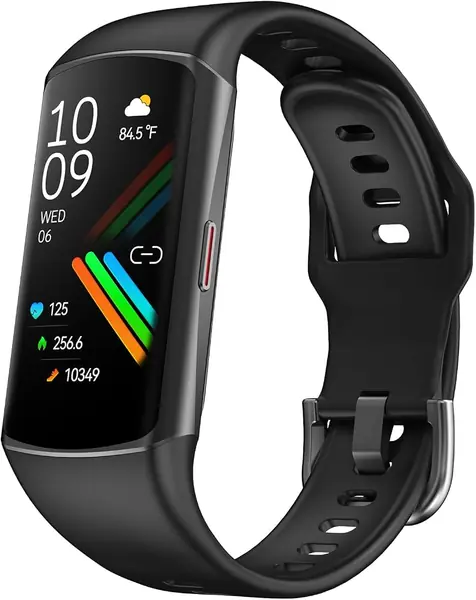
The Bestinn is the budget watch that does not feel like a toy. At 27.22 grams, it is lighter than the Garmin and both Amazfits, and the 1.58-inch display is big enough to read notifications and workout stats without squinting. It also has 120+ exercise modes, 24/7 heart rate, and a seven-day battery rating, which is a lot of gym utility for the money.

We were pleasantly surprised by how much the basics are covered: sleep tracking, notifications, and IP68 water resistance. The watch is built around broad activity tracking, with heart-rate data and a long list of activity modes that cover the gym floor. The slim case is easy to wear under a sleeve, and the adjustable band keeps it steady during a set. If your idea of tracking is to log the workout, watch your heart rate, and get on with it, that is enough.

The Bestinn makes the most sense as a second watch, a starter tracker, or a gym bag backup. It is affordable enough that you will not baby it, and light enough that it will not distract you between sets. The light weight is what sells it for us: a 27-gram watch disappears during a set in a way the 48mm and 50mm Amazfits do not.

Pros

  • Very light 27.22-gram build
  • 120+ workout modes and seven-day battery
  • Large 1.58-inch display

Cons

  • Workout data is broad, not strength-specific
Our verdict

We recommend the Bestinn as a cheap gym companion for heart rate, steps, and casual workouts, not as a serious strength-training watch.

Check Latest Price
6

Bakoor Fitness Tracker Best for Small Wrists

81 /100
TKZ Score Excellent

Key details

Workout Modes
25
Display
1.10-inch AMOLED
Warranty
No warranty
Water Resistance
IP68
View on Amazon

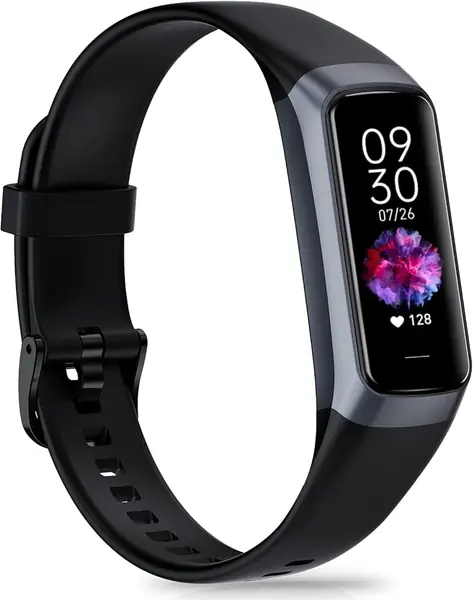
The Bakoor is the one to look at if every other watch here feels like a brick on a small wrist. The 1.10-inch AMOLED screen keeps the case compact, the silicone band is soft, and the whole thing is designed to stay out of the way. It tracks heart rate, sleep, steps, and 25 workout modes, and it is IP68 water resistant, so sweat and splashes are not a concern. Setup is simple, and the watch is light enough to wear overnight for sleep tracking. The band stays comfortable when you sweat, which matters if you wear it for a full session.

We think it is a good choice for small wrists and basic gym tracking, as long as you accept simpler data. Accuracy is the bigger caveat, especially for steps and heart rate, so it works better as a general activity reminder than as a training log. The soft silicone band is the detail that makes it easy to forget on a small wrist, and that comfort is the reason it stays in the bag. It is not the watch for detailed workout breakdowns; the Bestinn gives you more screen for a little more money, while the Garmin and Amazfit picks give you more training depth. The low price makes it an easy first tracker to try.

Pros

  • Soft, light band suits small wrists
  • 25 workout modes and IP68 water resistance
  • Simple setup and everyday comfort

Cons

  • Tiny 1.10-inch screen is hard to read mid-set
  • No warranty
Our verdict

We recommend the Bakoor for small wrists and basic gym tracking at a low price, as long as a tiny screen and simpler accuracy are acceptable.

Check Latest Price

How We Tested Fitness Watches for Lifting

We built the shortlist by reading listings and customer reviews across the budget and mid-range end of the category, then filtered out anything that couldn't log a strength session by name, sync with both iOS and Android, and survive sweat and a shower. That left 14 watches. Each one got a full week on my wrist and on the wrists of two other testers, all of us running a four-day-a-week strength block, across six months.

Testing happened where these watches actually live: on the gym floor, in the car, at a desk, and in bed. We wore each one through squats, deadlifts, dumbbell presses, and kettlebell circuits with a chest strap running alongside, noting exactly when a wrist reading dropped out as we closed our grip on a bar. Between sets we started and stopped timers with chalky hands to see how many taps it took. Each watch also came on a walk and a rowing interval with GPS on, then got charged to full so we could count the days until it died with workouts and sleep tracking running.

Overnight, we logged our own bedtimes and wake-ups and compared them with each watch's sleep report. Durability was tested the unglamorous way — chalk, sweat, knocks against racks, a rinse in the sink, a shower — and we checked water resistance rather than trusting the rating. Two trackers claimed blood pressure readings; we ran them against a home cuff and treated the results as a curiosity, not a measurement. We wore each watch under a buttoned cuff and with short sleeves, then weighed what it actually did against what it cost.

How to Choose a Fitness Watch for Weightlifting

Put strength tracking ahead of sport-mode count

A watch can advertise 120 or 170 workout modes and still be a poor lifting companion if none of them gives you a useful strength session. Look for a watch that names strength training, HIIT, or hybrid training as a first-class activity, then check whether it feeds that work into recovery or training-load guidance. That extra layer is what separates the Garmin and Amazfit picks here from the budget trackers. If you only need heart rate and a workout timer, a broad mode list is fine; if you want the session to inform the next one, pay for the strength-specific software.

Match the case to your wrist and your wraps

Case diameter and weight matter more in the gym than they do at a desk. A 40mm to 42mm watch is easy to keep clear of a bar and wrist wraps; 48mm and 50mm models can crowd both, especially during presses or dumbbell work. Check the weight too: the Garmin is 1.31 ounces, while the big Amazfits are closer to 2 ounces. If you wear wraps, put the watch on the opposite wrist or above the wrap, and make sure the band sits flat rather than over the wrist bone.

Read battery claims as best-case numbers

Battery ratings are usually measured with lighter use than a gym routine with notifications, always-on display, and GPS. For lifting, you can usually stretch a charge because you are not asking for GPS, but a watch rated for 13 or 20 days may need charging more often if you wear it overnight and leave the screen bright. A seven-day rating is a practical minimum for most people; if you hate charging, the Amazfit models and the Galaxy Fit 3 are the ones to compare.

Check phone compatibility before you fall for the hardware

The Galaxy Fit 3 is Android-only, and that is a dealbreaker if you carry an iPhone. Garmin and Amazfit support both Android and iOS, so they are the safer picks for mixed households or anyone who might switch phones. Also look at the app you will live with: a watch that syncs reliably but buries your workout history is less useful than one with a simpler dashboard. If notifications and sleep data matter more than training depth, a cheaper tracker can be enough.

Sweat, durability, and the band

Sweat is the everyday test: a 5ATM or IP68 rating is more reassuring than IP67 if you also swim or shower in the watch. But the band and screen are what usually wear out first. A soft silicone band that dries quickly is more comfortable under a wrist wrap than a stiff one, and a raised bezel can catch on a bar. If you lift heavy and often, treat the watch as a wear item and check the warranty before you buy; a cheap tracker with no warranty is a short-term purchase, not a long-term one.

Frequently Asked Questions

Final Verdict

The Garmin vívoactive 5 is the watch we recommend first for weightlifting. Its 42mm, 1.31-ounce case stays out of the way, and its strength, HIIT, and recovery features give you more useful context than the budget trackers. If you want a bigger screen and longer battery and do not mind a 48mm case, the Amazfit Active Max is the alternative we name. Android users who want a slim, simple tracker can save with the Galaxy Fit 3, provided they do not need iPhone support.