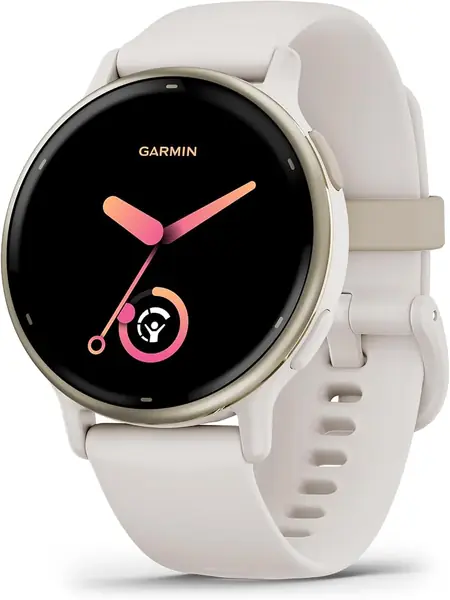
Best Garmin Watches for Cycling

Every cyclist I know has argued with a watch: you finish a ride, the distance is off by half a mile, the heart rate graph is a staircase, and the battery is somehow in the teens. A Garmin earns its spot on your wrist by being right — about the route, your effort, and how wrecked you'll be the next morning. The trouble is that a dozen models look nearly identical on a product page until you're three hours into a ride and realize the one you bought can't show you a map.

My team and I spent seven months wearing eight of them through intervals, commutes, trainer sessions, and overnight. The spec that changes your day isn't the sensor count — it's whether the watch is comfortable enough to sleep in, since recovery scores only work if it stays on at 2 a.m. Wrist heart rate, meanwhile, still lags a chest strap during hard efforts, so it's worth knowing what you're actually buying.

The picks below held up on every count: accurate traces, batteries that outlast long rides, screens you can read in noon sun, and cases we didn't mind wearing to dinner. These are for cyclists who want one watch for training and everything else.

The Best Garmin Watches for Cycling

1

Garmin Forerunner 265 Best Overall
94 /100
TKZ Score Outstanding

Key details

Display
1.3 in AMOLED
Weight
1.66 oz
Battery
13 days / 20 hours GPS
GPS
Multi-band
View on Amazon

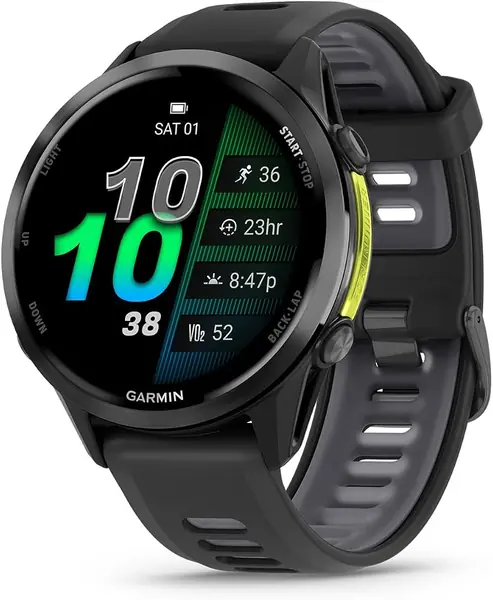
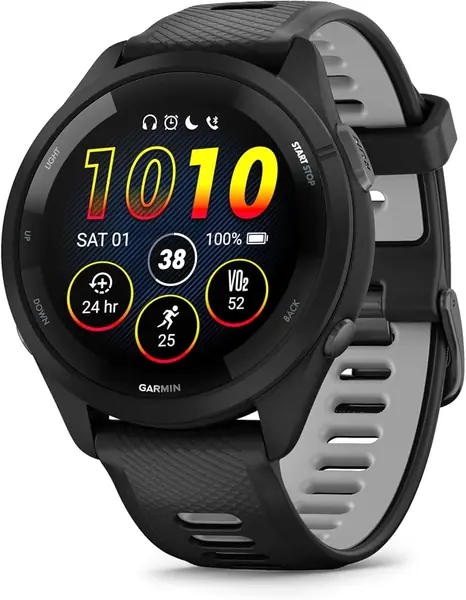
The Forerunner 265 is the watch we reach for when the ride is the point but the watch still has to disappear on the wrist. At 47 grams, it is light enough to forget during a long day, and the 1.3-inch AMOLED screen gives you speed, distance, heart rate, and training cues without the bulk of a mapping watch. That balance is why it is our default for cyclists.

The ride experience is built around quick glances. We appreciated the physical buttons when our hands were sweaty or gloved, and the touchscreen is there for everything else. Multi-band GPS is the feature that matters on tree-covered roads, and the 20-hour GPS rating leaves room for most century rides. The 13-day smartwatch battery means charging is a weekend habit rather than a nightly chore.

Training readiness and daily suggested workouts give the 265 a second life off the bike, and the 8GB of storage covers music for phone-free rides. We also liked how little the case interfered with sleep and everyday wear; this is a watch you can leave on. That matters when you are training most days and do not want to swap devices at the door.

Pros

  • Light 47 g case for all-day wear
  • Multi-band GPS for tricky reception
  • 13-day smartwatch battery and 20-hour GPS
  • Training readiness and daily suggested workouts

Cons

  • No built-in route maps
Our verdict

For most cyclists, the Forerunner 265 offers the best balance of ride data, battery, and all-day comfort in this group, and it is the one we recommend first.
Check Latest Price
2

Garmin Forerunner 965 Best for Mapping

93 /100
TKZ Score Outstanding

Key details

Display
1.4 in AMOLED
Weight
1.87 oz
Battery
23 days / 31 hours GPS
Navigation
Full-color maps
View on Amazon

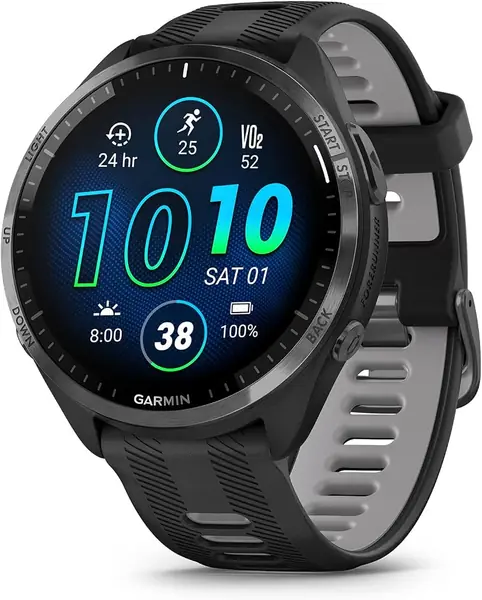
Full-color maps are the reason the Forerunner 965 sits alongside the 265, and they change how a ride feels when you are away from home. The 1.4-inch AMOLED display is bigger and easier to scan, the titanium bezel keeps the case from feeling crude, and the 23-day smartwatch rating plus 31 hours in GPS mode make it a better companion for long, unsupported days.

We found the extra screen space most useful when following a route or checking climb data, and the built-in maps mean you can glance at a turn without pulling out a phone. The 32GB storage is generous for music, and the multi-band GPS is the same accuracy-focused setup we like on the 265. It is still a running-first watch, but cycling is clearly part of the brief.

Mapping is a tool for unfamiliar roads; if you know every turn, the 265 is enough. For touring, racing unsupported, or simply liking to see where you are, the 965 is the one we take. The larger screen is the part we notice most when the route gets complicated, and the battery cushion is why we trust it on a full day out.

Pros

  • Full-color built-in maps for unfamiliar routes
  • 31-hour GPS battery for long days
  • Large 1.4-inch AMOLED display
  • Titanium bezel and 32 GB storage

Cons

  • Heavier than the Forerunner 265
Our verdict

Choose the Forerunner 965 if you want built-in maps and a longer GPS leash for big days; otherwise the 265 is the easier recommendation.

Check Latest Price
3

Garmin Forerunner 165 Best Value

92 /100
TKZ Score Outstanding

Key details

Display
1.2 in AMOLED
Weight
1.38 oz
Battery
11 days / 19 hours GPS
Activity Profiles
25+
View on Amazon

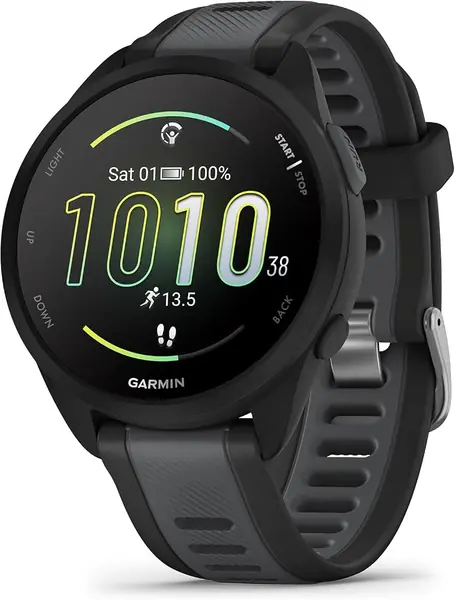
The Forerunner 165 is the least expensive way here to get an AMOLED Forerunner, and that matters more than the spec sheet suggests. The 1.2-inch screen is bright and easy to read, the 43mm case suits smaller wrists, and the watch weighs only 1.38 ounces. For commuting, club rides, and general fitness, we think it gets the cycling essentials right.

We like that the 165 keeps the same button-and-touchscreen layout as the more expensive models, so it never feels like a stripped-down toy. The 25+ activity profiles include cycling, and daily suggested workouts and Garmin Coach give you something to follow if you want structure. The 19-hour GPS rating is enough for most long rides, and the 11-day smartwatch battery keeps it off the charger.

The trade-off is positioning accuracy. The 265 adds multi-band GPS, which is the better choice for dense tree cover, city canyons, and precise ride files. The 165 also lacks the deeper training-readiness tools of the 265. Neither matters for a casual rider who mainly wants distance, speed, and heart rate; they matter if you train by pace and care about every split.

Pros

  • Bright 1.2-inch AMOLED screen
  • Light 43 mm, 1.38 oz case
  • 25+ activity profiles include cycling
  • 19-hour GPS and 11-day smartwatch battery

Cons

  • No built-in route maps
Our verdict

The Forerunner 165 is the budget pick we recommend to most new cyclists, with a bright screen and enough GPS battery for regular rides.

Check Latest Price
4

Garmin Forerunner 55 Best Bare-Basics Pick

91 /100
TKZ Score Outstanding

Key details

Display
1.04 in LCD
Weight
1.31 oz
Activity Profiles
17
Water Resistance
50 m
View on Amazon

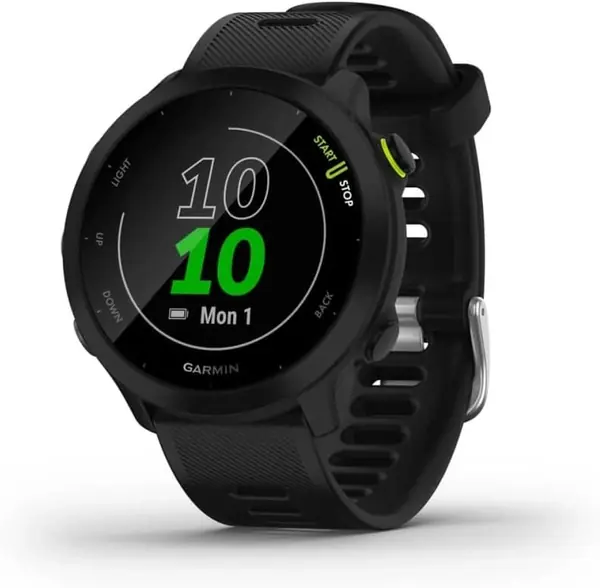
The Forerunner 55 is the watch for someone who wants fewer decisions: a simple LCD, physical buttons, and 17 activity profiles, including cycling. There is no touchscreen and no attempt to be a lifestyle watch, which is exactly why we like it as a first GPS watch or a knock-around option.

We found the button layout easy to use with sweaty hands, and the 37-gram case all but disappears on the wrist. It records distance, speed, heart rate, and laps without asking you to learn a menu system, and the 50-meter water resistance covers rain and sweat. The small screen is not the place to study maps, but it shows the essentials.

The 55 is also a reminder that more features can get in the way. It has the core ride tools and a simple interface, and it does not pretend to be a training coach. If you want daily suggested workouts, a brighter display, or multi-band GPS, the 165 and 265 are the step up; if you want to press start and ride, the 55 is enough.

Pros

  • Light 37 g case
  • Simple physical button controls
  • 17 activity profiles include cycling
  • 50 m water resistance

Cons

No notable drawbacks to flag.

Our verdict

The Forerunner 55 is the right choice for a simple, light ride logger that asks nothing of you beyond pressing start.

Check Latest Price
5

Garmin vívoactive 6 Best Everyday Fitness Watch

90 /100
TKZ Score Outstanding

Key details

Display
1.2 in AMOLED
Weight
1.3 oz
Sports Apps
80+
Brightness
2,000 nits
View on Amazon

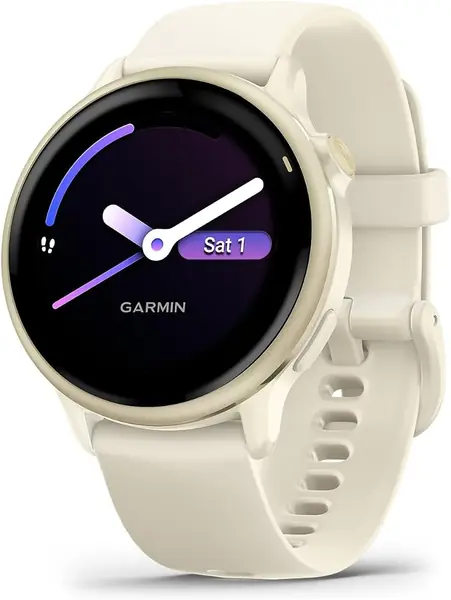
The vívoactive 6 is the one we hand to someone who wants a cycling-capable watch that still looks like an everyday watch. The 42mm case is compact, the 1.2-inch AMOLED screen is rated at 2,000 nits, and the whole thing weighs 1.3 ounces. On a smaller wrist, that combination is easier to live with than a 46mm Forerunner.

We appreciate the 80+ sports apps, which include cycling, and the daily suggested workouts give the watch a useful training brain without turning it into a dedicated running tool. The 11-day smartwatch battery and 8GB of storage cover the basics, and the bright display is the easiest to read in direct sun among the compact watches here. The health features, including Body Battery and sleep coaching, are why we keep wearing it after the ride.

It is not the deepest training watch in this group. The 265 has more advanced ride metrics, and the smaller screen shows fewer data fields at once. For commuting, fitness rides, and everyday wear, though, that is a fair trade. The 1.3-ounce case is the part that keeps it on our wrist after the ride.

Pros

  • 2,000-nit AMOLED display
  • Compact 42 mm, 1.3 oz case
  • 80+ sports apps include cycling
  • 11-day smartwatch battery

Cons

  • No built-in route maps
Our verdict

The vívoactive 6 is our pick for a smaller wrist and everyday wear, with enough cycling tracking for commuting and fitness rides.

Check Latest Price
6

Garmin Venu 3 Best for Calls

89 /100
TKZ Score Excellent

Key details

Display
1.4 in AMOLED
Battery
14 days
Sports Apps
30+
Calls
Speaker and mic
View on Amazon

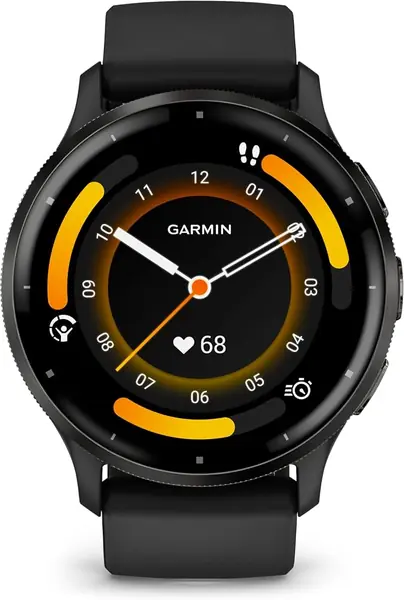
The Venu 3 is the watch for a cyclist who wants one device for rides and real life, and the party trick is the built-in speaker and microphone: you can make and take calls from your wrist when it is paired to your phone. That is a genuinely useful convenience when you are covered in sweat and your phone is buried in a jersey pocket.

We like the 1.4-inch AMOLED display and the 14-day smartwatch battery; this is a big, polished watch that does not need a charger every night. The 30+ sports apps include cycling, and the 8GB storage and health features make it a strong everyday companion. It handled quick glances at speed and heart rate well, and the screen is easy to read outdoors.

The catch is that it is a lifestyle watch first. The Forerunners go deeper on training metrics, and the Venu 3 is happiest as an all-day watch rather than a dedicated training computer. If you want calls, a big screen, and a watch that looks at home off the bike, it makes more sense than a running-first model. The 14-day battery is the detail that keeps it on our wrist, even on lighter weeks.

Pros

  • Calls from the wrist
  • 14-day smartwatch battery
  • Large 1.4-inch AMOLED display
  • 30+ sports apps include cycling

Cons

  • No built-in route maps
  • Larger 45 mm, 1.6 oz case
Our verdict

The Venu 3 is the best choice here if you want wrist calls and a polished everyday watch with enough cycling tracking for regular rides.

Check Latest Price
7

Garmin Forerunner 970 Best Premium Multi-Sport Watch

88 /100
TKZ Score Excellent

Key details

Display
1.4 in AMOLED
Battery
15 days / 26 hours GPS
Lens
Sapphire
Storage
32 GB
View on Amazon

The Forerunner 970 is the halo model, and it feels like one: a sapphire lens, a titanium bezel, a built-in flashlight, and the brightest AMOLED display in the Forerunner line. It also carries a 15-day smartwatch rating, 26 hours in GPS mode, and 32GB of storage. For a cyclist who races triathlon or trains in the dark, those are not vanity specs.

We used the flashlight more than we expected on early starts and late finishes, and the sapphire lens is the kind of detail we appreciate on a watch that gets knocked against bars and doorways. The 1.4-inch screen is easy to read at speed, and the multi-sport profiles cover swim-bike-run without switching devices. The 26-hour GPS rating is the real draw for long training days.

The 970 is overkill for most riders. The 265 covers the cycling essentials, and the 970 adds depth that only matters if you race or train with a plan. That does not make the watch less capable; it makes the upgrade easier to question.

The flashlight, sapphire, and longer GPS rating are what separate it from the cheaper Forerunners, and those are the parts we notice when we switch back. They are also the reasons the 970 feels expensive for a watch that spends most of its life on familiar roads. On a big day, though, it is the one we pack.

Pros

  • Sapphire lens and titanium bezel
  • Built-in LED flashlight
  • 26-hour GPS and 15-day battery
  • Triathlon and multisport profiles

Cons

  • Some advanced metrics need the HRM 600 monitor
Our verdict

The Forerunner 970 is worth it for triathletes and high-mileage riders who want sapphire, a flashlight, and a long GPS rating; most cyclists can stop at the 265.

Check Latest Price
8

Garmin vívoactive 5 A Light Everyday Tracker at a Lower Price

87 /100
TKZ Score Excellent

Key details

Display
1.2 in AMOLED
Weight
1.3 oz
Battery
11 days
Sports Apps
30+
View on Amazon

The vívoactive 5 is the older, less expensive sibling of the 6, and the comparison tells the story. You get the same 42mm size, a 1.2-inch AMOLED display, 30+ sports apps including cycling, and an 11-day smartwatch rating. At 1.3 ounces, it is one of the lightest watches here.

We still see the appeal for a casual rider or a second watch: it is comfortable, bright, and packed with health features such as Body Battery and sleep coaching. The touchscreen and buttons work well, and the screen is easy to read at a glance. For commuting and fitness rides, it covers the basics without making you feel like you are wearing a training computer.

The 6 is the better long-term buy. It adds a much brighter 2,000-nit screen and a larger 80+ sports-app list, and its newer design feels more current in daily use. The 5 remains a comfortable, light everyday tracker, and its lower price makes it a reasonable second watch or a first Garmin for someone who mostly wants health tracking.

Where the 5 still wins is on weight and simplicity; at 1.3 ounces it disappears on the wrist in a way the bigger Forerunners do not. That is the reason to pick it as a second watch or a first Garmin for health tracking, not as a training upgrade. The battery life is the thing to watch: the 11-day rating can fall short in real use.

Pros

  • Light 1.3 oz case
  • 1.2-inch AMOLED display
  • 30+ sports apps include cycling
  • 11-day smartwatch battery

Cons

  • Battery life can fall short of the 11-day rating
  • No built-in route maps
Our verdict

The vívoactive 5 is a comfortable, light everyday tracker for casual riders, but the vívoactive 6 is the better buy for most people.

Check Latest Price

How We Tested Eight Garmin Watches Over Seven Months

We started by pulling Garmin's current lineup and cutting anything that couldn't run a dedicated bike profile, pair with a power meter and a chest strap, or push a structured workout to the wrist. From there we spread our picks across price tiers, so there'd be a sensible option for someone replacing a five-year-old hand-me-down and for someone buying their first watch. Eight made the cut, and each one stayed on a tester's wrist for the full seven months.

Every watch rode the same 22-mile loop with a chest strap and power meter paired, which let us lay two GPS traces on top of each other and see exactly where one cut a corner under tree cover or between buildings. We mixed in indoor trainer intervals, gravel rides, rainy commutes, and at least one long weekend ride per watch. Battery was measured honestly rather than quoted: charged to full, GPS running, percentage logged after five hours — then a separate count of how many days it lasted with sleep tracking and notifications left on.

We wore each one to bed for at least two weeks and compared the sleep and recovery scores against how we actually felt, paying closest attention to the morning after a hard session. Screens were checked in direct noon sun and through polarized lenses, and we built routes and workouts on the watch itself with sweaty hands to count how many taps it took. Finally, we watched the boring stuff: scratched glass, stretched bands, paired sensors that dropped mid-ride, whether a ride synced to the app without a fight, and whether we'd wear the thing anywhere but on the bike.

How to Choose a Garmin Watch for Cycling

Start With the Cycling Profile, Not the Sports Count

Every watch here names cycling as an activity, which is the baseline. From there, look at the ride screen rather than the total sports count: speed, distance, heart rate, lap data, and the fields you actually glance at mid-ride. If you only record rides, the Forerunner 165 or 55 is enough. Structured workouts, recovery scores, and training readiness are where the 265, 965, and 970 separate themselves. We think most cyclists overpay for metrics they never open, so choose the screen and data you use, not the longest feature list.

Decide Whether You Need Maps on Your Wrist

Mapping is the clearest fork in this group. The Forerunner 965 is the one here that lists full-color built-in maps, which helps on unfamiliar routes and long days; GPS alone only records where you went. If you always ride known roads or use a bike computer, skip maps and save weight. If you tour, race unsupported, or ride new areas, the 965's screen and maps justify the step up. Do not assume a watch maps a route just because it has GPS.

Match GPS Battery to Your Longest Ride

Smartwatch-mode days are not the number that matters on a century. Compare GPS-mode ratings: the Forerunner 265 lists 20 hours, the 965 31 hours, the 970 26 hours, and the 165 19 hours. Those are manufacturer ceilings, and screen brightness or settings can shorten them. A typical three-to-five-hour ride leaves plenty of margin on any of these; ultra events and multi-day tours are where the bigger number earns its keep. Match the rating to your longest day, then charge before every big ride.

Choose the Case Size You'll Actually Wear

Case size is a comfort decision first. The 42mm vívoactive 6 and 45mm Venu 3 sit very differently from the 46mm and 47mm Forerunners, and the 55 is a listed 37 grams. A 1.2-inch screen is easier on a small wrist; a 1.4-inch display is easier to scan at speed. We prioritize a snug fit for heart rate and a case that does not catch on a jacket. If you are between sizes, the smaller watch is usually the one you keep wearing.

Frequently Asked Questions

Final Verdict

For most cyclists, the Garmin Forerunner 265 is the watch we recommend: it has the screen, battery, multi-band GPS, and training data that matter on the bike without the weight or price of a mapping model. It is the one we reach for first, and the one that fits the widest range of riders.

If your rides regularly go somewhere new, the Forerunner 965's full-color maps and 31-hour GPS rating justify the step up. On a tighter budget, the Forerunner 165 gets the essentials right, while the 55 is the simplest option if buttons and a small screen suit you.