Best Wired Earbuds for Running of 2026

The best argument for wired earbuds on a run is that they can't die at mile eight. The worst is everything else a cord drags along with it: the tug when you turn your head, the bud that slips out of a sweaty ear, the pair that quits for good after a few weeks of salt, sun, and rain. I've retired more than one set exactly that way.

My team and I spent the past four months running, lifting, and commuting with 16 pairs, and the differences rarely came down to sound alone. The plug matters more than most shoppers expect — a lot of phones don't have a headphone jack anymore, so USB-C versus 3.5mm is a real deciding factor, not an afterthought. Ear hooks and memory wire are the other fork in the road: they separate the pairs that stay put from the ones you're forever reseating with a sweaty finger.

Here's the thing nobody tells a first-time buyer: you'll adjust the fit far more often than the volume. Everything below survived months of real use, and between them they cover the spread — 3.5mm and USB-C, open and sealed, anchored and minimal.

The Best Wired Earbuds for Running

1

JBL Endurance Run 3 Best Overall
89 /100
TKZ Score Excellent

Key details

Connection
3.5 mm jack
Fit Design
FlipHook, in-ear or behind-ear
Weight
0.59 oz
Water And Dust Rating
IP65
View on Amazon

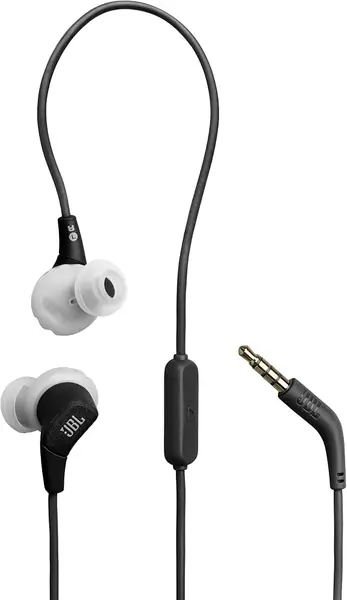
IP65 is the number that separates the JBL Endurance Run 3 from every other pair on this list. That is dust-tight plus protection against water sprayed from a nozzle, more than anything else here claims, and enough that sweat and a passing shower are not things you plan a run around. The other half of the design is FlipHook, a flexible hook that flips so the buds sit either straight in your ear or hooked behind it.

That combination is why these are the pair we recommend first. Most running earbuds solve one problem and quietly create another; this one handles weather and grip together. Flipped behind the ear, the cable hangs from the hook instead of tugging at the bud, which is the difference between a pair that stays seated through a windy mile and one you keep pushing back in. Straight in the ear, there is less hardware to bump against a cap.

The sound is better than the rest of the package prepares you for. An 8 mm driver with JBL's Pure Bass tuning puts real low end under a run, and the seal is tight enough that traffic gets muffled — welcome on a greenway, worth thinking about on a road with no shoulder. At 16.8 grams with three tip sizes in the box, an hour passes without a second thought.

Pros

  • IP65 is the strongest water and dust protection here
  • FlipHook wears in-ear or hooked behind the ear
  • Light 16.8 g body with three tip sizes included

Cons

  • Single in-line button, so volume stays on your phone
Our verdict

We recommend these to most runners: IP65 handles sweat and rain, and the flip hook gives you two ways to keep them on — nothing else here covers both so completely.
Check Latest Price
2

Avantree E171 Best for Controls

88 /100
TKZ Score Excellent

Key details

Connection
3.5 mm jack
Fit Design
Soft ear hook
In-line Controls
Mic, volume, track skip
Water Resistance
Not water resistant
View on Amazon

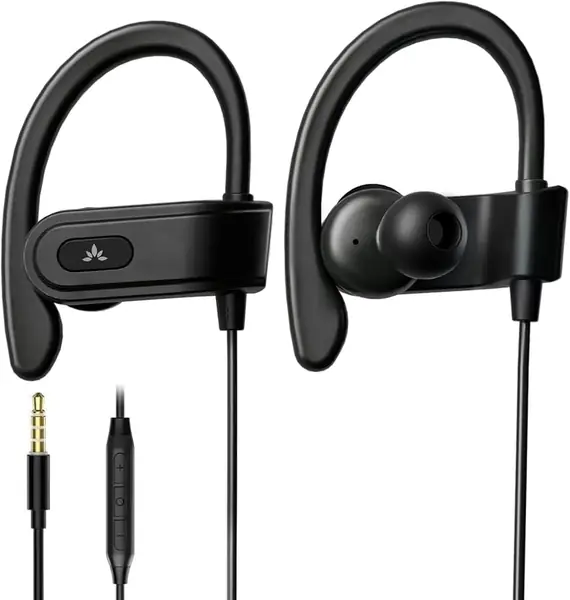
Where the JBL pair gives you a single button, the Avantree E171 gives you the whole row: volume up and down, track skip, play and pause, and a mic for calls. For a runner who leaves the phone zipped in a pocket and does not want to slow down to change a song, that is the difference between a useful pair and a fiddly one — assuming your phone honors in-line remotes, which is worth testing on day one.

Nothing about the design is clever, and that is the appeal. A soft hook sits behind the ear, three silicone tip sizes cover the fit, a shirt clip keeps the cable from swinging, and the 3.5 mm plug works with anything that still has a jack. The hook is the part we ended up trusting: soft enough for an hour without pressure, shaped so the bud does not wander during a hard session.

Sound is loud and mid-forward, with enough bass for a workout and enough clarity for a podcast, and the isolation is strong enough to make a gym treadmill sound quieter than it is. Runners with small ears tend to do well here, since the hook carries the bud rather than pressing it into the canal. Reaching up and pressing a button beats stopping to dig out a phone, and that is the whole case for these.

Pros

  • Full in-line remote: volume, tracks and calls
  • Soft ear hook holds through a sweaty session
  • Shirt clip keeps the cable from swinging

Cons

  • No sweat or water rating
Our verdict

Buy these if you change volume mid-run: the full in-line remote, soft hooks and steady sound make a phone-in-pocket run effortless.

Check Latest Price
3

MEE audio M6 Sport Best for Sweaty Runs

87 /100
TKZ Score Excellent

Key details

Connection
3.5 mm jack
Fit Design
Memory-wire ear hooks
Included Tips
6 sets
Water Resistance
IPX5
View on Amazon

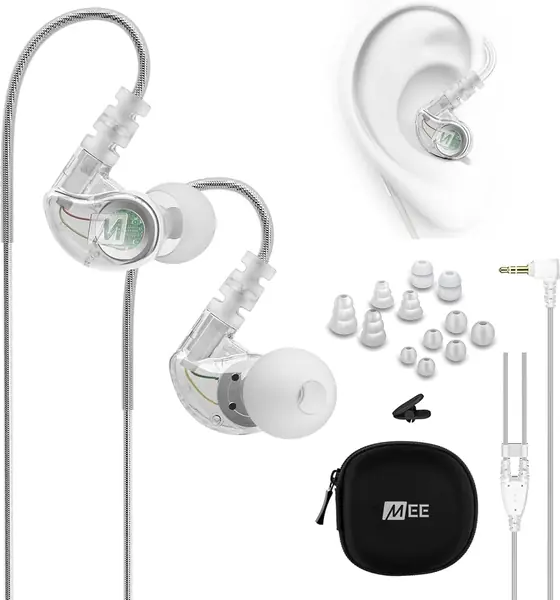
IPX5 covers sweat and rain spray, the hooks are memory wire you bend to the shape of your own ear, and the box holds six sets of tips, a shirt clip and a hard case. For a pair near the bottom of the price range here, that is an unusual amount of kit.

Memory wire is the feature worth understanding: the section that runs over your ear is bendable metal inside silicone, so you mold it once and it holds that shape instead of springing back. That is what keeps the bud seated when you turn your head or wipe your face — which is why these are the pair we hand to heavy sweaters. The flip side is a minute of fiddling at the start: seat the bud, bend the wire over the ear, then work through the tip sizes until the seal holds without pressure.

Isolation is the M6's real strength. With the right tip the seal shuts out gym clatter and traffic alike — helpful on a treadmill, a genuine caution on a road with no shoulder. The shirt clip and the case are the small practical touches that keep a pair alive in a gym bag.

Pros

  • IPX5 sweat and water resistance
  • Memory wire hooks mold to your own ears
  • Carrying case, shirt clip and six tip sets included

Cons

  • Lean bass on some ears
  • Some units lose a channel within months
Our verdict

The pair we hand to heavy sweaters — IPX5, memory-wire hooks and six tip sizes turn a secure fit into the default.

Check Latest Price
4

Panasonic ErgoFit RP-HJE120 Best Bare-Bones Pair

86 /100
TKZ Score Excellent

Key details

Connection
3.5 mm jack
Fit Design
In-ear, tips only
Weight
0.14 oz
Included Tips
3 sizes (S/M/L)
View on Amazon

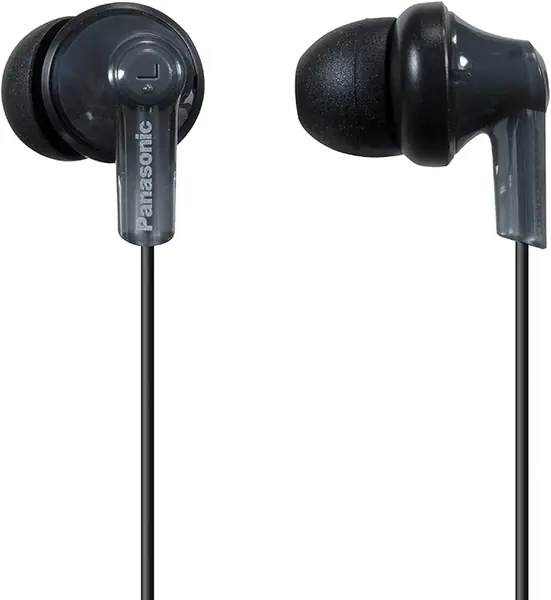
For anyone who has yanked a hook off a sore ear halfway through a run, the ErgoFit is the opposite approach: no mic, no in-line controls, no case — a four-gram bud, a silicone tip and a 3.6-foot cord.

The fit is the whole product, and it comes down to the tip. Three sizes ship in the box, and the housing is light enough that a correct seal simply sits there without support. Start with the large tip: it looks too big, seals better than the medium, and stays put through a run.

It is the pair we recommend when you want the least hardware possible in and around your ear. Sound is balanced rather than bassy — crisp highs, a low end that shows up when the track asks for it, and enough isolation to take the edge off a busy gym. The catch is comfort over distance: a tip that sits deep gets sore after forty minutes, and the three sizes are the only adjustment you get, so size up before you decide the design is not for you.

Pros

  • Four grams, so it disappears in your ear
  • Three tip sizes for a seal without hooks
  • Long 3.6-foot cord reaches a pocket

Cons

  • No ear hooks
  • Not rated for sweat or rain
Our verdict

For anyone who hates ear hooks, this is the pair we hand over: four grams, three tip sizes and nothing else to think about.

Check Latest Price
5

AIAUXAI USB-C Ear-Hook Earbuds Best USB-C

85 /100
TKZ Score Excellent

Key details

Connection
USB-C
Fit Design
Over-ear hooks
Included Tips
3 sizes
In-line Controls
Mic and volume
View on Amazon

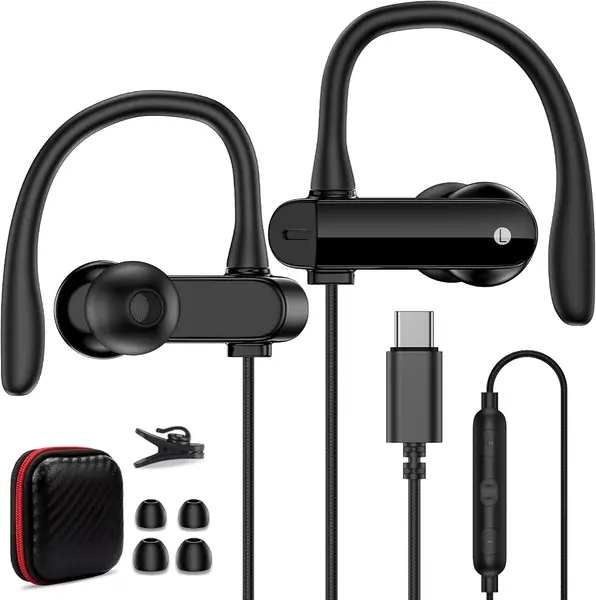
If your phone is an iPhone 15 or newer, or a recent Android that dropped the headphone jack, a 3.5 mm pair means a dongle hanging off the bottom. These AIAUXAI earbuds plug straight into USB-C, and they are the USB-C pair we point to, mostly because of the shape: over-ear hooks hold the bud where a plain USB-C bud has nothing to grab.

The rest of the package is more complete than the money suggests. Three tip sizes, a mic and volume buttons on the cord, and a small hard case all come in the box, and the plug carries a built-in DAC chip — the part that decides whether a USB-C pair plays at normal volume or barely whispers.

Sound is clear and, in our sessions, free of the lag Bluetooth adds, so there is no delay between your footfall and the beat when you are running to a tempo. Bass is where it gives ground: the 13 mm driver puts more into the midrange than the low end, so bass-heavy playlists sound leaner here than on the JBL pair.

Pros

  • USB-C plug with a built-in DAC
  • Over-ear hooks plus three tip sizes
  • In-line mic and volume buttons, with a case

Cons

  • Sweat protection is not rated
Our verdict

For a phone with no headphone jack, this is the USB-C pair we point to — hooks, in-line volume and a case for a modest outlay.

Check Latest Price
6

Philips SHS3200BK Budget Bent-Hook Fit

84 /100
TKZ Score Excellent

Key details

Connection
3.5 mm jack
Fit Design
Flexible earhook
Weight
0.35 oz
Microphone
None
View on Amazon

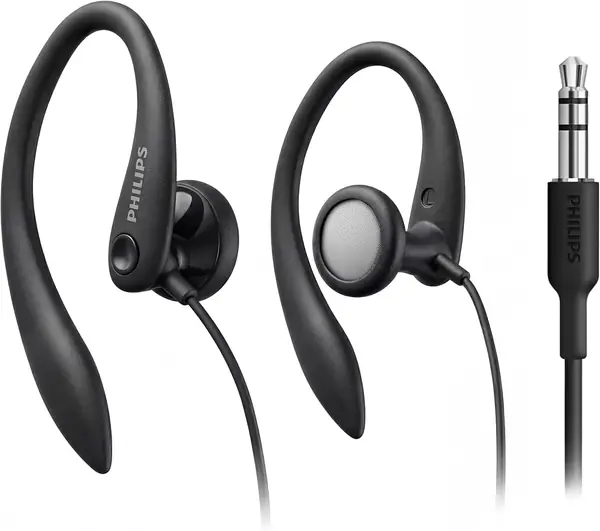
The SHS3200's earhook is a single molded piece of flexible plastic, one size for everyone. On smaller ears that is the whole story — the hook presses, and after a mile it aches. Ears it fits get years out of a very cheap pair; ears it does not get a sore ear and a spare for the desk drawer.

The rest of the design is just as plain. A 15 mm driver and a bass pipe give these a fuller, louder sound than the money suggests, with enough low end for a run and enough clarity for a podcast — though push the volume and the highs can turn gritty.

Where these shine is the hold. The molded hook carries the bud without pressing it into the canal, and at 9.93 grams there is almost nothing to notice once they are on. It is a running design that has barely changed in years, and the reason is that a bendable hook is most of what a runner needs.

We keep these in the list because that hook is the piece worth getting right, and this pair gets it right for the ears it suits — a long cable, a light body, sound that holds up, and a price that makes a second pair an easy call.

Pros

  • Flexible earhook bends and holds
  • 15 mm driver with a bass pipe
  • Under 10 g, so it barely registers

Cons

  • No microphone or in-line controls
  • No water-resistance rating
Our verdict

We keep these for the hook alone: a bendable, near-weightless design that holds on the ears it fits, at a price that makes a spare painless.

Check Latest Price
7

AIAUXAI USB-C Open-Ear Earbuds Running Near Traffic

83 /100
TKZ Score Excellent

Key details

Connection
USB-C
Fit Design
Open-ear loops
Weight
1.76 oz
In-line Controls
Mic and volume
View on Amazon

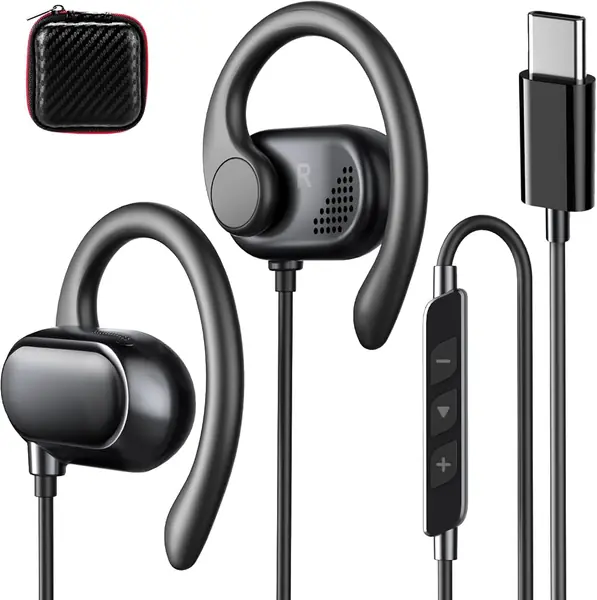
The other AIAUXAI pair here plugs into the same USB-C port but sits inside your ear; this one never enters the canal at all. A loop rests over your ear and aims sound at you from just outside, and for road running that changes what the pair is for.

An open ear is the difference between hearing a car come up behind you and being surprised by it — on a shared path, in a parking lot, on a road with no shoulder. You get a mic and volume buttons on the cord, a protective case, and a USB-C plug that needs no adapter on a recent phone.

For anyone who runs where vehicles are, this is the pair we point to, and it is the one place in this guide where letting sound in counts as a feature instead of a compromise. The trade-off is bulk: at 50 grams it is the heaviest pair here, and you feel that on a long run in a way the 16.8-gram JBL pair never makes you feel.

Pros

  • Open loop keeps traffic and voices audible
  • USB-C with mic and volume on the cord
  • Protective case included

Cons

  • No water-resistance rating
  • Fit isn't adjustable
Our verdict

Our first pick for road runners who want to hear traffic — the open loop keeps cars audible and the USB-C plug skips the dongle.

Check Latest Price
8

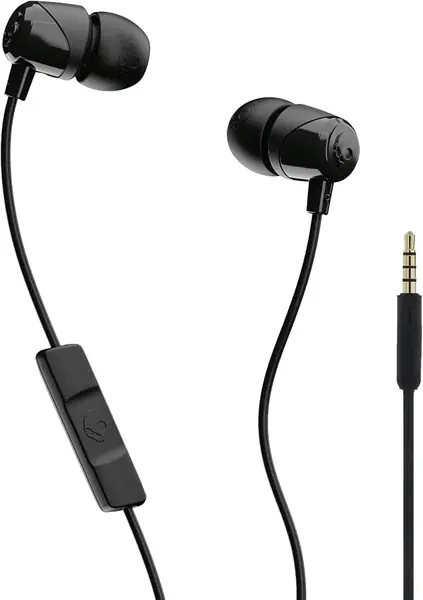
Skullcandy Jib Best for Treadmill and Desk

82 /100
TKZ Score Excellent

Key details

Connection
3.5 mm jack
Fit Design
In-ear, tips only
Included Tips
Small and medium
Cable Length
48 in
View on Amazon

The Jib is the least expensive pair here, and it wears that plainly: two sets of ear gels, no case, a 48-inch cable and a single button on the cord for play, pause and calls.

Comfort is where they beat their price. The housing is small, the silicone is soft, and a long listening session does not leave your ears sore, which is why one pair lives in a bag and another lives at a desk around here. The seal cuts more gym noise than the money suggests, and the sound is steady rather than exciting.

The two gels are small and medium, with no large, so if your canals run bigger the seal is the first thing to test — and the first thing that decides whether these work for you at all.

Plan on replacing them. The cable is thin, the strain relief at the plug is minimal, and a pair used daily is a pair that dies inside a year. Buying two at once is the practical answer, and it is the arrangement these make sense in: cheap enough that a failure costs you a trip to the drawer rather than a week of running silent.

Pros

  • Lowest price of any pair here
  • Comfortable for long listening sessions
  • Call and track button on the cord

Cons

  • No ear hooks, so hard runs work them loose
  • Cable static when the wire moves
Our verdict

The cheapest pair here, and the one we grab for treadmill runs and desk calls: comfortable, steady and no drama.

Check Latest Price

How We Tested Wired Earbuds for Running

We started with the things that actually change a run: whether the connector matches the phone you own, whether the earbud is held by an ear hook, a fin, or nothing at all, whether the cable carries an inline mic and volume control, and whether the maker claims any sweat or dust resistance. From that pool we bought 16 pairs at retail — no samples sent by brands — and rotated all of them through four months of use.

Every pair went on the same schedule: treadmill intervals, three outdoor routes in summer heat, a couple of weight sessions, and at least one rainy run each. One tester has narrow ear canals, the other sweats heavily, so we noted which earbuds stayed seated on both. At the end of each run we did a 30-second head shake and recorded which side moved.

Comfort got checked on long efforts rather than short ones — we wore each pair for a 90-minute run and logged where pressure showed up. For durability we yanked the cable at the plug, coiled the earbuds into a gym bag and pulled them out cold the next day, and washed the tips repeatedly to see whether the silicone went tacky. Volume control and call buttons we operated by feel with wet fingers mid-run, because that's how it happens. Microphone quality we judged by calling a colleague from a windy sidewalk and asking them to rate how much of the run came through.

We also noted value in plain terms — how long each pair lasted against what it cost — and what showed up in the box, including whether the spare tips actually fit and whether the listed phone compatibility held up once we plugged them in.

How to Choose Wired Earbuds for Running

Start With the Hook

A sealed tip can hold a bud in place, but the hook is what keeps it there when you sweat and turn your head. The two useful kinds are a molded flexible hook, which bends to your ear and stays bent, and memory wire, which you shape once and it holds. If a hook has ever pressed on your ear during a run, the problem is usually one-size plastic rather than hooks in general — memory wire spreads the pressure, and a plain tip-only design is the other way out.

Read the Sweat Rating, Not the Word Sport

An IP rating has two digits: dust first, water second. IPX5 means no dust claim but protection against water jets; IP65 means dust-tight plus water jets; IPX2 covers dripping water and little else. Several sport earbuds carry no rating at all, which makes them dry-weather pairs whatever the name on the box says.

If you sweat heavily or run in rain, we treat IPX5 or IP65 as the floor worth paying for, and we keep an unrated pair as a second pair rather than the only one in the bag.

Check the Buttons Against Your Phone

In-line remotes are the most common disappointment in wired sport earbuds: volume and track buttons depend on the phone recognizing them, and plenty of phones ignore them entirely. Decide before you buy whether you will adjust on the cord or on the phone. A single-button remote gives you play, pause and calls; a full remote adds volume and skip, which is worth having if your phone lives in a zipped pocket. Test the buttons the day the pair arrives, while returning is still simple.

3.5 mm or USB-C

A 3.5 mm jack is still the simplest connection you can own: no adapter, no chip, works with anything that has the hole. USB-C is where new phones have gone — iPhone 15 and later, plus most recent Android handsets. A USB-C pair needs its own DAC to play at normal volume, so look for that before ordering. If your phone has no jack and you want to keep a favorite 3.5 mm pair, budget for a dongle and accept the extra joint in the cable.

Cables, Clips and the Joint That Fails

Most wired earbuds do not die at the driver; they die where the cable meets the plug or where the hook meets the housing. A cable around three to four feet long, a shirt clip and a case all reduce the strain that ends a pair early. Route the cable under your shirt and clip it at the collar so the plug is not carrying the swing of the cord, and coil them loosely instead of wrapping them around your phone.

Frequently Asked Questions

Final Verdict

The JBL Endurance Run 3 is the pair we recommend to most runners, and it wins on the two things that end a pair's usefulness early: sweat and grip. IP65 means rain and heavy sweating are not part of the planning, and FlipHook gives you a straight in-ear fit or a hook that carries the cable, so one pair covers tempo runs and long slow ones alike.

If you sweat hard and want a case with six sets of tips, the MEE audio M6 Sport is the cheaper, IPX5-rated alternative. If volume buttons on the cord matter more than weather protection, the Avantree E171 is the one.