Best Wired Earbuds for Android of 2026

There's a particular panic in watching your wireless earbuds hit 8 percent with forty minutes of commute left. That's how I ended up digging a wired pair out of a drawer and remembering why I kept them: no charging, no pairing, no dropouts. The only wrinkle is Android's split personality—some phones still have a headphone jack, most have moved to USB-C, and the two aren't interchangeable.

We've spent the past four months with 16 pairs, on commutes, at desks, and on a lot of phone calls. What separated them was whether the plug stayed seated after a week in a pocket, whether the cord reached from a bag to your face without tugging, and whether the person on the other end could hear you clearly.

Here's what nobody tells a first-time buyer: not every USB-C earbud will talk to every Android phone. Some cheap ones leave out the chip that handles the handshake, so they play fine on a laptop and stay silent on your phone—we checked every pair, and it eliminated a few before we ever got to sound. The picks below are the ones that made it through.

The Best Wired Earbuds for Android

1

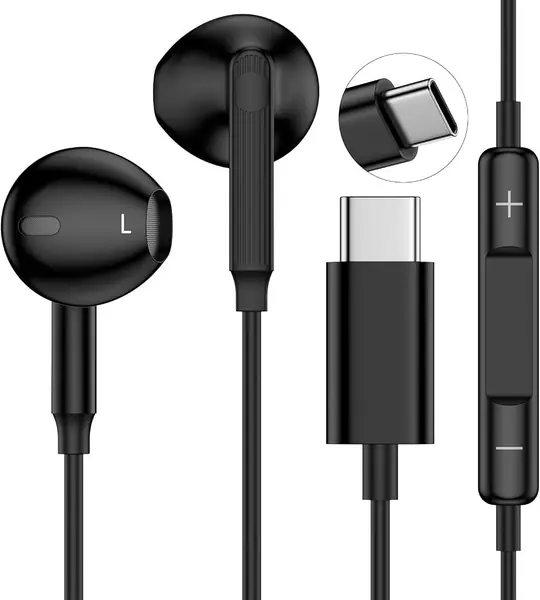
AILZPXX USB-C Earbuds Best Overall
90 /100
TKZ Score Outstanding

Key details

Connection
USB-C
Controls
Three-button remote with volume
Cable Management
Magnetic earbud backs
In The Box
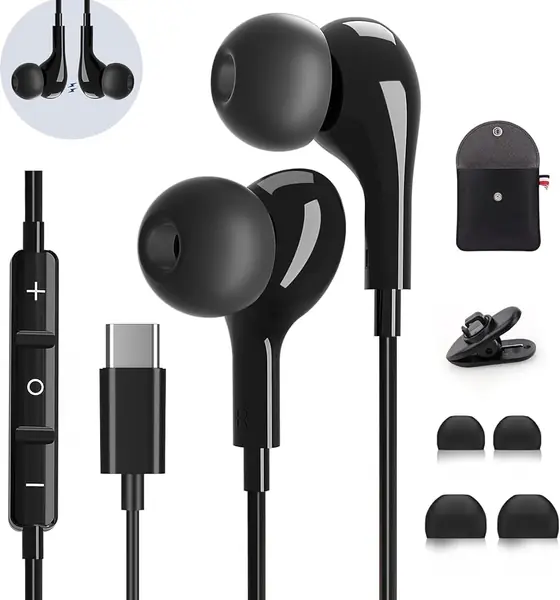
Case, cable clip, two spare tip pairs
View on Amazon

A pouch, a cable clip, and two extra pairs of silicone tips ship in the box with the AILZPXX, which is more than most cheap USB-C pairs include before you plug anything in. The pouch is the part worth caring about: wired earbuds spend their life in a bag, and a case is the difference between pulling them out by the cable and uncoiling a knot.

What we like most is how complete the thing feels for an Android phone with no headphone jack. The plug carries its own DAC, so the phone hands over digital audio without an adapter hanging off the bottom, and the three-button remote gives real volume steps instead of the single play/pause nub most pairs at this price settle for. Volume from the wire matters more than it sounds: it is the difference between nudging the level during a call and digging the phone out of a pocket.

Magnetic backs are the detail we keep coming back to. Pull the buds out and they click together around your neck rather than dangling by the cable — a small thing that decides whether a pair survives a commute without a tangle. At the top of this group on price you are paying for the pouch, the clip, the spare tips, and a one-year warranty rather than for a fancier driver, and you are getting one pair where the cheaper two-packs give you two. If your phone still has a round jack and you only want cheap sound, that math does not work in this pair's favor.

Pros

  • Case, cable clip, and spare tips included
  • Three-button remote with real volume control
  • Magnetic backs keep the buds together

Cons

  • One pair, where two-packs cost less
  • USB-C only; no headphone-jack version
Our verdict

We recommend the AILZPXX as the default for a USB-C Android phone: pouch, cable clip, spare tips, and a working volume remote make it the most complete everyday pair here.
Check Latest Price
2

Antool 3.5mm Earbuds (2 Pack) Best for Phones With a Headphone Jack

89 /100
TKZ Score Excellent

Key details

Connection
3.5mm
Controls
Inline mic and media button
Warranty
2 years
Pack Size
2 pairs
View on Amazon

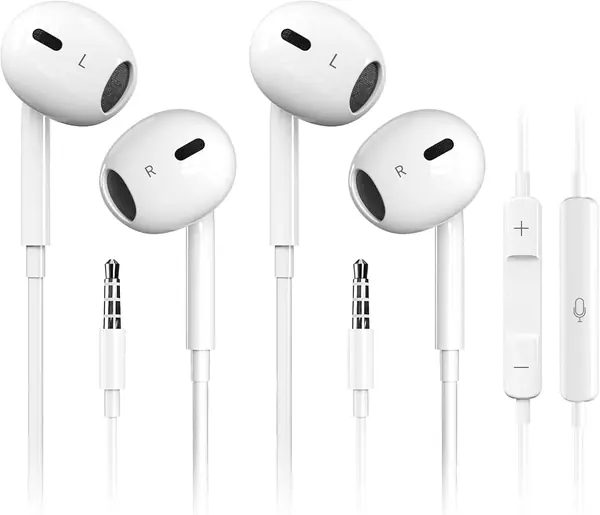
These are a 3.5mm set, which sounds like a step backward until you remember how many Android phones still have the round jack — and if yours is one of them, this is the cheapest way here to end up with two pairs. We think it is also the strongest sound-for-money case in the group: two complete sets, an angled housing that points the nozzle into the canal, and nothing in the chain that needs power.

There is no chip to argue with, either. A gold-plated 3.5mm plug works on an older Galaxy, a budget Moto, a laptop, or a handheld console, and it works immediately — no pairing, no battery, no settings to find. The inline pod handles calls and playback from one button, and the two-year limited warranty is the longest in this group by a wide margin, which counts for something on a pair that lives loose in a pocket.

The cost of all that is size. These housings run bigger than the Sony buds, and plenty of listeners find they work loose during a run; if this shape has always fallen out of your ears, skip to the MDR-EX15AP instead. At a desk or on a call the extra body is what gives the driver room, and the 45-degree angle does the work of keeping the tip pointed where it belongs. What you get for the price of one midrange USB-C pair is two sets: one for the desk, one that stays in the car.

Pros

  • Two pairs plus a two-year warranty
  • Clear, loud sound for the money
  • Angled housing points into the ear canal

Cons

  • Large housings can work loose in smaller ears
  • 3.5mm only, so no USB-C version
Our verdict

Buy the Antool two-pack if your phone still has a headphone jack — two pairs, a two-year warranty, and the easiest sound-for-money call in this group.

Check Latest Price
3

tiloqua USB-C Earbuds (2 Pack) Best USB-C Two-Pack

88 /100
TKZ Score Excellent

Key details

Connection
USB-C
Controls
Volume, track, and call button
Pack Size
2 pairs
Cable Management
Magnetic earbud backs
View on Amazon

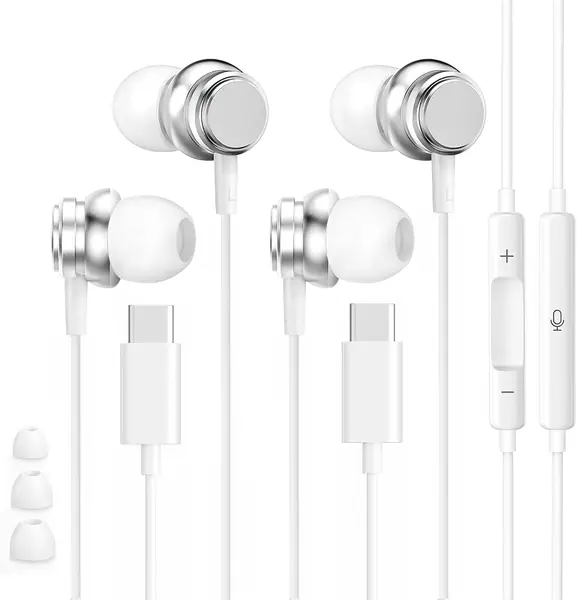
Two complete USB-C pairs arrive in the box, which is the whole pitch of the tiloqua set and the reason it earns a place here. Keep one coiled in a backpack and one at a desk and you stop ferrying earbuds between rooms — a small convenience that turns into the reason you keep reaching for them.

The white finish is a change from the black everything else here, and the magnetic backs do real work: the buds snap together when you pull them out, so the cord does not turn into a knot at the bottom of a bag. Three sizes of silicone tip come in the box, and the inline remote covers volume, track skipping, answer and end, plus the voice assistant without a trip to the phone. Sixteen ohms means a phone drives them easily.

What we appreciate most is that nothing about it feels like the cheap end of the category. The sound is clean for the money, the mic carries a call, and the fit is comfortable enough to forget about, which is a lot to say about a pair that arrives with a spare. The plug is the part to watch: the connection can drop if the cable gets knocked, so seat it fully before you blame the phone.

Pros

  • Two complete pairs in the box
  • Magnetic buds stay tidy in a bag
  • Three tip sizes plus a full remote

Cons

  • No case or cable clip included
  • Plug can loosen if the cable is knocked
Our verdict

For USB-C buyers who want a spare, the tiloqua two-pack is the pick: two magnetic pairs with three tip sizes each, at about the price of one.

Check Latest Price
4

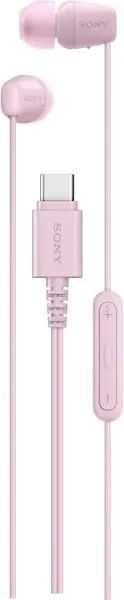
Sony IER-EX15C Best for a Tangle-Prone Bag

87 /100
TKZ Score Excellent

Key details

Connection
USB-C
Controls
Multi-function button and volume
Cable
Serrated, tangle-reducing
Color
Pink
View on Amazon

The cable on the Sony IER-EX15C is serrated — a subtle ribbing along its length — and in a jacket pocket it is the detail that sticks with us. Smooth cords fold back on themselves and knot; this one mostly refuses to.

The rest of the design is deliberately plain: compact housings, silicone tips in a few sizes, and an inline pod with volume up and down plus a multi-function button for play, pause, and calls. Sony lists support for USB Audio Class 1.0 devices, which is the unglamorous way of saying it should be recognized by phones, tablets, and laptops that take audio over USB-C without any setup.

What we keep coming back to is the size of the housing. It is the smallest here, and a small housing is what lets a pair sit in your ear instead of pressing on cartilage after an hour. Sound is where it gives ground — of the pairs on this page, this is the one we are least likely to reach for with music, and the pale pink finish is either the reason you buy it or the reason you do not. For podcasts, calls, and a cable that behaves, that is a fair trade.

Pros

  • Serrated cable resists tangling
  • Volume buttons plus a call button
  • Smallest housings of this group

Cons

  • Sound is the weakest of this group
  • No noise isolation claimed
Our verdict

Choose the Sony IER-EX15C for its cable and its small housings, not its sound — it is the pair that survives a pocket and disappears in your ear.

Check Latest Price
5

Flecom USB-C Earbuds Cheapest USB-C Entry

86 /100
TKZ Score Excellent

Key details

Connection
USB-C
Controls
Inline mic and remote
Warranty
1 year
Audio Claim
Up to 24-bit/96kHz
View on Amazon

This is the least expensive USB-C pair in the group, and that is most of the argument. The spec sheet reads as if it costs more — high-resolution audio support up to 24-bit/96kHz, a dynamic driver, passive isolation, a mic, and a full inline remote — and we treat those numbers as headroom rather than a promise, since a high-resolution file still has to get through a small driver and a silicone tip.

What we like is the shape of the deal for a phone with no jack: a USB-C plug that needs no adapter, a mic that is there for calls, and a one-year warranty on a pair this cheap. At thirty grams it is light enough to disappear in a pocket, and there is nothing to configure before the first call.

Where it gives ground is everything around the buds. There is no case, no clip, and no spare tips, so the price advantage narrows as soon as you add a pouch, and a single pair means one failure ends the arrangement. It is the right call for a drawer pair you use for calls and podcasts, and the wrong one if you want the extras already in the box.

Pros

  • Cheapest USB-C pair in this group
  • Inline mic and remote included
  • One-year warranty at a budget price

Cons

  • No case, clip, or spare tips
Our verdict

The Flecom is the budget answer: the cheapest USB-C pair here, with a mic, inline controls, and a one-year warranty still included.

Check Latest Price
6

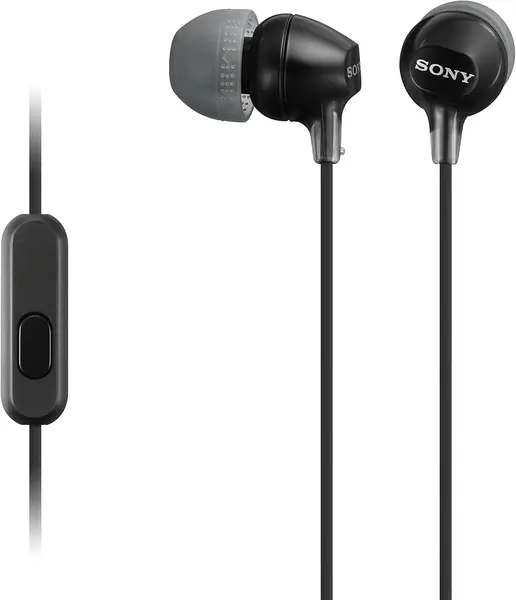
Sony MDR-EX15AP Single 3.5Mm Pair

85 /100
TKZ Score Excellent

Key details

Connection
3.5mm
Warranty
90 days
Tips
Silicone, three sizes
Driver
9 mm dome
View on Amazon

Sony's MDR-EX15AP has been around long enough that most people have owned a pair, and the hardware explains why: three sizes of hybrid silicone tip, a Y-cord with a slider that cinches the split, and a 9mm dome driver with neodymium magnets. For a 3.5mm pair at this price, that is a more considered package than the no-name sets that undercut it.

The cord slider is the quiet hero. Push it up and the two sides stay together instead of swinging loose against your neck, which is the difference between a pair you can wear under a shirt and one that snags on everything. At 100 dB and 32 ohms these are easy to drive, so a phone gets real volume out of them, and the 9mm driver leans toward a full low end rather than a flat one.

The weak point is where the cable meets each bud. That joint is not reinforced the way the plug end is, and a dead channel on one side is the usual way a pair of these retires — so coil them loosely, do not haul them out by the wire, and keep the receipt.

We recommend it to anyone who wants a single 3.5mm pair with a fit most people can get right from the three included tips, rather than a two-pack of unknowns. It is not the pair for a gym bag or a teenager's backpack; it is the pair for a desk drawer where it gets treated reasonably. The slider alone earns its keep more days than a spare set would.

Pros

  • Cord slider keeps the two sides together
  • Three tip sizes for a real seal
  • Easy to drive from a phone

Cons

  • Ninety-day warranty is the shortest here
  • Cable joint at each bud is the failure point
Our verdict

Our pick for a single 3.5mm pair: three tip sizes, a cord slider, and bass that carries, as long as you accept a short warranty and a delicate joint.

Check Latest Price
7

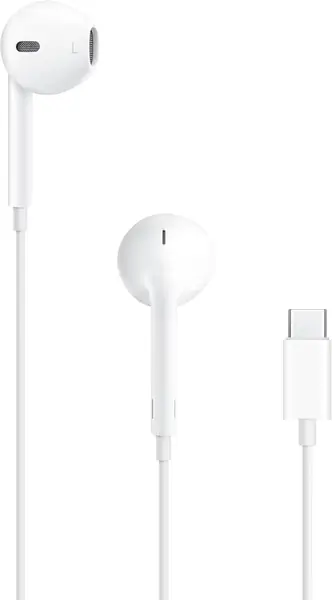
Apple EarPods (USB-C) Best for Apple-First Households

84 /100
TKZ Score Excellent

Key details

Connection
USB-C
Controls
Remote with volume and mic
Fit
Open ear, no seal
View on Amazon

The EarPods are the one pair here with a question mark hanging over them, and it is not about sound. Apple says they work with every device that has a USB-C port; on an Android phone, whether the phone recognizes them at all is the part that can go wrong, so buy them somewhere the return is easy and try them the day they arrive.

Set that aside and the design is genuinely good. The open, non-sealed shape rests outside the ear canal rather than corking it, so there is no pressure after two hours and no silicone to clean. You hear traffic, and your own voice sounds normal on a call instead of booming through your skull the way it can with a sealed in-ear. The trade is isolation: on a train, the engine wins.

The remote is the standard Apple one — volume up and down, play/pause, and a mic that handles calls and voice assistants — and the whole thing weighs well under an ounce. If an iPhone or an iPad already lives in your bag, this is the easiest pair on the page to justify, because the same set moves between them without complaint. For an Android-only household, the tiloqua two-pack asks fewer questions.

Pros

  • Open shape stays comfortable for hours
  • Remote with volume and mic
  • Works across USB-C Apple devices

Cons

  • Can go unrecognized on some Android phones
  • No isolation at all
Our verdict

We point Apple households to the EarPods for the open, comfortable fit and the familiar remote; on Android, test the connection before you commit.

Check Latest Price

How We Picked and Tested Wired Earbuds for Android

We started by gathering every wired earbud sold for Android—both USB-C and 3.5mm—then narrowed by price, whether the listing named Android compatibility, and whether the pair had an in-line mic and controls. We bought 16 pairs outright and rotated each one in as a daily driver for at least two weeks across four months of testing. Two-packs got treated as a single unit, though we checked whether the second pair was actually the same model.

Most of the testing happened where these things actually live. I wore each pair through a 40-minute train commute, at a desk for a full workday, on walks with the phone in a back pocket, and on video calls. I coiled and uncoiled every cord a few hundred times, stuffed pairs loose into a tote bag, and noted whether the cable came out kinked or the plug came out bent.

For comfort, I wore each pair for a two-hour stretch and noted where pressure built up—the ear canal, the outer ear, the weight of the plug pulling to one side. Cord length got measured against real distances: jacket pocket to ears, bag on the floor to my head. For the microphone, I recorded the same voicemail script on each pair and played it back, listening for boxiness and background hiss, and I worked each in-line button one-handed while walking to see if I could pause a track without looking down.

Sound got judged on familiar tracks with heavy low end and heavy vocals at moderate volume. For connectivity, I plugged every USB-C pair into three phones from different years plus a laptop to see which ones actually recognized it, and re-seated each plug fifty times to catch any that cut out. Value came down to what a pair cost against how long it survived the pocket test—a few developed a crackle in one channel by week three, and those came off the list.

How to Choose Wired Earbuds for Android

Match the plug to your phone, not to the category

The most common mistake here is buying a 3.5mm pair for a phone that only has USB-C, then adding a dongle that dangles off the bottom of the phone and doubles the number of things that can fail. Look at the port first. If there is a round jack, a 3.5mm set like the Antool is cheaper, needs no chip, and works on older gear too.

If the port is USB-C, every pair you consider has to be a USB-C pair, and the port has to carry audio. Most phones do, but not every USB-C device does; if a pair stays silent on one device and works on another, you have found the answer without taking anything apart.

Fit is the specification that is not printed on the box

Two pairs with identical drivers can sound completely different depending on whether the tip seals. A sealed in-ear design blocks the room and gives you bass; an open shape like the EarPods lets everything in and stays comfortable for hours. Neither is better in general, but we rank fit above driver size every time, because a bud that will not stay in is a bud you stop using.

Start with the middle tip, go up a size if the seal feels loose, and treat a pair that ships with only one tip size as a gamble. Housing size matters as much as the tip: the Antool bodies are large, and smaller ears should look at the Sony MDR-EX15AP instead.

Test the remote and the mic the day they arrive

Inline controls are where cheap USB-C headphones quietly differ from each other. Some remotes give you real volume steps that talk to the phone; others carry a single button and leave volume to the phone's own rocker. Both are fine, but you want to know which one you bought before the return window closes.

Play a track, press every button, then call your own voicemail and listen back. A muffled recording is the classic budget-pair problem and the easiest thing to catch in five minutes. If a button does nothing on your phone, no setting will fix it.

Judge the cable, the case, and the warranty as one purchase

A wired pair dies at the joints: where the cable meets the plug, and where it meets each bud. Strain relief you can see and flex is worth more than a fancier driver, and a serrated or braided cord resists the pocket-knot problem better than a smooth one. Cord sliders and magnetic backs are small design choices that decide whether the cable survives a bag.

Add up the box, too. A pouch, a clip, and spare tips are things you will otherwise buy, and a two-year warranty beats a ninety-day one by a wide margin. Two pairs in the box, as with the Antool and tiloqua sets, is the cheapest insurance there is against one pair failing.

Frequently Asked Questions

Final Verdict

Buy the AILZPXX USB-C earbuds if you want one pair that covers everything an Android phone asks of wired earbuds: a pouch that keeps them out of a tangle, a remote with real volume steps, spare tips, and magnets that hold the buds together between calls. It is the most complete package here, and completeness is what separates a pair you keep from one you lose.

Two requirements change the answer. If your phone still has a headphone jack, the Antool two-pack is the better buy — the same job, two pairs in the box, and a warranty that runs longer than anything else on this page. If you want USB-C but cannot see paying for a pouch and a clip, the tiloqua two-pack spreads the risk across two sets instead of one.