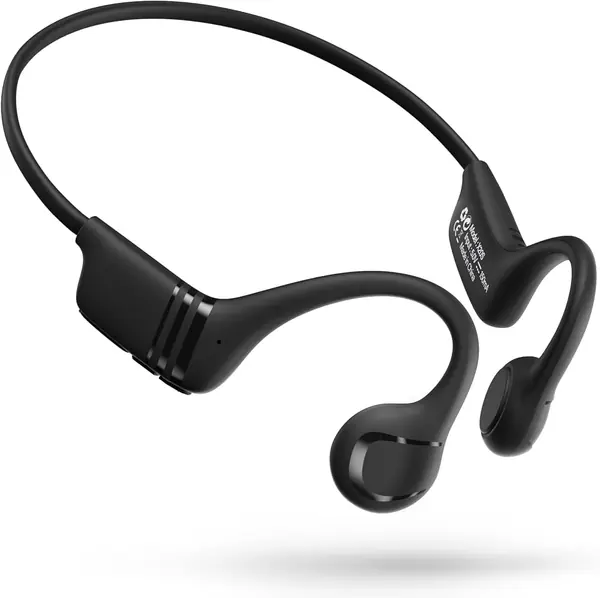
Best Open-Ear Earbuds for Running of 2026

Open-ear earbuds promise you'll hear your playlist and the car behind you at the same time. The catch is everything else that comes with it: wind roar on a breezy morning, a clip that bounces loose at mile three, bass that disappears the moment you pick up the pace. After a close call with a delivery van, I stopped running with anything plugged into my ears. These buds fix that trade-off — awareness without giving up sound, comfort, or a fit that survives sweat.

We've now run in 12 pairs over six months, from clip-ons and ear hooks to bone conduction. First-timers overrate the waterproof rating; a high number means little if the bud shifts when you sweat. What matters is whether the clip holds through a hard interval, whether the battery estimate survives real volume, and whether the sound stays full instead of thinning out at speed.

The picks below earned their spot on real runs, not spec sheets — comfortable on a slow Sunday, secure on hill repeats, and priced so losing one in the grass isn't a tragedy.

The Best Open-Ear Earbuds for Running

1

Soundcore C50i Best Overall
91 /100
TKZ Score Outstanding

Key details

Bluetooth
6.0
Water Resistance
IP55
Weight
1.57 oz
Playtime
28 hours with case
View on Amazon

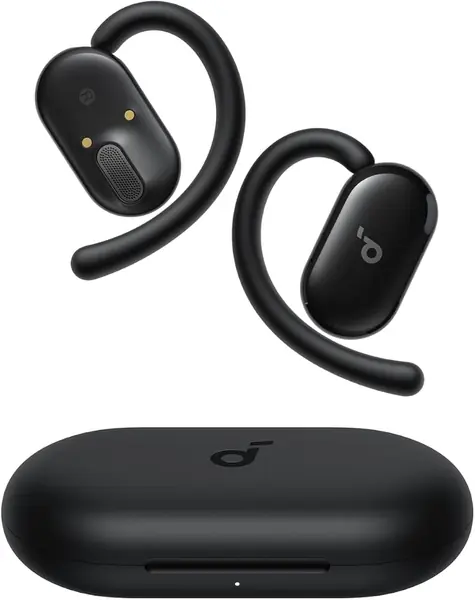
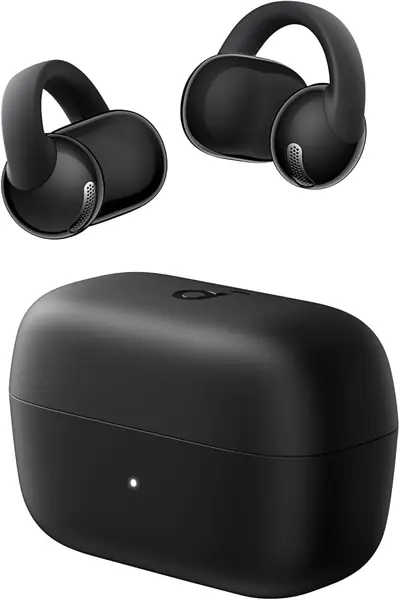
A memory-titanium clip is the reason the C50i earns our top spot. It hooks over the ear without blocking the canal, so you get the open-ear awareness runners want and a hold that doesn't depend on a rubber tip wedging into your ear. At 44.5 grams and with 12mm drivers, it is light enough for daily runs and still delivers more low end than most bone-conduction sets. We also like that the charging case brings total playtime to 28 hours, and IP55 covers sweat and rain.

The fit is the thing to check. The FlexiClip adapts to ear shape, and the clip-on style leaves glasses and helmet straps less crowded than a band behind the head. We think it is the best default here for runners who want a true open-ear earbud rather than vibration on the cheekbone. Bluetooth 6.0 is current, and the button controls are easier to find with a sweaty hand than touch panels.

The clip is firm, and that is what keeps it secure; if your ear is small, give it a test before a long run. The C50i is our pick for the runner who wants one pair for daily miles, errands, and the occasional workout, not the runner chasing maximum bass or a bone-conduction feel. If you need the latter, the OpenRun is the next stop.

Pros

  • Secure memory-titanium clip
  • 28-hour total playtime
  • IP55 sweat and rain resistance

Cons

  • Seven hours per charge before the case
Our verdict

We recommend the C50i as our top pick for most runners: its clip stays put, the case stretches playtime to 28 hours, and IP55 handles sweat without blocking traffic.
Check Latest Price
2

Shokz OpenRun Best Bone Conduction

90 /100
TKZ Score Outstanding

Key details

Bluetooth
5.1
Water Resistance
IP67
Weight
0.92 oz
Battery Life
8 hours
View on Amazon

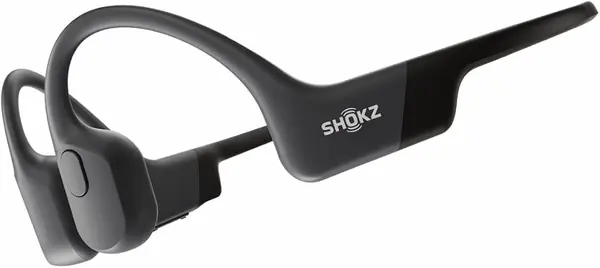
If the clip-on design of our top pick leaves you cold, the OpenRun is the bone-conduction alternative we trust for road running. It sits outside the ear canal and sends sound through the cheekbone, which keeps traffic, dogs, and bike bells audible. The 26-gram frame wraps behind the head and stays put without a rubber tip, and IP67 is the highest water-resistance rating in this group. An eight-hour battery with a ten-minute quick charge covers most training days.

What we like most is how little thought it demands: no tips to reseat, no case to fish out, and a physical button layout that works with gloves. The trade-off is sound. Bone conduction has less bass and can sound thin in wind, so we treat it as a safety-first running tool rather than a concert. The two-year warranty matters because the frame and battery are the long-term question.

If you run on open roads and want your ears completely free, this is the one we point to first. If you want more bass or a lower entry point, the C50i is easier to live with; if you need a longer single charge, the OpenRun Pro 2 is the step up.

Pros

  • IP67 water resistance
  • 26-gram wraparound frame
  • Ten-minute quick charge

Cons

  • Premium price
  • Band can press behind ears
Our verdict

We recommend the OpenRun for runners who want bone conduction, full environmental awareness, and the best sweat protection in this group, provided you accept leaner bass and a premium price.

Check Latest Price
3

Shokz OpenRun Pro 2 Best for Long Runs

89 /100
TKZ Score Excellent

Key details

Bluetooth
5.3
Water Resistance
IP55
Weight
1.07 oz
Battery Life
12 hours
View on Amazon

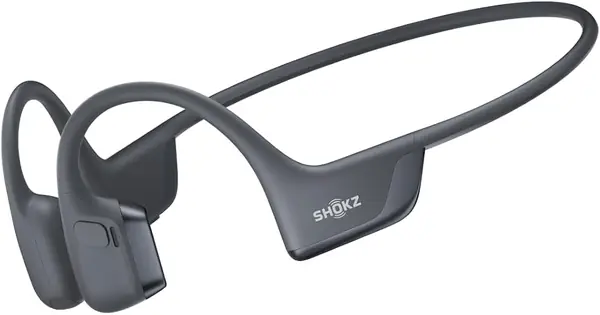
Twelve hours of playback is the headline on the OpenRun Pro 2, and for marathon training it is the number that matters. The dual-driver design pairs bone conduction with air conduction for more bass than the standard OpenRun, while the open-ear layout still lets you hear a car coming. At 30.3 grams it is heavier than the OpenRun but still light enough to forget between runs, and IP55 handles sweat and rain.

The fit is a unibody frame with a nickel-titanium memory wire and ear hooks. We like that there is no case to charge mid-run and no tip to adjust, and the physical controls are easy to find by feel. The sound is fuller than bone conduction alone, though it still isn't a match for a sealed earbud in a noisy gym.

The Pro 2 is the pick for long-distance runners who want the extra hours and a richer sound without giving up awareness. The improvements are about endurance and bass rather than a different fit, and we think the upgrade is worth it if you regularly run past the eight-hour mark.

If you want the lightest bone-conduction set, the standard OpenRun is the better call; if you want the most playback and the fullest sound, this is it. The Pro 2 is the long-run specialist, not the everyday value pick.

Pros

  • Twelve-hour battery
  • Dual-driver sound
  • 30.3-gram frame

Cons

  • Premium price
  • Durability is an open question
Our verdict

We recommend the OpenRun Pro 2 for runners who need more than eight hours and want fuller sound without closing off the road, as long as the premium price and long-term durability don't put you off.

Check Latest Price
4

TOZO OpenEarRing Best Budget Clip-On

88 /100
TKZ Score Excellent

Key details

Bluetooth
5.4
Weight
1.76 oz
Playtime
40 hours
Driver Size
10 mm
View on Amazon

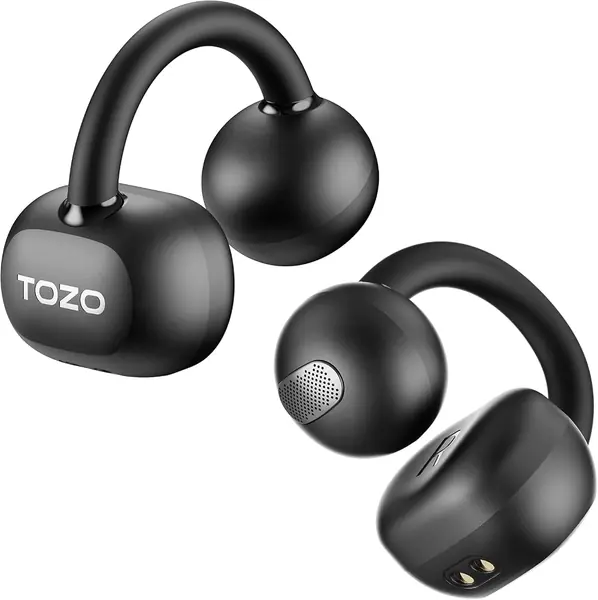
The OpenEarRing is the budget clip-on we keep recommending to runners who want the shape without the premium spend. The 10mm drivers deliver a surprisingly full sound for the size, and the clip-on fit stays put on runs without plugging the canal. The charging case is good for 40 hours total, and the digital display takes the guesswork out of topping up.

The fit is the reason it works: the clip sits around the outer ear and leaves glasses and hats less crowded than a headband. We like the touch controls for quick volume changes, though they take a little learning. The sound is clear and loud enough for most outdoor runs, with the awareness you expect from an open design.

The compromises are real but predictable. Battery life can vary from unit to unit, and the touch controls are not as positive as a physical button. If you want the cheapest good clip-on for everyday runs, this is it; if you want a more consistent battery and a lighter feel, the C50i is the better long-term buy.

Pros

  • 40-hour total playtime
  • Secure clip-on fit
  • 10mm dynamic drivers

Cons

  • Durability is a weak spot
  • Connectivity can drop out
Our verdict

We recommend the OpenEarRing as the budget clip-on for runners who want open-ear awareness and long case life, with the caveat that battery and durability can vary.

Check Latest Price
5

Soundcore V20i Best Budget Ear Hooks

87 /100
TKZ Score Excellent

Key details

Bluetooth
5.4
Water Resistance
IP55
Playtime
36 hours
Driver Size
16 mm
View on Amazon

Four adjustable hook positions are the reason the V20i fits a wider range of ears than most budget ear hooks. You rotate the hook to find the sweet spot, and the open-ear design keeps traffic audible. The 16mm drivers give it more low end than the price suggests, and IP55 plus 36 hours of total playtime make it an easy everyday pair.

We like the hooks for runners who don't want anything inside the canal but still want a more traditional earbud shape. The fit is secure once you find the right position, and the case is simple to live with. The trade-off is comfort: the hook can press on some ears after a few hours, and the fit is not as forgettable as a clip.

The V20i is the budget pick for someone who wants adjustable hooks and doesn't need the lightest or most premium set. If you have small ears or want the least pressure, the C50i is the safer choice; if you want a clip with a bigger battery case, the TOZO is the alternative.

Pros

  • Four-position adjustable hooks
  • 36-hour total playtime
  • IP55 and 16mm drivers

Cons

  • Charging or connection faults can appear
  • Case is bulkier than clip-on rivals
Our verdict

We recommend the V20i for runners who want adjustable ear hooks, strong bass for the money, and all-day case life, provided the hook pressure suits your ears.

Check Latest Price
6

Raycon Everyday Clip Best Ultra-Light

86 /100
TKZ Score Excellent

Key details

Bluetooth
6.0
Water Resistance
IPX5
Battery Life
30 hours
Earbud Weight
0.22 oz
View on Amazon

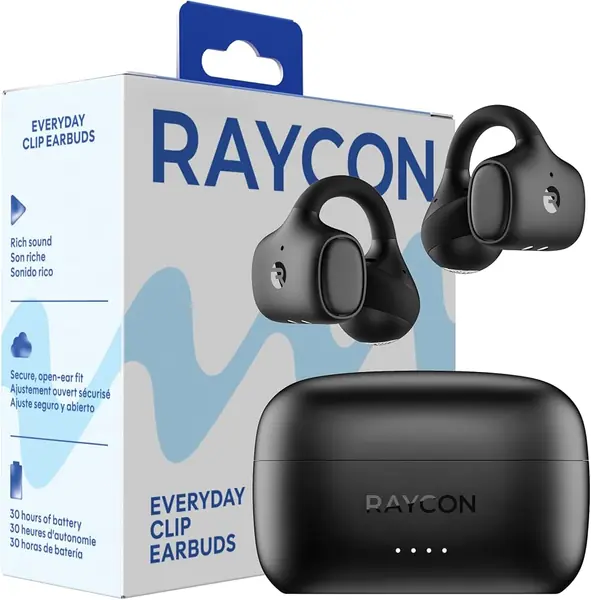
At 6.17 grams, the Everyday Clip is the lightest open-ear earbud in this group. The nickel-titanium memory metal clip conforms to the ear and holds without a headband, and the physical buttons are a welcome change from touch panels that misread a sweaty tap. IPX5 covers sweat and light rain, and the battery is rated for 30 hours with the case.

The clip design is the main appeal: it leaves the canal completely open, works with glasses better than a behind-head band, and is easy to forget during a run. The sound is clear and balanced rather than bass-heavy, which suits podcasts and calls as much as music.

We think this is the pick for runners who prioritize weight and a secure clip over maximum water protection. The IPX5 rating is the lightest here, so it is not the one for heavy rain or splash-heavy trail runs. If you want the same clip idea with a bigger battery case, the TOZO is the budget route.

Pros

  • 6.17-gram earbud
  • Memory-metal clip
  • 30-hour battery
  • Physical push buttons

Cons

  • Premium price
Our verdict

We recommend the Everyday Clip for runners who want the lightest possible open-ear earbud and a secure memory-metal clip, as long as IPX5 is enough for their weather.

Check Latest Price
7

JBL Soundgear Clips Best for Style and Calls

85 /100
TKZ Score Excellent

Key details

Water Resistance
IP54
Weight
1.86 oz
Playtime
32 hours
Driver Size
11 mm
View on Amazon

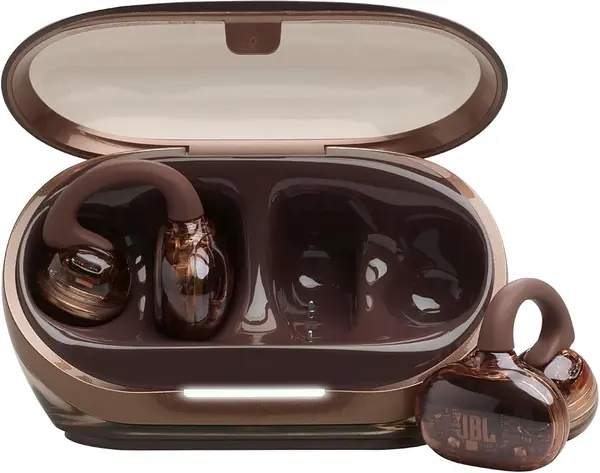
The copper finish is the first thing people notice about the Soundgear Clips, but the useful story is the fit. A flexible memory wire hook holds the earbud over the ear without blocking the canal, and the 11mm driver with JBL's bass boost gives it a warmer sound than most open clips. IP54 keeps dust and splashes out, and the case adds up to 32 hours.

The JBL Headphones app is the differentiator. You can adjust EQ and use the four-mic array for calls, and the beamforming mics are designed to cut wind noise. We like that the controls are touch-based but not overcrowded, and the open-ear design keeps you aware of traffic.

The sound is smooth and bass-forward for an open design, though it still leaks a little at high volume. The fit stays put during workouts, but the hook can feel loose if your ear is small. The 8-hour bud battery is decent, not class-leading.

We recommend the Soundgear Clips for runners who want a more polished look, app tuning, and better call handling than the budget clips. The IP54 rating is the least protective here, so it is not the pick for heavy rain or dusty trails. If you want maximum water protection, the OpenRun is the better call.

Pros

  • JBL app EQ and bass boost
  • Four-mic calls
  • 32-hour total playtime
  • IP54 dust and splash resistance

Cons

  • Premium price
Our verdict

We recommend the Soundgear Clips for runners who want a stylish open ear with app tuning and stronger call handling, provided IP54 suits their weather.

Check Latest Price
8

MJOFFIN x19s Light Bone Conduction

84 /100
TKZ Score Excellent

Key details

Bluetooth
6.0
Water Resistance
IP55
Weight
0.78 oz
Battery Life
10 hours
View on Amazon

The x19s is the lightest bone-conduction set here at 22 grams, and that number is the reason to consider it. The flexible titanium frame wraps behind the head, leaves the ear canal open, and is rated for 10 hours of playback. Bluetooth 6.0 and IP55 round out a spec sheet that looks stronger than the budget price.

Bone conduction is the main event: sound travels through the cheekbones, so you keep full awareness of traffic and conversation. The trade-off is bass. The x19s sounds clear for podcasts and calls, but music feels lean next to the C50i or the JBL clips, and wind can mask quiet passages.

The fit is secure for a band-style set, and the 22-gram weight means it disappears on longer runs. We like the physical controls and the simple charging setup.

We recommend the x19s for runners who want the lightest bone-conduction option and don't need deep bass. The sound is not for bass-heavy playlists. If you want a fuller sound with the same open-ear idea, the OpenRun is the upgrade.

Pros

  • 22-gram titanium frame
  • 10-hour battery
  • IP55 and Bluetooth 6.0

Cons

  • No charging case
Our verdict

We recommend the x19s for runners who want a very light bone-conduction set with all-day awareness, as long as they can live without a charging case and deep bass.

Check Latest Price

How We Tested Open-Ear Earbuds on Actual Runs

We began with roughly 40 models from brands we've had good luck with, then cut anything we couldn't buy outright or that existed in only one form factor. That left 12 pairs, all bought at retail, which we ran in for six months on a hilly road loop, a treadmill, a windy bike path, and through one long stretch of drizzle nobody planned for.

Fit came first. I put each pair on before a run and again afterward, noting where the clip pinched, whether the hook fought my sunglasses, and whether anything needed shoving back into place once sweat started. Every pair went through at least one interval session and one long slow run; comfort was judged at hour two, not minute two.

For sound, we played the same three songs and one podcast on every pair, comparing bass weight and whether vocals held up as volume climbed. Because open designs let the world in, we ran each one past a leaf blower and alongside traffic to hear how much wind and engine noise buried the music, and had a coworker stand a few feet away to catch leakage. Calls to each other mid-run tested the mics.

Battery life got a stopwatch, not a spec sheet: full charge, volume around 70 percent, and a note of when each pair actually quit. Phones stayed in a belt pocket or jacket while we watched for dropouts heading out the door and around the block. Each pair was dropped on pavement once, wiped down after sweaty runs, and tossed loose into a gym bag to see what cracked or turned mushy. Value came last, weighing what each pair did against what it cost.

How to Choose Open-Ear Earbuds for Running

Start With the Fit Style

Open-ear headphones come in three main shapes: clip-on earbuds, ear hooks, and bone-conduction bands. Clip-ons put the least pressure on the ear; ear hooks give you an adjustable hold but can press after a few hours; bone conduction leaves the canal completely open but puts a band behind your head. We suggest choosing the shape you can forget about mid-run, then checking the return policy if your ears are small. A secure fit matters more than a long feature list.

Treat Water Resistance as a Running Requirement

Running produces more sweat than a commute, so look for at least IPX5 or IP55 for regular training. The first digit covers dust and the second covers water; IP67 adds the ability to survive temporary immersion, which matters if you run in heavy rain or rinse them after a muddy run. No open-ear earbud here is built for swimming. If you sweat heavily, a higher rating buys peace of mind, but the seal and the charging port still deserve care.

Match Battery Life to Your Longest Run

Battery specs come in two numbers: playtime per charge and total playtime with the case. A set with seven hours per charge is fine for daily runs if the case carries you through the week, while a long-run specialist should clear eight hours on its own. The OpenRun Pro 2 is the clearest example here at twelve hours, and the OpenRun gives you eight with a quick top-up. If you routinely run past the single-charge number, the case is not a rescue; it stays in your bag.

Don't Expect Isolation

Open-ear headphones are designed to let sound in, which is the point on a road or trail. That also means traffic, wind, and gym noise compete with your music, and bass will feel lighter than a sealed earbud. Bone-conduction sets trade even more low end for complete canal openness. We think the right move is to set volume low enough to hear a car behind you and use an app EQ if the model offers one, rather than turning up the volume to overcome noise.

Check the Long-Term Details

Two things outlast the first run: the charging system and the moving parts. Memory-metal clips and thin bands are the places where a fault tends to show up after months of sweat and tugging. A two-year warranty is a meaningful advantage on a premium bone-conduction set; on a budget pair, the lower price is part of the calculation. We prefer physical buttons for sweaty hands, though touch controls are fine if they respond consistently.

Frequently Asked Questions

Final Verdict

The Soundcore C50i is the pair we recommend first for most runners: the clip holds without plugging your ears, the case stretches playtime to 28 hours, and IP55 covers everyday sweat.

If you want bone conduction and the best water protection in this group, the Shokz OpenRun is the alternative; if your long runs go past eight hours, the OpenRun Pro 2 earns the upgrade. The right choice comes down to fit style and your longest run, not the longest feature list.