Best Tablets for Photo Editing of 2026

I moved my whole culling-and-color routine onto a tablet out of pure stubbornness — I wanted to edit on the couch instead of at a desk. Two years later I barely open a laptop for photos. What I didn't expect was how much the small things decide it: whether the pen comes in the box, whether the screen holds its brightness when you tilt it, whether a batch of RAWs opens without a pause.

Our team has spent six months editing the same files on eight tablets, and the winners weren't the ones with the longest spec sheet. They were the ones I stopped thinking about — no lag dragging a slider, no app quitting mid-export, no hunting for a charger at 4 p.m.

One thing buyers overrate is megapixels; what they underrate is weight, since a big panel gets heavy in one hand. Watch, too, for whether a case or screen protector is in the box and how fast it charges — these live in bags and die at bad moments. The picks below are where I'd put my own money.

The Best Tablets for Photo Editing

1

Apple iPad 11-inch (A16) Best Overall
95 /100
TKZ Score Outstanding

Key details

Display
11-inch Liquid Retina, True Tone
Chip
Apple A16
Storage
128GB
Weight
1.05 lb
View on Amazon

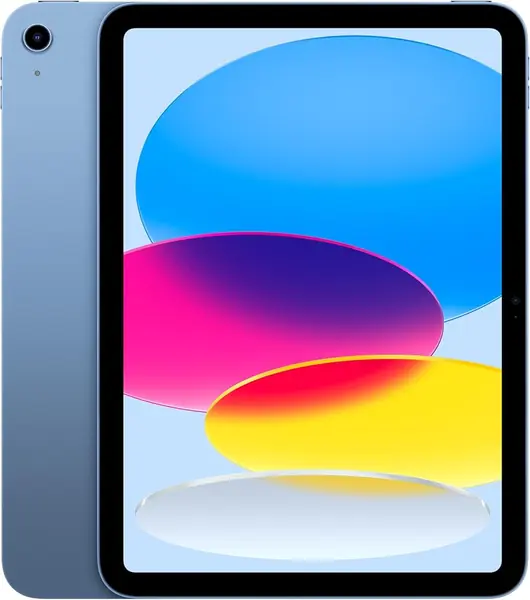
Ask us which tablet to buy for editing photos when you don't want to spend pro money or think about it for a week, and this 11-inch iPad is the answer we give most often. The A16 chip, 128GB of storage, and a Liquid Retina screen with True Tone cover the two jobs that matter: showing the photograph honestly, and keeping up while you work the sliders. At 1.05 pounds it also disappears into a tote, which counts for more than spec sheets usually admit.

What convinced us is the headroom. Edits that made the cheapest tablets in this group hitch never slowed this one down, and the picture stays clean at the edges of a crop where you actually spend your time. True Tone shifts the white balance toward whatever light is in the room, which is lovely for reading and worth switching off before you judge color, a small habit that separates people who trust their edits from people re-editing the same file on a laptop that night.

Split view is the underrated feature for photo work: keep a reference frame open beside the one you're grading and the comparison stops being a memory exercise. Add an Apple Pencil and masking becomes a brush stroke instead of a finger smear. The app bench on iPadOS is the deeper one, too, and that matters more on a tablet than raw clock speed.

One number to stare at: 128GB, which is the ceiling on this model. Do the setup and the software update inside the return window as well, because a bad unit tends to freeze during setup rather than in month three.

Pros

  • A16 chip keeps full-size edits moving
  • Liquid Retina with True Tone for honest previews
  • 1.05 pounds travels in any bag
  • Apple Pencil and split view suit retouching

Cons

  • Storage is capped at 128GB
Our verdict

The 11-inch iPad is the tablet we tell most people to buy for photo editing: quick enough for full-size files, light enough to carry, and honest about color.
Check Latest Price
2

Lenovo Idea Tab Pro Best Large-Screen Android

90 /100
TKZ Score Outstanding

Key details

Display
12.7-inch 3K LCD (2944 x 1840)
Chip
MediaTek Dimensity 8300
Storage
128GB, microSD expandable
In The Box
Tab Pen Plus, folio case
View on Amazon

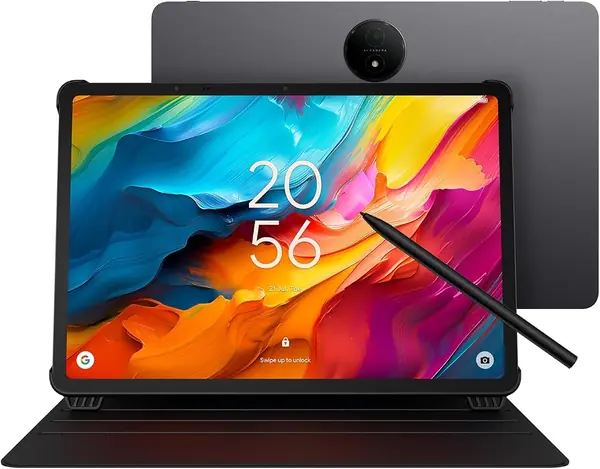
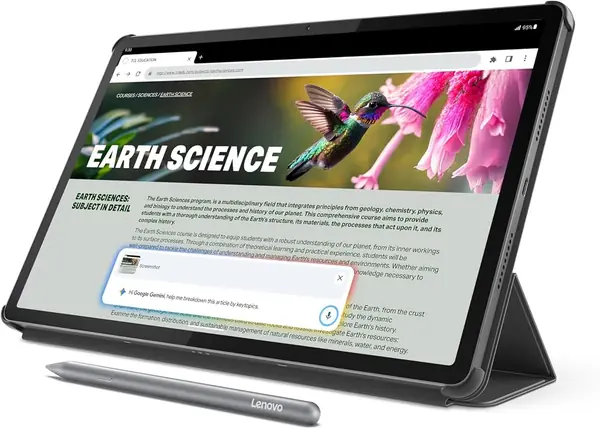
Twelve-point-seven inches of 3K LCD changes how you retouch. Dust spots stop hiding, mask edges behave, and a full-size image stays on screen without pinching. Lenovo also puts the Tab Pen Plus and a folio case in the box, which is the detail that separates this from every iPad in the group.

We think it's the best big-screen Android here for photo work. The Dimensity 8300 with 8GB of RAM moved through our edits without the lag the budget tablets show, and the microSD slot means the 128GB it ships with isn't the ceiling on your library. The 2944 x 1840 panel is bright and crisp enough to judge sharpening at 100%, and it's the reason to pick this over the cheaper 11-inch Android options.

Weight is what it asks in return. At 1.4 pounds it's a desk tablet, and brushing in a sky correction one-handed will have your arm filing a complaint. The 10,200mAh battery also takes hours to fill even with the 45W charger. Put it on a stand and neither matters much; carry it around a shoot and both do.

Pros

  • 12.7-inch 3K canvas shows fine detail
  • Pen and folio come in the box
  • Dimensity 8300 with microSD expansion

Cons

  • 1.4 pounds tires a one-handed grip
  • Big battery takes hours to charge
Our verdict

Choose this when you want a big, sharp Android canvas and a pen without iPad Pro money, and when your editing happens at a desk.

Check Latest Price
3

Apple iPad Pro 12.9-inch (M1) Best Display for Color Work

89 /100
TKZ Score Excellent

Key details

Display
12.9-inch Liquid Retina XDR, P3
Chip
Apple M1
Storage
128GB
Warranty
90 days, renewed
View on Amazon

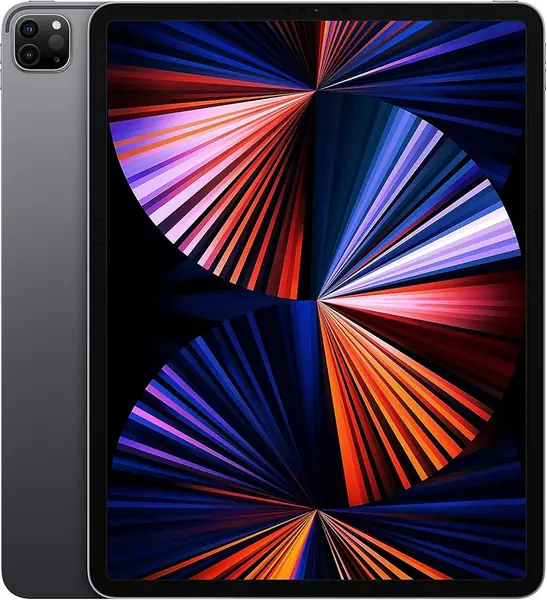
The reason to buy this one is printed on the glass: a 12.9-inch Liquid Retina XDR display with P3 wide color, ProMotion, and True Tone at 264 pixels per inch. That combination is what separates judging a photograph here from judging it on any LCD in this roundup, because the panel gives you more room between what the file says and what the screen shows.

The M1 is the most capable chip in this set, and 8GB of RAM with 128GB of storage is enough for full-resolution editing on a tablet. It also supports Apple Pencil (2nd generation) and the Magic Keyboard, so it can stand in for a laptop on a trip if you already own those pieces.

Our recommendation comes with a condition: this is a renewed unit, and that is the whole trade. You get the best color surface in the group for midprice money and accept a 90-day warranty, cosmetic variance that runs from flawless to visibly scratched, and battery wear you cannot see in a listing. Inspect the screen at full brightness the day it lands, run a full charge cycle, and charge it with your own USB-C brick, since the bundled charger is the part that lets these boxes down.

Pros

  • Liquid Retina XDR with P3 wide color
  • M1 chip with 8GB of RAM
  • Apple Pencil 2 and Magic Keyboard support

Cons

  • Renewed condition varies unit to unit
  • 90-day warranty only
Our verdict

If color is the whole job, this renewed iPad Pro earns its place on the strength of that XDR panel; just plan to inspect it the day it arrives.

Check Latest Price
4

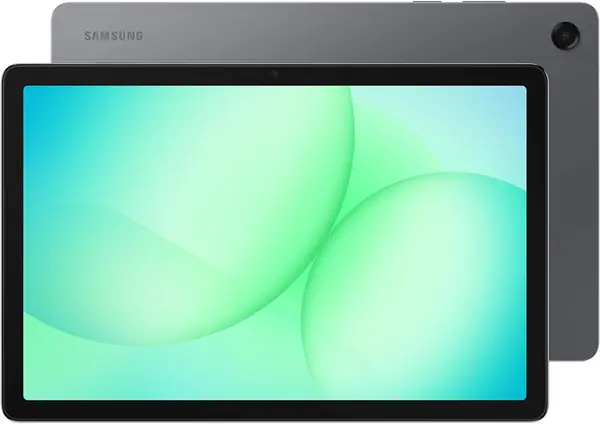
Samsung Galaxy Tab A11+ Best Budget for Big Files

88 /100
TKZ Score Excellent

Key details

Display
11-inch LCD, 90Hz
Memory
8GB RAM, 256GB storage
Weight
1.1 lb
Expansion
microSD card support
View on Amazon

256GB is the number that earns this tablet a place. Once your library passes a few shoots, RAW files plus exports plus a couple of editing apps eat through 128GB faster than anyone expects, and Samsung doubles that at the cheapest tier in this roundup, with a microSD slot if you outgrow it anyway.

We like it as a culling and cataloging machine. The 11-inch 1920 x 1200 screen at 90Hz scrolls a burst without smearing, 8GB of RAM and the octa-core MediaTek keep Android 16 responsive, and file handling on Android makes pulling frames off a card reader painless. It is not the panel where you make the final color call, which is work for the XDR iPad or the 3K Lenovo, but it is a fine place to decide which frames deserve one.

Two practical notes. There is no pen in the box, so masking stays a finger job until you add a stylus, and charging can stall around 80% on some units, the sort of thing you check in the first week while returns are still simple. Neither changes what the tablet is for: cheap, roomy storage with a screen good enough to sort by.

Pros

  • 256GB plus microSD at the lowest price tier
  • 90Hz 11-inch screen scrolls bursts smoothly
  • 8GB RAM and octa-core chip keep Android responsive

Cons

  • No stylus in the box
  • Charging can stall near 80%
Our verdict

A roomy, inexpensive tablet for sorting and storing a big library, as long as your final color calls happen elsewhere and you bring your own stylus.

Check Latest Price
5

TCL NXTPAPER 14 Best for Reference and Sketching

86 /100
TKZ Score Excellent

Key details

Display
14.3-inch 2.4K paper-like
Chip
MediaTek Helio G99
Storage
256GB, 8GB RAM
In The Box
4096-level stylus, flip case
View on Amazon

A matte, paper-like screen is an odd thing to love in a photo-editing roundup, and we do love it, for the half of the job that isn't color. Reference images, shot lists, and a full-size preview you can read outdoors without fighting glare all live happily on this panel. The final grade does not.

TCL includes a 4096-level stylus and a flip case, and 8GB of RAM with 256GB of storage is generous at this size. The NXTPAPER key switches between standard, color paper, and ink paper modes, which sounds like a gimmick until you are checking a histogram at midnight and want less blue light coming off the glass. The 10,000mAh battery keeps up with a long day of reviewing, and reverse charging tops up a phone in a pinch.

The Helio G99 is the ceiling. Simple edits over a reference image are fine; stacked layers and big panoramas can lag, and the stylus can trail slightly behind the line you draw. Buy it as the big comfortable second screen for planning, sketching, and reviewing, not as the tablet you color-grade on.

Pros

  • 14.3-inch 2.4K matte screen cuts glare
  • 4096-level stylus and case included
  • 256GB storage and 10,000mAh battery

Cons

  • Paper-like finish is not built for judging color
  • Helio G99 can lag on layered edits
Our verdict

Treat it as a huge, glare-free reference screen that sketches beautifully, and leave the grading to a tablet with a more color-focused panel.

Check Latest Price
6

TABWEE T90 Light Edits Only

85 /100
TKZ Score Excellent

Key details

Display
11-inch FHD, 60Hz
Chip
Unisoc T615
In The Box
Keyboard, mouse, stylus, case
Memory
8GB RAM (+16GB virtual), 128GB
View on Amazon

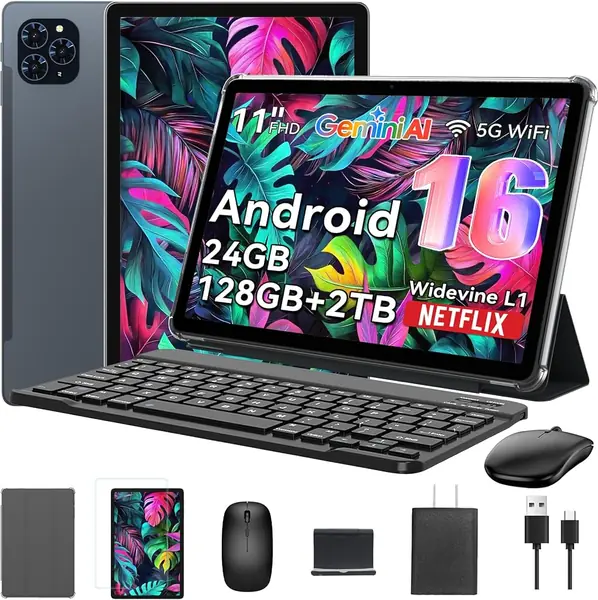
The box is the pitch: an 11-inch tablet, keyboard, mouse, stylus, and case for less than anything else in this roundup. If your editing is cropping, straightening, and a filter before you post, that bundle turns a cheap slab into a small workstation, and the included accessories are the reason it is here at all.

Read the memory claim carefully. The 24GB in the name is 8GB of built-in RAM plus 16GB of virtual memory borrowed from storage, and virtual memory does not make an entry-level Unisoc chip render a big file quickly. The 1920 x 1200 screen at 60Hz is fine for framing and coarse for fine detail, while the 128GB of storage takes a card up to 2TB, which is the most useful thing about the hardware.

Our advice is to treat it as a second device for quick edits and social posts and keep the big files on something with a better panel. Connectivity is the other caveat: Wi-Fi and Bluetooth can drop out, and the touch layer can register phantom taps, so give it a real week of work before you trust it with anything you cannot re-edit elsewhere.

Pros

  • Keyboard, mouse, stylus, and case included
  • Lowest-priced tablet in this group
  • microSD support up to 2TB

Cons

  • 24GB RAM claim is mostly virtual memory
  • Wi-Fi and touch can misbehave
Our verdict

Worth it only as a cheap second device for crops and social posts; the accessory bundle is real, but the panel and processor set the ceiling.

Check Latest Price

How We Picked the Best Tablets for Photo Editing

We started with a running list of about 40 tablets and cut it down by hand — no pen support, no reliable color, no current-generation chip, or a price that made no sense for photo work, and it was out. That left eight, which we bought ourselves and used for six months, ranging from 11-inch slates to a 14-inch panel, some with a stylus and case in the box, some without.

Each one ran the same workload. I imported a 200-image batch of RAW and JPEG files through a card reader, timed the import and then the export, pushed shadows and highlights to the edge of clipping, and checked skin tones against a printed reference under the same lamp. I also tilted each screen away from me at a patio table at midday to see how fast contrast fell off, and tried the built-in editing assistant each one shipped with, mainly to find out whether it saved a step or added one.

For the living-with-it part, we weighed each tablet with its case and carried them in a tote with keys and a water bottle to see how the glass held up. We ran each one to zero and charged it with a stopwatch, watched how hot the back got during long exports, and pulled cloud backups from the far end of the house to check whether Wi-Fi held as we moved between rooms. Apps stayed open overnight to see whether they resumed where we left off or reloaded from scratch.

At the end, we each named the one we'd buy with our own money and argued it out — value over raw price, and which one we enjoyed picking up on a Sunday. A couple of favorites lost a point or two for a charger that wasn't in the box.

How to Choose a Tablet for Photo Editing

Start With the Panel, Not the Screen Size

Resolution is the first filter. A 1920 x 1200 panel stretched across 12 or 13 inches looks coarser than a 2.4K or 3K screen of the same size, and mask edges are exactly where you notice. Then look for a wide-color claim: the iPad Pro's P3 coverage and the Lenovo's 3K panel are the two clearest color statements in this group.

A matte, paper-like finish such as the NXTPAPER reduces glare beautifully but is built for reading comfort, not for judging subtle color. Pick the panel that matches the decision you make most often, and check brightness and reflections before you commit.

Read the Memory and Chip Claims Twice

Headline RAM numbers deserve suspicion. Two tablets here advertise 24GB and 36GB, and both are mostly virtual memory borrowed from storage, with 8GB and 6GB of physical memory underneath. Virtual RAM keeps a browser tab alive; it does not make an entry-level chip render a large file faster.

Judge the processor tier alongside the built-in memory. An M1, an A16, or a Dimensity 8300 holds up to layered edits in a way an entry-level Unisoc or a Helio G99 does not, and that gap shows up the first time you open a panorama with a dozen adjustments on it.

Plan Storage Around RAW Files

Photo libraries grow faster than anyone plans for. A 128GB tablet is workable if you import, edit, and export in batches, but a season of RAW files plus edits will crowd it. The Android models here take a microSD card, which is the cheapest way to add room, so on iPad decide your capacity at checkout rather than later.

Our rule: choose at least 256GB, or 128GB plus a card, if you shoot more than a few hundred frames a month.

Match the Canvas to How You Hold It

Size is a workflow decision. A 12.7- or 14.3-inch screen is a desk device: full-size previews, comfortable masking, no pinching, but 1.4 pounds and up gets tiring in one hand. An 11-inch tablet is the compromise most people actually carry around.

If you retouch standing up or on a couch, favor the smaller body. If your edits happen at a table with a stand, take the big canvas and the pen that ships with it.

Weigh New Against Renewed

Two of the strongest color screens here come as renewed units, which is how they land at midprice money. That buys a shorter warranty, 90 days on the iPad Pro, and cosmetic variance that runs from flawless to visibly scratched. It also means battery wear you cannot see in a listing.

Inspect the screen at full brightness on arrival, run a full charge cycle, and keep the box until you are satisfied. Buy new when you want the warranty to outlast the honeymoon.

Frequently Asked Questions

Final Verdict

Buy the 11-inch iPad. It is the one tablet here a photographer can hand to a partner, take on a trip, and edit a full shoot on without a second thought: the A16 has the headroom, the Liquid Retina panel is honest, and it sits in the middle of this group on price.

When color is the entire job, the renewed 12.9-inch iPad Pro's XDR screen is worth the shorter warranty. If you want a big Android canvas with a pen in the box, the Lenovo Idea Tab Pro is the one we reach for.