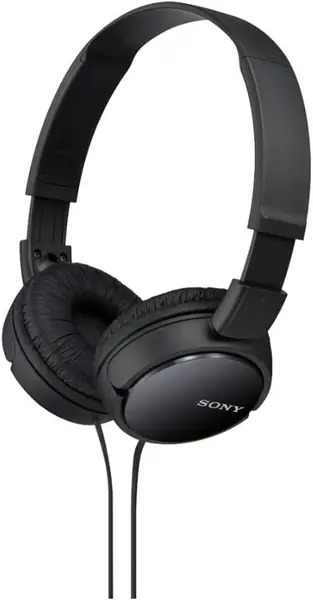
Best Sounding Sony Headphones of 2026

Headphones make a promise they can't entirely keep. Go wireless with noise cancellation and you hand over a little fidelity in exchange for quiet and freedom; reach for a wired studio pair and the detail comes back, along with a cable you have to think about every time you stand up. The pair that actually earns its price is the one that settles that tradeoff and then vanishes — you put it on, the room drops away, and you stop noticing you're wearing anything at all.

Over the past six months, my team and I have worn 14 pairs through commutes, flights, and long afternoons at a desk, and the biggest surprise is how little the spec sheet predicts. Seal matters as much as the driver: a pair that clamps slightly wrong or fights your glasses will lose bass and noise cancellation at the same time, and no processor fixes that. Noise cancellation itself is narrower than the marketing suggests — it erases engine drone and air-conditioning hum beautifully, but a nearby conversation or a crying baby will still get through.

Price turned out to be a weak guide too. Some of the least expensive pairs held their connection and composure better than models costing several times more, and the difference between good and great came down to fit, controls you can find without looking, and whether the earpads survived six months of daily use. Below are the picks worth your money, sorted by how you'll actually use them — quiet commute, mixing desk, or all-day calls.

The Best Sounding Sony Headphones

1

Sony WH-1000XM4 Best Overall
93 /100
TKZ Score Outstanding

Key details

Weight
9 oz
Driver
40 millimeters
Battery
Up to 30 hours
Noise Cancelling
Active, dual noise sensor
View on Amazon

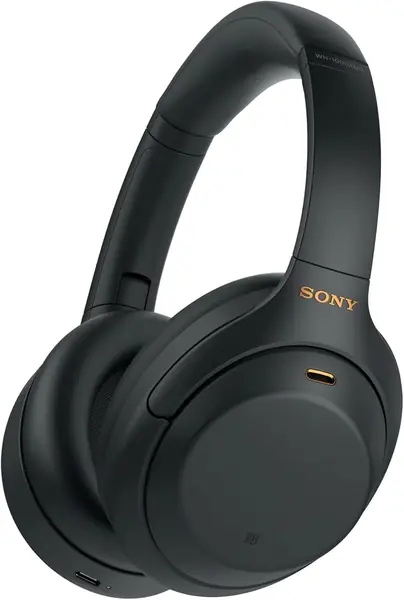
Sony's newest flagship is not the one we hand most people first. The WH-1000XM4 is two generations behind the XM6 now, and it is still the Sony we point to when someone asks which headphone sounds best without a studio in the house. There is a 40 mm driver inside, larger than the 30 mm unit in the newer model, plus active noise cancelling built on dual noise sensors and up to 30 hours of playback. Driver size is not a sound-quality score, but it is a reminder that the newest generation did not arrive with a bigger motor.

The sound is why it holds the top spot. Vocals sit forward, bass has weight without swallowing the midrange, and nothing about the tuning wears thin across an album — the mark of a headphone that flatters a phone stream and still holds up with the detachable cable plugged into a laptop. Cancellation flattens engine drone, air handlers, and open-plan hum, and the touch panel handles volume and track skips without a hunt for a button. Ten minutes on the charger buys about five hours if you forgot to plug them in overnight.

Fit is the thing to test early. The cups sit close and the clamp is firm, so pressure can build around the ears over a long session; buy from somewhere with a return window if you wear glasses or have a wide head. The detachable cable is the quiet bonus — when the battery is low, or when you want a stable connection at a desk, they run wired.

Pros

  • Clear, unfatiguing sound wired or wireless
  • Up to 30 hours with a 10-minute top-up
  • Cancellation that still handles engines and offices

Cons

  • Mixed long-term reliability record
Our verdict

We recommend the WH-1000XM4 to anyone who wants Sony's best-sounding all-rounder without flagship money — the cancellation, battery, and wired option still hold up.
Check Latest Price
2

Sony WH-1000XM6 Best Flagship

92 /100
TKZ Score Outstanding

Key details

Weight
8.96 oz
Driver
30 millimeters
Battery
Up to 30 hours
Microphones
12
View on Amazon

Twelve microphones, a processor Sony says is seven times faster than the one it replaces, and tuning developed with mastering engineers: the WH-1000XM6 is the most heavily processed headphone Sony sells, and the pitch is that all of it serves the sound.

We like it most as a travel and work headphone. The adaptive cancellation re-tunes as you move between a quiet office and a street, the six-microphone beamforming keeps your voice intelligible on calls in wind and crowds, and the 30-hour battery matches the older model. The sound is excellent — clean, controlled, comfortable at low volume — but we won't pretend the step up from the XM4 is dramatic. The gains are in processing and microphones rather than a new voicing, which is why this sits behind the cheaper pair here.

Fit is the compromise. The cups are shallower and the clamp firmer than the XM4's, so larger ears and glasses wearers should try a pair before committing and buy where returns are easy. Everything else about the hardware is a step forward: Bluetooth 5.3, a foldable frame, and a compact case with a magnetic closure that opens one-handed.

Pros

  • Best call array in this group
  • Adaptive cancellation that adjusts as you move
  • 30 hours, foldable, with a magnetic case

Cons

  • Premium price buys processing more than sound
  • Hinge is the structural weak point over time
Our verdict

Our pick for travel and calls: the XM6 has the best microphone array and the most advanced cancellation here, provided the firm fit suits you.

Check Latest Price
3

Sony MDR-7506 Best Wired Studio Reference

91 /100
TKZ Score Outstanding

Key details

Weight
8 oz
Driver
40 millimeters
Frequency Response
10 Hz to 20,000 Hz
Cable
9.8-foot fixed cord
View on Amazon

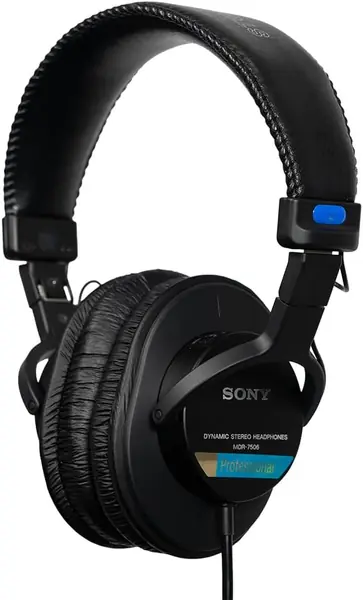
A 9.8-foot cable that does not detach is the first thing to know about the MDR-7506. In a studio that is the feature — you can walk to a rack without unplugging — but at a desk it is a lot of cord to manage, and a damaged cable means service rather than a swap. Sony includes a 1/4-inch adapter and a soft case, and the cups fold up for storage.

Set the cable aside and the case is simple: this is the cheapest way to hear what a studio hears, and the pair we trust when a mix has to be judged rather than enjoyed. The 40 mm neodymium drivers reach down to 10 Hz, the closed cups seal well enough to track with, and the balance is honest — it tells you what is in a recording instead of flattering it. At 63 ohms it runs from a laptop, though it asks for more volume than the low-impedance models here.

Comfort is the trade. The clamp is firm enough that long sessions turn uncomfortable, and the earpads are the first part to give out. For tracking, editing, and checking a mix against a reference, that is an acceptable bargain; for a flight or a commute it is not, which is what the noise-cancelling picks are for.

Pros

  • Studio-grade detail at the lowest monitor price
  • Closed cups with strong passive isolation
  • Folds into a soft case with a 1/4-inch adapter

Cons

  • 90-day warranty is the shortest here
  • Earpads wear out before anything else
Our verdict

For studio work and critical listening, this is the pair we trust — reference-flat sound and real isolation, if you can live with the fixed cable.

Check Latest Price
4

Sony MDR-M1 Best for Long Sessions

90 /100
TKZ Score Outstanding

Key details

Weight
7.62 oz
Driver
40 millimeters
Impedance
50 ohm
Cables
Two detachable cables
View on Amazon

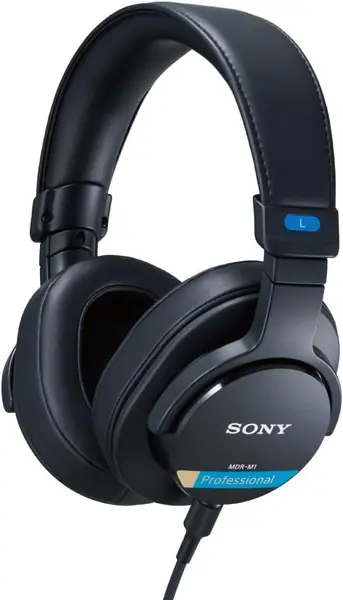
If your listening happens at a desk, this is the pair we reach for. The MDR-M1 is a closed-back monitor: it isolates without leaking, it runs from a laptop jack at 50 ohms without an amp, and it is built for the kind of session where you check the same eight bars forty times.

The details are what make that work. At 216 grams it is light enough to forget, the headband is wide and padded rather than a narrow strip, and the earpads are thick enough to keep pressure off your ears. Two detachable cables come in the box at different lengths, so a short one can live on the desk and the long one can travel — and a snagged cable is a replacement, not a repair.

What we liked most is how little it editorializes. Detail is the point: you hear the room on a live recording and the difference between a good take and a bad one, and nothing in the tuning pushes one genre to the front. The trade is that the M1 is a tool first, so if you want a headphone that adds excitement to a commute, this is not it. Against the MDR-7506 it is the more comfortable, more serviceable pair; the 7506 remains the leaner buy.

Pros

  • Neutral detail built for editing
  • Wide padded headband at 216 grams
  • Two detachable cables in the box

Cons

  • Wired only, with no microphone
Our verdict

For desk work, the MDR-M1 is the pair we reach for: detailed, isolating, and comfortable enough for a full session.

Check Latest Price
5

Sony MDR-MV1 Best Open-Back for Mixing

89 /100
TKZ Score Excellent

Key details

Weight
7.97 oz
Impedance
24 ohm
Frequency Response
5 Hz to 80 kHz
Design
Open back
View on Amazon

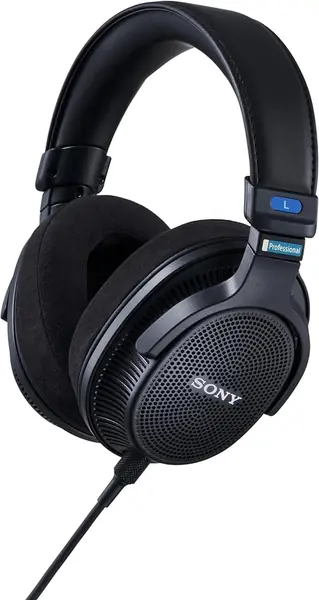
Open-back is a trade you make on purpose. The MDR-MV1's cups are open to the air, so the soundstage sits outside your head instead of between your ears — the effect people mean when they say a headphone sounds like speakers.

The hardware is genuinely nice: an aluminum alloy frame, suede earpads, 226 grams, and a detachable cable with a mini-jack adapter in the box. Of the pairs here, it is one of the least noticeable over a long session, and the gentle clamp means a four-hour mix does not leave your jaw sore.

For its actual job — mixing stereo and immersive audio — the open structure earns its keep. The 5 Hz to 80 kHz figure is the widest here, though what you notice is placement: reverb tails, panning, and the depth of a mix are easier to judge when the sound is not sealed into a cup. In an untreated home studio, that is closer to working on speakers than any closed pair in this guide.

For one reader the price is easy to justify: someone mixing in a room with a door that closes. The cost is leakage in both directions — a colleague two desks away hears your session, and a fan or a conversation lands in the mix — so this is a desk headphone for a quiet room, not a travel one. Everyone else is better served by the MDR-M1.

Pros

  • Speaker-like imaging for spatial mixes
  • 226 grams with suede earpads
  • Detachable cable and adapter included

Cons

  • Wired only, without noise cancelling
  • Costs the most of the monitor picks
Our verdict

Our choice for mixing: the open-back MDR-MV1 images like a pair of speakers, and we think that is worth the trade in isolation.

Check Latest Price
6

Sony WH-CH720N Best Budget Noise Cancelling

88 /100
TKZ Score Excellent

Key details

Weight
6.77 oz
Driver
30 millimeters
Battery
Up to 35 hours
Noise Cancelling
Active, dual noise sensor
View on Amazon

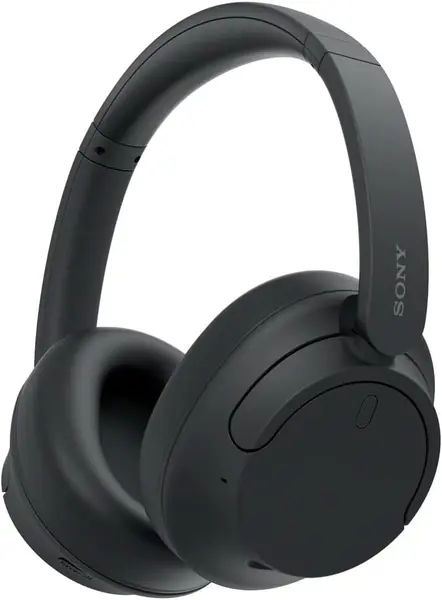
At 192 grams, the WH-CH720N is the lightest noise-cancelling headband Sony makes, and that number does real work: the weight stops being the reason you take them off.

The rest of the package is built for a commute. Thirty-five hours of battery, a three-minute charge that buys an hour of playback, multipoint that holds a laptop and a phone at once, and a 3.5 mm cable for a plane's seat-back screen.

Cancellation is the compromise. Dual noise sensors and Sony's V1 processor handle steady sound — an engine, a fan, a road — but conversation and office chatter come through, muffled rather than gone. That is the honest difference between this and a flagship, and it is also why the price is what it is.

What we appreciate most is how little it asks of you. It is light, it runs for days, and it sits around glasses without pinching, which is not guaranteed at this size. If you fly twice a month and want silence, step up to a flagship; if the headphones mostly live in a bag, this is the pair.

Pros

  • 192 grams, Sony's lightest ANC headband
  • 35 hours with a three-minute top-up
  • Multipoint plus a 3.5 mm cable

Cons

  • Bluetooth dropouts can interrupt playback
  • Sound leaks at higher volumes
Our verdict

This is the noise-cancelling pair we hand budget-conscious commuters: light, long-running, and easy to keep on all day.

Check Latest Price
7

Sony WH-CH520 All-Day Wireless

87 /100
TKZ Score Excellent

Key details

Weight
5.1 oz
Driver
30 millimeters
Battery
Up to 50 hours
Connections
Bluetooth only
View on Amazon

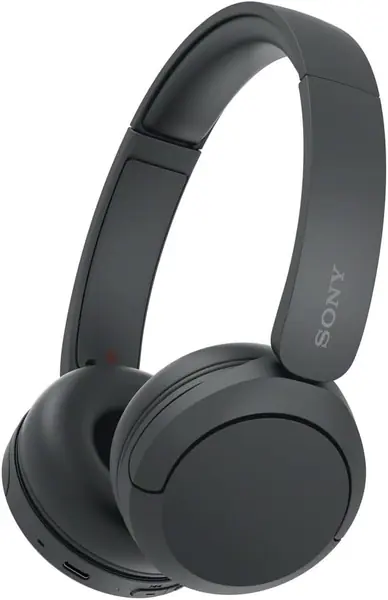
Fifty hours of playback is the headline, and it is the reason we treat the WH-CH520 as the default cheap wireless pick: this is a headphone that lives in a bag for a week and never asks for a charger.

The sound is better than the price suggests. The 30 mm drivers give you clear, balanced output rather than a bass cannon, the custom EQ in Sony's app lets you shade it toward your taste, and multipoint switches between a laptop and a phone without re-pairing. At 5.1 ounces it is light enough for a commute and a long shift.

What you give up is the hardware: no noise cancelling, no wired input at all, so a dead battery means silence until you find a charger. What you keep is the part that matters at this end of the market — clear sound and a battery that outlasts the week.

Pros

  • 50 hours on a single charge
  • Custom EQ and multipoint in the app
  • Light at 5.1 ounces

Cons

  • On-ear cups get tiring over long sessions
  • Plastic frame is the part to treat gently
Our verdict

We treat the CH520 as the default cheap wireless pick: clear sound, a 50-hour battery, and no noise cancelling to pay for.

Check Latest Price
8

Sony MDR-ZX110 Spare Wired Pair

86 /100
TKZ Score Excellent

Key details

Weight
4.76 oz
Driver
1.38 in
Cord
3.94 feet
Frequency Range
12 Hz to 22 kHz
View on Amazon

The least expensive pair here is the one we keep in a drawer for guests, kids, and the day the good headphones are charging.

You get more than the money suggests: 1.38-inch neodymium drivers, a claimed 12 Hz to 22 kHz range, swivel earcups that fold flat, and a 3.94-foot cord with an L-shaped plug that survives being shoved into a bag. At 24 ohms it plays loudly from anything with a headphone jack.

It sounds clear and unfussy — good enough for a kid's homework and an adult's podcast — and the closed cups take some edge off a bus engine. It will not replace a good pair of studio headphones, but it is the one we hand out without worrying about what comes back.

Pros

  • Clear sound for the lowest price here
  • Swivel cups fold flat for a bag
  • 24 ohms plays loud from a phone jack

Cons

  • Cord is the first thing to fail
  • On-ear fit runs tight on larger heads
Our verdict

Keep a pair of these as a backup: clear sound for the least money here, with no wireless and no microphone.

Check Latest Price

How We Picked and Tested These Headphones

Because the whole list comes from one lineup, the shortlist started as a spec comparison: wired versus wireless, open-back versus closed, on-ear versus over-ear, and where each pair sat on price so we weren't stacking near-duplicates against each other. That narrowed the field to 14 pairs, which we've now lived with for six months.

Every pair ran the same week of use: a morning commute on a crowded bus, an afternoon in an open-plan office, a couple of cross-country flights, and a desk where we edit audio. We played the same three tracks on each one — a bass-heavy track, a solo acoustic recording, and a dense mix — so differences in sound could be described in plain language instead of specs. For noise cancellation, we noted which sounds actually disappeared, like engine drone and HVAC hum, and which pushed straight through, like a conversation two rows back.

We timed how long pairing took, then made a call come in on a second paired device to see whether the handoff held, and watched video to check for lip-sync lag. Comfort got measured by the clock: four-hour stretches at the desk, a full flight, and a long walk with glasses on to see whether the seal broke. We weighed each pair, stuffed them uncased into a tote bag, dropped them from desk height once by accident and once deliberately, and tugged the cables on the wired models. Six months in, we compared earpads, hinges, and battery life against day one.

How to Choose Sound-First Sony Headphones

Start with wired or wireless

A wireless pair pushes your music through a Bluetooth radio, a converter, and a battery; a wired pair sends it down a cable. The practical difference is a charger and, eventually, a battery that holds less charge. Choose wireless if the headphones leave the house, and wired if they live on a desk and you want the simplest possible chain.

The trap is the jack. Phones have been dropping the 3.5 mm output for years, so check what you are plugging into before you order a wired pair. A dongle solves it, and the MDR-7506 ships with a 1/4-inch adapter for interfaces and amps.

Closed-back for isolation, open-back for space

Closed cups seal around your ear: they keep sound in, background noise out, and they are what you want in an office, on a train, or in front of a microphone. Open cups let air move, which is why the MDR-MV1 images like a pair of speakers, and why it leaks in both directions.

Pick open-back only if you have a quiet room and nobody to disturb. Commuters, shared apartments, and anyone tracking vocals are better served by a closed pair such as the MDR-M1 or the MDR-7506.

Weigh comfort before you weigh specifications

Two figures predict comfort better than any marketing claim: weight and clamping force. The lighter picks here run between 192 and 226 grams; at the top of that range you feel it in the last hour of a flight. Clamp matters more than weight if you wear glasses, and cup depth decides whether your ears press against the driver housing.

Buy from somewhere with a return window and wear the pair for two hours on the first day. If pressure builds at the temples or the pads flatten your ears, send them back. No amount of tuning makes up for a fit that hurts.

Know what the price steps actually buy

Past the entry level you are paying for processing rather than drivers. Moving from a budget wireless pair into Sony's 1000X line buys adaptive noise cancelling, a larger microphone array for calls, a better case, and newer Bluetooth. Those are real conveniences, and none of them changes whether a recording sounds good.

Driver size and frequency response are the weakest numbers to shop by. The 30 mm unit in the XM6 and the 40 mm units in the studio models are tuned for different jobs, and the MDR-MV1's 80 kHz ceiling sits far beyond anyone's hearing. Listen for tone and comfort instead.

Frequently Asked Questions

Final Verdict

The WH-1000XM4 is the Sony we recommend to most people: the sound holds up wireless or wired, the cancellation still handles a commute, and 30 hours means you stop thinking about the battery. The XM6 buys better microphones and newer processing, and it is the better travel headphone if calls matter.

If your listening happens at a desk, the MDR-M1 is the better tool: detailed, isolating, and comfortable for a full session. Buy for the room you listen in, not for the newest model number.