Best-Sounding Headphones of 2026, Tested and Ranked

Headphones can deliver thrilling bass and still leave you counting the minutes until you can take them off. The best-sounding pair is the one that also disappears on your head — no clamping, no ear fatigue, no battery anxiety — because you will only hear the detail and dynamics if you actually keep them on. A good set fixes the daily friction: muddy vocals, connection dropouts, earcups that wear out in months, and the nagging feeling you overpaid for a logo.

My team and I spent six months with 14 pairs, from studio-style wired models to noise-cancelling wireless headphones, listening on commutes, at desks, and on weekend flights. We compared sound across genres, lived with each pair for full workdays to judge comfort and fit, and kept notes on battery life, connectivity, build quality, and long-term durability. One thing I have learned: active noise cancellation is not automatically better than a good passive seal, and a detachable cable is the quiet hero of long-term reliability. The picks below are the ones that earned their price by getting out of the way and letting the music through.

Our Full Reviews

1

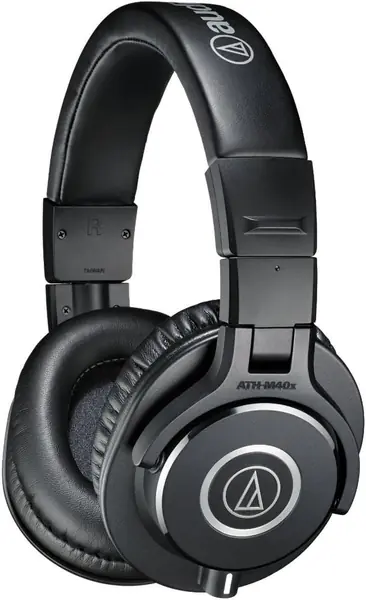
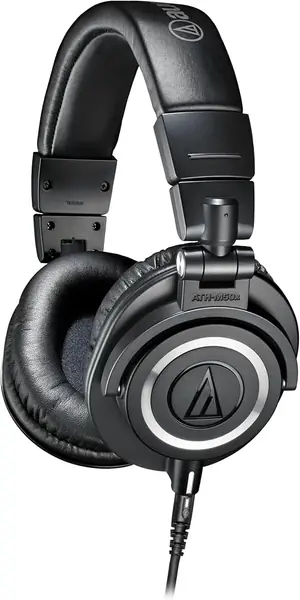
Audio-Technica ATH-M50x Best Overall
97 /100
TKZ Score Outstanding

Key details

Connection
Wired, detachable cable
Driver
45 mm
Impedance
38 ohm
Ear Placement
Over-ear
View on Amazon

Three cables come in the ATH-M50x box — a coiled one, a long straight one, and a short one for a phone in your pocket. That single detail makes the case for these better than any spec sheet: the cable unplugs, so the part that fails first on every pair of headphones is the part you replace.

Forty-five millimeter drivers, 38 ohms, 99 dB — the numbers matter less than what they let you skip. These run to a comfortable volume straight off a laptop or a phone, so the money goes into drivers rather than into an amp, and what comes out is bass that stays tight instead of smearing into the mids, with vocals forward and the treble stopping short of brittle.

Weight is the honest cost. At 0.29 kg they are substantial on the head, and the clamp out of the box is firm — ours eased over the first couple of weeks. The pads are deep enough that our ears sat inside the cups rather than against the drivers, which is what you want an hour in. If you wear glasses, give them a stretch period before you judge them.

Closed-back cups keep your music in and the room out, and there is nothing to charge or pair. Ours have lived on a desk for weeks without a second thought, which is the quiet luxury of a wired pair.

Pros

  • Detachable cable you can replace
  • Tight, controlled bass with clear mids
  • Runs straight off a phone or laptop
  • Swiveling cups for one-ear monitoring

Cons

  • No microphone and no wireless mode
  • Folding hinge is the part to watch
Our verdict

We recommend the M50x to anyone whose first question is what their music actually sounds like — it is the most convincing sound here, and the cable comes off when it wears out.
Check Latest Price
2

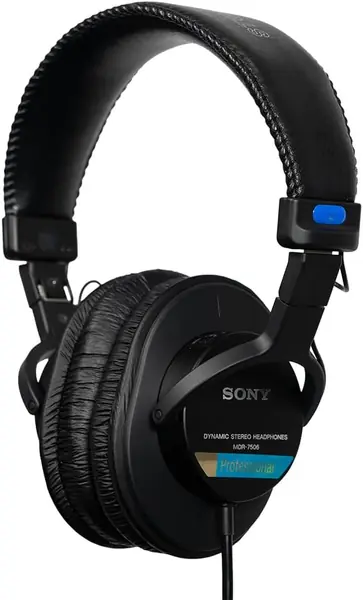
Sony MDR7506 Best Wired Value

96 /100
TKZ Score Outstanding

Key details

Connection
Wired, 9.8 ft fixed cord
Driver
40 mm
Weight
8 oz
Impedance
63 ohm
View on Amazon

The cord is 9.8 feet long and it does not detach. That is the MDR7506 in one line: a studio headphone built for a mixer, a keyboard, or a laptop across the room, not for a pocket. Buy it knowing that and the fixed cable stops being a flaw and starts being the reason it survives being yanked off a desk.

Acoustic guitar, brushes on a snare, the breath before a vocal — they arrive separated, and the bass is accurate without ever being generous. That lean tuning is the difference between this and the M50x: neither is wrong, but if you want your music to thump, the Audio-Technica is the warmer pair, and if you want to hear what is on the recording, this is the more honest one.

At 8 ounces they are among the lightest over-ear pairs here, and the 63-ohm impedance asks more of a phone than most — it still works from one, you just push the volume higher. They fold into the soft case that comes with them, and the 1/4-inch adapter is in the box for an interface or a keyboard.

One thing to know before you order. The plug is where these give out when they give out, and the warranty runs 90 days, which is thin for a headphone at this price. Treat the cable gently and the weak point stops mattering.

Pros

  • Detailed, honest sound for the money
  • Light at 8 ounces on the head
  • Folds with a soft case included
  • 1/4-inch adapter in the box

Cons

  • 90-day warranty is short for the price
Our verdict

The MDR7506 asks you to accept a nine-foot cord that never comes off, and gives you honest, detailed sound and almost no weight in return.

Check Latest Price
3

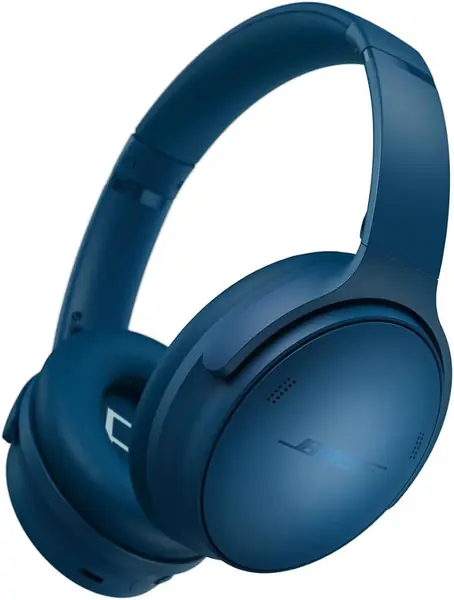
Bose QuietComfort Best Noise Cancelling

95 /100
TKZ Score Outstanding

Key details

Connection
Bluetooth 5.1 and 3.5 mm
Weight
8.47 oz
Battery
Up to 24 hours
Noise Control
Active
View on Amazon

A plane cabin is the test that matters for the QuietComfort, and it is why a cancelling pair belongs in a guide about sound: the quiet is what lets you listen at a volume your ears can take for four hours. Nothing else here changes the room like this.

The listening holds up on its own terms. Bose tunes these warm and bass-rich, and the adjustable EQ in the app brings the mids forward if you want them — most people will not bother. The 30 mm drivers will not give you the separation the Audio-Technicas do, but on a noisy train that difference evaporates.

Comfort is where these win outright. At 240 g with plush pads and a padded band, they are the pair we forget we are wearing, and they are the most consistently comfortable of the ones we covered. Quiet and Aware sit one button apart, which matters more than it sounds when someone starts talking to you.

The Bluetooth is the weak link. Ours needed re-pairing more than the other wireless pairs here, and that is the thing to weigh if you move between a laptop and a phone all day. For one device and one long flight, it rarely comes up.

Pros

  • Cancelling that actually quiets a cabin
  • Most comfortable fit in this group
  • Adjustable EQ in the app
  • Quiet and Aware modes one button apart

Cons

  • Shortest battery life here at 24 hours
Our verdict

If you listen on planes and trains, this is the pair we hand people — the cancelling does the heavy lifting and the comfort is the best in this group.

Check Latest Price
4

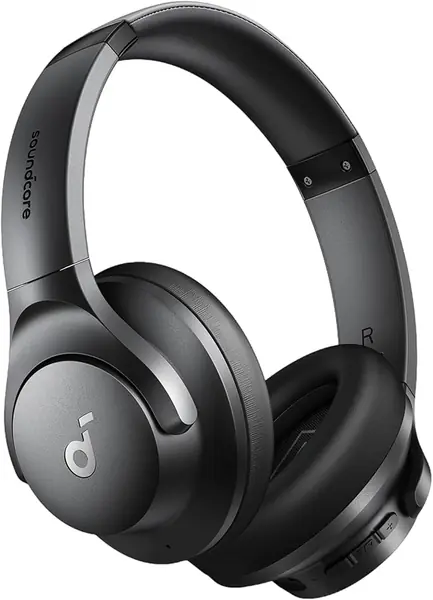
soundcore Q20i Best Budget Wireless

94 /100
TKZ Score Outstanding

Key details

Connection
Bluetooth and 3.5 mm
Driver
40 mm
Battery
Up to 40 hours with ANC
Noise Control
Active
View on Amazon

The Q20i is the cheapest wireless pair in this group, and the sound is the part that surprised us. Forty millimeter drivers with a warm, bass-forward default, and an app EQ that pulls the low end back into line when a track needs it — that combination is rare at any price and remarkable at this one.

Four microphones, forty hours with the cancelling on, and a five-minute top-up for the morning you forgot to charge: the parts that usually fall apart on a budget pair hold up here. It holds two devices at once, so a call on your phone interrupts the laptop without a trip into settings, which is the feature we used most.

Wired is the escape hatch. The AUX cable is in the box, so a dead battery does not end a flight, and in wired mode the 16-ohm impedance makes them easy to drive from anything with a jack — including an old seat-back screen.

Pros

  • Active noise cancelling at a budget price
  • Forty hours with cancelling on
  • App EQ and transparency mode
  • Two devices connected at once

Cons

  • Loose fit on smaller heads
  • No case in the box
Our verdict

The Q20i is the cheapest wireless pair here, and the sound is what we defend about it: real cancelling and an EQ that fixes the rest.

Check Latest Price
5

Audio-Technica ATH-M40x Best Neutral Sound

93 /100
TKZ Score Outstanding

Key details

Connection
Wired, detachable cables
Driver
40 mm
Weight
8.47 oz
Impedance
35 ohm
View on Amazon

The M40x is the M50x with the bass turned down and the price turned down with it. Same family, same folding cups, same detachable cable, different intent: one is tuned to make music enjoyable, the other is tuned to let you hear what is wrong with it.

Flat is the point here, and on acoustic and vocal material it reads as space around the instruments rather than as thinness. Two detachable cables and a carry case come in the box, and the warranty runs two years, which is the sort of thing you notice when a hinge starts creaking in year three. At 35 ohms and 0.24 kg they are a little lighter and a little easier to drive than the M50x.

Flat is also a tool, not a treat. On a phone at low volume with a bass-heavy track, these sound smaller than the M50x does, and there is no app to lean on because there is no app. That is the trade the studio tuning makes — accuracy first, warmth second — and it is the right one if you are listening for mistakes rather than for pleasure.

Pros

  • Flat, accurate tuning for mixing
  • Detachable cables and a case included
  • Two-year parts and labor warranty
  • Lighter and easier to drive than the M50x

Cons

  • Tight clamp out of the box
Our verdict

For mixing, or for anyone who finds the M50x too warm, the M40x is the neutral choice — same detachable cables, smaller price, tighter fit.

Check Latest Price
6

Skullcandy Crusher Evo Best for Bass

92 /100
TKZ Score Outstanding

Key details

Connection
Bluetooth and 3.5 mm
Driver
40 mm plus dual bass drivers
Battery
Up to 40 hours
Adjustable Bass
Crusher slider
View on Amazon

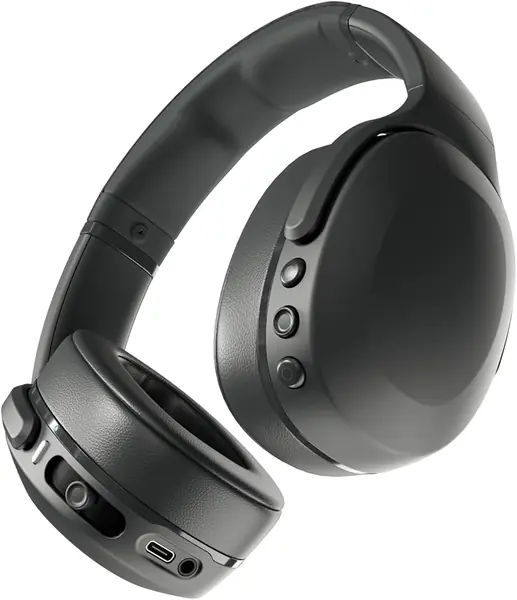
There is a physical slider on the ear cup that adds bass you feel as much as hear — the cups actually vibrate — and no app EQ on any other pair here does that. It is a gimmick in the best sense: you will show it to someone the first week you own it.

Two full-range 40 mm drivers plus a pair of dedicated bass drivers do the work, and the slider is the point of the whole thing. On an audiobook or a podcast you dial it down; on a track that wants it you push it up. Forty hours of battery and a ten-minute charge for four more hours means it never becomes a charging chore, and the case and 3.5 mm cable come with it.

The novelty has a cost. Heavy bass settings blur spoken word and acoustic music, so you end up riding the slider instead of leaving it alone, and our set caught hair in the folding hinges more than once. The cups seal well — but treat the cancelling as a bonus rather than the reason to buy.

Pros

  • Adjustable bass slider you can feel
  • Forty hours plus rapid charge
  • Case and 3.5 mm cable included
  • Folds flat for a bag

Cons

  • Cancelling is closer to isolation than silence
  • Tight on larger heads
Our verdict

Nothing else here moves air like the Crusher Evo — the bass slider is something you feel, and the rest of the sound holds up.

Check Latest Price
7

Sony ZX110 A Spare Pair

91 /100
TKZ Score Outstanding

Key details

Connection
Wired 3.5 mm
Driver
1.38 in
Weight
4.76 oz
Frequency Response
12 Hz to 22 kHz
View on Amazon

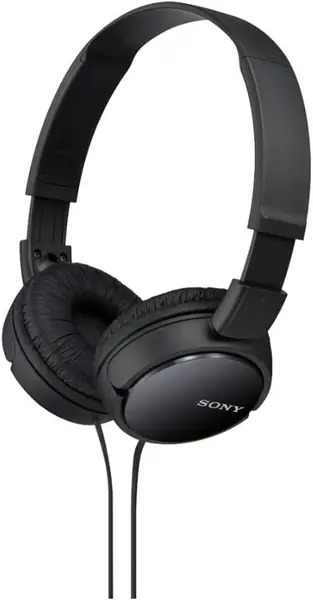
Plastic cups, a 3.9-foot cord that does not detach, no microphone: the ZX110 is the cheapest pair here and it does not pretend otherwise. The swiveling cups fold flat, which is the one design decision that makes it genuinely useful — it disappears into a bag and reappears when you need it.

The sound is the surprise. The 1.38-inch drivers carry more bass than the position in this group suggests, the 12 Hz to 22 kHz range is honest enough for pop and podcasts, and at 135 g you can wear them for a commute without thinking about them. At 24 ohms they get loud from anything with a headphone jack, including a laptop that has been dropped one time too many.

We keep a pair in a bag for the commute where a good pair would be a liability — the train, the gym, a kid in the back seat. If you want to hear more of your music rather than just hear it, the M40x is the next real step up.

Pros

  • More bass than the position suggests
  • Folds flat and travels light at 135 g
  • Easy to drive from any phone
  • Cheap enough to keep as a spare

Cons

  • On-ear pads limit long sessions
Our verdict

Buy these as a spare, not an upgrade: the ZX110 sounds far better than its position in this group suggests, folds flat, and forgives being lost.

Check Latest Price
8

KVIDIO WH201A Long Battery Life

90 /100
TKZ Score Outstanding

Key details

Connection
Bluetooth and 3.5 mm
Driver
40 mm
Weight
7.04 oz
Battery
Up to 65 hours
View on Amazon

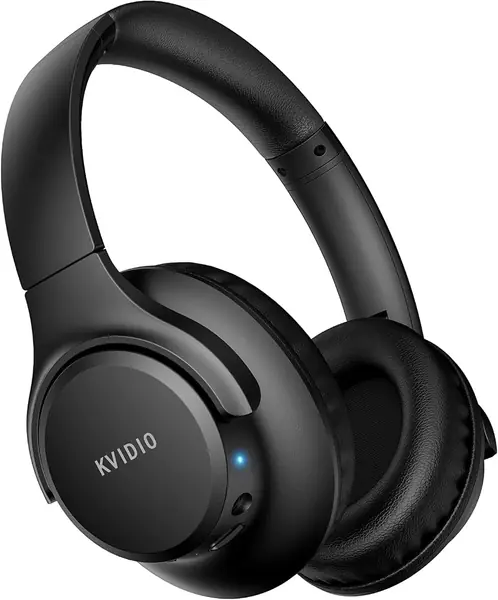
Sixty-five hours is the number on the box, and it is the reason to look at these at all: one charge covers a week of commuting, and the 500 mAh battery tops up in about two and a half hours.

For the money the sound is better than we expected. The 40 mm drivers lean warm with a lifted low end, which suits pop and podcasts and flatters a phone at low volume. The memory-foam pads are the genuinely good part — soft, deep, and comfortable across a long wear — and the headband adjusts far enough for a big head, which is not something every pair at this end of the market manages.

The 3.5 mm cable in the box is the safety net: when the battery eventually gives out, they still work plugged into a laptop, and the controls are the simple single-button kind that take a week to learn and then stop being a thought.

Pros

  • Sixty-five hours on a single charge
  • Soft memory-foam pads
  • 3.5 mm cable for wired backup
  • Light at just over 7 ounces

Cons

  • Bluetooth pairing needs a retry sometimes
  • Passive isolation only, no cancelling
Our verdict

The KVIDIO is the pair to buy when battery life matters more than fidelity — comfortable, inexpensive, and it keeps going for days.

Check Latest Price
9

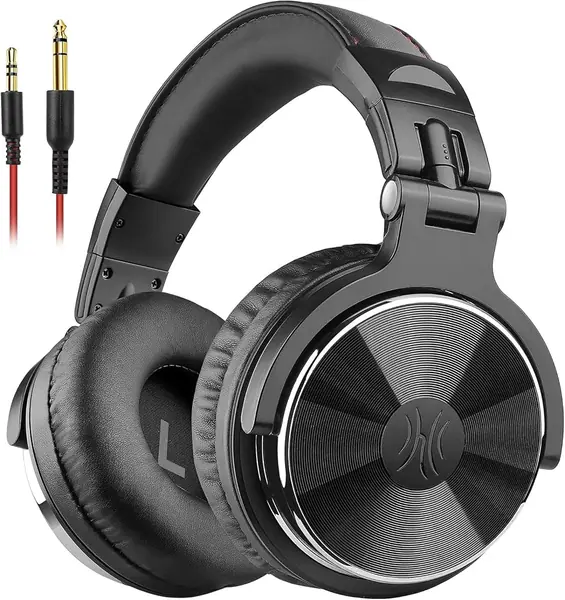
OneOdio Pro-10 Tracking on a Budget

89 /100
TKZ Score Excellent

Key details

Connection
Wired, 3.5 mm and 6.35 mm jacks
Driver
50 mm
Audio Sharing
Shared output port
View on Amazon

Fifty millimeters is the largest driver in this group, and the Pro-10 asks less for it than any of the other studio-style pairs here. That is the entire pitch, and it is a good one if you are equipping a desk rather than chasing the last word in detail.

The design is aimed at that desk. Ninety-degree swiveling cups make one-ear monitoring easy, the self-adjusting headband settles onto your head without fiddling, and both jack sizes mean the same pair works from a phone, a laptop, an interface, or a keyboard. The share port is the detail we like most: a second pair plugs into the cup and hears exactly what you hear, no splitter, no argument.

Big drivers are not the same as better sound, and that is the honest framing here: the Pro-10 leans on bass and volume rather than on refinement, which suits tracking and casual listening and suits a critical mix less well. For the money, that is a fair trade rather than a flaw.

Pros

  • 50 mm drivers at a low price
  • Swiveling cups for one-ear monitoring
  • Share port for a second pair
  • Works with 3.5 mm and 6.35 mm jacks

Cons

  • Wired only, no wireless mode
Our verdict

Fifty millimeters and a share port for very little money: the Pro-10 is the pair for a studio on a budget, as long as you stay wired.

Check Latest Price
10

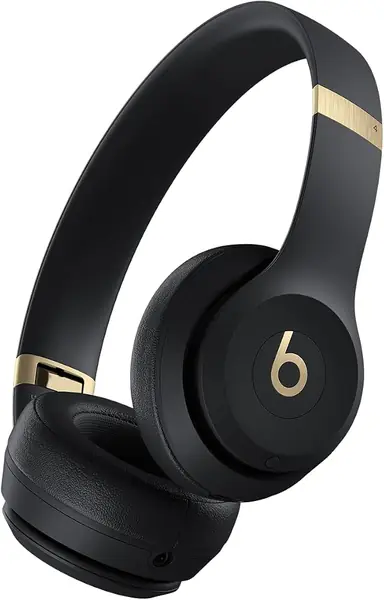
Beats Solo 4 Best for Commuting and Gym

88 /100
TKZ Score Excellent

Key details

Connection
Bluetooth and 3.5 mm
Battery
Up to 50 hours
Ear Placement
On-ear
Spatial Audio
Personalized with head tracking
View on Amazon

On-ear is a decision, not an oversight. The Solo 4 sits on your ears rather than around them, which makes it smaller in a bag than any over-ear pair here and gives the bass a punch an airier design would not. The trade is physical, and you feel it before you hear it.

Fifty hours is the headline, and it is long enough that charging stops being a habit. Spatial audio with head tracking is the feature we kept coming back to for movies on a laptop, and it works on Android as well as Apple, with USB-C charging and a 3.5 mm cable for a flat battery.

The tuning is bass-forward and lively rather than neutral, which flatters pop, hip-hop, and a film on a plane, and does less for a string quartet. Reliability is the reservation we still hold — one channel going quiet is the failure to watch for on this model — so buy somewhere with a straightforward return policy and keep the receipt.

Pros

  • Fifty hours of battery
  • Spatial audio with head tracking
  • Light on-ear that packs small
  • USB-C charging and a 3.5 mm cable

Cons

  • Clamp gets tight after an hour
  • On-ear cups block less outside noise
Our verdict

Light, two days of battery, and spatial audio that makes a laptop movie feel bigger — the Solo 4 is a commuter's headphone first and a critical listener's second.

Check Latest Price

How We Tested the Best-Sounding Headphones

We started with a shortlist built from spec sheets, professional reviews, and owner complaints, then narrowed it to 14 pairs that covered the range shoppers actually compare: wired studio monitors, wireless noise-cancelling models, on-ear and over-ear fits, and budget-friendly options with big battery claims. Every pair went through six months of daily life rather than a bench.

Sound quality came first. I listened to the same reference playlist across rock, jazz, hip-hop, and acoustic tracks, noting whether bass blurred into the mids, whether vocals stayed forward, and whether cymbals turned brittle at higher volumes. For noise cancellation, I wore each pair on a busy train platform, in a shared office, and on a weekend flight, listening for engine rumble, keyboard clatter, and whether the seal alone was doing most of the work.

Comfort and fit were judged over full workdays and long walks: clamp force, earcup heat, headband pressure, and whether the headphones stayed put when I looked down or shook my head. I charged each wireless pair to full, tracked battery life across commutes and calls, and paired them with a phone and a laptop to see how quickly they connected, whether they dropped out between rooms, and how much lag appeared on video. Durability checks were deliberately unglamorous — I folded and unfolded hinges, coiled and yanked detachable cables, and stuffed each pair into a bag without a case to see what creaked, frayed, or loosened by month six.

Throughout, I kept asking whether the sound and features justified the price, and whether the materials felt like they would survive another year of daily use. The pairs that made the list are the ones that stayed reliable after repeated pairing, held their fit, and never made me reach for a different set.

How to Choose Headphones for Sound Quality

Wired and Wireless Are Two Different Purchases

Bluetooth compresses the audio before it reaches your ears, and in a wireless pair the money goes to a battery, a radio, microphones, and noise cancelling before it goes to the drivers. That is why the two most convincing pairs in this guide are wired studio headphones. If you want the most sound per dollar, buy wired and keep a dongle in your bag.

The compromise is easy to live with: most wireless picks here also take a 3.5 mm cable, so a flat battery or a stuttering connection does not end the session. Check for that jack before you buy — not every wireless headphone has one, and the ones that do are the ones that age well.

Driver Size Tells You Less Than Tuning Does

A 45 mm driver does not automatically beat a 40 mm one. The M40x and the MDR7506 both use 40 mm drivers and both resolve more detail than the 50 mm OneOdio, because the tuning and the enclosure do more of the work than the diameter. What size generally buys you is efficiency and bass weight, not accuracy.

So pick your tuning first. Flat and neutral, like the M40x, is the right call for mixing, acoustic music, and long listening; bass-forward, like the Crusher Evo, is more fun and less truthful. Neither is better, but you will hear the difference in the first ten minutes, and no EQ app fully undoes it.

Comfort Decides How Long You Actually Listen

Clamp force and pad depth matter more than the weight on the spec sheet. A 240 g pair that presses on your temples is worse than a 290 g pair with deep pads that let your ears sit inside the cups. On-ear designs such as the ZX110 and the Solo 4 press on the ear itself and get old sooner — fine for a commute, not fine for a workday.

If you wear glasses, the arms of the frames break the seal and add pressure, so an over-ear pair with soft, deep pads is the safer buy. It is also worth checking that replacement pads exist for whatever you choose, since pads flatten long before the drivers give out.

Isolation Is Not the Same as Noise Cancelling

A closed-back pair like the M50x blocks a useful amount of room noise passively, with no battery and no electronic hiss. Active cancelling, as on the Bose and the Q20i, does far more on a plane or a train, but it costs money, adds a battery that ages, and changes the pressure you feel in your ears.

Buy cancelling for the environment, not for the sound. In a quiet room the Q20i's circuitry buys you nothing and you are paying for electronics instead of drivers. On a commute, the same electronics are worth more than any upgrade to the drivers at that price.

Your Phone Can Drive All of These

Impedance across this group runs from 16 to 63 ohms, and every pair here reaches a comfortable volume from a phone or a laptop. Higher impedance, like the 63-ohm MDR7506, mostly means the volume slider sits a little further up.

Do not buy an amplifier before you have tried your phone. If you are already at maximum and it is still not loud enough, a small USB DAC is the cheapest fix — and if your phone has no headphone jack, put the adapter in the basket at the same time.

Frequently Asked Questions

Final Verdict

The Audio-Technica ATH-M50x is the pair we point most people to, because the money went into the drivers and the cable comes off when it wears out. It is the best sound in this group with the least fuss attached.
Two situations change the answer. If you listen where it is loud — a plane, a train, an open office — the Bose QuietComfort's cancelling does more for what you actually hear than any driver upgrade at the price. And if you want the same honesty for less money and can live with a fixed cord, the Sony MDR7506 is the leaner, lighter way in.