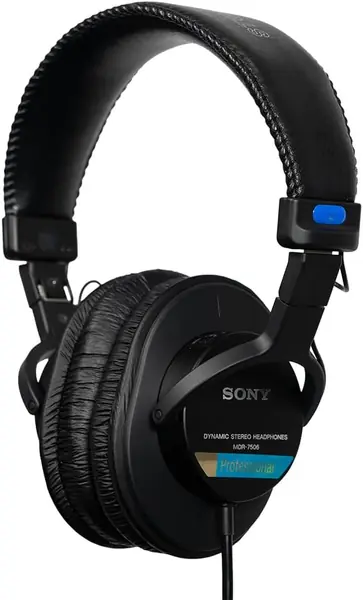
Best Sony Over-Ear Headphones of 2026

The engine hum starts somewhere over the Atlantic and doesn't stop for six hours. That's when noise cancellation stops being a spec-sheet line and becomes the reason you paid more — and when a lot of headphones quietly disappoint, thinning the roar without ever removing it. A good pair erases the drone, stays comfortable past hour four, and still has charge when you land.

Comfort is where shoppers get surprised: clamp force matters more than cushion depth, and plush in the first ten minutes can ache by hour three. We spent six months with nine pairs — commutes, desks, two long-haul flights — and the gaps in fit, connection stability, and how the noise cancelling handled a crowded café versus a cabin were wider than I expected.

Battery claims deserve a raised eyebrow too, and so does the price ladder — the honest pairs still hold a charge after a week of careless use and still feel worth it. Below are the ones that earned the spot and who each one suits.

The Best Sony Over-Ear Headphones

1

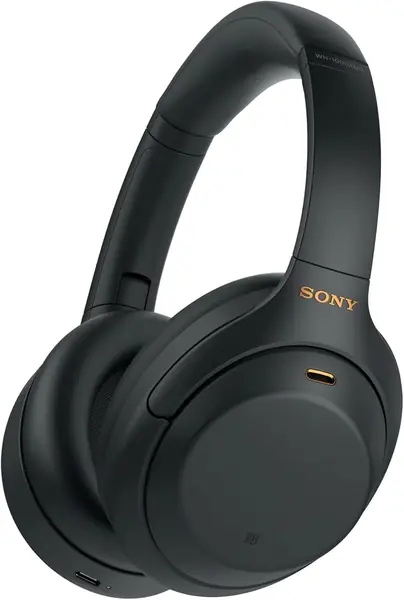
Sony WH-1000XM4 Best Overall
93 /100
TKZ Score Outstanding

Key details

Weight
9 oz
Battery Life
Up to 30 hours
Drivers
40 mm dynamic
Quick Charge
10 min for 5 hours
View on Amazon

Sony's flagship line now comes in two flavors: the newest noise-canceling chip, or the one we keep recommending. This is the second. The WH-1000XM4 is the pick we're most confident handing to almost anyone — it quiets a plane cabin, it holds a 30-hour charge, and ten minutes on a USB-C cable buys five more hours of playback.

Its best work is on steady, low-frequency noise. The dual noise sensor setup goes after engine drone, air conditioning, and the rumble of a train, and it does it without the cabin-pressure feeling that some cancellation designs produce. Five microphones handle calls, and the touch panel on the right cup covers volume, track skips, and your voice assistant without a reach for the phone.

Two hours in is where the earcups start to make themselves known. They're soft, and the 9-ounce frame is light enough that the top of your head forgets about it, but the pads warm up and press a little if you wear glasses. Speak-to-Chat is the feature we ended up using every day: start talking and the music drops, so you can order a coffee without pulling them off.

The case is the detail that sells it for travel — slim enough to slide beside a laptop rather than claiming a rectangle of its own. Against the WH-1000XM6 you give up some silence and the folding hinge. Against everything else here you give up very little.

Pros

  • Cancels engine drone without cabin pressure
  • Thirty hours, plus five more from ten minutes
  • Slim case slides next to a laptop

Cons

  • Earcups warm up and press on glasses
Our verdict

We recommend the WH-1000XM4 to most people: balanced noise canceling, a real 30 hours, and a slim case that travels well.
Check Latest Price
2

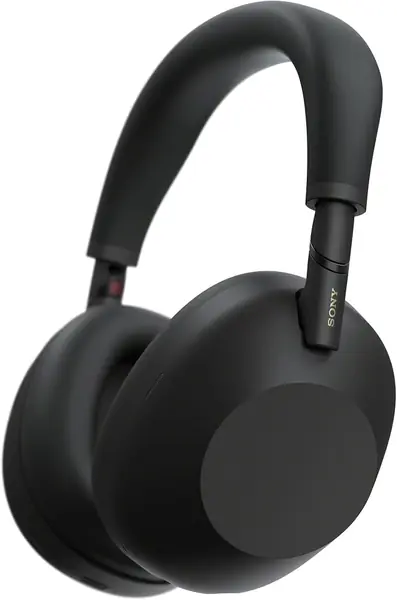
Sony WH-1000XM6 Best Noise Canceling

90 /100
TKZ Score Outstanding

Key details

Weight
8.96 oz
Battery Life
Up to 30 hours
Bluetooth
5.3
Microphones
12 noise-canceling mics
View on Amazon

Twelve microphones, a processor Sony says runs seven times faster than the chip in the previous generation, and an optimizer that retunes cancellation as you move. That's the pitch, and it holds up: this is the quietest headphone in this group, and the gap is widest on the low rumble that makes a long flight tiring.

We think the extra money is justified only when silence is the whole reason you're shopping. Everything else is close. Sound is clean and detailed, calls run through a six-microphone beamforming array that keeps your voice steady in wind, and the 30-hour battery matches the WH-1000XM4. In a quiet room the two are hard to tell apart, which is exactly where the premium stops mattering.

Fit asks more of you here. The cups are shallow, the headband stops short of the smallest heads, and the 8.96-ounce frame that feels fine for an hour starts to press by the third. If over-ears usually sit on your ears instead of around them, this is the one to try before you commit.

The folding hinge and magnetic-closure case are the improvement we appreciated most — they go flat into a backpack instead of claiming a slab of space. That matters more than it sounds when the alternative is carrying a hard rectangle every day.

Pros

  • The strongest noise canceling of this set
  • Six-mic beamforming keeps calls clear outdoors
  • Folds flat into a magnetic-closure case

Cons

  • Shallow cups and a short headband range
  • Costs noticeably more than the WH-1000XM4
Our verdict

Buy the WH-1000XM6 if noise cancellation is the reason you're shopping; it's the quietest here, provided the shallow cups suit your head.

Check Latest Price
3

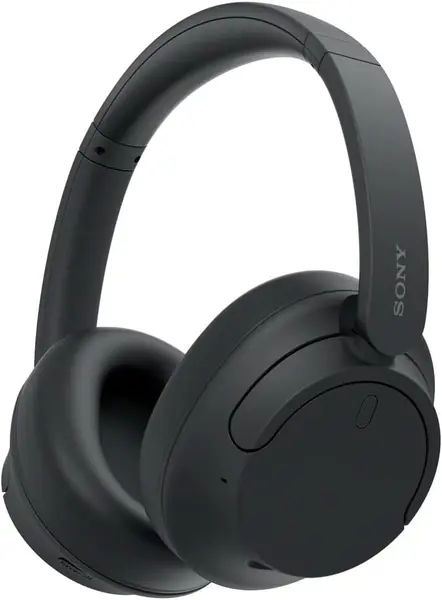
Sony WH-CH720N Best Budget

89 /100
TKZ Score Excellent

Key details

Weight
6.77 oz
Battery Life
Up to 35 hours
Quick Charge
3 min for 1 hour
Multipoint
Yes, two devices
View on Amazon

At 192 grams, this is the lightest headphone Sony has built with noise canceling inside it, and that figure is most of the review: eight hours into a workday you stop noticing it's there. It's also the least expensive way into Sony's cancellation, which makes it the default for anyone who wants the feature without the flagship bill.

The cancellation is where the savings show. It muffles — the HVAC hum, the keyboard clatter, the conversation two desks over — without the near-silence of the WH-1000XM4, and the ambient mode takes fiddling in the app before it behaves the way you expect. For a commute or a shared office, though, muffled is most of the benefit at a fraction of the cost.

Battery is the pleasant surprise: 35 hours, the longest of the wireless picks here, and three minutes on USB-C returns an hour of playback. Multipoint pairing lets a laptop call interrupt a phone playlist without re-pairing anything — the kind of feature you notice only when it's missing.

Two small annoyances come with the low weight. The volume and power buttons sit flush against the cup and are hard to find by feel in a dark room, and nothing in the box protects the headphones once they're loose in a bag. The 3.5 mm jack and the included cable mean a dead battery doesn't end the listening.

Pros

  • 192 grams disappears on your head
  • 35-hour battery, an hour back in three minutes
  • Multipoint holds a laptop and a phone

Cons

  • Cancellation muffles rather than silences
  • No case in the box
Our verdict

We point most commuters and students to the WH-CH720N: 192 grams, 35 hours, and the least expensive way into Sony noise canceling.

Check Latest Price
4

Sony MDR-7506 Best Wired

88 /100
TKZ Score Excellent

Key details

Weight
8 oz
Drivers
40 mm
Cord Length
9.8 feet, fixed
Frequency Response
10 Hz to 20,000 Hz
View on Amazon

Nine and a half feet of cable is either the best thing about these headphones or the reason to keep looking. At a desk or a mixing board that length means you can lean back in the chair, and the included 1/4-inch adapter lets an interface or a headphone amp take them without a dongle.

This is the oldest design in the group and still the one we reach for when the job is hearing what's actually in the file. The 40 mm drivers run from 10 Hz to 20 kHz without the bass lift that makes a commute fun, and the closed-back cups keep your mix out of the microphone while knocking down room noise with no electronics at all. No battery, no firmware, no app.

The trade-off is clamp force. The pads sit tight enough that a short session is fine and a long one isn't, and they're the first thing to wear through. The cable isn't detachable either, so a snag is a repair rather than a swap.

For recording, editing, or simply a pair that never needs charging, that's a fair exchange. They fold into the soft pouch that comes with them, and the 90-day warranty is the one figure here we wish were larger.

Pros

  • Flat, detailed sound for editing and monitoring
  • Closed-back cups cut room noise passively
  • 9.8-foot cord reaches across a desk

Cons

  • Firm clamp gets old within an hour
  • Cable isn't detachable
Our verdict

If your listening happens at a desk, the MDR-7506 is the wired pick we trust: clear, isolating, and free of charging.

Check Latest Price
5

Sony MDR-ZX110 Best for Backup and Kids

50 /100
TKZ Score Fair

Key details

Weight
7.05 oz
Impedance
24 ohm
Microphone
Inline with one button
Connectivity
Wired, 3.5 mm jack
View on Amazon

This is the pair that lives in a backpack and gets replaced without a second thought: wired, folding, and simple enough that a kid can work it. There's no battery to charge and no pairing to argue with, which is most of the appeal of a second set or a desk spare.

Sound is clear rather than bass-heavy, and the cups stay comfortable through a long reading session. An inline microphone and a single button cover calls and track skips, which is about what this corner of the market buys anywhere.

Where the price shows is the covering on the pads. The foam and the black material break down with use, and a few months of daily handling leaves them flaking. The headband has limited range too, so a larger head feels the cups sooner than it would on anything else here. As a spare or a first set we're comfortable with that; as an only pair we aren't.

Pros

  • No battery, no pairing, no app
  • Clear, balanced sound for the money
  • Folds flat into a backpack

Cons

  • Ear pad covering breaks down with use
  • Limited headband adjustment
Our verdict

The MDR-ZX110 is the cheap wired spare we keep on hand: clear, foldable, and honest about its pads wearing out.

Check Latest Price

How We Chose and Tested These Headphones

To build the shortlist, we started with the current lineup — wireless noise-cancelling models alongside the wired studio-style pair people still buy for editing — then read spec sheets, user reviews, and return complaints, cutting anything that duplicated a price tier or a use case. Nine pairs made it through, and we've lived with them for six months.

Each pair got a full workday at a desk, a daily commute, and a place in the bag on two long-haul flights, plus café time where background chatter competes with whatever you're listening to. Sound was judged the same way every time: the same playlist and the same podcast episode, at low and high volume, listening for whether bass muddied the mids and whether voices stayed forward.

Noise cancelling was measured against real noise rather than a demo booth — how much of a plane's low rumble, a café's clatter, and an office HVAC system disappeared, and whether my ears felt pressurized after an hour. Comfort came down to clamp force, hot spots on the crown and around the ears, and whether the fit survived a full day with glasses on. For connectivity, I counted dropouts walking two rooms away and timed how long each pair took to hand off between a laptop and a phone.

By the end we'd folded and unfolded each pair a few hundred times, stuffed them loose into bags, and checked hinge play and pad wear — the reliability questions no week-long test can answer. Battery life was logged against the maker's claim, and value came down to what the extra money actually bought.

How to Choose Sony Over-Ear Headphones

Wireless or wired comes first

If you listen at a desk, at a keyboard, or through an audio interface, the wired models here do the job with nothing to charge and nothing to pair. The MDR-7506 gives you a 9.8-foot cable and a 1/4-inch adapter; the MDR-ZX110 gives you an inline microphone for calls. Move between rooms, flights, and video meetings and you want Bluetooth, which is where the rest of this lineup sits.

One trap worth naming: a 3.5 mm jack on a wireless pair is a rescue line, not a wired headphone. The WH-CH720N's cable works when the battery is flat, but its tuning and controls were built around Bluetooth. Buy wired on purpose or buy wireless on purpose.

How much noise canceling you actually need

Cancellation is tuned for steady, low-frequency sound — engines, HVAC, the drone of a train — and every model here still lets voices and clatter through to some degree. The ladder inside this lineup is short: the WH-CH720N muffles, the WH-1000XM4 quiets, and the WH-1000XM6 all but removes it.

So match the spending to the noise. If your problem is a chatty open office, paying for the top of the ladder buys less than you hope. If it's a weekly flight or a train commute, the step up is the difference between arriving tired and arriving fine.

Fit: the specification that isn't on the box

Cup depth and headband range decide more day-to-day comfort than any figure in the listing. A headphone whose cups sit on your ears instead of around them will ache no matter how light it is, and a headband that stops short of its smallest setting never quite seals.

Two checks before you order: whether the headband adjusts small enough for the person who will wear it, and whether the cups are deep enough for their ears. The WH-1000XM6 runs shallow and snug; the MDR-7506 clamps firmly. Buy somewhere with a return window you can live with.

Battery claims and what they mean in practice

The wireless picks claim 30 to 35 hours, which is roughly a week of commutes rather than a month of anything. Volume and cancellation both draw it down, and cold weather takes a bite out of any lithium cell.

Quick charging is the more useful number. Three minutes on the WH-CH720N returns an hour; ten minutes on the WH-1000XM4 returns five. For travel, that's the figure to compare, because it decides whether a forgotten cable ruins a trip.

The two parts that fail first

Hinges and ear pads are where over-ear headphones give out. The plastic joints that let a headphone fold are also the piece that cracks, and the pads take every bit of skin oil and hair product you bring to them.

That makes storage part of the purchase: a case that lives in your bag keeps the hinge from being the thing that ends the relationship. It also means checking whether replacement pads are sold before you need them — a wear item you can swap is a cheap fix, and one you can't is a new pair.

Frequently Asked Questions

Final Verdict

Most people should buy the WH-1000XM4. It's the balance point of this lineup: cancellation that handles a plane, 30 hours of battery, a case that slides into a laptop bag, and fewer compromises than anything else here.

Spend more only if silence is the entire point — the WH-1000XM6 is noticeably quieter and worth the step for frequent flyers, provided its shallow cups suit your head. For a cheaper commute, the WH-CH720N is the light one that lasts all week. And if your listening happens at a desk, the MDR-7506 is still the wired answer.