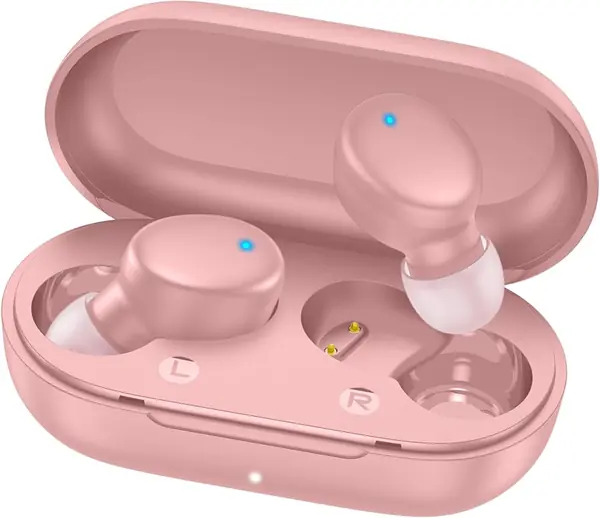
Best Small Headphones of 2026

Small headphones make a promise the spec sheet can't back up: shrink the shell, keep everything else. Something always gives — the bass goes thin, the battery quits by mid-afternoon, or the buds wiggle loose the second you start walking. I've lost more tiny earbuds to jacket pockets and sidewalk grates than I care to count.

Over the past four months, my team and I wore 14 pairs through commutes, gym sessions, long desk days, and a couple of flights. We weighed them, ran the batteries flat on purpose, and paired each one to a phone and a laptop at once. Size turned out to be the easy part; fit, honest battery life, and controls you can work without looking decide whether a pair stays in rotation.

One thing worth knowing before you shop: in buds this small, noise cancellation mostly dulls engine rumble, not conversation, so a secure seal and multipoint pairing do more for a noisy office than an ANC badge. Some of these are near-invisible sleep buds, others lightweight on-ear sets, and none of them made the cut on size alone.

The Best Small Headphones

1

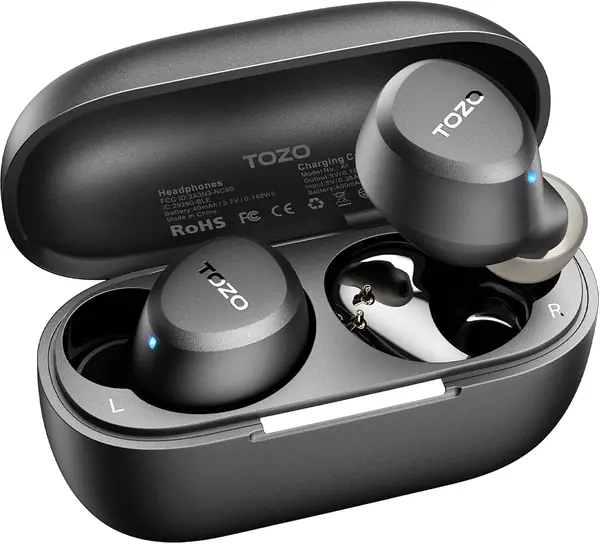
TOZO A1 Wireless Earbuds Best Overall
90 /100
TKZ Score Outstanding

Key details

Battery Life
7 hours (32 hours with case)
Bluetooth
5.3
Earbud Weight
0.13 oz
Water Resistance
IPX5
View on Amazon

The first thing we check on a small headphone is whether the shell disappears in the ear, and the A1 is built for that: 3.7 grams per bud, a rounded tip, and a shape TOZO markets for small ears. That combination earns it our top spot. The case is small enough for a coin pocket, and the 7-hour single charge means we are not reaching for the case at lunch.

Sound is tuned for everyday listening rather than critical detail: clear vocals, balanced mids, and enough bass for podcasts and pop. The app's EQ is a genuine help if the default is too warm or too flat. Bluetooth 5.3 paired quickly in our testing, and the IPX5 rating means sweat or a light rain is not an emergency.

What keeps this from being a universal pick is the fit ceiling: the same small shell that stays put in smaller ears can feel loose in larger ones, so try the included tips before you commit. For the money, we have not found another pair here that balances size, battery, and app control as neatly.

Pros

  • 3.7-gram buds stay light in small ears
  • Seven hours per charge, 32 hours with case
  • App EQ and IPX5 flexibility

Cons

  • One earbud can stop working over time
  • No active noise cancellation
Our verdict

We recommend the TOZO A1 first for small ears: it pairs a 3.7-gram bud with 7 hours of playtime, a 32-hour case, and a budget price that makes trying it low-risk.
Check Latest Price
2

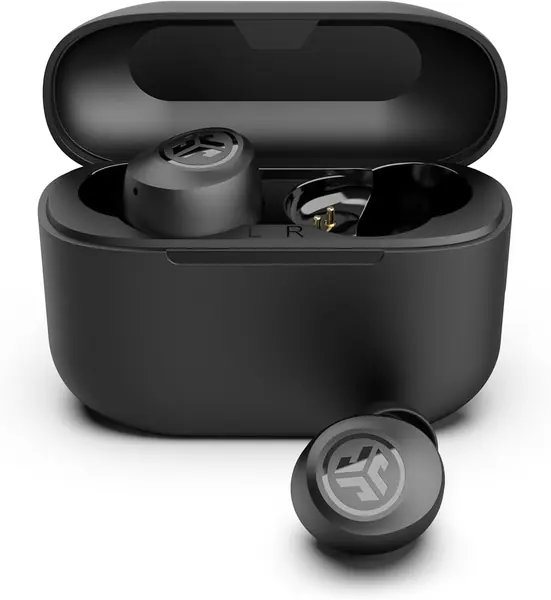
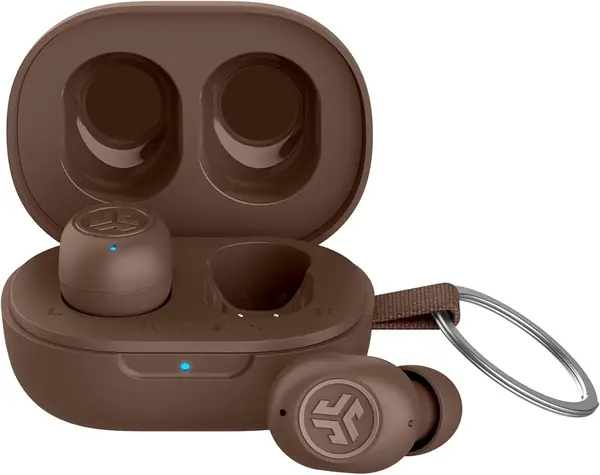
JLab JBuds Mini Tones Best for Tiny Ears

89 /100
TKZ Score Excellent

Key details

Battery Life
5.5 hours (20 hours with case)
Bluetooth
5.3
Earbud Weight
0.12 oz
Water Resistance
IP55
View on Amazon

Compared with the TOZO A1, the JBuds Mini Tones take the small-ear brief more literally: 3.3 grams per bud and a shell JLab says is 30% smaller than its GO Pop+.

That size is the reason to choose them. The case is genuinely pocketable, the buds sit flush enough that a hood or a knit cap does not immediately knock them loose, and Bluetooth multipoint lets us jump between a laptop and a phone without re-pairing. IP55 is the right rating for gym use, and the JLab app lets us remap touch controls and add a volume limiter.

The 5.5-hour single charge covers a commute and a workout, and the case adds enough for a few days of light use. It is not an all-week battery, but the tiny case is not trying to be one. What you get in exchange is a shell that vanishes in ears where most buds feel enormous.

Pros

  • 3.3-gram buds are the smallest shell here
  • Bluetooth multipoint and app EQ
  • IP55 sweat and dust resistance

Cons

  • Passive isolation only, no ANC
Our verdict

We point tiny-eared listeners to the JBuds Mini Tones: at 3.3 grams and 30% smaller than JLab's GO Pop+, they are the smallest shell here, though the 20-hour total battery asks for more charging.

Check Latest Price
3

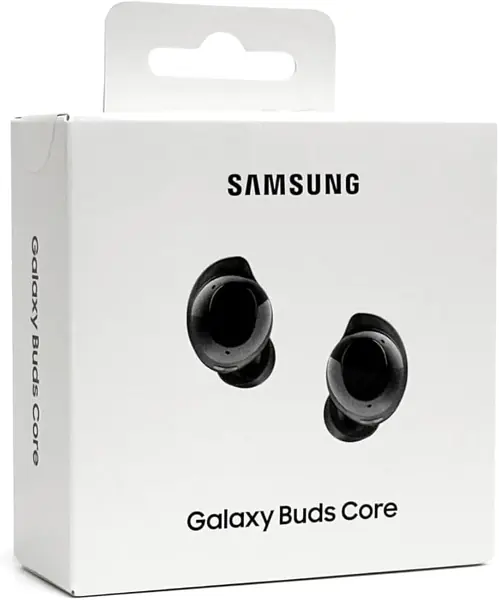
Samsung Galaxy Buds Core Best Noise Cancellation

88 /100
TKZ Score Excellent

Key details

Battery Life
Up to 35 hours
Bluetooth
5.4
Earbud Weight
0.19 oz
Noise Control
Active noise cancellation
View on Amazon

Active noise cancellation is the reason the Galaxy Buds Core stand out in this group. At 5.5 grams per bud, they are not the lightest here, but they are small enough to sit inside the ear without a stem hanging out, and the ANC gives commuters something the cheaper picks cannot match.

The sound is Samsung's usual consumer tuning: clear vocals, a lifted bass, and enough detail for streaming. The fit stays secure for many small-eared listeners, though the shell is firmer than the soft-tip designs, so comfort is the thing to check first.

Bluetooth 5.4, touch controls, and a 35-hour total charge round out the package. The case is compact, and the water-repellent finish is useful for light sweat or rain, not for swimming.

The 5.5-gram shell is the smallest ANC option here; for frequent flyers, that is the difference between a quiet flight and a pair that stays in the bag.

Pros

  • Active noise cancellation in a small bud
  • Secure fit for many small-ear listeners
  • Up to 35 hours with the case

Cons

  • Battery life is mixed over time
  • Connection can be finicky
Our verdict

For noisy commutes, the Galaxy Buds Core are our pick: active noise cancellation in a 5.5-gram bud, with a secure fit and up to 35 hours from the case.

Check Latest Price
4

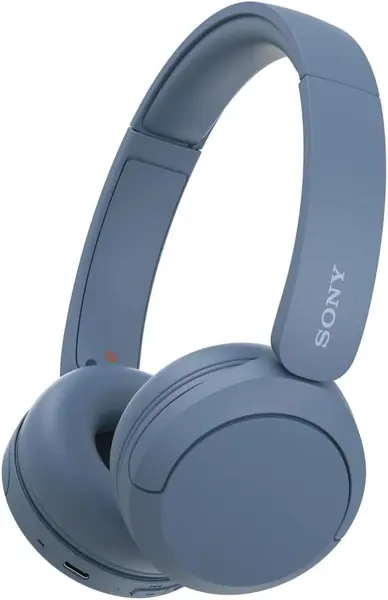
Sony WH-CH520 Best On-Ear Wireless

87 /100
TKZ Score Excellent

Key details

Battery Life
Up to 50 hours
Weight
10.6 oz
Connectivity
Bluetooth 5
Ear Placement
On-ear
View on Amazon

The WH-CH520 is for the listener who never got comfortable with ear tips. It is an on-ear headband, not a full-size over-ear, and the swivel earcups fold flat enough to slide into a bag.

At 0.3 kg, it is light enough to forget on a short walk, and the adjustable headband and soft pads spread the clamp. The sound is clear and balanced, with EQ in the Sony app if you want more bass.

Battery life is the real argument: up to 50 hours, with quick charging and multipoint for switching between a laptop and phone. That is the longest total here by a wide margin, and it means the headphone can live in a bag for a week without a cable.

We recommend it to commuters and remote workers who want one less thing to charge, not to someone who needs active noise cancellation or a pocket-size case. The on-ear design still leaks sound, so it is a poor fit for a crowded library.

Pros

  • Up to 50 hours of battery
  • Lightweight on-ear design with swivel cups
  • Multipoint and app EQ

Cons

  • No hard case included
  • No wired listening option
Our verdict

We keep the WH-CH520 for anyone who wants a lightweight headband instead of ear tips: 50 hours of battery, multipoint, and swivel cups for easy packing.

Check Latest Price
5

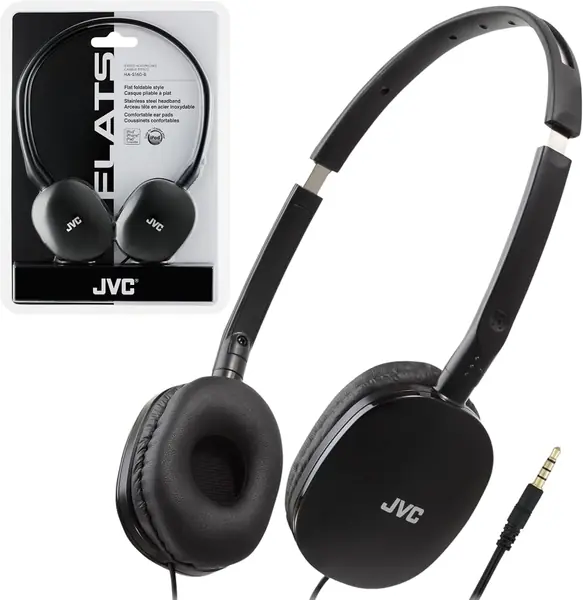
JVC HAS160B FLATS Best Wired On-Ear

86 /100
TKZ Score Excellent

Key details

Weight
2.33 oz
Driver Size
30 mm
Connectivity
Wired 3.5 mm
Frequency Response
12-24,000 Hz
View on Amazon

The JVC FLATS cost less than most of the wireless cases here, and they ask nothing of you but a 3.5 mm jack. At 66 grams, the headband is light enough to wear for a podcast or a walk, and the 30 mm drivers give voices and acoustic music a clean, unforced sound.

The fit is adjustable and snug without clamping hard, and the flat earcups fold into a bag without a case. This is the pair we keep for a wired laptop or a flight with an old seatback screen. The build is the honest limitation: the joints and foam pads are the parts that give out, so treat them as a light-duty backup rather than a daily commuter.

Pros

  • 66-gram headband is easy to wear
  • Clear sound from 30 mm drivers
  • Wired 3.5 mm connection needs no charging

Cons

  • No microphone or inline controls
  • Not water resistant
Our verdict

The JVC FLATS are the wired backup we reach for: 66 grams, clear sound, and no charging, with the caveat that the hinges and pads are the first parts to wear.

Check Latest Price
6

JLab Go Air Pop+ Best Budget Battery

85 /100
TKZ Score Excellent

Key details

Battery Life
9 hours (35 hours with case)
Bluetooth
5.3
Water Resistance
Water resistant
Case Footprint
Smaller than a credit card
View on Amazon

Nine hours from a single charge is the number that makes the Go Air Pop+ worth a look. That is longer than most small earbuds here, and the case adds 26 more hours while staying smaller than a credit card.

The buds are 15% smaller and 40% lighter than JLab's previous generation, and the fit is built around a rounded tip that sits flush in the ear. Bluetooth 5.3, Google Fast Pair, and the JLab app give you EQ presets, touch remapping, and a Be Aware mode for hearing traffic.

This is a budget pair, and the money goes to battery and size rather than premium materials. For a commuter who listens all day and does not want to think about charging, that is the right trade. We rank it behind the TOZO A1 for small-ear fit, but ahead of it for single-charge endurance.

Pros

  • Nine hours per charge, 35 hours total
  • Case is smaller than a credit card
  • App EQ, touch remapping, and Be Aware mode

Cons

  • No active noise cancellation
Our verdict

We recommend the Go Air Pop+ when battery life matters more than noise cancellation: nine hours per charge, 35 hours with the case, and a case smaller than a credit card.

Check Latest Price
7

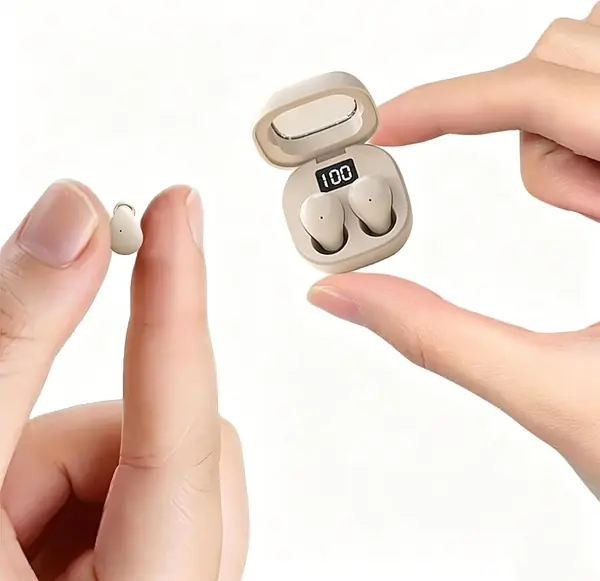
Ttbesmi Mini Invisible Earbuds Best for Discreet Sleep Listening

84 /100
TKZ Score Excellent

Key details

Battery Life
4-5 hours per charge
Bluetooth
5.3
Earbud Weight
0.08 oz
Water Resistance
Waterproof
View on Amazon

A side sleeper needs a bud that does not press into the pillow, and the Ttbesmi pair is built for that: 0.08 ounces per earbud, a low-profile rounded tip, and a nude finish that disappears against the ear. The charging case has a digital display, which is a small but useful touch when you are checking power in the dark.

The sound is tuned for podcasts and quiet music, not critical listening, and the 4-5 hours per charge is the shortest here. We rank it as a niche pick rather than a daily driver: for a nap, a night shift, or a workplace that discourages visible earbuds, the disappearing act is the point.

Pros

  • 0.08-ounce bud is the lightest here
  • Low-profile nude shell is genuinely discreet
  • Charging case with digital display

Cons

  • Connection and one-ear reliability can slip
Our verdict

For side sleepers and discreet listening, the Ttbesmi mini earbuds are the closest thing here to invisible: 0.08 ounces per bud and a skin-tone shell, with short battery life.

Check Latest Price
8

MOZOTER Mini Wireless Earbuds Marathon Battery

83 /100
TKZ Score Excellent

Key details

Battery Life
8 hours (60 hours with case)
Bluetooth
5.3
Weight
1.69 oz
Driver Size
10 mm
View on Amazon

The 60-hour total playtime is the first thing that jumps out about the MOZOTER Mini. That is 8 hours in the buds and the rest in the case, which puts it at the top of this group for total endurance and makes it a sensible glovebox or travel-bag pair.

The 10 mm driver gives it more low-end presence than the smallest buds here, and Bluetooth 5.3 covers the basics. The shell is compact enough to disappear in a pocket, and the touch controls handle playback without reaching for the phone.

The build is plainly basic next to the top picks, and the touch controls are the only way in. But if you want the longest stated battery in a mini earbud, this is the value play.

Pros

  • 60-hour total playtime
  • 10 mm driver for stronger bass
  • Compact mini shell at a low price

Cons

No notable drawbacks to flag.

Our verdict

The MOZOTER Mini is the marathon-battery budget pick: 8 hours per charge and 60 hours with the case, in a small shell that costs less than most here.

Check Latest Price

What Four Months With 14 Pairs Taught Us

Every pair started as a research pick. We pulled current listings across the budget and midrange end of the category, set aside anything that wasn't genuinely compact for its type, and cross-checked the specs shoppers compare on — weight, battery rating, Bluetooth version, multipoint pairing, app-based EQ, and water resistance — against what buyers actually complained about in reviews. That left 14 pairs, which we rotated through daily use for four months.

Testing happened where small headphones actually live: a 40-minute subway commute, the gym, an open-plan office, evening walks, and, for the tiniest models, a nightstand. We weighed each set on a kitchen scale and noted what the case added to a jacket pocket. Fit got tested by walking a city block while chewing gum — if a bud shifted, it failed — and two colleagues with narrow ear canals tried every small-ear model, since a bud that only fits average ears isn't really small.

To check battery claims, we ran each pair at half volume until it died and compared that with the box. Connectivity meant pairing to a phone and a laptop simultaneously and forcing a switch mid-song; reliability meant doing the same thing again two months later. We dropped each case from waist height onto concrete and carried the buds loose in a bag for a week to see how the plastic held up. Noise cancellation we judged on a train and in a coffee shop, noting whether the low rumble actually dropped or just the treble. Sound quality came down to the same six tracks played across every pair, and value was a simple question of what shipped in the box versus what the price implied.

How to Choose Small Headphones

Fit Comes Before the Size Label

Fit is the first thing to solve, because a tiny shell that works loose is worse than a slightly larger one that stays put. A mini earbud can still be too large for a small canal, so the label is only a starting point. Start with the smallest included tip, then try the next size up; a seal that feels snug but not painful is the goal. On-ear models rely on clamp and pad softness instead of tips, so check whether the headband adjusts small enough. The TOZO A1 and JLab JBuds Mini Tones are both built around small-ear shells, but neither replaces trying them on.

Single-Charge Life Matters More Than the Case Number

Battery claims usually combine the buds and the case, and the single-charge figure is the one that decides whether a pair lasts a commute. A 5.5-hour bud with a 20-hour case is fine for short trips; a 9-hour bud with a 35-hour case is better for long days away from an outlet. The JLab JBuds Mini Tones sit at the small-battery end, while the JLab Go Air Pop+ and TOZO A1 stretch a single charge further. Count your typical listening hours before you compare total playtime.

Wired Still Has a Job

A wired pair skips charging, pairing, and firmware updates, which is why the JVC FLATS remain useful as a backup. The 3.5 mm plug works with laptops, older phones, and airplane seatback screens, and the 66-gram headband is light enough for a long podcast. The trade is a cable, no microphone on this model, and no water resistance. Choose wired for a desk drawer or travel backup; choose wireless for movement and device switching.

Noise Cancellation Is a Fit-Dependent Feature

Active noise cancellation helps most when the earbud seals well; a loose tip lets in the noise you are trying to block. The Samsung Galaxy Buds Core is the ANC pick here, and it makes sense for trains, planes, and open offices. For street running or cycling, use an awareness mode instead, such as the Be Aware setting on the JLab Go Air Pop+. On-ear models leak sound both ways, so they are a weaker choice for a quiet car or a shared desk.

Durability Is the Hidden Cost

Small headphones live in pockets and bags, so the weak points are the ones that flex: hinges, pads, cables, and the electronics in one earbud. The JVC FLATS are light and clear but need gentle handling, and budget wireless pairs can develop a one-ear dropout over time. Buy from a seller with a return window, keep the packaging for the first week, and test both earbuds separately before you rely on them. A two-year warranty on JLab models is a real advantage.

Frequently Asked Questions

Final Verdict

The TOZO A1 is the pair we recommend first for most people: 3.7 grams per bud, a small-ear shape, 7 hours per charge, and a 32-hour case. If your ears need the smallest shell here, the JLab JBuds Mini Tones are the better fit, even with shorter battery. For a headband, the Sony WH-CH520 is the comfortable wireless alternative.