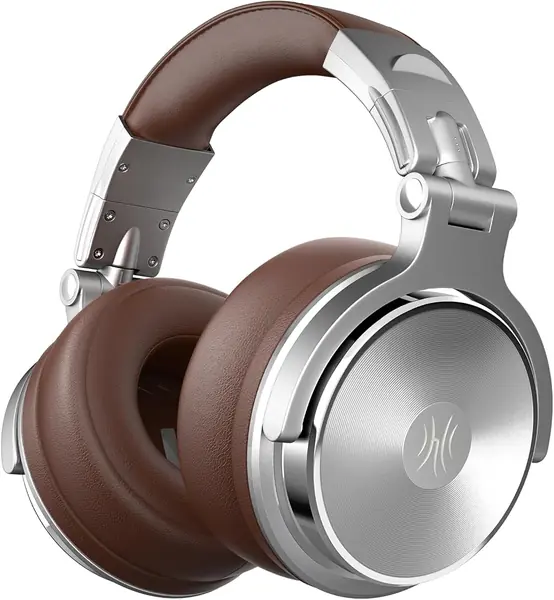
Best Sounding Over-Ear Headphones of 2026

Over-ear headphones are a stack of tradeoffs wearing ear cups. A closed-back pair seals you off from the room and pushes bass at you; an open-back pair breathes, spreads the sound wide, and broadcasts your playlist to everyone nearby. Wireless buys you noise cancellation and a charging cable. Wired buys you a cord that never dies.

I've owned both kinds — the sealed pair I bought for a loud office, the open pair I borrowed for one mixing project and never quite returned. My team and I have spent the past six months in 12 pairs, wearing them through commutes, workdays, and long evenings, and the differences that mattered were the unglamorous ones: how hard they clamp, how the pads feel in hour three, whether a cable survives being yanked out of a laptop bag.

The spec people misread most is impedance: a high-impedance studio set sounds glorious on an amp and thin and quiet straight out of a phone. Decide what you'll plug into before you fall for a frequency-response chart — the picks below are sorted by how you'll actually use them.

The Best Sounding Over-Ear Headphones

1

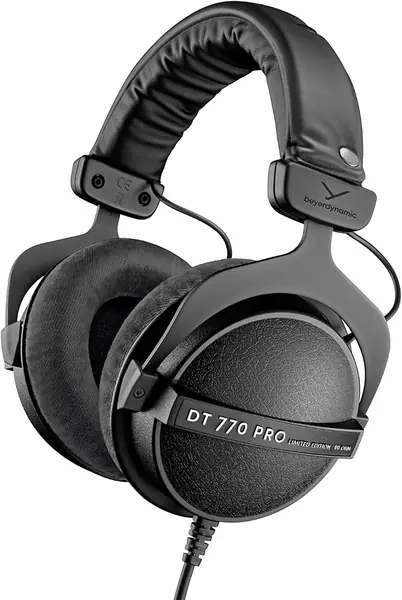
beyerdynamic DT 770 Pro (80 Ohm) Best Overall
95 /100
TKZ Score Outstanding

Key details

Weight
9.5 oz
Impedance
80 ohm
Design
Closed back
Ear Pads
Velour
View on Amazon

Eighty ohms is the decision that matters most with this headphone, and it is why we put the beyerdynamic first. The DT 770 Pro comes in three impedances, and this middle version plays at a sensible volume from a laptop while still opening up on a desktop amp; from a phone it works, but you push the volume hard. What we keep noticing is the tuning: closed-back, even from top to bottom, with bass that sounds like part of the music rather than a separate effect laid underneath it.

The velour pads do as much for the case as the drivers. They stay cool in a way coated pads do not, so a long editing session does not end with damp ears, and the clamp is gentle enough that we stopped noticing the headphone was there. At 9.5 ounces it is light for a closed-back design, and the isolation is good enough to erase an open-plan office without any active circuitry at all.

The cable is the one annoyance: fixed at the cup, about nine and a half feet long, with no unplugging it for the walk to the kitchen. At a desk that length is genuinely useful, because you can push back from the keyboard without tugging the plug, so we coiled the slack and clipped it to the desk edge and stopped thinking about it.

Against the Sony MDR7506 this is the warmer, more comfortable listen; against the open-back Sennheiser HD 560S it gives up some airiness in exchange for keeping the room out. That combination of detail, usable bass, and isolation is why it is the pair we reach for first when we want to listen rather than just hear something.

Pros

  • Even, detailed sound with real bass presence
  • Velour pads stay cool through long sessions
  • Three impedance versions to match your gear

Cons

  • Ear cup sliders can crack if knocked
Our verdict

We recommend the DT 770 Pro in 80 ohms to anyone who wants the most honest sound here and listens at a desk, as long as there is a little power behind the jack.
Check Latest Price
2

Sony MDR7506 Best Value Wired

94 /100
TKZ Score Outstanding

Key details

Weight
8 oz
Impedance
63 ohm
Driver Size
40 mm
Cable Length
9.8 ft, fixed
View on Amazon

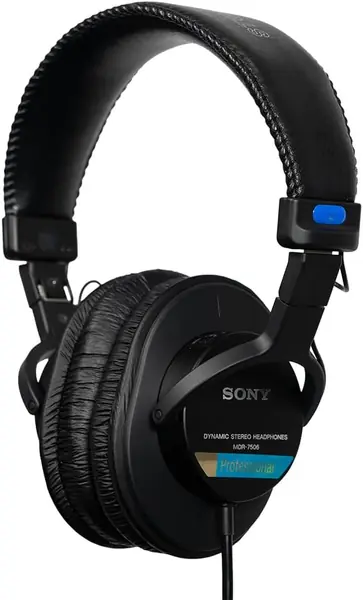
Nothing about the MDR7506 is tuned to impress you in the first ten seconds. The bass is honest rather than big, the mids sit forward where voices live, and the top end is bright enough to expose a badly compressed podcast. That is the job it was built for: this is studio headphone sound, not a lifestyle curve.

We keep coming back to it for what that flatness reveals. On acoustic recordings and spoken word it is startling, because you hear the room, the pick on the string, the breath before a sentence, and nothing in the low end smears over the detail above it. Eight ounces, a folding hinge, and a soft case also make it the studio headphone here that packs down smallest, which is why it ends up in a bag more often than its size suggests.

At 63 ohms it is easy to drive, and Sony includes both a 3.5 mm plug and a quarter-inch adapter, so it moves between a laptop, an interface, and a home stereo without a drawer full of dongles. The cable is the part to respect: nine and a half feet of it, fixed at the cup, ending in a plug that does not enjoy being yanked out of a jack by the wire.

Set beside the Audio-Technica ATH-M20x, it is clearly the more revealing headphone. Set beside the beyerdynamic, it trades some bass weight for midrange clarity and a lighter frame. For the money, it is the least compromised way into a genuine monitor.

Pros

  • Flat, revealing mids that expose detail
  • Folds into a soft case for travel
  • Runs from a phone or an interface

Cons

  • Firm clamp presses on larger heads
Our verdict

We recommend the MDR7506 to anyone who wants honest, detailed sound on a modest budget and does not mind a wired desk setup.

Check Latest Price
3

Sennheiser HD 560S Best Open-Back

93 /100
TKZ Score Outstanding

Key details

Impedance
120 ohm
Driver Size
38 mm
Design
Open back
Plug
6.3 mm with 3.5 mm adapter
View on Amazon

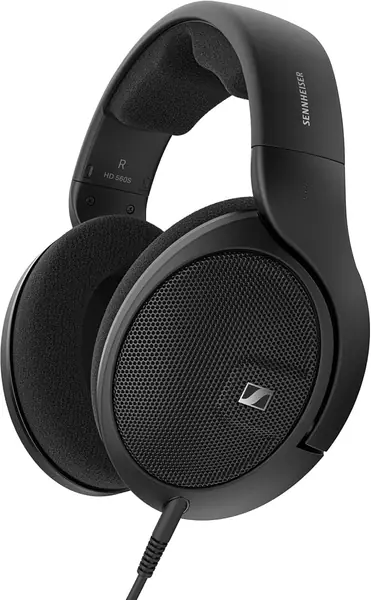
Open-back headphones are a commitment to a quiet room, and the HD 560S makes that trade more obvious than most. The cups are open, so the world comes in and your music goes out — an office, a train, or a shared living room is the wrong home for them. Sit somewhere quiet and that openness is the entire point.

The drivers are angled to meet your ears the way a pair of speakers would, and the effect is a stage that extends past the sides of your head instead of sitting between your temples. Tonally it is honest to the point of sternness: voices and strings sound like themselves, and the low end reaches down without ever thickening. Sennheiser terminates it in a quarter-inch plug and includes a 3.5 mm adapter, so a laptop will do in a pinch.

We reach for these when we want to hear what a recording is doing rather than enjoy a wall of sound. They are the most revealing pair here on acoustic and classical material and the least forgiving of a bad stream. If your listening happens at a desk with the door closed, this is the upgrade that makes the biggest difference; if it happens on a bus, buy closed-back instead.

Pros

  • Wide, speaker-like soundstage
  • Honest tone with extended low end
  • Angled drivers and velour pads for desk sessions

Cons

  • Tight clamp straight out of the box
  • Wants more power than a phone easily gives
Our verdict

For detail-first listening in a quiet room, the HD 560S is the most revealing headphone here, provided you have a decent source to feed it.

Check Latest Price
4

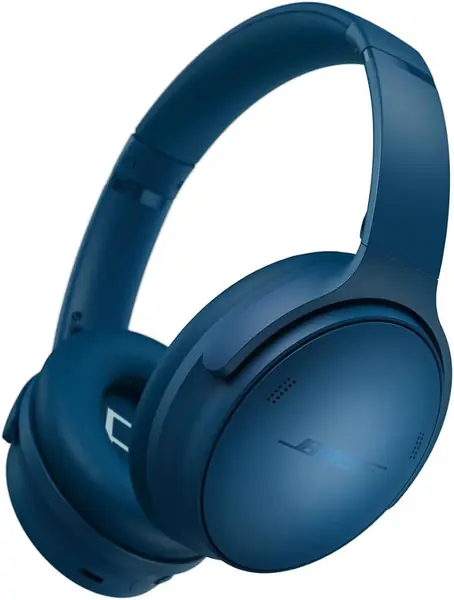
Bose QuietComfort Best Noise Cancelling

92 /100
TKZ Score Outstanding

Key details

Weight
8.47 oz
Battery Life
24 hours
Noise Control
Active noise cancellation
Bluetooth
5.1
View on Amazon

The QuietComfort earns its keep before it plays a note. Switch on the noise cancellation and a cabin turns into a low hum; switch to Aware mode and you can order a coffee without lifting a cup off your ear. That toggle is the reason the pair exists, and nothing else in this group does it as convincingly.

Comfort is the second argument. The cushions are plush, the band is padded, and at 240 grams these disappear for the length of a long flight. Battery life is rated at 24 hours on a USB-C charge, and they fold into a protective case that has survived being shoved into a carry-on.

Sound is where it asks for a little patience. Out of the box it leans warm, with more low end than the wired picks here, and the adjustable EQ is what turns it into a genuinely good listen — pull the bass down a touch and the mids come forward. It also takes a 3.5 mm cable, which matters when the battery runs out and the seat-back screen is the only entertainment left.

We treat it as the travel pair rather than the reference pair. Nothing wireless here is quieter, and nothing here is easier to wear for hours at a stretch, which is the right trade if most of your listening happens in motion.

Pros

  • Noise cancellation that genuinely quiets a cabin
  • Plush, light comfort at 240 grams
  • Adjustable EQ and a wired backup

Cons

  • Costs more than any wired pick here
  • Bluetooth can stutter with two devices competing
Our verdict

If you want noise cancellation without giving up good sound, the QuietComfort is the wireless pair we recommend: quiet, comfortable, and tunable to your taste.

Check Latest Price
5

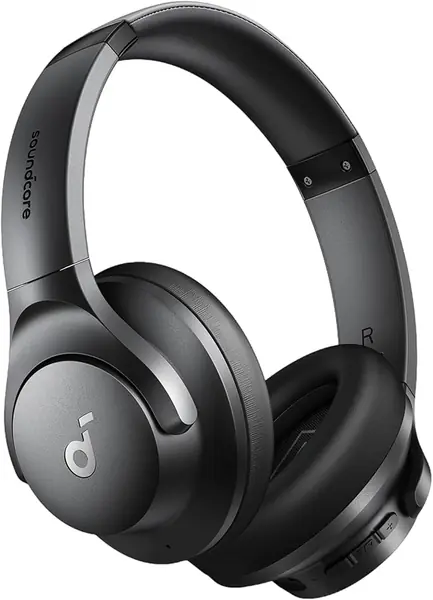
soundcore Q20i Best Budget Wireless

91 /100
TKZ Score Outstanding

Key details

Weight
9.12 oz
Driver Size
40 mm
Battery Life
40 hours with ANC
Noise Control
Active noise cancellation
View on Amazon

Two devices at once is the feature that makes the Q20i more useful than it looks. Paired to a laptop and a phone together, it hands the audio to whichever one speaks up, so a call interrupts a video without any menu diving. On a commute, that is the difference between answering and fumbling.

The rest of the package is more than the price suggests. Four microphones handle the active noise cancellation, there is a transparency mode for announcements, and the battery is rated at 40 hours with cancellation on, with a five-minute top-up that buys back listening time when you have forgotten to charge. The app adds EQ presets if the bass-forward default is not your taste.

What you do not get is the resolution of the wired picks. BassUp pushes the low end forward and the highs are crisp, but fine detail in a string section or a busy mix blurs in a way the Sony and the beyerdynamic do not. For podcasts, pop, and airplane noise that is a fair trade; for critical listening it is not.

Pros

  • Pairs with two devices at once
  • Effective ANC and a transparency mode
  • 40 hours of playback with ANC on

Cons

  • Runs large and slides on smaller heads
Our verdict

The Q20i is the wireless pair we point budget shoppers to: real noise cancellation, two-device pairing, and a lively sound for very little money.

Check Latest Price
6

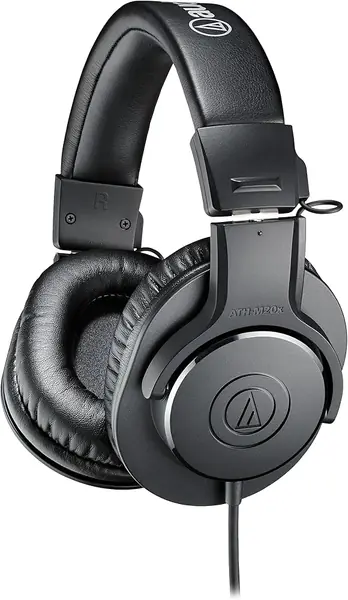
Audio-Technica ATH-M20x Best for Casual Wired Listening and Light Monitoring

90 /100
TKZ Score Outstanding

Key details

Weight
7.41 oz
Impedance
47 ohm
Driver Size
40 mm
Cable
Single-side exit
View on Amazon

Most monitor headphones ask you to give up bass in exchange for accuracy. The ATH-M20x does not. Audio-Technica tuned its 40 mm drivers for extra low-end output, so you get a full, punchy bottom with clear mids on top, and we think it is the right first wired pair for someone who wants detail without a thin, clinical sound.

At 47 ohms it runs from anything with a headphone jack, and the single-side cable exit keeps the cord out of your way instead of draping it across your chest. The closed cups contour around the ears, which is enough isolation for a loud room or a rattling keyboard. Gaming, editing, a keyboard at eleven at night — it handles all of it.

The adapter in the box covers a quarter-inch jack as well as 3.5 mm, so it moves from a laptop to an interface without another purchase. Sound is warmer and less revealing than the Sony MDR7506, and fuller in the bass than the semi-open Samson — it sits between the two, which is a comfortable place to be for casual listening.

Pros

  • Full bass with clear mids at a low price
  • Runs from any laptop or phone
  • Single-side cable stays out of the way

Cons

  • Pads press on the ears after a couple of hours
  • Plastic frame feels less solid than the Sony
Our verdict

We recommend the ATH-M20x as a first wired monitor: it is cheap, easy to drive, and fuller in the bass than its plain looks suggest.

Check Latest Price
7

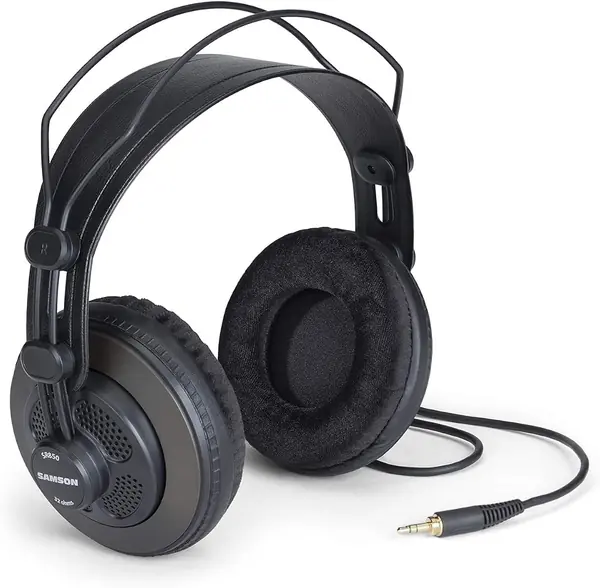
Samson SR850 Hearing an Open, Airy Sound for Very Little

89 /100
TKZ Score Excellent

Key details

Impedance
32 ohm
Driver Size
50 mm
Design
Semi-open
Headband
Self-adjusting
View on Amazon

Fifty-millimeter drivers in a headphone this cheap is the headline, and the semi-open cups are what you actually hear. The SR850 throws a wider, airier picture than the closed pairs here at the price, with a top end that stays clean when a mix gets busy.

We think it is the least risky way to find out whether an open stage matters to you. The self-adjusting headband is a genuinely nice piece of design as well — no clicks to fiddle with, just put them on and the band finds your head, which is more than most budget headphones manage.

Semi-open means exactly what it sounds like: a little isolation coming in, a little sound going out. On a quiet desk it is lovely; next to a television or a chatty coworker, everyone shares the experience. At 32 ohms a phone drives it without complaint, and the included eighth-inch to quarter-inch adapter gets it into a mixer or interface.

Beside the Audio-Technica ATH-M20x it is airier and less bass-heavy; beside the Sennheiser HD 560S it gives up refinement but keeps much of the openness for far less money. If you only have room in the budget for one experiment, this is the one that teaches you the most.

Pros

  • Wide, open sound from 50 mm drivers
  • Self-adjusting headband needs no fiddling
  • Cheap way to try an open-back sound

Cons

  • Build feels light and plasticky
  • Pads press after an hour or so
Our verdict

The SR850 is our budget pick for anyone curious about open, spacious sound: big drivers, a self-adjusting fit, and very little money at risk.

Check Latest Price
8

OneOdio Pro-30 Best for Single-Ear Monitoring and Shared Listening

88 /100
TKZ Score Excellent

Key details

Weight
8.82 oz
Impedance
32 ohm
Driver Size
50 mm
Ear Cups
90-degree swiveling
View on Amazon

The ear cups swivel 90 degrees, which is the detail that makes the Pro-30 useful in a way a normal pair is not. Swing one cup back and you have a single ear free for a cue, a click track, or the person across the table, while the other ear keeps the mix. It is a DJ habit borrowed for podcasting and home recording.

The rest is built around that: a coiled cable that stretches to roughly nine and a half feet, both a 3.5 mm and a 6.35 mm plug in the box, and a second jack on the cup so someone else can plug in and listen alongside you. The 50 mm drivers push a lot of bass, so this is a fun headphone rather than an analytical one.

Comfort is better than the price suggests. The protein leather memory foam cushions cover the ears fully, the headband adjusts wide, and at 250 grams it does not drag; we wore ours with glasses without complaint.

For watching television in bed with a second listener plugged in, or for a first DJ setup, it does things the other cheap wired pairs here cannot. It is the most flexible wired headphone in this group, and the one we hand to someone who needs one ear free.

Pros

  • Swiveling cup for single-ear monitoring
  • Second jack lets two people listen
  • Coiled cable and both plug sizes included

Cons

  • Swivel joints can crack with heavy use
  • No manufacturer warranty stated
Our verdict

For DJ practice, podcasting, or sharing a screen with someone, the Pro-30 gives you flexible single-ear monitoring for very little money.

Check Latest Price

How We Tested the Best Sounding Over-Ear Headphones

We started with spec sheets, not a listening chair. We cross-checked impedance, driver size, weight, and what came in the box, since a quarter-inch adapter and a spare cable turn out to matter more than they sound like they should. We also noted which pads could be swapped and which were sealed on for good, because that decides whether a pair lasts three years or ten. Twelve pairs made the cut, and we lived with them for six months.

For sound, we built one reference playlist of familiar tracks — something bass-heavy, something bright and acoustic, and a dense mix where a sloppy pair smears the vocals — and played it through each set at matched volume from the same laptop and phone. We wrote down whether bass bled into the mids, whether cymbals dissolved into hiss, and whether the soundstage felt like a room or a hallway. The noise-cancelling sets came with us onto a commuter train, into a coffee shop at the lunch rush, and beside an office HVAC vent, where we noted what got erased and what leaked through as a low hum.

Comfort got the clock rather than the first impression: three-hour stretches at a desk, then a full workday for anything promising. We tracked clamp on the first wear and the tenth, heat around the ears, pinching on the glasses-wearers on the team, and how the headband sat on different head sizes. For build quality, we flexed headbands, coiled and uncoiled cables, measured cord length end to end, tugged plugs at an angle, and carried each pair loose in a tote for a week to see what scuffed.

Connectivity got its own pass on the wireless sets: paired to an iPhone, an Android phone, and a laptop, walked two rooms away, and watched for dropouts and lip-sync lag on video. We counted how many devices each held at once and re-paired after a week of disuse. Reliability we judged the slow way — after six months of daily use, which pairs still clamped properly, which pads had flattened, which cables had gone crackly. Value, in the end, came down to exactly that: what still worked in month six.

How to Choose Sound-First Over-Ear Headphones

Start With Wired or Wireless

Bluetooth always involves compression, and no codec beats a cable for the last bit of clarity. If your listening happens at a desk and sound is the priority, a wired pair is the simple answer — the Sony MDR7506 and the beyerdynamic DT 770 Pro are both built for exactly that. If you need noise cancellation or you spend your day in transit, go wireless, and check that an audio cable is in the box for low-battery moments.

Watch the hi-res claims on wireless models. Some only reach their best quality over the included cable or a specific codec, which is fine as long as you know you are buying a wired headphone with a wireless mode.

Match Impedance to What You Own

The number before the ohm symbol tells you how much power a headphone wants. The wired models here at 32 to 47 ohms run from a phone without strain; 63 and 80 ohms play from a laptop but come alive with a dongle DAC or an interface; 120 ohms really wants a headphone amp behind it.

The trap is buying a high-impedance studio headphone for a phone and deciding it sounds thin. It usually just sounds underfed. Match the headphone to the gear you already have rather than buying gear to rescue a headphone.

Choose Open or Closed Back for Your Room

Open-back cups let the driver breathe, and the payoff is a stage that extends past your ears — the Sennheiser HD 560S is the widest listen here, and the semi-open Samson SR850 gets much of the way there for far less. The cost is leakage in both directions: everyone hears your music, and you hear everyone.

Closed-back designs seal around the ear, keep the room out, and put more weight behind the bass. If you share an office, fly regularly, or listen near other people, closed is the practical answer and open-back is a quiet-room luxury.

Judge Comfort by Clamp and Pads

Generous-looking padding in a product photo tells you very little. What matters is clamp force and what the pads are made of. Velour, as on the beyerdynamic and the Sennheiser, breathes and stays cool; coated protein leather seals better but traps heat against your ears.

A firm clamp keeps bass intact and keeps the headphone on your head, but it presses on a wide head after an hour. Give any pair a full evening before you decide, and keep the packaging until you have.

Check the Parts That Fail First

Drivers rarely die. Cables, jacks, hinges, and sliders do. A detachable cable is the single most useful durability feature on a headphone, because it turns a broken wire into a cheap replacement part.

Where the cable is fixed, as on the Sony and the beyerdynamic, treat the plug gently and coil the slack instead of wrapping it around the cups. Metal sliders and a real case are worth more than another line on the feature list.

Frequently Asked Questions

Final Verdict

Buy the beyerdynamic DT 770 Pro in 80 ohms if sound is the point and you listen at a desk. Nothing else here pairs that much detail with bass you can feel and pads you can wear all afternoon, and it does it without demanding a headphone amp.

Two requirements change the answer. If you need silence on a plane, pack the Bose QuietComfort instead. If you want the widest, most honest picture of a recording, the Sennheiser HD 560S is the one — in a quiet room, with the door shut.