Best Spatial Audio Headphones of 2026

Spatial audio is a simple trick with an outsized payoff: the headphones place virtual speakers in a ring around your head, then track your movements so the mix stays anchored to the room instead of your skull. Dialogue stops sounding like it's inside your ears and starts sounding like it's coming from the screen. Every brand builds that trick differently, and the gap between great and hollow is wide.

I wear over-ear headphones most of the workday, so I notice the small stuff — clamp force at hour three, whether a swipe on the earcup skips a track or pauses it, whether the battery claim holds with noise cancellation and spatial mode running at once. We spent seven months with eight pairs, and the field thinned out fast.

Head tracking isn't automatically the better version of spatial audio, by the way. Several of us switched it off for music within a week and back on for every movie. The picks below are the ones that stayed comfortable, honest about battery, and pleasant to control long after the novelty wore off.

The Best Spatial Audio Headphones

1

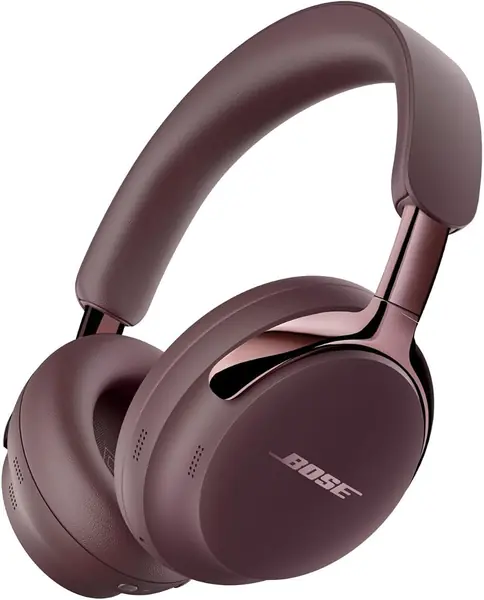
Bose QuietComfort Ultra (2nd Gen) Best Overall
91 /100
TKZ Score Outstanding

Key details

Spatial Audio
Spatialized audio with Cinema Mode
Battery
Up to 30 hours (23 with Immersive Audio)
Weight
1.1 lb
Noise Cancellation
Quiet and Aware modes
View on Amazon

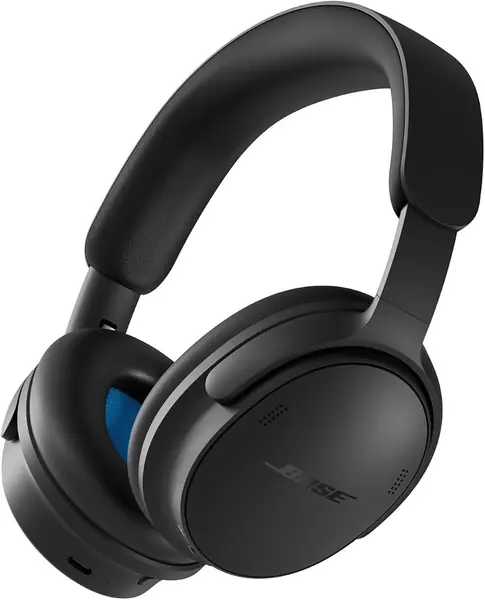
Cinema Mode is the reason we reach for the QuietComfort Ultra 2nd Gen first. It does not wait for a special spatial mix; it takes ordinary stereo and pushes the soundstage out in front of you, so a movie on a laptop feels less like two small speakers pressed against your ears. We like that for music, but the movie mode is the one that earns its keep. The effect is not a gimmick you turn on once and forget; it changes how dialogue, effects, and score sit around you.

Bose's noise cancellation is the other half of the pitch. Quiet mode shuts down the room, Aware lets you order a coffee without lifting an ear cup, and the extra Immersion and Cinema modes give you a reason to use the spatial processing beyond a demo. We appreciate that the modes are separate rather than a single spatial on/off switch, because a bus commute and a movie night do not call for the same presentation. The ear cups and headband are plush, and the mix of aluminum, faux leather, and plastic gives the Ultra a more finished look than a basic plastic shell.

The spec sheet lists Bluetooth 5.4 and multipoint pairing, which matters if you move between a phone and a laptop all day. Battery life is rated at up to 30 hours, and the headphones sit at the premium end of this group. We think the spatial engine justifies that position if movies and immersive music are a real part of your listening, not just a feature you want to tick off.

Pros

  • Spatializes ordinary stereo, not just spatial mixes
  • Strong Bose ANC with separate Quiet, Aware, Immersion, and Cinema modes
  • Bluetooth 5.4 with multipoint pairing

Cons

  • Immersive audio reduces battery to about 23 hours
  • At 1.1 pounds, heavy for long sessions
Our verdict

We recommend the QuietComfort Ultra 2nd Gen as the spatial default because it wraps music and movies in a convincing bubble and works with any phone.
Check Latest Price
2

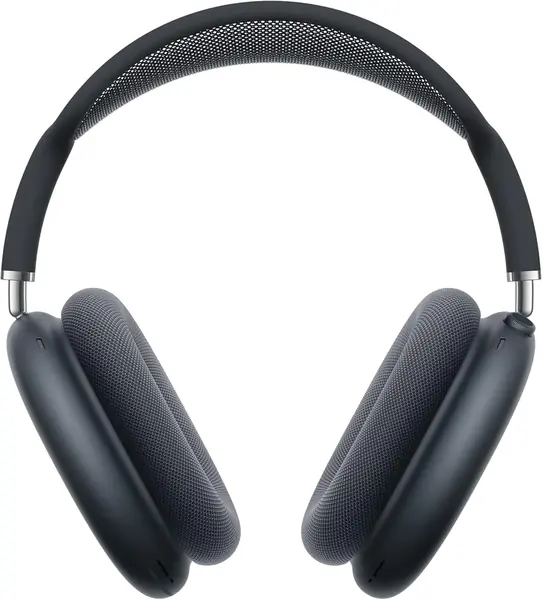
Apple AirPods Max 2 Best for Apple Devices

90 /100
TKZ Score Outstanding

Key details

Spatial Audio
Personalized Spatial Audio with dynamic head tracking
Weight
13.6 oz
Noise Cancellation
Up to 1.5x more than previous generation
View on Amazon

Dynamic head tracking is the AirPods Max 2's party trick, and it is the most convincing version of the effect in this group. Turn your head during a movie and the dialogue stays anchored to the screen instead of dragging along with the ear cups. Apple pairs that with Personalized Spatial Audio tuned to your ear shape, so the effect feels less like a preset and more like a room built around you. The catch is that the full experience is happiest on Apple hardware.

We think this is the best head-tracked spatial experience here for Apple users, and the rest of the package is strong: the H2 chip, Adaptive Audio, and up to 1.5x more noise cancellation than the previous generation. We appreciate Adaptive Audio most in a busy room, where it blends cancellation and transparency instead of forcing you to choose. Live Translation is a bonus if you take calls across languages, though it is an Apple Intelligence feature rather than a reason to buy on its own.

The 13.6-ounce weight is the first thing you notice when you pick them up, and it is the main reason to try a long session before you commit. We paid close attention to that because head tracking only helps when you are comfortable enough to keep the headphones on.

Pros

  • Personalized spatial audio with dynamic head tracking
  • Deep Apple-device integration and instant switching
  • Up to 1.5x more ANC than the previous generation

Cons

  • Battery life can fall short between charges
Our verdict

If your life runs on Apple devices, the AirPods Max 2 deliver the most convincing head-tracked spatial audio here, with the deepest Apple integration.

Check Latest Price
3

Bose QuietComfort Headphones (2nd Gen) Best Lightweight Option

89 /100
TKZ Score Excellent

Key details

Spatial Audio
Bose TrueSpatial with Immersion and Cinema modes
Battery
Up to 24 hours
Weight
8 oz
Noise Cancellation
Quiet and Aware modes
View on Amazon

At 8 ounces, the QuietComfort Headphones 2nd Gen are the pair we reach for when the listening session is going to be long. The new pill-shaped ear cups and wider headband spread the pressure better than the older design, and the synthetic leather padding feels soft without going sticky. We noticed the difference most at the end of a workday, when heavier headphones start to feel like a clamp. This is not the flashiest model in the group, but it is the easiest to forget you are wearing.

Bose TrueSpatial is here, along with Immersion and Cinema modes, so you still get the out-of-head effect without stepping up to the Ultra. We like that it works on ordinary content; you do not need a spatial playlist to hear what the processing is doing. The sound is balanced and clear, with enough bass to keep movies lively without bloating music. Noise cancellation is the familiar Bose kind: Quiet mode for the office, Aware mode for the street, and a clean transition between them.

Battery life is rated at up to 24 hours, which is enough for a workday plus a commute, and the headphones charge over USB-C. The 8-ounce build is the part that keeps them on your head for that long. We like the lighter weight more than we expected, because it makes the spatial feature easier to live with for a whole afternoon.

Pros

  • 8-ounce build stays comfortable for long sessions
  • TrueSpatial with Immersion and Cinema modes
  • Up to 24 hours of battery

Cons

  • Spatial effect is less enveloping than the Ultra's
Our verdict

A lighter Bose with TrueSpatial and a 24-hour battery, the QC 2nd Gen is the easy all-day pick for long listening sessions.

Check Latest Price
4

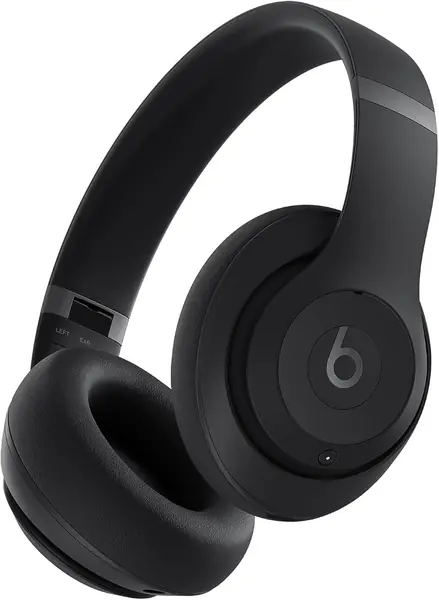
Beats Studio Pro Best Budget Over-Ear

88 /100
TKZ Score Excellent

Key details

Spatial Audio
Personalized Spatial Audio with dynamic head tracking
Battery
Up to 40 hours
Weight
9.2 oz
Wired Audio
USB-C lossless and 3.5 mm
View on Amazon

The Studio Pro is the value play in this group: it brings personalized spatial audio with dynamic head tracking, active noise cancellation, and a 40-hour battery. We were pleasantly surprised by how complete the spatial feature set feels at this end of the range; it is not a stripped-down imitation of the pricier Apple and Bose models. The sound is bass-forward and lively, which suits movies and pop more than critical listening, and the USB-C lossless and 3.5 mm wired options make it more flexible than some premium pairs. The foldable design also packs smaller than a fixed over-ear pair.

We think it is the right first spatial headphone for a lot of people, especially anyone who switches between Apple and Android. The head tracking is the same idea as the AirPods Max 2, and it works across Apple and Android. The 40-hour rating is the part that makes it easy to live with: you can go a week of commutes without thinking about the charger. We also appreciate the Fast Fuel charging, which is the kind of detail that keeps a budget pair from feeling budget.

For movies, the head tracking does what it should: the sound stays put when you turn to grab a drink, and the bass gives action scenes some weight. The spatial effect is the reason to choose this over a standard pair of Bluetooth headphones, and the wired options mean you can use it with a laptop or a plane seat without a dongle. That flexibility is what makes the Studio Pro feel like a complete travel pair rather than a single-purpose novelty.

Pros

  • Head-tracked spatial audio at a lower price
  • Up to 40 hours of battery
  • USB-C lossless and 3.5 mm wired listening

Cons

  • Headband and hinges can break
  • ANC is a step behind the Bose picks
Our verdict

The Studio Pro is the budget route to head-tracked spatial audio and 40-hour battery, though the hinge is the weak point.

Check Latest Price
5

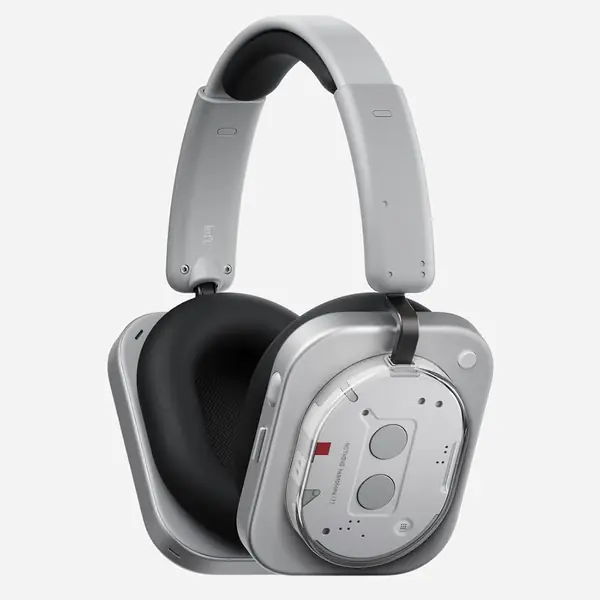
Nothing Headphone (1) Long Battery Life

87 /100
TKZ Score Excellent

Key details

Spatial Audio
Spatial Sound, KEF-tuned
Battery
Up to 80 hours (35 with ANC)
Noise Cancellation
Hybrid ANC with adaptive mics
Driver
40 mm dynamic
View on Amazon

Eighty hours is the number that makes you look twice, and the Nothing Headphone (1) backs it up with 35 hours with ANC on. That is the kind of runtime that changes how you travel: you can leave the charger at home for a long weekend and still have headroom. We like that the battery claim is not a standby figure; it is the reason this pair earns a place in the roundup. The quick-charge feature is another practical touch.

The KEF tuning is the other reason to consider it. The 40 mm drivers give the Nothing a balanced, detailed sound with tight bass and clear mids, and the physical buttons are a welcome change from touch-only controls. We appreciate the transparent, cassette-style design too; it is the one pair here that looks like an object rather than a piece of tech. The spatial sound widens the stage nicely for movies, and the app's 8-band EQ gives you room to tune it.

We think the 80-hour rating is the practical advantage here, and the KEF tuning is the bonus. The Nothing is the pair that makes a long trip feel less like a charging emergency, and that is a different kind of immersion.

Pros

  • Up to 80 hours, or 35 with ANC
  • KEF-tuned spatial sound with 40 mm drivers
  • Physical controls and distinctive design

Cons

  • Spatial effect is less dramatic than Bose's Cinema Mode
Our verdict

The Nothing Headphone (1) is the long-battery outlier, with 80 hours, KEF tuning, and a distinctive look that stands apart from the usual black headphone.

Check Latest Price
6

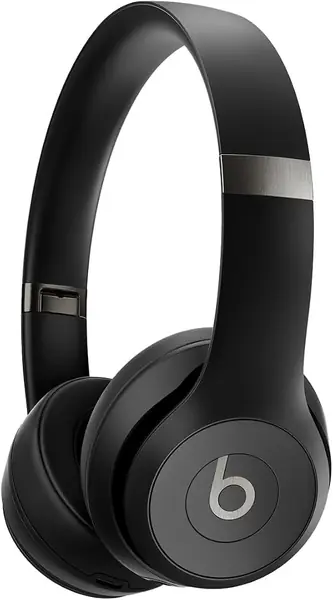
Beats Solo 4 On-Ear Portability

86 /100
TKZ Score Excellent

Key details

Spatial Audio
Personalized Spatial Audio with dynamic head tracking
Battery
Up to 50 hours
Fit
Flex-grip headband and angled ear cups
Charging
2.15 hours
View on Amazon

On-ear headphones are having a moment again, and the Solo 4 makes the case with a smaller footprint than the over-ear picks. The flex-grip headband and angled ear cups are designed to stay put, and the 50-hour battery means you can leave the cable at home for a week. We like the compact shape for commuting and for a bag that already has a laptop, a phone, and a water bottle in it.

Personalized Spatial Audio with dynamic head tracking is here, which is unusual at this end of the market. We think it is the least expensive way into head-tracked spatial audio in this group, and the effect is convincing enough for movies on a tablet. The sound is bass-forward and clear, the kind of tuning that makes pop and action scenes feel lively rather than flat. The 50-hour rating is the part that makes it easy to live with.

The catch is the fit: on-ear cups press on the ears, and the clamp is firm enough that a long movie can become a countdown. We noticed it most when we took the Solo 4 off after a stretch; the pressure lingered. That is the trade-off for the smaller size and lower price. We keep the Solo 4 for short trips and packed bags, not for a transatlantic movie marathon.

Pros

  • Personalized spatial audio with head tracking
  • Up to 50 hours of battery
  • Compact on-ear design with flex-grip headband

Cons

  • No active noise cancellation
Our verdict

The Solo 4 is the on-ear spatial pick for tight budgets and small bags, with head tracking and 50-hour battery.

Check Latest Price

How We Tested Spatial Audio Headphones Over Seven Months

We built the shortlist from spec sheets first: every candidate needed a genuine spatial mode, active noise cancellation, and a battery rating that could survive a workday with both switched on. Then we cut the ones that buried basic playback controls inside an app, the ones whose ear cushions and hinges felt loose straight out of the box, and the ones priced well above what their feature set justified. Eight pairs made it through, and we lived with them for seven months.

Testing happened where headphones actually get worn: full workdays at a desk, a commuter train, two long flights, an open-plan office, dog walks, and the couch for movie nights. We noted whether dialogue stayed anchored to the screen when we turned our heads, and whether music in spatial mode lost bass or gained a hollow middle. Each pair ran the same playlist with noise cancellation and spatial audio on, then off, and we logged battery percentage at the end of every day for two weeks.

Controls got tested one-handed, mid-commute, and by people who had never worn the pair before — we counted how many tries it took to pause, skip, and answer a call. Comfort was judged at hour three rather than minute three: we wore each set with glasses on, in a warm room, and paid attention to clamp force and earcup heat. Every pair went into a bag twice a week, folded where it folds, so we could see which finishes scuffed and which hinges developed play. Calls were placed from a windy sidewalk and a quiet office to compare how the mics handled each.

How to Choose Spatial Audio Headphones

Start With the Spatial Format

Spatial audio can mean a wider, more enveloping mix, or it can mean head tracking that keeps a movie's dialogue anchored to your laptop as you turn. They are not the same feature. Bose's TrueSpatial and Cinema Mode spatialize ordinary stereo, which is why the QuietComfort Ultra 2nd Gen is our default for mixed devices. Apple and Beats add dynamic head tracking, which is more convincing for movies if you stay in their ecosystems. Check the feature list for both words: spatial and head tracking.

Read Battery Life With the Effect On

Immersive processing costs runtime. The Bose Ultra 2 is rated for 30 hours, but 23 with Immersive Audio on; the Nothing Headphone (1) goes from 80 hours to 35 with ANC. Those lower numbers are the ones to plan around. For a long flight or a full workday, we prioritize at least 20 hours in the mode you actually use, or a fast-charge top-up. A 50-hour stereo rating can still shrink once spatial and noise cancellation are running.

Weight and Clamp Matter More Than Ever

Spatial listening tends to be longer listening: a movie, a flight, a full album. Weight and clamp pressure decide whether that is pleasant. The Bose QuietComfort 2nd Gen is the lightest pick here at 8 ounces, while the Bose Ultra 2 and AirPods Max 2 are substantially heavier. If you wear glasses, pay attention to ear-cup shape and clamping force; a plush pad does not guarantee comfort. We prioritize a secure but not tight fit, and we treat on-ear models as a shorter-session choice.

Match the Ecosystem and the Modes

Head tracking is most useful when the headphones know your device. Apple's Personalized Spatial Audio and Beats' equivalent are easiest to live with on Apple hardware; Bose's spatial modes travel across Android and iOS. Multipoint Bluetooth is the other practical check if you move between a phone and a laptop. Then look at the listening modes: Quiet, Aware, Cinema, Immersion. A model with a dedicated movie mode is doing more for spatial than one with a single on/off toggle.

Frequently Asked Questions

Final Verdict

For most people, the Bose QuietComfort Ultra Headphones (2nd Gen) are the spatial headphones to buy: Cinema Mode makes ordinary movies feel bigger, the noise cancellation is strong, and the 30-hour battery (23 with Immersive Audio) covers a long trip. If you live in Apple's ecosystem and want the most convincing head tracking, the AirPods Max 2 are the alternative, as long as the 13.6-ounce weight does not bother you. The Bose QuietComfort 2nd Gen is the lighter fallback when all-day comfort matters more than the deepest spatial effect.