Best Headphones for Small Heads of 2026

Headphones are molded around an average head that almost nobody actually has. If yours runs small, that average turns up as earcups that creep down your jaw every time you glance at your phone, a headband that bottoms out before it feels snug, and bass that leaks away because the seal never quite closes. I've spent years re-adjusting headphones that were one size fits all in name only.

Over the past six months, my team and I wore 12 pairs through commutes, dog walks, and long desk days, and fit was the first thing we judged rather than the last. A band can feel promising at minute five and be sliding by minute forty. We also learned that noise cancellation only earns its keep when the seal holds, which makes the two hard to judge apart.

The picks below run from featherweight on-ears to noise-cancelling over-ears, and every one of them stayed put through a full afternoon of real use. Here's where to start.

The Best Headphones for Small Heads

1

Beats Solo 4 Best Overall
95 /100
TKZ Score Outstanding

Key details

Wearing Style
On-ear
Battery Life
Up to 50 hours
Cushions
UltraPlush
Headband And Cups
Flex-grip; adjustable angled cups
View on Amazon

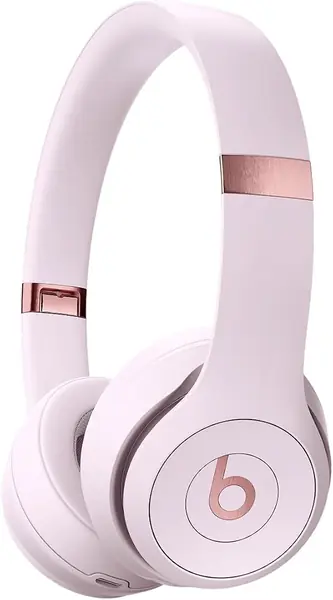
The first thing we check on an on-ear is whether the band closes down around a smaller head. The Solo 4 passes that test with a flex-grip headband and angled, adjustable ear cups that pull the pads in close instead of letting them float at the sides. That secure, compact shape is why it tops this list: it feels like a small pair of headphones made to grip, not a full-size set balanced on top of the head.

The rest of the package is built for carrying around. The on-ear design is light, the UltraPlush cushions are made for long wear, and the 50-hour battery means charging is a weekend task rather than a daily one. Personalized spatial audio with head tracking adds a wider, more theatrical soundstage for movies and games, and USB-C fast fuel is there when the battery does run down. The angled cups also sit more naturally against the ear than a flat on-ear pad.

The fit is firm in the way a secure on-ear should be, and that is the point: it stays put when you turn your head. If you want a plush, floaty feel instead, the Bose QuietComfort is the softer over-ear alternative. For a bag or a commute, the compact shape is the real win: less bulk, less shifting, and no need to readjust every few minutes.

Pros

  • Flex-grip band secures a smaller head
  • 50-hour battery with USB-C charging
  • Personalized spatial audio

Cons

  • Firm clamp can ache over long sessions
Our verdict

The Solo 4 is our top pick for smaller heads because its flex-grip band and angled cups create a secure, compact on-ear fit without a loose over-ear shell.
Check Latest Price
2

Sony WH-CH520 Best Budget Wireless

94 /100
TKZ Score Outstanding

Key details

Wearing Style
On-ear
Battery Life
Up to 50 hours
Connectivity
Bluetooth multipoint
Headband
Adjustable; swivel earcups
View on Amazon

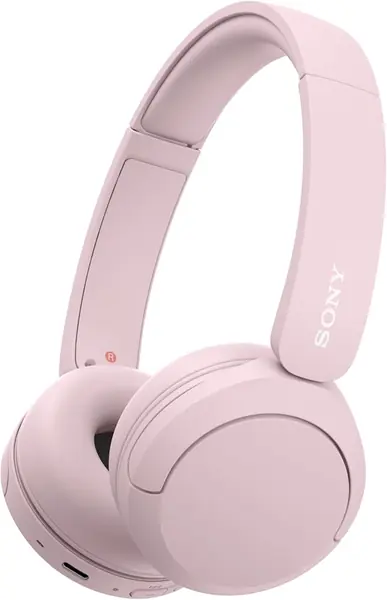
The CH520 is built around a light on-ear shape: Sony uses an adjustable headband, soft ear pads, and swivel earcups that slip on and off without a fight. The compact cups sit on the ear rather than around it, which is the right starting point for a smaller head.

We think this is our value pick among the wireless on-ears here. Battery life runs up to 50 hours with quick charging, multipoint lets you jump between a phone and a laptop, and the app adds EQ presets plus a clear-calls microphone. The controls are physical buttons, which we prefer because you can find them by feel instead of hunting for a touch panel.

The light build helps, but the pads still press on the ears after a while, and the fit can feel snug rather than roomy. For a quiet-room pair, that is a fair trade for the low weight. If you want a softer over-ear for long flights, the Bose QuietComfort is the better call.

Pros

  • Light on-ear build
  • Up to 50 hours battery
  • Multipoint and app EQ

Cons

  • No active noise cancellation
  • No 3.5 mm wired input
Our verdict

The WH-CH520 is our budget wireless pick: a light, adjustable on-ear with 50-hour battery and multipoint that suits smaller heads without costing much.

Check Latest Price
3

Bose QuietComfort Best Over-Ear Comfort

93 /100
TKZ Score Outstanding

Key details

Wearing Style
Over-ear
Battery Life
Up to 24 hours
Noise Control
Active noise cancellation
Fit
Padded adjustable band
View on Amazon

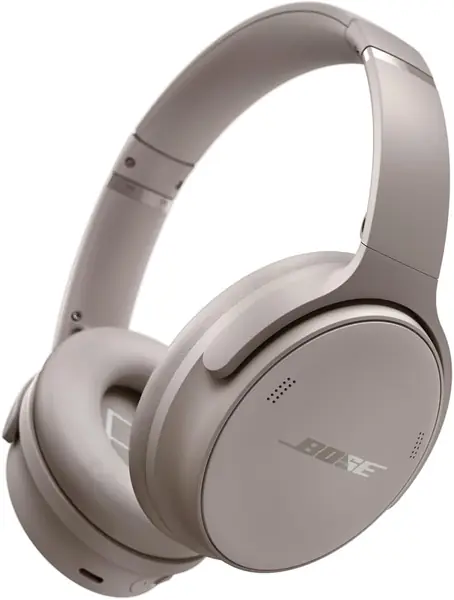
Full-size over-ear headphones can swallow a small head: the cups sit wide, the band floats, and every turn feels like the set is about to shift. The QuietComfort is the exception we keep coming back to for plush, secure over-ear wear. Bose uses softly padded ear cushions and a padded band that adjusts down and holds the cups against the sides of the head without a hard clamp.

The noise cancellation is the reason to pay the premium: it quiets engine rumble and office hum, and Aware mode lets you hear a platform announcement without taking the headphones off. Battery life runs up to 24 hours, with USB-C charging and a 15-minute top-up for 2.5 hours of playtime. The adjustable EQ in the Bose app lets you dial in more bass or treble if the default balance is not to your taste.

The case, the 24-hour battery, and the two listening modes make it a travel-ready set. We also appreciate that the controls are physical buttons, not a touch panel that needs a tutorial. For a small head, the padded band is the part that matters: it spreads pressure instead of concentrating it in one spot.

Pros

  • Plush over-ear comfort
  • Effective ANC with Aware mode
  • Up to 24 hours with USB-C quick charge

Cons

  • Full-size cups may overwhelm a very small head
Our verdict

The QuietComfort is our over-ear comfort pick for smaller heads: plush cushions, a padded adjustable band, and strong noise cancellation make it a soft landing.

Check Latest Price
4

Uliptz WH203A Best Budget Over-Ear

92 /100
TKZ Score Outstanding

Key details

Wearing Style
Over-ear
Battery Life
Up to 65 hours
Weight
6.35 oz
Headband
Adjustable metal slider
View on Amazon

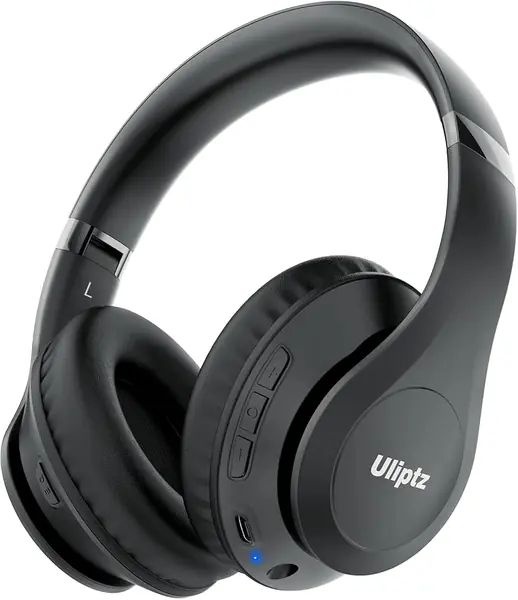
The Uliptz WH203A is the budget over-ear we suggest when someone wants the bigger cup style without a bigger fit. It weighs 180 grams and uses an adjustable metal slider headband with rotatable earcups, so there is actual room to bring the cups in rather than relying on a plastic band that jumps from loose to tight.

Battery life is rated at up to 65 hours, with a 10-minute charge giving up to 4 hours of playtime. You get 40 mm drivers, six EQ modes, Bluetooth 5.3, and a built-in mic for calls. The memory-foam ear cups are soft enough for long wear, and the rotatable cups let the set fold flatter in a bag.

This is the pick that makes the most sense if you want an over-ear fit on a small head without spending much. The metal slider is the difference: it gives you finer adjustment than a basic plastic band, and the light build keeps the cups from dragging downward. For flights and open offices, step up to the Soundcore Q20i; for a quiet room, the Uliptz is the budget over-ear we reach for.

Pros

  • 180-gram light build
  • Adjustable metal slider
  • Up to 65 hours battery

Cons

  • Bass-forward tuning rather than neutral
Our verdict

The Uliptz WH203A is our budget over-ear pick because its 180-gram build and metal slider headband adjust down to a smaller head without much spend.

Check Latest Price
5

Skullcandy Crusher Evo Best for Bass

91 /100
TKZ Score Outstanding

Key details

Wearing Style
Over-ear
Battery Life
Up to 40 hours
Design
Flat-folding with case
Bass Control
Adjustable slider
View on Amazon

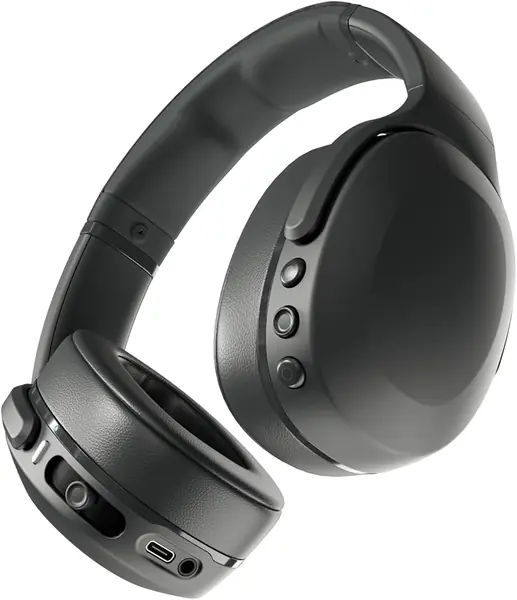
The Crusher Evo is not subtle: it has a bass slider you can feel through the cups, and that is exactly why it earns a place here for small-head listeners who want over-ear thump. The adjustable band and flat-folding design let it pack down, and the included case means it can travel without rattling around in a bag.

We like it as a fun, bass-first pair rather than a neutral monitor. The multi-sensory bass technology uses two full-range 40 mm drivers plus dual bass drivers, and the slider lets you add as much or as little rumble as you want. Battery life is up to 40 hours, with a 10-minute rapid charge giving 4 hours. The Skullcandy app includes a hearing analysis that adjusts the sound to your ears, and the controls are physical buttons for calls, tracks, and volume.

The fit is firm, which helps on a smaller head, but the cups are large and the clamp can make the set feel heavy after a while. If you want a cleaner, more neutral sound, the Bose QuietComfort is the better all-rounder. For the right listener, though, the slider is the fun part: you can go from a podcast to a bass-heavy track without changing headphones.

Pros

  • Adjustable bass slider
  • Up to 40 hours battery
  • Flat-folding design with case

Cons

  • Bass-forward tuning won't suit neutral listeners
Our verdict

The Crusher Evo is our bass pick for smaller heads: an adjustable over-ear with a dedicated bass slider, 40-hour battery, and a folding case.

Check Latest Price
6

Soundcore Q20i Budget ANC

90 /100
TKZ Score Outstanding

Key details

Wearing Style
Over-ear
Battery Life
Up to 40 hours
Connectivity
Dual-device Bluetooth
Noise Control
Hybrid ANC
View on Amazon

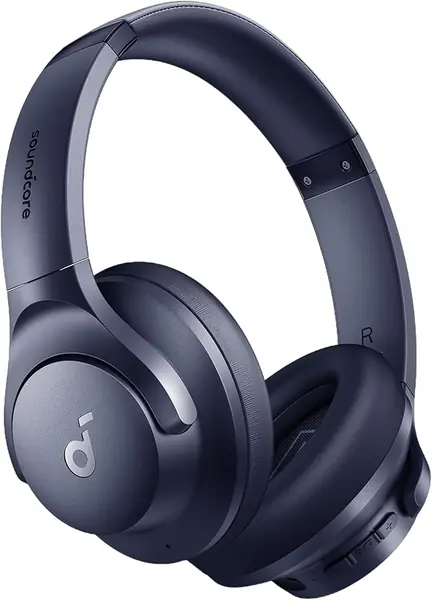
The Q20i is the value ANC pick: it brings hybrid active noise cancellation and 40 hours of playtime at a budget price, and it can connect to two devices at once. The four built-in mics work together to filter background noise, and the app puts the noise modes and EQ in one place.

The ANC does a good job with low-frequency noise, and Transparency mode lets you hear a barista or a train announcement. BassUp adds punch in wireless mode, and the included AUX cable gives you a wired option. The app handles EQ presets and noise modes, which is more control than we expect at this price.

We recommend it for budget noise cancellation: the ANC and battery are the reason to choose it over the on-ear picks. If you want a more secure fit, the Uliptz WH203A or Beats Solo 4 will stay put better. If ANC is the priority, the Q20i is the budget pick here.

Pros

  • Hybrid active noise cancellation
  • 40-hour ANC battery
  • Dual-device connection

Cons

  • Roomy fit for very small heads
Our verdict

The Q20i is our budget ANC over-ear, with 40-hour battery and dual-device pairing, but its roomy fit is not the first choice for the very smallest heads.

Check Latest Price
7

Sony ZX110 Wired Budget

89 /100
TKZ Score Excellent

Key details

Wearing Style
On-ear
Connectivity
Wired 3.5 mm
Weight
4.76 oz
Earcups
Swiveling
View on Amazon

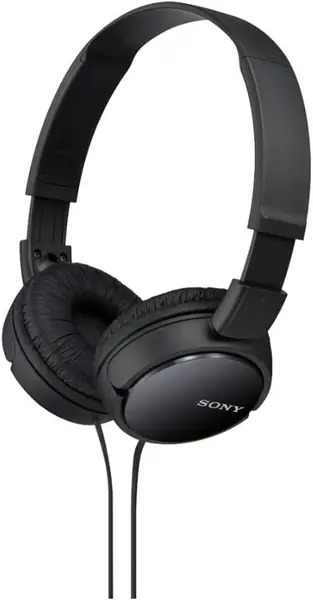
The ZX110 is the wired, old-school option: a 135-gram on-ear with swiveling earcups, cushioned pads, and a 3.5 mm L-shaped plug. It folds flat for storage and uses a closed-back design to seal in sound.

The 1.38-inch neodymium drivers cover a 12 Hz to 22 kHz range, and the 24-ohm impedance makes it easy to drive from a phone or laptop. There is no microphone, so it is a listening-first pair. The 3.94-foot tangle-free cable gives you enough slack for a desk without turning into a nest in a bag.

The fit is the part to watch. The on-ear cups sit close and the light build keeps pressure low, but the band does not adjust as precisely as the better wireless picks, and a very small head may find the cups sitting too wide. It is a better choice for a teen or an adult with a smaller-than-average head than for a young child.

For the money, we still think it is a useful wired backup: no charging, no pairing, and no battery to age out. The lack of a mic and the basic build are the trade-offs. If you want a wireless on-ear with a more secure fit, the Sony WH-CH520 is the step up; if you want the cheapest way to get a light on-ear, the ZX110 is the one we keep in a desk drawer.

Pros

  • 135-gram light build
  • Swiveling on-ear design
  • 3.5 mm wired connection

Cons

  • No microphone for calls
  • Wired-only design
Our verdict

The ZX110 is our wired budget pick: a 135-gram on-ear with swiveling cups and a 3.5 mm cable for listeners who want a light, no-charge backup.

Check Latest Price

How We Tested Headphones for Small Heads

We built the shortlist from spec sheets rather than reviews: headband adjustment range, weight, cup size, whether the cups swiveled or folded flat, and how far prices spread from budget to premium. Anything whose smallest band setting still measured wide for our smaller testers came off the list. That left 12 pairs, worn for six months.

Fit was measured, not just felt. We recorded each tester's head circumference, then noted where the band landed at its tightest setting, whether the cups stayed centered over the ear canal, and whether they shifted when we looked down at a phone or bent to tie a shoe. Testers who wear glasses checked the arms for pinching. Every pair went on a commute, a dog walk, and an eight-hour desk day, so we could catch temple pressure that only shows up after hour three.

For sound, we played the same three tracks and a podcast at matched volume, listening for bass that thinned once the seal broke and mids that muddied when we pushed the volume up. Noise cancellation was judged against a box fan and a busy street, then re-checked after reseating the cups on a smaller head. Battery life was timed to shutdown rather than read off the box, multipoint was tested by jumping between a laptop call and a phone, and we walked two rooms away to watch for dropouts and opened any companion app to see whether its EQ modes changed anything worth changing.

Durability got the least gentle treatment: each pair rode loose in a tote with keys and a water bottle, was folded and unfolded daily, and we checked hinge play and pad wear at the end of six months. Value came last, judged on whether the extras justified the jump in price.

How to Choose Headphones for Small Heads

Start With the Headband, Not the Cup

A headband that adjusts down is the difference between a secure fit and a set that slides forward every time you look down. Look for a metal slider or a flex-grip band that holds its position, not a plastic band with a short range. The clamping force should feel firm enough to keep the cups in place without pinching at the temples.

The trap is the word compact. In a listing it often means the headphones fold for storage, not that the band closes down small. Check the adjustment range and the cup width, then compare that with an on-ear design. The Beats Solo 4 uses a flex-grip band, while the Uliptz WH203A uses a metal slider; both give a smaller head more room to dial in the fit.

On-Ear vs. Over-Ear for a Smaller Head

On-ear headphones sit on the ears and use a shorter band, so they tend to feel more secure on a smaller head. The trade-off is pressure: the pads press against the ears, and a long session can become uncomfortable. Over-ear headphones spread the load around the ears, but the cups are larger and the band has more space to float.

Choose on-ear if you want a compact pair for a bag, a commute, or a child. Choose over-ear if you want plush cushions and noise cancellation and you are willing to check the cup size. The Sony WH-CH520 is the light on-ear option here; the Bose QuietComfort is the over-ear option with the softest landing.

Battery, Noise Cancellation, and the Features Worth Paying For

For wireless headphones, battery life and multipoint are the features we prioritize. A long runtime means you charge on your schedule, and multipoint lets you switch between a phone and a laptop without repairing. If you want a wireless headset for calls, a built-in mic and physical controls matter more than a long feature list.

Noise cancellation is worth paying for only if you will use it in noisy places. It also needs a good seal: if the cups lift when you turn your head, the cancellation suffers. The Soundcore Q20i is the budget ANC pick, but its roomy fit is not for the smallest heads; the wired Sony ZX110 skips ANC and charging entirely.

Check the Hinges and the Return Window

Plastic hinges and headbands are the parts that fail first on budget headphones, especially when a set is folded and unfolded every day. A metal slider or a flex-grip band is not a guarantee, but it is a better starting point than a thin plastic joint. Treat the folding points gently and avoid forcing a cup past its stop.

Fit is personal, so the return window is part of the purchase. Wear the headphones for a short session with the band adjusted, then turn your head and look down. If the clamp gives you a headache or the cups will not stay put, send them back before the window closes.

Frequently Asked Questions

Final Verdict

We recommend the Beats Solo 4 for most smaller heads: the flex-grip band and angled cups create a secure on-ear fit that does not rely on a loose over-ear shell, and the 50-hour battery makes it easy to live with. If you want a lighter, cheaper wireless on-ear, the Sony WH-CH520 is the better value; if you want plush over-ear comfort and noise cancellation, choose the Bose QuietComfort.