Best Small Wireless Headphones of 2026

Small headphones make a promise that's easy to break: less bulk, the same sound. I've pulled a pair from a coat pocket after a week of commuting and found a dead battery — shrinking the headphones usually shrinks the battery and the bass right along with them. What you want is something that disappears into a bag and still gets through a week of real use.

That's what my team and I chased for four months with 14 pairs — true wireless buds, on-ears, a neckband, a wrap-around sport headset — worn through commutes, full desk days, gym sessions, and calls taken on windy corners. Sound, battery life, fit, connectivity, and build quality separated them fast.

Two things shoppers overrate: the playtime on the box, which often counts the charging case rather than the buds alone, and noise cancellation at this size, which comes down to how well a pair seals your ear. A loose fit costs you bass and isolation at once. The picks below are the pairs that held their seal and their charge past the first few weeks.

The Best Small Wireless Headphones

1

Soundcore P20i Best Overall
90 /100
TKZ Score Outstanding

Key details

Water Resistance
Water resistant
Bluetooth
5.3
Playtime With Case
30 hours
App EQ
22 presets
View on Amazon

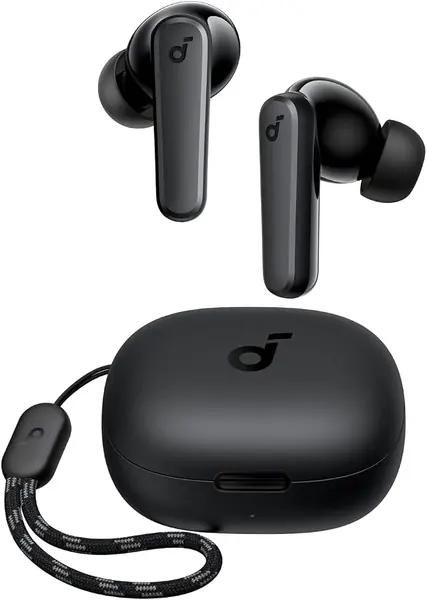
The case is why this one wins. It is a rounded little puck with a lanyard already attached, small enough to drop into a front pocket beside a phone, and it carries 30 hours of listening between trips to an outlet. That is what most people mean when they search for small wireless headphones: not the smallest bud on the page, but the smallest thing to carry.

The buds themselves are unremarkable to look at, and that is fine, because the money went into the app. Twenty-two EQ presets, controls you can remap, and a Find My Earbuds feature that makes a lost bud chirp until you find it under the couch. At this price that software is the difference between a pair you tolerate and a pair you keep reaching for.

Fit is the part we cannot settle for you. Spare ear tips are in the box, and if your canals are narrow, work through every size before deciding the buds are wrong, because a weak seal costs you bass and volume at the same time. The water resistance covers sweat and light rain, which is enough for a gym bag and not enough for a swim.

What you do not get is active noise cancellation. These seal passively, so engine drone and office chatter drop to a background level rather than disappearing, and the same is true of nearly everything else here. That is the honest trade at a budget price, and it is why we still start people here.

Pros

  • 30-hour case that slips into a pocket
  • 22 EQ presets and remappable controls
  • Find My Earbuds locates a missing bud

Cons

  • Passive isolation only, no ANC
Our verdict

For most people we point straight to the P20i: a genuinely pocketable case, 30 hours of power, and an app that tunes the sound, all at a budget price.
Check Latest Price
2

Sony WH-CH520 Best On-Ear

89 /100
TKZ Score Excellent

Key details

Battery Life
50 hours
Weight
5.1 oz
Charging Port
USB-C
Multipoint
Two devices
View on Amazon

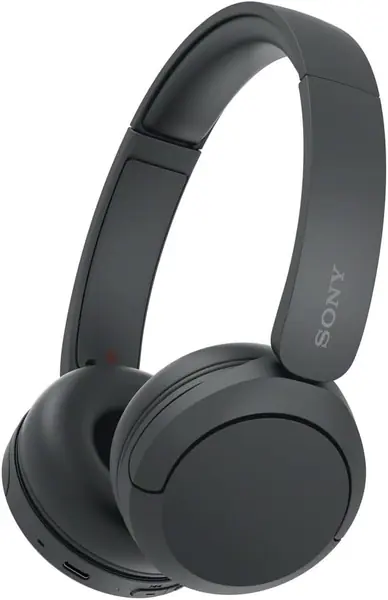
Every on-ear headphone is a clamping decision before it is a sound decision, because the pads have to press somewhere. The WH-CH520 keeps that pressure light: soft cups, a headband that adjusts without a fight, and swivel joints so the headphones slip on and off without tugging at your ears. The whole thing weighs 5.1 ounces.

Fifty hours is the number that makes these the on-ear we reach for during a work week. Charge them over the weekend and stop thinking about it, and a quick top-up covers the morning you forget. Multipoint holds a laptop and a phone at once, which matters more than any other spec if you move between calls and music all day.

Nothing here is trying to block sound. On-ear cups sit against the ear rather than around it, so a bus or an open-plan office comes through, and there is no noise cancellation to switch on. The box holds a USB-C cable and nothing else, so plan on a pouch if these live in a bag.

Pros

  • 50 hours per charge with quick charging
  • Multipoint across two devices
  • Light 5.1-ounce build with swivel cups

Cons

  • No carrying case in the box
Our verdict

If on-ear is the shape you want, we reach for the WH-CH520 first: light cups, 50 hours, and multipoint at a midrange price.

Check Latest Price
3

JBL Tune 530BT Long Trips Away from an Outlet

88 /100
TKZ Score Excellent

Key details

Battery Life
76 hours
Weight
5.44 oz
Bluetooth
6.0
Charging Port
USB-C
View on Amazon

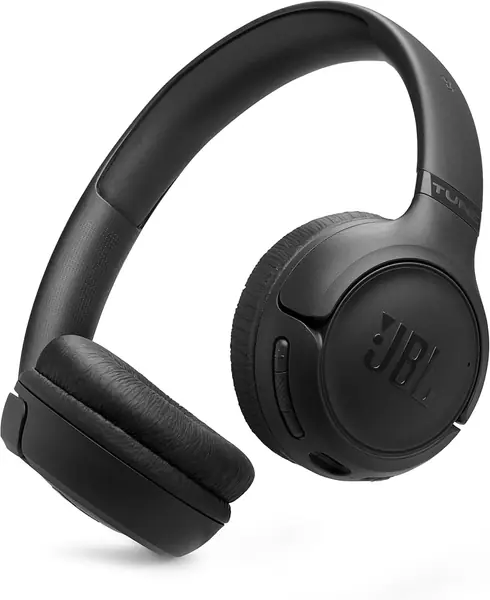
Seventy-six hours is not a specification you use up; it is one that changes how you pack. A week of commuting, a flight, and the days after it on a single charge, with a five-minute speed charge covering the morning you forget to plug in.

The rest of the package is aimed at calls as much as music. Two beamforming mics sit in each cup, Bluetooth 6.0 keeps a laptop and a phone paired at once, and the JBL Headphones app offers bass, vocal, and balanced presets when Pure Bass is not what you want. At 5.44 ounces it sits in the same weight class as the Sony.

Where we land is that this is the pair for long stretches away from an outlet, and the one to pick when charging is the thing that annoys you about small headphones. Two details to know first: the headband runs small, so a larger head will feel it by the end of a long day, and the box contains no charger and no cable.

Pros

  • 76 hours of playback per charge
  • Beamforming mics in each cup
  • Multipoint over Bluetooth 6.0

Cons

  • No charger or cable in the box
Our verdict

We hand the Tune 530BT to anyone who hates charging: 76 hours, clear calls, and a light on-ear fit, as long as the headband suits your head.

Check Latest Price
4

Fhumsh A10 Mini Best for Workouts

87 /100
TKZ Score Excellent

Key details

Water Resistance
IPX7
Playtime With Case
50 hours
Ear Tip Sizes
Three sizes
Power Display
Case and each bud
View on Amazon

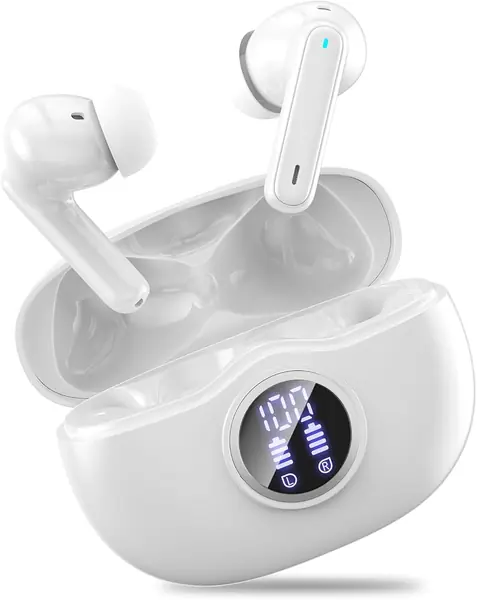
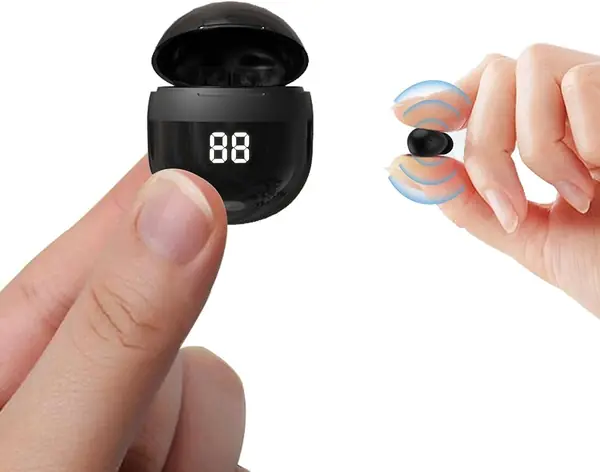
This is the pair we take to the gym. The case puts a percentage readout on the front, one figure for the case and one for each bud, so a dying bud shows up before it dies, and the buds themselves carry earhooks that loop over the top of each ear.

The hooks are the real difference. A bud that relies on friction alone works loose once you sweat; a hook keeps it in place even after the seal breaks, and the three tip sizes run from small to large. The IPX7 sealing covers sweat, rain, and the damp bottom of a gym bag, which is more water protection than most of this group offers.

What you give up is polish: the hooks take a second to seat over each ear, and you feel them there in a way you never feel a plain bud. That is the price of a pair that does not move, and at the gym we pay it happily.

Pros

  • Percentage display for the case and each bud
  • Earhooks hold the buds during workouts
  • IPX7 water resistance

Cons

  • Earhooks take a moment to seat
Our verdict

For sweaty sessions we grab the A10 Mini: hooks that hold, IPX7 sealing, and a case that tells you exactly how much charge is left.

Check Latest Price
5

RTUSIA Wrap-Around Best If Earbuds Slip Out

86 /100
TKZ Score Excellent

Key details

Battery Life
12 hours
Water Resistance
Water resistant
Bluetooth
5.0
Wearing Style
Over-ear hook
View on Amazon

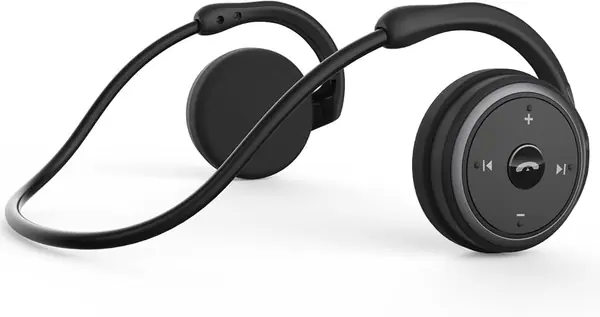
Some ears refuse earbuds. The canal aches, the seal never holds, and every pair ends up back in its case within a week. This wrap-around headset is built for those ears: the driver rests outside the canal on a rounded pad, and a band hooks over the top of each ear to hold it there.

The surprise is how much sound comes out of a design this open. It is loud, the microphone is clear enough that people stop asking you to repeat yourself, and the four physical buttons let you pause without looking, which is the thing touch controls get wrong when your hands are cold.

The catch is the band, which runs snug; on a larger head it is noticeable by the end of an hour-long walk. And because nothing seals, traffic and gym noise come straight in. That is the trade for hearing the world around you, and on a bike path it is the right trade to make.

Pros

  • Drivers rest outside the ear canal
  • Four physical buttons you can find by feel
  • 12 hours per charge

Cons

  • Band runs snug on larger heads
  • Open design lets in traffic noise
Our verdict

If earbuds never stay put, this is the pair we hand over: the drivers rest outside the canal, and 12 hours covers a week of walks.

Check Latest Price
6

Beats Solo Buds iPhone Owners, Tiny Case

85 /100
TKZ Score Excellent

Key details

Ear Tip Sizes
Four, XS to L
Fast Charge
5 minutes for 1 hour
Playtime Per Charge
18 hours
View on Amazon

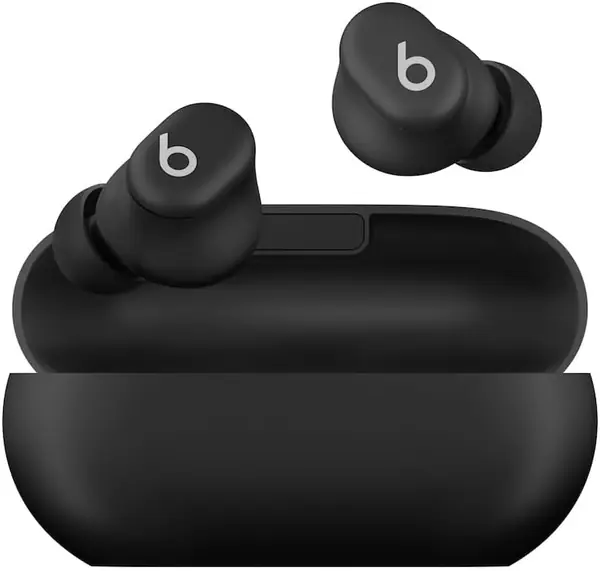
At the top of this group's price range, the Solo Buds are selling one thing above all: the smallest charging case Beats has built, small enough to disappear into a coin pocket and leave room for keys.

Eighteen hours of listening per charge is the shortest figure here, so this is a pair you plug in more often than the P20i or either Sony. The fit kit is the widest in this group, with four ear tip sizes from XS to L, and Fast Fuel turns five minutes on the charger into an hour of playback.

Each bud carries a microphone with a noise-learning algorithm, and that is the piece of hardware a premium earbud is really selling on calls. The dual-layer drivers aim sound straight down the canal, and the tuning is full and bass-forward rather than flat.

Fit is the gamble, and it is a strange place for a premium earbud to land. Four tip sizes give you a wide range to work with, but these are the buds in this group most likely to work loose mid-run. We point iPhone owners here for the case and the calls, not for the treadmill.

Pros

  • Smallest charging case Beats has made
  • Four ear tip sizes, XS through L
  • Five minutes of charging gives an hour of playback

Cons

  • Buds work loose during runs and workouts
Our verdict

We recommend the Solo Buds to iPhone owners who want the smallest case going and can live with 18 hours and a looser fit.

Check Latest Price
7

Sony WI-C100 Best for Podcasts and Calls on the Go

84 /100
TKZ Score Excellent

Key details

Battery Life
25 hours
Water Resistance
IPX4
Weight
0.71 oz
Wearing Style
Neckband
View on Amazon

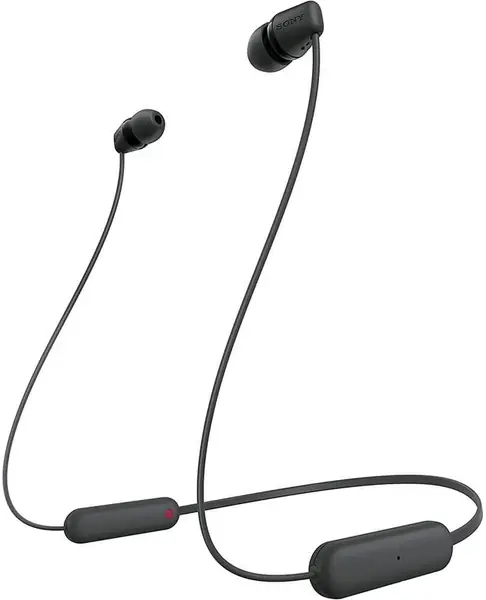
A neckband solves something earbuds cannot: when you pull a bud out to talk to someone, it hangs from the band instead of going into a pocket or onto the sidewalk. Walk a mile with the WI-C100 around your neck and the 20-gram headset mostly disappears under a collar.

Twenty-five hours on a charge, IPX4 for sweat and rain, and physical buttons set into the band that you can find without looking. The 9mm drivers are small, but Sony's DSEE processing fills in some of the high end that Bluetooth compression takes out, and for podcasts and audiobooks the result is more than enough.

It is not a running pair. The band is flexible rather than shaped, so it swings when you move, and the buds hang from short cables that tug when you turn your head. For a desk, a commute, or an evening walk, none of that matters, and nothing in your pocket gets lost.

Twenty-five hours and real buttons at a midrange price is the pitch, and it holds if you want one pair for talking and listening that you never have to hunt for. If you run or ride, put the money into hooks instead.

Pros

  • 25 hours per charge with IPX4 sealing
  • Physical buttons set into the band
  • Buds hang from the band instead of getting lost

Cons

  • Ear tips slip out of small canals
Our verdict

For podcasts, calls, and walks we like the WI-C100: 25 hours, real buttons, and buds that cannot end up on the pavement.

Check Latest Price
8

Yihou SK18 Best for Side Sleeping and Tiny Canals

80 /100
TKZ Score Excellent

Key details

Battery Life
4 hours
Playtime With Case
24 hours
Charge Time
1 hour
Earbud Weight
0.08 oz
View on Amazon

Lie on your side with ordinary earbuds in and a pillow drives them into your ear within minutes. These mini earbuds are built for that: each one weighs 0.08 ounce, and the housing is short enough that a pillow has almost nothing to press against.

The rest is a cheap set done with some thought. The case stands up on its own like a tumbler and shows a battery percentage, the buds run about four hours a charge with 24 hours in the case, and a full charge takes an hour. Touch controls handle calls and the voice assistant.

The thing to sit with is longevity. At this end of the market a bud that stops taking a charge is the risk you run, and that is the trade for something this small and this cheap. What softens it is that you are risking the smallest amount of money in this group.

Pros

  • 0.08-ounce buds built for side sleeping
  • Case stands up and shows battery level
  • 24 hours total with the case

Cons

  • Four hours of playtime per charge
Our verdict

For side sleepers and very small canals we keep the SK18 around: 0.08-ounce buds that a pillow cannot press into your ear.

Check Latest Price

How We Tested 14 Pairs of Small Wireless Headphones

We built the shortlist by gathering every compact, lightweight model we could find, then cutting anything too bulky to fit a jacket pocket, too heavy to forget you're wearing, or priced out of proportion to what it offers. That left 14 pairs: true wireless buds, on-ear sets, a neckband, and a wrap-around sport headset. Every one went into daily rotation for four months.

Testing happened where these headphones actually live. Each pair rode a commuter train and a crowded sidewalk, sat through full workdays at a desk with a fan running, came along on runs and gym sessions, and took a handful of calls. I timed battery life from a full charge at moderate volume until the headphones died, then compared the result to the number on the box — the gap was wide on some and nearly nonexistent on others.

For fit, I wore each pair through a full workday, again with glasses, and again under a knit hat and a bike helmet, noting where pressure built and whether anything slipped mid-run. Connectivity meant pairing to a phone and a laptop, walking two rooms away, and switching between devices on the pairs that allow it; some dropped out, some never did. Calls were recorded outdoors on a breezy corner. Durability meant riding in a bag next to keys, getting stuffed into a jeans pocket, and sweating through workouts.

Noise cancellation at this size comes down to seal and weight, so I judged it by how much of a train announcement or an open-plan office leaked through. Controls and pairing were scored on how little thought they required, and every pair was weighed against what it actually delivered — the priciest models did not win by default.

How to Choose Small Wireless Headphones

Start With the Shape, Not the Size

In-ear or mini earbuds are the only shape that genuinely disappears into a pocket, and they are the right answer when portability is the whole point. On-ear models cost you a headband but buy 50 hours or more away from an outlet and put nothing inside the ear canal. A neckband or a wrap-around band solves a third problem, losing a bud, because the two sides stay connected.

Decide which of those three annoyances you are trying to end and the shortlist picks itself. If you want two of them solved at once, that is when the choice gets harder and the reviews below matter more than the spec sheet.

Fit Is the Spec Nobody Prints

Every pair here ships with silicone tips, and the seal those tips make decides bass, volume, and whether a bud stays put. If your canals are narrow, start with the smallest tip and expect to work through all of them; a good seal is worth more than any driver size. Read the word compact carefully in a listing, because it usually describes the charging case rather than the part that goes in your ear.

On-ears have their own sizing problem. A headband that runs small will make itself known within an hour, and light weight only partly makes up for a tight fit.

Read the Battery Numbers Carefully

The headline figure is usually the total with the case, not the hours in your ears. Tiny buds hold four to five hours, and the case stretches that to 24 or 30. On-ear models skip the case entirely and quote 50 hours and up, which is a week of commuting on one charge.

Estimate your daily listening before you pay for endurance, then add a little back: the battery is the part of any of these that ages first, so a bigger number also buys a longer useful life.

Controls, Multipoint, and the App

Touch controls look cleaner and are easier to trigger by accident; physical buttons are easier to find with cold or gloved hands, which is why the wrap-around and neckband designs here use them. Multipoint, meaning a connection to a laptop and a phone at the same time, matters more than a Bluetooth version number if you move between the two all day.

The app is where budget earbuds earn their keep: EQ presets, remappable taps, and on the P20i a finder that makes a lost bud chirp.

What You Give Up for the Size

Small housings hold small batteries and thin plastic, so treat three years of hard use as optimistic. Passive isolation is the other cost: not one of these cancels noise, and on-ear cups leak sound in both directions, so what you play is partly heard by the row behind you.

If the job is silencing an open office or a plane, an in-ear pair with active noise cancellation is a different purchase and worth the extra bulk. For walking, commuting, and training, the light weight is the better trade.

Frequently Asked Questions

Final Verdict

The Soundcore P20i is the pair we point most people to. The case is the one that genuinely vanishes into a pocket, 30 hours makes charging a weekend chore instead of a daily one, and the app turns a budget earbud into something you can tune to your own ears.

What changes the answer is shape. If your ears will not hold a bud, the RTUSIA wrap-around rests outside the canal and stays there. If you want one charge a week and nothing inside your ear at all, the Sony WH-CH520 gets you 50 hours and multipoint on a light headband.