Best Rugged Power Banks of 2026

A phone that dies at the trailhead is an annoyance. A phone that dies three miles in, with the light fading and the route living on that screen, is something else entirely. A rugged power bank is the small, unglamorous insurance policy that keeps your map, your headlamp, and your one bar of signal alive when there's no outlet for miles.

I've carried one on every hike and camping trip for years, and my team and I have spent the past seven months putting 14 of them through rain, mud, cold nights, and more drops onto asphalt than I'd like to admit. Two things I picked up along the way: capacity is measured at the cell, so the number of full phone charges you actually get is always lower than the box suggests, and a waterproof rating means nothing if you leave the port flap hanging open.

The picks below run from featherweight 10,000mAh banks you'll forget you packed to 24,000mAh bricks that can keep a whole campsite topped up. Whether you're counting grams or counting days between outlets, there's one here that fits how you travel.

The Best Rugged Power Banks

1

NESTOUT Rugged Power Bank 15000 Best Overall
90 /100
TKZ Score Outstanding

Key details

Capacity
15,000 mAh
Weight
12.8 oz
Water And Dust
IP67
USB-C Output
32W PD
View on Amazon

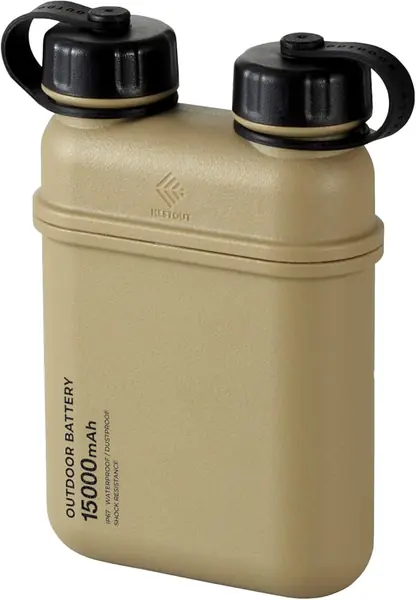
The first thing we noticed about the NESTOUT is how deliberate the sealing feels. The battery sits in a silicone cushion inside a hard shell, and the port covers press home against a gasket instead of snapping shut on a hinge. Port covers are where a rugged power bank usually gives up, since a flap that pops open inside a pack turns an IP67 rating into decoration, so a cover that needs a firm push to seat is the detail we care about most.

That construction, plus 15,000mAh and 32W USB-C Power Delivery across three ports, is why this is the pack we recommend first. It lands in the middle of this group on both capacity and bulk at 364 grams: real headroom over the 10,000mAh DeWalt and INIU, without the brick feel of the 24,000mAh ToughTested. It is also the pack we handled least carefully, and the shell came back from a week of rocks and truck beds without a mark.

Three ports do more than the spec suggests. With 32W shared, a phone fills quickly while a headlamp and a pair of earbuds ride along on the other two, and the pack reads what is plugged in and pushes current toward the hungriest device. We also like that it looks like gear rather than a plastic brick; the design award on the box does not charge anything, but it explains why this one lives on a shelf instead of in a drawer.

Where it gives ground is on a fast-and-light trip, since the smaller INIU and Nitecore packs save real weight in a day pack. The NESTOUT is what we pack when the forecast is bad and the trip runs long, and it is the one we hand to people who want a single charger to cover everything.

Pros

  • IP67 sealing with gasketed, firm-seating port covers
  • 15,000mAh covers a weekend without brick-class weight
  • 32W USB-C PD shared across three ports

Cons

  • Heavier and bulkier than the 10,000mAh picks
Our verdict

We point most people to the NESTOUT because it pairs genuine submersion-grade sealing with weekend-sized capacity, and no other pack here balances those two as comfortably.
Check Latest Price
2

DeWalt 10,000mAh Portable Charger Best for the Jobsite

89 /100
TKZ Score Excellent

Key details

Capacity
10,000 mAh
Weight
7.69 oz
Water And Dust
IP67
Ports
USB-C PD, USB-A QC
View on Amazon

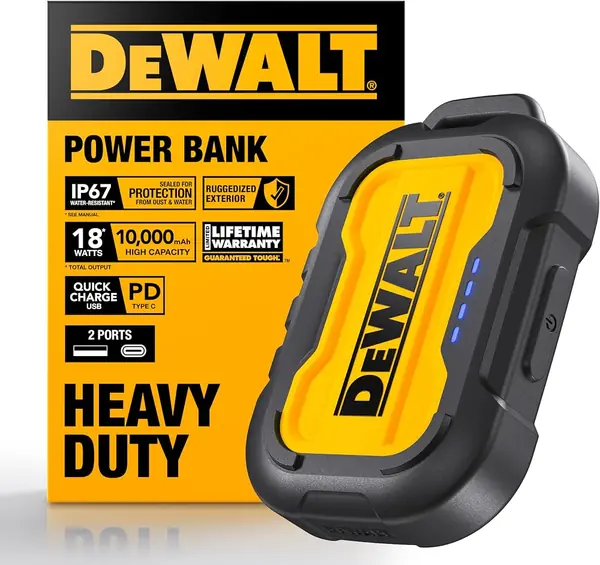
The molded carabiner loop is the reason the DeWalt exists in the shape it does. It clips to a work belt, a lanyard, or the outside of a tool bag and stays where you put it, which is where a charger needs to live if the day is spent on a ladder or under a hood.

We rate it the jobsite pick, and the rest of the package is deliberately conservative: a silicone-covered shell over an IP67 body, 218 grams, and USB-C PD alongside a Quick Charge USB-A port. Nothing about it is precious. This is the pack that rides a belt for months and comes back scuffed rather than cracked.

Two things we paid attention to in use. The first is heat, because pushing a tablet pulls harder than a phone does and the body warms noticeably, which makes it the wrong pack to bury at the bottom of a closed bag while it works. The second is the port cover, the only thing standing between an IP67 rating and a pocket full of lint; it seats firmly, and it needs to be seated every time.

In a tool bag, a pair of these covers more ground than one bigger pack, since one can sit on the charger overnight while the other rides on your belt. For a phone, a headset, and a couple of days of work, that arrangement beats a single 20,000mAh brick.

Pros

  • Carabiner loop keeps it on a belt or bag
  • Silicone-covered IP67 body shrugs off drops
  • Compact and light at 218 grams

Cons

  • Slow to refill from a wall outlet
Our verdict

We reach for the DeWalt on workdays, when a carabiner loop and a silicone-covered IP67 body matter more than raw capacity.

Check Latest Price
3

INIU Outdoor Rugged Power Bank Best for Day Hikes

88 /100
TKZ Score Excellent

Key details

Capacity
10,000 mAh
Weight
6.9 oz
Water And Dust
IP67
USB-C Output
45W
View on Amazon

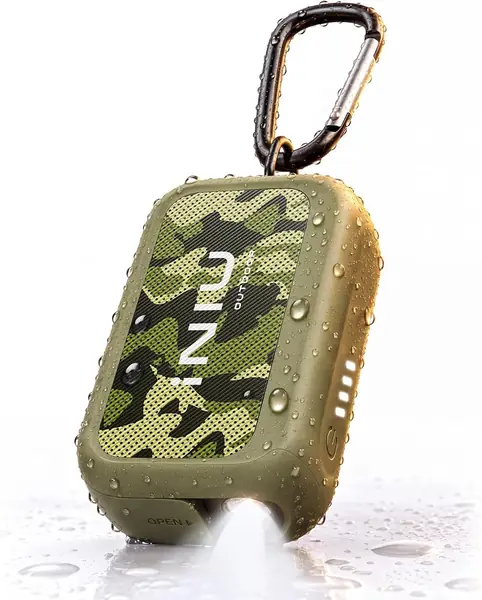
Six-point-nine ounces and 45 watts is an unusual pairing in a rugged pack, and it is the whole case for the INIU. No other pack here states a higher output, and at 6.9 ounces this one weighs roughly half what the NESTOUT does. We make it the day-hike pick for exactly that reason: it disappears into a hip-belt pocket and still fills a phone before the next junction.

The rest of the hardware is trail-specific in ways we appreciate. IP67 covers rain, splashes, and trail dust, a carabiner and detachable D-ring screw clip it to a strap, and the quarter-inch thread on the body takes a tripod or a bike mount so it can hold a light or stay on a handlebar while it charges. A threaded socket on a power bank sounds like a spec-sheet novelty until you use one.

Forty-five watts is worth having only if your phone accepts it, since a handset that caps at 20W charges no faster here than on the cheaper DeWalt. The five-year warranty is the longest coverage in this group, alongside the ToughTested, and it is a real argument for a pack this small at this price.

What it will not do is get you through a two-night trip. The 20,000mAh aswayke is the step up when a phone has to last until the third morning.

Pros

  • 45W output, the highest stated here
  • 6.9 ounces with a pocketable footprint
  • IP67 shell with a tripod thread

Cons

  • 10,000mAh covers one day, not a weekend
Our verdict

We take the INIU on day hikes, where 45W of output from a 6.9-ounce pack beats carrying twice the weight.

Check Latest Price
4

aswayke 20,000mAh Rugged Power Bank Best with a Built-In Lantern

83 /100
TKZ Score Excellent

Key details

Capacity
20,000 mAh
Weight
1.5 lb
Water And Dust
IP68
Lantern
420 lumens
View on Amazon

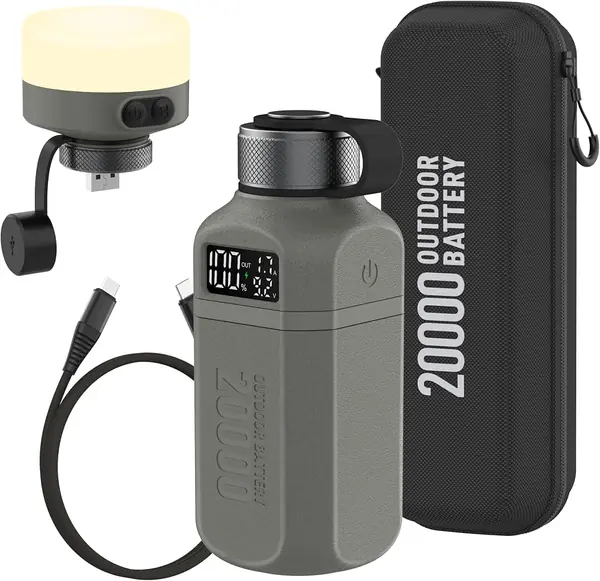
The lantern is the reason to look at the aswayke at all. A 420-lumen LED sits on top with five modes, high through warm, and it is bright enough to read by on the soft setting and to light a cooking area at full power. The base takes a standard tripod thread, so it stands up instead of lying face-down in the dirt. That beats most of the camping lanterns we have carried, and it costs no pack space because it is the body of the charger.

Underneath is a 20,000mAh battery rated IP68 for a 1.5-meter dunk, provided the ports are dry and sealed first, a condition worth respecting since a wet port closed under a cover is how these things corrode. The display is the other feature we got real use from: percentage plus live input and output current tells you more about a suspect cable than a row of indicator lights.

As a basecamp pack it is the best value in this group, with more capacity than the NESTOUT for less money and a light thrown in. The caveat sits in the electronics around the battery. The lantern and that display are what go wrong, with a light that will not come on or a screen that stays lit, so run all five modes and the button in the first week while a return is still simple.

Pros

  • Built-in 420-lumen lantern with five modes
  • 20,000mAh with IP68 sealing
  • Live percentage and current display

Cons

  • Six-month warranty is the shortest here
  • 1.5 pounds is heavy for a day pack
Our verdict

We suggest the aswayke for basecamp trips, where 20,000mAh and a genuinely useful 420-lumen lantern beat a smaller pack plus a separate light.

Check Latest Price
5

Nitecore NB10000 Gen4 Best for Ultralight Backpacking

82 /100
TKZ Score Excellent

Key details

Capacity
10,000 mAh
Weight
4.94 oz
USB-C Output
22.5W
Water Rating
IPX7
View on Amazon

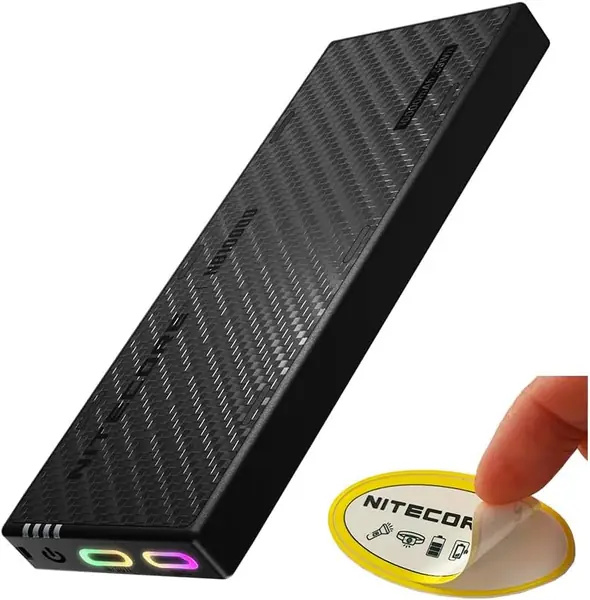
The lanyard on the Nitecore is also its charging cable, which sounds like a gimmick until you have packed for a trip and counted how many cables came along. Unclip it and it is a USB-C cable; clip it back and it is a handle. At 4.94 ounces and under an inch thick, this is the lightest pack here, and it is the one we slide into a running vest or a summit pack without a second thought.

Here is the detail that separates it from the rest of the group: IPX7 rates water immersion only. There is no dust digit, so Nitecore makes no claim about sand or grit, where the IP67 and IP68 packs here do. Rain, splashes, and a dunking are covered; a week of desert sand is not this pack's assignment, and knowing that is worth more than another 5,000mAh.

Two USB-C ports with pass-through charging mean a phone and a headlamp can run while the pack itself tops up, and the two-year warranty is longer coverage than the NESTOUT offers. What it asks in return is the right cables: with no USB-A port on board, anything with an older rectangular plug needs an adapter.

Pros

  • Lightest pack here at 4.94 ounces
  • Lanyard doubles as a USB-C cable
  • Pass-through charging on two USB-C ports

Cons

  • Modest 22.5W output
Our verdict

We carry the Nitecore when weight is the deciding factor, since 4.94 ounces and a cable you cannot forget are worth more than capacity.

Check Latest Price
6

Dark Energy Poseidon Pro Best for Hard Abuse

81 /100
TKZ Score Excellent

Key details

Capacity
10,000 mAh
Water And Dust
IP68
Outputs
2 USB-C, 1 USB-A
Rated Drop
50 ft
View on Amazon

Dark Energy rates the Poseidon Pro for a 50-foot drop, 1,500 pounds of crushing force, and, in the listing's own words, a shotgun blast. We did not test any of that. What we did handle is the part that decides whether a rugged pack survives real weather: the port cover, which seats with more authority than any other cover here, and a shell that feels like a sealed box rather than a battery in a case.

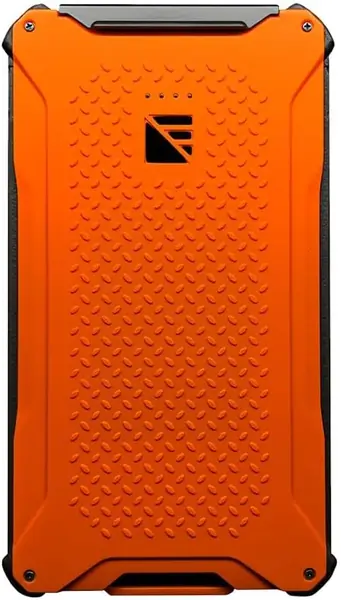
The rest of the package is straightforward. A 10,000mAh cell feeds two USB-C outputs and one USB-A, built-in cables mean the pack carries its own charging hardware, and IP68 sealing with a hi-vis orange body makes it easy to find in a dark tent or a truck bed.

Those built-in cables are the trade you make. They are genuinely convenient and they cannot be swapped, so a worn connector means the pack goes back rather than a new cable going in. That is a fair exchange for a bag charger that never arrives without its cable, but it is a decision, not a free feature.

Where it earns its keep is the truck bed, the boat, and the range bag, places where a pack gets crushed by other gear rather than dropped on a trail. Ours spent a week in a toolbox and came out with the cover still seated and the shell unmarked. What it will not do is run a group: 10,000mAh and three ports is one person's power for a couple of days.

Pros

  • IP68 sealing and the firmest port cover here
  • Built-in cables mean nothing to forget
  • Three outputs, two of them USB-C

Cons

  • Built-in cables cannot be replaced if they wear out
Our verdict

We recommend the Poseidon Pro for gear that rides in a truck bed or a boat, where an IP68 shell matters more than capacity.

Check Latest Price
7

ToughTested 24000mAh Solar Best for Vehicle and Blackout Backup

80 /100
TKZ Score Excellent

Key details

Capacity
24,000 mAh
Weight
16 oz
USB-C Output
18W PD
Solar
Integrated panel
View on Amazon

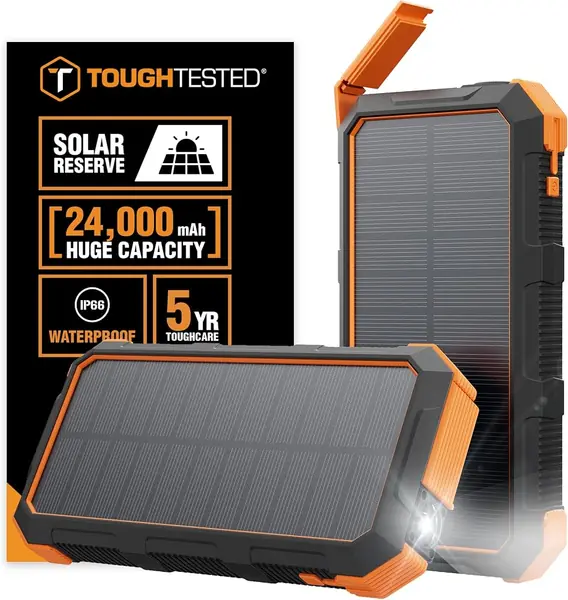
At 24,000mAh the ToughTested is the biggest battery in this group, with a solar panel across one face and a four-mode flashlight built into the edge. It is a pack built for a vehicle, a basecamp, or a blackout rather than for a summit pack.

The solar panel is the part to be honest about. A panel that size cannot meaningfully refill 24,000mAh; what it does is hold the pack steady or add a little charge across a sunny day, which is worth something on a week-long trip and worth almost nothing on a weekend. Treat it as insurance for when the wall is far away and it makes sense. Treat it as your charging plan and you will be disappointed.

As off-grid backup it has a real case. The maker claims eight to ten phone charges, three devices can charge at once from an 18W USB-C PD port plus USB-A, and the five-year warranty is the longest coverage here. We file it under vehicle and basecamp kit rather than hiking gear, which is the setting where a solar face, a flashlight, and this much capacity all pull their weight at the same time.

If you never get further than a night from an outlet, the aswayke hands you 20,000mAh and a lantern with less bulk to carry. The ToughTested is for the trip where the nearest socket is a week away and the pack lives in the truck until then.

Pros

  • 24,000mAh, the largest capacity here
  • Five-year warranty, the longest coverage
  • Charges three devices at once

Cons

  • Very slow to recharge from a wall outlet
  • Heavy and bulky for a day pack
Our verdict

We rate the ToughTested for vehicle and basecamp backup, where 24,000mAh, a five-year warranty, and a trickle of solar outweigh the bulk.

Check Latest Price

How We Tested Rugged Power Banks (and Tried to Break Them)

We started by pulling every power bank we could find that claimed a real IP rating and a shockproof housing, then set the spec sheets next to what owners actually complain about: port covers that stop seating after a month, banks that quit in the cold, listed weights that don't match the box. That narrowed a field of a few dozen to 14 units, which we've now lived with for seven months.

Every bank got the same treatment. I ran each one from full to empty into a phone with the screen off and counted how many complete charges it delivered, and I timed how long it took to push a dead phone to 50 percent. Then they went into real life: a rainy three-day camping trip, day hikes, a driveway alternator swap, a bike commute in wet weather, and one 30-hour power outage.

Durability testing was less gentle. I dropped each bank from waist height onto concrete, then again onto a corner, and checked whether the shell, buttons, and port covers still lined up afterward. For water resistance, I sealed the covers, ran each one under a faucet for five minutes, and left a few in a cooler of ice water for half an hour before opening the flaps to look for moisture. I also weighed every bank on a kitchen scale and carried it in a jacket pocket and on a hip belt to see how it actually rode.

Design got judged in the dark and in the cold — how many fumbling taps it took to find the flashlight or lantern, whether a port cover fought back with gloves on, whether the bank got hot enough mid-charge to be uncomfortable. We also worked out cost per usable charge, because value here isn't the sticker price; it's how many times a bank will genuinely top up your phone before it quits.

How to Choose a Rugged Power Bank

Read the IP Rating Properly

In an IP rating, the first digit is dust and the second is water. IP67 means dust-tight and able to survive immersion; IP68 goes deeper or longer, depending on the maker; IP66 handles dust and powerful jets but is not rated for a dunking. An X in the second spot, as in IPX7, means water only and no dust claim at all, which matters on sandy trips.

Whatever the number, it only holds with the port covers seated and the ports dry before you close them. A wet port sealed under a cover is worse than an open one, because the moisture stays put.

Size Capacity to the Trip, Then Weigh It

Think in days rather than milliamp-hours. A 10,000mAh pack covers a phone for a day out, 15,000 to 20,000mAh gets you a weekend with a headlamp and a camera in the mix, and 24,000mAh is basecamp and blackout territory. Expect less than the label suggests once conversion losses are counted.

Weight climbs with capacity: the 20,000mAh packs here run two to three times the heft of the 10,000mAh ones, and the Nitecore shows how little a small pack can weigh. The right answer is the smallest one that covers your longest usual trip.

Output Wattage Is What Fills a Phone Fast

Charging speed is an output question, so look at the watts on the USB-C port rather than the number of ports. An 18W port is fine for a phone, while 30W and up is what moves a tablet or a laptop-class device. Two devices charging at once split that budget, so a pack advertising 45W rarely sends 45W to each port.

Match the output to what your phone accepts. If your handset caps its intake around 20W, paying for 45W buys you nothing but a lighter wallet, and the INIU's advantage shrinks to its weight.

Clips, Threads, and Lights: Extras That Earn Their Weight

A portable charger only helps if it is still attached to you at the end of the day. A molded carabiner loop like the DeWalt's keeps it on a belt or strap, a quarter-inch thread lets it stand on a tripod or clamp to a bike mount, and a built-in lantern saves packing a separate light.

These extras are worth it only if you use them. A lantern adds bulk you feel on every climb, and a clip you never clip is dead weight.

Check the Input Wattage and the Warranty

Refilling a pack is a slower job than filling a phone, and the spec that decides it is input wattage, not output. A pack that accepts USB-C PD will recover far faster than one charging over an older micro-USB input, so plan to top up overnight rather than between outings.

Warranty is the other number worth reading. Coverage in this group runs from six months to five years, and a pack that lives in a truck bed is the one that will test it.

Frequently Asked Questions

Final Verdict

We recommend the NESTOUT for most people: genuine submersion-grade sealing, 15,000mAh, and a body that survives being set down in the wet stuff. If your pack lives on a work belt, the DeWalt's carabiner loop and 218-gram body make more sense, and if you count ounces on day hikes, the INIU delivers 45W at 6.9 ounces.

Match capacity to your longest usual trip and the rest of the decision gets easy.