Best Open-Ear Headphones of 2026

Open-ear headphones are a trade you make on purpose: you give up the seal, and in exchange your ears stay open to traffic, a bike bell, the barista calling your name. The reasonable worry is that you also give up bass, privacy, and a fit that survives a run. It doesn't have to work that way — the good ones sound fuller than they have any right to from outside your ear canal, and they stay put.

I've worn these on morning runs, on crowded buses, and through whole workdays of video calls, and the gaps show up fast. Over six months my team and I worked through 12 pairs, from clip-ons to ear hooks to bone conduction bands. One thing worth knowing: the playtime on the box usually counts the charging case, so a 40-hour claim can mean eight hours in your ears.

Comfort is the sleeper spec, and a clip that pinches after an hour is worse than a merely decent driver. None of these cost flagship money, and the picks below run from bass-forward pairs for the gym to hooks light enough to forget you're on a call.

The Best Open-Ear Headphones

1

Soundcore C50i Best Overall
91 /100
TKZ Score Outstanding

Key details

Bluetooth
6.0
Battery Life
7 hr buds / 28 hr case
Water Resistance
IP55
Drivers
12mm
View on Amazon

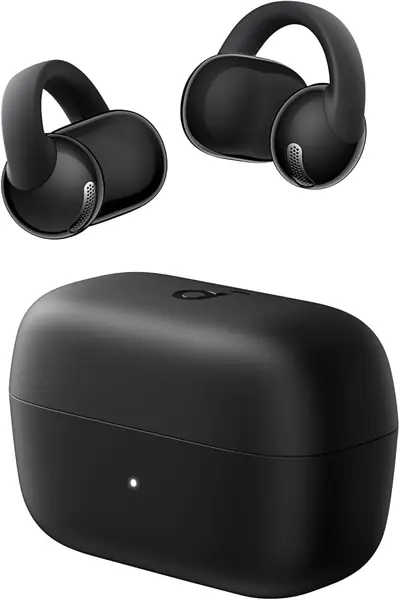
The clip-on shape is the reason the C50i earns our top spot. It rests over the ear rather than in the canal, so you get the open, aware feeling without a hook pressing behind your head all day. The FlexiClip memory titanium frame is the detail that makes it work: it adapts to the ear instead of forcing one fixed angle. We found that easier to live with than a bulky hook, especially when putting them on and taking them off through the day.

Sound is the other surprise. The 12mm drivers give the C50i more low end than the thin, bright sound we expect from budget open-ear designs, and the button controls are easier to find by feel than touch panels. The 7-hour single-charge rating is enough for a workday or a long run, and the case stretches total playtime to 28 hours. IP55 covers sweat and rain, and Bluetooth 6.0 covers the connection basics. The compact case slips into a pocket more easily than the cases that come with full-size earhooks, which is why it stays in our bag.

Comfort is good but not universal. The clip is gentle on the ear canal, yet ears on the small side may need a few adjustments before the driver sits close enough for full volume. If you prefer a hook to a clip, the V20i is the budget alternative; for most commuting, walking, and gym sessions, the C50i is the one we reach for. The clip design is also easier to put on one-handed than a headband, which matters when you're heading out the door.

Pros

  • Secure clip-on fit for workouts
  • Clear sound and strong value
  • 28-hour total battery with pocketable case

Cons

  • Connection can cut out
Our verdict

We recommend the C50i as the default open-ear pair for most people: the clip-on fit stays secure, the sound is crisp, and the case makes it easy to live with.
Check Latest Price
2

Soundcore V20i Best Budget

90 /100
TKZ Score Outstanding

Key details

Bluetooth
5.4
Battery Life
8 hr buds / 36 hr case
Water Resistance
IP55
Drivers
16mm
View on Amazon

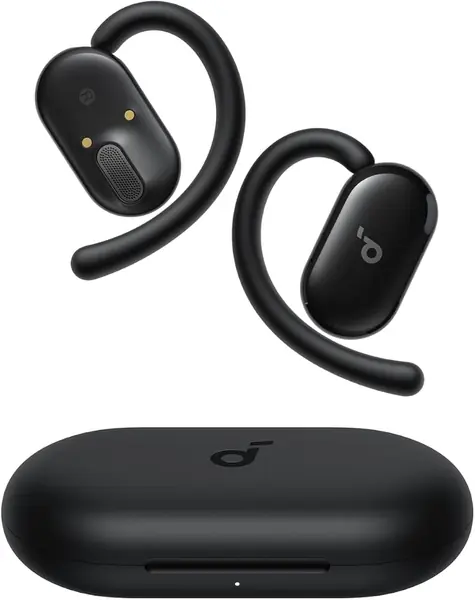
The V20i is the budget entry in this group. Its hooks rotate through four positions, which matters if one fixed hook tends to sit too far from your ear or press too hard behind it. That flexibility helps when you share the buds between family members or switch between a hat and bare ears. The 16mm drivers also give it more body than the tiny drivers on some budget clips.

Where it earns our budget recommendation is the combination of fit and battery. The buds are rated for 8 hours and the case adds another 28 for 36 total, so a week of commutes can pass without hunting for a cable. IP55 and Bluetooth 5.4 cover the basics, and multipoint is useful if you move between a phone and a laptop. We did notice that comfort is the dividing line: the hooks can press on smaller ears after a few hours.

The V20i is our budget pick rather than the overall winner because the C50i's clip design is easier to forget about. If your ears need a hook rather than a clip, it remains the one to try first. The four-position adjustment is the feature we come back to, and it is the reason this pair works for more ear shapes than a fixed hook.

Pros

  • Four-position hooks adjust to ear shape
  • 36-hour total battery
  • Strong sound and value for the price

Cons

  • Right bud can cut out
Our verdict

The V20i is the open-ear pair we point budget shoppers to: adjustable hooks, a 36-hour case, and sound that holds up against the pricier picks here.

Check Latest Price
3

SHOKZ OpenRun Pro 2 Best Bone Conduction

89 /100
TKZ Score Excellent

Key details

Bluetooth
5.3
Battery Life
12 hours
Water Resistance
IP55
Weight
1.07 oz
View on Amazon

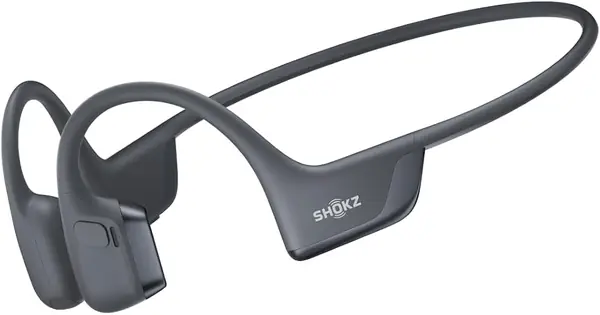
Bone conduction usually trades bass for awareness, and the OpenRun Pro 2 is the first pair here that narrows that gap. It combines a bone-conduction driver with an air-conduction driver, so the sound has more weight without sealing your ears. We were struck by how much more low end the music has without losing the open feeling. The 12-hour rating is also the longest single-charge figure among the bone-conduction picks here, and the 30.3g titanium frame is light for a headband and uses a memory wire to hold its shape.

The trade-off is fit. The wraparound frame assumes a certain head size; smaller heads may find the band loose or the hooks less planted. The controls are buttons, which we prefer over touch for gloved hands, and the IP55 rating covers sweat and rain. Call quality is good in calm conditions, though wind noise can still creep in on exposed rides. The hard-shell case is the kind of detail that matters if these live in a gym bag.

If your priority is pure sound and all-day comfort rather than bone conduction, the OpenFit 2+ is the more natural fit. But for a runner who wants the cheekbone feel and the security of a frame, the OpenRun Pro 2 is the bone-conduction pair we recommend.

Pros

  • Dual drivers add bass to bone conduction
  • 12-hour single-charge battery
  • Stable titanium frame for running

Cons

  • Premium price
Our verdict

For runners who want bone conduction with more bass, the OpenRun Pro 2 is the pick: 12 hours of battery and a dual-driver design that keeps you aware.

Check Latest Price
4

SHOKZ OpenFit 2+ Best for All-Day Comfort

88 /100
TKZ Score Excellent

Key details

Bluetooth
5.4
Battery Life
11 hr buds / 48 hr case
Water Resistance
IP55
Weight
9.4 g per earbud
View on Amazon

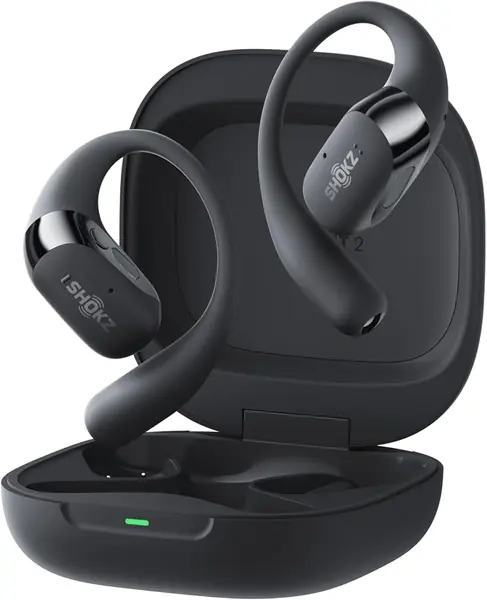
At 9.4 grams per earbud, the OpenFit 2+ is light enough that the weight stops being the story. The soft silicone and flexible hook sit around the ear rather than pressing into it, and the 11-hour single-charge rating means most people can wear them through a workday without docking them. The charging case brings the total to 48 hours, and it supports wireless charging, which is one less cable to carry.

The sound is the most polished of the open-air picks here. The 17.3mm low-frequency driver is the largest bass driver in this group, and Dolby Audio processing gives it a more refined presentation at lower volumes. The physical buttons are a detail we appreciate; they're easier to use without looking than touch panels. IP55 covers sweat and light rain, and Bluetooth 5.4 supports multipoint for switching between a phone and a laptop.

The fit is still the caveat: the hook can feel loose on smaller ears, and the earbud sits differently depending on the shape of your ear. If you want the best sound and the lightest long-wear feel, the OpenFit 2+ earns it; if you need maximum security for sprinting, the OpenRun Pro 2's frame is the safer choice.

Pros

  • 9.4 g per earbud for all-day comfort
  • 48-hour total battery with wireless charging
  • Polished sound with Dolby Audio

Cons

  • Premium price
Our verdict

The OpenFit 2+ is the open-ear pair we choose for long workdays: 9.4 grams per earbud, 48 hours with the case, and a soft fit that stays comfortable.

Check Latest Price
5

JBL Soundgear Sense Best for Workouts with a Neckband

87 /100
TKZ Score Excellent

Key details

Bluetooth
5.0
Battery Life
6 hr buds / 24 hr case
Water Resistance
IP54
Drivers
16.2mm
View on Amazon

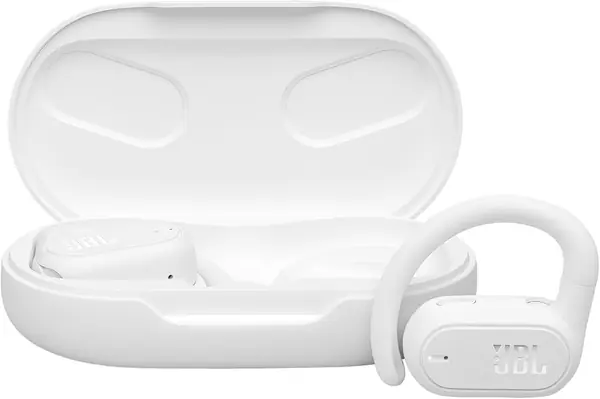
The neckband is the reason to look at the Soundgear Sense. JBL includes a detachable band that loops behind your head, so the earbuds stay with you even if one hook works loose on a run. That's a practical answer for cyclists and trail runners who don't want to stop and search the pavement. The adjustable earhooks also rotate, and the 16.2mm drivers give the sound a fuller shape than the smaller clip designs.

The buds are rated for 6 hours, and the case brings the total to 24, which is fine for a few workouts but not a week of long shifts. IP54 covers sweat and splashes, not a downpour. The earbuds are light enough to forget about, but the battery number is the one to check against your longest session.

For most people, the C50i is the easier daily choice because it doesn't ask you to keep track of a band. The Soundgear Sense makes more sense if you run in places where a dropped earbud is a real problem, or if you like the reassurance of a headband without giving up open-ear awareness. That's a narrower job, but it does that job well.

Pros

  • Detachable neckband adds security
  • Adjustable hooks and full sound
  • 24-hour total battery

Cons

  • Must use case to power on/off
Our verdict

The Soundgear Sense is the open-ear pick for runners who want a backup tether: adjustable hooks, a neckband, and 24 hours of case battery.

Check Latest Price
6

OHAYO T10 Best Lightweight Value

86 /100
TKZ Score Excellent

Key details

Bluetooth
5.4
Battery Life
10 hr buds / 40 hr case
Water Resistance
IPX6
Weight
8 g per earbud
View on Amazon

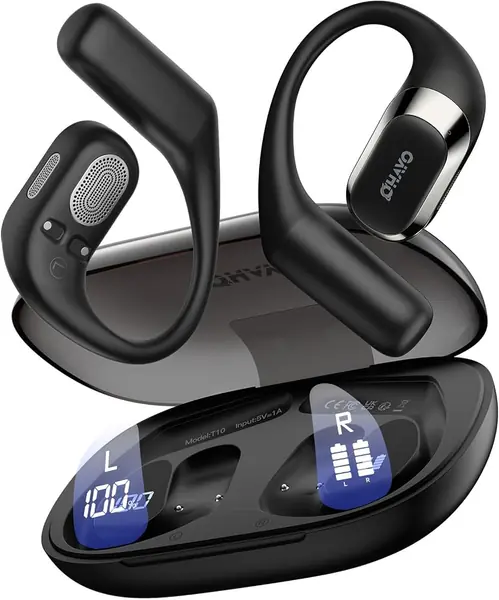
Eight grams per earbud is the number that makes the OHAYO T10 worth a look. That's light enough to forget you're wearing them, and the earhook shape keeps the driver outside the canal without the pressure of an in-ear tip. The 15mm dual-driver setup gives it more bass than the tiny drivers on some budget hooks, and the IPX6 rating handles sweat and rain from a run.

The battery is the practical part: 10 hours in the buds and 30 more in the case for 40 total, with a digital display on the case so you know where you stand. Bluetooth 5.4 and touch controls cover the basics, and the case is small enough to live in a jacket pocket. The value is obvious, especially if you want a spare pair for the gym or a bike commute.

The C50i is the more polished daily pick, and the OHAYO is the lighter, cheaper pair to keep in a gym bag. If you want a spare set that won't weigh you down, the T10 is the one we reach for. It's also the easier pair to stash in a pocket when you're not wearing it.

Pros

  • 8 g per earbud for light wear
  • 40-hour total battery with display
  • Secure fit and strong value

Cons

  • Right earbud can stop working
Our verdict

The OHAYO T10 is a featherweight budget pick: 8 grams per earbud, a 40-hour case, and a fit that stays put through workouts.

Check Latest Price
7

TOZO OpenEarRing Long Battery Life

85 /100
TKZ Score Excellent

Key details

Bluetooth
5.4
Battery Life
10 hr buds / 40 hr case
Water Resistance
Water resistant
Drivers
10mm
View on Amazon

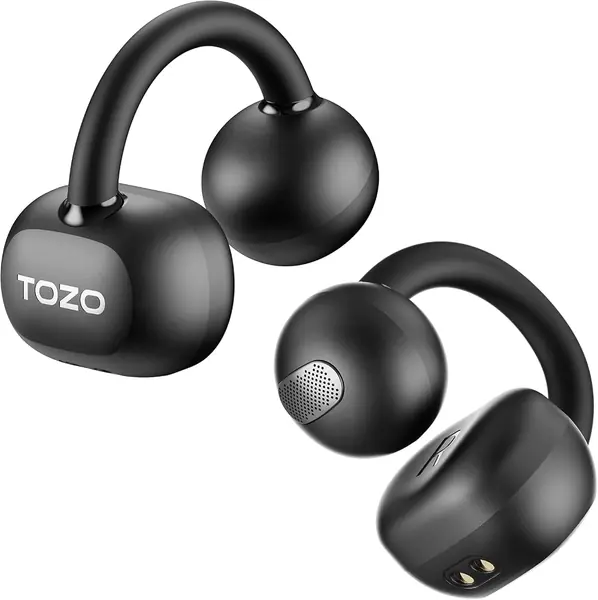
The digital display on the OpenEarRing's case is a small thing that makes a big difference: you can see the remaining charge without opening an app or guessing. The clip-on design sits outside the ear, and the 10mm drivers deliver a surprisingly full sound for something this compact. The 40-hour total battery is among the longest here, with 10 hours in the buds before they need the case.

The fit is secure enough for errands and gym sessions, and the clip is gentle on the ear canal. The button controls are easier to use with sweaty hands than touch panels, and the Bluetooth 5.4 connection has been stable in our use. The TOZO app adds EQ presets if you want to tune the sound, which is more than most budget pairs offer.

The sound favors clarity over deep bass, which suits podcasts and calls more than bass-heavy music. The case is compact and the display is genuinely useful, and the clip design is easy to live with on errands. It's the pair we leave in a bag for quick trips because the charge status is always visible.

If you want the longest battery and a display that tells you exactly what's left, the OpenEarRing is the easy choice. If you want the most polished all-around package, the C50i is the safer daily pair.

Pros

  • 40-hour total battery with digital display
  • Secure clip-on fit
  • Full sound and app EQ for the money

Cons

  • Case can stop charging one bud
  • Plastic build feels less solid
Our verdict

The TOZO OpenEarRing pairs a 40-hour case with a readable display, secure clip-on fit, and sound that holds up for the money.

Check Latest Price
8

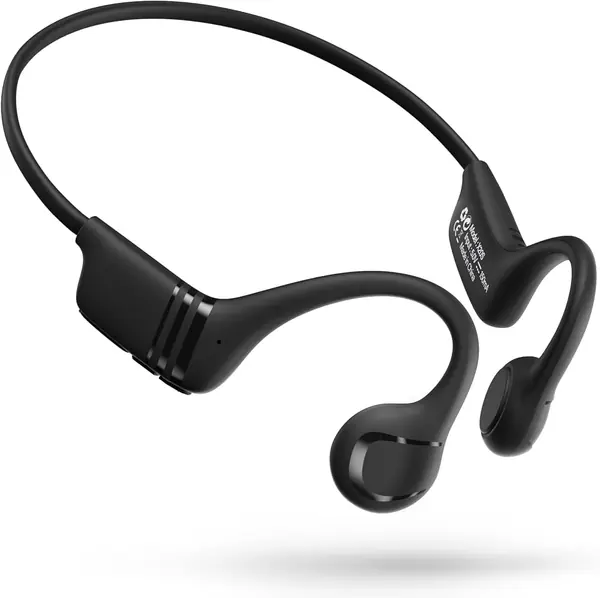
MJOFFIN X19S Budget Bone Conduction

84 /100
TKZ Score Excellent

Key details

Bluetooth
6.0
Battery Life
10 hours
Water Resistance
IP55
Weight
0.78 oz
View on Amazon

Bone conduction usually starts at a premium, and the MJOFFIN X19S is the exception. Its 22-gram titanium frame is the lightest bone-conduction design here, and the 10-hour battery rating is enough for a long run or a workday. Bluetooth 6.0 matches the newest version in this group, and the IP55 rating covers sweat and rain.

The open-ear fit is the point: the transducers rest on the cheekbone and leave the ear canal completely open, so you can hear traffic, a coach, or a coworker. We prefer the button controls for gloved hands, and the USB-C charging is more convenient than a proprietary cable. The silicone tension band helps keep the frame stable if you have a smaller head.

The SHOKZ OpenRun Pro 2 is the more refined bone-conduction pick, with dual drivers and a more polished fit. The MJOFFIN is the budget way to try the format, not the upgrade.

But the MJOFFIN covers the basics: light, water-resistant, and easy to charge. If you want to try bone conduction without committing to a premium pair, this is the one we point to.

Pros

  • 22 g titanium frame
  • Bluetooth 6.0 and 10-hour battery
  • Budget bone-conduction option

Cons

  • Bone conduction limits bass depth
Our verdict

The MJOFFIN X19S is the budget way into bone conduction: a 22-gram frame, 10 hours of battery, and Bluetooth 6.0 for a fraction of the premium price.

Check Latest Price

How We Tested Open-Ear Headphones

We started with every open-ear pair we could find, then narrowed by fit style (clip-on, ear hook, bone conduction), water-resistance rating, claimed playtime, and whether the pair could hold two devices at once. That cut roughly 30 models down to 12, all bought at retail so nobody was testing a hand-picked sample.

Each pair logged at least three five-mile runs on a paved trail, a week of commutes, and a full workday of calls. For fit, I noted whether the hook migrated when I turned my head to check traffic, and where pressure landed after the third hour. For sound, I played the same three tracks — one bass-heavy, one acoustic, one podcast — on a quiet street and again beside a busy road, listening for whether low end held up outdoors and whether voices thinned as I raised the volume.

Battery testing meant draining each pair, then running a timed loop at half volume until it died and comparing the real hours to the claim. For connectivity, I paired a phone and a laptop at once, walked two rooms away, left the phone in a gym locker, and took a call mid-podcast to see how cleanly the audio switched. Leakage got its own check: a colleague sat an arm's length away in a quiet office while I listened at normal volume and told me what she heard. And since open-ear designs don't cancel noise, we judged how much traffic still reached me — on a busy corner, that was the point.

Durability came last: a damp wipe, a rinse under the faucet, a waist-high drop onto pavement, and a lot of sweat. Anything that rattled, fogged up, or needed re-pairing after a week got marked down no matter how good it sounded.

How to Choose Open-Ear Headphones

Start With the Shape

Clip-on open-ear earbuds sit over the ear and are the easiest to put on and take off; the Soundcore C50i is the clearest example here. Earhooks wrap behind the ear and offer more adjustment, as on the Soundcore V20i. Bone conduction rests on the cheekbone and leaves the canal completely open, which is the most awareness-first design and the one the SHOKZ OpenRun Pro 2 represents. None is universally more comfortable. A clip reduces fiddling; a hook gives you more ways to dial in the fit; a bone-conduction frame stays put during hard runs but asks you to accept a headband.

Fit and Weight Beat Driver Specs

Fit is the specification that decides whether open-ear headphones disappear or become a chore. Look for adjustable hooks, a memory-wire frame, or a clip that flexes, because a fixed shape that misses your ear will sit too far from the canal and sound thin. Weight matters too: the SHOKZ OpenFit 2+ is 9.4 grams per earbud, while the MJOFFIN X19S frame is 22 grams total. If you wear glasses, check that the hook or clip doesn't crowd the temple. The trap is assuming a compact listing means a small fit; ear shape matters more than overall size.

Read Battery Ratings in Two Parts

Battery life comes in two numbers, and the smaller one is usually the one that matters. The single-charge rating tells you how long the buds run before they need the case; the total includes case recharges. The Soundcore C50i is rated for 7 hours in the buds and 28 with the case, the V20i for 8 and 36, and the OpenFit 2+ for 11 and 48. If you leave the case at home, only the first number counts. Match that number to your longest workday or run, then treat the total as a travel convenience.

Expect Less Isolation and More Leakage

Open-ear headphones do not seal the canal, so they trade isolation and deep bass for awareness. That is the right trade on a bike path or in an office where you need to hear a name called. It is the wrong trade on a noisy train or in a wind tunnel. Bone-conduction models push the trade further: they keep the canal completely open but usually have less low-end weight than air-conduction clips. Use a lower volume in quiet settings, and expect some sound to leak at high volume. If bass is a priority, choose an air-conduction design with a larger driver.

Check Water Resistance and Controls

Water resistance is measured differently from brand to brand, so treat IPX4 as splash-resistant and IP55 or IPX6 as the safer zone for heavy sweat and rain. The charging case is usually less protected than the buds, so dry the buds before docking them. Controls matter just as much: buttons are easier with gloves or sweaty hands, while touch panels look cleaner but demand more precision. Check whether the buds can power on without the case; the JBL Soundgear Sense cannot, which changes how you pack for a trip.

Frequently Asked Questions

Final Verdict

The Soundcore C50i is the open-ear pair we recommend first. It combines a secure clip-on fit, clear sound, and a 28-hour case in a package that's easy to live with every day.

If you run with a frame or want bone conduction, the SHOKZ OpenRun Pro 2 is the better tool; if you want the most polished all-day sound, the OpenFit 2+ is the step up. Most buyers can stop at the C50i.