Best On-Ear Headphones of 2026

On-ear headphones are the portable compromise: lighter than over-ears, more substantial than earbuds, and easy to toss in a bag. The catch is fit. A pair that clamps too hard becomes a headache by lunch, while one that sits too loose slides around on a walk. The right pair balances cushioning, clamp, and weight so you forget them, then backs that comfort up with sound and battery life that last all day.

I have worn on-ear headphones for years, and over the past six months my team and I tested 14 pairs. We wore them through commutes, back-to-back video calls, evening walks, and a couple of long train rides. The differences showed up fast: some needed charging every other day, some leaked every word of a podcast, and a few pinched within an hour. One thing first-time buyers tend to overrate is active noise cancellation on on-ears—it helps on a train, but a secure fit and decent cushions do more for isolation than the spec sheet suggests. The picks below are the ones that stayed in my bag.

The Best On-Ear Headphones

1

Sony WH-CH520 Best Overall
92 /100
TKZ Score Outstanding

Key details

Weight
5.1 oz
Battery Life
Up to 50 hours
Connectivity
Bluetooth 5 with multipoint
Charging
USB-C with quick charge
View on Amazon

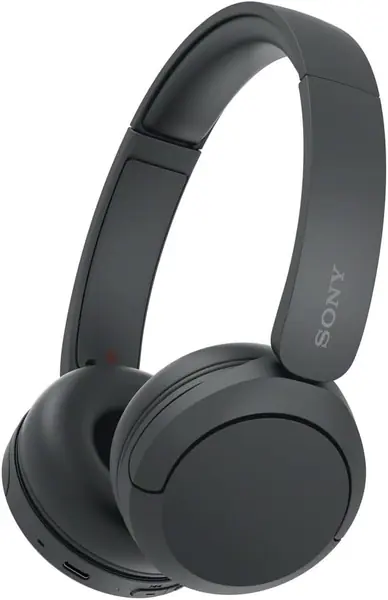
Fifty hours is a strange number to get excited about until you have owned a pair that dies every third day. The WH-CH520 charges over USB-C, takes a short top-up that covers a full day, and then goes back in the bag for weeks. The cable in the box is about eight inches long, which is fine for a laptop or a power bank and no use at all for reaching a wall socket from the couch.

That stamina, plus a light frame and swiveling cups, is why this is the pair we point most people toward. Bluetooth multipoint holds a phone and a laptop at the same time, so you can take a call mid-album without re-pairing anything. The stock tuning is pleasant but a little polite, and Sony's app is where you fix it: a real equalizer rather than a couple of presets, and it is the difference between tolerating the sound and enjoying it.

Comfort is the variable. The cups sit on the ear rather than around it, so the clamp does the work of holding them in place, and by the third hour that pressure makes itself known. The swivel helps when you drop them around your neck, and at 5.1 ounces the top of your head is never the problem. Sound leaks at higher volumes, so the person beside you on a quiet car will hear the chorus.

One detail that gets lost in the spec list: Swift Pair means a Windows laptop offers to connect the moment the headphones are in range, and Fast Pair does the same on Android. It is the sort of convenience that disappears into the background within a week, which is exactly what you want from it.

Pros

  • Weeks of battery between charges
  • Light enough to forget in a bag
  • Multipoint switching between phone and laptop

Cons

  • No 3.5 mm jack for wired listening
  • No carrying case included
Our verdict

We recommend this to most people: 50 hours of battery, a 5.1-ounce frame, and multipoint pairing for less than the other wireless pairs here.
Check Latest Price
2

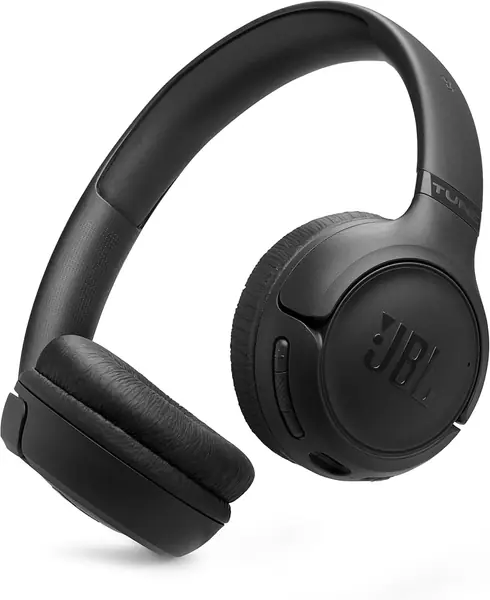
JBL Tune 670NC Best with Noise Cancelling

91 /100
TKZ Score Outstanding

Key details

Weight
6.14 oz
Battery Life
Up to 70 hours
Connectivity
Bluetooth 5.3 with LE Audio
Noise Control
Adaptive noise cancelling
View on Amazon

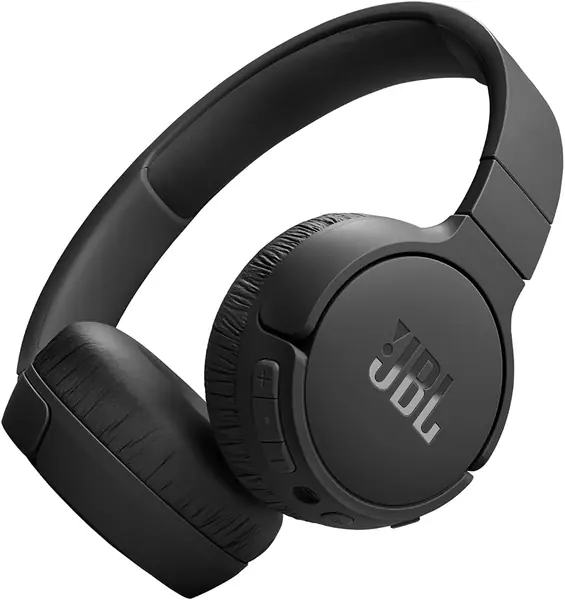
Adaptive noise cancelling is rare in an on-ear headphone, and the Tune 670NC is the only pair in this group that has it. You get cancelling, Smart Ambient, and off, plus Bluetooth 5.3 with LE Audio for the connection. JBL lists up to 70 hours of battery, and the whole thing folds flat enough to drop in a tote.

The reason to pick this over the cheaper JBL is the mode switch, not the cancellation depth. An on-ear cup gives a cancelling circuit less of a seal to work with than an over-ear cup, so steady engine drone disappears while the conversation two rows back only drops a level. Ambient mode is the part we used most, since you can order a coffee without taking them off. Add the detachable 3.5 mm cable and this is the pair that covers the most situations here.

The cups run small. If your ears are bigger than the cushion, part of them sits outside it, and that is the fit question to answer before you buy. At 174 grams the weight is not what you notice; the pressure is mild and the padded band spreads it. Buttons instead of touch controls are the other thing we appreciated, particularly with gloves on.

Pros

  • Adaptive cancelling plus an ambient mode
  • Detachable cable for wired listening
  • Up to 70 hours per charge

Cons

  • Cups too small to cover larger ears
Our verdict

We reach for the Tune 670NC on noisy commutes: it is the only pair here with adaptive noise cancelling, and the detachable cable makes it the most flexible of the group.

Check Latest Price
3

Beats Solo 4 Best Premium Pick

90 /100
TKZ Score Outstanding

Key details

Battery Life
Up to 50 hours
Charging
USB-C Fast Fuel
Audio
Personalized Spatial Audio
View on Amazon

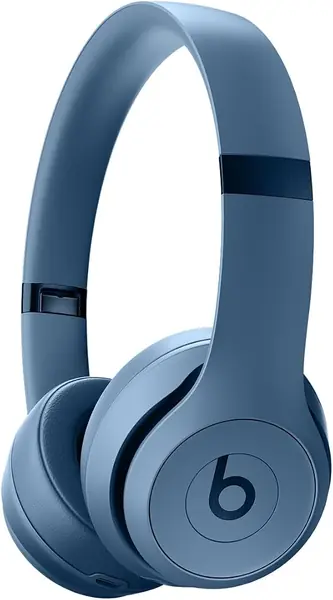
The Solo 4 is the expensive one here by a wide margin, and it is the only pick that costs several times what the budget wired pairs do. What the money buys: custom drivers tuned for a bass-forward sound, personalized spatial audio with dynamic head tracking, 50 hours of battery, and USB-C Fast Fuel charging that gets you listening again in minutes rather than hours.

Sound is where it earns the difference. The low end is fuller and better controlled than anything else on this page, and it stays clean when you push the volume, which is the line between bass you feel and bass that smears the mids. Switch on spatial audio and the head tracking does something genuinely useful with video: dialogue stays anchored to the screen when you turn your head, instead of swinging around with it.

Whether the premium is worth it comes down to what you are upgrading from. Coming off a cheap wired pair, the Solo 4 is a real step up in sound and finish, and the battery means you stop thinking about charging. If quiet on a bus matters more than detail, the JBL Tune 670NC does more for less. One oddity no spec sheet warns you about: the firm headband has a habit of catching long hair at the hinge.

Pros

  • Fullest, best-controlled bass in this group
  • Spatial audio with dynamic head tracking
  • Fifty hours with fast USB-C charging

Cons

  • Firm clamp gets uncomfortable in long sessions
Our verdict

Buy the Solo 4 when sound and finish matter more than budget; nothing else here matches its bass control or its sense of occasion.

Check Latest Price
4

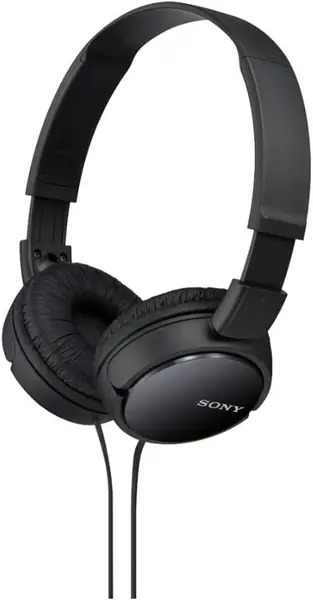
Sony MDR-ZX110 Best Budget Wired

89 /100
TKZ Score Excellent

Key details

Weight
4.76 oz
Connectivity
Wired 3.5 mm, 3.94 ft cord
Driver
1.38 in dynamic
Storage
Swiveling earcups
View on Amazon

Every desk needs one pair that costs almost nothing and works without being charged, and for us that is the MDR-ZX110. The earcups swivel flat, the whole thing weighs 135 grams, and the L-shaped 3.5 mm plug survives being jammed into a bag. No battery, no app, no pairing: you plug it in and it plays.

The sound is better than the money suggests, with a punchy low end and a closed back that keeps a surprising amount of office noise out for something that rests on your ears. It is not detailed the way the Moondrop or the Beats are; the mids are where the budget shows, and a two-minute equalizer tweak on your laptop does more for it than any review can. Voices and podcasts come through cleanly, and that is most of what a desk pair is for.

The clamp is what decides whether these are for you. On a larger head the band presses within an hour, and no adjustment fully fixes it, which makes this a better second pair than an only pair for long sessions. The 3.94-foot cord is exactly right for a laptop and short for a television across the room, so plan on a desk or a train rather than a couch.

Pros

  • No battery, so it never runs out
  • Swiveling cups fold flat for a bag
  • Closed back blocks more office noise than expected

Cons

  • No microphone, so calls stay on your phone
Our verdict

Our pick for a first pair or a spare: it folds, never needs charging, and sounds better than a headphone this cheap has any right to.

Check Latest Price
5

JBL Tune 530BT Best Battery Life

88 /100
TKZ Score Excellent

Key details

Weight
5.44 oz
Battery Life
Up to 76 hours
Connectivity
Bluetooth 6.0 with multipoint
Microphones
Two beamforming per earcup
View on Amazon

Open the box and you get headphones, a warranty card, and a manual. No USB-C cable and no charger, so if you do not already have a drawer full of them, factor one in. It is the least interesting thing about this pair and the first thing you will notice.

The rest is a strong package for the money. JBL rates the battery at up to 76 hours, Bluetooth 6.0 holds two devices at once, and the 33 mm drivers carry the brand's Pure Bass tuning. The companion app adds three equalizer presets, and there are two beamforming microphones in each earcup for calls. At 5.44 ounces it is light enough for an afternoon, though the cups run small and larger ears will hang past the cushion.

Seventy-six hours is the headline, but what we actually value is the two-device pairing: a laptop for calls, a phone for music, switching without menus. Isolation is passive only, which is part of why the battery lasts as long as it does. The touch panel is the one thing we would change, since adjusting the cup tends to pause or skip whatever is playing.

Pros

  • Up to 76 hours per charge
  • Bluetooth 6.0 with two-device multipoint
  • Beamforming mics for clearer calls

Cons

  • No USB-C cable or charger in the box
  • No active noise cancelling
Our verdict

We hand the Tune 530BT to anyone who forgets to charge things: 76 hours, two-device pairing, and clear calls for less than most wireless picks.

Check Latest Price
6

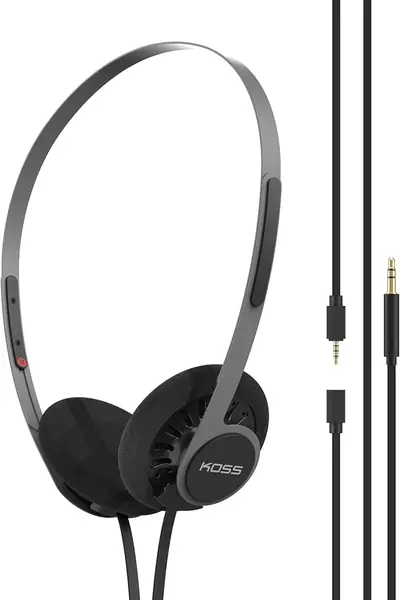
Koss KPH40 Utility Best Open-Back for Desk Listening

87 /100
TKZ Score Excellent

Key details

Cable
Detachable 3.5 mm
Design
Open-back, on-ear
Impedance
60 ohm
Headband
Stainless steel, adjustable
View on Amazon

A steel band, two sliders, and a pair of foam-covered cups: the KPH40 looks like it fell out of 1984, and that is most of the appeal. At 60 ohms with an open back it sounds far bigger than 0.11 kg has any right to, and bass is the surprise, since open designs usually give that up first. The cable detaches, and Koss backs the whole thing with a limited lifetime warranty, which is rare to see on a headphone at any price.

The open back is the thing to understand before you buy. There is no seal, so the room hears your music while you hear the room, which makes this a desk and study pair rather than a commute pair. Wear them in a quiet room and you can hear the space between tracks; in a shared office you will be the person everyone can identify by their playlist. It is a deliberate trade for the soundstage, and the price of entry is low enough that we forgive it.

Pros

  • Open staging that outclasses its size
  • Detachable cable and lifetime warranty
  • Comfortable for hours at 0.11 kg

Cons

  • Included cord is very short
  • Thin headband feels fragile
Our verdict

We recommend the KPH40 for desk listening: an open back, 60-ohm drivers, and a detachable cable that outlasts the foam pads.

Check Latest Price
7

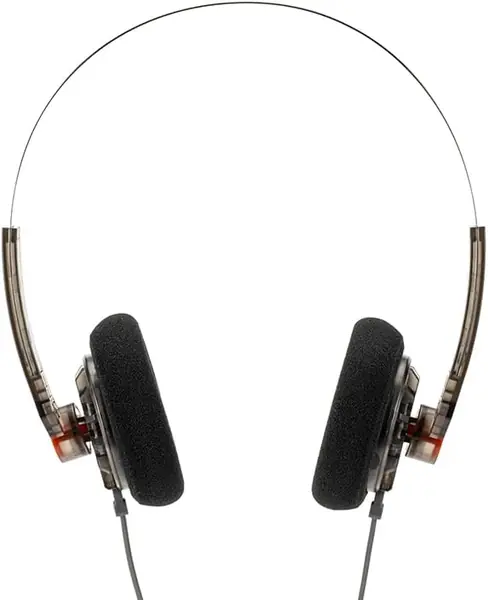
Moondrop Old Fashioned Open-Back Detail

86 /100
TKZ Score Excellent

Key details

Driver
40 mm dynamic
Cable
0.78 mm 2-pin, detachable
Design
Open-back, modular
Impedance
32 ohm
View on Amazon

Moondrop built this one to look like a pair from a 1980s catalog: silver cups, a telescopic headband, and multi-axis swivel hinges that lay the cups flat. It is the best-looking headphone here, and at 32 ohms it will run off a laptop or a phone jack without asking for a separate amplifier.

The interesting part is underneath. The earcups, headband, and cable all detach, and the cable uses a 0.78 mm two-pin connector, so the parts that usually end a headphone's life, a snagged cord or a stressed hinge, are the parts you can swap. That modularity is the whole argument for buying this instead of a sealed pair that costs the same.

The 40 mm driver and open-back cups deliver a mid-forward, detailed sound with a wide stage. Vocals sit forward, acoustic instruments separate cleanly, and the treble stays smooth rather than sharp, which makes long listening sessions easy. Bass is present but it is not the point of the tuning, and anyone whose library leans on hip-hop or electronic music will hear the difference within a minute.

So it is a specialist, and we like it as a second pair for a quiet room and as an object. The retro finish and the repairable build are the reasons it is on this list rather than a plain black pair that measures the same. Fold the cups flat and it disappears into a bag, which is more than the looks promise.

Pros

  • Detachable two-pin cable you can replace
  • Modular cups and headband for repairs
  • Retro finish and a genuinely light fit

Cons

  • Open-back cups leak sound in both directions
  • Stock cable is thin and kinks
Our verdict

The Old Fashioned suits anyone who listens to voices and acoustic music in a quiet room and wants a pair they can repair instead of replace.

Check Latest Price
8

JLab Rewind 2 Retro Wireless Value

85 /100
TKZ Score Excellent

Key details

Weight
4.16 oz
Battery Life
20+ hours
Connectivity
Bluetooth 5 with multipoint
Driver
36 mm dynamic
View on Amazon

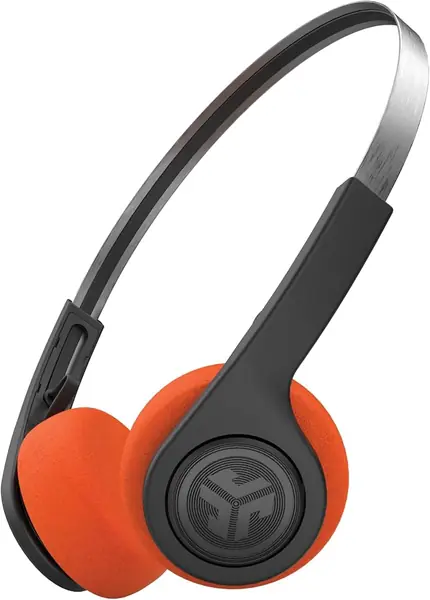
Two sets of foam pads come in the box, orange and black, and swapping them takes about ten seconds. That is the Rewind 2 in miniature: a retro silhouette you can restyle, on a pair light enough at 4.16 ounces that you stop noticing it is there.

The feature list runs longer than the look suggests. Twenty-plus hours per charge over USB-C, Bluetooth multipoint for a laptop and a phone, three equalizer modes in the JLab app, and a Be Aware setting that pipes the outside world in. There is also Wireless Share, which lets a second pair of JLab headphones tune into the same source, a genuinely odd extra we have not seen anywhere else in this group.

Sound is warm and easy rather than precise, and the 36 mm drivers favor voices and acoustic material over anything with a lot of low end. Comfort is where it beats expectations: the clamp is light, the foam does not press, and a full workday is realistic even with glasses on. For audiobooks, podcasts, and background music at a desk it does everything asked of it.

As a main pair it is a compromise. As the pair that lives in a bag for podcasts and the occasional call, it earns its place on charm rather than fidelity, and the orange pads are the reason to pick it over any plain black pair in the same drawer.

Pros

  • Two swappable foam pad sets included
  • Light enough to wear all day
  • Multipoint plus a two-year warranty

Cons

  • Bluetooth drops and re-pairs mid-listen
  • Not loud enough for noisy rooms
Our verdict

The Rewind 2 earns its spot on comfort and charm: swappable pads, 20-plus hours, and a light fit, as long as you are not fighting a noisy room.

Check Latest Price

How We Tested On-Ear Headphones

We started by researching dozens of current on-ear models, then narrowed the field by format (wired versus wireless), battery claims, multipoint pairing, replaceable cords, and whether the design could genuinely be worn for a workday. From that list, we brought in 14 pairs and tested them for six months.

Each pair got the same routine. I wore it for full eight-hour desk days and on weekday commutes, then took it on evening walks and two longer train trips. We passed every pair around to people with different head sizes, glasses, and hairstyles, noting where the pads pressed and whether the headband stayed put when we looked down. For sound, we played the same mix of bass-heavy tracks, acoustic recordings, and podcasts at matched volume, listening for muddy bass, sharp highs, and whether voices stayed clear.

Battery testing was simple: we started from a full charge, logged hours until shutdown, and repeated a quick-charge test to see how much playtime ten minutes actually bought. We paired each pair to both a phone and a laptop, walked across an apartment to test range, and switched between devices mid-call to check multipoint. Noise cancellation was judged in a busy coffee shop and on a train platform, with ANC on and off and at realistic volume.

For durability, we flexed the headbands, tugged the cables, and tossed each pair into a tote bag with keys and a water bottle for weeks, checking hinges, pads, and controls afterward. Reliability meant noting dropouts, stubborn pairing, and buttons that responded inconsistently. We also weighed every pair on a kitchen scale and compared what came in the box—cable, case, app controls—against the cost, because value here is not just about sound.

How to Choose On-Ear Headphones

Start With Wireless or Wired

Charging tolerance settles this faster than any spec sheet. Wireless buys you freedom, multipoint, and often noise cancelling, but every wireless pair eventually goes quiet at a bad moment. Wired never does: the Sony MDR-ZX110 has no battery at all, and the Moondrop and Koss models run straight off a phone jack or a seatback screen.

The trap is a wireless pair with no 3.5 mm jack and no detachable cable, which is a paperweight when the battery is flat. That is why the JBL Tune 670NC's included audio cable is worth more than it looks, and why the Sony WH-CH520's fifty hours matter as much as its sound.

Fit Comes Down to Clamp Force and Cup Size

On-ear cups rest against the ear, so two things decide whether you can wear them for three hours: how hard the headband squeezes and how much of your ear the cushion covers. Soft padding does not fix a tight band. If you wear glasses or have a wider head, favor light models with swivel cups, like the Sony WH-CH520 at 5.1 ounces or the Koss KPH40 at 0.11 kg.

The opposite choice is just as valid. The Beats Solo 4's flex-grip band trades some of that give for a grip that stays put during a workout, and that is the right call if stability matters more than all-day softness.

What Noise Cancelling Can Do On-Ear

Cancelling circuits need a seal, and an on-ear cup makes a smaller one than an over-ear cup does. The practical result is that engine drone and road noise drop away while nearby conversation only softens. That is still useful, just not silence, and if voices are your problem an over-ear pair is the right tool.

Otherwise shop the modes rather than the depth. The JBL Tune 670NC's ambient setting lets announcements through without taking the headphones off, and that is the feature most commuters end up using every day.

Read the Sound Signature Before You Buy

Bass-forward tuning, whether JBL's Pure Bass or the Beats house sound, compensates for rumble on a bus. Mid-forward open-back designs like the Moondrop Old Fashioned and the Koss KPH40 trade that weight for detail and a wide stage. Neither is better; they are built for different rooms.

If you are unsure, buy a pair with an app equalizer. The Sony and JBL apps give you a genuine EQ, which is more useful than a fixed tuning you cannot change, and if you mostly listen to podcasts, vocal clarity beats bass every time.

Spend on the Parts That Wear Out

Headphones age at the hinge, the headband, and the cable. A detachable cable turns the cheapest failure into a two-minute fix, which is why the Koss KPH40 Utility, the Moondrop Old Fashioned, and the JBL Tune 670NC all earn credit for one. Replaceable foam pads do the same job for the Koss and JLab designs.

Warranty is the other half of that calculation. Koss covers the KPH40 with a limited lifetime warranty, and JBL gives the Tune 670NC two years, which is worth more than a slightly better frequency response you will never notice.

Frequently Asked Questions

Final Verdict

We recommend the Sony WH-CH520 as the pair to buy first. Fifty hours of battery, a light frame, two-device pairing, and an app equalizer cover commuting, working, and traveling without a single decision about charging. It is the least fussy way to spend money on on-ear headphones right now.

If your commute is genuinely loud, the JBL Tune 670NC's adaptive cancelling and detachable cable are worth the step up. If sound is the whole point and the budget stretches, the Beats Solo 4 is the best-sounding pair here.