Best Open-Ear Headphones for Running of 2026

Nothing ruins a run faster than a bud popping out at mile three, or the moment you realize you can't hear the car behind you. Open-ear headphones fix both problems the same way: the driver sits outside your ear canal, so the road stays audible while your playlist plays. What they can't change is physics. Nothing here seals, so wind and traffic compete with the music, and the gap between pairs that handle that well and pairs that don't is wider than the prices suggest.

Over six months, my team and I ran, cycled, and treadmill-tested 12 pairs to find out which ones held their sound at a volume you'd actually use. One thing to know before you shop: none of these cancel noise — that's the point, you're buying awareness instead. So judge on fit, battery life, and whether they stay put once your ears are wet. The picks below span bone conduction, clip-ons, and a neckband, sorted by the kind of runner they suit rather than by a single winner.

The Best Open-Ear Headphones for Running

1

SHOKZ OpenRun Best Overall
91 /100
TKZ Score Outstanding

Key details

Fit
Bone conduction band
Battery Life
8 hours
Water Resistance
IP67
Weight
0.92 oz
View on Amazon

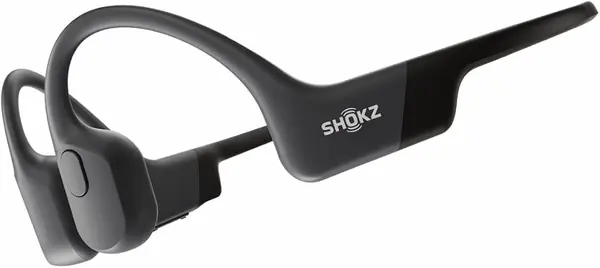
The first number we checked on the OpenRun was the water rating, and it is where this one gets the better of its more expensive sibling: IP67 against the OpenRun Pro 2's IP55. Sweat is what kills running headphones, and IP67 means you can rinse the frame under a tap after a hot run instead of dabbing at it with a towel and hoping.

At 26 grams the wraparound titanium frame all but disappears once it is settled, and the hooks sit above the arms of sunglasses rather than fighting them. It held position through tempo work and hill repeats without the constant re-seating that clip-ons demand. The catch with any band is that it is one size: a narrow head leaves it sitting proud of the cheekbones, and that costs you volume.

What settles it for road running is the combination. Eight hours, and a ten-minute quick charge that gets you out the door when you forgot to plug anything in last night. Nothing else here pairs this water rating with a frame this light and this settled, and that is the whole job when the pavement is the test.

The part we cannot wave away is the long view. Charging failures and stuck power buttons are the recurring note in its history, and they tend to arrive after a year rather than out of the box — a pattern we paid attention to across the SHOKZ range. Buy it for the running you are doing now, and keep the receipt where you can find it.

Pros

  • IP67 survives sweat, rain, and a rinse
  • 26-gram frame holds without re-seating
  • Ten-minute charge buys 1.5 hours

Cons

  • 8-hour battery trails the longer-running picks
  • Pressure behind the ears builds on long wears
Our verdict

This is the one we tell road runners to buy: IP67 handles sweat and rain, and the 26-gram frame stays exactly where you put it.
Check Latest Price
2

SHOKZ OpenRun Pro 2 Best for Long Runs

89 /100
TKZ Score Excellent

Key details

Fit
Bone conduction band
Battery Life
12 hours
Water Resistance
IP55
Weight
1.07 oz
View on Amazon

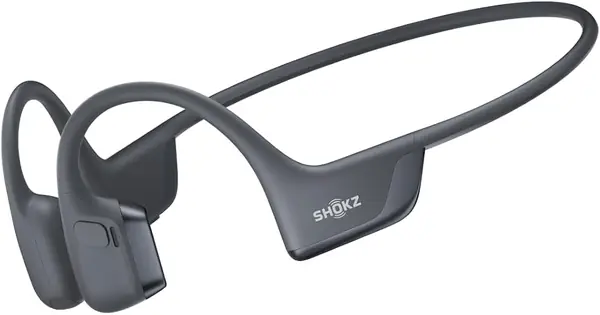
If your long runs run long, this is the one to beat: twelve hours of playback and the only set here that fires a small air-conduction driver alongside the bone-conduction one to produce actual bass. We noticed the low end on the first mile — it is the rare bone-conduction headphone that does not sound like a radio playing two rooms over.

The trade is water. SHOKZ rates the Pro 2 at IP55, which covers sweat and light rain but not the rinse-and-go of the cheaper OpenRun's IP67, and the fit is fussier than its sibling's, with the band asking more of a narrow head. You are being asked to care more about sound and endurance than about weather, and that is a real fork in the road rather than a marketing preference.

What earns the premium beyond the drivers: dual wind-resistant mics that make mid-run calls sound like calls, a hard shell case that actually protects it at the bottom of a gym bag, and a reflective strip in the box for the dark half of the year. Small things, all of them, but they are the small things you notice on a Tuesday in February.

Pros

  • 12 hours of playback, one hour to charge
  • Dual drivers add bass bone conduction alone can't
  • Hard case and reflective strip for night runs

Cons

  • IP55, not the IP67 of the cheaper OpenRun
  • Volume headroom runs out in traffic and wind
Our verdict

We recommend the Pro 2 to anyone training long — twelve hours of battery and the best bass open-ear audio gets, provided IP55 is enough weatherproofing for you.

Check Latest Price
3

Soundcore V20i Best Budget

88 /100
TKZ Score Excellent

Key details

Fit
Four-position ear hooks
Battery Life
8 hours, 36 with case
Water Resistance
IP55
Driver
16 mm dynamic
View on Amazon

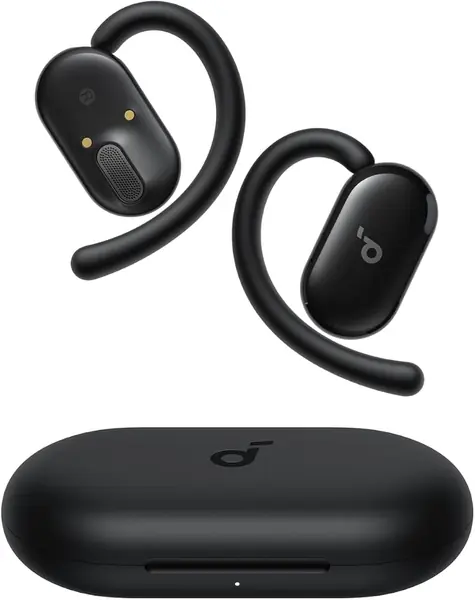
The least expensive pair on this list is also one of the best equipped for someone trying open-ear for the first time: four hook positions, a charging case, and multipoint Bluetooth so the phone and the laptop stop fighting over it. Nothing about the build announces the price.

The rotating hooks are the detail we keep coming back to. Swing them forward and they clamp under the ear; swing them back and they sit clear of a glasses arm or a cap. Anyone who has given up on ear hooks because they pinch under sunglasses should try the V20i before writing off the shape — that adjustment alone is worth the experiment. The 16 mm drivers give it more low end than the price suggests, too.

Two things to go in knowing. Per-charge runtime drifts well under the eight-hour claim once you are actually running with them, so the case is doing more work than the listing implies; and the occasional unit develops a bud that will not pair again. Neither is a reason to skip the cheapest way into open-ear running, but you are buying the case as much as the buds.

Pros

  • Four hook positions clear glasses and caps
  • Case stretches total playtime to 36 hours
  • 16 mm drivers give it real bass

Cons

  • One earbud can stop pairing over time
Our verdict

For a first open-ear pair we point you here: four hook positions clear sunglasses, and the case turns a short charge into a week of runs.

Check Latest Price
4

TOZO OpenEarRing Best Sound for the Money

87 /100
TKZ Score Excellent

Key details

Fit
Clip-on
Battery Life
10 hours, 40 with case
Driver
10 mm dynamic
EQ Modes
32 in app
View on Amazon

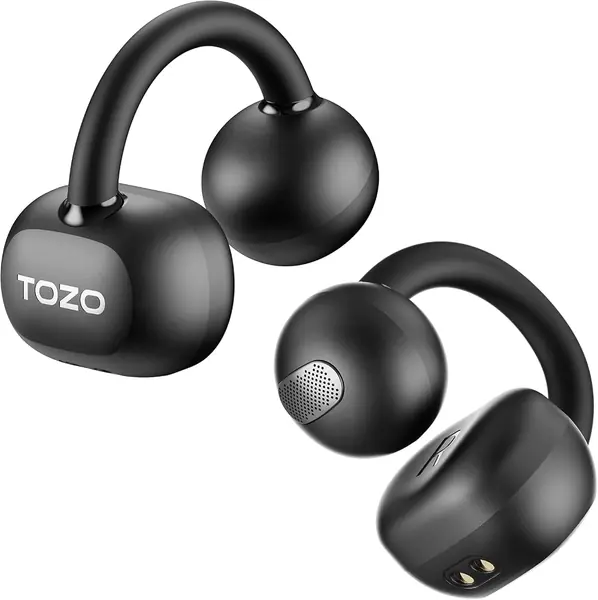
The OpenEarRing is a clip, not a hook: a ring that grips the outer ear with the driver floating just outside the canal. Nothing enters the ear, nothing presses behind it, and for anyone whose ears ache after an hour of ear hooks, that is the entire pitch.

What surprised us is how much volume comes out of something this small. The 10 mm drivers push harder than several of the bone-conduction bands here, which matters the moment traffic noise starts eating your headroom, and the app's 32 EQ presets let you tilt the sound toward bass or voice without touching the source. The case's LED readout tells you what is left at a glance instead of guessing from a blinking light.

The gap is water. TOZO does not publish an IP rating for it, just water resistant, so a downpour is a gamble the listing never resolves and we cannot resolve for you either. Treat the OpenEarRing as dry-weather equipment and it is the best sound per dollar in this group — loud, comfortable, and forgettable in the way running gear should be.

Pros

  • Loud, clear output from a small clip
  • 10 hours per charge, 40 with the case
  • 32 EQ presets in the app

Cons

  • No published IP rating for water resistance
Our verdict

Our budget pick for sound — a clip-on that plays loud and clear, as long as your runs stay out of the rain.

Check Latest Price
5

Soundcore C50i Best for Hard Workouts

86 /100
TKZ Score Excellent

Key details

Fit
Memory titanium clip
Battery Life
7 hours, 28 with case
Water Resistance
IP55
Driver
12 mm dynamic
View on Amazon

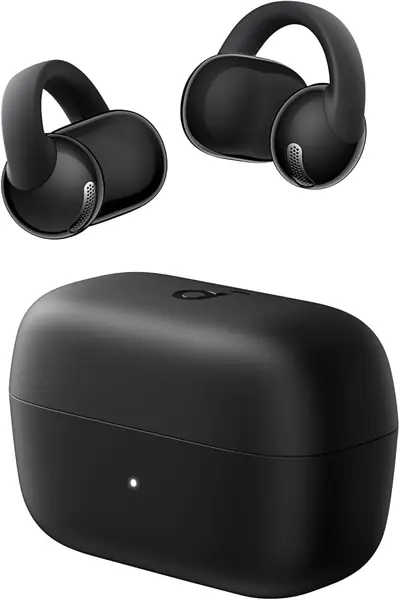
The FlexiClip is a loop of memory titanium that clamps over the outer ear and flexes to whatever shape yours happens to be. Of the clip-ons we ran in, this is the one that stayed put through the ugly parts — sprint finishes, burpees, bending to tie a shoe mid-loop.

It also sounds better than a clip has a right to. The 12 mm drivers give drums an actual thump, and 86 dB of output is enough to be heard over traffic without riding the slider at maximum. Buttons instead of touch controls mean you can pause with a wet hand and not trigger something by accident, which sounds like a small thing until the alternative misfires at mile four. Seven hours a charge and 28 with the case is the shortest per-charge runtime here, though the case covers a week of short runs.

Bluetooth range is the real catch. Soundcore lists it at 10 feet, which is fine with the phone strapped to your arm and useless if you leave it on a bench while you circle the track — the drop-off showed up the moment we put a room between us and the source. Keep it close and the C50i is the most secure thing on your ear in this group.

Pros

  • FlexiClip holds through sprints and burpees
  • 12 mm drivers deliver real bass
  • 28 hours total with the charging case

Cons

  • One earbud can drain faster than the other
Our verdict

We trust this clip through sprints and burpees; it clamps on and stays, though the phone needs to stay close.

Check Latest Price
6

JBL Endurance Pace Best for Rain and Trail

82 /100
TKZ Score Excellent

Key details

Fit
Memory wire neckband
Battery Life
10 hours music, 8 hours talk
Water Resistance
IP68
Driver
18 x 11 mm dynamic
View on Amazon

IP68 is the highest rating in this group, and it is the reason the Endurance Pace exists: dust-proof as well as water-proof, so sand, grit, salt, and a downpour are all fine. Where the SHOKZ frames conduct sound through your cheekbones, JBL's OpenSound fires an 18 x 11 mm driver at the ear without sealing the canal, which puts noticeably more air behind the music than a bone-conduction band manages.

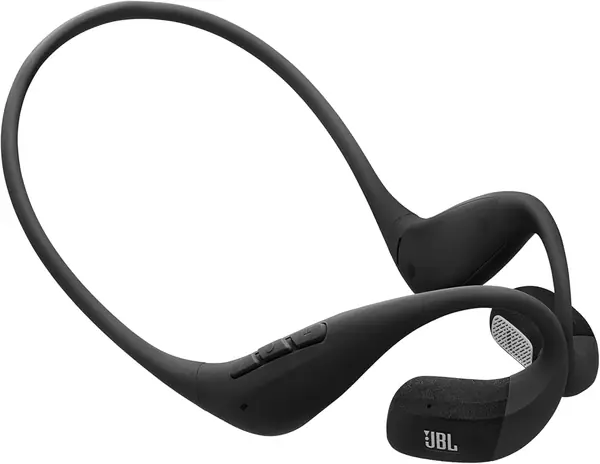
Add a titanium memory-wire neckband that will not shift when you turn to check a lane, ten hours of music, and two beamforming mics, and you have the wet-weather pick of the set. Our reservation is about time rather than anything on the spec sheet: this is a new design and we have not put a full season of hard use on it the way we have with the SHOKZ frames, so treat long-term wear as the open question and buy it for the weather it shrugs off.

Pros

  • IP68 seals out water, dust, and sand
  • 10 hours of music on a charge
  • Memory-wire neckband stays put

Cons

No notable drawbacks to flag.

Our verdict

We like it for rain, sand, and grit: nothing else here is sealed this thoroughly, and the neckband holds through turns of the head.

Check Latest Price
7

PSIER X22 Light Bone Conduction

81 /100
TKZ Score Excellent

Key details

Battery Life
10 hours
Water Resistance
IPX5
Weight
0.81 oz
Bluetooth
6.0
View on Amazon

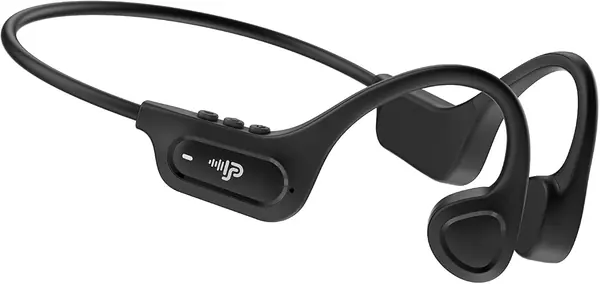
Twenty-three grams is the lightest frame we ran in, and it is the first thing you notice: the X22 sits on the cheekbones and stays there without the springy tension of the heavier bands, so there is nothing to adjust at mile three.

It is a full bone-conduction design at mid-budget money, with Bluetooth 6.0, ten hours of playback, and a memory titanium band that survives being stuffed in a bag. The controls are physical buttons rather than a touch panel, which on a sweaty run is the difference between pausing your podcast and skipping it by accident.

The rating is where we pause. IPX5 keeps sweat and light rain out, but it is the lowest water protection among the band designs here and nowhere near the IP67 of the OpenRun. Ride out storms or rinse your gear under a tap and this is not the headphone for you.

For a first bone-conduction set, or a second one to leave in a gym bag, the trade is easy to justify: you give up weather sealing and a little top-end clarity and keep most of the experience for a lot less money. Just do not expect the X22 to outlast a wet winter.

Pros

  • 23 grams, the lightest frame here
  • 10 hours of playback per charge
  • Physical buttons work with wet fingers

Cons

  • Volume headroom runs out in traffic
Our verdict

A good first bone-conduction pair in our view: 23 grams, ten hours, and a band that stays put, with IPX5 as the fair-weather caveat.

Check Latest Price
8

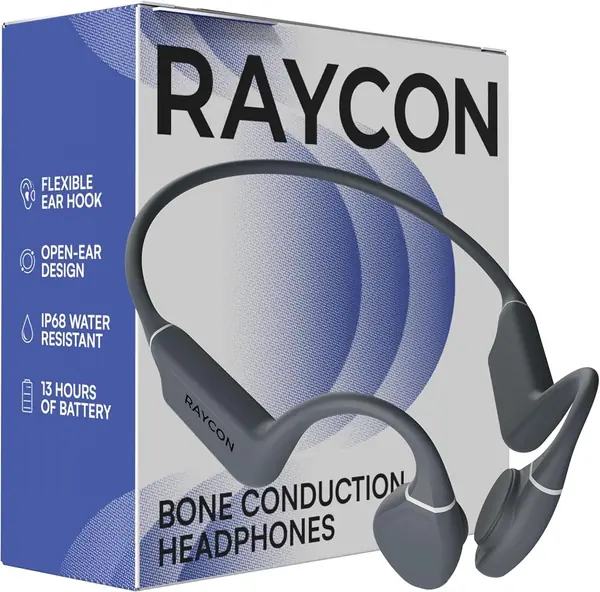
Raycon Bone Conduction Adjustable Awareness

80 /100
TKZ Score Excellent

Key details

Fit
Bone conduction hooks
Water Resistance
IP68
Driver
16 mm bone conduction
Charging
Magnetic cable
View on Amazon

Raycon's frame is one size, and that is the first thing to know: there is no band adjustment beyond the sliders on the earbuds themselves, so a smaller head or a pair of thick glasses arms can leave it sitting loose instead of snug. Of everything on this page, it is the pick where fit is most likely to decide the outcome.

The sliders are the genuinely good idea. Push the buds toward the ear for more volume, pull them back toward the cheekbone for more awareness — a physical trade you can make mid-run without touching your phone, and the only design here that lets you dial awareness directly instead of through an app.

Raycon rates it IP68, which if it holds is the highest protection in this group alongside the JBL, and the 16 mm bone-conduction driver carries more body than the cheapest bands. The charging cable is the annoyance in daily use: a proprietary magnetic connector that pops off when it is bumped and is not the USB-C you already have a drawer of.

What keeps it out of the top tier is the fit lottery. A band that does not size plus buds resting on the cheekbone makes comfort a coin flip, and a running headphone that shifts is one you eventually leave at home. The SHOKZ OpenRun comes in the same shape with a stronger fit record; the Raycon is the choice when the sliders are worth that risk to you.

Pros

  • Sliders trade volume for awareness mid-run
  • IP68 rated for rain and sweat
  • Bone conduction for less than the SHOKZ bands

Cons

  • One-size band cannot be tightened
  • Proprietary magnetic charging cable pops off
Our verdict

For runners who want to dial awareness up and down mid-run we recommend it — as long as your head suits a one-size frame.

Check Latest Price

How We Tested Open-Ear Headphones for Running

We started with the best-reviewed open-ear models across the three formats — bone conduction, ear clips, and a memory-wire neckband — then cut anything without a stated sweat or water rating or a claimed battery life under eight hours. That left 12 pairs, all bought at retail so nothing arrived pre-paired or pre-charged by a brand.

Testing ran six months, and every pair went through the same rotation: Tuesday and Thursday road loops on a busy street, treadmill intervals, a weekend long run, and at least two outings in the rain. We wore each one with a running cap, sunglasses, and a ponytail where it applied, because a headband or a temple arm is usually where open-ear fit falls apart.

To judge fit, we sprinted, shook our heads out at stoplights, and pulled a beanie on and off mid-run to see if the hooks or clips caught. For sound, we covered the same stretch of road at a volume we'd normally choose and noted whether a podcast stayed intelligible over traffic — and how much of our music the person running beside us could hear.

Battery was timed from full to shutoff with a stopwatch rather than taken off the spec sheet, and we tracked whether capacity slipped over the six months. Connectivity got checked by leaving a phone in a jacket pocket and running through a crowded park, counting dropouts and noting how fast each pair reconnected. After sweaty runs we rinsed each one under a faucet for a minute, then tossed them loose into a gym bag with keys and a water bottle to see what scratched or quit. Comfort was settled on three-hour long runs — pressure behind the ears, hot spots under a cap. Value came last: what each pair actually delivered on the run, weighed against what it cost.

How to Choose Open-Ear Headphones for Running

Bone Conduction, Clip-On, or Ear Hook

Three designs do the same job differently. A bone-conduction band wraps behind your head and rests on the cheekbones, sending sound through them: nothing enters the ear canal, awareness is the best of the three, and the band has to suit your skull. A clip-on grips the outer ear and aims a small driver at the canal — lighter and surer on small heads, but more likely to press on cartilage. An ear hook is a true wireless bud that loops over the ear and gives you a charging case.

If you wear glasses on every run, a clip-on usually clears the arms better than a band or a hook. If awareness is the entire reason you are shopping, start with a band.

What an IP Rating Actually Tells You

The two digits are not one score. The first is dust, the second is water: IPX5 handles sweat and sprayed water but not a rinse, IP55 adds dust protection, IP67 survives a rinse and a brief dunking, IP68 is the most sealed thing here. A listing that says waterproof without a number is telling you nothing you can plan around.

Sweat is the real enemy, and it is salt: wipe the charging contacts and let them dry before anything gets plugged in. Run in rain or sweat hard and IP67 or IP68 is worth the money. IPX5 is a fair-weather rating.

Per-Charge Hours vs. Case Hours

A big number like 36 or 40 is total playtime with the charging case, not what you get on one run. The figure that matters at the trailhead is per-charge, and across these picks it runs from 7 hours to 12. Bands charge from a cable and have no case at all; true wireless gives you a case but a shorter single charge.

Match the number to your longest run plus a margin. A marathon block wants 10 hours or more; three 5Ks a week is covered by anything on this page.

Glasses, Hats, and Hair

This is the fit question buyers forget. The arm of a pair of sunglasses occupies the same strip of skin behind your ear as a hook or a band, and a ponytail or a beanie pushes a band forward until it sits off the cheekbones and loses volume. None of that appears on a spec sheet, and all of it decides whether you keep wearing the thing in February.

Adjustable hooks and clips are the safer bet if you never run without glasses. A fixed band is fine if you don't.

Volume, Wind, and Hearing Traffic

Nothing here seals your ear, which is the point and also the limit. Traffic, wind, and a fast descent all compete with the driver, and bone conduction has the least headroom of the three designs — push it and the sound gets thinner rather than louder. That is the safety feature working, and it is also why an app EQ or a physical slider is worth having.

The test is simple. At your normal volume you should hear a car approaching from behind before you see it. If you can't, turn it down; the run is the thing you're keeping.

Frequently Asked Questions

Final Verdict

Buy the SHOKZ OpenRun. IP67, 26 grams, and a frame that holds through a workout — nothing else here puts those three together as cleanly, and after all our running that is still the combination we reach for.

If the budget is tighter, the Soundcore V20i covers the same ground with a charging case and hooks that clear sunglasses. If you want real bass and twelve hours and can live with IP55 instead of IP67, the OpenRun Pro 2 is the upgrade.