Best On-Ear Headphones for Running of 2026

On-ear headphones live in a useful middle ground: earbuds vanish into a sweaty ear canal, over-ears become a heated headband by mile three, and a light on-ear pair splits the difference. The trade-off is grip. The clamp that keeps a pair steady when you pick up the pace is the clamp that aches an hour later, so you want something that stays put without pressing on your glasses and doesn't need charging every other run.

I've run in headphones for years, and box specs rarely survive a real route — battery estimates are measured at moderate volume, and wind on an open road pushes most of us louder than that. My team and I spent six months running in 12 pairs, wired and wireless, on treadmills, sidewalks, and in the rain, and the differences showed up fast. The ones that held on all fold down small enough for a gym bag and still felt fine past mile one. Here's what held up.

The Best On-Ear Headphones for Running

1

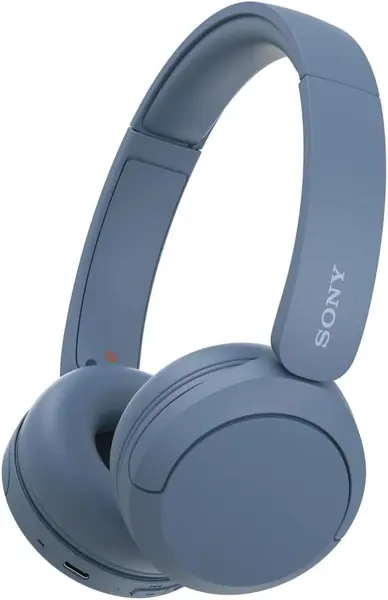
Sony WH-CH520 Best Overall
91 /100
TKZ Score Outstanding

Key details

Weight
10.6 oz
Battery Life
Up to 50 hours
Water Resistance
Not water resistant
Connectivity
Bluetooth 5 with multipoint
View on Amazon

Fifty hours is the number that changes how you live with the WH-CH520. For a runner doing a few half-hour sessions a week, that is weeks between charges, and USB-C means you can top it up from the same cable as your phone. We also appreciate the light 0.3 kg build for a pair that sits on your ears rather than around them; it is easy to grab on the way out the door.

Where it earns the top spot is as the low-maintenance wireless default. The sound is clear and easy to tune with the EQ in Sony's app, multipoint switches cleanly between a phone and a laptop, and the built-in mic handles quick calls. We found the light clamp comfortable for short sessions, but this is not a locked-down sprinting pair: the earcups can shift if you have a larger head or wear a cap. If you need a tighter fit, the Koss is the more secure shape.

What we like most is how little thought it asks for. The controls are simple, the battery level is not something you check every morning, and the swivel cups make them easier to slip off when you stop to talk. It is not a noise-canceling headphone, so you keep more of the street around you; just keep the volume low enough to hear traffic. The 50-hour battery is the quiet luxury here: you can leave the charger at home and still have power for the walk back.

Pros

  • Up to 50 hours of battery
  • Light 0.3 kg on-ear build
  • Bluetooth 5 multipoint connection

Cons

  • No water-resistance rating
Our verdict

We recommend the Sony WH-CH520 as the default on-ear running pair for anyone who wants wireless freedom, low weight, and a battery that lasts through weeks of short runs.
Check Latest Price
2

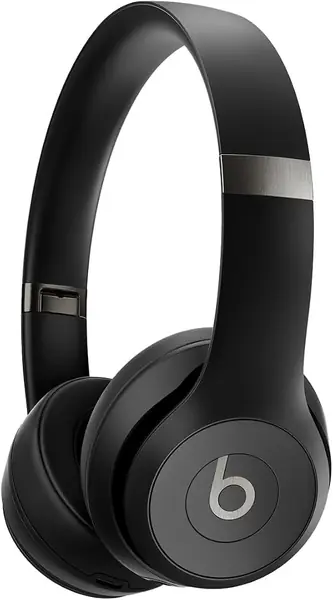
Beats Solo 4 Best for Bass

90 /100
TKZ Score Outstanding

Key details

Weight
1.19 lb
Battery Life
Up to 50 hours
Audio
Spatial Audio with head tracking
Charging
2.15 hours
View on Amazon

The Solo 4 is the heaviest pair here, and that is the first thing we noticed when comparing it with the Sony. At 1.19 pounds, it puts more mass on your head than the 0.3 kg Sony, but the payoff is a bass-forward sound that is more energetic than the Sony's more even presentation. The flex-grip headband and angled cups are built to stay put, and the UltraPlush pads are soft against the ear.

Where the Solo 4 wins is sound. The custom drivers and spatial audio with head tracking give music a wider, more engaging shape, and we preferred it for lifting sessions and short treadmill work. The 50-hour battery is just as generous as the Sony's, and USB-C Fast Fuel means a short top-up goes a long way. It is not the pair we reach for on a long outdoor run, though; the extra weight is the trade-off for that richer sound.

The fit is the other dividing line. The clamp is firm enough to feel secure when you are upright, but it can become a headache on a longer effort, and the weight makes the cups slide when you lean. If you want a pair that disappears on your head, the Sony is the better choice. The bass is the reward, and the extra mass is the tax; that is a trade some runners will happily make.

Pros

  • Bass-forward spatial audio
  • Up to 50 hours with USB-C fast fuel
  • Stable flex-grip fit

Cons

  • One-sided failure can develop over time
Our verdict

Choose the Beats Solo 4 if bass-forward sound matters more to you than low weight; its clamp and heft suit gym sessions better than long outdoor miles.

Check Latest Price
3

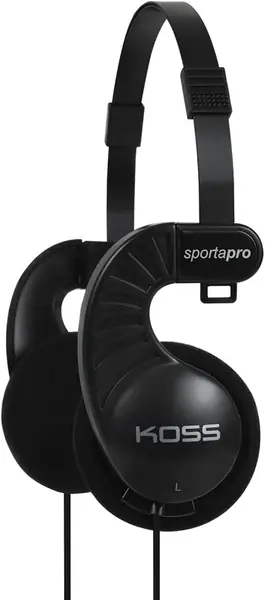
Koss Sporta Pro Best Budget

85 /100
TKZ Score Excellent

Key details

Weight
4.8 oz
Water Resistance
Not water resistant
Power
Wired 3.5 mm
Headband
Converts to behind-head
View on Amazon

The Sporta Pro's headband pivots backward at its base, turning a standard over-the-head pair into a behind-the-head fit. That is not a gimmick for running: it changes where the pressure sits and keeps the foam pads closer to your ears when you turn your head. For a wired budget pair, that flexibility is the reason we kept it in the mix.

At 4.8 ounces, it is light enough to forget about, and the 3.5 mm plug means no charging routine. The foam pads and 60-ohm drivers deliver a lively, bass-forward sound that is easy to like for the money, and the folding design collapses into a small bundle. We also like the lifetime warranty, which is unusual at this end of the category.

The trade-off is the fit and the cable. The band runs tight on larger heads, so try the behind-head mode before a long run, and the fixed cable is one more thing to manage on a run. For a cable-tolerant runner who wants a secure fit without spending much, it is the pair we hand over first. The behind-head mode is the reason to choose it over the Sony when a route has more turns than straightaways.

Pros

  • Converts to secure behind-head fit
  • Light 4.8-ounce wired build
  • Lifetime warranty

Cons

  • Not water resistant
  • Cable can loosen over time
Our verdict

We keep the Koss Sporta Pro for runners who want a secure behind-head fit and do not mind a cable; it is the least expensive way into this group.

Check Latest Price

How We Tested On-Ear Headphones for Running

We started by surveying what's actually sold for running in an on-ear shape — wireless and wired, folding and fixed — then cut anything that was over-ear or in-ear, and anything priced far outside what most runners will spend. That left 12 pairs, which we ran in for six months. Some went on 6 a.m. pavement runs, some on treadmill intervals, and every one of them spent the week between runs in a gym bag with a wet towel and a water bottle.

Fit came first, because it kills more runs than sound does. I wore each pair for at least one five-mile run and a full workday at a desk, noting where the pads pressed, whether the headband left a hot spot, and how clammy my ears felt at the cool-down. Any pair I had to re-adjust while sprinting got marked down. I also weighed each one on a kitchen scale before the first run — a couple of ounces reads as nothing on a spec sheet and as a lot at mile eight.

For sound, we listened for bass that survives road noise without swallowing vocals, at volumes loud enough to be inadvisable. Battery life we timed ourselves, playing at 70 percent until each pair died; most box numbers were optimistic. For connectivity, we paired each set to a phone and a laptop, walked half a mile from the source, and counted dropouts at a busy intersection.

Then we got careless on purpose: dropped each pair from waist height onto pavement, folded and unfolded the hinges until they loosened or didn't, and stuffed them into a bag with keys. We set what each pair asked for against what survived all that, and the ones on this list did both.

How to Choose On-Ear Headphones for Running

Fit and Clamp Come First

On-ear headphones stay on by pressing the pads against your ears, so clamp force is the whole game. A gentle clamp is comfortable at a desk but can shift when you turn your head; a firmer clamp feels secure for intervals but can ache after a few miles. A convertible behind-head frame, like the Koss Sporta Pro's, is the most stable shape here because it moves the anchor point behind your skull. Before a long run, wear the pair for twenty minutes, shake your head, and lean forward; if the cups slide, try the behind-head mode or a different pair.

Sweat Changes the Math

On-ear pads sit against skin and soak up sweat, and the picks here either state no water resistance or do not claim it. That does not make them unusable, but it does make them a maintenance item. Wipe the pads with a dry microfiber after each run and let them air-dry before folding them away. A sweatband across your forehead keeps drip away from the cushions. If you sweat heavily or run in rain, treat water resistance as a must-have and look beyond a standard on-ear design.

Pick Wireless or Wired for Your Route

Wireless pairs such as the Sony and Beats give you up to 50 hours between charges and no cable to catch on a gate or treadmill. Multipoint is useful if you switch between a phone and a laptop, and USB-C charging means one less cable in your bag. A wired pair like the Koss Sporta Pro never needs charging and keeps the setup simple, but the cable can snag and you are tethered to your phone. Choose wireless for convenience, wired for the simplest possible setup.

Keep an Ear on Traffic

On-ear headphones do not seal off the world the way over-ear noise-cancelers do, and that is an advantage on a shared path. The catch is volume: a loud mix can still mask a bike bell or a car door. Keep the level low enough to hear a conversation beside you, and leave one ear free on a road with no shoulder. The right sports headphones for running are the ones you can hear around, not the ones that shut everything out.

Watch the Wear Parts

Pads, hinges, and cables fail before drivers do. Foam pads flatten and hold odor, folding joints crack, and thin cables loosen at the plug. Check the warranty before you buy: Koss covers the Sporta Pro for life, while Sony lists a one-year warranty. Keep the cable loose rather than wrapping it around the cups, and store the headphones open enough that the pads can dry. A cheap pair with a good warranty can be a better long-term buy than a premium pair with a short one.

Frequently Asked Questions

Final Verdict

Most runners should start with the Sony WH-CH520. It is the lightest wireless pick here, its battery makes charging a background task, and the gentle clamp is comfortable for short and mid-length sessions. It is not water-resistant and not the most locked-down fit, so heavy sweaters and sprint-focused runners should look at the Koss Sporta Pro instead.

Choose the Beats Solo 4 if bass-forward sound matters more than weight; its spatial audio is the most engaging listen in this group.