Best Over-Ear Headphones for Android of 2026

Android owners hear a lot of nonsense about headphones, starting with the idea that the good stuff is built for someone else's phone. It isn't. What separates a pair worth keeping from one that ends up in a drawer is rarely the driver spec — it's whether the earcups clamp evenly, whether the noise cancellation holds up on a train, and whether the app lets you fix tuning you don't like.

I've worn over-ears through years of commutes, open-plan offices, and one apartment with a neighbor who loved action movies. Over the past six months, my team and I have lived with 12 pairs, from budget models with eye-catching battery claims to premium sets, wearing them on subways, flights, and calls, and folding them far more than anyone should.

Two things I've learned: battery figures are almost always quoted with noise cancellation off, so expect less in real life, and a folding hinge matters more than you'd guess if these live in a bag. Everything below earned its spot on an Android phone, not on paper.

The Best Over-Ear Headphones for Android

1

Soundcore Q20i Best Overall
93 /100
TKZ Score Outstanding

Key details

Weight
9.12 oz
Battery Life
40 hours with ANC
Bluetooth
Bluetooth 5 with multipoint
Noise Cancellation
Hybrid ANC with transparency
View on Amazon

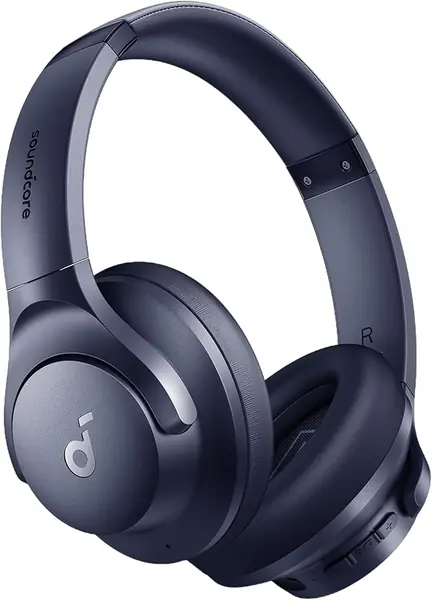
The Q20i is the pair we point most Android owners toward when they want one headset for commutes, calls, and desk work. Its case is built on practical features rather than a single headline: two-device multipoint, app EQ, transparency mode, and a 3.5 mm cable for wired listening. That combination is rare at the midrange end, and it is why this is our top pick.

Sound is bass-forward but easy to tune. BassUp gives pop and hip-hop a fuller low end, and the app's EQ is there when you want a cleaner vocal sound. The hybrid ANC is effective on engine rumble and office hum, though it is not a mute button for nearby conversation. For a commute, that is the right balance: enough quiet to lower the volume, not so much isolation that you lose your stop.

Multipoint is the feature we use most: a call on the phone pauses a laptop stream, then the laptop takes over when the call ends. The 9.12-ounce build and soft pads make long sessions easy, and the foldable cups pack down without a fight. The 40-hour ANC rating is enough for a week of commutes, and the five-minute top-up is a genuine save before a flight.

Against the Bose, the Q20i gives up some quiet and polish; against the JBL, it adds ANC and keeps multipoint. That is the trade we make for most Android phones, where the app EQ and two-device switching are everyday wins. The 3.5 mm cable is the emergency backup, not the main event.

Pros

  • Two-device multipoint for phone and laptop
  • 40 hours with ANC plus fast top-up
  • App EQ, transparency, and wired backup

Cons

  • Fit can run loose on smaller heads
Our verdict

The Q20i is our default Android over-ear: it pairs with two devices, quiets a commute, and runs for days on a charge without flagship pricing.
Check Latest Price
2

Bose QuietComfort Best for Noise Cancellation and Comfort

92 /100
TKZ Score Outstanding

Key details

Weight
8.47 oz
Battery Life
24 hours
Bluetooth
Bluetooth 5.1
Noise Cancellation
Active ANC with Quiet and Aware modes
View on Amazon

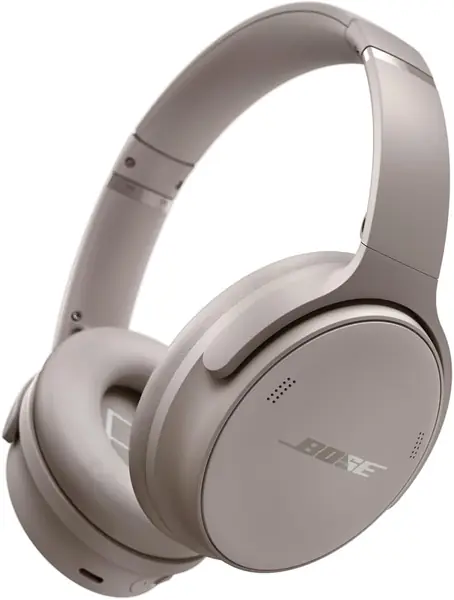
Premium noise cancellation is easy to advertise and harder to live with when the headset clamps in the wrong places. The QuietComfort avoids that trap with plush ear cushions and a padded band that spreads pressure instead of concentrating it. The result is a headphone you can wear through a long flight without wanting to take it off at the gate, and the included case makes it easy to pack.

What we appreciate most is how the Quiet and Aware modes handle real transit. Quiet mode takes down engine rumble and air-conditioning hum; Aware mode lets a gate announcement through without a full removal. The ANC is the most convincing in this group, and the comfort is right there with it. The app EQ is a useful bonus, not a fix for a weak tuning.

The physical controls are easy to find by feel, and the included case protects the headset without adding much bulk. For a frequent flyer or an open-office worker, the QuietComfort is the pair that makes the day quieter and softer. The Aware mode is the feature that keeps it usable beyond the plane, and the app EQ is there when you want a little more bass.

Pros

  • Most convincing ANC in this group
  • Plush comfort for long flights
  • Quiet and Aware modes plus app EQ

Cons

  • Battery life trails longer-running picks
  • Bluetooth can stutter when switching devices
Our verdict

We choose the Bose QuietComfort when quiet and comfort matter more than battery life; its ANC and plush fit make long flights easier.

Check Latest Price
3

JBL Tune 720BT Best Lightweight Long-Battery Pick

91 /100
TKZ Score Outstanding

Key details

Weight
7.76 oz
Battery Life
76 hours
Bluetooth
Bluetooth 5.3 with multipoint
Noise Control
Passive isolation only
View on Amazon

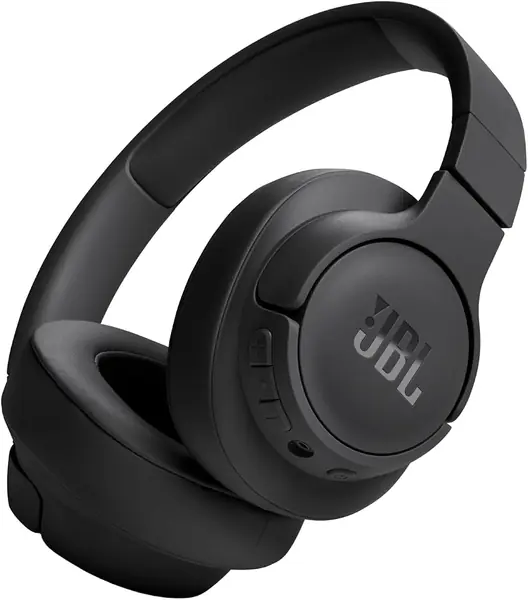
The 720BT makes its case with two numbers: 76 hours and 220 grams. For a headset you leave in a bag and charge on weekends, that combination is more useful than a long feature list. The 40 mm drivers deliver JBL's bass-forward sound, and the app EQ lets you pull it back when a podcast or acoustic track needs less low end. Bluetooth 5.3 multipoint keeps a phone and laptop connected, which is the Android convenience that matters most on a workday.

The 220-gram build disappears on a long walk, and the pads stay comfortable through a workday. The foldable frame and 3.5 mm cable make it a practical bag companion, not a desk ornament. The buttons are easy to find by feel, and the app's EQ is a genuine improvement over the default tuning.

It suits a commuter who wants a light headset for podcasts and calls, and a traveler who prefers to pack a charger once a week rather than hunt for one daily. The JBL app is one of the better companion apps here, and the multipoint connection makes it easy to move between a phone and a laptop without pairing again.

Pros

  • 76-hour battery outlasts the ANC picks
  • Light 220-gram build
  • Multipoint and app EQ

Cons

  • No active noise cancellation
  • Clamp is snug on larger heads
Our verdict

We like the JBL Tune 720BT for Android users who want a light, simple headset that runs for a week and skips ANC rather than paying for it.

Check Latest Price
4

JLab JBuds Lux ANC Best ANC Battery Value

90 /100
TKZ Score Outstanding

Key details

Battery Life
40+ hours with ANC
Bluetooth
Bluetooth 5 with multipoint
Noise Cancellation
Hybrid ANC, up to 35 dB
Warranty
2 years
View on Amazon

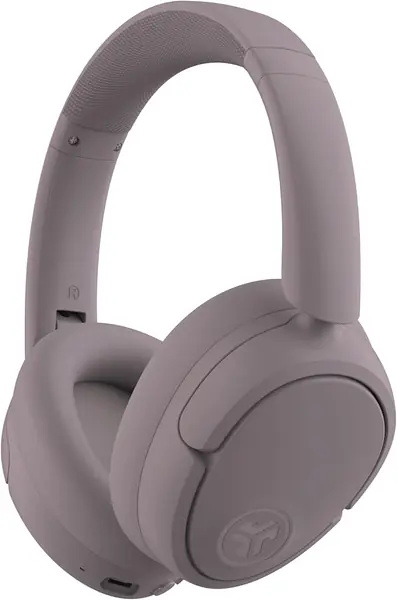
A two-year warranty is rare in this group, and JLab pairs it with 35 dB of hybrid ANC and a 70-hour battery. The 40 mm drivers deliver full-range sound, and Lab Spatial Audio is there for movies. The Lux ANC also supports Bluetooth multipoint, app EQ, and a USB-C audio cable, so it covers the Android basics without making you hunt for extras.

The matte mauve finish is a nice change from black, and the 235-gram build sits securely without the vise-like clamp some over-ears use. Be Aware mode is easy to reach when you need to hear a barista or a train announcement, and the app lets you remap controls if the default layout does not suit you. The app also includes safe-hearing limits, a small thing that matters if you listen for hours.

What sold us is the balance: ANC that handles an office or a train, battery that lasts a workweek, and a warranty that covers the hinge anxiety. The USB-C audio cable is a useful backup for newer Android phones, and the app keeps the controls and EQ easy to change. It is the most complete ANC package here after the premium Bose.

Pros

  • 70-hour battery, 40+ with ANC
  • 35 dB hybrid ANC with Be Aware mode
  • Two-year warranty

Cons

  • No 3.5 mm jack for older phones
Our verdict

For ANC with a long warranty, we point Android buyers to the JBuds Lux ANC; it runs a workweek and switches between phone and laptop.

Check Latest Price
5

BERIBES WH202A Best Budget Long-Battery Pick

89 /100
TKZ Score Excellent

Key details

Weight
0.38 lb
Battery Life
120 hours
Bluetooth
Bluetooth 6.0
Noise Control
Passive sound isolation
View on Amazon

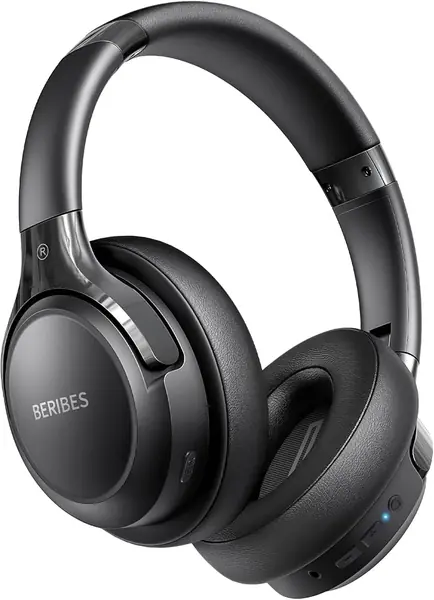
The WH202A is the budget pick that makes the fewest apologies for its cost. It weighs 0.38 lb, folds flat, and claims 120 hours, which is the kind of battery life that turns charging into a monthly chore instead of a nightly one. The six EQ modes are more of a preset buffet than a real tuning suite, but they let you soften the bass without opening an app.

What we like is the honesty of the design: no ANC, no app, just Bluetooth 6.0, a 3.5 mm cable, and a light fit that stays comfortable for long stretches. The six EQ modes are simple presets, not a full tuning suite, but they are enough to take the edge off a harsh track. The 120-hour claim is the headline, but the light fit is what makes it easy to forget on a long study session.

That makes it a strong choice for a student, a commuter who listens at moderate volume, or anyone who wants a spare pair in a bag. If you need to mute a plane, the Q20i is the better spend. The 3.5 mm cable is there when the battery finally runs down, and the fold-flat frame fits in a backpack pocket.

Pros

  • 120-hour battery
  • Light 0.38-pound build
  • Six EQ modes and wired backup

Cons

  • No carrying case included
Our verdict

We keep the BERIBES WH202A as the budget endurance pick: it weighs little, runs for an absurdly long time, and leaves ANC out to keep the cost down.

Check Latest Price
6

Beats Studio Pro USB-C Lossless

88 /100
TKZ Score Excellent

Key details

Weight
9.2 oz
Battery Life
40 hours
Noise Cancellation
Active ANC with transparency
Wired Audio
USB-C lossless
View on Amazon

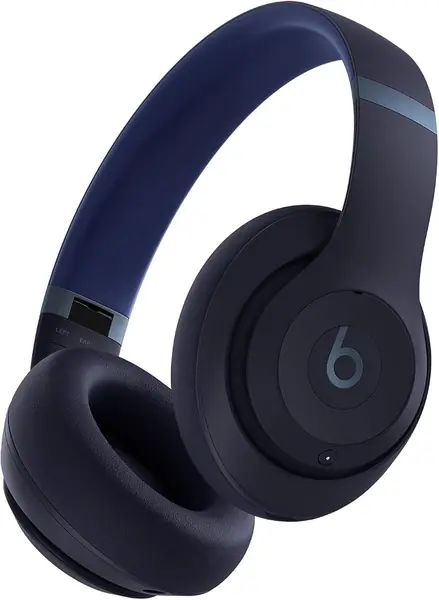
The Studio Pro's most interesting Android feature is the USB-C port. It carries lossless audio from a compatible phone, not just charging, which is a real difference from the Bluetooth-first picks here. For a listener who keeps a lossless library on an Android device, that gives the Beats a role the others do not have.

The 40-hour battery and spatial audio with head tracking make it a travel headphone with a bit more theater than the rest. The custom acoustic platform is balanced rather than bass-heavy, so hip-hop and action movies do not hit as hard as they do on the JBL or Soundcore. That is a taste question, not a defect.

ANC is effective on steady noise, but it is not the deepest quiet in this group. The spatial audio is more of a movie feature than a music one. The Beats are at their best when USB-C lossless or spatial audio is the reason you are buying them.

That is why they are a niche pick rather than a default. The USB-C lossless trick is genuinely useful, and the 40-hour battery is strong, but the Studio Pro does not clearly beat the cheaper ANC picks on quiet or everyday features. If you want the Beats look and spatial audio, they are worth a listen; for rough daily commuting, the cheaper picks make more sense.

Pros

  • USB-C lossless audio for Android
  • 40-hour battery with ANC
  • Spatial audio with head tracking

Cons

  • Headband and hinge durability are a concern
  • Fit runs tight for some
Our verdict

We see the Beats Studio Pro as a USB-C lossless specialist for Android, provided its long-term build holds up better than the early wear suggests.

Check Latest Price
7

ADOOPE AD1000 Wired USB-C

87 /100
TKZ Score Excellent

Key details

Weight
8.82 oz
Cable
1.2 m braided
Driver
40 mm dynamic
Connection
USB-C digital audio
View on Amazon

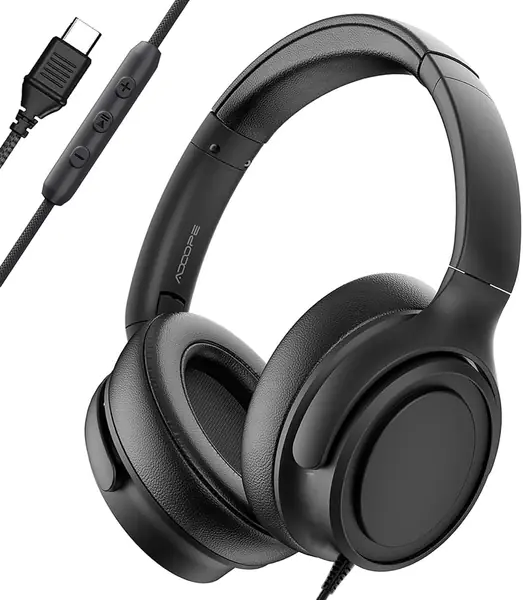
The AD1000 is the simplest way to get over-ear sound from an Android phone without pairing: a USB-C plug, a 1.2 m braided cable, and inline controls. There is no battery to charge and no pairing routine to troubleshoot, which is the appeal for a classroom, a desk, or a travel bag. The braided cable resists tangles, and the inline controls are reachable without looking.

The 40 mm drivers are tuned for everyday listening rather than critical detail, and the memory-foam cups and rotating ear cups make long study sessions easier. The inline mic is useful for a class or a call, and the foldable frame stores in a backpack without much bulk.

We see the AD1000 as a backup or a kid's headset: plug it into a USB-C tablet or phone, use the inline mic for a class, and do not expect it to replace a Q20i. The connection is the thing to test first, because USB-C audio support varies by phone, and a thick case can block the plug. If it seats and plays, it is a useful spare; if not, Bluetooth is the safer route.

Pros

  • Plug-and-play USB-C connection
  • Memory-foam comfort and folding cups
  • Inline mic and controls

Cons

  • Wired USB-C only, no Bluetooth
  • No carrying bag included
Our verdict

We reserve the ADOOPE AD1000 for a wired USB-C backup role; it is cheap, simple, and not a primary pair for critical listening.

Check Latest Price

How We Tested Over-Ear Headphones for Android

We started with roughly 40 models and cut the list to 12 by reading spec sheets and owner reviews instead of press releases: USB-C charging, a companion app with a real equalizer, a folding hinge, and active noise cancellation spread across several price levels. Anything that couldn't be adjusted without digging through menus, or that seemed designed around a different phone, came off the list.

Each pair was charged to full and run flat twice — once with noise cancellation on at 50 percent volume, once with it off — stopwatch running, so we could compare the number on the box to what we actually got. We also timed 15 minutes of charging to see how much playtime that bought on the way out the door. Evenings went to subway rides, a shared office, two flights, and a café where we switched to transparency mid-order to hear whether voices sounded like voices. From the earcups we skipped tracks, changed volume, and woke the voice assistant on an Android phone, noting which gestures needed a second try.

Sound was judged with volume matched across pairs and the same short playlist on repeat — dense rock, acoustic guitar, bass-heavy pop, one podcast — listening for whether the low end smeared the mids and whether vocals sat forward or got buried. We opened every companion app and worked the equalizer, since that's where a lot of the value lives, and asked whether the extra money bought better noise cancellation or just nicer packaging. Each pair also got a two-hour stretch of continuous wear, some of it with glasses on, to find out where the clamp landed after the first hour.

Durability got the least gentle treatment. Hinges were folded and unfolded until it got annoying, pairs were dropped into a tote with keys, and earcups were twisted looking for creak. We noted which pads flattened, which headbands pressed, and which microphones made us sound like we were calling from a tunnel.

How to Choose Over-Ear Headphones for Android

Connection Comes Before Codecs

Most Android phones pair with any Bluetooth headphones, so the useful question is not whether it works but how gracefully it switches. Multipoint lets a phone and laptop stay connected at once, which matters if you take calls at a desk. Wired USB-C is the other Android-native route, but a USB-C plug is not a guarantee of audio: some phones route sound only over Bluetooth, and a thick case can block the connector. Test the cable with your case on before you rely on it for a flight.

Decide Between ANC and Isolation

Active noise cancellation uses microphones and processing to reduce steady sound; passive isolation relies on the seal of the pads. ANC is what makes a plane or open office bearable, and transparency mode is what keeps you aware at a crosswalk. If you mostly listen in a quiet room, you can skip ANC and put the money into battery or comfort. The Q20i and JLab show how much ANC you can get without a premium badge; the JBL and BERIBES are passive-only by design.

Read Battery Ratings With ANC On

Battery figures are not interchangeable. A 24-hour rating may be with ANC on, while a 120-hour claim is usually without it and without a quiet mode. ANC drains power, and the longest-running pairs here are the ones that leave it out. Decide how often you want to charge: a 40-hour ANC headphone covers a week of commutes, while a 76- or 120-hour passive pair can go a month. Fast charging is the insurance policy when you forget.

Fit and Weight Beat Driver Size

A 40 mm driver is common at every price; a comfortable headband is not. Weight and clamp force decide whether you keep the headphones on through a workday, and pad depth affects both seal and heat. The 220-gram JBL and 0.38 lb BERIBES are easier to forget than the 240-gram Bose, but the Bose spreads weight more deliberately. If your head is small or large, buy from a seller with a return window and test the clamp before the packaging goes in the trash.

Check Warranty and Wear Points

Hinges, headbands, and ear pads are the parts that fail first, not the drivers. A two-year warranty is a real advantage on a folding headset, which is why the JLab stands out; most picks here carry one year. Check whether the pads are replaceable and whether the case is included, because both affect how long the headset survives a bag. If you commute daily, spend for the better hinge rather than the extra EQ preset.

Frequently Asked Questions

Final Verdict

For most Android phones, the Soundcore Q20i is the pair to buy: it covers ANC, two-device multipoint, app EQ, and a 40-hour battery without the premium tier. Choose the Bose QuietComfort if quiet and comfort matter most, the JBL Tune 720BT if you want less weight and far more battery and can skip ANC, or the BERIBES WH202A if budget is the binding constraint. The JLab is the middle path for ANC with a long warranty.