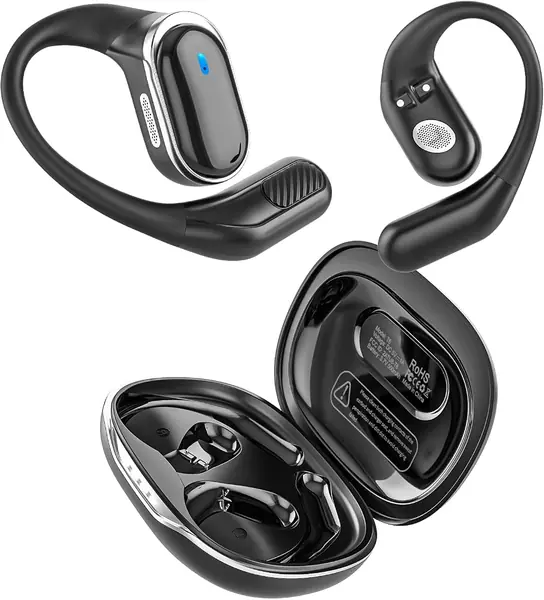
Best Open-Ear Earbuds of 2026

Open-ear earbuds exist for one reason: you want your music and the world at the same time. On a bike that means the car behind you; at your desk, someone saying your name. The tradeoff is seal — and seal is where bass comes from — so the pair you keep wearing is the one that still sounds full without plugging you up.

I've worn open-ear buds on runs and dog walks for years, and my team spent the past six months with 14 pairs to find which ones earn a permanent spot. Comfort decided more than specs: a clip that pinches at hour two or a hook that slips when you sweat ends the relationship faster than any codec. We tracked battery life, connection drops, and how each pair held up after months in a bag.

Worth knowing before you shop: clip-ons and hook-style buds behave nothing alike. Clips sit lighter and disappear under a helmet; hooks stay put through sprints but can crowd sunglasses. Box playtime is usually buds plus case, so check the split. The picks below cover both shapes.

The Best Open-Ear Earbuds

1

Soundcore V20i Best Overall
90 /100
TKZ Score Outstanding

Key details

Battery
8H buds / 36H case
Water Resistance
IP55
Bluetooth
5.4 with multipoint
Fit
Four-position ear hooks
View on Amazon

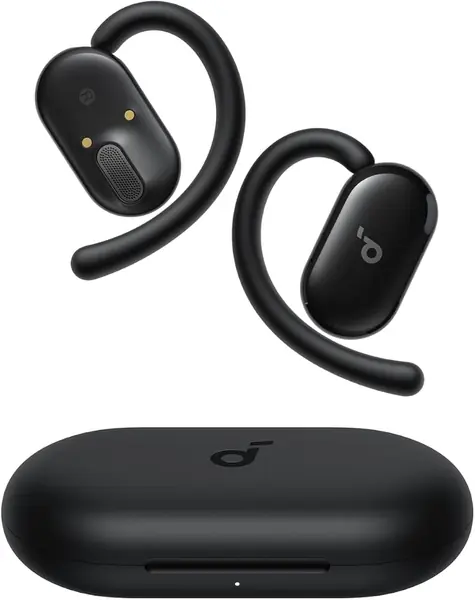
Four positions is the detail that makes the Soundcore V20i our default open-ear pick. The ear hooks rotate so you can move the 16mm driver closer to your ear canal without sealing it, which is the difference between hearing your podcast and hearing it plus every car on the block. We rotated the hooks until the buds sat just outside the canal, and the open design kept traffic and coworkers audible. The sound has more body than most budget open-ears, and calls come through clearly thanks to the four-mic array.

The V20i also does the small conveniences well. Bluetooth 5.4 pairs quickly and holds a multipoint connection to a phone and laptop, so a call can pull you away from a video without re-pairing. The charging case adds up to 36 hours, and the buds themselves run about 8 hours per charge. Touch controls are responsive, though we prefer physical buttons when our hands are wet or gloved.

The V20i is the pair to buy first if you want to try open-ear without spending much. The adjustable hooks do work that a fixed shape cannot, and the low-cost replacement makes it easy to live with. If you need a more secure clip for sprint workouts, the Soundcore C50i is the better shape. Otherwise, the V20i is the one we hand to first-time open-ear buyers.

Pros

  • Four-position hooks make fit easier to dial in
  • Multipoint Bluetooth 5.4 for phone and laptop
  • Clear calls from four mics and AI enhancement

Cons

  • Eight-hour bud battery is short for long shifts
  • Some pairs develop dropouts or one-bud failures
Our verdict

The Soundcore V20i is the open-ear pair we tell most people to buy first: adjustable hooks solve fit, and multipoint makes it easy to live with.
Check Latest Price
2

TOZO OpenEarRing Best Budget Clip-On

89 /100
TKZ Score Excellent

Key details

Battery
10H buds / 40H case
Bluetooth
5.4
Design
Clip-on open ear
EQ Modes
32 via app
View on Amazon

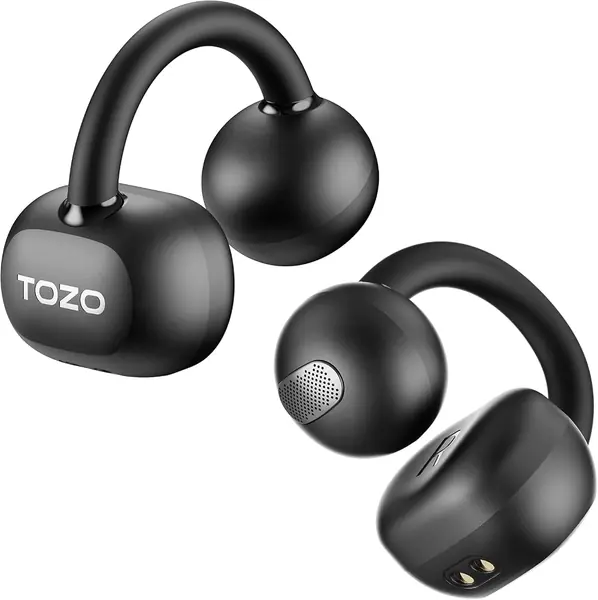
The OpenEarRing's case has a digital display, which sounds like a small thing until you're packing for a trip and want to know whether the case is full. The display is a genuinely useful convenience: you get a 10-hour single charge and 40 hours total, plus 32 EQ modes in the TOZO app. The clip sits on the outer ear rather than hooking behind it, so it leaves the canal completely open.

For budget clip-on shoppers, the OpenEarRing is the one we recommend first. Sound is bright and loud enough for podcasts, calls, and gym music, and the touch controls are simple once you learn the taps. We found the EQ modes genuinely useful for taming harsh treble on poorer recordings, though the default tuning is more forward than warm. The case is small enough for a pocket, and the LED readout takes the guesswork out of charging.

The clip-on shape is the main reason to choose this over the V20i. It sits on the outer ear instead of hooking behind it, so it suits people who dislike the feel of an earhook or wear certain piercings. We like it as a second pair for travel and gym bags, where the display and 40-hour case are more useful than a premium finish. The display and long case battery are the details that make it feel less like a compromise.

Pros

  • 40-hour case battery and 10-hour buds
  • 32 EQ modes in the TOZO app
  • Digital display shows case charge

Cons

  • Fit varies with ear shape
  • Durability can be inconsistent
Our verdict

For budget clip-on shoppers, we recommend the TOZO OpenEarRing for its long case battery and app EQ; test the clip fit before you commit.

Check Latest Price
3

Soundcore C50i Best for Workouts

88 /100
TKZ Score Excellent

Key details

Battery
7H buds / 28H case
Water Resistance
IP55
Bluetooth
6.0
Fit
FlexiClip titanium
View on Amazon

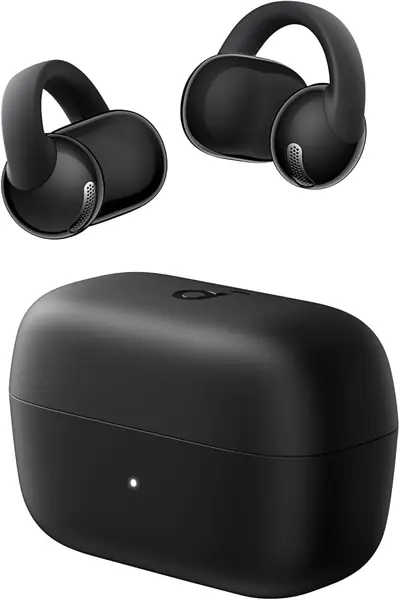
The FlexiClip on the Soundcore C50i is a memory-titanium band that flexes over the outer ear instead of clamping like a spring. It holds the 12mm driver in place without pressing on the canal, and the IP55 rating means sweat and rain are not an immediate problem. The push-button controls are easier to find by feel than touch panels, which matters when your hands are wet or busy.

Sound is punchy for an open-ear design, with enough bass to keep a workout moving, and the Bluetooth 6.0 connection paired quickly with a phone. The case is small enough to carry in a pocket, and the 28-hour total playtime is fine for a week of workouts if you top up between sessions.

For training, this is the clip-on we reach for. It stays put through head turns and sweaty sessions, and the buttons work when your hands are busy. For desk listening, the TOZO OpenEarRing is the better value; for sprint intervals and gym work, the C50i is the one we clip on.

Pros

  • FlexiClip titanium band stays secure
  • IP55 protection for sweat and rain
  • Physical push buttons are easy to find

Cons

  • Seven-hour bud battery
  • Bluetooth can drop out
Our verdict

We reach for the Soundcore C50i when a workout will get sweaty: the FlexiClip stays put, and IP55 and physical buttons make sense for training.

Check Latest Price
4

Raycon Everyday Clip Best Lightweight Clip-On

87 /100
TKZ Score Excellent

Key details

Battery
30H total
Water Resistance
IPX5
Weight
6.17g per earbud
Controls
Physical push buttons
View on Amazon

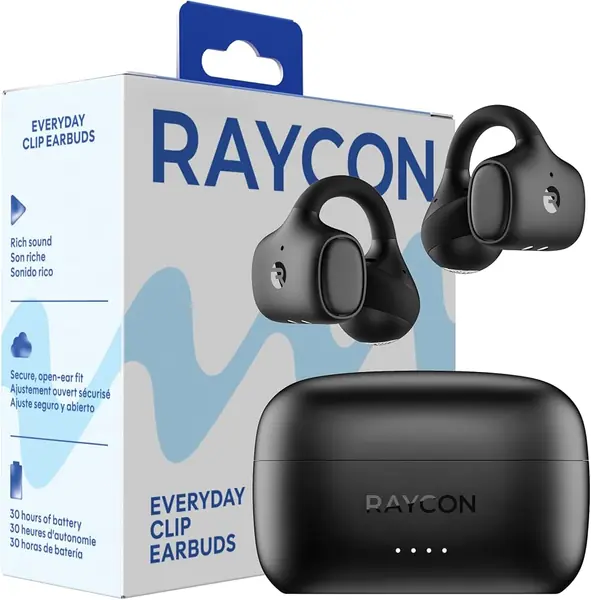
At 6.17 grams per earbud, the Everyday Clip is the lightest pair in this roundup, and that number is the whole pitch. The nickel-titanium memory clip conforms to the outer ear without a hard clamp, so it stays put without the pressure that makes some clip-ons feel like a clothespin. We forgot we were wearing them on a long commute, which is exactly what an open-ear pair should do. The physical push buttons are another win: no misreads when you tap to pause.

Sound is clear and open, with enough volume for podcasts and calls, and the 30-hour total battery got us through several days of mixed use before the case needed a cable. IPX5 covers sweat and rain, and the Bluetooth 6.0 connection was stable in our testing. This is not a noise-canceling pair, nothing about the open design is, but it keeps traffic and conversation audible without asking you to take a bud out.

The Everyday Clip is the pick for someone who wants a clip-on that disappears on the ear and wants tactile controls. It also has the most comfortable clip here for long hours, which matters if you wear earbuds from breakfast to dinner. If you want a cheaper clip-on, the TOZO is the value move; if you want premium sound, the OpenDots 2 is the step up.

Pros

  • 6.17 grams per earbud disappears on the ear
  • Physical buttons avoid touch misreads
  • Memory-metal clip holds without hard pressure

Cons

  • Thirty-hour total battery is modest for the money
Our verdict

The Raycon Everyday Clip is our pick for all-day wear when you want a featherlight clip-on with physical buttons and a secure fit.

Check Latest Price
5

SHOKZ OpenDots 2 Best Premium Clip-On

86 /100
TKZ Score Excellent

Key details

Battery
10H buds / 40H case
Water Resistance
IP57
Bluetooth
6.1
Design
Interchangeable left/right
View on Amazon

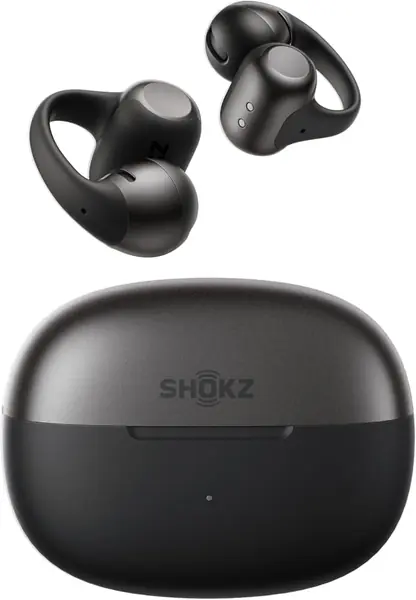
The OpenDots 2 are the first pair here that let us stop thinking about left and right. The earbuds are interchangeable, and dynamic ear detection reassigns the channels, so you can grab either one in the dark and put it on. That sounds like a gimmick until you've done the one-bud shuffle at 6 a.m.; it makes the pair easier to live with. The clip-on shape is light and secure, and the contoured silicone keeps the 11.8mm drivers aimed at the ear without sealing it.

The OpenDots 2 are the premium clip-on we choose when comfort and sound matter most. Dolby Audio and the dual drivers give these the richest low end of the clip-ons here, and the three-mic array handled calls well in our testing. The case adds up to 40 hours, the buds run about 10 hours per charge, and IP57 means dust and sweat are not a concern. Wireless charging is a nice touch if you already have a pad on your desk.

These are the clip-ons for someone who wants the fit to disappear and does not want a hook behind the ear. The interchangeable design and Dolby sound are the reasons to step up from the Raycon. If you need the longest single-charge battery, the OpenFit Pro is the better SHOKZ; if you want the same clip-on idea for less, the Raycon Everyday Clip is the value alternative.

Pros

  • Interchangeable left and right earbuds
  • Dolby Audio with dual 11.8mm drivers
  • IP57 and 40-hour total battery

Cons

  • Premium price
  • Some pairs disconnect or stop playing
Our verdict

We like the SHOKZ OpenDots 2 best as a premium clip-on: the interchangeable buds, barely-there fit, and Dolby sound justify the step up.

Check Latest Price
6

SHOKZ OpenFit Pro Best Noise Reduction

85 /100
TKZ Score Excellent

Key details

Battery
7H buds / 50H case
Water Resistance
IP55
Bluetooth
6.1
Noise Reduction
Open-ear noise reduction
View on Amazon

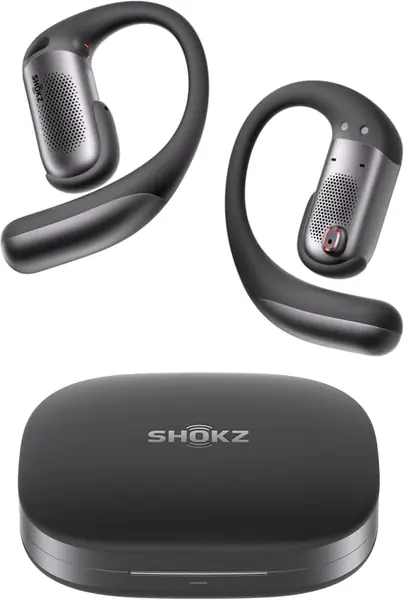
Noise reduction in an open-ear bud sounds like a contradiction, and the OpenFit Pro is the one pair here that tries to resolve it. The 16.2mm driver and Dolby Atmos tuning give it the most complete sound in this group, with a low end that doesn't disappear the way it does on thinner open-ears. The open-ear noise reduction takes the edge off low-frequency rumble without sealing the canal, so you can still hear a platform announcement or a barista calling your name.

Battery is the practical win: about 7 hours in the buds, and 50 hours total with the case. A 10-minute quick charge is enough to get you through a commute if you forgot to plug in the night before. The triple-mic system and AI call processing kept our voice clear in a noisy room, and the IP55 rating covers sweat and light rain. The app gives you noise-reduction levels and touch controls that are worth setting up once.

If you want the most premium open-ear sound and you'll use the noise-reduction modes, the OpenFit Pro earns the upgrade. It is not a replacement for closed noise-canceling headphones; it reduces distractions, it doesn't erase a train cabin. The earhook shape is a different feel from a clip-on, and the larger driver is part of why the sound is fuller. If you want a clip-on shape instead of a hook, the OpenDots 2 is the better fit.

Pros

  • Open-ear noise reduction reduces distractions
  • Dolby Atmos and a 16.2mm driver
  • 50-hour total battery and fast charge

Cons

  • Premium price
  • Ear fatigue can set in for some listeners
Our verdict

The SHOKZ OpenFit Pro is the premium open-ear we choose for commutes and office listening, where a little noise reduction helps but awareness still matters.

Check Latest Price
7

JBL Soundgear Clips Best for Style-Focused Calls

84 /100
TKZ Score Excellent

Key details

Battery
8H buds / 32H case
Water Resistance
IP54
Calls
4-mic array
Drivers
11mm dynamic
View on Amazon

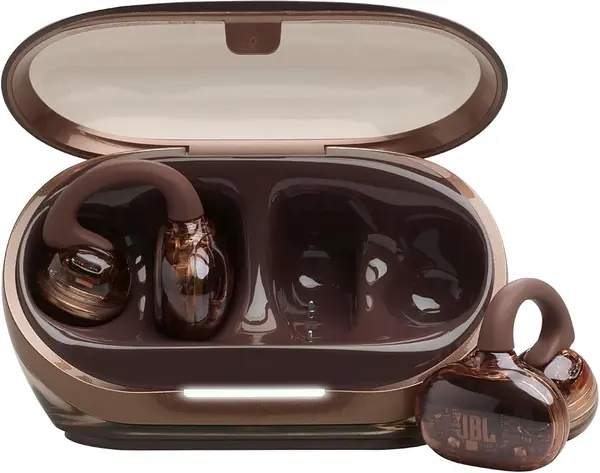
The copper finish is the first thing you notice. JBL's SonicArc design angles the 11mm driver for less leakage, and adaptive bass boost adds weight without making the open sound muddy. The clip looks more like jewelry than gym gear, which is the point.

The JBL Headphones app is the real differentiator. You can choose one or both beamforming mics per earbud, adjust the EQ, and set the controls. We spent a few minutes assigning the mic modes and found the per-ear choice useful for calls in a shared office.

Battery runs up to 8 hours in the buds and 32 hours with the case, and IP54 covers sweat and dust. The hooks are soft and the fit is light, so these work best for commutes, desk calls, and walking rather than sprint intervals.

We recommend the Soundgear Clips as the style pick for buyers who want a distinctive open-ear clip and app-based call tuning. The copper finish and microphone control give them a clear role. If you want the most secure fit for running, the C50i is better; if you want a premium clip-on, the OpenDots 2 is the step up.

Pros

  • Copper finish stands out from black plastic
  • App EQ and per-ear mic choices
  • Four-mic calls and IP54

Cons

  • Eight-hour bud battery trails the leaders
Our verdict

Buy the JBL Soundgear Clips for the copper finish and app-based call tuning; we think they make the most sense for style-conscious commuters.

Check Latest Price
8

TRAUSI T6 Best for Long Trips and Shifts

83 /100
TKZ Score Excellent

Key details

Battery
80H total with case
Water Resistance
IPX7
Bluetooth
5.4
Design
Earhook open ear
View on Amazon

Eighty hours is the headline, and it's the reason the TRAUSI T6 is here: no other pair in this group promises that much total playtime. The number is the case plus the buds, not 80 hours on a single charge, so think of it as a week of commutes between wall outlets. The earhook design keeps the canal open, and the IPX7 rating is unusually generous for a budget pair. Bluetooth 5.4 paired quickly with our phone, and the touch controls are simple enough to learn.

Sound is clear and forward, with enough volume for podcasts and calls, and the case's battery held up well in our testing. We kept coming back to it for long days away from a charger, where the extra case capacity mattered more than a premium finish. The hooks are light, and the open design let us hear announcements and traffic without pulling a bud out.

The T6 is the pair to leave in a work bag or glove box. The case holds the extra capacity, the earhook keeps the canal open, and the IPX7 rating covers rain and sweat. It's the pair we pack for a weekend trip when we don't want to think about charging.

The 80-hour case and IPX7 protection are the reasons to choose it over a more polished pair. It is a one-job accessory, and that job is keeping a charge in reserve. For raw hours, this is the budget tool.

Pros

  • 80-hour total playtime with case
  • IPX7 water protection
  • Bluetooth 5.4 and touch controls

Cons

  • Fit can sit too far from the ear
  • 90-day warranty is short
Our verdict

The TRAUSI T6 is our long-playtime budget pick: 80 hours with the case and IPX7 protection for trips and shifts where charging is scarce.

Check Latest Price

How We Tested the Best Open-Ear Earbuds

We read through hundreds of customer reviews, pulled every open-ear model we could find in both clip and hook styles, then narrowed the field by price tier, Bluetooth version, water-resistance rating, and whether the quoted playtime was split between the buds and the case. Fourteen pairs made the cut, and we wore them for six months.

They went where open-ear buds actually go: long runs, bike commutes, dog walks, grocery runs, a Saturday of laundry and dishes, and desk days full of video calls. Each pair got a full workday straight out of the box so we could feel where the pinching started, then a hard head shake and a set of jumping jacks to see whether clips crept or hooks loosened. Every set also got worn under a bike helmet and with sunglasses, since that's where adjustment range stops being a spec and starts being a dealbreaker.

We logged battery life by timing from a full charge rather than trusting the box, and paired each set to a phone and a laptop at once to see whether the handoff was automatic or a fight. For sound, we played the same bass-heavy and vocal-heavy tracks on repeat and toggled the spatial audio modes on the pairs that offered them, listening for whether the effect widened the mix or smeared it. A colleague sat three feet away at half volume so we could hear how much leaked. We flexed every clip and hook open and closed dozens of times, then rinsed each pair under a faucet to check the water-resistance claims held.

Calls got their own pass: a recorded voice memo on a windy street corner, another in a busy café, and one at a quiet desk, so we could hear how much of the world the mics shut out. Too much cancellation is its own problem here — a pair that muffles traffic defeats the point of wearing open-ear buds at all.

How to Choose Open-Ear Earbuds

Fit: Choose the Hook or Clip You'll Forget

Open-ear headphones fail at the ear before they fail at the speaker. Earhooks sit behind the ear and aim a driver at the canal; clip-ons pinch the outer ear with a springy band. Neither is universally comfortable, and small ears or glasses can change the answer. Adjustable hooks, like the four positions on the Soundcore V20i, give you more room to move the speaker without pressing on the canal. Clip-ons are easier to put on one-handed, but the clamp force has to suit your ear. Buy from a retailer with returns and test the fit while talking, walking, and turning your head, not just sitting still.

Awareness Is the Point, So Leakage Is the Trade-Off

You're buying these to hear traffic, a coach, or a coworker, so don't expect noise cancellation. Just as important, open designs can leak music outward when you push volume. The practical test is simple: play a track at your normal level, cup your hands near your ears, and see how much escapes. If you need quiet on a plane, use closed earbuds instead. The SHOKZ OpenFit Pro's open-ear noise reduction takes the edge off low frequencies, but it does not seal you off; treat it as a comfort feature, not isolation.

Read Battery as Two Numbers

The total with the case is the travel number; the single-charge number is the one that matters for a long shift or a flight. A pair with 8 hours in the buds and 36 hours total is fine for commutes but not a full workday without a case top-up. The TRAUSI T6's 80-hour total is mostly case capacity, while the SHOKZ OpenFit Pro lists about 7 hours in the buds and 50 hours total. Battery capacity also declines with age, so prioritize the single-charge figure if you rarely carry the case.

Calls, Controls, and Water Protection

Mic count is a starting point, not a guarantee: four mics and AI processing help, but wind and traffic still win. We prefer physical buttons for movement because they're easier to find by feel than touch panels, especially with gloves or sweaty hands. For sweat, look for at least IPX5 or IP55; IP57 adds dust protection and a deeper water rating. None of these are swimming earbuds, so check the maker's water claim before you wear them in heavy rain or near water.

Frequently Asked Questions

Final Verdict

For most buyers, the Soundcore V20i is the open-ear pair to start with: the four-position hooks make fit easier to solve, multipoint keeps a phone and laptop connected, and the price leaves room for a second pair. If you want a premium clip-on, choose the SHOKZ OpenDots 2; if you want noise reduction without sealing your ears, the SHOKZ OpenFit Pro is the upgrade. Buyers who hate touch controls should go straight to the Raycon Everyday Clip.