Best GPS Watches of 2026

A GPS watch has two jobs that fight each other: show your pace in bright sun, and keep running long after your phone would have quit. A big, bright screen looks great on the shelf and can cut your time between charges nearly in half. What you're really buying is a wrist companion that logs your miles, tracks your sleep, and lasts the week.

I've worn a GPS watch on nearly every run since one lost signal under tree cover, so flaky tracking still bothers me. My team and I spent seven months with 12 watches — running, swimming, hiking, and sleeping in each one, and setting up every one on both iPhones and Android phones. The ones that stuck around fit well, stayed charged, and looked like something we'd wear anyway.

Sizing is the mistake first-time buyers make: a 46mm case on a smaller wrist becomes a watch you take off at night, and night is where sleep data comes from. Battery estimates are usually quoted with GPS off, so we measured ours with a workout running. The picks below are sorted by who they suit.

The Best GPS Watches

1

Garmin Instinct 3 AMOLED Best Overall
94 /100
TKZ Score Outstanding

Key details

Battery Life
Up to 18 days
Display
1.2 in. AMOLED, 1,000 nits
Water Resistance
100 m
GPS
Multi-band with SatIQ
View on Amazon

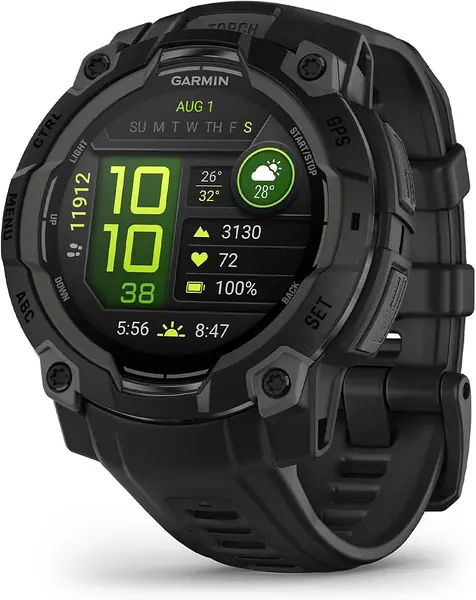
A flashlight on a wristwatch sounds like a spec-sheet gimmick until the sun sets earlier than you planned. On the Instinct 3 it's a real LED with several brightness levels and a strobe, and it's the extra we reached for most — at a dark trailhead, hunting for a dropped key, finding a tent zipper at 2 a.m. The rest of the watch follows the same logic: a 45 mm fiber-reinforced polymer case with a metal-reinforced bezel, 100-meter water resistance, and a rated 18 days between charges in smartwatch mode. That combination is why it's the watch we recommend first.

The 1.2-inch AMOLED display makes the case. At 1,000 nits it stays readable in direct sun, which matters more on a watch you glance at mid-run than resolution does. Underneath is Garmin's multi-band GPS with SatIQ, which shifts satellite modes to hold a track in tree cover and between buildings without flattening the battery. We were also glad of the barometric altimeter and 3-axis compass on hikes, where elevation gain is half the story you're trying to record.

The compromise is coaching. The Instinct records and navigates beautifully, but adaptive daily workouts and race plans belong to the Forerunner 165, and if you want a watch that tells you what to run tomorrow, that's the one to buy instead. What keeps the Instinct on our wrist is the charging arithmetic: roughly two and a half weeks of wear changes how you use sleep tracking, because it stops being a decision about battery.

Pros

  • Built-in LED flashlight with a strobe
  • Multi-band GPS with SatIQ
  • Up to 18 days of battery

Cons

  • Button-only controls, no touchscreen
  • 53 g is the heaviest on the wrist here
Our verdict

The GPS watch we tell most people to buy: rugged, readable in sunlight, accurate on multi-band GPS, and it runs for weeks between charges.
Check Latest Price
2

Garmin Forerunner 165 Best for Running

93 /100
TKZ Score Outstanding

Key details

Battery Life
Up to 11 days; 19 hours in GPS
Display
1.2 in. AMOLED touchscreen
Weight
1.38 oz
Activity Profiles
25+
View on Amazon

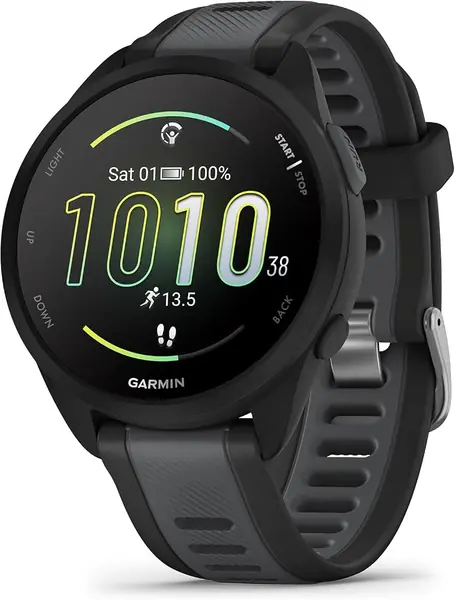
The Forerunner 165 costs less than the Instinct 3 and, for anyone whose GPS watch is really a running watch, it's the better buy. The case is 43 mm and 1.38 ounces, so it sits closer to the wrist and disappears under a cuff in a way the bigger rugged watches don't. The screen matches our top pick on paper at 1.2 inches and 1,000 nits, which means you aren't giving up readability to save weight.

What you're paying for is the training layer. Daily suggested workouts adapt to how hard you've been going, Garmin Coach plans cover 5K through half marathon, and the morning report puts sleep, recovery, training outlook, weather and HRV status on one screen before you've had coffee. Of everything in this group, it's the watch whose running feedback we trusted most — the pace, zone and split breakdowns are thorough without burying the one number you wanted.

Two numbers explain the battery: 11 days in smartwatch mode and 19 hours with GPS running. Run most days and the real cadence lands closer to a week than the headline suggests, which is still a different universe from a nightly charge. Pairing is the one wrinkle we've hit — when the app can't see the watch, closing it and reopening has sorted it every time.

Pros

  • Adaptive daily workouts and race plans
  • Light at 1.38 ounces on a 43 mm case
  • 11 days in smartwatch mode

Cons

  • No multi-band GPS or flashlight
  • Rated to 50 m rather than 100 m
Our verdict

Our pick for runners: the most useful training guidance in this group on the lightest Garmin here, and it costs less than the Instinct 3.

Check Latest Price
3

Apple Watch Series 12 Best for Health Data

92 /100
TKZ Score Outstanding

Key details

Case Size
42 mm aluminum
Safety Features
Fall and crash detection
Phone Compatibility
iPhone
Health Sensing
HRV every five minutes
View on Amazon

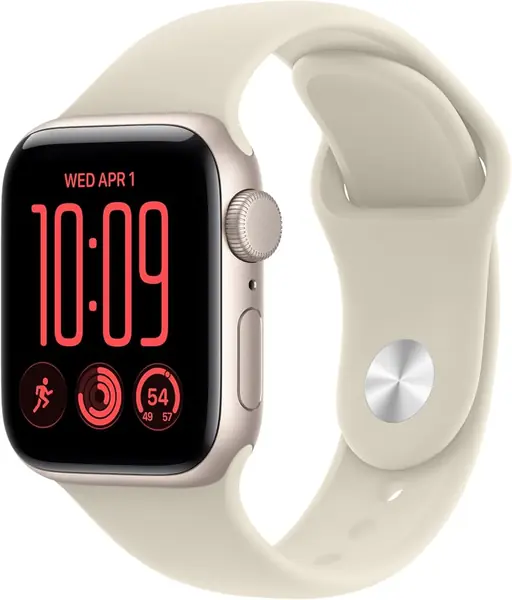
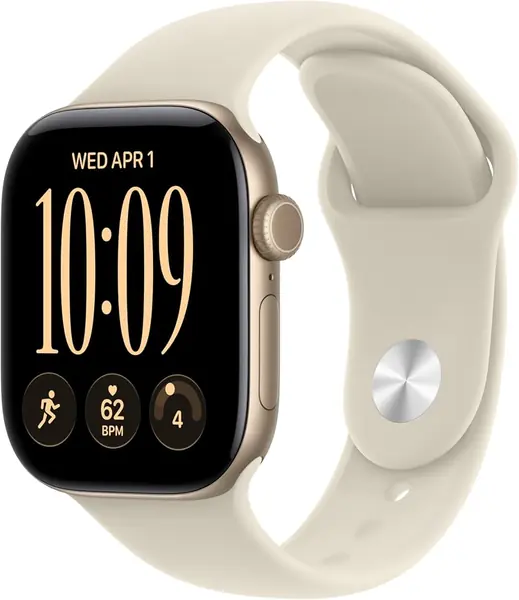
If your phone is an iPhone and you want insight into your body more than help navigating a ridge, the Series 12 is the most interesting watch here. Apple samples HRV as often as every five minutes, far more frequent than an overnight-only reading, and feeds it into the Vitals app, a nightly sleep score and a readiness number that tells you whether to push or back off. For a runner, that morning-after picture is a different kind of data than pace and distance.

The fitness side is stronger than the health-first pitch suggests. Pacer, heart-rate zones and Workout Buddy, which draws on Apple Intelligence from your nearby iPhone, all land in the same app you already use for everything else. It's also the best-looking watch here — the 42 mm Light Gold aluminum case reads as jewelry in a way the polymer Garmins never will.

Fit is the thing to settle in person: 42 mm is a lot of case on a narrow wrist, and it's the dimension people react to most strongly. If it sits right, the argument for buying is short — the deepest health data in this roundup, in a case that looks the part.

Pros

  • HRV sampled as often as every five minutes
  • Vitals and a daily readiness score
  • Best-looking case in this group

Cons

  • iPhone only, so it's a no on Android
  • Needs a nightly charge
Our verdict

For iPhone owners who want health data more than trail maps, the Series 12 earns it: five-minute HRV, a daily readiness read, and the best-looking case in this group.

Check Latest Price
4

Apple Watch SE 3 Best Value for iPhone

91 /100
TKZ Score Outstanding

Key details

Battery Life
Up to 18 hours
Case Size
40 mm aluminum
Safety Features
Fall and crash detection
Phone Compatibility
iPhone
View on Amazon

Fall detection and crash detection that can call emergency services on their own are the reason to look at the SE 3, and it's the least expensive way to get them here. Apple also fits in temperature sensing for cycle tracking, the Vitals app, a daily readiness read and the same workout tracking as the rest of the line, in a 40 mm aluminum case.

Training is honest rather than deep. Running, strength work and the 10,000-steps habit are all tracked properly, and the fitness side is the part of this watch we've had the least to complain about. Fast charging is the practical win: Apple rates it at twice the SE 2's speed, so a top-up while you shower covers an evening out.

Put it next to the Series 12 and the gaps are the case material and the health sampling — not the tracking, and not the safety features. That's a short list of things to give up, which is the whole argument for the cheaper Apple Watch.

Pros

  • Fall and crash detection at the lowest price here
  • Temperature sensing and Vitals
  • Fast charging, twice the SE 2's speed

Cons

  • Rated 18 hours, so it needs a daily charge
  • 40 mm case feels small on larger wrists
Our verdict

The safest money in this group for an iPhone owner: fall and crash detection, solid workout tracking, and a case that won't overwhelm a small wrist.

Check Latest Price
5

Amazfit Bip 6 Best Budget

86 /100
TKZ Score Excellent

Key details

Battery Life
Up to 14 days
Display
1.97 in. AMOLED, 2,000 nits
Water Resistance
50 m
Satellite Systems
GPS, GLONASS, Galileo, BeiDou
View on Amazon

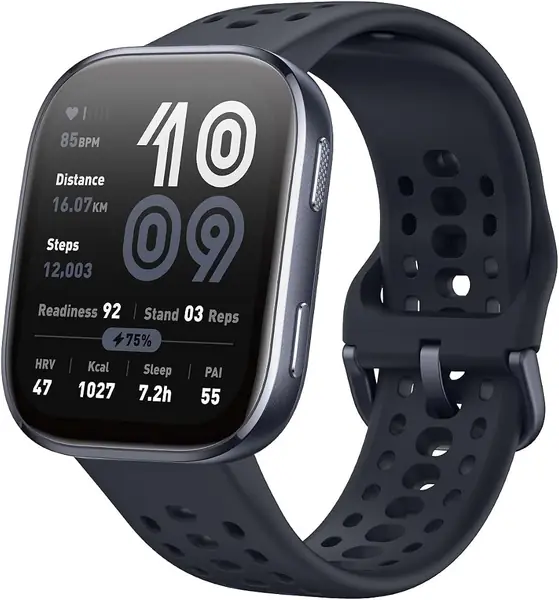
The 1.97-inch AMOLED panel is wide enough to read a map without squinting, and at 2,000 nits it stays legible in any light you'll actually be in. It's also the least expensive watch here, which makes the rest of the spec sheet read like a typo: 14 days of battery, more than 140 workout modes, built-in GPS across four satellite systems, and free downloadable maps with turn-by-turn directions.

The maps are the detail that changes how you use it. Turn-by-turn directions on the wrist are unusual at this end of the range, and having them turns a new route into a glance instead of a phone stop. Bluetooth calling and text notifications come along too, so it doubles as a wrist phone for the commute.

Where it differs from the Garmins is positioning. The Instinct 3 adds multi-band reception, which is what holds a track together in dense tree cover or a street canyon; the Bip 6 leans on four satellite systems instead. On open road and open trail that difference mostly disappears, and at this price the trade is easy to accept.

Pros

  • 1.97-inch AMOLED at 2,000 nits
  • Up to 14 days of battery
  • Free downloadable maps with turn-by-turn

Cons

  • Charging base ships without a USB-C cable
  • 46 mm case is the largest here
Our verdict

The budget pick that doesn't feel like one: a huge bright screen, two weeks of battery, and free turn-by-turn maps for less than half what the next watch here costs.

Check Latest Price

What Seven Months on the Wrist Taught Us

We started with a list of about 40 watches and cut it down on three things that decide whether one actually gets worn: GPS built into the case rather than borrowed from a phone, a case size that suits the wrist it's going on, and compatibility with both iOS and Android. That left 12, bought at retail and worn for seven months.

Setup came first. I timed each watch from box to first recorded workout, on an iPhone and then an Android phone, noting which ones demanded a firmware update, a second app, or a permissions screen before they'd do anything at all. Each watch then went on Tuesday-morning five-milers in the dark, a hilly weekend hike, pool laps, and a treadmill session, and stayed on overnight for a week of sleep tracking. We ran the same 5-mile loop with two watches at once and laid the maps on top of each other to see where pace splits and heart-rate graphs disagreed, and we walked out of phone range on purpose to see which ones kept recording and which had to be re-paired.

Battery was measured, not trusted: charged to 100 percent, a one-hour GPS workout every day, notifications on, and the percentage logged each morning, plus a separate drain with the always-on display running. Screens got read outdoors at noon and again at dusk with sweaty hands, since a display that only works on a showroom floor is no help at mile eight. Fit came down to case size against wrist, strap slip at the end of a ten-miler, and whether the heart-rate sensor held contact. We wore each one to the office and to dinner to judge appearance, set off the fall alerts over a carpeted floor rather than waiting for a real emergency, and checked at month seven which bezels had scuffed. Value, in the end, was about what a watch did for the money rather than how long its feature list ran.

How to Choose a Gps Watch

Training Tool or Phone Companion

Settle this before you compare anything else. A training-first GPS smartwatch spends its money on pacing, heart-rate zones, suggested workouts and battery, and treats notifications as a courtesy. A smartwatch-first design spends it on the screen, the health sensing and how neatly it fits into your phone, with workouts as one feature among many.

Neither approach is better; they answer different questions. If your week is built around runs and you want to know what to do tomorrow, buy training-first. If your wrist is where you check your day and your recovery, buy smartwatch-first and accept the charging routine that comes with it.

Read the GPS Battery Number, Not the Headline

A watch rated at 11 days may also be rated at 19 hours with GPS running, and those two figures describe the same battery. Before you decide a watch lasts long enough, find the GPS-mode hours and divide them by your weekly outdoor time.

Headline ratings assume smartwatch mode with the screen mostly asleep. Always-on displays, music, overnight blood oxygen and long GPS sessions all come out of that figure, so treat the big number as a ceiling rather than a schedule.

Case Size and Weight: The Specs You Actually Wear

The numbers that decide whether you keep wearing a watch are the ones on your wrist: 40 to 46 millimeters of case and roughly 39 to 53 grams across this group. A 53-gram watch feels substantial on a long run; a 39-gram one disappears under a sleeve.

Wrist size matters more than preference here, and band width — 20 or 22 millimeters — decides how easy it is to find a replacement strap later. Try the case on if you can, or buy somewhere with free returns.

What Multi-Band GPS Buys You

Every watch here receives GPS; the differences show up where the signal is hard. Multi-band positioning, which the Instinct 3 carries with SatIQ, holds a track together under dense tree cover and between tall buildings by listening on more than one frequency.

Single-band designs with several satellite systems are fine on open road and open trail. If you run canyons, woods or downtown streets and care whether your pace graph is honest, pay for multi-band. If you don't, save the money.

Water Ratings, Translated

5 ATM, the same as a 50-meter rating, covers rain, showers and pool laps. 10 ATM, or 100 meters, adds margin for surf, high-speed water sports and the general abuse of a watch you never take off. Neither is a diving rating, and no watch here should go in a hot tub or a sauna.

If you swim laps, 5 ATM is enough. If you're regularly on a boat or in the surf, the 100-meter watches here are the safer choice.

Frequently Asked Questions

Final Verdict

Start with the Garmin Instinct 3 AMOLED. It covers the widest range of what a GPS smartwatch is for — trail navigation, open-water swims, weeks between charges — and the flashlight is the rare extra that earns its place on the wrist. If your training is the point and you want a lighter watch for less money, the Forerunner 165 is the better tool. On an iPhone, the Apple watches trade battery for health data, and the SE 3 makes that trade for the least money.