Best Garmin Watches for Women of 2026

Small watches are where fitness trackers get honest. Shrink a case down to something that looks right on a narrow wrist and the savings come out of somewhere — a battery that quits by Thursday, a screen you squint at in daylight, or sensors quietly trimmed to save space. That tradeoff is what this category is really about.

I've worn a watch every day for years, through marathon blocks and through ordinary weeks when the only workout was a walk at lunch, and the boring things turned out to matter most. Over six months, my team and I wore 12 of the newest models through long runs, gym sessions, overnight sleep, and full workdays, looking as closely at how they looked with a blazer sleeve as at how their heart-rate data held up.

One thing I'd tell a first-time buyer: the spec sheet oversells the number of sport modes and undersells what the always-on display does to battery life. The picks below are the ones that got that balance right.

The Best Garmin Watches for Women

1

Garmin Venu 3S Best Overall
93 /100
TKZ Score Outstanding

Key details

Case Size
41 mm
Battery Life
Up to 10 days
Weight
1.4 oz
Water Resistance
50 m
View on Amazon

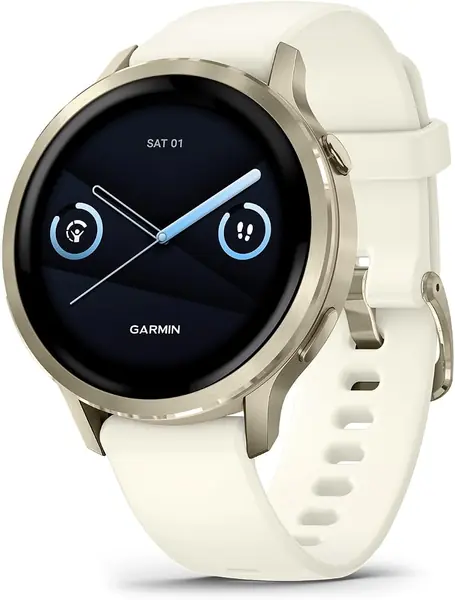
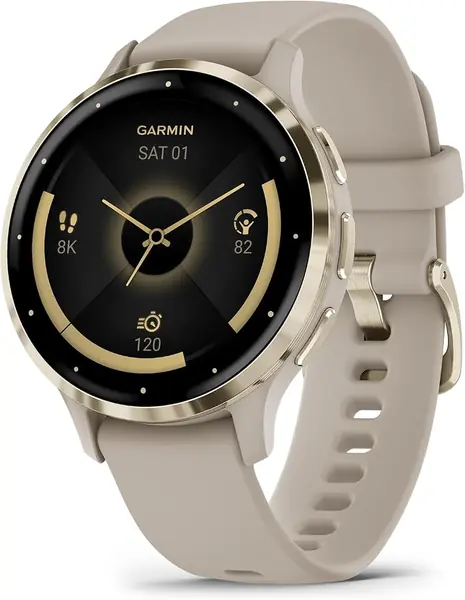
A 41mm case is the sweet spot for a lot of women: big enough for a readable 1.2-inch AMOLED screen, small enough to disappear under a cuff. The Venu 3S gets that balance right, then adds a speaker and mic for calls from your wrist. At 1.4 ounces, it is light enough for all-day wear, and the soft gold and French gray finish looks more like a watch than a gym gadget. We also appreciate the 10-day battery estimate in smartwatch mode, which keeps sleep tracking from turning into a nightly charging chore.

The health side is broad without being overwhelming. Body Battery, sleep coaching, HRV status, stress, hydration, and a sports menu that covers walking, running, cycling, HIIT, swimming, golf, and more handle the everyday basics. We like that the watch can be a general fitness companion rather than a running-only tool. The buttons and touchscreen work together, so you can start a workout without stabbing at a tiny icon with sweaty fingers.

This is not the cheapest route into Garmin, and if you never take calls from your wrist, the vívoactive 6 is the value alternative. But the smaller case, speaker, and mic are the reasons this one stays at the top of our list. It is the Garmin we are happiest to wear with a dress and then take on a walk.

Pros

  • 41mm case suits smaller wrists
  • Speaker and mic enable wrist calls
  • Up to 10 days of battery

Cons

  • Menu system takes time to learn
  • Phone pairing can be inconsistent
Our verdict

The Venu 3S is our default for a compact everyday Garmin: 41mm, light, and capable of wrist calls, with enough health tracking to justify the step up.
Check Latest Price
2

Garmin vívoactive 6 Best Value

92 /100
TKZ Score Outstanding

Key details

Case Size
42 mm
Battery Life
Up to 11 days
Weight
1.3 oz
Sports Apps
80+ built-in
View on Amazon

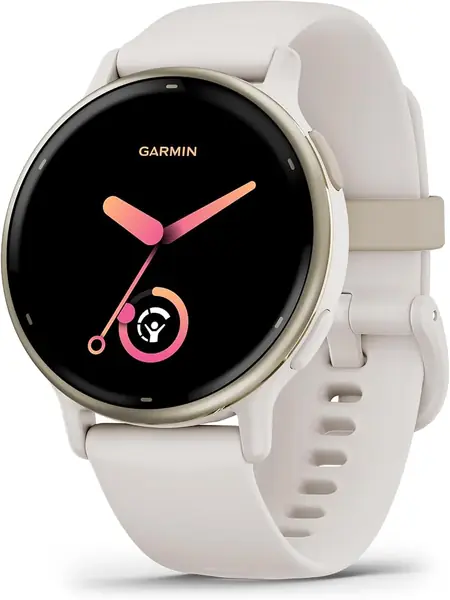
Eighty-plus sports apps on a 42mm watch is the value story here, and it is not just a numbers game. The vívoactive 6 pairs that roster with a bright 1.2-inch AMOLED display, up to 11 days of smartwatch battery, and a smart wake alarm that tries to rouse you at a better point in your sleep cycle. We think that combination makes it the most sensible everyday Garmin for someone who wants broad fitness tracking without paying for a premium case.

The health features are the broad Garmin mix: Body Battery, sleep coaching, HRV status, stress, hydration, and cycle tracking. We appreciate that the watch covers strength, yoga, mobility, swimming, golf, and more without making you dig through a separate app for each. At 1.3 ounces, it stays comfortable for sleep tracking, and the 42mm case is not so large that it dominates a smaller wrist.

The Venu 3S is the dressier alternative; the vívoactive 6 is the one we point to when sports coverage and battery matter more. It is the newest value play in this group, and it earns that label without feeling like a stripped-down watch. If your priority is tracking first and smartwatch extras second, this is the one to beat here.

Pros

  • 80+ sports apps built in
  • Bright 1.2-inch AMOLED display
  • Up to 11 days battery life

Cons

  • No speaker or mic for calls
  • Always-on display cuts battery to 5 days
Our verdict

The vívoactive 6 is the best value in this group for all-around fitness, with 80+ sports, a bright AMOLED screen, and 11-day battery life.

Check Latest Price
3

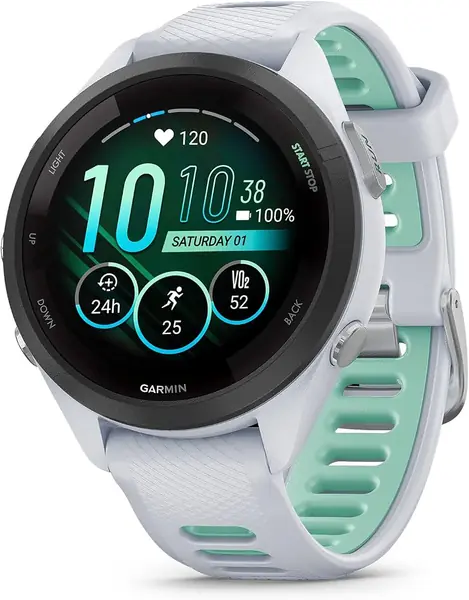
Garmin Forerunner 265S Best for Runners

91 /100
TKZ Score Outstanding

Key details

Case Size
42 mm
Battery Life
Up to 15 days
Weight
1.38 oz
Display
1.1-in. AMOLED
View on Amazon

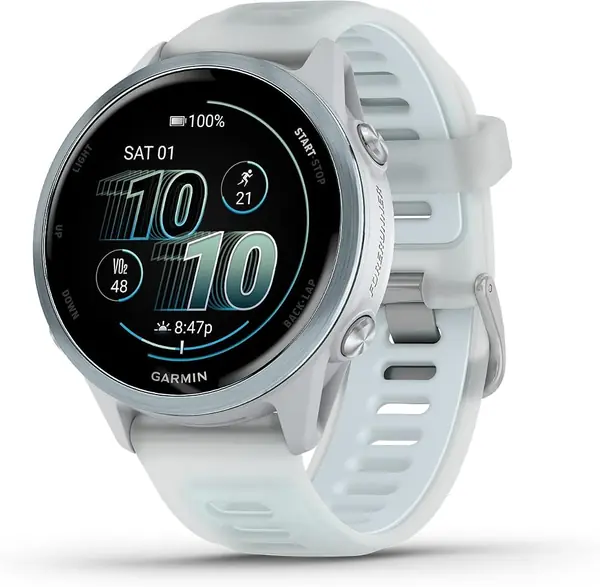
Fifteen days of smartwatch battery is the number that makes the 265S worth a look for runners who are tired of charging. The 42mm case and 39 g weight keep it in compact territory, and the 1.1-inch AMOLED display is bright enough for sunny sidewalks and dark treadmills. We were glad Garmin did not make the smaller version feel like the lesser version; the training features are the same story.

The morning report is the feature we came back to: sleep, recovery, training outlook, HRV status, and weather in one place before you decide how hard to go. Training readiness, daily suggested workouts, race adaptive plans, and Garmin Coach give you a plan to follow. Music on the wrist is a useful bonus for phone-free runs, and the button-and-touchscreen controls are easy to find mid-stride.

The 265S is a running tool first, and that is exactly why it earns a place here. It is not the watch for someone who wants a metal case and a dressy finish, but it is the one we reach for when the workout is the point. For a 42mm case, it carries its training data lightly.

Pros

  • 15-day smartwatch battery estimate
  • Light 39 g build
  • Training readiness and daily workouts

Cons

  • Button navigation takes practice
  • No speaker or mic for calls
Our verdict

The Forerunner 265S is the running watch we recommend for smaller wrists, with a 15-day battery, a light 39 g build, and serious recovery metrics.

Check Latest Price
4

Garmin Venu 4 Best Premium

90 /100
TKZ Score Outstanding

Key details

Case Size
41 mm
Battery Life
Up to 10 days
Case Material
Stainless steel
Flashlight
Built-in
View on Amazon

Stainless steel and a built-in flashlight change the Venu 4 from a fitness watch into something that feels at home with a jacket. The 41mm case is still compact, and the 1.2-inch AMOLED display keeps the same readable shape as the Venu 3S. We noticed the metal finish first, but the flashlight is the detail that makes it more useful after dark than a standard smartwatch.

Garmin's health-status feature looks for changes in heart rate, HRV, skin temperature, and other metrics, while sleep coaching and Body Battery cover the daily routine. The 80-plus sports apps are more than enough for most people, and the custom behavior logging for caffeine and alcohol is a nice touch if you like connecting lifestyle choices to sleep and stress. Battery life runs up to 10 days in smartwatch mode.

The battery estimate matches the Venu 3S, so you are buying materials, the flashlight, and the extra health insights rather than more runtime. That is a fair trade if you want a watch that looks dressier and does not need a separate flashlight on an evening walk. The Venu 4 is the premium pick for someone who wears one watch everywhere and wants the finish to match.

Pros

  • Stainless-steel case looks dressier
  • Built-in flashlight adds utility
  • Health-status and sleep coaching

Cons

  • Premium price over Venu 3S
Our verdict

The Venu 4 is the premium health watch in this group, pairing a stainless-steel case and built-in flashlight with Garmin's deeper health-status features.

Check Latest Price
5

Garmin Lily 2 Active Best Small GPS Watch

89 /100
TKZ Score Excellent

Key details

Case Size
38 mm
Battery Life
Up to 9 days
Weight
1.02 oz
GPS
Built-in
View on Amazon

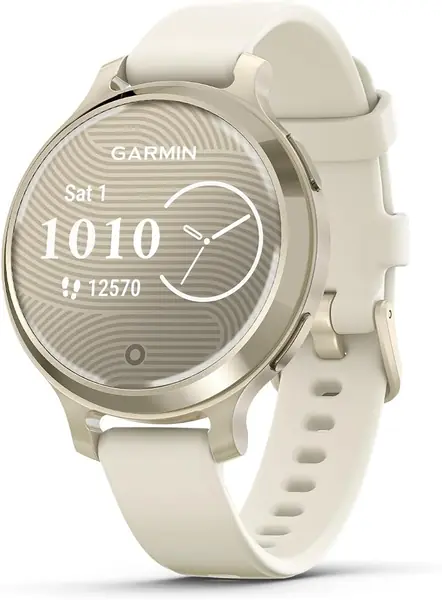
The smallest Garmin here with true built-in GPS is the Lily 2 Active, and that combination is the reason to notice it. The 38mm anodized aluminum case and 29 g weight read as a small everyday watch, not a scaled-down sports computer. The metal case and silicone band can go from a workout to dinner without looking out of place.

Built-in GPS tracks outdoor activities without your phone, and the sports apps cover yoga, Pilates, cardio, dance fitness, golf, and more. Body Battery, sleep score, respiration, hydration, stress, and cycle or pregnancy tracking round out the health side, and Garmin Pay adds a useful convenience. We think that makes it the small GPS watch to beat.

The Lily 2 Active is the one we point to when a smaller case matters more than a feature checklist. It proves that a GPS watch does not have to look like a gym timer. For a petite wrist, that is the whole point.

Pros

  • 38mm case with built-in GPS
  • Light 29 g build
  • Up to 9 days battery life

Cons

  • LCD lacks AMOLED punch
  • Phone pairing can drop
Our verdict

The Lily 2 Active is the smallest Garmin here with built-in GPS, making it the pick for a 38mm case that can still track a phone-free run.

Check Latest Price
6

Garmin Forerunner 165 Best Budget Running Watch

88 /100
TKZ Score Excellent

Key details

Case Size
43 mm
Battery Life
Up to 11 days
Weight
1.38 oz
Display
1.2-in. AMOLED
View on Amazon

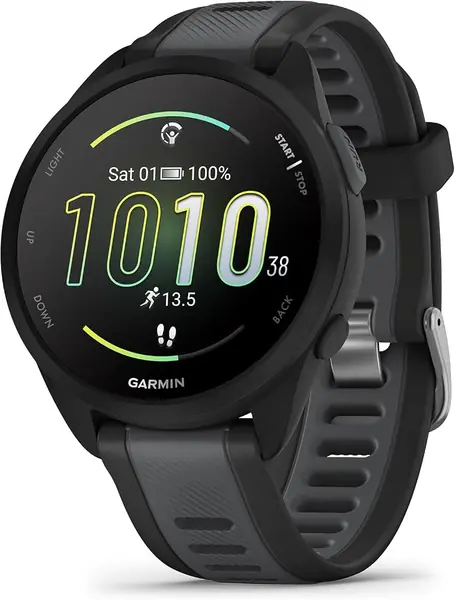
The budget running watch is usually where screens get dim and corners get cut, but the Forerunner 165 keeps a 1.2-inch AMOLED display and a 43mm case that still feels light at 1.38 ounces. It does not look like a clearance bin watch. The 11-day smartwatch battery estimate is enough for a week of training and then some.

Built-in GPS handles pace, distance, and speed, while daily suggested workouts, Garmin Coach, and 25-plus activity profiles give you a structure to follow. The morning report bundles sleep, recovery, training outlook, HRV status, and weather, which is a lot of useful information before your first mile. For a runner who wants the essentials without paying for triathlon features, it hits the sweet spot.

It is a running tool first, not a dress watch, but that is the trade for the price and the bright screen. The Forerunner 165 is the value runner's pick, and it is the one we point to when the goal is a first race, not a first smartwatch.

Pros

  • AMOLED screen at budget price
  • Up to 11 days battery life
  • Daily suggested workouts

Cons

  • 43mm case may overwhelm petite wrists
  • No speaker or mic for calls
Our verdict

The Forerunner 165 is the budget running pick, with an AMOLED screen, built-in GPS, and 11-day battery life without the premium price.

Check Latest Price
7

Garmin Forerunner 570 Best for Triathlon Training

87 /100
TKZ Score Excellent

Key details

Case Size
42 mm
Battery Life
Up to 10 days
Display
1.2-in. AMOLED
Training Plans
Running and triathlon
View on Amazon

Triathlon plans and a 42mm aluminum case put the Forerunner 570 at the serious-training end of this group. The 1.2-inch AMOLED display is Garmin's brightest touchscreen, and the button controls stay usable when your hands are wet or moving. It looks more polished than the budget Forerunners without turning into a heavy metal watch.

Training readiness, HRV status, sleep quality, recovery, and Garmin Coach running or triathlon plans give you a full picture of how hard to push. The watch also tracks swimming, cycling, and running in one place, which is the point for a multisport athlete. We appreciate that the data is deep but still organized around a morning report and daily suggestions.

A built-in speaker and mic let you make and take calls from your wrist when paired to your phone, and the 8GB of storage gives the watch room for apps and workouts. The touchscreen and buttons work together, so you can swipe through metrics and still use physical controls for laps. For a watch this capable, the 42mm case stays wearable.

The 1.2-inch AMOLED is the display we want on a watch at this level, and the aluminum bezel keeps the weight down. Garmin lists up to 10 days in smartwatch mode and up to 18 hours in GPS mode, which covers race day and most training blocks.

The Forerunner 570 is the pick for someone training for triathlons or chasing serious running goals, not for someone who just wants a pretty everyday tracker. If you need the deepest training data and wrist calls in a 42mm case, this is the one. If you mostly walk and strength-train, the Venu 3S is the more sensible spend.

Pros

  • Triathlon and running plans
  • Training readiness and HRV status
  • Speaker and mic for calls

Cons

  • Premium price for serious athletes
Our verdict

The Forerunner 570 is the triathlon-ready pick in this group, with a 42mm aluminum case, advanced training metrics, and wrist-call hardware.

Check Latest Price
8

Garmin Lily 2 Petite Everyday Style

86 /100
TKZ Score Excellent

Key details

Case Size
35 mm
Battery Life
Up to 5 days
Weight
0.8 oz
Case Material
Metal
View on Amazon

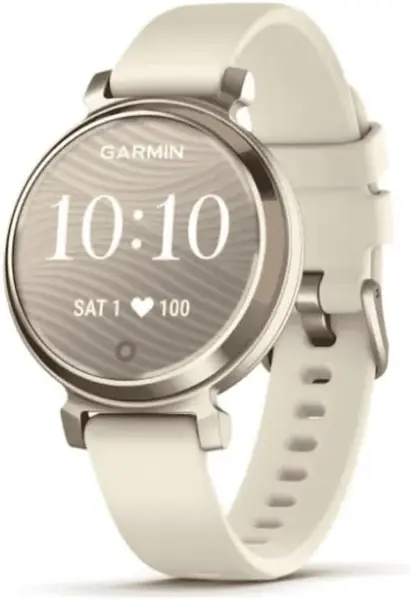
The Lily 2 looks less like a fitness watch and more like a piece of jewelry that happens to count steps. The 35mm metal case, patterned lens, and 0.8-ounce weight make it the least obtrusive watch here. The display stays hidden until you tap it, which keeps the watch face looking like a watch rather than a tiny phone.

Garmin packs in Body Battery, sleep score, respiration, hydration, all-day stress, and menstrual cycle or pregnancy tracking. Smart notifications come through when paired to your phone, and Garmin Pay adds a useful shortcut for errands.

The Lily 2 relies on your paired phone for GPS, so it is not the one for phone-free runs. That is a real limitation for a watch that otherwise looks ready for a walk, but it keeps the case small and the price lower.

The Lily 2 is the pick for someone who wants a small, pretty watch first and a fitness tracker second. It is the one we reach for when the outfit matters more than the mile split, and the patterned lens is the detail that makes it feel intentional rather than sporty.

Pros

  • 35mm jewelry-like metal case
  • Light 0.8 oz build
  • Cycle and pregnancy tracking

Cons

  • Up to 5 days is shortest here
Our verdict

The Lily 2 is the style-first pick for a petite wrist, with a 35mm jewelry-like case and Garmin's core health tracking in the lightest package here.

Check Latest Price
9

Garmin vívoactive 5 Best for Budget Health Tracking

85 /100
TKZ Score Excellent

Key details

Case Size
42 mm
Battery Life
Up to 11 days
Weight
1.3 oz
Sports Apps
30+ built-in
View on Amazon

Older does not mean obsolete, and the vívoactive 5 is the proof. It keeps the 1.2-inch AMOLED display, 11-day battery estimate, and 1.3-ounce build that make the newer vívoactive 6 so easy to wear, then trims the sports roster to the 30-plus activities most people actually use.

Body Battery, sleep coaching, HRV status, stress, hydration, and a wheelchair mode that tracks pushes instead of steps are all here. The health tracking is the same broad Garmin approach, and the 42mm case is a comfortable middle ground for everyday wear. For someone who wants the core experience without the newest extras, it covers the important parts.

The 42mm case and 20mm band give it a lower-profile look than the chunky outdoor watches. It is still light enough to sleep in, and the AMOLED screen keeps notifications and workout stats easy to read. The fiber-reinforced polymer case does not pretend to be stainless steel, but it keeps the weight down.

The vívoactive 5 is the budget pick for someone who wants Garmin's core health features without paying for the newest model. It is the one we point to when the basics are enough, and the AMOLED screen keeps it from feeling like a step down.

Pros

  • Core health tracking at budget price
  • AMOLED screen and 11-day battery
  • Wheelchair mode and 30+ sports

Cons

  • No speaker or mic for calls
  • Smaller sports roster than vivoactive 6
Our verdict

The vívoactive 5 is the budget route into Garmin's core health tracking, with an AMOLED screen, 11-day battery, and a light 42mm case.

Check Latest Price

How We Tested These Watches Over Six Months

We built the shortlist by pulling every current model with a case between 38 and 43 millimeters — the range that fits a smaller wrist without becoming a statement piece — then cutting anything that duplicated another watch's feature set or landed far outside the middle of the price range. That left 12 watches, and each one was worn for six months rather than a week.

Every watch started at a full charge so we could log how long the battery actually lasted with notifications on and the display in its everyday setting, then we ran the check again with the always-on mode enabled to see what that cost. Runs, rides, and pool swims were recorded alongside a phone or a chest strap, so distance, pace, and heart rate could be compared point by point instead of taken from the summary screen. I wore one to bed every night and matched the sleep and energy scores against how the night had actually gone.

Each watch also lived a normal life: showers, dishwashing, weight sessions with a barbell resting on the wrist, a scraped car door or two, and strap swaps before dinner. We paired each one to both an iPhone and an Android phone, walked away from the phone mid-run to see what dropped, and read the screen in direct sun and under office lighting. We also handed the daily suggested workouts a two-week block to see whether the coaching was genuinely useful or just noise. Appearance got the same scrutiny as the sensors — case thickness against a shirt cuff, how the band sat under a jacket, whether we reached for it on a Saturday night — and at the end we asked, plainly, whether the features justified the price.

How to Choose a Garmin Watch for Women

Start With Case Size and Wrist Fit

Case size is the first filter because it decides whether the watch feels like jewelry or a piece of sports gear. The Lily 2 is 35mm and the Lily 2 Active is 38mm; both read as small everyday watches. The Venu 3S and Venu 4 sit at 41mm, while most Forerunner picks here are 42mm or 43mm. A 41-42mm case is the safe middle for a wrist that usually wears a 38-40mm traditional watch; 43mm is the largest profile in this group. Check the lug-to-lug footprint if you are between sizes, and prioritize a comfortable band over a bigger screen.

Match Battery Life to Your Charging Habit

Battery estimates assume smartwatch mode, not always-on display or long GPS sessions. The Lily 2 is the shortest at up to five days; the vivoactive and Forerunner 165 models claim up to 11 days; the Forerunner 265S claims up to 15. If you wear a watch to bed for sleep tracking, a five-day model means charging during the day, which breaks the routine. We prioritize the gap between smartwatch and GPS runtimes over the headline number. A watch that fits your charging rhythm is more useful than one with a bigger estimate.

Decide How Much Training Data You Will Use

Everyday health tracking and serious training are different purchases. The Venu and vivoactive models cover Body Battery, sleep, stress, and a broad sports menu. The Forerunner 265S and 570 add training readiness, HRV status, and adaptive workout suggestions; the 570 goes further with triathlon plans. If you mostly walk, do strength sessions, and track sleep, the extra running metrics can become clutter. If you are chasing a race time or juggling three disciplines, they earn their place. Be honest about which data you will open after the first month.

Choose Smartwatch Features Deliberately

Calls from the wrist, music storage, contactless pay, and notification replies are the features that separate a training watch from a daily smartwatch. The Venu 3S and Forerunner 570 have speaker and mic hardware for wrist calls; the Venu 4 lists voice-call support; the vivoactive 6 and Forerunner 165 are more focused on tracking. If you always carry your phone, skip the calling premium and put the money into battery or a smaller case. If you leave your phone in a locker, the calling feature is worth prioritizing.

Wear It Before You Commit

Comfort is the specification you cannot read from a table. The Lily 2 Active is 29 g, the Forerunner 265S is 39 g, and the Venu 3S is 1.4 oz; those differences matter when you sleep with a watch on. A silicone band is the practical default for workouts, but a metal case or patterned lens can make the same watch feel less sporty. If you wear bracelets on the same wrist, a smaller case reduces the chance of clatter. Choose the finish you will still want on a rest day.

Frequently Asked Questions

Final Verdict

The Venu 3S is the Garmin we recommend first for most women. Its 41mm case is compact without feeling tiny, the 10-day battery keeps sleep tracking practical, and the speaker and mic add wrist calls without turning it into a bulky smartwatch. If running is the main event, the Forerunner 265S gives you deeper training guidance and a 15-day battery in a 42mm case. For a smaller wrist or a style-first watch, start with the Lily 2 Active.