Best GPS Fitness Watches of 2026

A GPS fitness watch has to pull off a small magic trick: a training tool at 6 a.m., a sleep tracker at midnight, and something you don't mind wearing to dinner — all without a nightly charging ritual. The biggest batteries tend to live in the biggest cases, and the brightest displays drain fastest. The right watch is the one whose compromises you stop noticing.

I've worn these through marathon builds and through months when a two-mile walk counted as the workout, and the spec sheet rarely tells you which one you'll keep wearing. My team and I spent eight months running, swimming, cycling, hiking, and sleeping in 11 watches, from slim 40mm cases to 48mm bricks. Two things stood out: GPS and heart-rate accuracy beat sport-mode counts, and legibility in noon sun matters more than any sharpness claim.

Some picks are training tools first; others lean on wrist calls and offline maps. Either way, these earned a permanent spot after weeks on my wrist, not minutes — one of them will fit how you actually move.

The Best GPS Fitness Watches

1

Garmin Forerunner 165 Best Overall
93 /100
TKZ Score Outstanding

Key details

Battery Life
Up to 11 days smartwatch; 19 hours GPS
Display
1.2-inch AMOLED
Water Resistance
50 meters
Weight
1.38 oz
View on Amazon

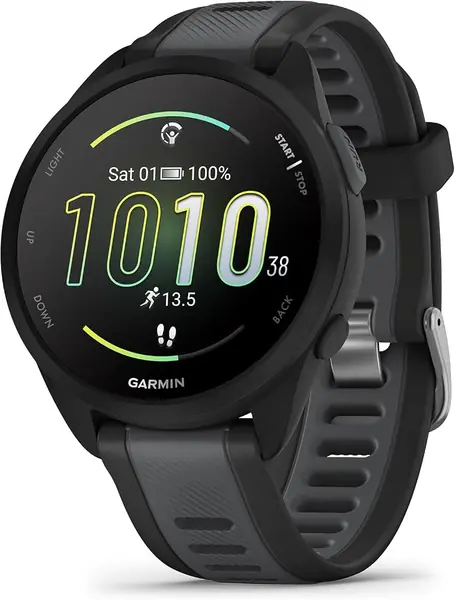
The Forerunner 165 earns its place with a 19-hour GPS battery and a 1.2-inch AMOLED screen that stays readable outdoors. For a runner who wants pace, distance, and heart rate without charging every night, that combination is the practical sweet spot. The 1.38-ounce case is light enough to forget between sessions, and the 50-meter rating covers pool laps and rainy runs. The 1.2-inch AMOLED is rated to 1,000 nits, so it holds up in sun.

What makes it our top pick is the training layer: daily suggested workouts adapt to performance and recovery, Garmin Coach plans are built in, and the watch tracks 25+ activity profiles. We like that the guidance sits on the wrist, not buried in an app after the run. The morning report is the other detail we use: it bundles sleep, recovery, training outlook, weather, and HRV status into one glance before you head out.

The 19-hour GPS figure covers most marathon efforts, but it is not a full-day ultra number; if you regularly go longer, the battery becomes a planning item rather than a footnote. A screen protector is the first accessory to add; the glass is the part to protect first. It is the watch we reach for when the session has a purpose beyond counting steps.

Pros

  • 19-hour GPS battery for long runs
  • Adaptive daily workouts and Garmin Coach
  • Bright 1.2-inch AMOLED display

Cons

  • Phone pairing can be inconsistent
Our verdict

We recommend the Forerunner 165 as the best GPS fitness watch for most runners: it combines a bright AMOLED display, 19 hours of GPS battery, and adaptive daily workouts.
Check Latest Price
2

Garmin vivoactive 5 Best All-Around

92 /100
TKZ Score Outstanding

Key details

Battery Life
Up to 11 days smartwatch; 5 days always-on
Display
1.2-inch AMOLED
Weight
1.3 oz
Sport Modes
30+
View on Amazon

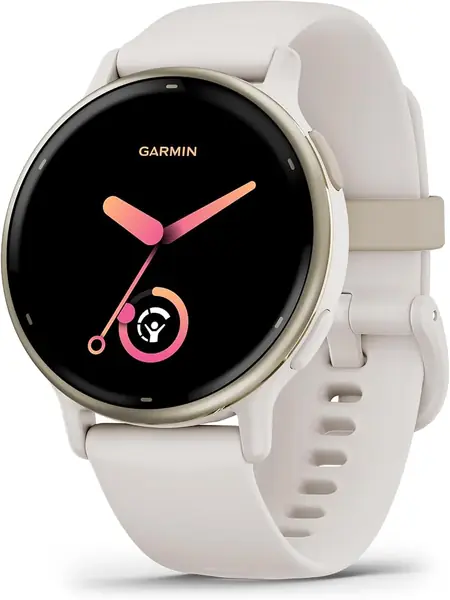
The vivoactive 5 is the pick for someone who wants one watch for the gym, the road, and the rest of the day. Its 1.2-inch AMOLED display and 42mm case look more polished than the running-first Garmins, and the 30+ sport apps cover everything from HIIT to golf. At 1.3 ounces, it is the lighter everyday option.

It carries a 50-meter water rating, so it disappears on the wrist and handles pool laps. We especially like wheelchair mode, which counts pushes rather than steps and includes handcycle and strength workouts; that is a rare bit of inclusive design in this category. Body Battery and the sleep coach are the other reasons it works as an all-day watch, not just a workout log, and 4 GB of storage gives it room for workouts and watch faces.

The 11-day smartwatch rating is the headline, but GPS and always-on display use cut into it; the five-day always-on figure is the one we plan around. It is the version we reach for when the day mixes a run, a strength session, and errands.

Pros

  • 30+ indoor and GPS sport apps
  • Light 1.3-ounce, 42mm case
  • Wheelchair mode and inclusive workouts

Cons

  • Sleep tracking can be inconsistent
Our verdict

For a fitness watch that moves from a run to the gym to daily wear, the vivoactive 5 is our all-around pick; it is lighter and more polished than the running-first options.

Check Latest Price
3

Amazfit Bip 6 Best Budget

91 /100
TKZ Score Outstanding

Key details

Battery Life
Up to 14 days
Display
1.97-inch AMOLED
Workout Modes
140+
Water Resistance
50 meters
View on Amazon

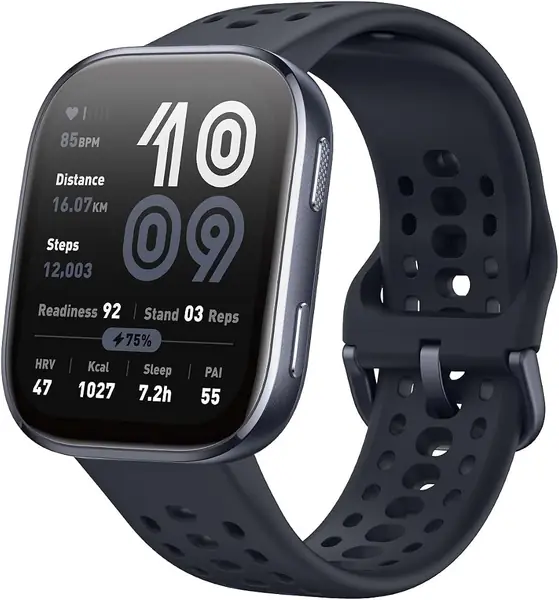
The Bip 6 makes the budget case hard to argue with: a 1.97-inch AMOLED display, built-in GPS, and a 14-day battery estimate in a 46mm aluminum case. It is the one here that gives a big, bright screen without asking you to charge it every night. At 1.44 ounces, it stays light despite the larger face, and the 50-meter rating covers pool laps.

We like it best for the buyer who wants a fitness watch for walking, hiking, and gym sessions, not a coach for a marathon block. The 140+ workout modes and free downloadable maps cover more than the budget suggests, and five satellite systems help it find a signal away from the city. The 1.97-inch panel is also rated to 2,000 nits, so glare is less of a fight than on a dimmer budget watch.

The 14-day rating is the smartwatch number; GPS runs will pull it down, so plan on charging more often than the claim. The magnetic charging base also ships without a USB-C cable, so you need to supply one. Even with those caveats, we keep it in the conversation for anyone who wants the screen without the premium.

Pros

  • Large 1.97-inch AMOLED display
  • Up to 14-day battery life
  • 140+ workout modes and free maps

Cons

No notable drawbacks to flag.

Our verdict

The Bip 6 is our budget pick because it pairs a huge AMOLED screen and built-in GPS with a two-week battery estimate; it covers the basics without daily charging.

Check Latest Price
4

Amazfit Active Max Best Battery Life

90 /100
TKZ Score Outstanding

Key details

Battery Life
Up to 24 days
Display
1.5-inch AMOLED, 3,000 nits
Workout Modes
170+
Storage
4 GB
View on Amazon

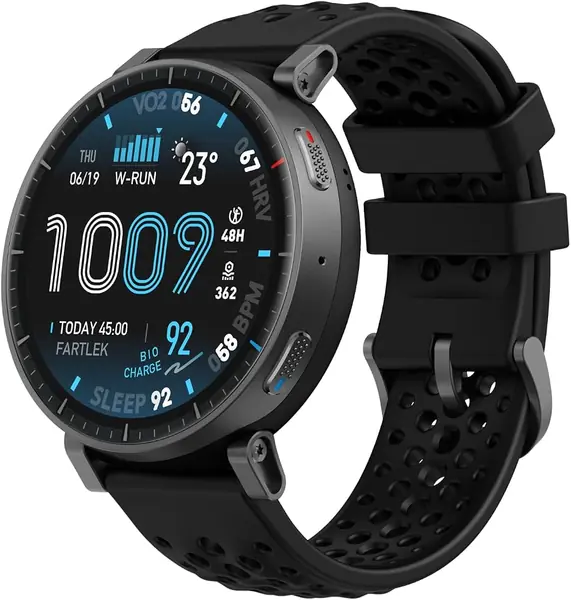
The Active Max is built around endurance: a 24-day battery estimate and a 3,000-nit display that should stay legible in direct sun. For a long training block or a week of hiking, that combination matters more than another watch face. The 1.5-inch AMOLED is the brightest screen in this group.

The 48mm case and 4 GB of storage make it the more serious training tool. You can load offline maps with turn-by-turn directions and leave the phone behind, and 170+ workout modes include strength and HYROX-style sessions. The 50-meter water rating covers pool sessions, and the 1.97-ounce weight is reasonable for a watch this size.

We appreciate the BioCharge energy score as a recovery prompt rather than a hard rule; it adjusts with workouts and stress, which is useful when you are deciding whether to push or back off. The 3,000-nit figure is the reason it earns a place for bright-weather training.

The value is in the battery and brightness, not in a slim profile. We make it our endurance pick because it covers long days away from a charger better than anything else here.

Pros

  • 24-day battery estimate
  • 3,000-nit AMOLED display
  • 4 GB storage for offline maps
  • 170+ workout modes

Cons

  • 48mm case may overwhelm smaller wrists
  • 24-day estimate assumes typical use, not GPS
Our verdict

We choose the Active Max when battery life and outdoor visibility come first; its 24-day estimate and 3,000-nit screen make it the endurance specialist here.

Check Latest Price
5

Apple Watch SE 3 Best for iPhone

89 /100
TKZ Score Excellent

Key details

Battery Life
18 hours
Safety
Fall and crash detection
Case Size
40mm
Connectivity
GPS, iPhone pairing
View on Amazon

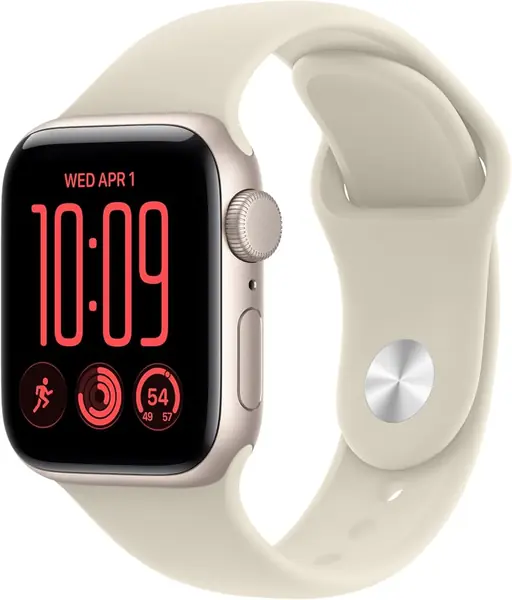
The Apple Watch SE 3 is the easiest recommendation for an iPhone owner who wants fitness tracking without learning a new ecosystem. It pairs with an iPhone, tracks workouts and sleep, and adds fall and crash detection that is a different kind of feature from pace and recovery. The 40mm case is the most compact option here.

The 18-hour battery is the clearest compromise. We treat it as a daily-charge watch, not a multi-day training tool; fast charging helps, but a long GPS day still needs planning. The Vitals app and cycle tracking give it a health layer that goes beyond step counts, and the safety features are the reason some buyers choose it over a dedicated running watch.

We like how little friction there is: setup, notifications, and daily use are handled by the phone you already carry. It is not the watch we reach for on a marathon day, but it is the one that keeps the rest of the day connected.

Pros

  • Seamless iPhone pairing
  • Fall and crash detection
  • Fast charging

Cons

  • 40mm case may feel small
Our verdict

For iPhone owners, the SE 3 is the fitness watch we point to first: it handles workouts, sleep, and safety with the least friction, as long as you accept daily charging.

Check Latest Price
6

Apple Watch Series 12 Premium iPhone

88 /100
TKZ Score Excellent

Key details

Safety
Fall and crash detection
Case Size
42mm
Heart Sensing
HRV every 5 minutes
Health Features
Vitals, sleep score, readiness
View on Amazon

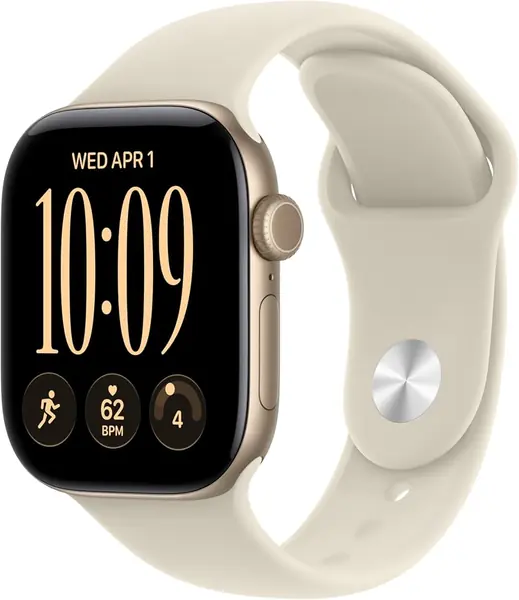
The Series 12 is the health-sensing end of the Apple lineup: it measures HRV as often as every five minutes and pulls overnight metrics into the Vitals app, a daily sleep score, and a readiness view. That is a deeper recovery picture than a pace-and-distance watch gives you. The 42mm case is the larger Apple option here, and it gives more room for data fields than the 40mm SE 3.

The workout side is stronger than a glance at the smartwatch label suggests. Pacer and Heart Rate Zones give structure to a run, and Workout Buddy uses Apple Intelligence from a nearby iPhone for in-workout feedback. Fall and crash detection are part of the package. We like the workout metrics, but this is still a smartwatch that happens to train well, not a running tool first.

The catch is ecosystem lock-in. iPhone pairing is the price of the deepest health dashboard, so it is a poor fit for an Android household. We keep it as the premium iPhone pick for someone who wants health insights more than a running-first tool.

Pros

  • HRV every five minutes
  • Vitals, sleep score, readiness
  • Pacer and heart-rate zones
  • 42mm case

Cons

  • iPhone-only pairing
Our verdict

We treat the Series 12 as the premium iPhone health watch: its five-minute HRV sensing and readiness tools go deeper than pace and distance, provided you stay in Apple's ecosystem.

Check Latest Price
7

CMF Watch 3 Pro Budget Style

83 /100
TKZ Score Excellent

Key details

Battery Life
Up to 13 days
Display
1.43-inch AMOLED
Workout Modes
130+
Water Resistance
IP68
View on Amazon

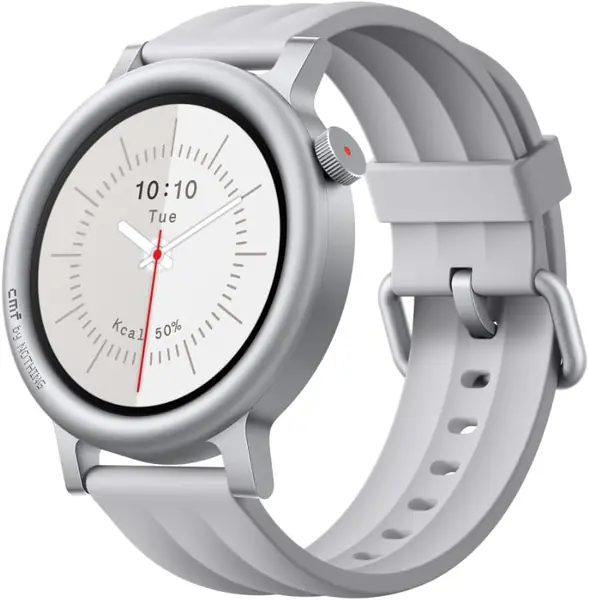
The CMF Watch 3 Pro is the style-first budget option: a 1.43-inch AMOLED screen, a metal case, and a 13-day battery estimate in a light 1.8-ounce package. It looks more expensive than it is, which is the point. The 1.43-inch panel is also sharp at 454 x 454, so notifications and watch faces look clean.

The 130+ sport modes and built-in GPS cover the basics, and Bluetooth calling is a genuinely useful extra when you are out on a run. Dual microphones and AI noise reduction help calls sound better than the price suggests, and the IP68 rating handles sweat and splashes. We like it best for an Android user who wants notifications, workouts, and a good-looking watch without spending much.

Accuracy is where we hesitate. Step and heart-rate tracking can be inconsistent, and pairing is less reliable on iOS, so it is not our first choice for interval training or an iPhone household. The 13-day estimate is a typical-use number, so GPS runs and calls will shorten it. On Android, at the budget end, it earns a look.

Pros

  • Bright 1.43-inch AMOLED
  • 13-day battery estimate
  • Bluetooth calling and 130+ modes

Cons

  • Magnetic charging cable can slip off
Our verdict

The Watch 3 Pro is our style-led budget alternative for Android users; it looks sharp and covers the basics, though we trust it more for daily movement than hard interval data.

Check Latest Price

How We Tested GPS Fitness Watches

We started by pulling specs and prices for dozens of current GPS watches, cutting anything that couldn't hold a signal without a phone nearby or talk to both iOS and Android. From there we narrowed to 11 watches in case sizes from 40mm to 48mm, and wore them for eight months so we could judge how each one sat on a small wrist and on a large one.

Setup came first: we timed the stretch from unboxing to first recorded run, then ran the same 5-mile loop with a phone in a pocket as a reference, comparing distance and pace against it and checking heart rate against a chest strap during intervals. We left the phone home on some runs to see what still worked — maps, music, calls and texts from the wrist — and paired every watch to an iPhone and an Android phone to watch for dropouts.

For battery life, we charged each to full, turned on always-on displays where available, and logged days between charges with three GPS sessions a week — runs, rides, and a weekend hike. Sleep tracking got the same treatment: at least two weeks of overnight wear each, checking morning reports against how the night actually felt and noting how much battery the overnight stretch ate.

Durability and comfort got judged in the wild — doorframes, hot showers, chlorinated laps, sweater sleeves — and appearance on whether a case looked at home in a meeting as well as on a trail. Last, we noted what each watch does without an extra subscription, since value here is mostly about what's already switched on when the box opens.

How to Choose a Gps Fitness Watch

Separate GPS Battery From Smartwatch Battery

GPS is the feature that separates a fitness watch from a daily smartwatch, and it is also the biggest battery variable. When a watch lists both, read the GPS number first: the Forerunner 165 manages 19 hours with GPS running but 11 days in smartwatch mode. If your longest session is a 90-minute run, either figure is generous. If you hike all day or race ultras, the GPS number is the one that decides whether the watch finishes with you.

Match Training Guidance to How You Train

Daily suggested workouts and coaching plans are the real upgrade from a basic tracker. The Forerunner 165 adapts suggestions to performance and recovery; the vivoactive 5 spreads its attention across 30+ sports, with less running-specific coaching. If you follow a plan, running-first tools are worth it. If you mix lifting, cycling, and classes, a broad sport list and a comfortable case matter more. There is no reason to pay for race predictions if you never race.

Choose a Screen and Case You Will Wear

AMOLED screens are brighter and more colorful; the trade-off is that always-on mode eats into battery. A 1.2-inch display suits a 42mm case and a 1.3-ounce watch, while a 1.97-inch panel is easier to read at a glance but makes a 46mm case feel larger. We look at wrist size first, then brightness. If you run in direct sun, a 3,000-nit display like the Active Max's is a real advantage; if you wear the watch to bed, weight matters more than brightness.

Check Water Resistance, Fit, and Phone Compatibility

50-meter water resistance is the practical baseline for pool laps and rainy runs; IP68 is fine for splashes but not a substitute for a swim rating. Fit is the other spec people skip: a 1.3-ounce watch disappears on the wrist, while a 1.97-ounce watch can feel heavy overnight. Finally, match the phone. Apple watches are the natural choice for iPhone owners; Garmin and Amazfit are more platform-neutral. A GPS smartwatch that pairs poorly will annoy you more than a missing sport mode.

Read the Reliability Story, Not Just the Feature List

The feature list is the easy part; the hard part is how the watch behaves after months. We look for a clear warranty, a replaceable band, and a charging system that does not depend on a fragile proprietary cable. The Bip 6's missing USB-C cable is a small example of ownership cost; a band that cannot be replaced is a bigger one. Buy from a maker with a support path you can actually use, and treat a two-week battery claim as a habit question, not a guarantee.

Frequently Asked Questions

Final Verdict

We recommend the Garmin Forerunner 165 for most runners because it gets the training basics right: a bright AMOLED screen, 19 hours of GPS battery, and daily suggested workouts that adapt to how you recover. If battery life and a bigger, brighter display matter more than running coaching, the Amazfit Active Max is the better fit. iPhone owners who want safety and daily health tracking should start with the Apple Watch SE 3 and accept its daily-charge rhythm.