Best Fitbits for Heart Monitoring of 2026

A heart-rate graph is only worth looking at if it matches the body it came from. I've worn a tracker that claimed I was resting at 95 beats a minute while I stood in line for coffee, and another that missed the first minute of a hard run entirely. That gap is why this category deserves a careful look instead of a grab at whatever model is newest.

Over the past seven months, my team and I have worn 10 trackers through runs, gym sessions, overnight sleep, showers, and long desk days. We set aside the ones that lost their connection, died before the week was out, or bugged us enough that we took them off at night.

The band matters more than most first-time buyers expect, which is why these ship with a small and a large strap — a loose fit can throw off a reading as easily as a cheap sensor can. The bundled months of the maker's premium service are worth pricing in, too, since some of the deeper sleep and stress breakdowns disappear once the trial ends. What follows are the ones we'd still wear.

The Best Fitbits for Heart Monitoring

1

Fitbit Charge 6 Best Overall
86 /100
TKZ Score Excellent

Key details

Battery Life
Up to 7 days
Heart Sensors
Optical heart rate, SpO2
Built-in GPS
Yes
Gym Equipment Link
Live heart rate on compatible machines
View on Amazon

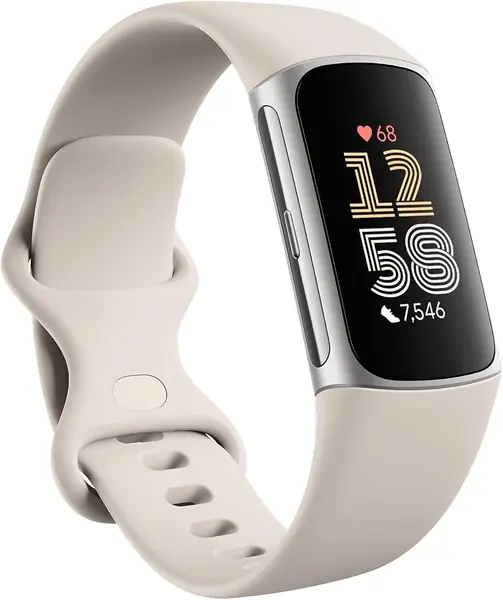
The Charge 6 does something the other trackers here can't: pair it with a compatible treadmill, elliptical, or rower and your heart rate appears on the machine's own display. It sounds minor until you've tried to read a small screen with one eye while your legs are moving. Around that trick sits the full kit — continuous heart rate, SpO2, a daily Stress Management Score, nightly sleep stages, 40-plus exercise modes, and built-in GPS for outdoor miles without your phone.

We recommend it because it covers a whole week of heart data without asking for a charging ritual. Seven days is the listed battery life and two hours is the listed charge time, which adds up to a Sunday top-up and little else; the payoff is overnight wear, since resting heart rate and sleep are where a heart monitor earns its keep. The GPS is the other thing we didn't want to give up — a run tracked through your phone loses its charm the moment you want to leave the phone at home.

What you accept in exchange is a small screen and a plain strap. The 1.04-inch display is legible for a pulse check between sets and tight for anything more ambitious, and the silicone band is standard Fitbit issue. The habit it builds is the more useful part: resting heart rate drifting down across a month tells you more than any single mid-workout number, and the app's charts are where that story lives.

Pros

  • Puts live heart rate on compatible gym machines
  • Built-in GPS and 40-plus exercise modes
  • Up to seven days of battery

Cons

  • Some units quit within a few months
Our verdict

We recommend the Charge 6 to most people: live heart rate on gym machines, built-in GPS, and a week between charges cover more of a real week than any other pick here.
Check Latest Price
2

Fitbit Inspire 3 Best Value

85 /100
TKZ Score Excellent

Key details

Battery Life
Up to 10 days
Heart Sensors
Optical heart rate, SpO2
GPS
Via smartphone
Rhythm Alerts
Irregular heart rhythm notifications
View on Amazon

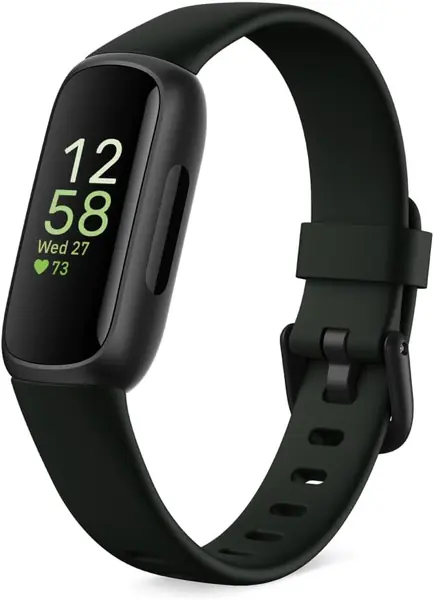
The Inspire 3 is the entry point to this group, and it gives up less than the price suggests. Continuous heart rate, SpO2, a daily Stress Management Score, and irregular heart rhythm notifications all come standard, in a band small enough to disappear under a sleeve. For a tracker whose job is to sit quietly on your wrist and collect, that's a trade we're happy to make.

Ten days is the listed battery life, the longest of the four, and it changes the routine more than the number suggests. Overnight heart rate and sleep scores only exist on nights you keep the band on, and a tracker that needs charging every few days is one you peel off at exactly the wrong moment. At 0.76 inches the screen is for a glance — the time, your step count, a current pulse — not for reading a workout summary.

Two things we temper, neither of which changes what this is. The sleep readout is generous: a long, still hour on the couch can land as a nap, so we read the weekly pattern instead of any single night. And silicone plus sweat is the usual recipe for irritation, so rinse the band and let it dry before it goes back on. What's left is the least expensive Fitbit here that still watches your heart all night.

Pros

  • Continuous heart rate, SpO2, and stress score
  • Up to ten days per charge
  • Irregular heart rhythm notifications included

Cons

  • No built-in GPS, so runs rely on your phone
Our verdict

We send budget-minded buyers to the Inspire 3 — it keeps continuous heart rate, SpO2, and irregular-rhythm alerts, and gives up only the extras.

Check Latest Price
3

Google Fitbit Air Best for Sleep

84 /100
TKZ Score Excellent

Key details

Battery Life
Up to 7 days
Heart Sensors
Optical heart rate, red and infrared SpO2
Display
None
Tracker Weight
0.18 oz
View on Amazon

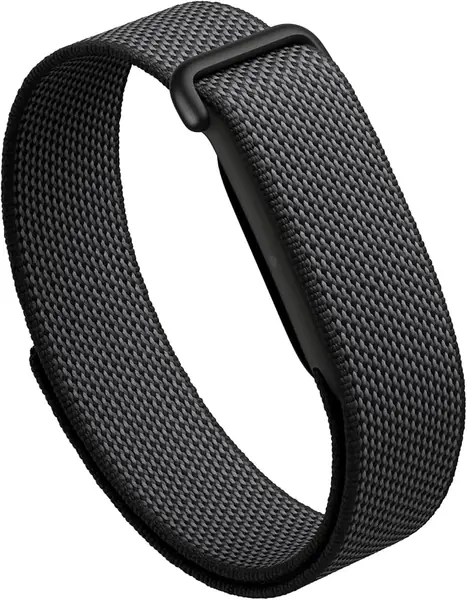
There's no screen on the Fitbit Air, and that single decision explains everything else about it. Nothing lights up at 2 a.m., there's nothing to tap, and the tracker itself weighs about 5 grams on a band you micro-adjust once and then forget. It's built for the overnight shift: the same sensor moves between a bracelet, a workout band, and a sleep band, so the thing tracking your heart rate all day is also the thing you can stand to sleep in.

The sensing is serious for something this small — an optical heart rate monitor, red and infrared sensors for SpO2, and a skin temperature sensor, all feeding the Google Health app with a three-month Premium trial attached. Battery is listed at up to seven days, and the fast-charge claim is the one we liked most: five minutes for a day of use turns charging into something you do while you brush your teeth rather than an evening on a dock.

The trade is real, and it's why this isn't our top pick. With no display, every heart rate reading means opening the app; mid-workout, that's a phone in your hand or nothing at all. So the Air is for the person whose heart data matters most at night and least during intervals — sleep quality, resting heart rate, all-day movement — and who wants a tracker that disappears. If you want the number visible while you push, take the Charge 6.

Pros

  • Screenless and light enough to sleep in
  • Heart rate plus infrared SpO2 sensing
  • Five-minute charge buys a day of battery

Cons

  • Step counts drift during hand-heavy work
  • One-size band tops out at 210 mm wrists
Our verdict

The Air is for the sleeper, not the sprinter: nothing on the wrist to distract you, so it stays on all night and the app holds the heart-rate story.

Check Latest Price
4

Fitbit Sense 2 Best for AFib and Stress

83 /100
TKZ Score Excellent

Key details

Battery Life
6+ days
Heart Sensors
Optical heart rate, ECG, SpO2
GPS
Built-in
Stress Sensing
cEDA all-day detection
View on Amazon

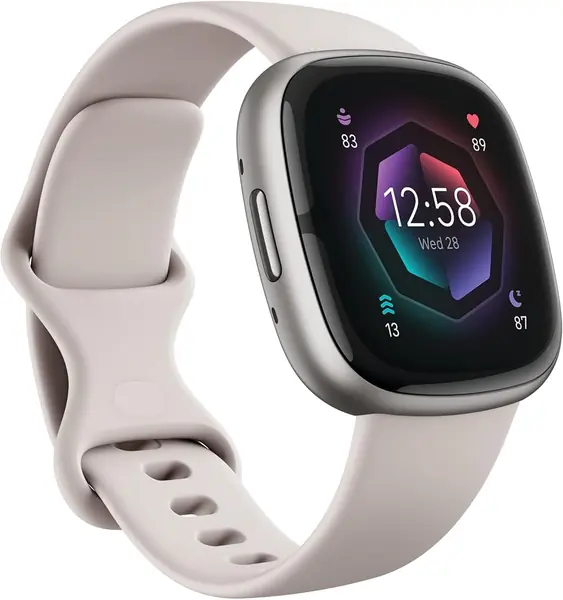
The Sense 2 is what the heart-rate basics look like with a budget for health sensors. An ECG app records a single-lead trace for atrial fibrillation assessment, cEDA adds all-day stress detection, and continuous heart rate, SpO2, and built-in GPS are all still here. It's also a proper smartwatch: calls and texts on the wrist, Alexa, Google Wallet, and customizable clock faces.

What earns it a place is context. A pulse number on its own doesn't say much; the same number sitting next to a stress score and a night of sleep stages starts to explain itself, and the ECG trace is the piece a doctor can actually look at. If you're monitoring because atrial fibrillation runs in your family, this is the Fitbit in this group that goes furthest toward answering that specific worry.

Build quality is the flag we raise. The case plates on some Sense 2 watches separate, and some units go dead within the first months, so buy it where returns are straightforward and test the charger in week one. The smartwatch extras — calls, Alexa, the wallet — are pleasant, but they aren't the reason to choose this one; the sensors are.

Pros

  • ECG app for AFib assessment
  • All-day stress detection with cEDA
  • Built-in GPS and six-plus days of battery

Cons

  • Heavier than a band for overnight wear
  • Costs the most of the picks here
Our verdict

For an irregular rhythm specifically, the Sense 2 is the one: an ECG app and all-day stress sensing in a full smartwatch, at the highest price and the heaviest build here.

Check Latest Price

How We Tested These Heart-Rate Trackers

I started by pulling every current tracker from the major wearable makers and cutting anything that couldn't log heart rate continuously, couldn't be worn overnight, or didn't include both a small and a large band. Trackers that put basic readings behind a subscription were out as well. Ten made it into testing, and I wore each one for at least a week straight, day and night, across seven months.

Every tracker came on runs — treadmill intervals and outdoor miles — plus gym sessions, showers, dish duty, and long stretches at a desk. During intervals I compared the on-wrist number against a chest strap, watching how long it took to catch up when my heart rate climbed or settled, and whether it spiked while I sat still. Overnight, I slept in each one and noted whether it stayed put, left a mark, or woke me up.

Between sessions I counted battery life in days rather than hours and timed each charge, because a device that dies mid-week is one you stop trusting. I logged connectivity failures — trackers that dropped after a phone call, synced late, or lost a workout — and inspected durability at the end for band fraying, case scratches, and whether the screen survived a doorknob. Comfort and appearance got judged the honest way: whether I forgot I was wearing it, and whether it looked fine under a shirt sleeve at dinner. Once each included premium trial expired, I went back to see how much heart, sleep, and stress data stayed free, since that's usually what decides the value.

How to Choose a Fitbit for Heart Monitoring

Decide what the heart data has to answer

Resting heart rate, workout zones, rhythm alerts, and an ECG trace are four different jobs. If your question is whether training is working, continuous heart rate and zones answer it, and the Inspire 3 or the Air does that for the least money. If the question involves atrial fibrillation, the Sense 2 carries an ECG app built for that assessment.

Decide which job you're buying for before you start comparing sensor lists. The cheapest device that answers your question is usually the right one, and the extra sensors are only worth paying for if you'll act on what they tell you.

Think about whether you want a screen

A display is the difference between seeing your pulse mid-interval and opening an app to find it. The Air deliberately has none: it disappears on the wrist, which is exactly why people sleep in it, but it also means no glanceable number during a workout. The Inspire 3's 0.76-inch screen is a compromise, and the Charge 6's 1.04-inch AMOLED is the most readable of the group.

If you train by heart rate rather than just logging it, buy the screen. If you mostly want a record to look at afterward, a screenless tracker buys you comfort and battery instead.

Pick a shape you'll actually keep on overnight

Overnight data is where heart monitoring gets interesting — resting heart rate, sleep stages, the slow drift that shows recovery — and none of it exists if the device is on the nightstand. A 5-gram screenless tracker and a 1.28-ounce smartwatch are very different things to roll onto at 2 a.m.

If you already take your watch off before bed, another watch won't change that habit. The band shapes here are the ones that survive a night.

Treat battery life as a data feature

Battery life in this category isn't really about convenience; it's about how many nights you record. The range here runs from six days to ten, and the longer end means one weekly charge covers sleep and workouts together.

Fast charging helps at the margins — the Air adds a day in five minutes — but the number that matters is the one that keeps the band on your wrist until morning.

Expect the app to be the fragile part

The wrist hardware is usually the reliable half. The pairing is not: stalled syncs and manual re-pairs are the shared weakness across this group, and they're how a day of data goes missing.

Check the phone requirement before you buy — iOS 16.4 or Android 11 and newer — keep the Google Health app updated, and when a tracker stops syncing, remove the device and add it back before assuming it has failed.

Frequently Asked Questions

Final Verdict

Most people should buy the Charge 6. It covers a real week — live heart rate on gym equipment, built-in GPS, seven days of battery, overnight sleep data — without the Sense 2's premium.

Two changes of requirement flip that choice. If the readings you care about happen at night, the Air's screenless, five-gram build keeps it on your wrist until morning. If an irregular rhythm is the specific worry, the Sense 2's ECG app is the reason to spend more and wear something heavier.