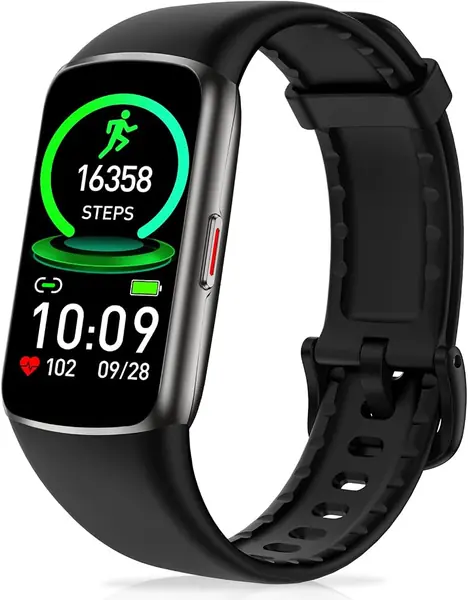
Best Fitbit Alternatives of 2026

The tradeoff with fitness wearables is nearly always the same: the watch that tracks everything wants a charge every night, and the band that runs two weeks has less to say. I wore a smartwatch for years and got tired of planning mornings around a cable. Most of us want something narrower: a step count we trust, sleep data, and a battery that survives a weekend away.

Our team spent three months with 14 trackers, from screenless straps to touchscreen watches, wearing them through the same days: workouts, desk work, overnight sleep, showers, and a few pool laps. The spec sheet wasn't what separated them. It was whether heart rate matched a chest strap during intervals, whether notifications landed on time, and whether the app was still connected on a random Tuesday.

One thing worth knowing: water resistance and a hundred sport modes are table stakes now, and that mode count rarely means much. Battery is the number that rearranges your week, since a 10-day claim often becomes five once continuous heart rate and notifications are on. The picks below held up to all of it.

The Best Fitbit Alternatives

1

MorePro Air6 Fitness Tracker Best Overall
89 /100
TKZ Score Excellent

Key details

Water Resistance
IP68
Display
1.52-inch LCD
Sport Modes
120+
Warranty
2 years
View on Amazon

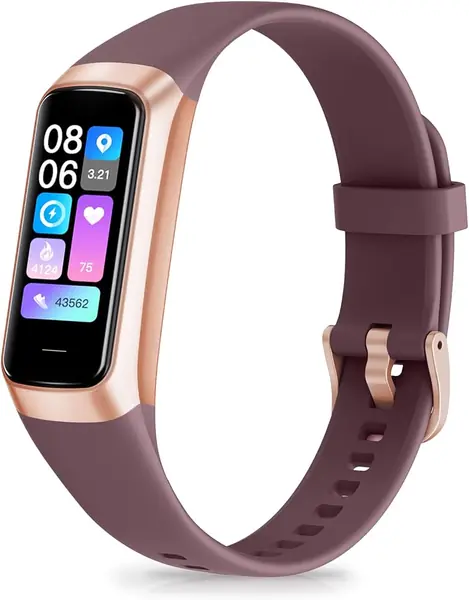
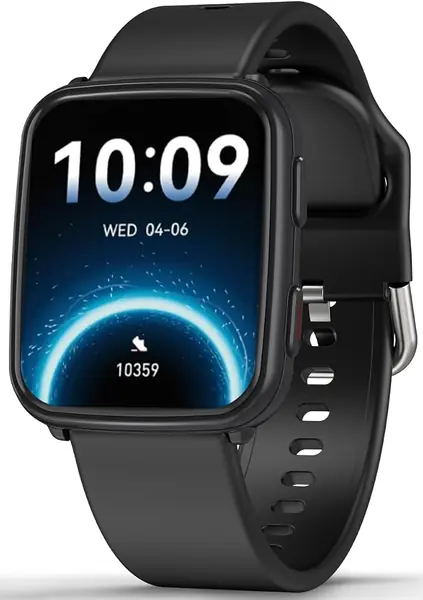
The MorePro Air6 is the alternative we recommend first because it covers the widest everyday spread without asking you to learn a new ecosystem. It tracks continuous heart rate, sleep duration, blood oxygen, stress, steps, and calories, and it adds 120+ sport modes on a 1.52-inch LCD. The IP68 body handles sweat and rain, and the two-year warranty is a useful backstop. For someone leaving Fitbit who wants the same daily checklist—steps, sleep, workouts, notifications—it is the least disruptive swap.

What sold us is the balance rather than any one headline feature. The watch is light enough to wear overnight, the band is comfortable for all-day use, and the battery rhythm is sensible: the 230 mAh cell and two-hour charge time pair with a low-drain LCD, so we treat it as a once-a-week charger rather than a nightly one. The 120+ modes are more than most people need, but the core metrics are easy to find, and the app keeps sleep, heart rate, and workouts in one place.

The LCD is the one place we notice the price. It does not have the contrast of the AMOLED screens on the Zeacool models, though it is perfectly readable and easier on battery. The rest of the package is focused on health rather than wrist-phone tricks, which is why it stays comfortable as a daily tracker. If you want a no-drama fitness tracker that covers the basics, sleeps comfortably, and does not charge for a subscription, this is the one.

Pros

  • 120+ sport modes cover everyday workouts
  • IP68 body and two-year warranty
  • Comfortable all-day band with a week-long charging rhythm

Cons

  • No built-in GPS for phone-free runs
Our verdict

The best Fitbit replacement for most people: broad everyday tracking, a comfortable all-day band, and no subscription.
Check Latest Price
2

Amazfit Helio Strap Best Screenless Tracker

88 /100
TKZ Score Excellent

Key details

Water Resistance
50 meters
Battery Life
10 days
Weight
0.64 oz
Built-in GPS
No
View on Amazon

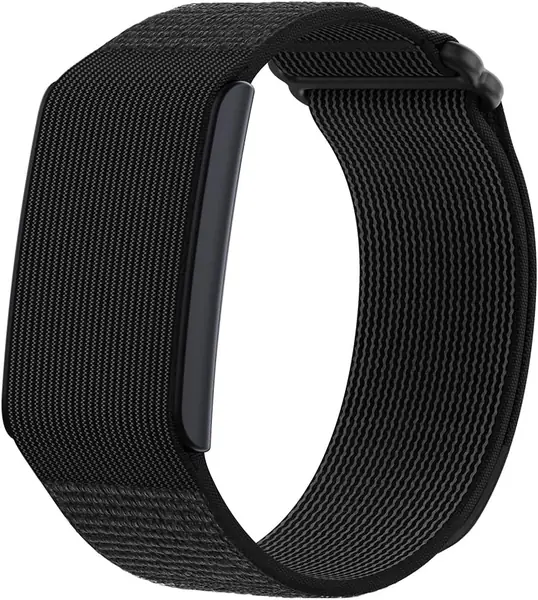
There is no screen on the Amazfit Helio Strap, and that is the point. The 18-gram band tracks heart rate, blood oxygen, stress, sleep, and 27 sports, including strength-training rep counts and a HYROX race mode. It is water-resistant to 50 meters and rated for 10 days of battery. If you want a tracker that disappears under a sleeve and does not light up at midnight, this is the most focused design here.

We think it is the best choice here for someone who trains hard and wants recovery data without another smartwatch. The HybridCharge score adapts to sleep, workouts, and stress, so the app gives you a decision—push or rest—rather than a wall of numbers. The lack of notifications kept us from reaching for it during the day, which is exactly what we want from a sleep-and-training band. It is also subscription-free, which sets it apart from the WHOOP model.

Our hesitation is the app and sleep tracking. The Zepp app is capable but not as simple as the hardware, and sleep tracking can miss nights. The lack of notifications is a deliberate trade-off, not a flaw: it keeps the band quiet overnight. If you want a screen and alerts, this is the wrong pick; if you want training and recovery data without distraction, it is the most interesting tracker here.

Pros

  • Screenless 18-gram band is built for overnight wear
  • 10-day battery and 50-meter water resistance
  • 27 sport modes with recovery and strength tracking

Cons

  • Mixed long-term reliability
  • No built-in GPS
Our verdict

The best screenless pick for training-focused users, with 10-day battery, recovery tools, and no nightly glow.

Check Latest Price
3

Fitpolo IDW208P Smartwatch Best Smartwatch Upgrade

87 /100
TKZ Score Excellent

Key details

Water Resistance
IP68
Display
1.8-inch LCD
Battery Life
7 days
Warranty
5 years
View on Amazon

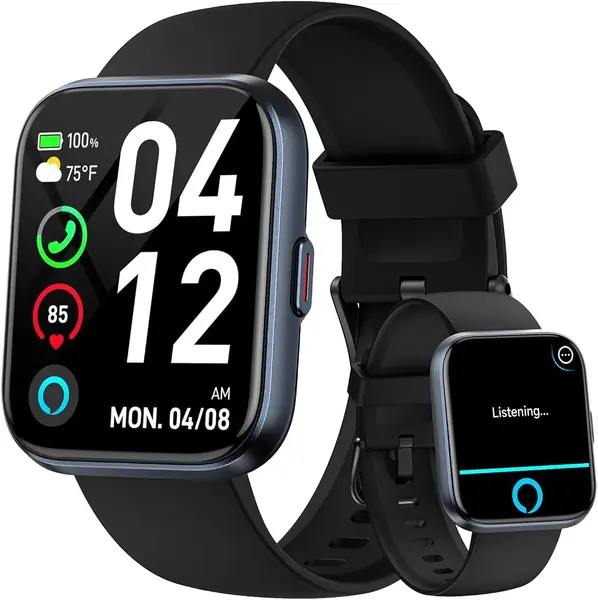
The Fitpolo IDW208P is the closest thing here to a full smartwatch without the full smartwatch price. The 1.8-inch screen, Bluetooth calling, built-in Alexa, 110 sport modes, IP68 body, and seven-day battery cover the basics and then some. The five-year warranty is one of the longest here, which matters if you are hard on your gear.

We recommend it for someone who wants calls and Alexa on their wrist but still cares about step, sleep, SpO2, and heart-rate tracking. The screen is big enough for notifications, the watch is light enough for all-day wear, and Alexa is simple to set up. The fitness side is not an afterthought: sleep tracking is a strength, and the 110 modes cover gym work, walking, cycling, and swimming.

The feature list is the pitch, and the execution is good enough for everyday use. The screen is bright, calls are clear, and the battery lasts through a normal week. It is not a dedicated training watch, but it is a lot of watch for the money.

Pros

  • Bluetooth calls and Alexa built in
  • 110 sport modes with IP68 water resistance
  • Five-year warranty and seven-day battery

Cons

  • Connectivity can be inconsistent
  • No built-in GPS
Our verdict

A feature-dense smartwatch for buyers who want Alexa, calls, and a five-year warranty without paying flagship money.

Check Latest Price
4

WHOOP 5.0 Best for Recovery and Sleep

86 /100
TKZ Score Excellent

Key details

Water Resistance
IP68
Battery Life
14 days
Weight
2.61 oz
Membership
12 months
View on Amazon

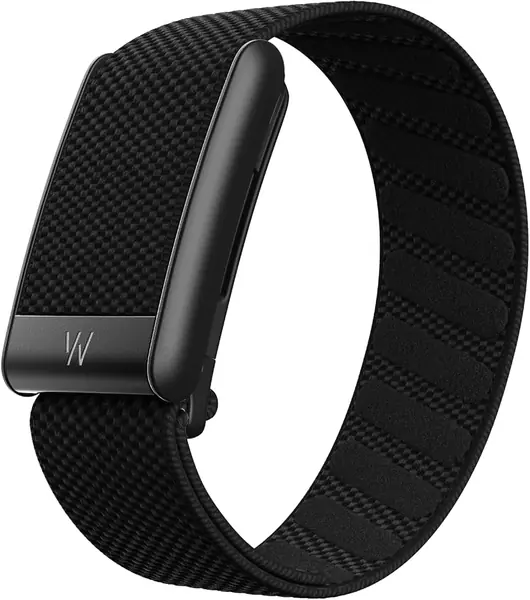
The WHOOP 5.0 is the most focused tracker here. The screenless band has a 14-day battery and IP68 water resistance. There is no display and no notifications, which is the point.

We recommend it for someone who already trains seriously and wants to know whether to push or back off. The sleep tracking is the standout: it breaks out REM, deep, and light sleep and ties the numbers to recovery. The battery is long enough to wear continuously, and the wireless power pack means you can charge without taking it off.

We think the app is where the value lives. It turns heart-rate variability, sleep, strain, and recovery into a daily coaching score, with an AI coach and healthspan view. That is a different purchase from a step tracker: you are paying for interpretation, not just sensors. If you want a set-and-forget band, this is overkill; if you want a recovery coach on your wrist, it earns its keep.

Pros

  • Recovery and sleep coaching in one app
  • 14-day battery with wireless charging while worn
  • Screenless design stays quiet overnight

Cons

  • Requires a 12-month membership
  • Accuracy can vary during workouts
Our verdict

A recovery-focused band for serious training, with standout sleep and strain data; buy it if you will use the coaching app every day.

Check Latest Price
5

Jacoosa TG38 Smartwatch Best Budget Smartwatch

85 /100
TKZ Score Excellent

Key details

Water Resistance
IP68
Display
1.83-inch
Battery Life
30 days
Sport Modes
140+
View on Amazon

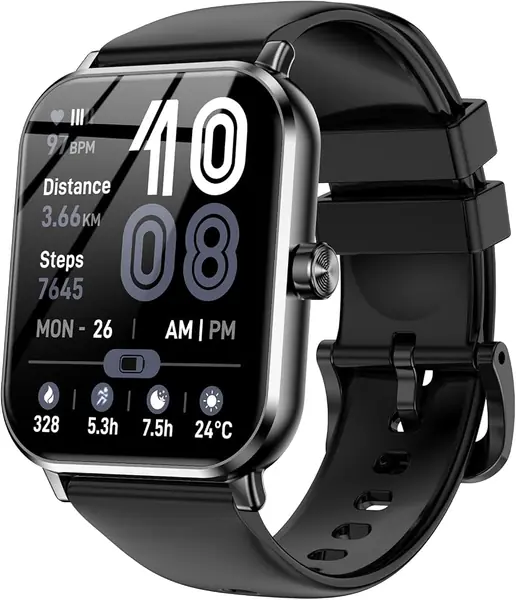
The Jacoosa TG38 is the budget smartwatch we hand to someone who wants a big screen and call handling without spending much. The 1.83-inch display, Bluetooth calling, 140 sport modes, IP68 body, and 30-day battery claim are a lot for the money. It is not the most refined watch here, but it covers the basics.

We like the size for reading notifications and workout stats at a glance, and the call feature is genuinely useful when your phone is in a bag. The 140 modes are overkill for most people, but the main ones are easy to find. The watch is comfortable enough for all-day wear, and the IP68 rating means sweat and rain are fine.

The 30-day battery number is a standby figure, not a with-calls figure; once Bluetooth calling and notifications are on, you will charge far more often. That is the trade-off for the big screen and the low price. If you want a cheap second screen for calls and steps, it is a good value. If you need a reliable training partner, spend more.

Pros

  • 1.83-inch screen is easy to read
  • Bluetooth calls and 140 sport modes
  • IP68 body at a budget price

Cons

  • No built-in GPS
Our verdict

A big-screen call watch for budget buyers who want 140 sport modes and a low entry point.

Check Latest Price
6

Gydom IDW19 Smartwatch Stylish Everyday Wear

84 /100
TKZ Score Excellent

Key details

Water Resistance
IP68
Display
1.8-inch LCD
Battery Life
7 days
Sport Modes
100+
View on Amazon

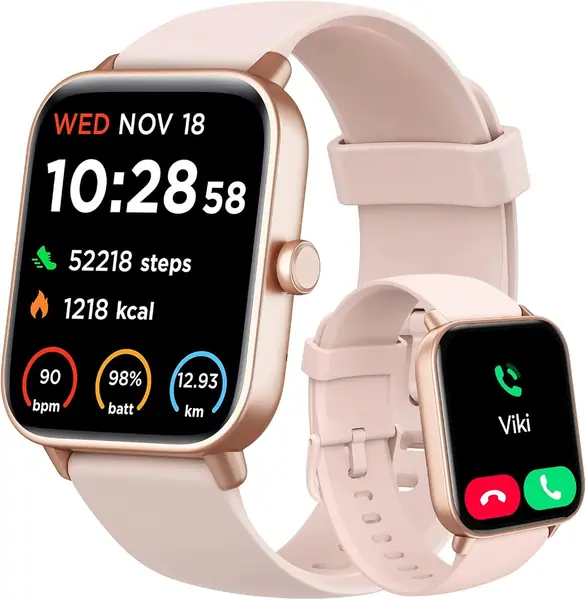
The Gydom IDW19 is the pick for a smaller wrist or a more jewelry-like watch. The 1.8-inch screen, 40-gram body, rose-gold finish, 100+ sport modes, IP68 rating, and seven-day battery make it a full-featured smartwatch at a midrange price. It also has Alexa built in and handles Bluetooth calls.

The design is the differentiator. The pink band and metal case make it look less like gym gear and more like something you can wear to dinner. The screen is big enough for notifications without feeling huge, and the watch is light enough for all-day wear. The health suite covers heart rate, SpO2, stress, sleep, and cycle tracking.

We like it as an everyday watch for someone who wants calls and Alexa but does not need a flagship. The step tracking is the strongest part of the fitness package, and the 100+ modes cover the usual activities. The seven-day battery is realistic for normal use, not for constant calls.

The weak spot is connectivity. Pairing is usually easy, but some phones drop the connection or delay notifications. That is the difference between a good budget smartwatch and a great one. If you want a stylish watch that covers fitness basics and handles calls, it earns a place; if you need flawless iPhone integration, the Fitpolo is the safer pick.

Pros

  • Rose-gold design with a 1.8-inch screen
  • Alexa and Bluetooth calling
  • Strong step tracking and seven-day battery

Cons

  • No built-in GPS
Our verdict

A stylish everyday smartwatch for women who want Alexa, calls, and solid step tracking in a rose-gold package.

Check Latest Price
7

Zeacool 1.1-Inch Fitness Tracker Best for Small Wrists

83 /100
TKZ Score Excellent

Key details

Water Resistance
5 ATM
Display
1.1-inch AMOLED
Battery Life
10 days
Sport Modes
25
View on Amazon

The 1.1-inch Zeacool is the smallest tracker here, and that is its appeal. It wraps around a small wrist without a fight and still packs a 10-day battery, 5 ATM water resistance, 25 sport modes, and an AMOLED screen. For someone who finds a 1.8-inch smartwatch too much, it is a relief. We recommend it for sleep tracking and all-day wear because the small screen stays out of the way.

The 5 ATM rating is the best water-resistance spec in this group, so swimming and showering are covered. The 25 modes are enough for walking, running, cycling, and gym work, and the AMOLED display is sharp despite the size. The band is light, and the battery rhythm is a once-a-week job rather than a nightly one.

It is a tracker, not a smartwatch. The feature set stays focused on health and workouts. If you want a full smartwatch experience, this is not the one. If you want a Fitbit-style band that tracks the essentials and disappears on your wrist, it is the most comfortable route here.

Pros

  • 5 ATM water resistance for swimming
  • 10-day battery
  • Small, light 1.1-inch AMOLED design

Cons

  • Cramped 1.1-inch display for notifications
Our verdict

A tiny, swim-ready tracker for small wrists, with a 10-day battery and an AMOLED screen that stays out of the way.

Check Latest Price
8

Zeacool 1.47-Inch Fitness Tracker Best for Big-Screen Tracking

82 /100
TKZ Score Excellent

Key details

Water Resistance
IP68
Display
1.47-inch AMOLED
Sport Modes
123
Health Sensors
Heart rate, SpO2, sleep
View on Amazon

The 1.47-inch Zeacool is the bigger-screen version of the budget tracker idea. The AMOLED panel gives you more room for steps, heart rate, sleep, and SpO2, and the 123 sport modes cover almost any activity you can name. It is IP68 and has the same 24/7 health monitoring as the smaller model.

The screen is the reason to pick it. At 1.47 inches, it is a meaningful step up from a 1.1-inch band, and the AMOLED contrast makes glanceable stats clearer. The 123 modes are more than most people need, but the main ones are there.

We recommend it for someone who wants a tracker that is easy to read without jumping to a full smartwatch. The IP68 body covers sweat and splashes, and the maker lists swimming. The band is light, and the battery-friendly design suits all-day wear.

It is still a budget tracker, so the feature set stays focused on health and workouts. If you want a bigger display for cheap, it is a good pick; if you want smart features, the Fitpolo is better, and if you want a smaller band, the 1.1-inch Zeacool is the one.

Pros

  • 1.47-inch AMOLED display
  • 123 sport modes
  • 24/7 health tracking at a budget price

Cons

  • Not rated to 5 ATM for lap swimming
Our verdict

A budget tracker with a bigger AMOLED screen and 123 sport modes for people who want readable stats without smartwatch extras.

Check Latest Price

How We Tested These Fitness Trackers

We started by pulling every tracker we could find across the price range and sorting them into three groups: screenless straps, watch-style touchscreens, and hybrids that also handle calls. Anything that duplicated another pick on specs or design got cut, which left 14 models to live with for three months.

Each one went on a wrist and stayed there — to the office, on runs and gym sessions, through overnight sleep, into the shower and a pool, and to a dinner where I wanted to see whether it read as a watch or a gadget. I logged battery percentage every morning to see how quickly continuous heart rate and notifications chewed through a charge, and timed how long a full recharge actually took.

For tracking accuracy, we compared readings side by side rather than trusting the app's summary: heart rate against a chest strap during intervals and easy jogs, step counts against a manual tally on a measured walk, and sleep stages against how the wearer felt the next morning. Blood oxygen and blood pressure readings got checked for consistency from day to day, since one impressive number doesn't prove much.

Then the unglamorous part. We watched how fast notifications arrived, whether a call connected on the first try, how often the app dropped Bluetooth during a normal week, and how much fiddling it took to pair with an iPhone and an Android phone in turn. Ease of use was graded on small things, like starting a workout with one thumb, and we noted whether the app's own recommendations felt useful or generic. Value came down to what you got without a subscription; reliability to whether a feature still worked in week ten the way it did on day one.

How to Choose a Fitbit Alternative

Start With the Tracking You Actually Use

Most people need three things from a Fitbit replacement: reliable step counting, a heart-rate graph they can interpret, and sleep data that reflects their routine. Everything else—blood oxygen, stress scores, menstrual cycle logs, wrist temperature—is a bonus. Wrist-based blood pressure and SpO2 readings are wellness estimates, not medical measurements, so do not choose a tracker because it promises a diagnosis. The MorePro Air6 is a good example of a sensible core: heart rate, sleep, SpO2, stress, steps, and a long list of workouts without a subscription.

Fit matters as much as sensors. A loose band gives noisy heart-rate data, and a bulky watch you take off at night cannot track sleep. Look for a weight and band you can wear around the clock, then judge the extras.

Decide Whether You Want a Screen

Screenless trackers such as the Amazfit Helio Strap and WHOOP 5.0 are built for people who want data without notifications or a glowing wrist at night. They can be more comfortable for sleep and less distracting during the day, but you give up at-a-glance stats and call handling. A 1.1-inch band like the Zeacool is the other extreme: light and discreet, with a screen that is cramped for notifications. Most buyers are happiest in the middle, with a 1.5- to 1.8-inch display that is readable without becoming a small phone. Picture when you will actually look at it: mid-run, in a meeting, or only in the morning app review.

Match Battery and Water Resistance to Your Routine

Battery claims are written for light use. A seven-day watch can drop to two or three days with Bluetooth calling, always-on notifications, or frequent GPS sessions; a 30-day claim is usually a standby figure. The practical target is a week between charges, so you are not planning your day around a cable. For water, IP68 covers sweat, rain, and splashes, while 5 ATM is the clearer rating for swimming and showering. If you swim laps, choose a 5 ATM model and follow the maker's guidance on hot water and soap. The Zeacool 1.1-inch is the clearest swim pick with 5 ATM; the Fitpolo is IP68 and lists swimming.

Check the App, Phone Compatibility, and Subscription

The tracker is only half the purchase; the app is where you will spend time. Look for one that syncs reliably, explains sleep and heart-rate data without a paywall, and supports your phone. Connectivity is the most common weak spot in this group: notifications can lag or drop, especially on iPhone. If you want Alexa and Bluetooth calls, the Fitpolo and Gydom are the relevant picks; if you want no subscription, the MorePro, Amazfit, and Fitpolo are subscription-free. The WHOOP is the opposite: a 12-month membership is the product. Decide which model you are actually buying before you compare hardware.

Frequently Asked Questions

Final Verdict

The MorePro Air6 is the Fitbit alternative we recommend to most people. It covers heart rate, sleep, SpO2, stress, steps, and 120+ workouts, wears comfortably overnight, and skips the subscription, with a two-year warranty as backup.

If you want a screenless band, the Amazfit Helio Strap is the more focused training tool; if you want calls and Alexa, the Fitpolo IDW208P is the better fit. Neither changes the default: start with the Air6 unless one of those specific needs is yours.