Best Health Trackers for Men of 2026

A health tracker only earns its place if you stop noticing it, and most of the ones I've tried are hard to ignore. I have a pale rectangle of skin where a chunky watch sat for three weeks, and a drawer of straps that felt fine for a day and unbearable by the third night. What matters isn't the spec sheet — it's whether it survives a shower, a bench press, and eight hours of sleep without you wanting to take it off.

Get that right and a tracker quietly answers the questions you actually have: whether your resting heart rate is drifting, how much of last night you spent awake, how far that run really was. We've worn 12 of them for six months — smartwatches, screenless bands, even a ring — and features rarely decided it. The ones that look like ordinary watches got worn on weekends; a couple of the cheapest read heart rate as well as the priciest.

The picks below are the ones we kept reaching for after the novelty wore off, membership fees and all.

The Best Health Trackers for Men

1

Garmin Vivoactive 5 Best Overall
89 /100
TKZ Score Excellent

Key details

Battery Life
Up to 11 days
GPS
Built-in
Case Size
42 mm
Sports Apps
30+ built-in
View on Amazon

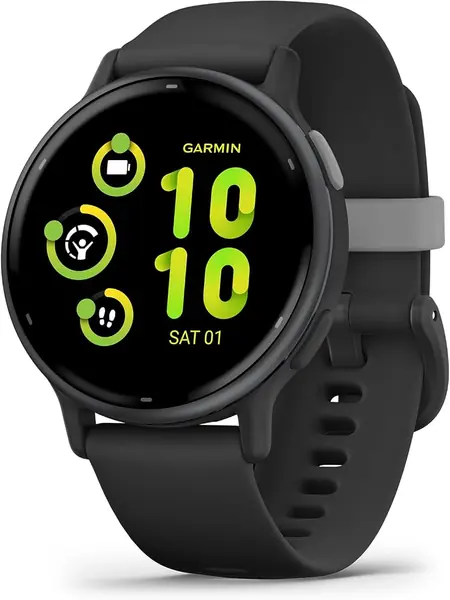
The Garmin Vivoactive 5 takes the top spot because it covers the whole health-tracker brief without turning into a specialist's tool. You get 24/7 heart rate, sleep coaching, HRV status, Body Battery energy monitoring, SpO2, and more than 30 built-in sports apps, plus built-in GPS. That mix is why it's our default for a man who wants one watch for sleep, training, and everyday wear.

The 42mm case and 1.31-ounce weight make it easy to forget during the day, and the AMOLED screen is bright enough to read at a glance. We like that the health data is organized around decisions rather than raw numbers: Body Battery tells you when to push and when to rest, and the sleep coach turns a night's data into a suggestion. The 11-day battery rating is the other practical win; GPS sessions and heavy screen use will shorten it, but the charging routine is far less demanding than a nightly charge.

The usual smartwatch compromises are mostly absent. It works with Android and iOS, has built-in GPS for phone-free runs, and includes wheelchair mode that tracks pushes instead of steps. That last detail matters because it shows Garmin is thinking about different bodies, not just runners. The 42mm case also keeps the watch light enough to sleep in, and the standard band is easy to swap.

We recommend the Vivoactive 5 as the best all-rounder here for most men. It is not the cheapest tracker in this group, but it is the one that gives you useful health context, outdoor GPS, and a long battery in a package you can wear all night. If you want a screenless band, a ring, or a more rugged outdoor watch, the alternatives below make more sense.

Pros

  • Covers heart rate, sleep, HRV, and SpO2
  • Built-in GPS and 30+ sports apps
  • Up to 11 days of battery

Cons

  • 42mm case may feel small on larger wrists
  • Sleep metrics can be inconsistent
Our verdict

We recommend the Garmin Vivoactive 5 as the best default here for a man who wants sleep, training, and GPS in one watch, provided the 42mm case fits.
Check Latest Price
2

WHOOP 5.0 Best for Recovery

88 /100
TKZ Score Excellent

Key details

Battery Life
14+ days
Display
None
Water Resistance
IP68
Membership
12-month included
View on Amazon

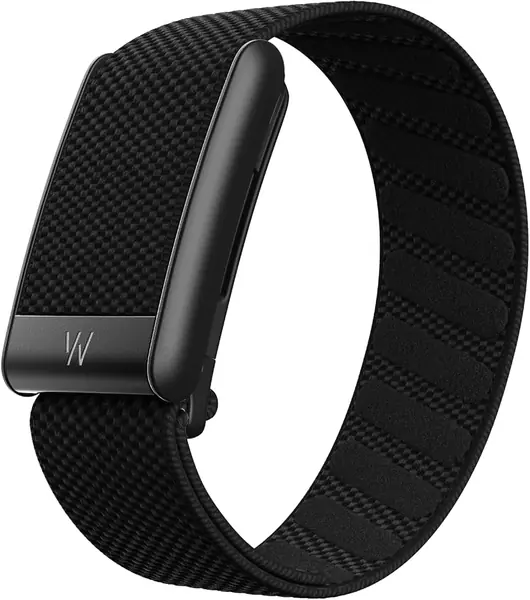
WHOOP 5.0 is the opposite of a smartwatch: no screen, no notifications, no glanceable step count. What you're buying is the 12-month membership, with the device and SuperKnit band included. That framing matters because the value lives in the app's recovery, strain, sleep, and healthspan coaching, not in the hardware alone.

We recommend it for the man who wants to understand recovery and sleep in detail and doesn't mind a screenless wrist. The 14+ day battery is genuinely useful, and the wireless PowerPack lets you top it up while wearing it, so you don't lose a night of sleep data to charging. The app turns more than 140 health and fitness metrics into a daily read on whether to push or back off; that guidance is the reason to choose WHOOP over a cheaper step tracker.

Sleep tracking is the strongest part of the package. You get REM, deep, light, and awake time, plus a recovery picture that includes HRV and resting heart rate. The screenless design also makes it easier to wear overnight than a chunky watch. We like the Healthspan view as a long-term motivator: it connects daily habits to nine key metrics instead of treating one bad night as a verdict.

This is a specialist tool, not a casual step counter. The device is built to be worn constantly rather than admired on a desk. If you want a screen, GPS, or a one-time purchase, the Garmin Vivoactive 5 is the easier recommendation. If recovery is the metric you care about most, WHOOP is the pick.

Pros

  • Screenless design for all-night wear
  • 14+ day battery with wearable charging
  • Recovery, sleep, and Healthspan coaching

Cons

  • Ongoing membership after first year
  • Readings can be inconsistent
Our verdict

We recommend WHOOP 5.0 for the man who wants screenless recovery and sleep coaching and will use the membership enough to justify it.

Check Latest Price
3

Fitbit Air Best Screenless

87 /100
TKZ Score Excellent

Key details

Battery Life
Up to 7 days
Display
None
Water Resistance
50 m
Weight
0.18 oz
View on Amazon

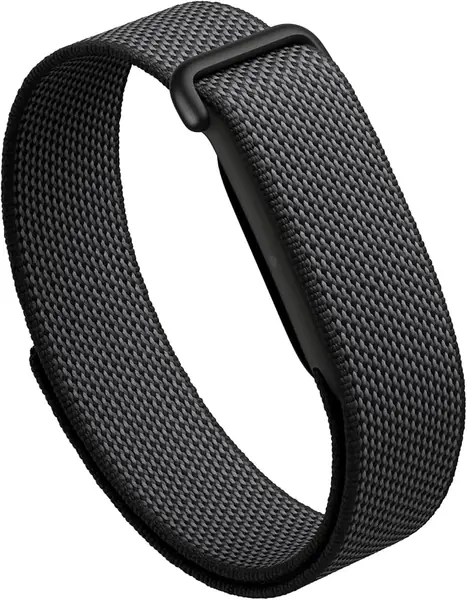
At 5.07 grams, the Fitbit Air is the tracker we reach for when the goal is to forget you're wearing anything. There's no screen, no vibration-heavy interface, and no reason to take it off at night. That makes it our pick for sleep and all-day wear, especially for a man who finds a full smartwatch bulky under a cuff or annoying in bed.

The health set is broader than the size suggests: 24/7 heart rate, SpO2, skin temperature variation, sleep stages, and a daily coaching layer through Google Health. The band adjusts from 130 to 210 mm, and the 50-meter water resistance means sweat, rain, and showers are not a concern. Battery life is rated at up to seven days, and a five-minute charge gets you about a day, which is the kind of top-up that fits a busy morning.

The Air is happiest paired with your phone. We like it most as a sleep-and-recovery band for someone who already carries a phone on runs, and the app is where the product either clicks or doesn't. If you want on-wrist training tools, the Garmin Vivoactive 5 is the better fit. If you want the lightest possible thing on your wrist at night, this is the one.

Pros

  • 5.07-gram screenless design
  • Up to 7 days of battery
  • Tracks HR, SpO2, sleep, and skin temperature

Cons

  • GPS requires a paired phone
  • Sleep and sync can be inconsistent
Our verdict

We recommend the Fitbit Air for all-night comfort and simple health tracking, as long as you don't need a display or built-in GPS.

Check Latest Price
4

Garmin Instinct 3 Best Rugged

86 /100
TKZ Score Excellent

Key details

Battery Life
Up to 18 days
Display
1.2-inch AMOLED
GPS
Multi-band
Case Size
45 mm
View on Amazon

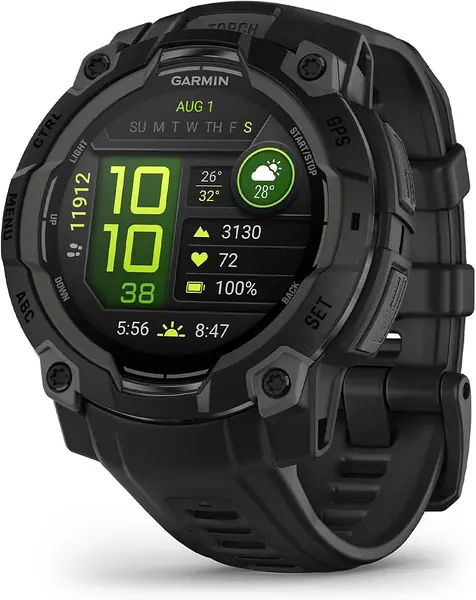
The Instinct 3's built-in flashlight sounds like a novelty until you're unlocking a door in the dark or finding a trail marker at dusk. It is one of several details that make this the rugged pick: a 45mm fiber-reinforced polymer case, a metal-reinforced bezel, 100-meter water resistance, and a 1.2-inch AMOLED display that stays readable outdoors.

Garmin pairs that toughness with an 18-day battery rating, multi-band GPS with SatIQ, a barometric altimeter, a 3-axis compass, and the usual 24/7 heart rate, advanced sleep, and Pulse Ox monitoring. For hiking, trail running, or any training that takes you away from a charger, that combination is more useful than a slim everyday band. The 53-gram weight feels substantial without crossing into wrist anchor territory.

We recommend the Instinct 3 for the man whose idea of health tracking includes time outdoors and who wants a watch that can take a knock. The battery, navigation, and flashlight justify the specialist role; this is a tool, not a fashion piece. It is not the most subtle watch here, but the capability is the point.

The flashlight, multi-band GPS, and 18-day battery are the three features we kept coming back to. They make the Instinct 3 feel purpose-built rather than a city watch with an outdoor mode. If your training stays close to home and you sleep with a watch, the smaller Vivoactive 5 is easier to live with; if you spend weekends off-grid, the Instinct 3 is the one.

Pros

  • 18-day battery
  • Built-in flashlight and rugged 45mm build
  • Multi-band GPS and 100m water resistance

Cons

  • Premium price for casual use
Our verdict

We recommend the Garmin Instinct 3 for outdoor training and travel, where its 18-day battery, flashlight, and multi-band GPS earn the bulk.

Check Latest Price
5

MorePro Air6 Best Value

84 /100
TKZ Score Excellent

Key details

Display
1.52-inch LCD
Water Resistance
IP68
GPS
No GPS
Sport Modes
120+
View on Amazon

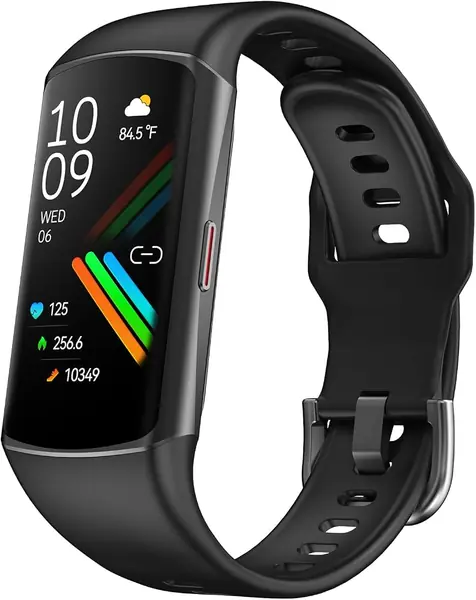
The MorePro Air6 is the budget fitness tracker that doesn't feel like a punishment. You get a 1.52-inch LCD, 24/7 heart rate, blood pressure and SpO2 readings, sleep tracking, 120+ sport modes, and IP68 water resistance in a 1.12-ounce package. The band is soft, the screen is easy to read, and the whole thing looks more polished than its place in the lineup suggests.

We recommend it for the man who wants the basics without a subscription or a big outlay. The step, heart-rate, sleep, and workout data are all in one app, and the two-year warranty is a genuine comfort at this end of the market. Battery life is one of the pleasant surprises; a week between charges is realistic for lighter use, and the magnetic charger is simple to live with.

The Air6 is a daily tracker, not a training watch. The data is organized clearly, notifications come through, and the band stays comfortable through a workday. Treat the blood-pressure number as a trend, not a diagnosis. For a man who wants daily activity, sleep, and heart-rate trends, the Air6 covers the routine without fuss.

Pros

  • 120+ sport modes
  • Comfortable 1.12-ounce build
  • Two-year warranty

Cons

  • No built-in GPS
  • LCD lacks AMOLED clarity
Our verdict

We recommend the MorePro Air6 for a low-cost daily tracker with broad health features, a comfortable fit, and a two-year warranty.

Check Latest Price
6

Bestinn H32 Pro Best for Low-Cost Health Tracking

83 /100
TKZ Score Excellent

Key details

Battery Life
Up to 7 days
Display
1.58 inches
Water Resistance
IP68
Sport Modes
120+
View on Amazon

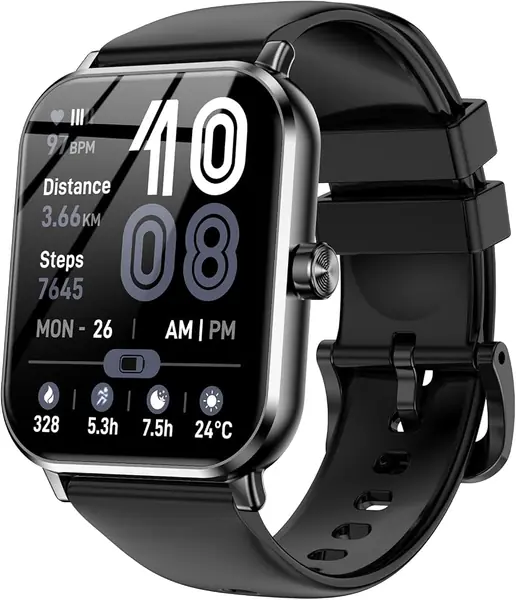
The Bestinn H32 Pro makes its case with a 1.58-inch display and a feature list that reads like a watch twice its price. It tracks 24/7 heart rate, blood pressure, blood oxygen, sleep, steps, and calories, and it offers more than 120 exercise modes in a 27-gram package. The graphite-black finish and metal-and-silicone band give it a more grown-up look than the usual budget tracker.

We like it for a man who wants a readable screen and a lot of health data without paying for a flagship. The display is bright, the band is adjustable, and the three-year warranty is unusually long for this category. Setup is straightforward, and the watch works with both Android and iPhone.

Sleep and heart-rate tracking are the more dependable parts of the package, and the 120+ modes are useful if you like to log walks, rides, and gym sessions. The app organizes the trends clearly, though it is not a coaching platform. The 1.58-inch screen is big enough to read a message or a heart-rate number without squinting.

This is an also-consider rather than a default because it lacks the polish of the Garmin picks. But if you want a low-cost tracker with a big display, a long warranty, and no subscription, the H32 Pro earns its place. We recommend it for everyday health awareness, not for training plans that depend on route maps.

Pros

  • 1.58-inch display
  • 120+ sport modes and broad health tracking
  • Three-year warranty

Cons

  • Blood-pressure readings aren't medical-grade
Our verdict

We recommend the Bestinn H32 Pro for a low-cost, big-screen tracker for everyday health awareness, not medical-grade blood-pressure checks.

Check Latest Price
7

UniJethro Smart Ring Best for Ring-Based Sleep Tracking

80 /100
TKZ Score Excellent

Key details

Battery Life
5-7 days
Water Resistance
IP68
Metrics
Heart rate, SpO2, BP, temperature, HRV
Materials
Resin and stainless steel
View on Amazon

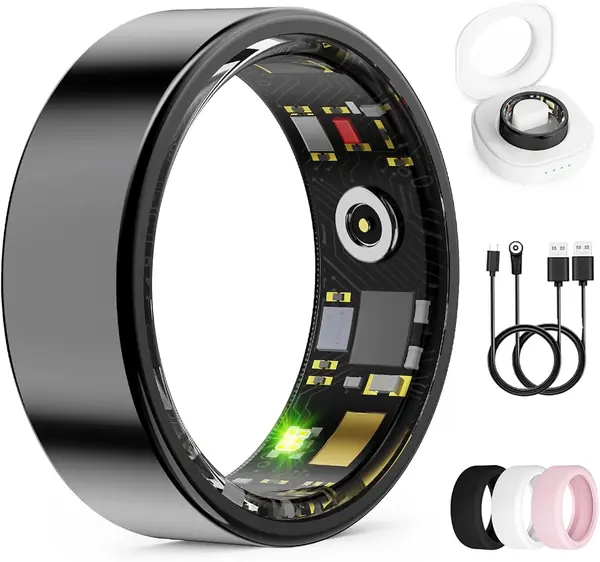
The UniJethro ring is for the man who wants health data without another screen on his wrist. It slips on like jewelry, disappears under a cuff, and tracks heart rate, blood oxygen, blood pressure, temperature, HRV, stress, and sleep. The resin-and-stainless-steel body looks more expensive than the price tier suggests, and the IP68 rating means you can wear it through sweaty workouts and hand-washing.

Sleep tracking is the reason to consider it. The ring records light, deep, and awake time, and the app presents the night in a way that is easy to scan in the morning. Battery life is rated at five to seven days, with a charging case that makes topping up simple. We also like that there is no app fee, which is rare for a screenless health device.

We recommend the UniJethro as a secondary tracker for someone who likes the ring format and mainly wants sleep and recovery trends. It is not a training tool: there is no screen, no GPS, and the app is the entire interface. The form factor is the point, and the low commitment makes it an easy experiment. If you want a watch that also handles training and navigation, a Garmin or Fitbit model is the safer choice.

Pros

  • Comfortable ring form
  • Tracks HR, SpO2, BP, temperature, HRV, and sleep
  • Five to seven days of battery

Cons

  • App connectivity can drop
  • Readings can be inconsistent
Our verdict

We recommend the UniJethro Smart Ring for sleep and recovery tracking in a screen-free form, with the caveat that the app can be fussy.

Check Latest Price
8

Jacoosa TG38 Ultra-Budget Smartwatch

79 /100
TKZ Score Very Good

Key details

Battery Life
30 days
Display
1.83-inch HD
Water Resistance
IP68
Sport Modes
140+
View on Amazon

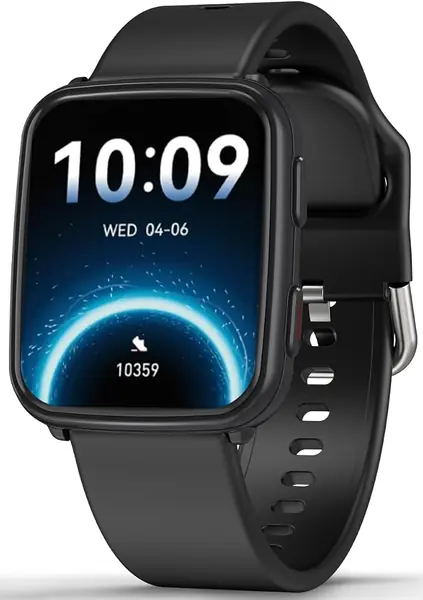
The Jacoosa TG38 is the least expensive way into a big-screen smartwatch here. The 1.83-inch HD display is bright and easy to read, the 140+ sport modes cover everything from walking to basketball, and Bluetooth calling works without a phone in your hand. At 10 grams, it is light enough to wear all day, and the 22mm band is easy to swap.

We like it for a man who wants a watch for notifications, step counts, heart rate, and sleep without spending much. Setup is quick, the interface is simple, and the IP68 rating handles sweat and splashes. The screen is the standout: it is large enough to read a message or a heart-rate number at a glance.

The 30-day battery claim is a best-case figure; heavy Bluetooth use and bright-screen time will bring that down, so expect a more ordinary charging rhythm. The big display makes the basics easier to use, and the light build means it stays comfortable through a workday. For everyday wear, the trade-off is reasonable.

We recommend the TG38 as a first smartwatch or a backup for someone who wants the look and the calls more than the coaching. It does the daily basics, and the big screen is genuinely pleasant. If health tracking is the main event, spend a little more for the Fitbit Air or MorePro Air6; if you want a watch that does a bit of everything for very little, the TG38 is the one.

Pros

  • Large 1.83-inch display
  • 140+ modes and Bluetooth calls
  • Light 10-gram build

Cons

  • Health readings are basic
Our verdict

We recommend the Jacoosa TG38 as an ultra-budget smartwatch for calls, steps, and basic health tracking, not for serious training.

Check Latest Price

How We Tested 12 Health Trackers Over Six Months

We started with research — hundreds of customer reviews and spec sheets, narrowed down to 12 trackers across the three formats people actually wear: full smartwatches, screenless bands, and a smart ring. We deliberately mixed cheap, mid-priced, and premium models, since the value math on these is so different. Each had to be something we'd wear to a lifting session and to bed the same night.

Every tracker got at least two weeks of full-time wear — weekday runs, weight sessions, weekend hikes, showers, and every night in bed. We logged the charge level each morning and counted the days between charges, first with the screen as bright as we'd really use it, then with GPS running. Battery life turned out to decide more than convenience: a band that dies at midnight takes your sleep data and your alarm with it. Comfort got judged at 3 a.m. and at a keyboard midafternoon; appearance meant wearing each one under a dress-shirt cuff, not just with gym shorts.

For accuracy, we ran the same 3-mile loop with a chest strap and compared traces, counted reps by hand on the gym floor, and tallied 500 steps on a track. Overnight, we noted whether each device caught the 2 a.m. wake-ups and checked its morning readiness score against how wrecked we actually felt. We set each one up without opening the manual, paired it to an iPhone and an Android phone, then walked out of range to see whether data caught up later or vanished.

Quality showed up as scratched bezels after a scramble, straps that stretched by week six, and one watch that fogged in the shower despite its waterproof rating. For the subscription-based options, we totaled a year of fees against the hardware price. And the wrist blood pressure readings some listings lead with never matched a cuff, so we scored them as a novelty.

How to Choose a Health Tracker for Men

Pick the Form Factor First

A watch gives you a screen, notifications, and usually the best training tools; a screenless band disappears under a cuff and is easier to sleep in; a ring is the least noticeable of all. We keep the Garmin Vivoactive 5 for all-day wear, the Fitbit Air for sleep, and the UniJethro ring for a no-wrist-screen option. The trap is assuming more screen means better health data. For overnight tracking, a smaller, lighter device you forget about usually wins.

Focus on the Metrics You'll Use

Heart rate, sleep, and step trends are the core. SpO2 and HRV add context, but they are not better than a consistent baseline. Blood-pressure numbers on a wrist tracker are for trends, not diagnosis; if you need a real reading, use a validated cuff. We prioritize a device that records sleep stages and resting heart rate reliably over one that advertises a dozen extra sensors. Check that the app shows trends over weeks, not just a single score.

Wear It Before You Trust It

Fit changes the data. A loose band lets the optical sensor shift, and a tight one is uncomfortable by morning. The 42mm Vivoactive 5 and 45mm Instinct 3 sit very differently on the wrist, and the 5.07-gram Fitbit Air is a different category of noticeable. Measure your wrist, check the band range (the Air fits 130 to 210 mm), and wear the tracker for a full night before you decide. If it leaves a mark, size up or change bands.

Match Battery and GPS to Your Routine

Battery life is a routine decision, not a contest. An 11-day watch like the Vivoactive 5 or an 18-day Instinct 3 means charging is a background task; a five-to-seven-day ring or band needs a more regular slot. Built-in GPS matters if you run or hike without your phone; phone-tethered GPS is fine for neighborhood walks. The trap is buying a 30-day claim without asking what turns it into a three-day reality. Heavy GPS, bright screens, and constant notifications all shorten runtime.

Check the App, Syncing, and Ongoing Cost

The app is half the product. A tracker that drops Bluetooth or times out during sync makes every other feature harder to use. Check that it works with your phone's operating system, and look for a clear return window in case pairing is unreliable. Also separate the purchase price from the ongoing cost: some screenless trackers bundle a membership, and the service is the real commitment. We factor in both before recommending a device for daily health tracking.

Frequently Asked Questions

Final Verdict

The Garmin Vivoactive 5 is the health tracker we recommend to most men because it does the unglamorous work: it tracks heart rate, sleep, HRV, and SpO2, adds built-in GPS, and runs for up to 11 days. It is the one here that feels equally at home on a run, at a desk, and in bed.

If you want a screenless recovery coach, choose WHOOP 5.0; if you want the lightest possible sleep band, choose the Fitbit Air. The Instinct 3 is the better answer only when rugged navigation matters more than everyday polish.