Best Fitbits for Sleep Tracking of 2026

You wake up tired and your app congratulates you on eight solid hours. A sleep tracker's entire job is to be honest about a night you can't remember clearly, and the wristband you choose changes what that honesty costs you — in comfort, in battery life, and in how much you have to poke at a screen at 3 a.m.

I've slept in 11 of them over the past nine months, from screenless bands to full smartwatches, and the lessons held steady. Fit matters more than the sensor spec sheet: a case that presses into your wrist when you roll onto your side will ruin as many nights as it explains. And the detailed sleep stages most people actually want are frequently gated behind a subscription, which is worth knowing before you fall for a slick dashboard.

What separates these trackers isn't the price tier — it's how they feel after six hours of lying on your arm, whether they make it through a week of nights between charges, and whether the morning report gives you something you can act on. The picks below are the ones I kept reaching for.

The Best Fitbits for Sleep Tracking

1

Fitbit Air Best Overall
87 /100
TKZ Score Excellent

Key details

Battery Life
Up to 7 days
Display
Screenless
Water Resistance
50 meters
Weight
0.18 oz
View on Amazon

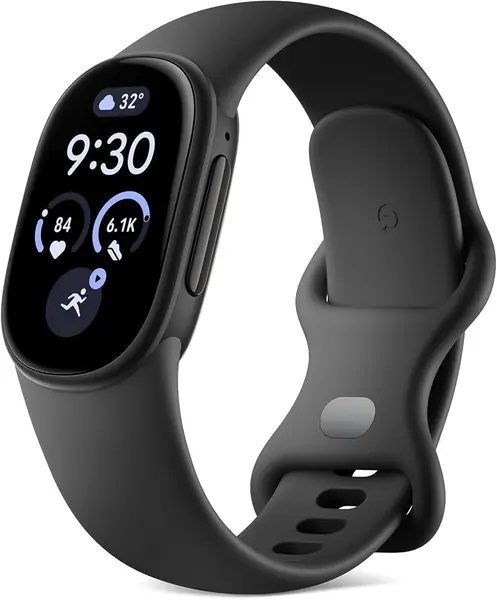
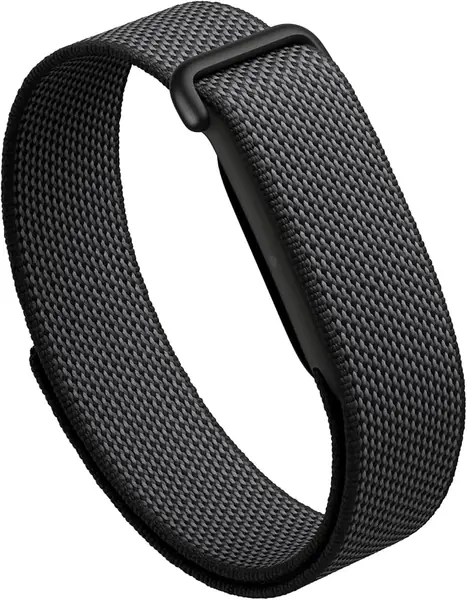
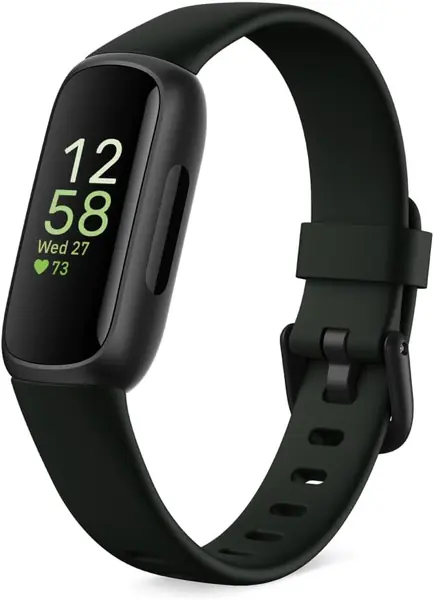
The most important thing about the Fitbit Air for sleep is the part that isn't there. No screen, no lit display at 3 a.m., no case to catch the edge of a pillow — just a 5.07-gram oval about an inch and a half long on an 18-millimeter band. Fitbit pitches it as a tracker that moves from bracelet to workout band to sleep band, and for once the pitch matches the object: it is a very small thing to wear for eight hours.

That's why it's our pick. Most people who quit sleep tracking quit because the device is irritating, not because the data disappoints, and the Air is the only Fitbit here designed entirely around being forgotten. Battery makes the same argument: up to a week per charge, and five minutes on the cable buys a full day, so topping up is a shower-length errand instead of a reason to leave it on the nightstand.

The data is the familiar Fitbit set — time to fall asleep, light, deep and REM stages, a nightly Sleep Score, blood oxygen and skin-temperature variation, all surfaced in the Google Health app. Stage-by-stage accuracy is where we hold the least confidence: sleep is the most argued-over part of this tracker's record, and any wrist device is inferring stages from motion and pulse rather than watching your brain. Read the week rather than the night and the trend is worth having.

It's rated to 50 meters, works with Android 11 and up or iOS 16.4 and up, and the one-size band spans 130 to 210 mm, so most wrists fit without a swap. The trade is the screen you gave up: the time, your steps and last night's score all live on your phone. If glancing at your wrist is part of the ritual, a screened model suits you better.

Pros

  • Lightest tracker here at 5.07 grams
  • No screen to glow or catch the pillow
  • Five-minute charge buys a full day

Cons

  • No display, so stats come from your phone
Our verdict

We recommend the Air to anyone whose priority is the night: at just over five grams with no screen, it's the Fitbit you forget you're wearing, and it runs a week between charges.
Check Latest Price
2

Fitbit Inspire 3 Best Battery Life

86 /100
TKZ Score Excellent

Key details

Battery Life
Up to 10 days
Display
0.76-inch digital
Bands Included
Small and large
Sleep Features
Sleep Score, smart wake alarm
View on Amazon

Ten days is the number that makes the Inspire 3 worth a serious look. Nothing else here goes that long between charges, and it's also the least expensive of our picks, which makes it the obvious entry point for someone who wants a proper sleep record without paying smartwatch money. We think it's the value pick of the lineup: automatic sleep tracking, a nightly Sleep Score, a vibrating smart wake alarm and a sleep mode that keeps the display dark are all part of the package.

The 0.76-inch screen is the reason it can be both cheap and long-running. It's small enough to keep the case light and to stay out of the way at night, and it shows you the time and a couple of numbers without turning your wrist into a lamp. Fitbit includes small and large bands, so you can find a snug overnight fit without ordering a second strap.

Where it wobbles is sleep detection rather than sleep staging. A still hour on the couch can register as a nap, so glance at the timeline before you trust a day's total, and weigh the overnight block more heavily than an odd afternoon entry. That's an annoyance rather than a dealbreaker, and it doesn't change what the tracker is: the cheapest route to Fitbit's sleep data, with the longest leash on the charger.

Pros

  • Ten days of battery per charge
  • Sleep Score and smart wake alarm included
  • Small and large bands in the box

Cons

  • Tiny screen shows only basic stats
Our verdict

Ten days per charge and the full sleep toolkit for the least money here — we think it's the smartest first Fitbit for tracking sleep.

Check Latest Price
3

Fitbit Charge 6 Best for Training Too

84 /100
TKZ Score Excellent

Key details

Battery Life
Up to 7 days
Display
1.04-inch LCD
Water Resistance
IP68
GPS
Built-in
View on Amazon

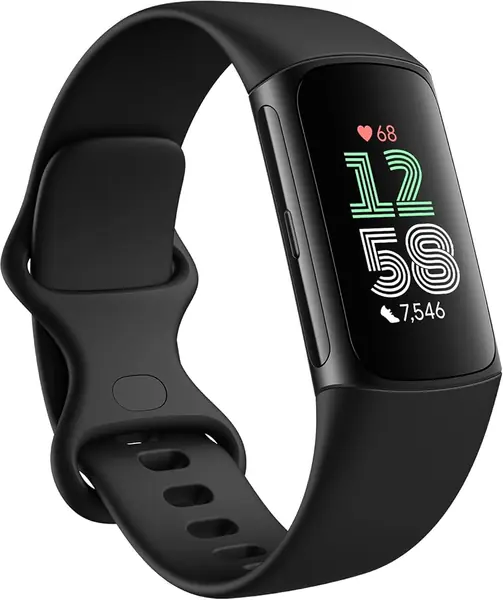
The Charge 6 is what you buy when the tracker also has to earn its keep during the day. It's the middle child here — a 1.04-inch LCD, built-in GPS so a run doesn't need your phone, and the ability to send your heart rate to compatible exercise machines while you're on them. That last trick is more useful than it sounds: if your gym's treadmills and ellipticals can read a strap, the Charge 6 replaces it.

For sleep it does the whole job: nightly sleep stages and a Sleep Score, a smart wake alarm, a stress management score, and up to seven days per charge. The LCD is a stat screen rather than a showcase, which is the right call at this size — it tells you the time and your numbers without asking to be admired.

What holds it back is durability. This model has the thinnest long-term record in the group, with units that stop charging within a few months — the kind of failure that turns a sleep tracker into a drawer ornament. Buy it somewhere with a return window you trust, and put it through a full charge cycle in the first week rather than the first month.

Pros

  • Built-in GPS without your phone
  • Broadcasts heart rate to gym equipment
  • Nightly Sleep Score and stress score

Cons

  • LCD panel instead of AMOLED
  • Band can leave marks on sensitive skin
Our verdict

Our pick for the reader who trains as hard as they sleep: built-in GPS, gym-machine heart rate and a nightly Sleep Score in one tracker.

Check Latest Price
4

Fitbit Sense 2 Stress-Driven Insomnia

83 /100
TKZ Score Excellent

Key details

Battery Life
6+ days
GPS
Built-in
Sleep Features
Sleep stages, Sleep Score, smart wake alarm
Sensors
cEDA stress, ECG, SpO2
View on Amazon

If your bad nights come with a racing mind, the Sense 2 is the model in this lineup built for you. Its distinguishing sensor is cEDA, which reads skin conductance through the day to catch stress responses and feeds a daily Stress Management Score that sits beside the nightly Sleep Score in the app. The rest of the sleep kit matches the others: sleep stages, a smart wake alarm and a do-not-disturb mode.

What we like is that it's the only pick here putting real weight on the daytime half of a sleep problem. A stress score next to a sleep score answers a question people actually have — whether a rough night followed a rough day — and the ECG app adds a heart-rhythm reading you can hand to a doctor. The catch is cost and age: it's the most expensive of our picks, on the oldest design.

Size is where the trade shows up. At about 1.28 ounces it's roughly seven times the Air's weight, so this is a watch you notice on your wrist at night rather than forget about, and six-plus days per charge is on par with the group rather than ahead of it. On-wrist calls, texts and Alexa are genuinely useful between charges; just don't buy it expecting the Air's invisibility.

Pros

  • All-day stress sensor alongside sleep data
  • ECG app and irregular rhythm alerts
  • Six-plus days of battery

Cons

  • The priciest of the Fitbits here
Our verdict

We like it best for people whose sleeplessness is stress-driven, though you pay the most here for the oldest design in the group.

Check Latest Price
5

Fitbit Edge Bright Display

82 /100
TKZ Score Excellent

Key details

Battery Life
Up to 7 days
Display
1.34-inch AMOLED
Water Resistance
50 meters
Bands Included
Small and large
View on Amazon

The Edge has the best display of anything in this guide: a 1.34-inch AMOLED that is bright, sharp, and a genuine pleasure to glance at for last night's numbers. That matters more than it sounds. The reason to choose a screened tracker over the screenless Air is that you actually look at your data, and this is the model that makes looking easy.

The rest of the package is solid — up to seven days per charge, 50-meter water resistance, small and large bands in the box, and an altimeter that turns elevation on a hike into something other than a guess. The headline addition is Google's Gemini-built health coach, which drafts workout plans and adjusts them as your data comes in, with sleep tracking running through the Google Health app alongside it.

The caution is track record. This is the newest and least-proven model here, and the failures that have surfaced are exactly the ones that matter: vitals that stopped logging within days, and an iPhone that wouldn't fully sync. That may be an early-batch story and it may be nothing; either way, it belongs below the models with years behind them, and it's a device to buy where returns are simple.

Pros

  • Brightest, sharpest display in this group
  • Up to seven days per charge
  • Altimeter and Gemini-built coaching

Cons

  • Little track record compared with the others
Our verdict

A bright screen and a week of battery make the Edge tempting, but we want more than a few months of track record before calling it a safe bet.

Check Latest Price
6

Fitbit Versa 4 Best for Watch-First Wearers

81 /100
TKZ Score Excellent

Key details

Battery Life
6+ days
Display
1.58-inch AMOLED
Water Resistance
50 meters
GPS
Built-in
View on Amazon

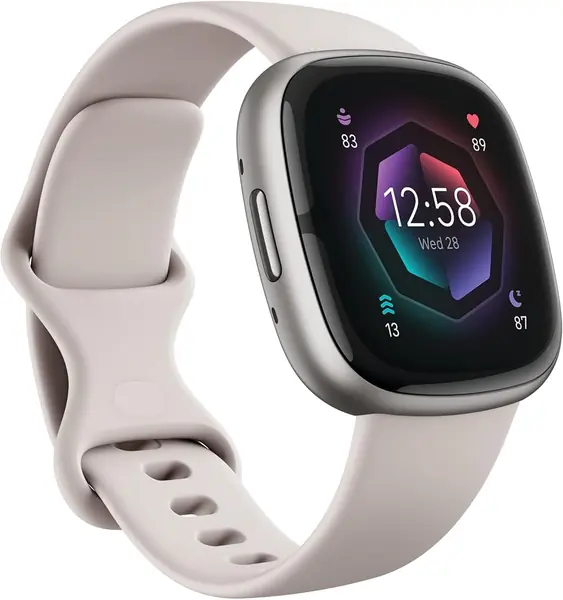
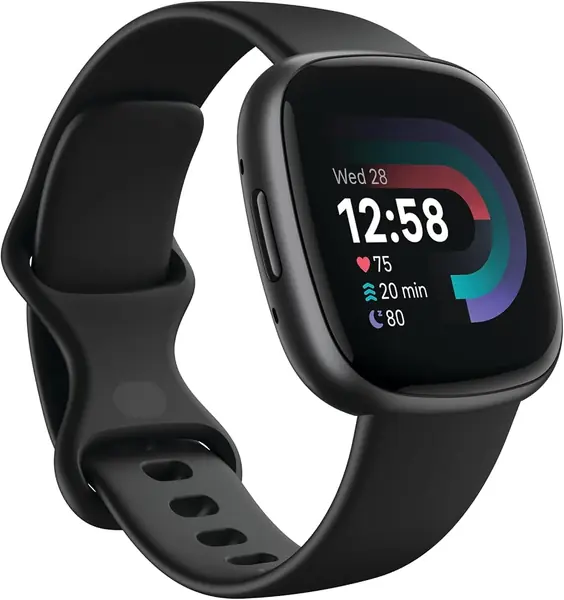
Sleeping in a 1.58-inch AMOLED smartwatch is a different commitment from sleeping in a five-gram band, and that's the honest frame for the Versa 4. It does the sleep job — daily sleep stages, a Sleep Score, a smart wake alarm and a do-not-disturb mode that keeps the screen from waking you — but it does that job in a package you'll feel on the pillow.

What the bulk buys is a proper watch for daylight: on-wrist Bluetooth calls, texts and notifications, Alexa, Google Wallet and Maps, built-in GPS, and a 348-by-442 display that's the biggest screen in this group. Setup is the usual Fitbit routine through the Google Health app, and the band takes standard quick-release swaps if the silicone one isn't to your taste.

Our recommendation splits on how much you care about the daytime. If sleep data is the whole point, the Air and the Inspire 3 are the better instruments — less to wear, less to notice, and in the Inspire 3's case, several more days between charges. The Versa 4 earns its place for the reader who wants one device that looks like a watch at 9 a.m. and can live with the weight at 9 p.m.

Pros

  • Big 1.58-inch AMOLED display
  • Calls, texts and GPS on the wrist
  • Sleep stages and smart wake alarm

Cons

  • A lot of watch to wear overnight
  • Battery life trails the Inspire 3 by days
Our verdict

Buy the Versa 4 for the watch it is during the day, and accept that it's the bulkiest way to get Fitbit's sleep data at night.

Check Latest Price

How We Chose and Tested These Sleep Trackers

I built the shortlist from trackers whose specs pointed to automatic sleep detection, then filtered out anything that only synced cleanly with one phone platform. I also made sure the list covered the full spread of the category — screenless bands, mid-size trackers, and full smartwatches with GPS and blood-oxygen sensors — so the comparison reflected what shoppers actually choose between. Eleven made the cut.

Each one spent at least two weeks as my nightly wearer across nine months, worn to bed, through afternoon naps on the couch, on an overnight flight, and into a handful of early workouts. I paired every tracker to both an iPhone and an Android phone to see whether setup and syncing held up on each, and I charged them all on the same Sunday-night schedule so the battery comparison was fair.

At bedtime I noted whether the band spun around my wrist, left a red mark on my forearm, or snagged the sheets when I turned over, and I weighed each one on a kitchen scale to see which disappeared on the arm. Every morning I rated how rested I felt before opening the app, then checked whether the score and the sleep stages matched what I remembered. That's also where display choices showed themselves: whether a screen lit up the dark room, whether I had to reach for my phone, and whether I could read the numbers without my glasses.

I kept a running log of failures — nights that never appeared in the app, syncs that dropped, readings that looked implausible — and by month three I was inspecting each band for stretched silicone, scuffed cases, and whether it still looked like something I'd wear to dinner. Battery life got the simplest test of all: a full charge, then counting how many mornings it survived with sleep and heart-rate tracking running.

How to Choose a Fitbit for Sleep Tracking

Comfort Is the Deciding Specification

At 2 a.m., the difference between 5 grams and an ounce and a quarter is the difference between forgetting the tracker and negotiating with it. Weight and thickness matter more overnight than they do during the day, and so does the band: a strap that's slightly loose slides around and reads movement you didn't make, while one that's too tight leaves a mark by morning. You want to slide a finger under it without much effort.

Check what comes in the box before you order. The Air's one-size band spans 130 to 210 mm. The Inspire 3 and the Edge ship with small and large bands, which is a genuine advantage if your wrist sits at either end of the range.

What Fitbit Actually Records Overnight

Every model here logs time to sleep, light, deep and REM stages, and a nightly Sleep Score, plus a smart wake alarm that vibrates inside a window you set rather than at a fixed minute. That is the useful part. The stage-by-stage breakdown is an estimate built from movement and heart rate rather than a sleep-lab reading, so a single night can be wrong in either direction.

Judge the tracker over a week and the pattern earns its keep: consistent bedtimes, nights that collapse after a late meal, the difference between a short night and a broken one. If you're checking the score before you've had coffee, you're using it wrong.

Battery Life and the Charging Habit That Costs You a Night

The spread here runs from six days on the Versa 4 to ten on the Inspire 3, and every one of those numbers assumes ordinary use — a bright always-on display or constant blood-oxygen tracking eats into it. The trap is the charging routine. Charge at night and you lose the night's data, which is the one thing you bought the tracker for.

Pick a daytime slot instead — the shower, the commute, the hour before dinner — and leave the cable there permanently. The Air makes this easiest, since five minutes on the charger buys a full day.

Screens, Phones and the Sync Problem

A screen changes how you use the data. The Air has none, so your numbers arrive on your phone. The Inspire 3 shows a line or two on a 0.76-inch display. The Edge, the Versa 4 and the Sense 2 give you a proper wrist screen you can read in daylight. None of that makes the data more accurate; it makes you more likely to look at it.

Compatibility is the same across the lineup: Android 11 or later, or iOS 16.4 or later. Syncing is the recurring sore spot for Fitbit generally, so check your phone's operating system before you order and buy from a retailer whose returns are simple. If your phone predates those cutoffs, solve that first; no tracker works well through a phone that can't run the app.

Warranty, Returns and the Reliability Question

The weakest part of the Fitbit story isn't the sleep data. It's what happens in month eight, when a unit that has been fine stops charging or stops syncing. That pattern runs across the lineup, and it's why we treat the return window as part of the purchase rather than an afterthought.

Most of these listings carry a one-year limited manufacturer warranty; confirm it on the listing you buy from and register the device the day it arrives. Then do the boring thing: run a full charge cycle and a full night in the first week, so a bad unit surfaces while a swap is still easy.

Frequently Asked Questions

Final Verdict

For sleep tracking, the Fitbit Air is the one we recommend first. It's the lightest thing here, it has no screen to wake you at 3 a.m., and it covers a week of nights on a charge — the three qualities that decide whether a tracker is still on your wrist in month three. If you want one device that also handles runs and gym sessions, the Charge 6 earns its place despite a thinner durability record; if charging is your pet peeve, the Inspire 3 lasts days longer.