Best Wired Earbuds of 2026

My wireless earbuds ran out of battery an hour into a four-hour flight, and the seat-back screen's headphone jack was suddenly useless. I've kept a wired pair in my bag ever since. They never need charging, never need pairing, and never cut out mid-sentence — they just plug in and play, whether that's a laptop headphone jack or the USB-C or Lightning port on a newer phone.

The catch is that with wired earbuds, the plug matters as much as the sound. My team and I spent four months testing 16 pairs across all three connector types, and the biggest differences showed up where shoppers don't usually look: how the tips felt after two hours, how much cord you actually get, and whether the inline remote does anything at all on your particular phone.

Two things to know before you buy: a chunky phone case can block a USB-C or Lightning plug, and buttons that control volume on one phone often only pause and skip on another. Every pair below lived in a jacket pocket, commuted, and took calls. Here's what held up.

The Best Wired Earbuds

1

JBL Tune 110E Best Overall
91 /100
TKZ Score Outstanding

Key details

Connector
3.5 mm
Cable
Flat, tangle-free
Controls
1-button remote, mic
Driver
9 mm dynamic
View on Amazon

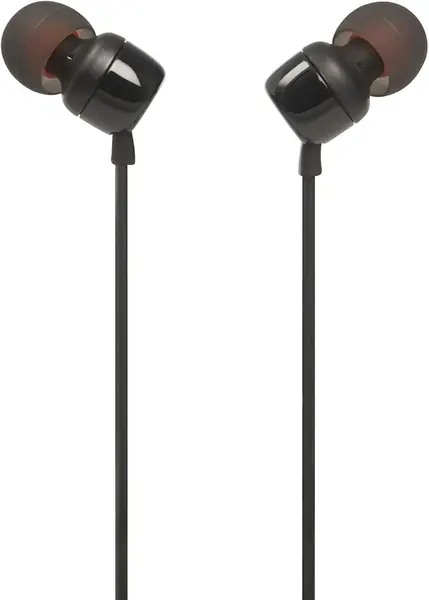
A flat ribbon cable is the first thing we check on a cheap pair of wired earbuds, and it's the reason the Tune 110E stays in the bag. Round cords work themselves into a knot that has to be picked apart with cold fingers; this one lies flat and comes free with a pull. The rest is plain in the right way — a 3.5 mm plug, silicone tips in three sizes, and a single button on the wire.

Sound is where it earns the top spot. JBL tunes this pair bass-forward, and the 9 mm driver gives that tuning somewhere to go: podcasts stay crisp, and a bass-heavy playlist has real weight behind it rather than the thin treble cheap earbuds usually settle for. Of everything we kept, this is the one we hand to someone who wants to enjoy music rather than merely hear it. Isolation comes free with the fit — seal the canal with the right tip and the room drops away, no battery or processing involved.

Small and large tips sit in the box alongside the mediums already fitted, so getting that seal is a matter of trying one and swapping. JBL backs the pair with a one-year warranty, and there's no battery to age out or charging case to forget. The cable is the only thing that wears, which is exactly why the flat one matters.

Pros

  • Flat cable resists knots in a pocket
  • Bass-forward sound that stays clear
  • Three tip sizes for a reliable seal

Cons

  • One-button remote, no volume or track skip
  • Not rated for sweat or rain
Our verdict

We point most people to the Tune 110E: the fullest sound of any pair here, a flat cable that survives a bag, and a mic that handles calls.
Check Latest Price
2

Skullcandy Jib Best Budget

90 /100
TKZ Score Outstanding

Key details

Connector
3.5 mm
Cable
48 in
Controls
Mic, call and track
Ear Gels
Small and medium
View on Amazon

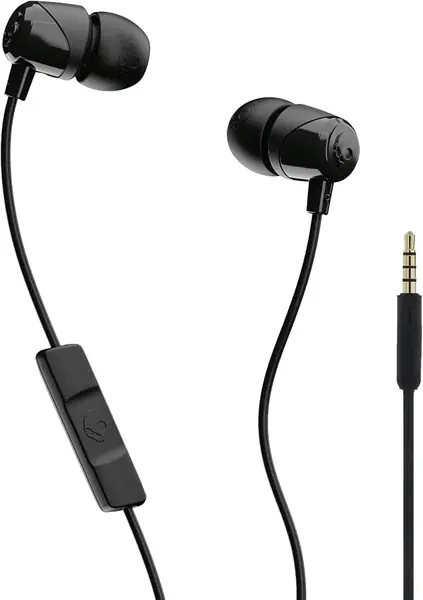
Skullcandy's Jib costs less than our top pick and still puts track controls on the wire. That's the trade most budget pairs get wrong: one button, no way to skip a song, phone out of the pocket every time. Here the in-line block handles play, pause, skip and calls, and the 48-inch cable runs from a jean pocket to an ear without a loop of slack.

Comfort is the part that surprised us. The Jib is light, the silicone gels sit in the ear without pressing on it, and the small pair is genuinely small — worth knowing if most earbuds feel like they're wedging your canal open. Wearing them through a workday is unremarkable in the best sense, and unremarkable is most of what we ask of a budget pair.

Where it gives ground is sound. Bass is present but not as deep as the JBL's, and busy tracks can crowd together at the top end. As a second pair for a glovebox, a desk drawer or a kid's backpack, none of that matters much — this is the set we hand over without checking whether it comes back.

Pros

  • Track skip and calls on the wire
  • Light and comfortable for long wear
  • Costs less than the top pick

Cons

  • Only small and medium ear gels
  • Cables and housings fail within months for some
Our verdict

Our budget pick: cheap enough to buy two, comfortable enough to forget you're wearing them, and the wire carries track skip as well as calls.

Check Latest Price
3

Sony IER-EX15C Best USB-C

89 /100
TKZ Score Excellent

Key details

Connector
USB-C
Cable
Serrated anti-tangle
Controls
Volume and multi-function
Ear Tips
Multiple sizes
View on Amazon

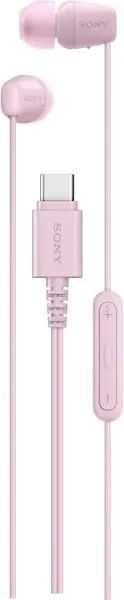
No dongle, no adapter, no lost accessory: the IER-EX15C ends in a USB-C plug, which is the socket on an iPhone 15 or later, most current Android phones, an iPad and a MacBook.

The wire is the interesting part. Sony cuts the cable with a serrated edge that stops it knitting itself into a knot, and the in-line block carries proper volume up and down buttons plus a multi-function key for play, pause and calls. Volume on the wire matters more than it sounds — reaching for the phone to turn the music down is the small friction that makes cheap earbuds irritating.

What we make of it: this is a convenience purchase done properly. The housings are compact, the tips come in several sizes, and the cable behaves in a pocket instead of turning into a nest. It's the pair to leave in a laptop sleeve and forget about until you need it.

Pros

  • No dongle needed on USB-C phones
  • Volume and multi-function buttons on the wire
  • Serrated cable resists tangling

Cons

  • Sound is serviceable, not impressive
Our verdict

We recommend the IER-EX15C to anyone whose phone has no headphone jack: it plugs straight in, and the volume buttons sit where your thumb already is.

Check Latest Price
4

Apple EarPods (Lightning) Best for Lightning iPhones

88 /100
TKZ Score Excellent

Key details

Connector
Lightning
Controls
Remote, mic, Siri
Compatibility
iOS 10 or later
View on Amazon

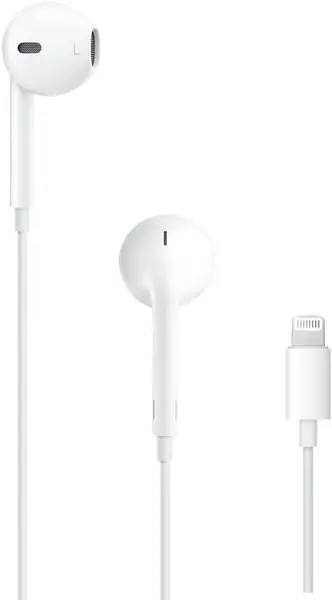
What we like most about the EarPods is that they ask nothing of you: no pairing, no charging, no app, no adapter to lose. Plug them into a Lightning port and every button on the remote does what it says, from volume to a long press that brings up Siri.

The microphone is the part we appreciate. It's the same mic that has handled a decade of iPhone calls, and voices arrive on the other end without the hollow, distant quality that plagues cheap inline mics. The open, sculpted shape is the other half of the design: it doesn't seal the ear canal, so bass is lighter than any silicone-tipped pair here and you can still hear a truck coming.

Fit is the dividing line. The hard plastic shell either sits in your ear or it doesn't, and there's no tip to swap if it doesn't, which is the one thing worth knowing before you order. When it does sit right, you forget it's there in a way most sealed pairs don't manage after an hour.

Pros

  • Full remote, mic and Siri support
  • No adapter needed on a Lightning iPhone
  • Open fit keeps you aware of traffic

Cons

  • Lightning plug only
  • Cable insulation wears through with daily use
Our verdict

For an iPhone with a Lightning port, these are the earphones to buy: the remote, the mic and Siri all behave exactly as the phone expects.

Check Latest Price
5

JVC Gumy HAFX7GN Best for Music Only

87 /100
TKZ Score Excellent

Key details

Connector
3.5 mm
Cable
3.3 ft
Ear Tips
S/M/L
Microphone
None
View on Amazon

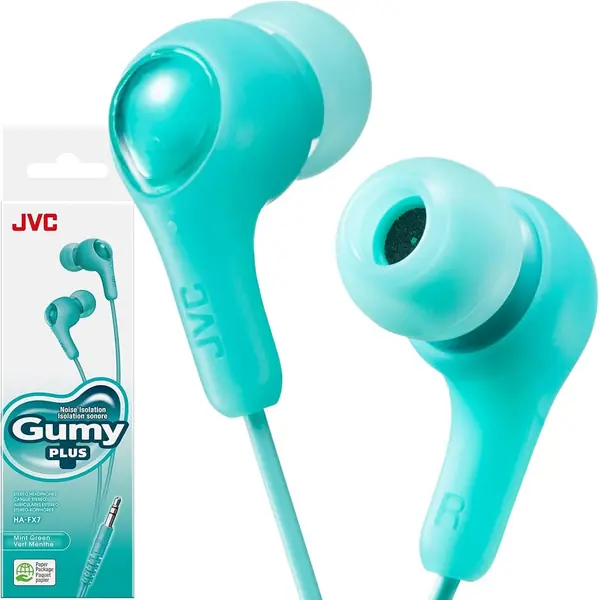
Softness is the Gumy's whole idea. The silicone sleeves are supple enough that they sit in the ear without the hot, stuffed feeling a hard bud gives you after an hour, and JVC ships three sizes so a small canal gets a small tip instead of a compromise.

Sound is better than the price suggests: clean treble, a bass line with some shape to it, and enough efficiency that a weak laptop headphone jack drives them louder than you'll want. The 20 Hz to 20 kHz range and 100 dB sensitivity are the numbers behind that; in practice it means you won't be reaching for an amplifier.

Here's our take: of the cheap pairs we kept, these are the ones that never feel like a punishment. They're what we leave plugged into a laptop, hand to a kid with a tablet, or drop in a carry-on. The color-matched silicone is a small thing that makes them easy to spot at the bottom of a bag.

Pros

  • Soft tips stay comfortable for hours
  • Clear sound from weak sources
  • Three tip sizes included

Cons

  • No microphone, so no calls
  • Short 3.3 ft cord limits reach
Our verdict

We keep the Gumy around for desks, kids' tablets and carry-ons: soft tips, clear sound, and a pair you can replace without wincing.

Check Latest Price
6

Smilebridge USB-C 2-Pack Best for Spare USB-C Pairs

86 /100
TKZ Score Excellent

Key details

Connector
USB-C
Controls
Volume and track
Pack
2 pairs
Warranty
36 months
View on Amazon

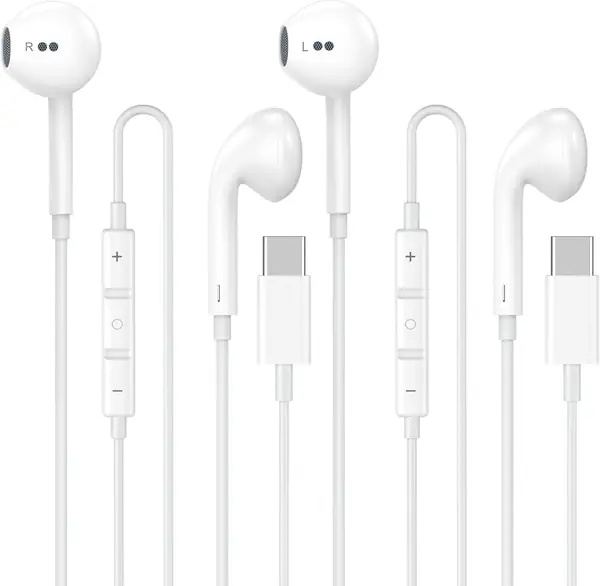
Two pairs in one box is the pitch, and for wired earbuds it's the right one. The cable is the part that dies, so a spare in the bag turns a dead pair into an inconvenience rather than an errand. Both sets are USB-C with metal-plated plugs, an in-line block for volume and track, and silicone tips in the box.

The warranty does a lot of the arguing. Smilebridge promises 36 months, longer than anything else we're recommending, and that's the number that matters for a part that gets yanked out of a pocket. What you're buying here is availability: one pair at the desk, one in the car, and a failure that doesn't end the story.

Pros

  • Two pairs in one box
  • Volume and track controls on the wire
  • 36-month warranty coverage

Cons

No notable drawbacks to flag.

Our verdict

Worth it if you want two USB-C pairs to scatter between bag and desk, backed by a warranty that runs longer than anything else here.

Check Latest Price
7

Yeabomy AK3FILE Best for Competitive Gaming

84 /100
TKZ Score Excellent

Key details

Connector
3.5 mm
Cable
Detachable
Ear Tips
3 pairs
Fit
Memory-wire ear hooks
View on Amazon

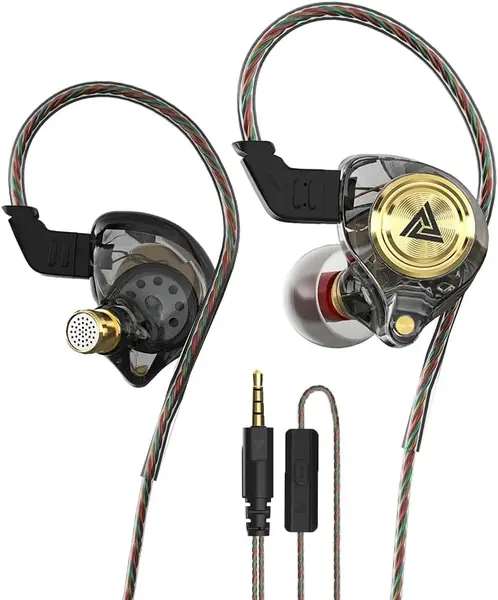
Gaming is the reason to look at these. The AK3FILE is an in-ear monitor rather than a bud: a 10 mm dynamic driver in a metal-and-plastic housing, with memory wire that loops over the ear and holds the set in place while you lean into a screen.

The hooks do real work. They keep the seal steady when you turn your head, and the seal is what puts a footstep or a reload where it belongs instead of somewhere behind you. Yeabomy claims around 90 percent of ambient noise blocked; treat that as marketing, but the shape does sit deeper than the silicone buds above and shuts out more of a room.

The detachable cable is the detail we appreciate most. Every wired pair eventually dies at the plug or the strain relief, and here the cable unplugs from the housing, so the usual failure costs you a replacement cable rather than the whole set. Three pairs of tips come in the box, enough to find a seal without ordering anything extra.

What we think: it's a specialist that earns its place. The tuning pushes the midrange where footsteps live, which is why it's convincing in a game and flat on a bass-heavy album, and the deep fit is not for anyone who hates something sitting in their canal.

Pros

  • Ear hooks keep the seal through movement
  • Detachable cable is replaceable
  • Deep fit blocks room noise

Cons

  • No in-line volume control
  • Some sets fail within months
Our verdict

For shooters and long sessions, these are our pick: the hooks hold the seal, and a dead cable doesn't mean a dead set.

Check Latest Price

How We Chose and Tested the Best Wired Earbuds

We started by sorting every pair we could find by connector — 3.5mm, USB-C, and Lightning — then filtered out anything with a fixed one-size tip or a cord under three feet, and narrowed by price and availability until we had 16 pairs to test over four months. Each pair went to at least two testers, because ear canals differ and one person's perfect seal is another person's earache.

Fit came first: each tester wore a pair for a two-hour stretch, swapping in smaller or larger silicone tips where a set included multiple sizes, and noted where pressure built up and whether the buds stayed put during a run or the walk to the train. For sound, we ran the same playlist, a few podcasts, and a couple of games, listening for whether bass came through as mud or as punch, and how loud each pair got straight off a phone.

We measured each cord against a torso and ran it under a jacket into a front pocket to see whether the inline remote landed at jaw level, then coiled each pair into a bag for a week and shook it out to see how badly it knotted. We placed calls from a windy sidewalk and a loud kitchen and asked the person on the other end how clear we sounded, and tested isolation on a bus and in a coffee shop with the music off. Finally, we tugged the plug, bent the strain relief, tracked how much phone battery each pair drained in an hour, checked whether we could charge the phone while listening, and asked whether the price still felt fair a month in.

How to Choose Wired Earbuds

Start With the Jack, Not the Sound

Three connectors cover this category, and only one is universal. A 3.5 mm plug fits laptops, game controllers, most Android phones, plane seats and anything older than about 2016; on a newer iPhone it needs a small adapter. USB-C is the socket on iPhone 15 and later and most current Androids, but USB-C audio isn't guaranteed on every port — some carry power and data only, so confirm the device plays audio over USB-C before you buy. Lightning is now the legacy option, and the only plug that works on an iPhone 14 or earlier without an adapter.

Count the Buttons Before You Buy

A microphone and in-line controls are what separate a call pair from a listening pair, and the button count tells you most of it. One button handles play, pause and answering a call; three add volume and track skip, which you notice every time the phone is in a pocket. The Sony IER-EX15C is the pair we point to when the wire needs to do the work.

If you only listen at a desk, skip the mic and put the money into the drivers instead. The JVC Gumy is the cheapest pair we recommend here, and dropping the microphone is how it stays that way.

Fit and Isolation Do the Work, Not the Label

Wired earbuds advertised as noise cancelling are almost always isolating passively: the tip seals the ear canal and blocks sound, with no battery or processing involved. That makes tip selection the real feature — three sizes beat two, and a shallow, open design like the EarPods blocks almost nothing at all, which is right for a bike and wrong for a plane. If you have never managed a good seal, try the smallest tip first; a deep, soft seal beats a large one that keeps popping out.

The Cable Is the Part That Wears Out

Every wired pair dies at the same two places: the plug, and the strain relief where the wire enters the housing. A flat ribbon cable resists the knots that shorten a cord's life, and a detachable cable — the Yeabomy AK3FILE has one — turns the most common failure into a cheap swap. Warranty length is the other hedge: a year is standard, and the Smilebridge two-pack promises three. If you are hard on gear, two cheap pairs will outlast one expensive one.

Frequently Asked Questions

Final Verdict

The JBL Tune 110E is the pair we point most people to. It has the fullest sound of anything we kept, the flat cable shrugs off a bag, and a one-year warranty covers the part that usually fails first. If your phone has no headphone jack, the Sony IER-EX15C plugs in directly with volume buttons on the wire. And if you want track controls while spending as little as possible, the Skullcandy Jib is the one.