Best Sounding Earbuds of 2026

Every budget pair of earbuds promises deep bass, and most deliver the same thud — a fat low end that swallows the vocals and cymbals you were actually listening for. What separates a good pair from a forgettable one is rarely the driver count on the box; it's whether the tips seal your ear canal and whether the tuning knows when to hold back. My team and I have worn 16 pairs over the past four months, on commutes, during workouts, and through long afternoons at a desk, and the ones that disappeared into our ears had little to do with price.

An app with a real equalizer can rescue earbuds whose default tuning isn't to your taste, and a surprising number of cheap models now ship with one. Noise cancellation at this price mostly dulls steady engine hum, so judge it on a bus ride, not a spec sheet. We scored clarity, separation, and whether the bass stayed in its lane, then weighed battery life, dropped connections, and how the hinges and cables held up after weeks in a pocket. Wired or wireless, the right pair is below.

The Best Sounding Earbuds

1

Soundcore P31i Best Overall
92 /100
TKZ Score Outstanding

Key details

Playtime
10 hrs (50 with case)
Water Resistance
IP55
Audio
Hi-Res certified, LDAC
Noise Cancelling
Up to 52 dB adaptive
View on Amazon

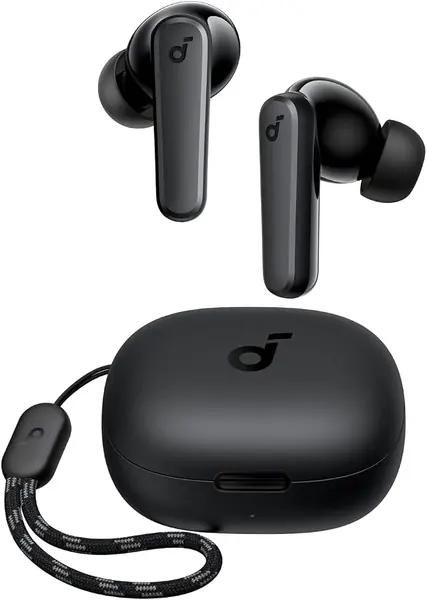
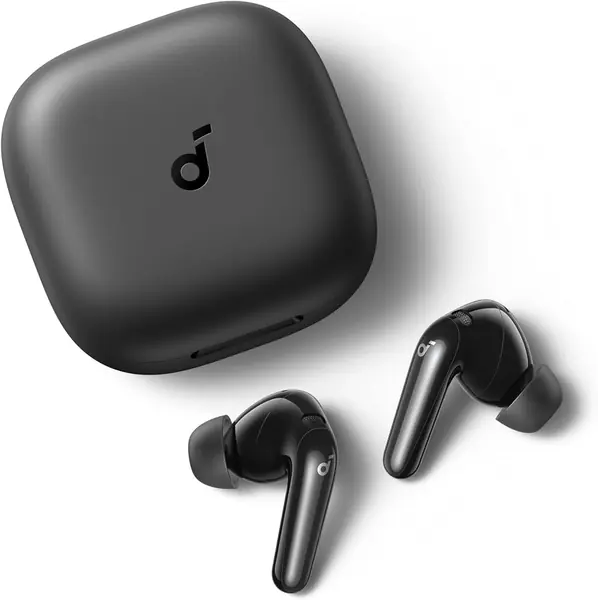
High-resolution labels are usually decoration, but the one on the P31i tells you something real: these earbuds support LDAC, the codec Android phones use to send a far denser stream than the SBC or AAC fallback most budget pairs rely on. That is the reason they lead this list. Feed them an Android phone and a decent streaming tier and cymbals, strings, and room reverb arrive with edges instead of smearing into each other.

The rest of the package earns its place too. Adaptive noise cancelling rated to 52 dB is the most effective of the wireless picks here, and it flattens the drone of a train or an air handler without the pressurized feeling cheaper systems give you. Six microphones handle calls, and there is a real-time translation feature we tried once out of curiosity and then forgot about; it does not change the recommendation either way.

Ten hours on a charge, fifty with the case, dropping to eight and forty with noise cancelling on — for most commuters that means charging the case weekly rather than the buds nightly. The buds are IP55, which covers sweat and rain but not a swim, and the case is glossy enough that it has already slid off a table edge on us.

Fit is the part that asks something of you. Four tip sizes ship in the box, and the seal is the difference between full bass and a thin, distant version of the same song. Smaller ears should plan on working through those sizes before deciding; get the seal right and these disappear for an hour at a time.

Pros

  • Hi-res LDAC streaming on Android
  • Best noise cancelling of the wireless picks here
  • Ten hours per charge, fifty with the case
  • IP55 body handles sweat and light rain

Cons

  • LDAC buys nothing on an iPhone
Our verdict

We recommend the P31i to anyone listening on Android who wants more detail than budget earbuds usually manage, with noise cancelling that holds up on a commute.
Check Latest Price
2

TOZO T10 Best Bass

91 /100
TKZ Score Outstanding

Key details

Driver
8 mm dynamic
Playtime
9 hrs (55 with case)
Water Resistance
IPX8
Case Charging
Wireless
View on Amazon

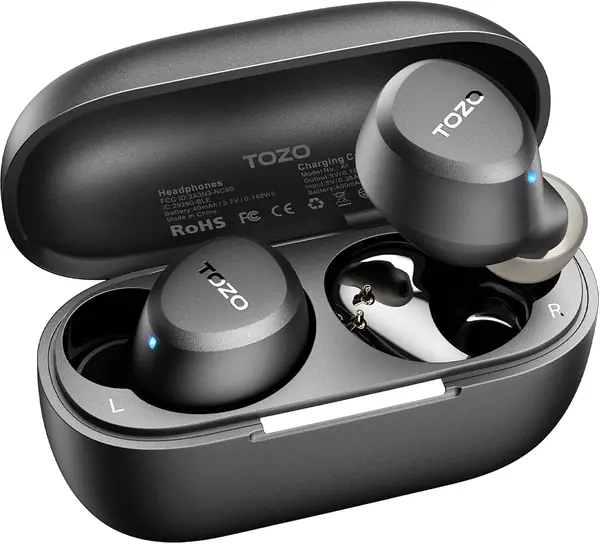
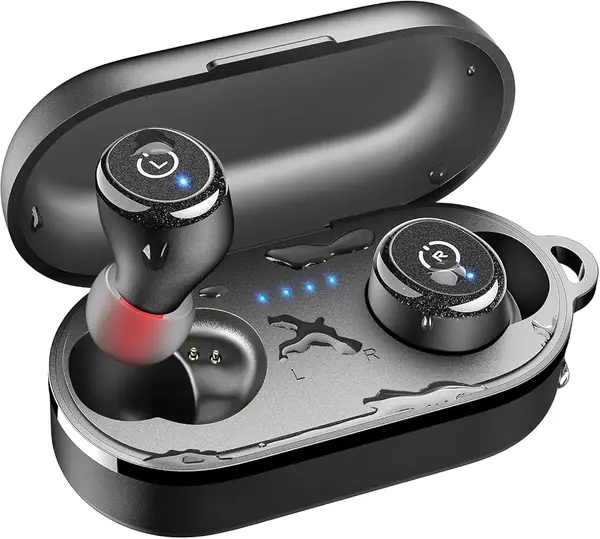
Where the P31i chases detail, the T10 chases weight. An 8 mm dynamic driver tuned with TOZO's OrigX processing puts a thick, physical low end under kick drums and bass lines, and the mids stay clean enough that vocals do not vanish behind it. If your library is hip-hop, electronic, or anything mixed for a car stereo, this is the tuning that lands first and asks the least of you.

The app is what we actually used: 32 EQ modes and remappable touch controls, which is more sound-shaping than anything else in this group offers. The case charges wirelessly as well, a small luxury that turns out to matter more than it sounds — you drop it on a pad instead of hunting for a cable at 11 p.m. For the money, we think it is the most fun pair here.

Two practical notes. Water is not a concern: IPX8 is the highest rating in this group, so a bud dropped in a sink or soaked on a run comes back working. The other is size — these are the chunkiest buds on the list, so a small ear may never get the seal that makes all that bass work, and it is worth trying the tips before you judge the sound.

Pros

  • Deep, physical bass with clean mids
  • IPX8, the highest water rating in this group
  • Case charges on any wireless pad
  • 32 EQ modes in the app

Cons

  • Charging case is the long-term weak point
Our verdict

For a big, warm sound and a waterproof body on a tight budget, the T10 is the pair we hand people first.

Check Latest Price
3

KZ ZS10 Pro Best for Detail

90 /100
TKZ Score Outstanding

Key details

Connection
Detachable 3.5 mm cable
Drivers
4 balanced armature + 1 dynamic
Faceplate
304 stainless steel
Frequency Range
7 Hz–40 kHz
View on Amazon

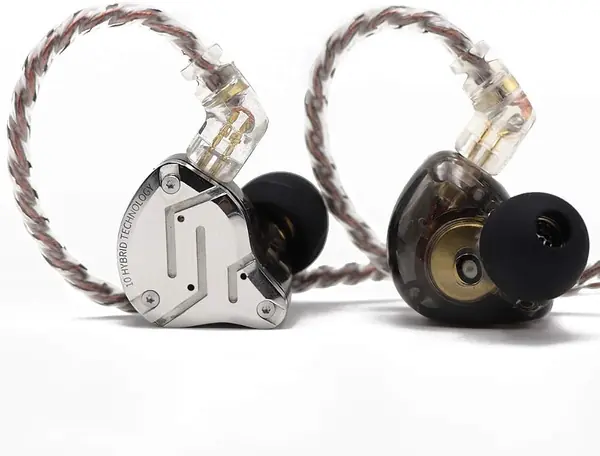
No battery, no pairing, no codec, no app — the ZS10 Pro is a pair of in-ear monitors on the end of a 3.5 mm cable, and that is the whole proposition. It sounds like a step backward until you hear how much of a recording survives when nothing is being squeezed through a wireless link.

Per side, four balanced armatures cover the mids and treble while a 10 mm dynamic driver handles the low end, split by a small crossover board. The driver count is the marketing; the useful effect is that bass no longer crowds the vocal, so on a dense mix you can follow a bass line and a ride cymbal at the same time.

The build holds up its end. A 304 stainless faceplate over a resin shell feels like a far more expensive set, and the cable detaches at both ends, which means the part that usually dies first on a wired pair is the part you can replace.

What comes out of them is bright, quick, and slightly unforgiving: a badly mastered track stays badly mastered, and that is the trade for the detail. It is the pair we reach for when the recording matters more than the convenience, and the one here that can make a familiar album sound like a new one.

Pros

  • Five drivers per side with a real crossover
  • Detachable cable you can replace yourself
  • Stainless steel faceplate over a resin shell
  • Easy to drive from a phone

Cons

  • No microphone or inline controls
  • Needs a 3.5 mm jack or a DAC dongle
Our verdict

For wired listening at a desk or on a train, the ZS10 Pro reveals more of a recording than any wireless pick here.

Check Latest Price
4

Apple EarPods (USB-C) Best for USB-C Phones

89 /100
TKZ Score Excellent

Key details

Weight
0.63 oz
Connection
USB-C plug
Charging
None required
Controls
Inline remote and mic
View on Amazon

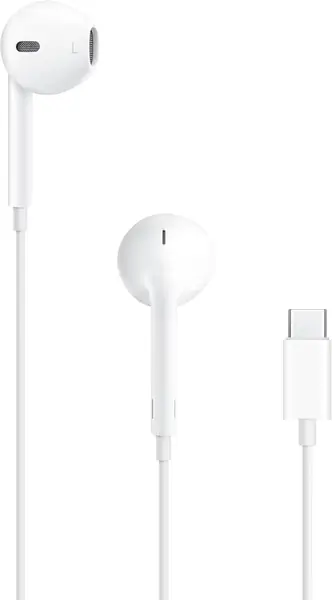
No case, no battery, no app, no pairing ritual — and that absence is the reason we keep a pair around. The USB-C EarPods are the least complicated thing on this list: plug them into a phone, a tablet, or a laptop and music starts, with the volume rocker on the wire where your hand already is.

The housing is shaped to the ear instead of sealed with a silicone tip, and everything else follows from that. You get hours of comfort and full awareness of the room; you give up the low-end weight a seal provides. Bass is present but light, the midrange is clean, and for podcasts, acoustic music, and calls that balance is a good one. The shape suits more ears than a round bud, but it is still a one-size design, and anyone it does not suit will feel it within an hour.

The inline remote handles playback and calls, and the microphone is clear enough for a meeting. Nothing about the set needs charging, updating, or pairing again tomorrow, which is more than most of this group can say.

Pros

  • Plug in and play, no charging or pairing
  • Inline volume, playback, and call control
  • Ear-shaped housing avoids tip pressure
  • Clean mids for podcasts and vocals

Cons

  • Light low end without a seal
  • Cable cannot be replaced
Our verdict

For USB-C phones and anyone who resents charging another device, the EarPods are the simplest good-sounding pair here.

Check Latest Price
5

Soundcore P20i Cheap App-Tuned Sound

88 /100
TKZ Score Excellent

Key details

Driver
10 mm dynamic
Playtime
10 hrs (30 with case)
EQ
22 presets in app
Noise Control
Passive isolation
View on Amazon

Twenty-two EQ presets in a free app sounds like a marketing line until you find the one that fixes a specific pair of headphones. On the P20i that app is the difference between a muddy default tuning and something you actually like, and it costs nothing extra.

Underneath is a 10 mm driver with boosted bass, ten hours on a charge and thirty with the case, plus two microphones for calls. Isolation is passive, so this is a quiet-office set rather than a plane set — no active noise cancelling, just the tips doing what tips do.

We rate it the best of the budget picks for tinkerers: presets, control remapping, and a find-my-earbuds chime give you more say over the sound than the money suggests. The trade is longevity — this is not a pair built for years of daily use, so register the 18-month warranty and treat it as a replaceable one.

Pros

  • 22 EQ presets and remappable controls
  • Ten hours per charge, thirty with the case
  • 10 mm drivers with boosted bass
  • Backed by an 18-month warranty

Cons

  • Passive isolation only, no ANC
  • Shorter lifespan than the price suggests
Our verdict

The P20i is what we point to when someone wants punchy, app-tunable sound for very little money.

Check Latest Price
6

TOZO A1 Best for Small Ears

87 /100
TKZ Score Excellent

Key details

Driver
6 mm dynamic
Playtime
7 hrs (32 with case)
Water Resistance
IPX5
Weight
3.7 g per bud
View on Amazon

Each A1 bud weighs 3.7 grams, and TOZO shaped the shell for smaller ears. That is a narrow brief, and it is why this pair made the list: if every set you have tried leaves your canals sore after an hour, the problem is usually the housing rather than the tuning.

The compromise sits in the driver. A 6 mm dynamic unit moves less air than the 10 mm drivers in the P20i and the T10, so bass is lighter and the emphasis lands in the mids and treble. Vocals and podcasts come through cleanly, and the app's 32 EQ modes let you push the low end up, though no preset invents bass the driver cannot make.

Seven hours on a charge and 32 with the case covers a workday and then some, and IPX5 takes sweat without complaint. We think of the A1 as the pair to buy when comfort is the thing that keeps failing — just do not ask it for weight in the low end.

Pros

  • 3.7 g per bud, shaped for small ears
  • 32 EQ modes in the app
  • Seven hours per charge, 32 with the case
  • IPX5 for sweat and rain

Cons

  • Light bass from the 6 mm driver
  • No noise cancelling at all
Our verdict

If your ears are small and most buds ache within an hour, the A1 is the lightest, cheapest fix here.

Check Latest Price
7

Sephia SP3060 Best for Wired Desk Listening

86 /100
TKZ Score Excellent

Key details

Driver
10 mm neodymium
Cable
3.8 ft, 3.5 mm
Ear Tips
6 sets (S/M/L)
Microphone
None
View on Amazon

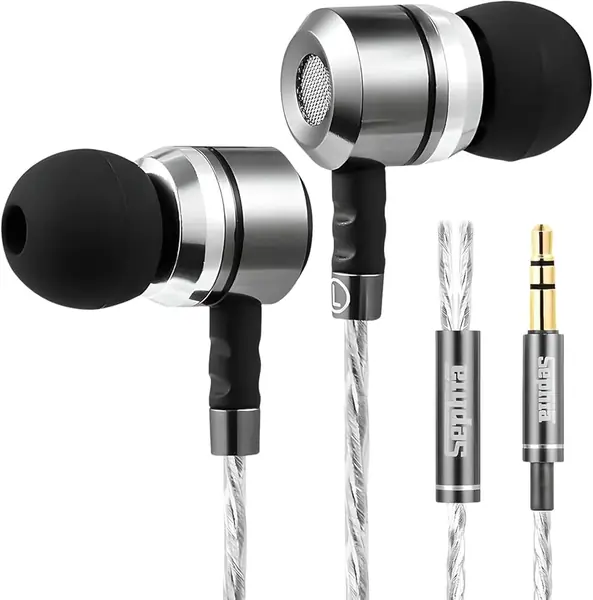
The Sephia SP3060 arrives with six sets of ear tips, which tells you where the company thinks the weak link is. It is a fair call: the seal is what makes a 10 mm neodymium driver sound like it costs more than it does, and having that many sizes in the box means most ears find one without buying anything extra.

What we did not expect at this price is the housing. Machined aluminum with a little heft makes these feel like a tool rather than a giveaway, and the 3.8-foot tangle-resistant cord is the right length for a desk or a jacket pocket. The seal blocks a surprising amount of office noise for a pair with no electronics in them.

There is no microphone and no inline control, so this is a listening pair — good on a laptop, useless for a meeting where you have to talk. Keep an eye on the join where the cable meets the bud, since that is where a wired set usually fails first.

Pros

  • Aluminum housings that feel substantial
  • Six sets of tips for a proper seal
  • 10 mm neodymium driver with good isolation
  • 3.8 ft tangle-free cord

Cons

  • No microphone, so no calls
  • 3.5 mm plug needs an adapter on new phones
Our verdict

A metal-bodied wired pair with six sets of tips: the pick when you want sound and nothing else to charge.

Check Latest Price
8

PocBuds T60 Best for Running and Workouts

85 /100
TKZ Score Excellent

Key details

Driver
13 mm double-layer
Playtime
Up to 80 hrs with case
Water Resistance
IPX7
Fit
Flexible earhooks
View on Amazon

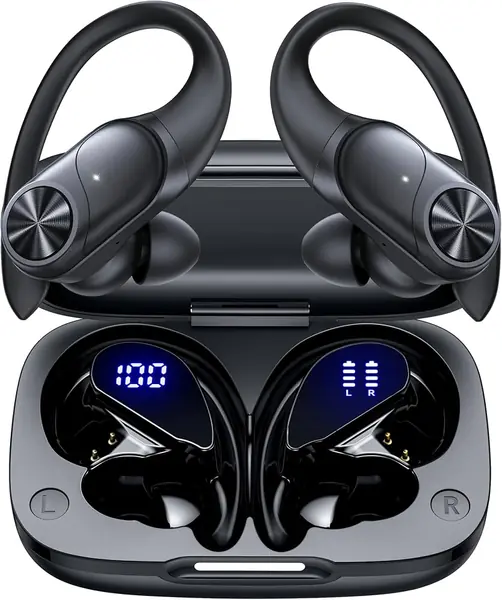
An earhook is the oldest fix for buds that will not stay put, and the T60 leans on it: a flexible hook curves over the top of the ear and holds the bud in place while the housing itself stays small. If you have ever pushed a bud back in mid-stride, you already know what this design is for.

Inside is a 13 mm double-layer diaphragm, the largest driver in this group, and you can hear the size in the low end. This is a warm, bass-forward tuning rather than a detailed one, and the single button on each bud keeps controls simple at the cost of extra presses to skip a track.

Battery is the headline: eight hours in each bud, and because the two are used in turn the case stretches that to 80 hours before anything needs a wall outlet. IPX7 covers sweat and rain, and the case has a digital display so you can see what is left before a long day out.

We keep reaching for these for yard work and runs, where a bud popping loose is the entire problem; the grip, not the fidelity, is what you are paying for. Sit still with them and a sealed pair with a better driver will give you more of the music.

Pros

  • Earhooks keep the buds in place
  • 13 mm drivers with strong low end
  • Up to 80 hours total with the case
  • IPX7 sweat and rain resistance

Cons

  • Warm, bass-first sound, not the most detailed
  • Single-button controls take practice
Our verdict

For running, yard work, and anything where buds fall out, the T60's earhooks are the reason to buy.

Check Latest Price

How We Tested the Best Sounding Earbuds

We started by pulling together roughly 40 pairs — true wireless, wired, and a couple of in-ear monitors with detachable cables — from the affordable end of the shelf, and cut the list using spec sheets, app support, and the complaint patterns in customer reviews. Sixteen made it into the test, chosen so we had wired and wireless options, models with and without app equalizers, and a spread of water-resistance ratings. Every one had to justify its price against the pair sitting next to it.

Testing ran four months, and most of it happened away from a desk. Each pair went on at least a dozen bus and train commutes, through two or three workouts, and on phone calls taken from a parking lot on a windy day so we could hear how the mics handled it. We played the same six tracks on every set — one bass-heavy, one acoustic, one dense mix — and noted where the vocals sat, whether cymbals smeared, and whether the low end bled into the mids.

Fit came first, because everything else depends on it: we tried every tip in the box and logged which pairs stayed put through a run and which needed shoving back in every ten minutes. Battery life came from running each set from full to dead at a normal volume, not from the box. We paired each one to a phone and a laptop, walked two rooms away to find where the signal broke, and worked the touch controls with cold hands. The wired pairs went into a USB-C phone, a laptop jack, and an older player. After four months of pocket and bag life, we noted loosened hinges, cable ends fraying near the plug, and which pairs we'd spend our own money on again.

How to Choose Earbuds for Sound

Match the Earbud to the Phone You Own

Codecs are the step shoppers skip. LDAC, which the Soundcore P31i supports, sends a much denser stream than the SBC or AAC fallback, but it lives on Android; an iPhone ignores it, so a hi-res badge buys nothing there. Wired in-ear headphones sidestep the question by taking the signal straight from the port. Before paying more for a codec, confirm your phone supports it and that your streaming tier runs a high enough bitrate to show the difference.

The Seal Matters More Than the Driver

A 10 mm driver and a 6 mm driver sound far more alike than a good seal and a bad one. Silicone tips seal by pressure, foam tips seal by expansion, and the housing decides how deep either can sit. If a new pair sounds thin, work through every tip size in the box before deciding the earbuds are at fault. The Sephia SP3060 ships six sets for exactly that reason, and the TOZO A1 exists because small ears rarely get a seal from a full-size shell.

Decide How Much Noise Cancelling You Need

Active noise cancelling works on steady low-frequency sound — engines, fans, road hum — and does almost nothing about a nearby conversation. In a quiet room, that money is better spent on the driver. On a commute it changes how loud you have to play music, which matters for your hearing over years rather than weeks. It also costs battery: the P31i drops from ten hours to eight with cancelling switched on.

Wired Still Wins on Detail

No battery, no codec, no dropouts: a wired pair hands the driver the decoded signal with nothing in between. What you trade is convenience and, on some models, features — the KZ ZS10 Pro and the Sephia SP3060 have no microphone, so neither works for calls. Check for a 3.5 mm jack before committing. Without one, buy a USB-C dongle with its own DAC rather than the cheapest adapter on the shelf.

Treat Battery Figures as Best Case

Published playtime assumes moderate volume and noise cancelling off. Ten hours becomes eight with ANC, and a 50-hour case total becomes 40. The case number is the one that matters for most people, because it decides how often you hunt for a cable: a 30-hour case needs charging about weekly, while the 80-hour case on the PocBuds T60 can stretch a fortnight. If you sleep in earbuds, buy on the single-charge figure instead.

Frequently Asked Questions

Final Verdict

Start with the Soundcore P31i unless something specific rules it out. It is the only pair here with a hi-res codec, its noise cancelling is the strongest of the wireless picks, and it has enough battery that charging stops being a routine. That combination makes the most of a modest budget.

Two things change the answer. On an iPhone the codec advantage disappears, and the TOZO T10's warmer, heavier sound is the better buy. If you listen at a desk and want the most detail this money can find, the wired KZ ZS10 Pro is the one.