Best Travel Video Tripods of 2026

A travel tripod is asked to do two opposite things: vanish into a daypack, and hold dead still while you pan across a scene. Most pick a side — the featherweight ones shiver in a breeze, and the rock-solid ones stay home because nobody wants to carry them.

The good ones hide that compromise in the leg locks and the head, which is where I spent most of my time with a dozen travel tripods over the past six months. My team and I folded and unfolded them at airport gates, on windy overlooks, and in a dim hotel room, watching how carbon fiber and aluminum settled at full extension, whether each quick-release plate clicked in without a fight, and whether the price jump bought anything you could feel in your hands. The load rating printed on the box tells you far less than the pan tension does.

I shoot handheld more than I should, and a tripod is the thing that finally makes a shot look deliberate. The picks below are the ones that let me stop thinking about the gear and watch the frame.

The Best Travel Video Tripods

1

SmallRig 4221 Travel Tripod Best Overall
88 /100
TKZ Score Excellent

Key details

Weight
3 lb
Max Load
8.8 lb
Max Height
63 in
Folded Size
41 cm
View on Amazon

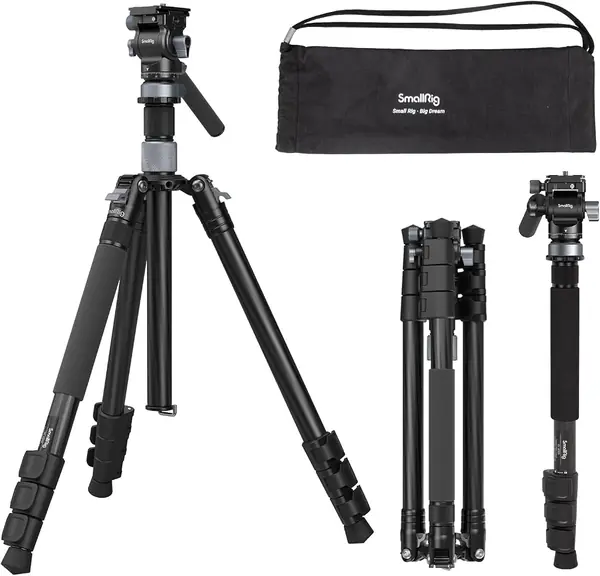
Leveling is the quiet chore of video travel: you set the legs, check the horizon, and fiddle. The SmallRig 4221 puts a ±10-degree leveling base under its fluid head, so you can true the camera with a short twist instead of micro-adjusting three legs. That is the feature that makes it our top pick for most traveling shooters, and it comes in a carbon kit that folds to 41 cm and weighs about 3 lb.

The 8.8-pound load rating leaves room for a mirrorless body, a modest zoom, and a microphone, and the 63-inch maximum height gets the camera above eye level without a ladder. We appreciate the Arca-Swiss quick-release plate and the built-in wrench, small details that make packing and setup less fiddly. The four-section flip locks are fast, and the detachable center column reverses for low-angle shots. Panning is smooth enough for slow moves, though the tension is not as creamy as a full-size fluid head.

The compromises show up at the edges. At full height the legs can pick up a little wiggle in wind, and the center-column hook gives you a place to hang a ballast bag. Portrait shooting is the bigger annoyance: there is no clean way to turn the camera vertical without an L-bracket, which matters if you shoot social video. Those are manageable for a travel kit. Pack an L-bracket and a small ballast bag, and the 4221 covers more ground than its folded size suggests.

Pros

  • Leveling base speeds horizon correction
  • Folds to 41 cm at about 3 lb
  • 8.8 lb capacity handles mirrorless kits

Cons

  • Panning tension could be smoother
  • Portrait mounting needs an L-bracket
Our verdict

We recommend the SmallRig 4221 as the best all-around travel video tripod for its fast leveling base, compact carbon build, and enough capacity for a mirrorless kit.
Check Latest Price
2

ULANZI JJ06 GlideGo Tripod Best for Taller Shoots

87 /100
TKZ Score Excellent

Key details

Weight
3.9 lb
Max Load
11 lb
Max Height
183 cm
Folded Size
20.28 in
View on Amazon

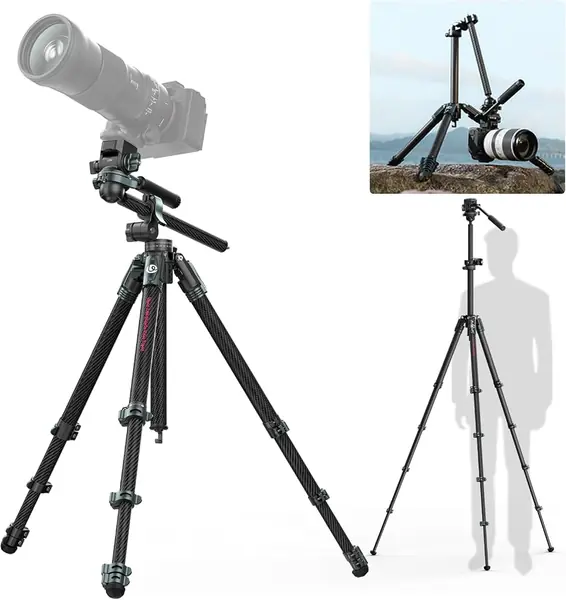
At 183 centimeters, the ULANZI JJ06 GlideGo is the tallest tripod here, and that extra reach changes the shots you can take: above a crowd, at a speaker's eye line, or over a table without a ladder. It also carries an 11-pound load, which is more than most travel rigs need, and the dual 360-degree pan controls let you sweep from the ball head or the center column.

We rate it as the pick for taller shoots and heavier rigs because that capacity is backed by a genuinely solid build. The quick-release system is fast, and the center column adds a second panning axis for slow, wide moves. The trade-off is packed weight. At 1.76 kg, it is noticeably heavier than the carbon competitors, and the 20.28-inch folded length takes more room in a daypack than the K&F or Manfrotto.

The leg locks are the detail we watch. They can feel less positive than the rest of the build, so check each section after extending and before you let go of the camera. That caveat does not erase the value for a shooter who needs height and load capacity, but it is why this is a runner-up rather than our default. If you mostly shoot at eye level and carry your kit all day, the lighter picks make more sense; if you need to get above the scene, the JJ06 earns its space.

Pros

  • Tall 183 cm working height
  • 11 lb load capacity
  • Dual 360 pan and quick release

Cons

  • Heavier at 1.76 kg
  • Leg locks can feel less positive
Our verdict

Choose the ULANZI JJ06 when you need extra height and an 11-pound load rating, and accept the extra packed weight in return.

Check Latest Price
3

K&F Concept A305A1 Tripod Best Budget

84 /100
TKZ Score Excellent

Key details

Weight
2.6 lb
Max Load
6.6 lb
Max Height
63 in
Folded Size
18.9 in
View on Amazon

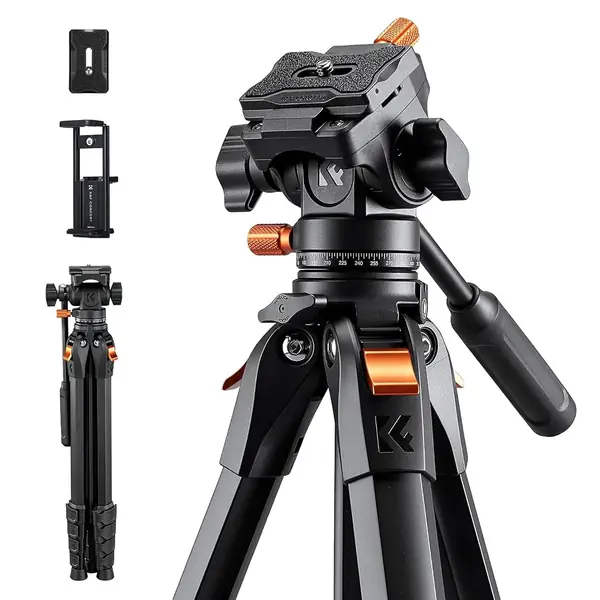
The K&F Concept A305A1 is the budget pick here, and it does not read like a compromise on paper: a fluid head, 63-inch maximum height, a 2.6-pound aluminum body, and a 6.6-pound load rating. For a phone or a light mirrorless camera, that is a useful combination, and the included 2-in-1 phone and tablet holder makes it especially easy to start shooting without extra clamps.

We think it is the right first video tripod for someone who wants smooth pan and tilt without paying for carbon fiber. The fluid head moves cleanly for slow moves, and the legs collapse small enough to fit a carry-on. The phone holder is secure, which is not a given on tripods at this level, and the standard 1/4-inch screw fits most cameras without an adapter.

The 6.6-pound capacity is the real ceiling. A compact camera or a phone is fine; a heavy zoom, a cage, or a full-frame body with a big lens pushes it. At full height the aluminum legs are also less planted than the carbon options, so keep the center column down when there is wind. Those are fair trade-offs for the price. If you rent a heavy lens for a trip, leave this one home and take the SmallRig or JJ06 instead.

Pros

  • Fluid head pans smoothly for the price
  • Includes secure phone and tablet holder
  • Folds small and weighs 2.6 lb

Cons

  • 6.6 lb load limit rules out heavier rigs
Our verdict

We think the K&F Concept is the best budget travel video tripod for phone or light-camera setups, provided you stay under its 6.6-pound load limit.

Check Latest Price
4

Manfrotto Befree Live Tripod Best for Packing Small

83 /100
TKZ Score Excellent

Key details

Weight
1.8 lb
Max Load
8.8 lb
Max Height
59.45 in
Folded Size
15.75 in
View on Amazon

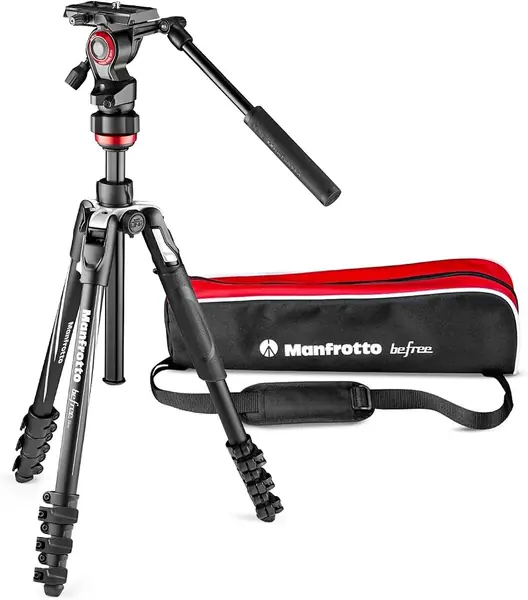
At 15.75 inches folded, the Manfrotto Befree Live is the tripod that disappears into a carry-on. It also weighs just 1.8 pounds, which makes it the easiest of these to carry all day, and the fluid head and lever locks are quick to deploy when a shot appears. We recommend it for travelers who prize packability over maximum height.

The head gives smooth pan and tilt, and the lever locks are faster to set than twist locks when you are moving between spots. The 8.8-pound load rating is enough for a mirrorless camera and a small lens. The catch is working height: at 59.45 inches, it is shorter than the SmallRig and the ULANZI JJ06, so tall shooters will notice the difference at eye level. For everyone else, that is the trade for the smallest folded package here. The included case protects the head in a backpack, which matters when the tripod rides in soft luggage.

Pros

  • Folds to 15.75 inches for small bags
  • Weighs 1.8 lb and carries easily
  • Fluid head and lever locks set up quickly

Cons

  • Head can develop play at the base
Our verdict

Pack the Manfrotto Befree Live when folded size matters most; it is the smallest and lightest tripod here, with a shorter working height.

Check Latest Price
5

ULANZI F38 Travel Tripod Best for Fast Rig Switching

77 /100
TKZ Score Very Good

Key details

Weight
2.38 lb
Max Load
22 lb
Max Height
61.4 in
Folded Size
18 in
View on Amazon

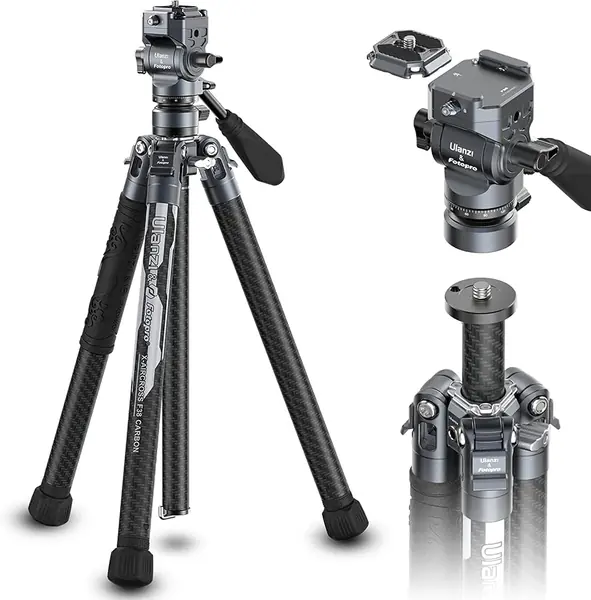
The F38 quick-release plate is the reason to look at this tripod. It lets you move a camera between a gimbal, a slider, and the tripod without unscrewing a plate, and the 22-pound load rating is the highest here. Add a 2.38-pound carbon body and an integrated leveling bowl, and it reads like a fast, travel-friendly kit for someone already inside the Falcam F38 system.

We like the speed of that workflow for run-and-gun shooting. The bowl makes it quick to level on uneven ground, and the twist locks are faster to extend than traditional clamps. The plate seats securely, and the low center of gravity helps the tripod feel more planted than its weight suggests.

The 22-pound rating is generous, but the tripod feels less planted with a heavy rig than the number implies, and that is why it sits in also-consider rather than the top tiers. If you already use F38 plates, the switching speed is worth it; this one is happiest with a light mirrorless setup.

Pros

  • F38 quick release swaps rigs fast
  • 22 lb load rating
  • 2.38 lb carbon body

Cons

  • Leg locks can fail to hold
Our verdict

The ULANZI F38 is a smart pick for shooters already using its quick-release plates, but its legs need care with heavier rigs.

Check Latest Price

How We Tested Travel Video Tripods

We started by pulling every travel tripod we could find that folded small enough to strap onto a pack, then narrowed by the specs that actually shape a shoot day: folded length, weight, head type, plate system, and how the legs lock. Anything that only collapsed to studio length, or that paired a smooth head with legs rated near the camera's weight, came off the list. That left 12 tripods, tested over six months, across carbon fiber and aluminum builds from familiar names and newer ones.

Each went out on real shoots — an airport gate while waiting on a connection, a windy overlook at golden hour, a dim hotel room where I was shooting a two-person interview with no room to back up. I timed setup and teardown alone, in the dark, without looking at the instructions.

Stability was judged where tripods actually get shaky: legs at full height with the center column up. I tapped the pan handle and watched how long the frame kept moving, hung a loaded camera bag on the hook to see what the wind did, and left a long lens locked off for 20 minutes to check for creep. For the locking mechanisms, I extended each leg lock and leaned my weight on it, then noted which ones held silently and which ones clicked or slipped a millimeter. Quick-release plates went in and out dozens of times to see whether they seated with a click or needed a wiggle, and I checked the joints and head finishes for the kind of play that shows up after a few months of use. Finally, I carried each one in a daypack for a full day and weighed it with its bag, since a tripod you resent carrying stays home.

How to Choose a Travel Video Tripod

Match the Load Rating to Your Real Rig

Start with the combined weight of camera, lens, cage, microphone, and anything else mounted. A tripod's maximum load is a ceiling, not a comfort target; a head that is near its limit will feel less controlled. The K&F Concept's 6.6-pound rating is fine for a phone or a compact mirrorless setup, while the SmallRig 4221's 8.8-pound rating leaves more headroom. If you regularly use a heavy zoom or a full-frame body, the ULANZI JJ06's 11-pound rating is the better match.

Pack for the Trip You Are Taking

Folded length decides whether the tripod rides in a carry-on or gets strapped outside; packed weight decides whether you carry it all day. The Manfrotto Befree Live folds to 15.75 inches and weighs 1.8 pounds, the easiest here to tuck into a small bag. The SmallRig 4221 is close at 41 centimeters folded but adds about a pound. Check the folded length with the head attached—some tripods list the legs alone, and a fluid head can add several inches.

Look for a Real Video Head and Leveling Control

A fluid-head tripod is not just a ball head with a handle. It should pan and tilt with controlled damping, and it should let you level the camera without fighting the legs. A leveling bowl, like the ±10-degree base on the SmallRig 4221, is the fastest way to correct a horizon on uneven ground. A 360-degree pan claim does not guarantee smooth damping; look for adjustable tension or a fluid cartridge. If you shoot mostly locked-off phone video, a simpler head can be enough.

Height and Leg Locks Decide Setup Speed

Maximum height matters most when you shoot at eye level or above a crowd, but the last few inches often come from the center column, which is the least stable part of the tripod. For travel, we prefer a tripod that reaches a useful height with the column down, then use the column only when needed. Leg locks are the other daily touchpoint: flip locks are fast, twist locks pack smaller, and either can be fine if they feel positive. Check every section after extending, especially on a used or rented tripod.

Plan for Phone and Accessory Support

If your travel kit includes a phone, a tablet, or a monitor, check what the tripod includes before you buy. The K&F Concept ships with a 2-in-1 phone and tablet holder, which is the simplest route for phone-first shooting. The camera-focused picks use a 1/4-inch screw or an Arca-style plate, so you will need a separate phone clamp. Quick-release systems are worth paying for only if you already own matching plates; otherwise they add cost without simplifying your setup.

Frequently Asked Questions

Final Verdict

We recommend the SmallRig 4221 as the default travel video tripod for most shooters. Its 63-inch height, 8.8-pound load, and ±10-degree leveling base make it quick to frame steady video without the bulk of a studio tripod, and it folds small enough for a carry-on. The K&F Concept is the budget choice for phone or light-camera setups, while the Manfrotto Befree Live is the one to pack when folded size matters most. Choose the ULANZI JJ06 only if you need extra height and load capacity.