Best Tabletop Tripods of 2026

A tabletop tripod looks like the simplest gear in a camera bag: three legs, a screw, done. Then you extend those legs a few inches, mount a real camera, and watch the thing shiver every time you press the shutter. Height is what a mini tripod sells and stability is what it spends, so the ball head and load rating matter as much as the legs.

I learned that the hard way, balancing a mirrorless body on a windy overlook. Over four months, we tested 14 tabletop tripods at my desk during video calls, on a kitchen counter filming a sauce, and on trailside rocks at sunset.

The differences show up in your hands, not on the spec sheet: whether the legs feel sturdy or splay under a heavy lens, whether the head levels a shot one-handed, and whether the folded size earns its place in a bag. Versatility counts — a mini tripod that only holds one kind of camera is a drawer resident. The picks below are sorted by what each one is genuinely good at.

The Best Tabletop Tripods

1

NEEWER Portable Travel Mini Best Overall
95 /100
TKZ Score Outstanding

Key details

Max Load
11 lb
Weight
1.7 lb
Height Range
6.7 to 19.7 in
Head
360° ball head
View on Amazon

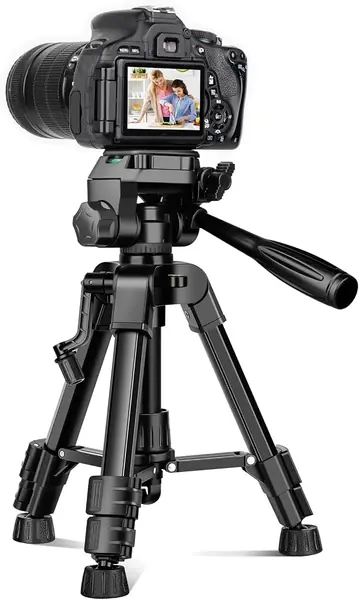
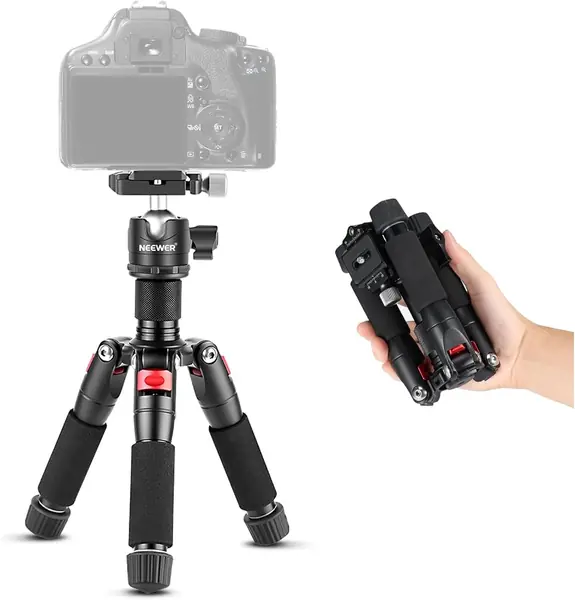
The 6.7- to 19.7-inch height range is what makes this NEEWER the first one we reach for. It sits low enough for a product shot on a desk and rises high enough for a video call or a near-eye-level camera angle, which is more range than most tabletop tripods here. The 11-pound load rating also means a mirrorless camera or a phone in a chunky case is not asking much. We like that one tripod covers both jobs.

The aluminum legs have five sections and three angle stops, and the 360-degree ball head includes a bubble level and an Arca-type quick-release plate. We found the ball head easy to set and the plate handy when swapping between a camera and a phone holder. At 1.7 pounds, it has enough mass to feel planted on a desk, though it is not the pocket tripod you forget in a jacket.

For low-angle work, the three leg angles let it sit close to the table without the center column getting in the way; for travel, the 6.7-inch folded length still fits a camera bag. The height and load are the reasons it stays in our kit, and the TP29 is the easier carry when we want something smaller.

Pros

  • One tripod spans desk to near-eye level
  • 11-pound capacity handles phones and cameras
  • Arca-type plate speeds device swaps

Cons

  • Quick-release plate can work loose under load
Our verdict

We recommend the NEEWER Portable Travel Mini as the default tabletop tripod: it rises from desk height to near eye level and holds a phone or camera securely.
Check Latest Price
2

Manfrotto PIXI Mini Tripod Best for Compact Cameras

94 /100
TKZ Score Outstanding

Key details

Weight
0.49 lb
Head
Push-button ball head
Mount
1/4-inch screw
Height
5.3 in
View on Amazon

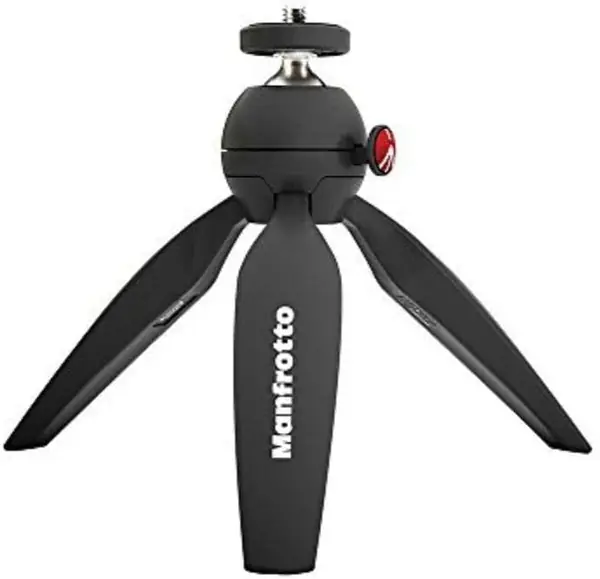
Close the legs on the Manfrotto PIXI and it becomes a handgrip; open them and it is a small tripod. That dual role is the reason we keep coming back to it for compact cameras and casual video. The push-button ball head locks and releases with one thumb, and the 1/4-inch screw takes a camera directly.

We found the PIXI's strongest trick is how little fuss it makes of a quick shot. The ball head stays put when you let go of the button, and the wide legs give a compact camera a stable base on a table or counter. It tops out at 5.3 inches, so it is not the tripod for eye-level video calls or tall product shots; it is the one for low angles and handheld work.

Compact cameras are its sweet spot: a small mirrorless body or a premium point-and-shoot feels secure, and the folded shape slides into a jacket pocket. We reach for it when we want a camera support that feels good in the hand.

Pros

  • Tripod and handgrip in one
  • Push-button ball head locks securely
  • Pocketable 0.49-pound body

Cons

  • Phone holder sold separately
Our verdict

We recommend the PIXI to compact-camera and mirrorless shooters who want a pocketable, rock-solid base that doubles as a handgrip.

Check Latest Price
3

Zeadio Heavy Duty Mini Tripod Best Low-Angle Support

93 /100
TKZ Score Outstanding

Key details

Max Load
88 lb
Weight
5.64 oz
Folded Size
4.7 in
Working Height
0.94 and 4.21 in
View on Amazon

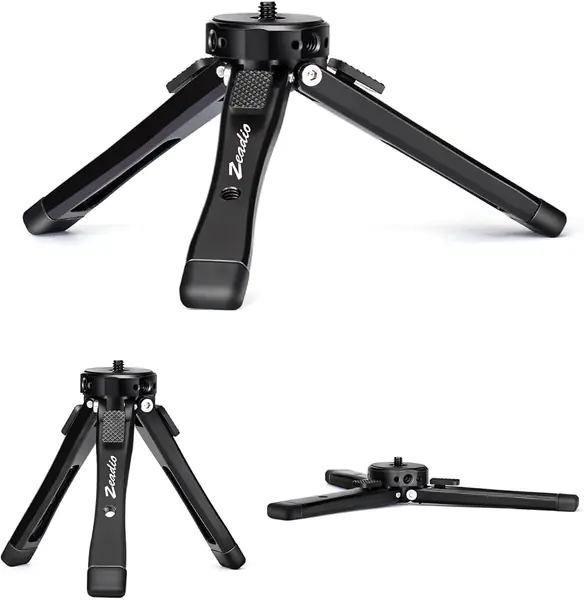
An 88-pound load rating on a tripod that folds to 4.7 inches is the kind of number that makes you look twice. The Zeadio backs it up with a machined aluminum body and legs that splay out flat, so it works as a base for a gimbal, a monopod foot, or a low camera rig. The 1/4-inch threaded holes around the top also give you a place to add an arm or a second device.

There are three leg positions, with working heights around 0.94 and 4.21 inches, and the whole thing weighs 160 grams. That makes it the tripod we grab when the shot is low and the camera is heavy: it sits under a monitor, at the base of a gimbal, or on a bench without feeling like it is about to tip. The rubber feet grip a smooth table well.

Our verdict is simple: for low-angle work, this is the sturdiest little base in the group. The all-metal build is why we trust it with a gimbal or a spotting scope, and the flat-splaying legs let it sit close to the surface. It is a specialist, not an all-rounder.

Pros

  • 88-pound load rating
  • All-metal body and flat-splaying legs
  • Folds to 4.7 inches and weighs 160 grams

Cons

  • Working height tops out around 4.3 inches
Our verdict

We keep the Zeadio for heavy low-angle work: its all-metal body takes a gimbal or scope without flexing, and it folds to palm size.

Check Latest Price
4

JCWINY Webcam Tripod Stand Best for Webcams

92 /100
TKZ Score Outstanding

Key details

Max Load
3.2 lb
Weight
9.1 oz
Height Range
11.5 to 18 in
Folded Size
7 in
View on Amazon

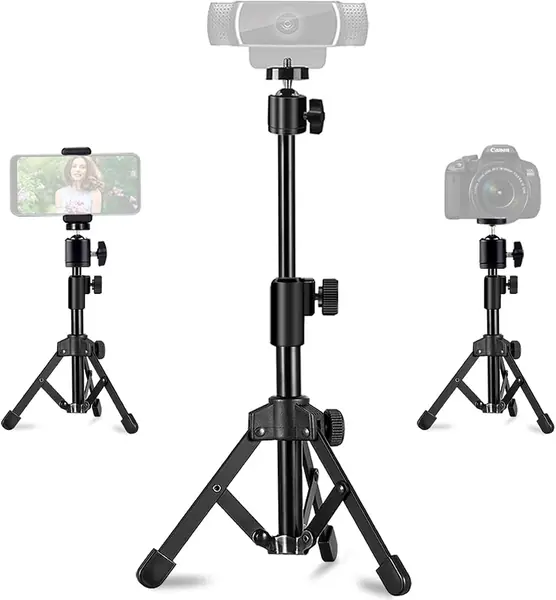
The JCWINY is the tabletop tripod we point to when the job is a webcam. Its 11.5- to 18-inch height range puts a Logitech C920 or a phone at seated eye level, and the 7-inch folded body fits on a shelf when the call is over. We like that it comes with a phone holder and a rotation platform, so it is not a camera-only stand.

The frame is a mix of metal and ABS plastic, with non-slip pads and a ball joint for tilt. At 9.1 ounces, it is light enough to move from desk to desk, and the 3.2-pound load limit is sensible for a webcam, a phone, or a small light. The ball joint is fine for small adjustments; a heavier camera is outside what this stand is for.

The height tops out at 18 inches, which is right for a seated desk but short for a standing desk. If you need a tablet holder, the JOILCAN is the better fit; if you want a dedicated webcam perch, the JCWINY is the cleaner one.

Pros

  • Lifts webcams to seated eye level
  • Includes phone holder and rotation platform
  • Light 9.1-ounce frame

Cons

  • Plastic joints feel less durable than metal
Our verdict

We recommend the JCWINY for video calls and streaming: it puts a webcam or phone at seated eye level without crowding the desk.

Check Latest Price
5

JOILCAN Mini Camera Tripod Best for Tablets

91 /100
TKZ Score Outstanding

Key details

Max Load
6.5 lb
Height Range
11.8 to 25 in
Head
3-way pan head
Mount
Phone and tablet holder
View on Amazon

The JOILCAN is the one that takes a tablet. The included holder opens wide enough for an iPad or a phone, and the tripod reaches from 11.8 to 25 inches, so it can clear a laptop screen or frame a recipe on the counter. The aluminum legs and three-way pan head give it a more traditional camera-tripod feel than the phone-first stands here.

We found the tablet holder is what makes it worth the space: it is the only tripod here that can frame a recipe video or a video call around a tablet without adding a separate clamp. The pan head is also a good match for slow, controlled moves, and the 6.5-pound load rating handles a mirrorless camera or a tablet with room to spare.

Against the Manfrotto PIXI, it is much taller and more device-friendly; against the TP29, it is the one that can hold a tablet. For a desk that needs to frame a tablet, that trade is worth it.

Pros

  • Holds a tablet or phone
  • Reaches 25 inches
  • Smooth three-way pan head

Cons

  • Folded 12-inch length is bulky for travel
Our verdict

We recommend the JOILCAN for tablet-based setups: the included holder and 25-inch reach turn a desk into a small studio.

Check Latest Price
6

SIRUI AM-203 Mini Tripod Best for Heavy Camera Rigs

90 /100
TKZ Score Outstanding

Key details

Max Load
20 lb
Height Range
2.2 to 16.7 in
Head
B-00K ball head
Folded Size
11.4 in
View on Amazon

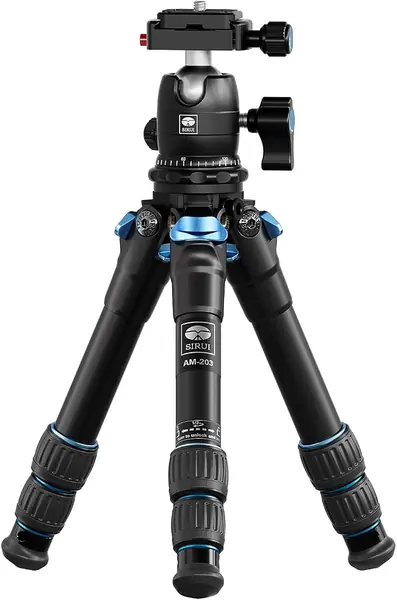
The SIRUI AM-203 arrives with a B-00K ball head, an Arca-Swiss plate, and a 20-pound load rating, which is a different class of hardware from the phone-first stands here. The three-section aluminum legs extend to 16.7 inches and fold to 11.4 inches, and the legs can splay flat for macro work. It is a mini tripod for someone who already owns a real camera.

The head is the part that justifies the price. The panning base is smooth, the clamp is secure, and the whole package feels planted with a mirrorless body and a modest zoom. The rubber feet and included metal spikes let it sit on a desk or on dirt without fuss.

Our verdict: if you need a tabletop tripod for a camera that would overwhelm a plastic stand, the SIRUI is the one we trust. The Arca-Swiss head is the difference; it is the only tripod here that feels like a scaled-down field tripod. For a phone and a webcam, the smaller picks make more sense.

Pros

  • 20-pound load capacity
  • Arca-Swiss B-00K ball head
  • Legs splay flat for macro

Cons

  • Premium price for a tabletop tripod
  • 1.7-pound weight is noticeable
Our verdict

We recommend the SIRUI for heavier mirrorless and DSLR rigs: the Arca-Swiss ball head and 20-pound capacity make it a serious mini tripod.

Check Latest Price
7

NEEWER TP29 Mini Tripod Best Tiny Desk Tripod

89 /100
TKZ Score Excellent

Key details

Max Load
6.6 lb
Weight
8.99 oz
Height Range
2.9 to 6.8 in
Folded Size
7.1 in
View on Amazon

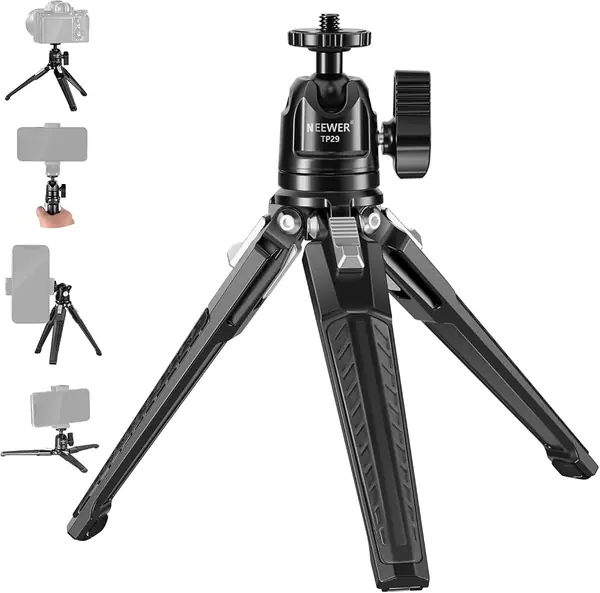
At 255 grams and 7.1 inches folded, the NEEWER TP29 is the one that disappears into a bag. We like it for a phone, with a holder attached, or a small camera on a desk because the metal body and 360-degree ball head feel more substantial than the size suggests. It is the tripod we leave set up on a shelf for quick video calls.

The ball head has dual U-notches for vertical shooting, and the three leg sections click into preset angles. The 6.8-inch maximum height is low, so it is best for a desk-level angle, a low product shot, or a phone call with the phone propped at the base of a monitor. We found the ball head holds a small camera without creeping.

Against the Manfrotto PIXI, it has a taller ceiling and a standard ball head; against the B07, it is the one that fits a small bag. For a tiny metal tripod that feels built to last, it is the one we reach for.

Pros

  • Tiny 255-gram metal body
  • 360-degree ball head with U-notches
  • Three leg angles hold settings

Cons

  • No phone holder in the box
Our verdict

The TP29 is our pick for a tiny metal tripod: with your own phone holder, it steadies a phone or small camera and disappears into a bag.

Check Latest Price
8

Vanguard VS-82 Table Top Tripod Best for Spotting Scopes

88 /100
TKZ Score Excellent

Key details

Max Load
5.5 lb
Weight
0.86 lb
Height Range
9 to 9.9 in
Head
360° pan head
View on Amazon

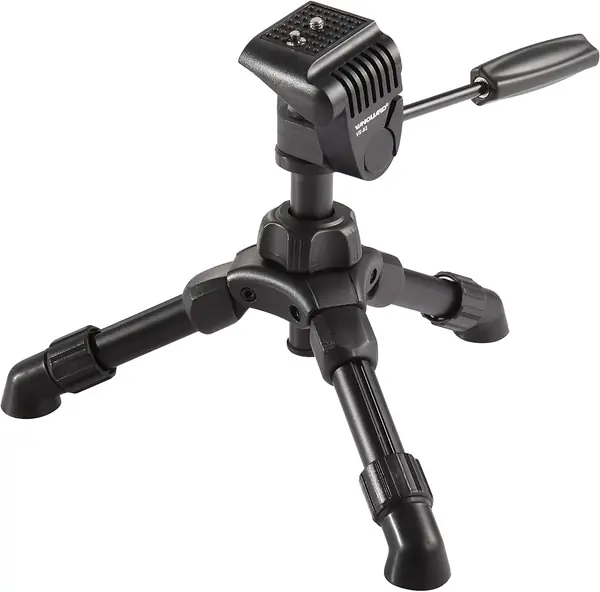
The Vanguard VS-82 is an old-school tabletop tripod: aluminum legs, a two-way pan head that rotates 360 degrees, and a height that runs from 9 to 9.9 inches. There is just a 1/4-inch screw and a pan handle, with no extra clamps or adapters. That simplicity is the appeal if you are setting up a spotting scope or a camera on a bench.

We found it most useful at the range or on a counter, where the pan head lets you track a subject without re-aiming the whole tripod. The 5.5-pound capacity is enough for a DSLR or a large scope, and the non-slip feet stay put on a smooth surface. It feels like a piece of gear rather than a disposable stand.

For a scope on a bench, it is a quietly excellent fit: the pan head tracks smoothly and the compact footprint leaves room for a notebook. It is a specialist, and that is fine.

Pros

  • Simple 360-degree pan head
  • 5.5-pound capacity for scopes and cameras
  • Compact 0.86-pound aluminum body

Cons

  • Only 0.9 inch of height adjustment
  • No phone holder included
Our verdict

We recommend the Vanguard for spotting scopes and cameras that need a simple pan head, not a phone-first desk setup.

Check Latest Price
9

Aureday Flexible Phone Tripod Best for Budget Phone Selfies

87 /100
TKZ Score Excellent

Key details

Max Load
6.6 lb
Weight
3.07 oz
Height
9.4 in
Remote
Wireless remote included
View on Amazon

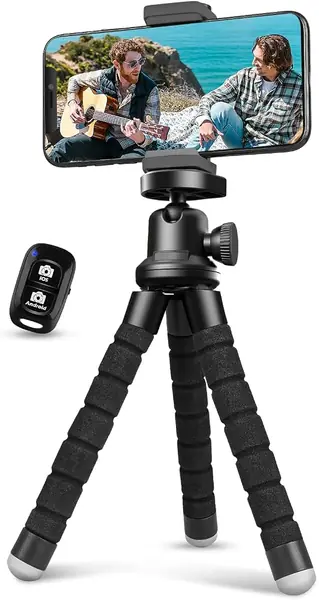
The Aureday is a flexible phone tripod, not a rigid tabletop stand. Its legs bend around a railing or stand on a desk, and the included wireless remote lets you start recording without touching the phone. At 87 grams, it is the lightest tripod here and the easiest to keep in a bag.

The 360-degree ball head and spring-loaded clip are simple to set, and the remote paired quickly in our use. It is not the tripod we trust with a camera; the flexible legs are for phones and action cams, not a mirrorless body.

For a light phone and a casual shot, it earns its place: propping a phone for a video call, wrapping the legs around a chair back, or taking a group photo without a rush. It is the budget phone pick, not the one we leave on a desk for serious work.

Pros

  • Wireless remote included
  • Flexible legs grip uneven spots
  • Just 87 grams

Cons

  • Ball joint can slip with a heavier phone
  • Flexible legs wear out with repeated bending
Our verdict

The Aureday is our budget phone pick: the remote and bendable legs make casual selfies and video calls easy.

Check Latest Price

How We Chose and Tested 14 Tabletop Tripods

We started by gathering everything we could find with a standard quarter-inch screw, then sorted the field by folded length, listed load limit, head type, and price. Anything with legs that wouldn't lock, a head with no panning, or no way to mount a phone got cut before testing began. Fourteen made the final group, and each one stayed in rotation for roughly a month rather than a single afternoon.

Desk duty came first, since that's where most of these end up: a week of video calls with a webcam mounted, raising and lowering the center column between meetings and watching how much the frame drifted when I typed. From there, each tripod held a phone over a cutting board while I filmed a sauce, and came along on evening walks to sit on a rock or a park wall with a mirrorless body and, on a couple of them, a heavier lens.

Sturdiness got the roughest treatment. I tapped the table beside each tripod and watched the frame, pressed two fingers down on the apex, and loaded the heaviest camera it claimed to hold before giving it a nudge. For adjustability, I timed how long a one-handed setup took and whether the ball head could level a shot without a second hand. Folded length got measured against a jacket pocket and a crammed camera bag, and every model rode in a bag with keys and a water bottle so we could check leg joints for wobble, threads for stripping, and the finish for scuffs. At the end, we weighed what came in the box — plate, phone clip, case — against what each one cost.

How to Choose a Tabletop Tripod

Match the Height to the Way You Work

Height is the first thing to settle because a tabletop tripod cannot make up for a ceiling that is too low. A 5- to 7-inch model is a low-angle base: it puts a camera close to the table, stays out of the way under a monitor, and is easy to pack. A 15- to 25-inch model can reach seated eye level for video calls or clear a laptop screen. Measure from the table to your eyes, not from the floor, and remember that a ball head adds a little height.

The Manfrotto PIXI sits at the low end of that range, while the JOILCAN reaches the tall end. Neither is better in the abstract; they answer different desk setups.

Choose the Head Around Your Subject

Ball heads are the quickest way to level a phone or camera, and a 360-degree head with a vertical notch is what you want for overhead shots. Pan-and-tilt heads are better for smooth tracking, which is why the Vanguard VS-82 and JOILCAN use them for scopes and tabletop video. If you shoot both, a ball head is the more flexible default.

Check that the plate or clamp matches your device. A bare 1/4-inch screw is not a phone mount, and a quick-release plate that fits a camera may need an adapter for a phone holder.

Respect the Load Rating and the Footprint

A tabletop tripod's load rating is a ceiling, not a target. A phone and a small camera are easy; a DSLR with a long lens moves the center of gravity forward, so the legs need to splay wider and the head needs to lock firmly. The Zeadio's 88-pound rating and the SIRUI's 20-pound rating are for different kinds of heavy work: one is a low base, the other a miniature camera tripod. Keep the heaviest part centered over the legs.

Decide How Much Portability You Will Trade for Stability

Every ounce and every inch of folded length buys stability. A 160-gram metal base disappears into a bag; a 1.7-pound tripod with a larger head feels more planted on a desk. If the tripod will live on one desk, favor footprint and height. If it travels, favor folded length and weight, and accept a lower ceiling.

The Aureday is the lightest phone option here; the NEEWER Portable Travel Mini is the one we carry when a camera is coming too.

Frequently Asked Questions

Final Verdict

For most people, the NEEWER Portable Travel Mini is the tabletop tripod we recommend. It has the height range to move from a desk-level product shot to a near-eye-level call, the ball head and plate to switch devices, and the load rating to take a real camera. It is not the smallest or the cheapest, but it is the one that covers the most situations.

If you mostly need a tiny base for a phone, the NEEWER TP29 is easier to carry; for a dedicated webcam stand, choose the JCWINY; for a heavy camera rig, the SIRUI's Arca-Swiss head and capacity justify the step up.