Best Sounding Wired Headphones of 2026

Wireless headphones die on a schedule. Wired ones die the day you catch the cord on a chair arm — and in between, they never once ask you to charge. That's the trade, and it's a good one if sound is what you're after: with no battery and no Bluetooth chip inside, nearly the whole budget goes to drivers, housing, and padding.

The wire does dictate everything else, though. A plug that doesn't fit your gear, a cable a foot too short to reach the interface, earcups that clamp hard enough to ache by hour two — those are why wired pairs end up in a drawer, not the sound. I've had twelve in rotation since spring, and the keepers all got the small stuff right.

One thing nobody tells a first-time buyer: closed-back pairs block out the room and keep your music out of a shared mic, while open-back ones sound airier and leak badly — and the 1/4-inch adapter matters more than it should, since good ones screw on and cheap ones pull loose mid-take. After six months of daily listening, the field sorted itself out; the pairs below are the ones I kept reaching for.

The Best Sounding Wired Headphones

1

Audio-Technica ATH-M20x Best Overall
93 /100
TKZ Score Outstanding

Key details

Impedance
47 ohm
Weight
7.41 oz
Driver Size
40 mm
Frequency Range
15 - 20,000 Hz
View on Amazon

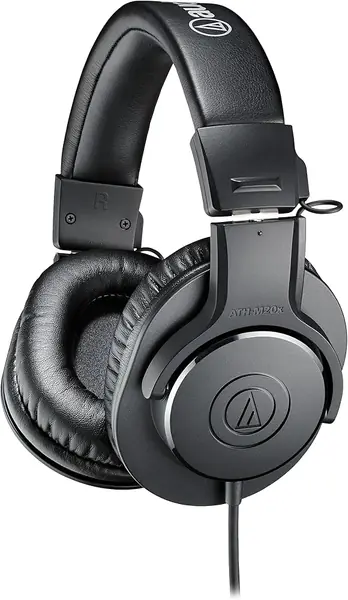
Forty-seven ohms and 96 dB of sensitivity are the numbers that decided this one for us. Together they mean the ATH-M20x reaches a comfortable volume from a laptop jack or a phone with a dongle, with no headphone amp in the chain — the snag that catches most people buying their first studio pair. That practicality is why it is the default recommendation for anyone who wants one wired set for a desk, a couch, and the occasional flight.

The sound is the reason to stay. The 40 mm drivers carry a deliberate low-frequency lift, so basslines and kick drums land with weight while vocals keep their place in front of the mix. We listened to it back to back with the flatter pairs on this list, and the Audio-Technica is the friendlier of the two for pleasure listening — it makes modest recordings sound bigger than they are. Feed it a well-recorded acoustic track and the tone stays warm rather than muddy.

Comfort holds up better than we expected from a 210-gram plastic headphone. The circumaural pads sit around the ear instead of on it, the suspension headband spreads the load, and the single-side cable exit keeps the cord off your collar. The clamp is firm for the first week and eases after that; if you wear glasses, give yourself room to return them rather than assuming the fit relaxes on day one.

Where it gives ground is at the edges. The HD 280 Pro isolates far better in a noisy room, the FIFINE HD8 offers two detachable cables for a desk, and the OneOdio Pro-10 pushes more bass if that is what you are after. What the M20x keeps is balance — it is the pair here that flatters the widest range of music without a single extreme.

Pros

  • Balanced, warm sound with real bass weight
  • Easy to drive from a phone or laptop
  • Light at 210 g with around-ear pads

Cons

  • No microphone or detachable cable
  • Bass lift colors neutral monitoring
Our verdict

Our default pick: it sounds good from the laptop or phone you already own, with no amp and nothing to charge.
Check Latest Price
2

Sennheiser HD 280 Pro Best for Loud Rooms

92 /100
TKZ Score Outstanding

Key details

Impedance
64 ohm
Weight
1.3 lb
Frequency Range
8 - 25,000 Hz
Noise Attenuation
Up to 32 dB
View on Amazon

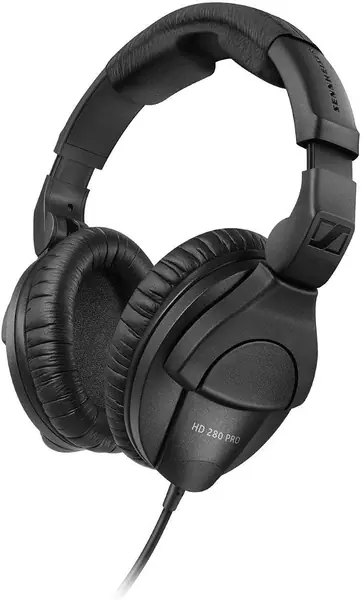
The HD 280 Pro clamps hard and weighs 1.3 pounds, and both of those facts are the price of the thing it does better than anything else in this group: up to 32 dB of attenuation of the noise around you. Put them on in a room full of conversation, or on a plane, and the world drops back to a hum. The clamp that delivers that seal is real, so plan on taking them off for a minute every couple of hours rather than wearing them through a whole afternoon.

What makes the weight worth carrying is that this is a headphone built to be kept. The ear pads, the headband padding, and the cord are all replaceable, so the parts that wear out on every other pair are the parts you swap here. That is what makes a plain-looking plastic headphone worth its space on the shelf.

The tuning is warm and even, and the 8 Hz to 25,000 Hz range gives it natural low end rather than a boosted one. It is a monitoring signature: nothing is hyped, which makes long listening easy and bass-heavy playlists a little less exciting than they are on the OneOdio. Nothing here flatters a bad recording, which is exactly the point of a monitoring headphone.

Pros

  • Up to 32 dB of passive isolation
  • Pads, headband padding, and cord are replaceable
  • Warm, even monitoring sound

Cons

  • Coiled cable tugs and adds bulk
  • 64 ohm wants more gain than a phone gives
Our verdict

We point anyone who works in a noisy room here — it seals out more sound than anything else on this list, and its wear parts are replaceable.

Check Latest Price
3

OneOdio Pro-10 Best for Bass and DJ Work

91 /100
TKZ Score Outstanding

Key details

Impedance
32 ohm
Weight
14.6 oz
Driver Size
50 mm
Frequency Range
20 Hz-40K Hz
View on Amazon

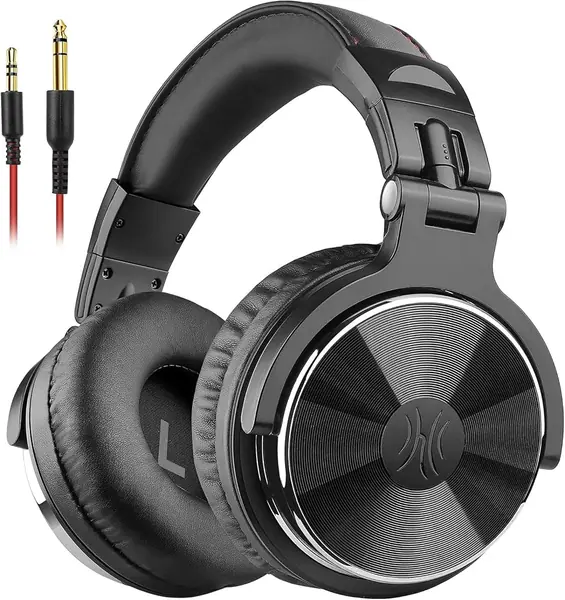
Set the Pro-10 beside our top pick and the difference is tonal rather than technical. Both are closed-back wired headphones that run off a laptop, but the OneOdio leans on its low end where the Audio-Technica stays even. Two 50 mm drivers and 110 dB of sensitivity give it a fuller, more club-like presentation, and for hip-hop, electronic music, and anything built on a bassline, that is the more enjoyable listen.

The hardware is unusually generous for a headphone aimed at DJs and home studios. It takes both a 3.5 mm and a 6.35 mm connection, so it plugs into a laptop and a mixer without an adapter hunt; the cables detach; the cups swivel 90 degrees for single-ear cueing; and a share port lets a second pair run off the same source. That last one is genuinely useful when someone wants to hear what you are working on.

Comfort asks for some patience. The pads are soft and the self-adjusting headband takes the fiddling out of setup, but the cups seal warm and the clamp is snug, so an hour is comfortable and four hours is not. On a wide head the adjustment runs out before the fit feels relaxed. For a monitoring session or a set, that is fine; for a long flight, it is the wrong pair.

Our verdict is that these earn their place in a home studio, a DJ setup, or a shared laptop where bass and connections matter more than refinement. Nothing else here does all three of those jobs at once, and the plastic frame is what you trade for it — treat the headband accordingly.

Pros

  • Big, bass-forward sound from 50 mm drivers
  • Takes 3.5 mm and 6.35 mm cables
  • Share port runs a second pair

Cons

  • Plastic headband is the failure point
  • 415 g is heavy for long sessions
Our verdict

For a first home studio or DJ setup, this is the pair we hand over: bass-forward, both plug sizes, and a second headphone out.

Check Latest Price
4

FIFINE HD8 Best for Desk Setups

90 /100
TKZ Score Outstanding

Key details

Impedance
32 ohm
Weight
9.35 oz
Driver Size
50 mm
Detachable Cables
Two 9.8 ft coiled
View on Amazon

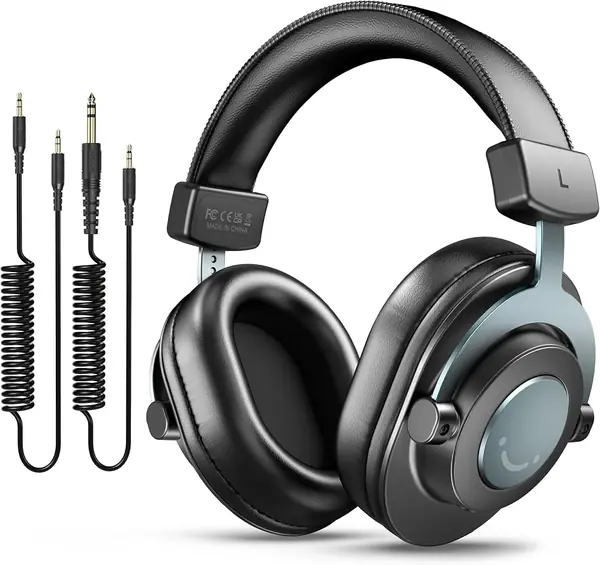
Two coiled detachable cables come in the box — one 3.5 mm to 3.5 mm, one 3.5 mm to a quarter-inch plug, each 9.8 feet — and that tells you where the HD8 belongs. This is a desk headphone: long enough to reach a mixer or an interface across a work surface, and ready for whichever of the two jacks your gear uses without a trip to the adapter drawer.

The 50 mm drivers are tuned evenly, with stable mids and treble that stays accurate instead of bright, across a 20 Hz to 20 kHz range. At 32 ohms and 95 dB it runs off a laptop or a phone without complaint. The padded headband and soft cushions carry the 9.35-ounce weight comfortably, and the closed-back cups take the edge off a shared room without pretending to be noise canceling.

The tuning will not flatter a bass-heavy playlist the way the OneOdio does, and that is the honest trade: accuracy rather than excitement. What you get in return is the most complete desk package here — a quarter-inch option without hunting for an adapter, a folding frame for the cupboard, and a cable you can replace instead of a headphone you have to.

Pros

  • Two detachable coiled cables included
  • Even, accurate sound from 50 mm drivers
  • Light and comfortable for long sessions

Cons

  • Cups run tight on larger heads
  • No inline mic or controls
Our verdict

Our choice for a desk or home studio, where two detachable cables and even tuning cover a laptop, an interface, and a mixer.

Check Latest Price
5

Sony MDR-ZX110 Best Lightweight On-Ear

89 /100
TKZ Score Excellent

Key details

Impedance
24 ohm
Weight
4.76 oz
Driver Size
1.38 in
Cable Length
3.94 ft
View on Amazon

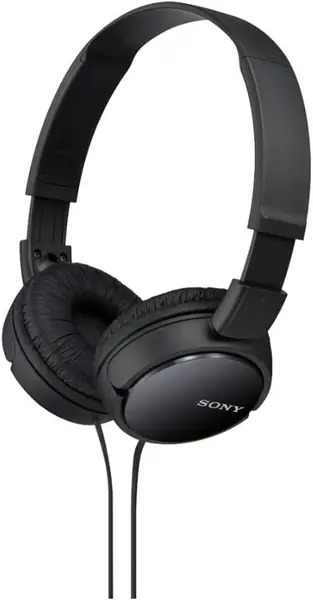
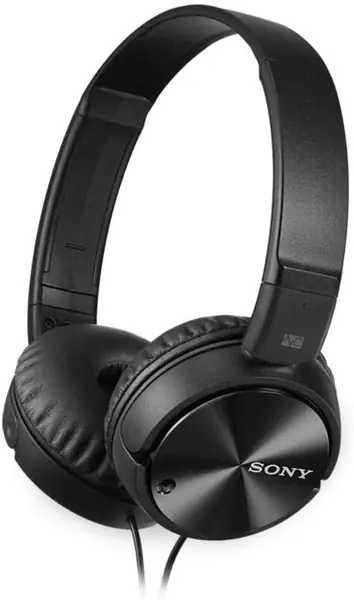
At 135 grams the MDR-ZX110 is the lightest pair here, and the swiveling cups fold flat, so it disappears into a bag pocket between trips. That is the pitch: a headphone you leave in a work bag and forget about until you need it, rather than one you plan an evening around.

The 24-ohm drivers are easy to drive from anything with a jack, and the 12 Hz to 22 kHz tuning gives it fuller bass than earbuds manage. The L-shaped plug survives being bent against a leg, and the rubberized cord resists tangling. It runs 3.94 feet, though, which is short enough that you will notice it at a desktop — fine for a pocket, less so for reaching across a table to a monitor.

It is a wired on-ear with no microphone, no controls, and no pretense of blocking a train carriage. What it offers is a tuning that is pleasant rather than revealing, which suits podcasts, videos, and background music and is not where we send anyone doing critical listening. Within those limits it is the easiest pair here to live with.

Pros

  • Lightest pair here at 135 g
  • Folds flat with swiveling cups
  • Easy to drive from any 3.5 mm jack

Cons

  • On-ear cups press on the ears
  • Modest isolation in loud places
Our verdict

The pair we keep in a bag: 135 grams, folds flat, and pleasant enough for podcasts and playlists away from a desk.

Check Latest Price
6

COOSII AC01 Best for Big Ears, Calls

88 /100
TKZ Score Excellent

Key details

Impedance
32 ohm
Driver Size
40 mm
Sensitivity
117 dB
Ear Pad Size
3.54 in x 1 in
View on Amazon

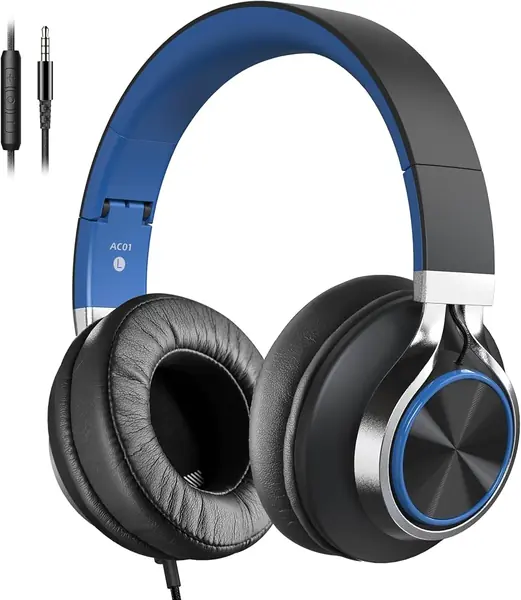
The AC01's ear pads measure 3.54 inches by 1 inch, which is the largest opening in this group, and that is the whole argument for the pair. If every on-ear you have tried has ended up pinching the outside of your ear, this is the shape that fixes it — the cup surrounds rather than presses, which is why it is the one we hand to people who have given up on headphones.

Inside sits a 40 mm dynamic driver and a 117 dB sensitivity rating that makes it loud from a phone, a school Chromebook, or an older MP3 player without any help. Bass is ample without booming, mids stay clear, and the closed-back pads take a useful bite out of a noisy room. It is also the only pair here with an inline microphone and volume buttons, so it doubles as a headset for meetings or classes.

It is a big headphone in every direction. The pads that make it comfortable also make it loose on a smaller head, and it does not fold down as small as the Sony or the TASCAM, so it is a bag item rather than a pocket one. For a teenager, a shared office, or a long study session, those are easy things to live with.

Pros

  • Oversized pads fit around the ear
  • Very efficient at 117 dB
  • Inline mic and volume buttons

Cons

  • Plastic headband breaks under normal use
  • Inline volume buttons sometimes arrive dead
Our verdict

We send anyone whose ears never fit an on-ear straight to the AC01: the biggest pads in this group, plus a mic for calls.

Check Latest Price
7

TASCAM TH-02 Folding Studio Spare

87 /100
TKZ Score Excellent

Key details

Impedance
32 ohm
Weight
10.6 oz
Driver Size
50 mm
Frequency Range
18 Hz - 22 kHz
View on Amazon

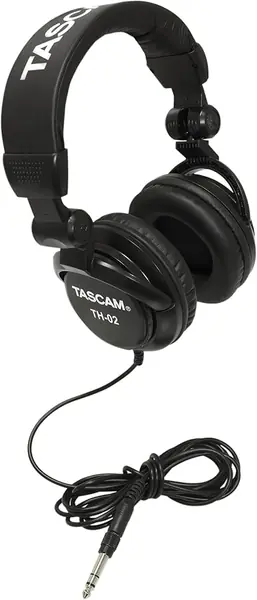
TASCAM builds the TH-02 around a 50 mm driver and a folding frame, and includes a snap-on 1/8-inch to 1/4-inch adapter, which is the practical version of working with everything: one push and the plug fits a guitar amp, an interface, or a phone. The closed-back shell keeps the click track in your ears and out of the room.

Sound is bass-rich with crisp highs across a stated 18 Hz to 22 kHz range, and at 32 ohms and 98 dB it plays loud from a laptop without strain. Isolation is modest — this is a monitoring headphone, not a silencing one — and the cord is long enough to reach across a small studio desk without a extension.

The reason to own one is that it folds into a compact shape and takes a quarter-inch plug without an adapter, which makes it the pair that lives in a drawer until someone needs to hear a click track or practice along with a metronome. Nothing about the plastic shell suggests an heirloom; nothing about it feels like it is about to fail, either.

Pros

  • Folds small for drawer storage
  • 50 mm driver with rich bass
  • Snap-on quarter-inch adapter included

Cons

  • Small cups and a high crown fit few heads
  • Treble turns harsh on bright masters
Our verdict

We treat it as the folding spare for a small studio or practice corner — a 50 mm driver and a quarter-inch adapter in a drawer-ready shape.

Check Latest Price
8

Sony MDR-ZX110NC Best for Flights

86 /100
TKZ Score Excellent

Key details

Impedance
32 ohm
Weight
5.29 oz
Driver Size
30 mm
Battery Life
80 hours
View on Amazon

Eighty hours is the figure that makes the ZX110NC a travel headphone rather than a toy. The noise canceling runs for weeks of commuting between battery changes, so it is still working on the return leg of a trip, and the wired connection means the audio side never depends on a charge at all.

What the canceling does is take the edge off, not erase it. Engine drone and air-conditioning hum drop back; conversation and a crying baby do not. That is normal at this level of canceling, and it is still the difference between arriving tired and arriving wrecked on a long flight, which is the job this pair is here to do.

The rest is the ZX110 recipe: an on-ear shape at 5.29 ounces, folding cups, a 30 mm driver, and 32 ohms so a phone drives it. The cups sit on the ear rather than around it, so after a few hours you will feel them, and the smaller driver is the giveaway on detail — separation and texture are a step behind the studio pairs here.

This is the pair in the group that solves a specific problem rather than chasing the best sound: a long flight, a shared office, a noisy train. Pack it for the journey and leave the ATH-M20x for the listening you do at either end.

Pros

  • 80 hours of battery life
  • Light at 5.29 ounces
  • Folds flat for travel

Cons

  • Active canceling needs a battery
  • 30 mm drivers trail the studio pairs here
Our verdict

For flights and shared offices, we pack the ZX110NC: 80 hours of canceling battery and a 3.5 mm plug that fits in-flight systems.

Check Latest Price

How We Tested the Best Sounding Wired Headphones

We started with about 40 pairs plucked from retailer best-seller lists and studio-supply shelves, then cut the list to 12 by filtering on price, connector type, fixed versus detachable cable, and whether the pair folds flat. Anything that needed a headphone amp to sound like itself got dropped, since almost nobody shopping at this price owns one.

Each pair got the same three tracks — one bass-heavy, one acoustic, one crowded mix — played from the same laptop at matched volume. I listened for low end turning to mush, cymbals turning to hiss, and where the vocal sat in the mix. Then each one went into a laptop jack, a phone dongle, and a small mixer, with every plug wiggled mid-song to catch crackle and every 1/4-inch adapter tried to see whether it screwed on or just pushed on.

Comfort got a two-hour block per pair, worn the way you'd actually wear them: through a morning of desk work, on a bus, in a shared office. I noted where the headband pressed, whether my ears got hot, and how much clamp was left after an hour, weighed each pair on a kitchen scale, and bent over to tie a shoe to see if anything shifted. For isolation, I sat in a loud cafe with the music off first to hear what got through.

Durability ran a week per pair: loose in a tote bag, dropped from desk height, cable tugged where it meets the housing. I measured every cord stretched end to end and noted how a heavy coiled cable drags a light pair sideways.

How to Choose Wired Headphones

Start With Tuning, Not Driver Size

Two headphones with 50 mm drivers can sound nothing alike, and a well-tuned 40 mm pair like the ATH-M20x will beat a badly tuned 50 mm one every time. What separates the picks here is how much bass the maker dialed in: the OneOdio Pro-10 and TASCAM TH-02 push the low end forward, while the FIFINE HD8 and HD 280 Pro stay closer to even.

Listen to what you actually play. A library built on basslines sounds better through a forward tuning; acoustic, jazz, and spoken word stay more natural on an even one. Ignore the frequency-range figures on the box — 12 Hz to 40 kHz tells you nothing about whether voices will sound right.

Check Impedance Before You Check the Jack

Impedance tells you how hard a pair is to drive. Anything at 32 ohms or below — the Sony sets, the OneOdio, the FIFINE, the TASCAM, the COOSII — reaches a decent volume from a phone. The 47-ohm ATH-M20x is fine too. The 64-ohm HD 280 Pro is where a laptop starts running out of headroom, and a USB-C dongle with a real DAC, not a bare adapter, is what covers the gap.

Then check the plug. A quarter-inch connector needs an adapter that is easy to lose, and a phone with no headphone jack needs a dongle whichever pair you buy, so price that in before you decide.

Isolation Is a Fit Question, Not a Label

Closed-back cups block sound by sealing around your ears, and the seal depends on pads and clamp. Sennheiser's HD 280 Pro claims up to 32 dB of attenuation because it presses firmly and the pads are deep; the on-ear Sonys let most of a room through because there is less material between you and it.

If a listing says noise canceling and there is no battery, it means passive isolation. Where a room is genuinely loud, buy for the seal and accept the clamp — and if you need the room quiet without turning the volume up, active canceling like the MDR-ZX110NC's is the only thing that does it.

Cables and Connectors Decide Where They Live

A fixed 3.94-foot cord is a pocket cord; a 9.8-foot detachable coiled cable is a desk cord. Detachable is the better long-term bet because the cable is the first part to fail, and both the FIFINE HD8 and the OneOdio Pro-10 let you swap one in. These are corded headphones, so the cable is not an accessory — it is half the product.

Consider the plug shape as well. Sony's L-shaped plug survives being bent against a leg, a snap-on quarter-inch adapter is harder to lose than a screw-on one, and a share port on the OneOdio lets a second pair run off the same source.

Weight and Replaceable Parts

Weight is the spec you feel at hour three. The MDR-ZX110 is 135 grams and vanishes; the HD 280 Pro is 1.3 pounds and does not. Neither is wrong — one is for a commute, one is for a shift at a desk — but buy for the session length you actually have, not the one you imagine.

Then look at what can be replaced. The HD 280 Pro's ear pads, headband padding, and cord are all user-serviceable, and that single fact does more for how long a wired headphone stays in service than any claim about build quality on a box.

Frequently Asked Questions

Final Verdict

The ATH-M20x is the pair we point most people to: 47 ohms so it runs from what you already own, 40 mm drivers tuned to make ordinary recordings sound good, and 210 grams that don't wear you down by the third album.

If your room is loud, the HD 280 Pro seals out more noise than anything else here and can be repaired instead of replaced. If bass and connections matter more than neutrality, the OneOdio Pro-10 covers a laptop, a mixer, and a second listener at once.