Best Over-Ear Headphones for Sleeping of 2026

The first night I tried sleeping in over-ear headphones, I made it about forty minutes into a podcast before I rolled onto my side and felt the earcup bore into my jaw. Clamping force, deep bass, a firm headband — everything that makes a pair great on a commute works against you once a pillow is involved.

I'm a light sleeper, and my team has now spent six months sleeping in 12 pairs of over-ear headphones: in our own beds, on red-eyes, and in the office nap chair. The features that matter at night are the ones listings bury. Noise cancellation has a faint hiss of its own that can be worse than the fan you were trying to drown out, and a touch panel that wakes at the brush of a pillow will pause your white noise at 3 a.m.

Battery life matters more here than raw sound quality (a dead pair at 4 a.m. is worse than a muddy one), and comfort is decided by the earpad, not the headband. Below are the pairs we'd genuinely sleep in.

The Best Over-Ear Headphones for Sleeping

1

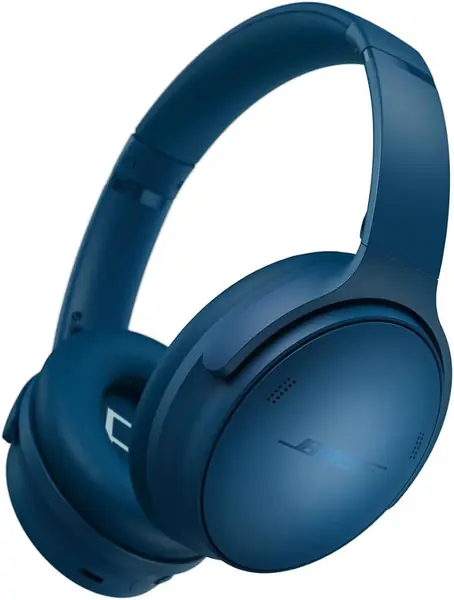
Bose QuietComfort Best Overall
91 /100
TKZ Score Outstanding

Key details

Battery Life
Up to 24 hours
Noise Control
Active noise cancellation
Weight
8.47 oz
Listening Modes
Quiet and Aware
View on Amazon

Two numbers and one piece of padding make the case for the QuietComfort on a nightstand: 240 grams, 24 hours, and ear cushions soft enough to give instead of press. Weight is what you notice first when you lie down — a headphone that's fine at a desk becomes a headache by the second hour — and at 240 grams this is one of the two lightest full-size sets here. The pads are the better argument. They're plush enough that the foam compresses around your ear rather than driving into your skull, which is the difference between a set you wear to sleep and one you take off at midnight.

The noise cancelling does what you want it to on the sounds that keep people awake: a ceiling fan, traffic three floors down, the drone of an air handler. Quiet mode swallows those, and Aware mode hands the room back when you wake up. Of the five here, this is the pair we kept reaching for on the pillow.

Long-term connection is the reservation. These pair cleanly out of the box, and over a year or two the Bluetooth link is the weak point — drops, the occasional stutter, a re-pair that fixes it for a while. A bedside set that talks to one phone every night is unlikely to bother you; a set that hops between a work laptop, a tablet, and a phone all evening might.

Pros

  • Plush cushions that compress instead of pressing
  • 240 grams, among the lightest here
  • Quiet and Aware modes you can switch half-asleep

Cons

  • 24-hour battery, shortest in this set
  • Spoken prompts are loud in a quiet room
Our verdict

Our default for back sleepers: plush cushions that compress instead of pressing, 240 grams on your head, and 24 hours of noise cancelling that turns a ceiling fan into nothing.
Check Latest Price
2

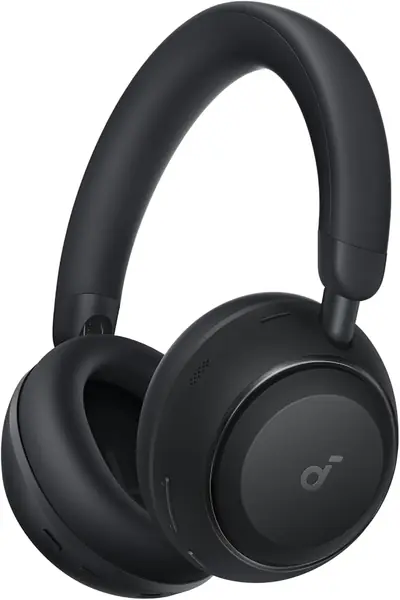
Soundcore Space 2 Best for Falling Asleep

90 /100
TKZ Score Outstanding

Key details

Battery Life
Up to 50 hours with ANC on
Noise Control
Active noise cancellation
Weight
9.31 oz
Sleep Feature
Nap Mode with built-in soundscapes
View on Amazon

Nap Mode is why this one is here. It lives in the soundcore app and plays built-in soundscapes through the headphones themselves — no second speaker, no white-noise box on the nightstand, no phone propped against a lamp. Tap it, put the set on, and a steady sound arrives a few inches from your ears, which is where masking works best anyway.

Comfort is genuinely good rather than merely adequate. The cushions are slow-rebound memory foam under protein leather, thick enough to sit around the arms of glasses instead of pressing them into your temples, and the headband spreads the load across the top of your head. At 264 grams it doesn't feel heavy on your back. Wearing detection is the quiet luxury: lift the set off at 3 a.m. and playback pauses itself instead of blaring back ten seconds later.

Fifty hours with the noise cancelling on means the charging cable can live in a drawer, and a short top-up buys four hours if you forget. Buttons rather than a touch surface are the right call for a bedside set — you can find pause in the dark, and a pillow can't swipe through a menu.

Pros

  • Nap Mode plays soundscapes with no extra device
  • Slow-rebound memory foam that clears glasses
  • 50 hours with noise cancelling on

Cons

  • Headband runs large on smaller heads
Our verdict

If you need sound to fall asleep to, this is the one: Nap Mode plays soundscapes through the headphones themselves, so you never buy a white-noise machine.

Check Latest Price
3

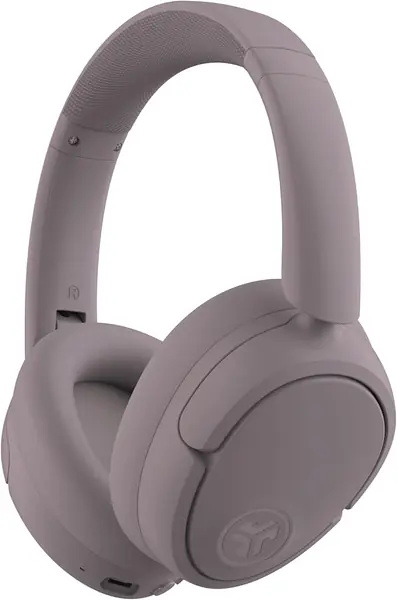
JLab JBuds Lux ANC Best Lightweight

89 /100
TKZ Score Excellent

Key details

Battery Life
Up to 70 hours
Noise Control
Hybrid ANC up to 35 dB
Weight
8.29 oz
Warranty
2 years
View on Amazon

At 235 grams the JBuds Lux is the lightest set we recommend, and for sleeping that number does more work than anything else on the spec sheet. Less mass means less of your head sinking into the pillow and less of the pad being driven into your ear, and the clamp is gentle enough that the cushions rest against your ears rather than compressing them — the detail people with stretched lobes bring up first.

Seventy hours is the second-longest figure here, and the noise cancelling is real rather than decorative: JLab rates it at up to 35 dB, enough to take the edge off a fan, a road, or a television in the next room, though it won't disappear an engine rumble the way the Bose does. Bluetooth multipoint covers the tablet-and-phone habit, and the app is where the EQ lives if the stock tuning isn't to your taste.

The pad covers are where these eventually give out — the yoke and hinge around the ear cups take the abuse when a headphone lives on a pillow or gets rolled onto. JLab's two-year warranty is the longest of any pick here, which softens that, and the price sits in the middle of this group rather than at the top.

Pros

  • 235 grams, the lightest set here
  • Pads that rest rather than press the ear
  • Up to 70 hours and a two-year warranty

Cons

  • No 3.5 mm jack for wired listening
Our verdict

We reach for the JBuds Lux when weight is the problem: 235 grams, pads that rest on your ears instead of pressing them, and 70 hours between charges.

Check Latest Price
4

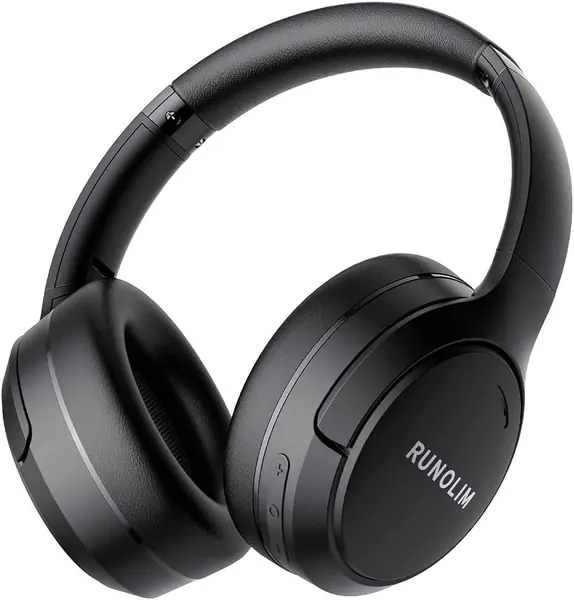
RUNOLIM ANC Headphones A Bedside Pair with Real Noise Cancelling on a Tight Budget

88 /100
TKZ Score Excellent

Key details

Battery Life
Up to 100 hours
Noise Control
Active noise cancellation
Weight
9.17 oz
Headphone Jack
3.5 mm
View on Amazon

This is what a budget pair looks like when it still does the important thing properly. The RUNOLIM has real active noise cancelling rather than a microphone that only cleans up your voice on calls, and the protein-leather pads have enough give that lying down in them isn't a punishment.

Playtime is the headline: up to 100 hours in standard mode and roughly 65 with the cancelling on, long enough that the charging cable hibernates in a drawer. The pads are the pleasant surprise at this end of the price range — wide, soft, and forgiving enough that dozing off in them happens without a second thought. Nothing else near the bottom of this list combines real cancelling, soft pads, and a battery measured in weeks.

It folds, which matters more than it sounds: the set drops into a nightstand drawer in the morning instead of squatting on the table. And the 3.5 mm cable in the box is the small mercy — if the battery gives out at 2 a.m., plugging in keeps the night going.

Pros

  • Real active noise cancelling on a budget
  • Up to 100 hours between charges
  • Soft protein-leather pads for lying down

Cons

  • Thin plastic frame at the headband and hinges
Our verdict

The budget pick that still cancels noise — real ANC, soft pads, and up to 100 hours — for anyone who wants a bedside pair without flagship money.

Check Latest Price
5

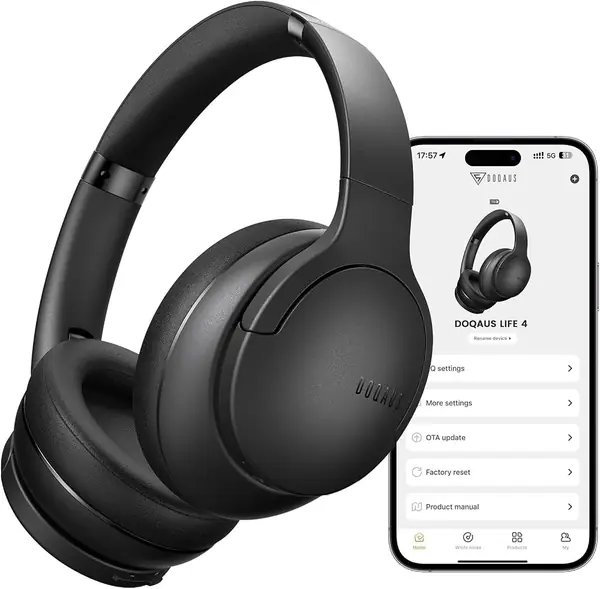
DOQAUS LIFE 5 Soft Pads for Quiet Listening at the Lowest Price Here

87 /100
TKZ Score Excellent

Key details

Battery Life
52 hours
Noise Control
Environmental noise cancellation
Headphone Jack
3.5 mm
EQ Modes
9, six adjustable
View on Amazon

Memory foam does the heavy lifting here. The pads are thick and sit around the ear rather than on it, and the headband adjusts far enough that a doze in them doesn't turn into a headache. What you don't get is noise cancelling — the environmental noise cancellation in the listing is the call microphone at work, not a chip quieting the bedroom — so the quiet comes from the foam and from whatever you're playing.

Battery is listed at 52 hours, well short of the 90 in the product title and still more than a week of nights. In the app, nine EQ modes, six of them fully adjustable, let you pull the bass back for an audiobook at 11 p.m. or push it up for music, which is more control than the price suggests. It's also the least expensive set here.

A 3.5 mm jack and a cable come in the box, and the cups fold flat into a drawer, so it stores as easily as it travels. Fit is the thing to watch: the headband covers what most adults need, but if headphones have ever sat too high or too low on you, this is a set to try while you can still send it back.

Pros

  • Memory foam pads soft enough to doze in
  • 52 hours between charges
  • Nine EQ modes, six fully adjustable

Cons

  • Plastic frame cracks with regular handling
Our verdict

Buy it for the pads and the price: the softest memory foam at the bottom of the range, with a battery that runs a week of nights.

Check Latest Price

How We Tested 12 Pairs of Headphones for Sleeping

We started with more than 40 models pulled from retailer listings and verified buyer reviews, then filtered on the things that actually decide a night's sleep: weight, earpad depth and material, whether noise cancellation runs without an audible hiss, claimed playtime, and whether the auto-off timer or touch controls can be switched off. Twelve pairs made the cut, spanning budget to premium, and we slept in them for six months.

Every tester kept a bedside log. We wore each pair for at least three consecutive nights, on our backs and on our sides with a pillow pressed against one earcup, plus couch naps and one red-eye flight. We recorded whether we pulled the headphones off in the middle of the night, whether our ears were hot or marked by the pads at 6 a.m., and whether the headband left a sore spot behind our ears.

For noise cancellation we ran a box fan and a recording of snoring in a quiet room, then sat in true silence to listen for the electronic hiss that makes ANC useless at night. Battery was tested honestly: charged to full, white noise at low volume, sleep timer on, percentage logged at wake-up and repeated across a week. We rolled over on purpose to see if a touch panel would pause playback, left the phone charging in another room, took a morning call to check switching between paired devices, and spent the last month flexing hinges, wiping down pads, and packing pairs into bags to see what cracked, flattened, or started dropping connections.

Our most expensive pair did not win, and two of the cheapest held their charge and their shape better than models costing twice as much.

How to Choose Over-Ear Headphones for Sleeping

Start With How You Sleep

Back sleepers get the most out of any pair here: the pillow presses on the headband rather than the ear cup, and weight is the only thing you feel. Side sleepers have it harder — roll over and the cup goes into the pillow, which pushes the pad into the side of your head. None of these sets makes that disappear.

Judge comfort the way you'll use it, lying down on your own pillow for a night or two while the return window is open. A demo sitting upright at a desk tells you almost nothing about 2 a.m.

Weight, Clamp, and Cushioning

The sets here run from 235 grams to 264 grams, and that spread is felt more at night than in the day. You want the weight carried by the top of your head and a headband snug enough that the cups don't shift when you turn.

That snugness is the trap: a pair that feels pleasantly loose sitting up will slide across your ear the moment you roll over, so set the band one notch tighter than feels natural. Slow-rebound memory foam compresses around the ear; firmer protein leather sits on top of it.

What Noise Cancelling Can and Can't Do Overnight

Active noise cancelling is built for steady, low-frequency sound: a fan, a road, an air handler, an engine. It's much weaker against speech and sudden noise, which is why it won't rescue you from a snoring partner or a barking dog.

If masking is the goal, pair the cancelling with a steady sound — that's exactly what the Space 2's Nap Mode is for. If you simply want the room quieter, the seal of the pads matters as much as the electronics. Decide which of those two you're buying before you compare anything else.

The Details That Wake You at 3 A.M.

A spoken battery warning, a touch panel brushed by a pillow, an auto-off timer, a cable across your throat: these are what actually interrupt a night, and none of them shows up in a spec comparison. Buttons you can find blind beat touch surfaces, and wearing detection that pauses playback when you lift the set off is worth having.

A 3.5 mm jack is the cheapest insurance there is. If the battery dies at 2 a.m., a wired pair keeps the room quiet.

Heat, Pads, and the Long Haul

Every closed cup traps heat, and a pair that's lovely for two hours can be unbearable by hour six in a warm bedroom. Faux leather wipes clean; fabric breathes better but stains.

Pads are the first part to flatten and the first to split, so on a set without replacement pads the pads effectively are the lifespan. Spend a full night in a pair rather than twenty minutes, and check that replacement pads exist for the model you're considering.

Frequently Asked Questions

Final Verdict

The Bose QuietComfort is the pair we point most people to, because sleeping in headphones is a comfort problem before it's a features problem, and plush cushions on a 240-gram frame solve more of it than a longer spec sheet does. When the goal is sound rather than silence, the Space 2 is the only set here that supplies it without a second device.

And if you sleep on your side and keep waking up on a hard ear cup, no pair on this list fixes that. A smaller, flatter design will.