Best Smartwatches with Fall Detection of 2026

A fall is rarely the injury — it's the hours after, when nobody knows you went down. A smartwatch with fall detection feels the impact, waits a beat to see whether you get up, and calls for help if you don't. Everything else matters too, because a safety net only works if you keep it on: sleep and fitness tracking, a battery that lasts the night, a case that shrugs off doorframes and still looks good at dinner.

I've worn a smartwatch daily for years, but lately I've paid attention to the ten seconds after a stumble. Over eight months, my team and I wore 10 of these through runs, overnight sleeps, showers, and one clumsy hike. Fall detection is only as good as your setup, too — emergency contacts, location sharing, and whether the watch needs your phone nearby to place the call.

We watched value and condition as closely as specs, since a well-kept older model can cover the basics for a lot less. The picks below are grouped by who they suit, not by price.

The Best Smartwatches with Fall Detection

1

Apple Watch SE 3 (40mm) Best Overall
95 /100
TKZ Score Outstanding

Key details

Case Size
40mm
Fall Detection
Yes, automatic emergency call
Phone Compatibility
iPhone
Battery Life
18 hours
View on Amazon

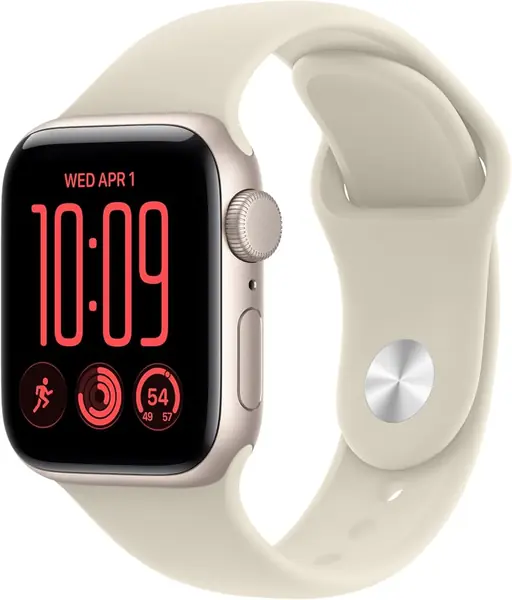
Fall detection is usually bought for someone else — a parent who lives alone, a partner coming home from surgery — and the SE 3 is the watch we point people toward first. It detects a hard fall or a severe car crash and automatically helps connect you with emergency services, and it does that without charging you for a stack of features nobody in that situation will ever touch. Around it sits the standard Apple Watch package: heart rate, sleep, temperature sensing that feeds Cycle Tracking and the Vitals app, workout tracking, and Siri on the wrist.

Charge is what decides whether a safety watch is actually there when it's needed, and 18 hours of rated battery plus charging up to twice as fast as the SE 2 is a workable combination. The fast top-up is the part we appreciate: a short charge while you're in the shower covers most of a day, so the routine never turns into a production. Long GPS workouts are what eat into it, so if the wearer walks or runs with the workout app open, add an evening charge to the day.

What earns it the top spot is that nothing about owning it is fussy. It's the watch we're comfortable handing to someone who has never worn a smartwatch, and it leaves room in the budget for the things that actually keep a watch on a wrist — a strap that fits properly and a second charger for the kitchen. The Series 9 is the step up if you want an ECG and an always-on screen; for the safety features by themselves, this is the one to buy.

Pros

  • Automatic emergency call after a hard fall or crash
  • 18-hour battery with fast charging
  • Full health tracking at Apple's entry price

Cons

  • Pairs with an iPhone only
  • 40mm case and S/M band suit smaller wrists
Our verdict

We tell almost everyone shopping for fall detection to buy the SE 3 — it calls for help on its own, runs a full day, and charges fast enough to keep on a wrist.
Check Latest Price
2

Apple Watch Series 9 (41mm) Best for Heart Health

92 /100
TKZ Score Outstanding

Key details

Case Size
41mm
Fall Detection
Yes, plus crash detection
Phone Compatibility
iPhone
Health Sensors
ECG and irregular rhythm alerts
View on Amazon

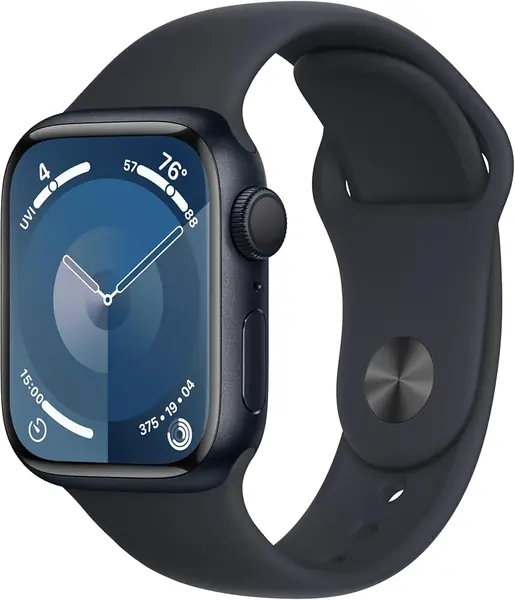
The ECG app is the line between this watch and the cheaper Apple here: it records a reading you can share with a doctor, and it flags an irregular heart rhythm in the background without being asked. For a household already thinking about falls, that's the upgrade that makes sense — the same fall and crash detection that calls for help, plus a reason to keep the watch on when nothing is wrong.

We think it's the better watch and the more indulgent purchase, and both can be true at once. The always-on Retina display keeps the time readable without a wrist raise, the screen holds up in direct sun, and sleep stages split the night into REM, Core, and Deep so the morning report is worth reading. What we noticed in daily wear was how little we had to think about it: notifications, timers, and the workout app all sit where your thumb expects them.

Fit is the thing to settle before you order. The 41mm case suits most wrists without crowding them, but the watch ships with the larger M/L band, so a smaller arm needs a different strap — add it to the same order rather than making a second trip. The Midnight aluminum finish is subdued enough for an office, and the water resistance means a shower or a rainy walk isn't a reason to take it off.

Pros

  • ECG and irregular rhythm notifications
  • Always-on, superbright Retina display
  • Fall and crash detection with Emergency SOS

Cons

  • Needs a charge most nights
Our verdict

Buy the Series 9 if someone in the house is watching their heart — the ECG and rhythm alerts are the reason to spend more than the SE 3 costs.

Check Latest Price
3

Samsung Galaxy Watch 4 Classic (Renewed) Best for Android Phones

87 /100
TKZ Score Excellent

Key details

Case Size
46mm
Fall Detection
Yes
Phone Compatibility
Android
Battery Life
About 15 hours
View on Amazon

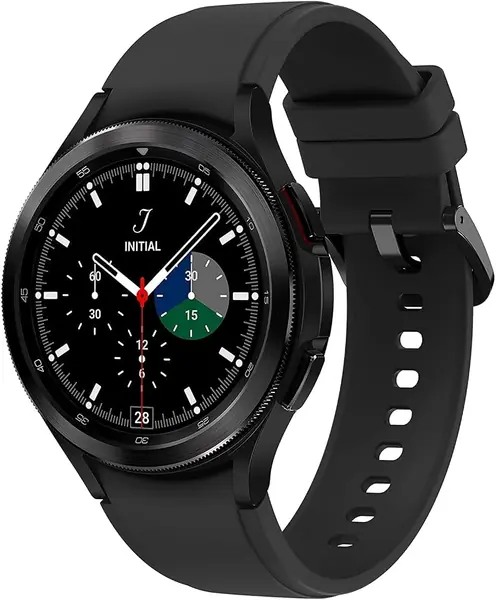
Buying renewed is the trade this watch asks you to make, and for an Android household it's still the cheapest route to fall detection on a wrist. The part we like best is the physical rotating bezel: you turn the ring to move through menus instead of swiping a small screen, which is a real help with gloves on, cold hands, or fingers that aren't as steady as they used to be. In stainless steel with a 46mm case, it reads like a watch rather than a gadget.

Fall detection and an ECG monitor are both on board, along with GPS and sleep-cycle tracking, so the safety job is covered the same way the Apple watches here cover it. The number that gives us pause is the battery: Samsung rates a charge at about 15 hours, which means a daily ritual and, on a GPS-heavy day, a second one. A watch sitting on the charger detects nothing, so build the habit — a charger by the bed and another at the desk — before you start relying on it.

Two details to sort out first. It's Android-only, so an iPhone household is out. And the included band runs short for larger wrists, an easy fix with a replacement strap but worth knowing before the box arrives. Set against the Apple watches, the bezel and the stainless case are the reason to pick it; the platform is the reason not to.

Pros

  • Rotating bezel is easy to use without swiping
  • Documented fall detection and ECG monitoring
  • Stainless steel case at a budget price

Cons

  • Ninety-day warranty and variable condition on renewed stock
Our verdict

For an Android phone this is the affordable way to get fall detection on a wrist, as long as you accept daily charging and a 90-day warranty.

Check Latest Price

How We Tested Smartwatches With Fall Detection

We started from a shortlist of roughly 30 current and recent models and cut anything without built-in fall detection, anything that wouldn't pair with the phone we actually carry, and anything priced well beyond what the feature is worth. That left 10 watches, from budget picks to premium ones, plus a couple of refurbished units to find out whether saving money costs you condition. Each was worn for eight months by someone on the team — at a desk, on runs, overnight, in the shower, and on a weekend hike.

Battery and connectivity got measured rather than eyeballed: we logged the charge level at bedtime and again at wake-up, timed how long a top-up took, and noted whether a smaller case meant a smaller battery in practice. Each watch was paired with phones running both major operating systems, and we walked out of range on purpose to see how fast it reconnected and whether notifications arrived on time. Step counts were checked against a hand-counted walk, and sleep tracking against our own notes the next morning.

Durability and condition came from ordinary carelessness — keys in the same pocket, sleeve cuffs, gym sweat, showers, one solid knock against a doorframe — and the refurbished units were checked for battery health, scratches on the glass, and bands that arrived in usable shape. Because we weren't about to stage a real fall, we judged the setup instead: how long it took to enter emergency contacts, whether location permissions were explained clearly, and how the manual SOS behaved under pressure. We also swapped cases between wrists of different sizes to see which felt like a watch and which felt like a cuff.

How to Choose a Smartwatch with Fall Detection

Pick the Phone Before the Watch

Fall detection is standard equipment on the watches here, so the first thing that narrows the list isn't a feature — it's the phone the wearer already carries. The Apple Watch SE 3 and Series 9 pair with an iPhone and nothing else; the Galaxy Watch 4 Classic pairs with Android. If you're buying for a parent, confirm which phone is actually in their pocket rather than the one you plan to hand down. Platform is the one mistake in this category you can't fix with a band or a charger.

Fall Detection Is a Setting, Not a Given

The alert has to be switched on during setup, and it only works while the watch is on a wrist with charge left. Treat battery life as a safety number rather than a convenience one: 18 hours on the SE 3 means an evening top-up, and about 15 hours on the Galaxy Watch 4 means a fixed charging time every day.

Build it into something that already happens — a shower, the evening news, dinner — and check the battery before bed rather than in the morning, when it's too late to do anything about it.

Fit Decides How Often It's Worn

A watch that's uncomfortable comes off, and a watch in a drawer detects nothing. Case size is only half of it: the SE 3 ships with an S/M band, the Series 9 with an M/L, and the Galaxy Watch 4's included strap runs small for bigger wrists. Measure the wrist or borrow a fabric tape, then order the strap you need along with the watch instead of after it. The 46mm Galaxy is the largest case here and sits very differently on a small arm than the 40mm and 41mm Apples.

What the Step Up Buys

Moving from the SE 3 to the Series 9 buys three things: an ECG app that records a reading you can show a doctor, background alerts for an irregular heart rhythm, and an always-on display that keeps the time visible without a wrist raise. Those matter a great deal to someone already watching their heart and very little to someone who mainly wants an emergency call and a step count. If you're in the second group, spend the difference on a second charger instead.

Frequently Asked Questions

Final Verdict

Fall detection is the whole reason to buy any of these, and the Apple Watch SE 3 delivers it with the fewest compromises: an automatic emergency call, 18 hours of rated battery, and charging quick enough that keeping it topped up is no burden. That is the one we recommend by default to almost every household shopping for this feature.

The Series 9 is the upgrade when heart monitoring matters — an ECG and an always-on display sitting on top of the same fall and crash detection. For Android phones, the renewed Galaxy Watch 4 Classic is the only watch here that documents fall detection, so accept the daily charge and inspect the unit the day it lands.