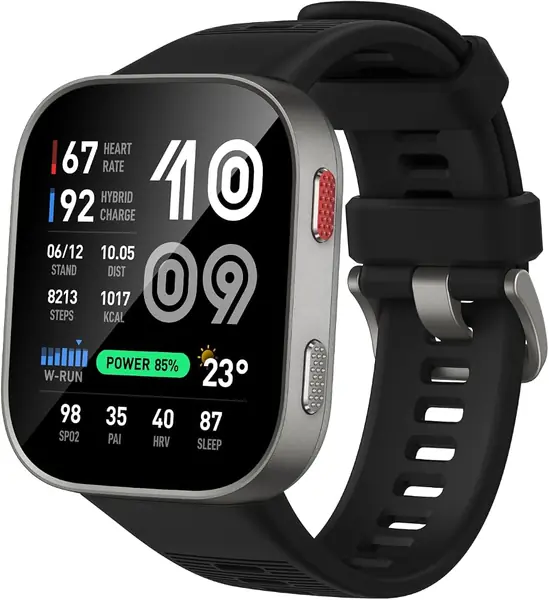
Best Smartwatches for Cycling of 2026

A cycling watch has one job nothing else on your wrist can do: tell you where you are and how hard you're working when your phone is buried in a jersey pocket. The catch is that the two things cyclists want most — a screen you can read in flat sun and a battery that survives a six-hour ride — tend to fight each other.

Over the past six months, I've ridden with 12 of these watches, from rugged solar models to big-screen budget picks, and the differences showed up where spec sheets don't: how fast a ride actually starts, whether the map redraws when you miss a turn, whether the strap still feels fine after four hours of sweat. Glanceability beats resolution — a watch you squint at is one you stop checking.

Every pick below will outlast your longest ride on battery and won't leave you standing in the driveway waiting for a satellite fix. What they don't share is a screen type or a training philosophy, so read for the kind of riding you actually do.

The Best Smartwatches for Cycling

1

Garmin Forerunner 265 Best Overall
92 /100
TKZ Score Outstanding

Key details

Display
1.3-inch AMOLED
Weight
1.66 oz
Satellite Positioning
Multi-band GPS
GPS Battery
20 hours
View on Amazon

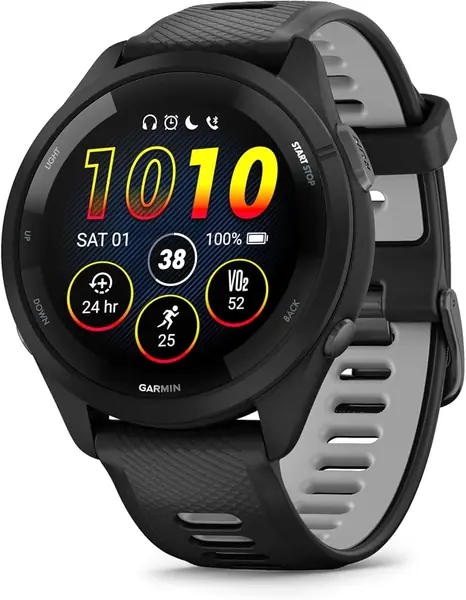
Twenty hours of GPS battery and multi-band positioning are the two figures that make the Forerunner 265 the default here. On a bike, those are the specs that decide whether a watch holds a line under tree cover and whether it survives a long gravel day. The 1.3-inch AMOLED screen is bright and easy to scan at a stoplight, and the 47-gram case is light enough to forget about after the ride. We also like that Garmin keeps physical buttons alongside the touchscreen, because wet gloves and touchscreens are a bad pairing.

The training side is where the 265 pulls ahead of the budget picks. It logs the ride and gives you recovery and readiness context that a basic fitness tracker does not, including a morning report and a training readiness score for planning hard days. We treat those numbers as guidance rather than a coach's orders, but they are useful when you are stacking intervals and long rides in the same week. The 13-day smartwatch rating is realistic for mixed use; the 20-hour GPS figure is the one to check against your longest ride.

If you mostly ride familiar roads and do not care about training scores, the 265 is more watch than you need. For the rider who wants one device for intervals, long weekend rides, and the occasional run, it is the most complete package in this group. The Amazfit Active Max covers the basics with a bigger battery, while the Instinct 3 Solar is the better choice for mud, sun, and multi-day battery.

Pros

  • Multi-band GPS for cleaner tracks
  • 20 hours of GPS-mode battery
  • Bright 1.3-inch AMOLED display
  • Light 47 g case with buttons and touch

Cons

  • Premium price next to budget picks
  • Training menus take time to learn
Our verdict

We recommend the Forerunner 265 as the best cycling watch here for riders who want multi-band GPS, a bright AMOLED screen, and serious training data without a heavy wrist load.
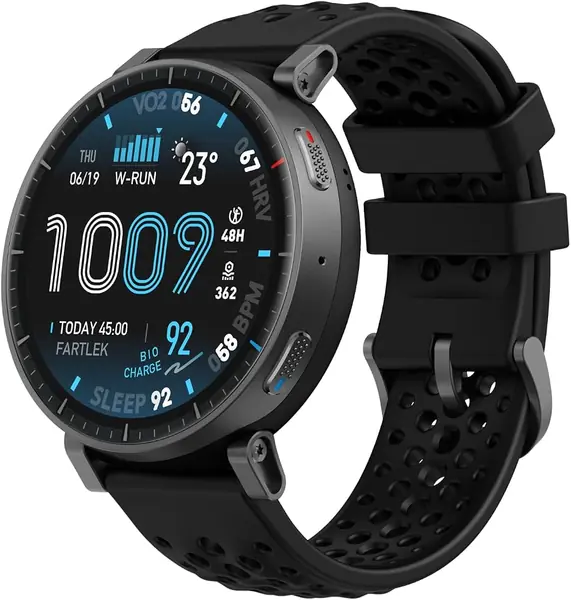
Check Latest Price
2

Garmin Instinct 3 Solar Best Rugged Battery

90 /100
TKZ Score Outstanding

Key details

Display
0.9-inch monochrome
Weight
1.83 oz
Battery Life
28 days
Satellite Positioning
Multi-band GPS with SatIQ
View on Amazon

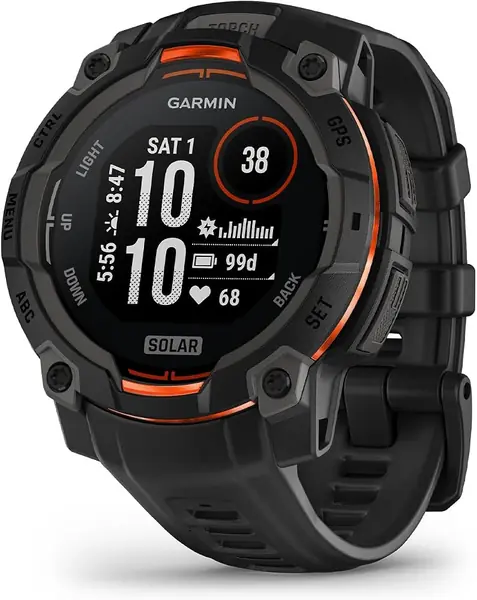
The solar lens and 28-day battery are the reason the Instinct 3 Solar belongs here. Garmin's unlimited-solar claim assumes three hours of direct sun a day, so it is not magic, but even without perfect sun this is a watch that leaves the charger at home. The 45 mm fiber-reinforced case and metal-reinforced bezel feel built for gravel spray and clumsy handling, and the 100-meter water rating covers rain and worse.

We like the button-only controls for cycling. You can start a lap or pause a ride without pulling off a glove or stabbing at a wet touchscreen, and the built-in flashlight is genuinely useful for early starts and late repairs. The 0.9-inch MIP screen is built for sunlight readability and power savings rather than rich color maps, which is the right trade for this watch's job. If you want a bright wrist screen for route cues, the Forerunner 265 is the better fit.

The Instinct 3 Solar is not the watch for someone who wants a colorful training dashboard. It is the watch for the rider who wants to press a button, follow a line, and not think about charging until the weekend. We also appreciate the multi-band GPS with SatIQ, which is the same accuracy-first positioning story as the 265 in a tougher shell.

Pros

  • 28-day battery plus solar charging
  • Button controls work with gloves
  • 100-meter water rating
  • Built-in flashlight

Cons

  • Solar gain depends on direct sun
Our verdict

Buy the Instinct 3 Solar if battery life and ruggedness matter more than a color screen; it is the long-ride watch we trust for sun, mud, and multi-day charging gaps.

Check Latest Price
3

Amazfit Active Max Best Budget All-Rounder

89 /100
TKZ Score Excellent

Key details

Display
1.5-inch AMOLED
Weight
1.97 oz
Battery Life
24 days
Satellite Systems
BeiDou, GLONASS, GPS, Galileo
View on Amazon

The 24-day battery and 1.5-inch 3,000-nit AMOLED screen are the two reasons the Active Max earns a spot. On a bike, that brightness matters more than a resolution number: you can read speed, distance, and heart rate in direct sun without shading the watch. The 4GB of storage and offline maps are a real convenience for riders who want to follow a route without mounting a phone.

We also appreciate the 170+ sport modes and the 50-meter water rating, which make it more than a one-trick fitness tracker. The 1.97-ounce case is not the lightest here, and the 1.5-inch screen is a lot of watch on a small wrist, but it stays comfortable on longer rides because the band is silicone and the shape is rounded. The Zepp app is where the data lives, and the workout summaries are easy to scan, though the training depth is not Garmin-level.

This is the watch for the rider who wants a big display and long battery without paying premium prices, and who can live with a simpler training suite. If your rides take you under dense tree cover or between tall buildings, the Garmin picks are the more accuracy-focused tools. For open-road training and everyday wear, the Active Max is a strong value.

Pros

  • 24-day battery life
  • 1.5-inch 3,000-nit AMOLED
  • 4GB storage and offline maps
  • 170+ sport modes

Cons

  • Charging puck ships without a USB-C cable
Our verdict

The Active Max is the budget pick we point to for riders who want a big, bright screen and a battery that lasts weeks, with the understanding that GPS polish trails the Garmins.

Check Latest Price
4

Amazfit Bip Max Best Big-Screen Budget

87 /100
TKZ Score Excellent

Key details

Display
2.07-inch AMOLED
Weight
1.86 oz
Battery Life
20 days
Satellite Positioning
Five satellite systems
View on Amazon

The 2.07-inch AMOLED display is the whole point of the Bip Max. Pace, distance, and heart rate are easy to read at a glance, and the 3,000-nit brightness means you do not have to squint in direct sun. It is a lot of screen for a watch, so we think of it as a cycling computer for your wrist rather than a discreet everyday piece. The 20-day battery rating is the other draw, though that figure is for typical smartwatch use, not a week of long GPS rides.

We like the 4GB of storage and offline maps for riders who want to follow a route without a phone, and the five satellite systems are a useful step up from basic GPS. The 150+ sport modes cover cycling and plenty more, and the 50-meter water rating handles rain and sweat. The catch is that the watch is big and the app experience is simpler than Garmin's; if you want advanced training scores or multi-band accuracy, this is not the one.

For the rider who wants the biggest display here and does not need race-level analytics, the Bip Max is a compelling budget choice. It is also the one we point to for anyone who mounts the watch on wide bars and wants data to read like a small dashboard.

Pros

  • Huge 2.07-inch AMOLED
  • 20-day battery rating
  • 4GB storage and offline maps
  • Five satellite systems

Cons

  • Charging base ships without a USB-C cable
Our verdict

The Bip Max is the big-screen budget pick for riders who want glanceable data and long battery, as long as a 2.07-inch watch does not feel oversized on their wrist.

Check Latest Price
5

BANLVS Military Smart Watch Rugged Budget

77 /100
TKZ Score Very Good

Key details

Display
2.02 inches
Battery Life
12+ days
Satellite Positioning
Built-in GPS
Water Resistance
5ATM
View on Amazon

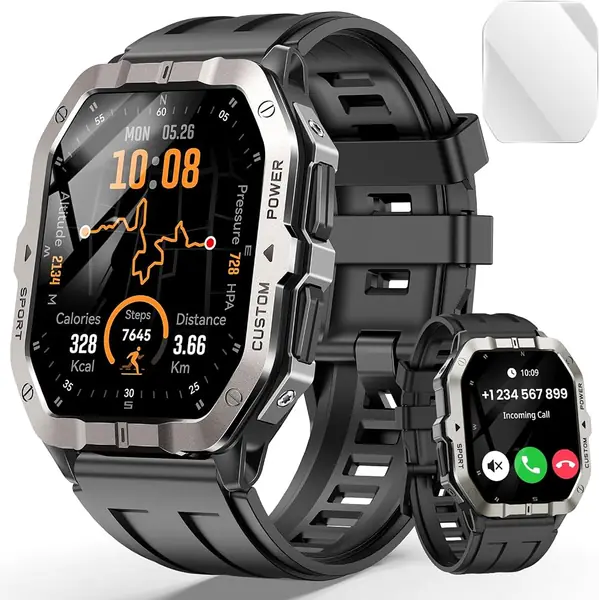
The 5ATM water rating is what sets the BANLVS apart in the budget group. That rating covers swimming and heavy rain, which is more than many cheap big-screen watches offer, and it makes the watch a practical choice for commuters who ride in all weather. The 2.02-inch display is bright and easy to read, and the 12+ day battery rating is long enough to leave the charger at home for a week of commuting.

We like the built-in GPS and 100+ sport modes for basic ride logging, and Bluetooth 5.4 calling is a useful extra if you ride with your phone in a jersey pocket. The app and sensor suite are simpler than the Garmin picks, so we see it as a first budget watch or a second watch for messy weather. We do not recommend relying on it for race-level pacing.

For the money, the BANLVS covers the essentials: a big screen, GPS, water resistance, and calls. If you want accurate route tracing under trees or serious training metrics, the Forerunner 265 or Instinct 3 Solar is the better tool. If you want a tough watch for commuting and casual rides, this one earns its place.

Pros

  • 5ATM water resistance
  • 12+ days battery with calling
  • 2.02-inch display
  • Built-in GPS and 100+ modes

Cons

  • Single-band GPS only
Our verdict

The BANLVS is the budget rugged pick for riders who want a big screen and 5ATM water resistance, but it is a basic training tool rather than a Garmin substitute.

Check Latest Price

How We Tested the Best Smartwatches for Cycling

We started by pulling every watch we could find with built-in GPS and multisport tracking, then narrowed the field on the things that actually decide a bike purchase: battery life under GPS load, display type, offline mapping, water resistance, and whether it played nicely with both iOS and Android. Case size got a vote too — a 50mm watch on a narrow wrist is a dealbreaker no spec sheet warns you about. That left 12 watches, which we bought at retail and wore over six months, each for a minimum of two weeks.

Testing happened on real rides: a 20-mile weekday loop with two climbs, a 60-mile weekend route through the hills, a rainy commute, a cold 6 a.m. start, and a couple of indoor trainer sessions. We paired each watch with a cadence sensor and a heart rate strap whenever it supported them, then checked distance, elevation, and route shape against a bike computer recording the same ride. On unfamiliar roads we turned on navigation and deliberately missed turns to see how quickly the map redrew and whether the alert actually reached us over wind noise.

Battery got measured rather than estimated — we wrote down the percentage before and after every ride over two hours, then let each watch run a full week with notifications on. Screens were judged in direct midday sun and through sunglasses at speed. In the app, we counted the taps it took to start a ride, watched for failed uploads, and disconnected Bluetooth mid-ride to see whether it reconnected on its own. Because a watch is jewelry half the time, everyone on the team wore theirs to the office and to dinner for a week before we weighed in on looks and strap comfort. Value was the last filter: what each watch included set against what that price tier usually gets you.

How to Choose a Smartwatch for Cycling

Prioritize GPS Mode Battery, Not Smartwatch Days

A watch that lasts two weeks on your wrist may still die on a long century. The number that matters is GPS-mode runtime, not smartwatch-mode days. The Forerunner 265 is rated for 20 hours with GPS on, while the Instinct 3 Solar stretches to 28 days in smartwatch mode and adds solar charging. Those are different kinds of endurance. Check the GPS figure against your longest ride and add a margin for cold weather, rerouting, and a forgotten charge.

Multi-band GPS is the other half of the accuracy story. It helps under tree cover and between buildings, but it draws more power. If you ride open roads, single-band can be enough; if your routes are wooded or urban, pay for multi-band.

Choose a Display You Can Read at Speed

AMOLED screens look great and are easy to read in sun, but they draw more power than a monochrome MIP display. The Bip Max's 2.07-inch AMOLED is the most glanceable screen here; the Instinct 3 Solar's 0.9-inch MIP is the most power-efficient. Match the screen to how you ride: a large color display if you follow maps and want data at a glance, a smaller MIP if you want maximum battery and do not need color.

Buttons, Maps, and the Phone-Free Ride

Touchscreens are fine at a café stop and frustrating with wet gloves. Physical buttons are easier to hit without looking, which is why the Instinct 3 Solar and the Forerunner 265 keep them. If you want to leave your phone at home, look for onboard maps and storage: the Amazfit Active Max and Bip Max both list 4GB and offline maps. Decide which matters more before you pay for either.

Fit, Weight, and What You Wear All Day

A 47-gram watch disappears on some wrists and feels heavy on others. The Bip Max's 2.07-inch screen and 1.86-ounce body are great on the bike but noticeable off it; the Forerunner 265 at 47 grams is easier to wear to bed. If you wear a watch 24/7, weight and case size matter as much as battery. Try the watch under a jacket cuff and with gloves before you commit.

Frequently Asked Questions

Final Verdict

Buy the Garmin Forerunner 265 if you want the most complete cycling watch here: multi-band GPS, a bright AMOLED screen, 20 hours of GPS battery, and training data that goes beyond pace and distance. The Instinct 3 Solar is the better choice for long, rugged days and solar charging, while the Amazfit Active Max is the budget pick for a big screen and week-long battery. Start with the riding you actually do, then choose the watch that matches its longest, dirtiest day.