Best Sleep Trackers of 2026

I have a complicated relationship with sleep data. A tracker that tells me I slept poorly can send me into a spiral, but the right one helps me see why—late meals, a warm room, one more episode—and adjust without turning bedtime into a spreadsheet. Sleep trackers now come as rings, screenless bands and straps, and bedside devices that watch you without touching you; the choice is less about gadgets and more about where you want the technology to sit in your life. The best fade into the background and hand you a morning summary you'll actually use.

Over six months, we've worn and lived with a dozen sleep trackers, including rings, screenless bands, and a contactless bedside unit. We paid attention to comfort, accuracy, battery life, and whether suggestions felt supportive or scolding. A little category wisdom: a tracker is only as good as its consistency, so the one you'll keep wearing or keep on your nightstand beats the one with the longest feature list. The picks below earned a spot on our wrists, fingers, and nightstands.

The Best Sleep Trackers

1

WHOOP 5.0 Best Overall
89 /100
TKZ Score Excellent

Key details

Battery Life
Up to 14 days
Water Resistance
IP68
Membership
12 months included
Sleep Tracking
REM, deep, light, awake
View on Amazon

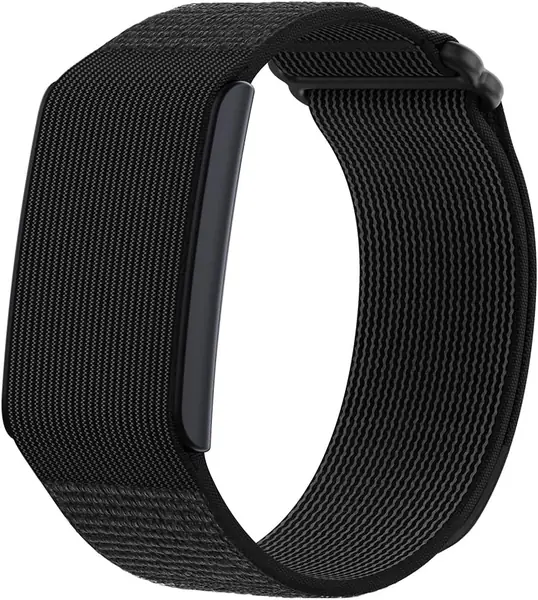
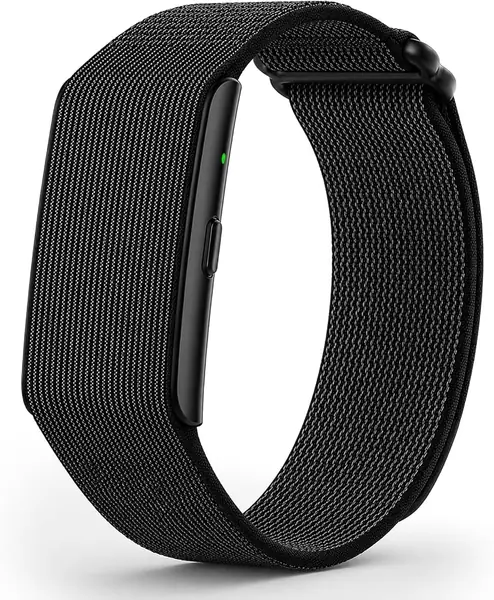
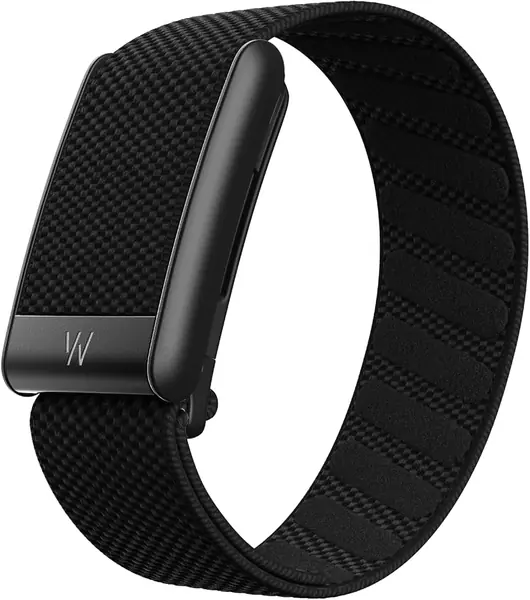
The detail that decides it for us is the charger: a small waterproof pack that slides onto the band and tops the battery up while the strap is still on your wrist. That sounds minor until you've lived with a tracker you have to take off every few nights. The WHOOP 5.0 runs up to 14 days between charges, and you never give up a night of data to get there.

What it does with the night is the other half. It records REM, deep, light and awake time, then folds sleep, strain and heart-rate variability into a recovery number in the morning alongside the 140-plus health metrics the app keeps. We like that the output is a decision rather than a chart: it tells you whether to push or back off, and it does it with nothing glowing on the nightstand.

The membership is the thing to get comfortable with. You're buying 12 months of the service with the band included, and after that you renew to keep the data coming. Comfort is the other split: the SuperKnit strap is soft, but warm and itchy by morning is a real possibility, and the 5.0 uses different band holders than the 4.0, so a drawer of old straps won't fit.

One practical note we didn't expect: the membership and the battery pack are HSA and FSA eligible, so a benefits card you've been ignoring can pay for this one.

Pros

  • Charges while worn, so no night goes untracked
  • Turns sleep and strain into a daily recovery call
  • Screenless and dark, with two weeks between charges
  • Membership covers the hardware and is HSA/FSA eligible

Cons

  • Costs a yearly membership, not a one-time price
  • Knit band can feel warm and itchy by morning
Our verdict

We recommend it for anyone who wants a nightly recovery read without a screen — just go in knowing the membership, not the band, is the real purchase.
Check Latest Price
2

Oura Ring 4 Best Ring

88 /100
TKZ Score Excellent

Key details

Battery Life
Up to 8 days
Water Resistance
100 m
Membership
Required after first month
Form
Titanium ring
View on Amazon

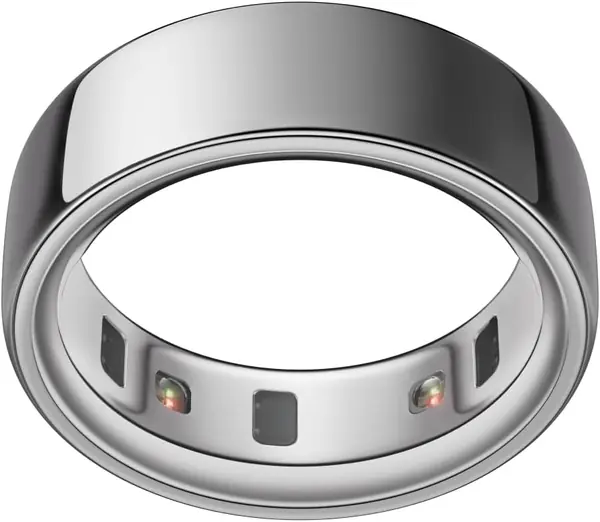
It looks like a ring, which is the entire argument for wearing one to bed. The Oura Ring 4 is titanium, round and about as thick as a wedding band, with no display and no vibration — nothing to catch on a pillow or light up at three in the morning. On the hand it reads as jewelry rather than a gadget, and that's why it survives the night.

Sleep is where it does its best work. It logs stages through the night, tracks heart rate and body temperature, and rolls all of it into a readiness score by morning, and of everything here it's the sleep breakdown we keep coming back to. When a night goes badly, this is the device that tells you why — the temperature shift, the late evening, the short wind-down.

The cost side is real. Full insights need the Oura membership, which starts after the first month, so this is a subscription product wearing a ring. The battery is rated up to eight days and takes about 80 minutes to recharge, and the cell is the part that ages first; a ring that stops holding a charge is the failure worth planning for.

One thing to do before you order: use Oura's sizing kit. Its sizes don't line up with standard ring sizes, and a ring that spins or pinches won't give you the overnight readings you bought it for.

Pros

  • Sleep stages, temperature and readiness in one morning read
  • Titanium ring with no screen and no vibration
  • Up to eight days between charges

Cons

  • Membership required after the first month
  • Finish and battery wear with daily use
Our verdict

The deepest sleep analysis in this set comes in the shape of a ring you'll genuinely wear — provided you're willing to keep paying for the membership.

Check Latest Price
3

Hatch Sleep Clock Best You Don't Wear

87 /100
TKZ Score Excellent

Key details

Also Does
Sound machine, sunrise alarm
Connectivity
Wi-Fi and Bluetooth
Power Source
Corded electric
Tracking Method
Contactless from nightstand
View on Amazon

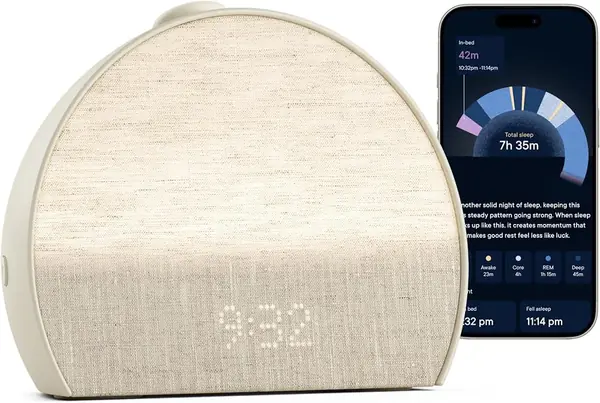
Bedtime is where the Hatch Sleep Clock starts, not the morning. It's a nightstand device that runs a wind-down routine of colored light and sound, wakes you with a sunrise instead of an alarm tone, and senses your night without anything strapped to your body.

The tracking is contactless: sensors in the clock pick up micro-movements and breathing patterns and turn them into a morning summary with a suggestion. What comes back is a plain read on how the night went and what to try next, not a physiology dashboard. Setup needs Bluetooth and a steady 2.4 GHz Wi-Fi network, and the clock stays plugged into the wall. It's priced like a premium device, and you're paying for the light and sound as much as for the sensing.

Where it wins us over is that it works on the sleep itself, not just the score. The wind-down light and the sound machine are what you feel on night one; the tracking is what tells you whether the routine is working. It's also the only pick here that does its job whether or not you remember to put it on — and the only one that has to live on your nightstand instead of your wrist.

Pros

  • Tracks sleep with nothing worn on your body
  • Wind-down light and sound make bedtime easier
  • Sunrise alarm wakes you without a jolt

Cons

  • Costs as much as a premium ring with less data
  • Must stay plugged in on the nightstand
Our verdict

For anyone who won't wear a band or ring to bed, this is the sleep tracker that still gets the job done, and it helps you wind down first.

Check Latest Price
4

Amazfit Helio Strap Best Value

86 /100
TKZ Score Excellent

Key details

Battery Life
Up to 10 days
Water Resistance
50 m
Weight
0.64 oz
Subscription
None
View on Amazon

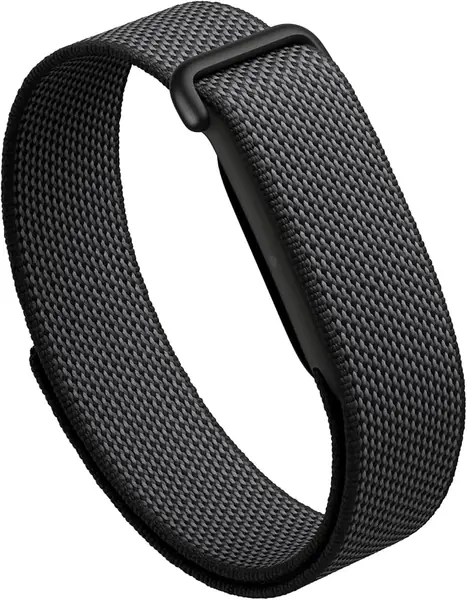
No subscription, ever, is the promise the Amazfit Helio Strap makes, and at this price it's the detail that matters most. You buy the strap once, pair it with the free Zepp app, and the sleep, heart rate and recovery data keeps coming without a monthly bill. In a category where the WHOOP 5.0 and the Oura Ring 4 both run on memberships, that's a real difference.

The hardware is honest about what it is: 18 grams of screenless band with a nylon hook-and-loop strap, up to 10 days of battery, and continuous heart rate, blood oxygen, stress and sleep tracking. It boils the day into a HybridCharge score that tells you how much you have in the tank, and there are 27 sport modes plus rep and set counting for gym work. Step counts read low against a smartwatch, so treat the walking numbers as a trend rather than a tally.

Two things to know before you buy. The strap is fabric, and fabric holds water, so lap swimming isn't what this one is for even though it's rated to 50 meters. And reliability is uneven: a unit that stops syncing or dies inside six months is a possibility here, so buy it where returns are easy rather than chasing the cheapest listing.

For us it comes down to what you want the data for. If a nightly picture of how you slept and how hard you can train is enough, and you prefer not to rent your own health data, the Helio Strap covers it and leaves room in the budget for a replacement if it fails. If you want the deepest analysis in this set, that's what the Oura Ring 4 is for.

Pros

  • No subscription
  • 18 grams and up to 10 days per charge
  • HybridCharge score and overnight sleep data in a free app

Cons

  • Fabric strap holds water after a swim
  • Step counts can read low
Our verdict

Our subscription-free pick: real sleep and recovery data for a one-time price, as long as you don't need lab-grade precision.

Check Latest Price
5

Fitbit Air Best for All-Night Comfort

85 /100
TKZ Score Excellent

Key details

Battery Life
Up to 7 days
Water Resistance
50 m
Weight
0.18 oz
Sleep Metrics
Stages, SpO2, skin temperature
View on Amazon

Five grams is the number that matters here. The Fitbit Air is the lightest thing in this roundup by a wide margin, and the one-size band micro-adjusts from 130 to 210 millimeters, so it sits still on a small wrist without being cranked tight. It's the one we noticed least overnight, which is the only test a sleep tracker truly has to pass.

Sleep data covers the essentials: time to sleep, REM, light and deep stages, plus overnight skin temperature and blood oxygen from the red and infrared sensors. What we don't love is the consistency — sleep insights are the most uneven part of the package, and a sync can stall until you reopen the app. When it lands, the morning summary is clear and easy to act on.

The rest is sensible. A week of battery, a five-minute top-up that buys you a day, and a band you can swap for a softer sleep band at night. Google Health Premium, with its Gemini-built coaching, is optional and comes with a three-month trial; the free app gives you the numbers without it. If you want the coaching, pay for it — if you want the data, skip it.

Pros

  • At 5.07 g, the lightest tracker here
  • A five-minute charge buys a full day
  • Skin temperature and blood oxygen overnight

Cons

  • Sleep insights are the least consistent part
  • Sync can stall until you reopen the app
Our verdict

The tracker we point to when wristbands annoy you at night: it's barely there, it covers the sleep basics, and it skips the membership math.

Check Latest Price
6

Domhong Screenless Band Best for A Cheap Second Tracker for Travel or a First Taste of Sleep Data.

84 /100
TKZ Score Excellent

Key details

Battery Life
20–30 days
Water Resistance
IP68
Weight
0.88 oz
Subscription
None
View on Amazon

Twenty to thirty days is the number that stops us short. The Domhong band charges in about two hours and then leaves your to-do list for a month — no charging case to lose, no nightly ritual, no deciding which night to sacrifice for a top-up. At 25 grams it's heavier than the premium options, but it's still a band you forget about.

For the money you get light, deep and REM sleep stages, heart rate variability, blood oxygen, stress tracking and a daily energy read, all through the free QwatchPro app with no subscription attached. There are more than 170 sport modes, which is more than anyone needs, and the GPS borrows your phone's signal rather than carrying its own.

This is the pick for a specific shopper: someone who wants to find out whether nightly data changes anything before spending ring money, or who wants a second tracker to travel with so the good one stays home. The pin buckle is the weak point — it's fiddlier to fasten in a dark bedroom than a stretch band — but a month of battery and no subscription buys a lot of patience.

Pros

  • Twenty to thirty days between charges
  • No subscription; the app is free
  • Sleep stages, HRV, SpO2 and stress tracking

Cons

  • Pin buckle is fiddly to fasten in the dark
  • GPS depends on your phone
Our verdict

A cheap way to try sleep tracking properly: a month of battery, no subscription, and overnight data that doesn't cost ring money.

Check Latest Price
7

Milavan Smart Ring Testing Whether a Ring Suits You Before Spending Ring Money.

83 /100
TKZ Score Excellent

Key details

Battery Life
3 days
Water Resistance
50 m
Sizing
Measure against size chart
Profile
2 mm
View on Amazon

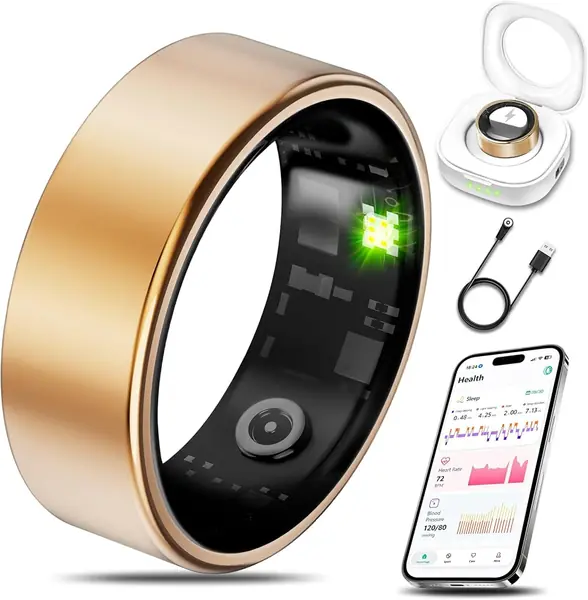
Measure your finger before you order, because that's the whole game with an inexpensive smart ring. The Milavan comes in numbered sizes, and the size chart is the only thing standing between you and a ring that slides off at night or leaves a mark by morning. Get it right and this is the least expensive way to find out whether you actually like wearing a ring to bed.

What arrives is a 2 mm stainless steel and resin band in rose gold with a polished inner surface, a charging case, and about three days of battery per charge. It logs deep, light and REM sleep plus awake time, and covers eight sport modes from running to golf. Heart rate is sampled every 30 minutes rather than continuously, so treat it as a nightly summary device, not a workout monitor.

The trade for the price is depth: sleep stages and a nightly read, but not the readiness coaching or temperature tracking the expensive rings build their pitch on. We appreciate that the warranty runs a full year, and the charging case means a top-up happens at your desk rather than on a hunt for a cable. If a ring is the form you want and the budget is tight, start here.

Pros

  • Slim 2 mm band with a polished inner surface
  • Charging case included for desk-side top-ups
  • Tracks deep, light, REM and awake time

Cons

  • Heart rate sampled every 30 minutes, not continuously
  • Needs charging every three days
Our verdict

An inexpensive first ring: measure carefully, expect a nightly summary rather than deep coaching, and it earns its keep.

Check Latest Price

How We Chose and Tested the Best Sleep Trackers

To build the shortlist, I started with the formats people actually ask about—rings, screenless wrist wearables, and contactless bedside trackers—then compared specs, app compatibility, subscription requirements, and replacement costs. I ruled out anything that needed a new charger every night or a subscription to see basic sleep data, and I checked ring sizing and strap fit before ordering. We ended up with 12 trackers and tested them for six months.

Each tracker lived through real weeks: overnights at home, a few naps, travel weekends, and the usual mix of late dinners and early alarms. I wore rings on my non-dominant hand, bands and straps on my wrist during showers, workouts, and yard work, and placed the bedside unit where I'd normally set a phone. Every morning I compared the sleep summary with what I remembered—how long it took to fall asleep, how many times I woke, whether I felt rested—and noted where the numbers matched or drifted.

I also watched the less glamorous stuff. I ran each battery down to zero and logged how many days it lasted and how annoying charging was; I checked whether the app lost connection overnight or repeated old data. Comfort and design got judged by whether I forgot I was wearing the thing, and durability by how the finish, strap, and ring held up after sweat, lotion, and daily handling. For value, I weighed the purchase price against subscription fees, replacement parts, and whether the free version gave me enough. The trackers that made the list were the ones that stayed reliable, felt comfortable enough for every night, and turned a night's data into something I could actually use—not just a score to stress over.

How to Choose a Sleep Tracker

Pick the Form You'll Actually Keep Wearing

A ring disappears on your hand, but it has to be sized properly, and ring sizing is not jewelry sizing: the Oura Ring 4 needs its own sizing kit because its numbers don't match standard rings. A screenless band forgives more and swaps wrists easily, though the strap material decides whether you sleep in it — knit can feel warm by morning, silicone wipes clean. A bedside device asks nothing of you at all, which is its whole advantage if wearables have ended up in a drawer before.

Match the form to your history rather than to the spec sheet. If you've abandoned a watch before, the contactless Hatch is the lower-risk entry. If you want the deepest data, accept the fitting step a ring requires.

Read Battery Life as Nights, Not Days

The number on the box is a best case, measured with a fresh cell, and it shrinks with age. What matters is the charging routine. The WHOOP 5.0 tops up from a pack that slides onto the band while you wear it, so no night is lost. The Oura Ring 4 sits on its charger for roughly 80 minutes, which is easiest to give it in the morning. The Domhong goes a month between charges.

Ask which night you'll lose and whether that's a night you care about. A tracker that dies mid-week gives you a hole in exactly the data you bought it for.

Know What You Want the App to Say

Sleep stages are table stakes now; the differences show up in what happens after them. A recovery or readiness score tells you whether to train hard. Temperature and heart-rate variability trends explain a bad night. A bedside box gives you a plain sentence and a suggestion. More numbers are not automatically better — a score you check every morning beats a dashboard you open once.

Decide which of those you'll act on. If you want behavior change, weight the coaching and the wind-down features; if you want raw data, weight sensor coverage.

Price the Membership, Not Just the Device

Two picks here are memberships in disguise: the WHOOP 5.0 includes the band in a 12-month plan, and the Oura Ring 4 needs its subscription to show you everything after the first month. The Amazfit Helio Strap, Fitbit Air, Domhong and Milavan are buy-once, with coaching optional on the Fitbit.

Choose the model you're comfortable with before you buy, because a subscription you resent is a tracker you stop wearing. A one-time purchase with slightly less polish is often the better long-term deal.

Frequently Asked Questions

Final Verdict

We recommend the WHOOP 5.0 for most people. It's the only tracker here that can't lose a night to charging, its sleep and recovery reporting is what the hardware was built around, and the screenless band keeps your bedroom dark. Go in knowing the membership, not the band, is the purchase.

If you want the most detailed sleep analysis and you'll wear a ring, the Oura Ring 4 delivers it — size it with the kit, budget for the subscription, and treat the battery as the part that will age. And if you know you won't wear anything to bed, the Hatch Sleep Clock tracks the night from the nightstand and works on your wind-down routine at the same time, which is more than any wristband can do from a drawer.