Best Basic Fitness Trackers of 2026

I once spent a week with a smartwatch that could do everything except make it through a weekend without a charger, and it cured me of wanting more features. A basic fitness tracker should count steps, monitor heart rate and sleep, survive a shower, and stay on your wrist long enough that charging is an afterthought. It should also be easy to use without digging through menus and good-looking enough that you don't feel like you're wearing a gadget.

The biggest fork in this category is connectivity: some trackers run entirely on the wrist with no app or phone required, while others pair with an app for trends and history. Over four months, I wore 12 basic trackers through desk work, dog walks, gym sessions, and overnight sleep, and my team compared setup, screen readability, band comfort, battery life, and whether step counts and connections held up. We also watched finish and fit, because a tracker you don't want to wear is one you won't use. The picks below are the ones that made the basics feel effortless.

The Best Basic Fitness Trackers

1

Pautios EW1 Fitness Tracker Best Overall
85 /100
TKZ Score Excellent

Key details

Battery Life
10 days
Display
Large color touchscreen
App Or Phone
Not required
Tracks
Steps, heart rate, SpO2, sleep
View on Amazon

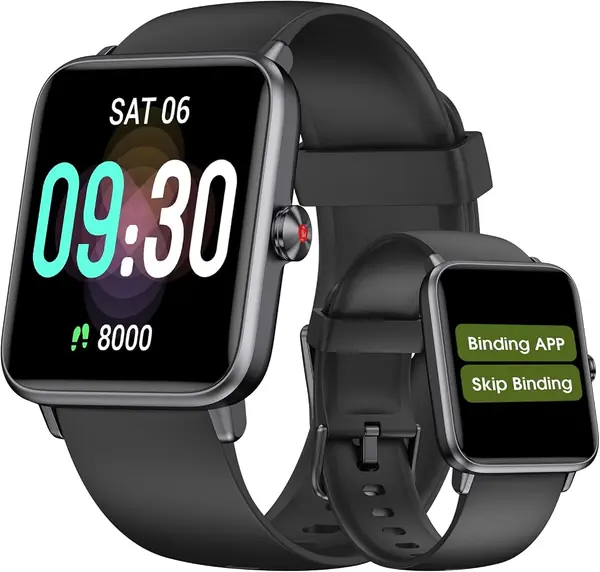
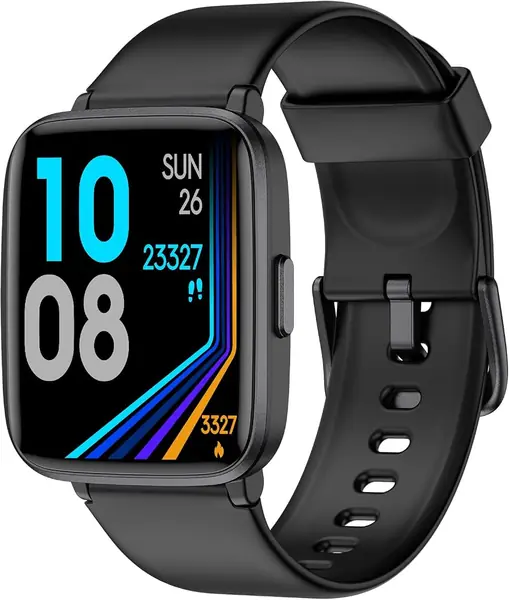
Some people want a tracker the way they want a wristwatch: strap it on, glance at it, and never think about it again. The Pautios EW1 is built for exactly that person. Steps, heart rate, blood oxygen and sleep all appear on a large color touchscreen, and every setting is handled on your wrist — no pairing screen, no account, no password to lose.

That phone-free setup is why it is our top pick. Ease of use carries the day: the display is big enough to read at arm's length, the battery is rated at 10 days, and the watch keeps working as a watch even if it never talks to anything else. If you are buying a first tracker for yourself, or for a parent who does not want another login, this design removes almost every place the purchase can go wrong.

The step count is the softer part. Wrist trackers infer steps from arm movement and this one can run a little high, so treat the daily total as a score to beat rather than a precise record, and check it once against a route you already know. The band also holds moisture after a sweaty workout or a hand-wash, so rinse it and let your wrist dry before you strap it back on.

One detail matters more than any specification: pairing is optional. Connectivity is the only thing that can spoil this watch, and only if you decide to send your history to a phone. Leave it unpaired and you have bought a watch, a pedometer and a sleep tracker with nothing to configure — which is the entire promise of the category.

Pros

  • No app, account or pairing needed
  • Large color touchscreen shows steps, heart rate, SpO2 and sleep
  • Rated at 10 days per charge

Cons

  • Step counts can read a little high
Our verdict

Our pick for most people: steps, heart rate and sleep on a big readable screen, roughly 10 days a charge, and no app to set up.
Check Latest Price
2

Fitbit Inspire 3 Best with an App

84 /100
TKZ Score Excellent

Key details

Water Resistance
50 meters
Battery Life
10 days
App Support
iOS 16.4+, Android 11+
Sleep And Stress
Sleep Score, Stress Score
View on Amazon

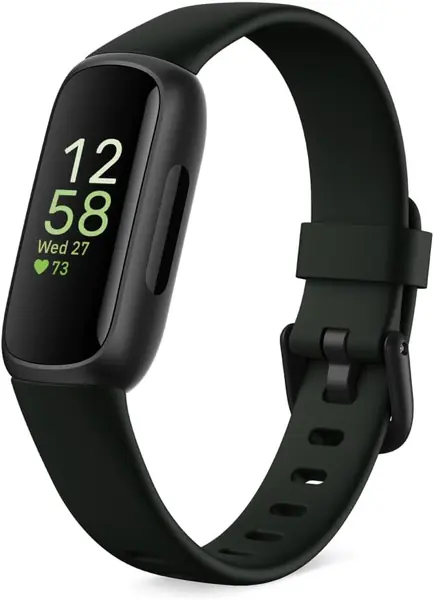
The Inspire 3 asks one thing the Pautios does not: keep a phone nearby and open the Fitbit app. What that buys is the deepest picture of your rest in this group — a daily Sleep Score, a readiness score that tells you whether to push or ease off, and a stress reading that shifts through the day.

On the wrist it has the smallest screen here at 0.76 inches, paired with a 10-day battery rating and 50-meter water resistance that covers swimming without a second thought. Behind that sit blood-oxygen readings, irregular heart rhythm notifications, menstrual tracking, 40-plus exercise modes and a three-month Google Health Premium membership.

We recommend it to people who genuinely like data and will open the app most days. The trade is real: that tiny display pushes you to your phone, the case is resin rather than metal, and the silicone band takes a firm tug to latch. Add the fact that it sits at the top of this group's price range and the decision becomes simple — you are paying for the sleep and stress software and for the backing of the only major wearables brand here, and that is worth it only if you will use it.

Pros

  • Sleep Score, readiness and stress tracking
  • 10-day battery and 50-meter water resistance
  • Three-month Google Health Premium included

Cons

  • Syncing to the app can stall or drop
  • Charging can fail after a few months
Our verdict

We recommend it to anyone who will actually open the app: the sleep and stress insight is the deepest here, and the price is the trade.

Check Latest Price
3

LIVIKEY No-App Fitness Tracker Best Budget

83 /100
TKZ Score Excellent

Key details

Water Resistance
IP68
Sport Modes
9
Battery Life
5–7 days
App Or Phone
Not required
View on Amazon

The LIVIKEY sits at the budget end of this list and spends what it has in the right places: a 41-millimeter touchscreen, nine sport modes, IP68 water resistance, and a battery rated at five to seven days on a two-hour charge. It also pushes texts and call alerts to your wrist, which is more than most basics even attempt.

What we like is how little it asks of you. The watch counts steps, heart rate and sleep entirely on its own; pairing only matters if you want the phone alerts and the app history, so you can start as simple as you like and add the rest later. For a first tracker, or a second one that lives in a gym bag, that is about as low-stakes as this category gets.

Accuracy is the one soft spot. Step counts can wander enough that the daily figure works better as a target than as a receipt, which is true of most wrist trackers at any price — walk a known route once with it and you will know which way yours leans. Everything else about the watch is a straight trade of polish for price, and the trade is a fair one.

Pros

  • No app needed for steps, heart rate and sleep
  • IP68 body with five to seven days per charge
  • Phone alerts at a budget price

Cons

  • Band and screen wear within months
Our verdict

Our budget pick: steps, heart rate, sleep and phone alerts for very little money, with nothing to install unless you want the extras.

Check Latest Price
4

DAVIKO Slim Fitness Tracker Barely-There Wear

82 /100
TKZ Score Excellent

Key details

Water Resistance
30 meters
Sport Modes
100
App Or Phone
Not required
Weight
1 oz
View on Amazon

One ounce, on a band 0.6 inches wide. The DAVIKO is the tracker for people who cannot stand the feel of a watch, and at that weight it stops registering on your wrist within an hour or so — which matters most overnight, when a bulky watch is usually the reason sleep tracking never happens.

It is not stripped down to get there. The spec list runs to round-the-clock heart rate and stress tracking, blood oxygen, sleep monitoring, 30-meter water resistance and a hundred sport modes, and the basics work without an app or a phone in the loop.

We think of it as a sleep-and-steps tracker: wear it to bed, glance at it in the morning, forget it for the rest of the day. The case is plain plastic and the strap is ordinary, but at an ounce it is the easiest of these to forget you have on — and a tracker you forget is a tracker you keep wearing past the first month.

Pros

  • One-ounce build disappears on the wrist
  • Heart rate, SpO2, sleep and stress tracking
  • No app or phone needed for daily use

Cons

  • Marketed for diving, but 30 meters is a swim rating
Our verdict

If you have given up on trackers because they feel like a lump, we think this one-ounce watch is the one to try.

Check Latest Price
5

Zeacool 1.1-Inch Fitness Tracker Best for Swim-Friendly Tracking

81 /100
TKZ Score Excellent

Key details

Water Resistance
5 ATM
Sport Modes
25
Battery Life
10 days
Display
1.1-inch AMOLED
View on Amazon

If you want to swim in your tracker, the rating to look for is 5 ATM, and the Zeacool is the least expensive way to get it here. The screen is the nicest part — a bright 1.1-inch AMOLED panel, in a slim case that comes in bordeaux as well as black. For the money, this is the swimming pick.

What the watch does on its own is the core: steps, calories, all-day heart rate, blood oxygen, sleep and the usual reminder nudges. The 25 sport modes and their settings are chosen in the app, though, so setting up a swim workout takes a phone first. That is the one place this watch makes you work for the features you paid for.

Pros

  • 5 ATM rating covers swimming and showers
  • Bright 1.1-inch AMOLED touchscreen
  • Rated at 10 days per charge

Cons

  • Plastic case will not take knocks like steel
  • Sport modes must be set up in the app
Our verdict

We like it best for swimmers: 5 ATM water resistance, a bright AMOLED screen and 10 days of battery for very little money.

Check Latest Price
6

ST-CARE C60 Fitness Tracker Best for Watch-Like Looks

78 /100
TKZ Score Very Good

Key details

Water Resistance
5 ATM
Sport Modes
25
Display
1.1-inch AMOLED
Frame
Stainless steel
View on Amazon

Nearly everything in this price range is plastic; we like that the ST-CARE C60 is not. A stainless steel frame wraps a 1.1-inch AMOLED touchscreen, and the result is the pick here that looks like a more expensive watch than it is — bordeaux is an option alongside black.

Under the metal it is a familiar package: 25 sport modes, 5 ATM water resistance for swimming and showers, all-day steps, calories, distance and time, plus call and message reminders, a remote camera shutter, and drink-water and sedentary nudges. The controls are touch, the frame is the only metal one in this group, and nothing about the feature list asks you to learn a new habit.

The one number missing is battery life, which ST-CARE does not publish, so confirm it where you buy if charging frequency matters to you. Everything else about the C60 is a matter of taste, and the taste it serves is straightforward: a basic tracker that will not look out of place with a shirt cuff.

Pros

  • Stainless steel frame stands apart from plastic rivals
  • 5 ATM rating covers swimming and showers
  • AMOLED touchscreen with 25 sport modes

Cons

No notable drawbacks to flag.

Our verdict

We recommend it when you want a basic tracker that looks like a real watch rather than a plastic band.

Check Latest Price

How We Tested Basic Fitness Trackers

We started by researching the basic fitness tracker category rather than the smartwatch shelf, reading specs and customer feedback and narrowing the field to models that emphasized simple step, heart rate, and sleep tracking. We filtered for app-free operation, waterproof ratings, readable displays, comfortable band sizes, and battery claims that sounded believable, then bought 12 trackers at retail and tested them for four months.

Each tracker went through the same routines: a measured one-mile walk where we counted steps by hand and compared, a week of all-day wear at a desk and on dog walks, gym sessions, showers, and overnight sleep. We set up every model from the box, timed how long it took to get the time, date, and tracking running, and noted whether we needed a phone or app to do it. We checked screens indoors, outdoors, and in low light, and wore each band through a full day to see whether it snagged, sweated, or left marks.

Battery life was tracked from full charge to shutdown, with charging time noted, and we watched for reliability issues like dropped Bluetooth connections, step counts that drifted, and heart rate readings that stalled during workouts. We also compared materials, clasps, and finish against what each tracker costs, because value in this category comes from a device that feels solid and keeps working, not from a long feature list. At the end, we looked at which ones we kept reaching for after the testing week ended.

How to Choose a Basic Fitness Tracker

Watch-first or app-first?

A no-app pedometer watch shows steps, heart rate and sleep on its own screen and never asks for an account; the trade is that your history lives on the device instead of in charts. An app-based tracker like the Fitbit Inspire 3 gives you sleep stages, stress scores and months of trends, but only if you will pair, sync and remember a password. Buying for a parent? Go watch-first. Buying for yourself and you like data? Pay for the app. And remember that no-app-required rarely means no-app-at-all: several of these pair optionally for history and alerts.

What a week of battery really means

A basic tracker runs for days, not hours, and the spread here of five to ten days decides how annoying charging becomes. A five-day watch needs a charge on the same weekday every week; a ten-day watch slots into a laundry routine. Charging contacts are also where cheap trackers go wrong early, so treat the little magnetic cable as part of the product: keep the contacts clean and dry, use the cable that came in the box, and charge before the battery hits zero rather than after. If you know you forget, buy the longest rating and skip overnight oxygen tracking.

IP68 against 5 ATM

Water ratings split into two camps here. IP68 means the case shrugs off dust and a dunking; 5 ATM, the same as a 50-meter rating, is the one to look for if you want to swim laps, and it is what the Zeacool and the ST-CARE carry. Both handle sweat, rain and hand-washing. Neither is a dive rating, whatever a product page may imply, and heat is the real enemy: hot tubs, saunas and soapy showers degrade the seals that keep water out. If you swim weekly, spend for 5 ATM and rinse the watch in cool fresh water afterward.

Screen, weight and what your wrist will tolerate

Screen choice is a daily-use decision before it is a specification. An AMOLED panel is brighter and sharper than the color LCD on the Pautios, but a bigger screen usually means a bigger case, and the smallest display here — the Fitbit at 0.76 inches — pushes you to read the app instead. Weight runs from about an ounce upward, and the lightest trackers are the ones still on your wrist at 2 a.m. Band material matters as much: silicone traps moisture, the usual cause of a red, itchy wrist. Rinse and dry the band after workouts and give your wrist a night off.

What step counts can and cannot tell you

A wrist tracker infers steps from arm movement, so pushing a cart or gesturing can add steps while pushing a stroller can hide them. That is normal rather than a defect, and the fix is calibration: walk a route you already know and compare once, so you know whether yours runs high or low. Put the same caution on the health numbers. Heart rate is a training guide, not a medical measurement, and the blood pressure or oxygen readings on a budget watch should never be something you act on. The number worth watching is the trend across weeks.

Frequently Asked Questions

Final Verdict

Start with the Pautios EW1 unless something specific rules it out. It does the three things a basic tracker is for — steps, heart rate, sleep — on a screen you can read without your glasses, and it never asks you to pair a phone, which is the step where most first-time buyers quietly give up on a wearable.

Choose the Fitbit Inspire 3 instead if you know you will open an app and want sleep and stress scores to go with your steps. Pick the DAVIKO if the reason your last tracker ended up in a drawer was that it felt like a lump on your wrist.