Best Over-Ear Headphones for Travel of 2026

The cabin noise starts before the plane even pushes back from the gate, a low rumble you don't notice until it stops. A good pair of over-ear headphones is the closest thing air travel has to a volume knob, and it turns a middle seat into a room of your own. I've worn pairs through a six-hour flight and forgotten they were on my head, and I've worn pairs that clamped so hard I spent the last hour counting rows to the exit.

Over the past six months, my team and I have lived with 12 pairs of over-ear headphones on long-haul flights, on commuter trains, and at desks in open offices. The spec sheet sells the wrong thing: noise cancellation gets all the marketing, but the pair that ruins a trip is usually the one that dies during a layover or starts aching at hour two. Multipoint pairing, so a laptop and a phone can both stay connected, matters far more than most first-time buyers expect, and so does a hinge sturdy enough to survive being stuffed into a personal item.

We weighed all of it, including what each pair asks you to pay for it, and the picks below are the ones we kept reaching for. Some are built for a coast-to-coast flight, some for a daily commute, and one for the trip you take twice a year.

The Best Over-Ear Headphones for Travel

1

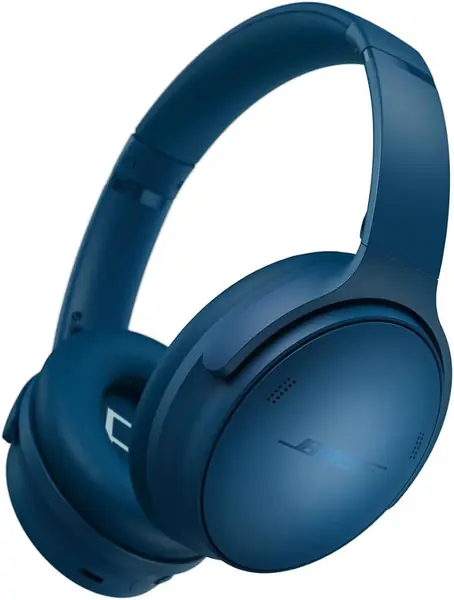
Bose QuietComfort Headphones Best Overall
93 /100
TKZ Score Outstanding

Key details

Battery Life
Up to 24 hours
Weight
8.47 oz
Noise Cancelling
Active, Quiet and Aware modes
In The Box
Carrying case, 3.5 mm cable, USB-C cable
View on Amazon

Few headphones arrive as ready for a trip. The QuietComfort ships with a molded carrying case, a detachable 3.5 mm cable, and a USB-C cord, so one purchase covers a Bluetooth flight, a seatback screen with no wireless of its own, and a charge in a hotel room. Quiet and Aware modes sit on the earcup too: drop the cabin noise for a movie, then let the gate announcement back in without lifting a cushion.

That completeness is why it is our top pick, more than any single figure. The cancelling is the genuine article — engine drone and air-conditioning hum flatten into silence, and the low-frequency wash of a wide-body cabin stops competing with dialogue. The cushions are plush enough that a double feature does not leave your ears sore, and at 240 grams the weight stays out of the way of a nap against the window. Adjustable EQ in the app lets you add back some bass if the stock tuning sounds polite at altitude.

The one habit to plan around is Bluetooth. The link can stutter when a phone and a laptop are both hovering, and pairing takes a beat longer than the newest chips manage; when that happens, the included cable turns them into a wired pair for the rest of the flight, which is more than most of the pairs here can offer.

Pros

  • Cancels engine drone and cabin hum
  • Case and 3.5 mm cable included
  • Plush cushions stay comfortable for hours
  • Aware mode for announcements

Cons

  • 24-hour battery is the shortest of the cancelling picks
  • Loud voice prompts and limited on-ear controls
Our verdict

We steer most travelers here: the QuietComfort quiets a cabin, stays comfortable through a long movie, and packs with a case, a cable, and a wired backup.
Check Latest Price
2

soundcore by Anker Q20i Best Budget

92 /100
TKZ Score Outstanding

Key details

Battery Life
Up to 40 hours with ANC
Weight
9.12 oz
Noise Cancelling
Active, with transparency mode
Multipoint
Two devices
View on Amazon

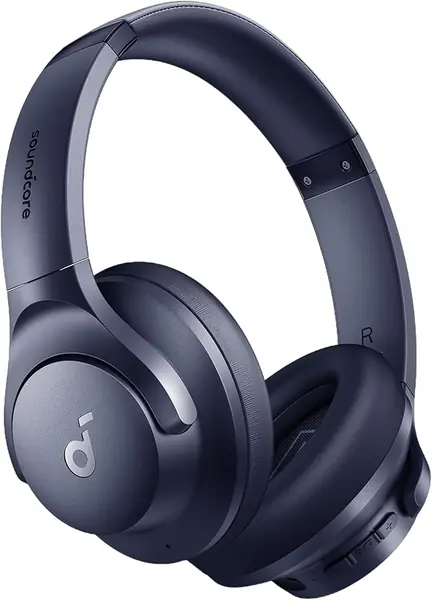
Noise cancelling is usually where the price jumps, and this is the pair that breaks the rule. The Q20i is the least expensive set here with genuine active cancelling built from four microphones, and it is the one we point to when someone wants to spend sensibly and still hear less of the engine.

What surprised us is how little it gives up. Forty hours with cancelling on covers a two-week trip without the charger, a five-minute top-up handles a delayed connection, and two-device pairing means a call interrupts a movie instead of missing you entirely. The app's EQ is worth five minutes of fiddling — BassUp adds a lot of low end, which is exactly what a plane makes sound thin — and the AUX cable in the box delivers the seatback-screen trick that plenty of pricier pairs skip.

Budget cancelling is a muffler, not a mute. It takes the rumble down and leaves the toddler two rows back audible, which is the honest ceiling at this end of the market. The pads also run warm after an hour or two, so a summer layover is the least pleasant part of owning these.

Pros

  • Real active cancelling at the lowest price here
  • 40 hours with cancelling on, plus quick top-ups
  • Pairs with two devices at once
  • App EQ and an included AUX cable

Cons

  • Headband runs loose on smaller heads
  • No travel case in the box
Our verdict

Our budget pick: the Q20i brings real active cancelling, two-device pairing, and 40 hours to a price that makes the flagship pairs look indulgent.

Check Latest Price
3

Sony WH-CH720N Best for All-Day Wear

91 /100
TKZ Score Outstanding

Key details

Battery Life
Up to 35 hours
Weight
6.77 oz
Noise Cancelling
Active, dual noise sensor
Quick Charge
3 minutes for 1 hour
View on Amazon

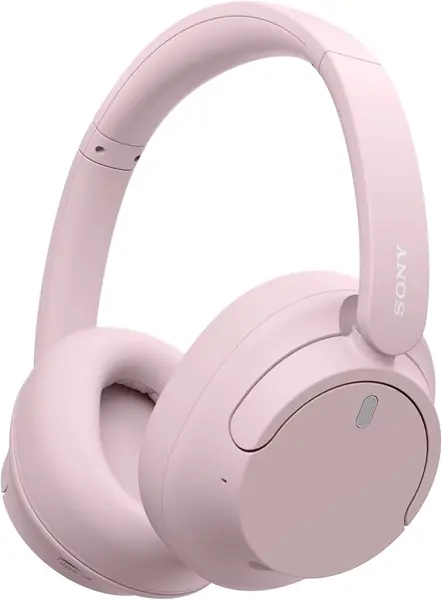
At 192 grams the WH-CH720N is the lightest pair here, the only one under 200 grams and 48 grams lighter than the Bose. On a travel day that is the difference between a headband you notice and one you forget: less pressure on the crown, less to shift when you lean against a window, and no urge to take them off between flights.

The rest of the package is built for long wear. Thirty-five hours is more than the Bose manages, and the three-minute charge that buys an hour is the quickest top-up in this group — enough to cover a delay at the gate. Ambient sound mode is adjustable rather than fixed, multipoint keeps a phone and a laptop connected, and the push buttons are easier to find by feel in a dark cabin than a touch panel.

The gap that matters for flying is the wiring. There is no 3.5 mm jack and no audio cable in the box, so an older plane's seatback screen is out of reach; this is a Bluetooth-only pair, full stop. If your long-hauls are your own downloads on a phone, that costs you nothing — and you get the lightest thing on your head in exchange.

Pros

  • Lightest pair here at 192 grams
  • 35 hours with the fastest quick charge here
  • Comfortable enough for all-day wear

Cons

  • No 3.5 mm jack or audio cable
  • Bluetooth link is the least steady here
Our verdict

We hand the WH-CH720N to travelers who wear headphones all day rather than in bursts: it is the lightest pair here, and the missing cable is the price.

Check Latest Price
4

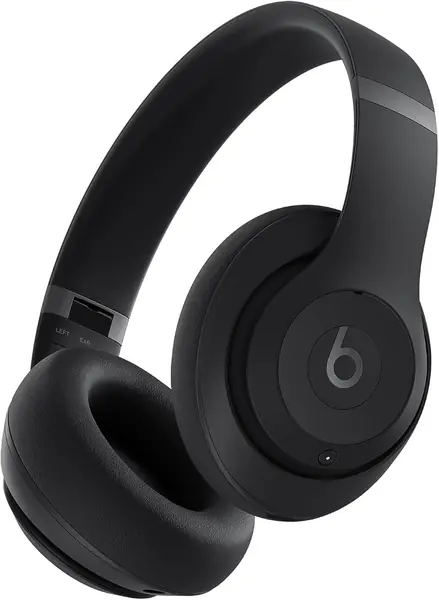
Beats Studio Pro Best for Apple Devices

90 /100
TKZ Score Outstanding

Key details

Battery Life
Up to 40 hours
Weight
9.2 oz
Noise Cancelling
Active, with transparency
Audio
USB-C lossless, spatial audio
View on Amazon

The Studio Pro is the only pair here that plays lossless audio over USB-C. Plug it into a laptop or a newer phone with the right cable and the signal skips Bluetooth entirely — worth the trouble on a long flight with an album you actually care about — and the spatial audio with head tracking makes a downloaded film feel bigger than the seatback screen in front of you.

As a travel companion it is easier to live with than that feature list suggests. Forty hours of playback is joint-longest among the cancelling pairs here, the frame folds into a bag, and transparency mode is a button press away when the gate staff start talking. On an iPhone the setup is the smoothest of the group: pair once and it follows you between devices without a second visit to the settings menu.

Fit is the thing to test early. The clamp is firm, and on a larger head it turns into pressure behind the ears after a couple of hours; a ten-minute try-on at home tells you what a six-hour flight tells you too late. Buy from somewhere with a return window you are willing to use.

Pros

  • Plays lossless audio over USB-C
  • 40 hours, joint-longest of the cancelling pairs
  • One-touch pairing on Apple and Android

Cons

  • Firm clamp presses on larger heads
  • Hinge and headband are the wear points
Our verdict

For an iPhone or a USB-C laptop, this is the pair we point to: lossless audio, 40 hours, and the smoothest pairing in this roundup.

Check Latest Price
5

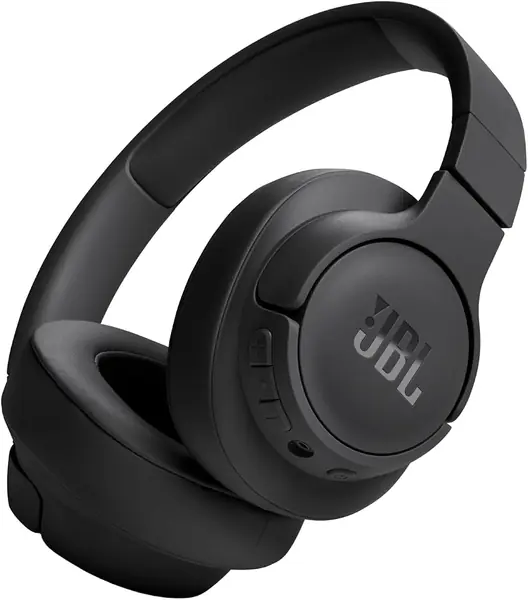
JBL Tune 720BT Best for Value and Endurance

89 /100
TKZ Score Excellent

Key details

Battery Life
Up to 76 hours
Weight
7.76 oz
Wired Option
3.5 mm jack
Noise Control
Passive sound isolation
View on Amazon

There is no active noise cancelling here, and that is the trade for 76 hours of playback and a folding frame that weighs 220 grams. On a plane the Tune 720BT muffles the engines rather than removing them; the upside is that the isolation is plenty for a train, a bus, or a cafe, and you are paying mid-budget money instead of flagship money.

Endurance is the reason it is in this roundup at all. Seventy-six hours is more than three times the Bose's run time, which on a two-week trip means the charger stays in the suitcase, and 220 grams is light for a folding pair carrying this much battery. The JBL Headphones app adds a usable EQ, multipoint keeps a phone and a tablet connected, and there is a 3.5 mm jack for the planes that still need a cable.

The fit runs small. The cups sit closer to on-ear than over-ear on a bigger head, and the clamp is tight enough that a long flight keeps reminding you about it — if you wear thick-framed glasses or have a wide head, try before you commit. Everyone else gets a light, long-running pair that undercuts the flagships by a wide margin.

Pros

  • 76 hours on a charge
  • Light at 220 grams and folds down
  • App EQ, multipoint, and a 3.5 mm jack

Cons

  • No active noise cancelling
  • Cups run small and clamp tight
Our verdict

The pair we recommend when the trip is long and the budget is not: 76 hours, a folding frame, and a cable for the seatback screen, with no cancelling.

Check Latest Price
6

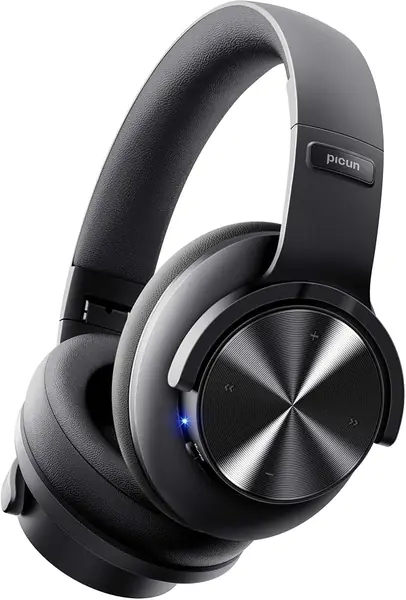
Picun B8 Cheapest Backup Pair

88 /100
TKZ Score Excellent

Key details

Battery Life
Up to 120 hours
Multipoint
Two devices
Wired Option
3.5 mm cable
Noise Control
Passive sound isolation
View on Amazon

If 76 hours still sounds like a chore, the B8 quotes 120 from a 1,000 mAh battery. Even allowing for the usual optimism in battery claims, that is weeks of commuting between charges rather than days, which is why this is the pair that ends up living in a bag instead of a drawer.

It is also the least expensive pair here that holds two devices at once, and multipoint matters more on a trip than it sounds: a laptop and a phone both stay connected and the audio follows whichever one speaks. There is a 3.5 mm cable for older seatback systems, three EQ presets on the headset itself, and quoted latency of 50 ms — low enough that dialogue stays in sync with lips on a tablet.

The trade is weight and quiet. At 12.3 ounces it is the heaviest pair in this roundup, and after a few hours the mass shows up as pressure on the crown: fine for a commute, less fun on a nine-hour flight. And this is isolation rather than active cancelling, so engine noise drops to a background rumble instead of disappearing. As a second pair that lives in a bag and gets charged monthly, it is an easy call.

Pros

  • 120 hours per charge
  • Multipoint and a 3.5 mm cable at the lowest price here
  • Comfortable cushions and low latency for video

Cons

  • Heaviest pair here at 12.3 ounces
  • Isolation only, no active cancelling
Our verdict

A second pair you can leave in a bag: 120 hours, two-device pairing, and a cable for older planes, with weight and no cancelling as the trade.

Check Latest Price

How We Tested Travel Headphones

We started with the things shoppers actually compare: published weight, battery rating, Bluetooth version, whether the cups fold flat, and price. Anything that couldn't realistically make it through a cross-country flight got cut, which left 12 pairs ranging from budget models to premium ones. Testers then lived with them for six months, with two long-haul flights, a handful of shorter ones, twice-weekly train commutes, and long stretches at open desks in between.

Battery life was the first thing we stopped taking on faith. We charged each pair to full, ran noise cancellation at a fixed volume, and timed how long it took to die, then noted how much playtime a quick top-up bought before a flight. On planes and trains we paid attention to which pairs silenced the engine drone and which ones just added a hiss of their own.

Comfort we judged with our bodies rather than a scale. Each tester wore a pair through a full workday, glasses included, and wrote down where the headband pressed, whether their ears overheated after two hours, and how the fit held up when they turned their head or leaned back in a seat.

Because these headphones live in bags, we folded and unfolded each pair a dozen times, dropped them into backpacks next to water bottles and charging cables, and checked the hinges for wobble by the end of the test. We also paired each one to a laptop and a phone at once, walked across the room to see which connection held, and took video calls with a box fan running to hear how the microphones handled background noise.

How to Choose Over-Ear Headphones for Travel

What Noise Cancelling Actually Removes

Active cancelling works on steady, low-frequency sound: engine drone, air handlers, the rumble of a rail car. It is much weaker against a baby, a chatty row, or the gate announcement, which is why every pair worth flying with has a transparency or aware mode to let those back in. Look for microphones and a real ANC mode rather than the phrase "noise cancelling" on its own — a lot of budget Bluetooth headphones mean passive isolation, which is just the cup sealing against your head.

If your travel is mostly trains, offices, and the occasional flight, isolation plus a good seal can be enough. If you are regularly above the clouds, pay for the real thing. The soundcore Q20i shows you no longer need flagship money to get it.

The Jack, the Cable, and the Seatback Screen

A 3.5 mm jack is the least glamorous spec on this page and the one you will miss most. Plenty of aircraft still pipe audio through a socket in the armrest, and older cabins use a two-prong airline jack that needs a cheap adapter before anything will play.

Check what ships in the box before you order. A cable is included with the Bose and the soundcore; the Sony has no jack at all, which makes it a Bluetooth-only pair however good the cancelling is. Pack the adapter with your passport and you will never think about it again.

Battery Math for a Real Trip

Playtime figures are quoted with different features running, so compare them like for like: the soundcore's 40 hours is with cancelling engaged, while some cheaper pairs reach their headline number with everything switched off. What matters is whether the number covers your itinerary. Twenty-four hours handles a round trip with room to spare, and anything past 40 mostly means the charger stays home.

Quick charging is the feature that rescues a bad day. Three minutes on USB-C buys an hour on the Sony, and a five-minute top-up on the soundcore covers a delayed gate. That is often the difference between listening on the plane and reading the safety card.

Fit, Weight, and the Over-Ear Promise

Over-ear means the cup surrounds your ear instead of pressing on it, and that distinction is what makes an eight-hour flight bearable. Cup openings vary, though, and a pair that is genuinely circumaural on one head sits on the ear of a larger one — the JBL Tune 720BT is the example in this group, and it is worth knowing before you order.

Weight across this set runs from 192 grams to 12.3 ounces, and the difference shows up as pressure on the crown rather than in your hand. Wear a new pair for an hour at home before you fly with it, and buy somewhere the return window is generous.

Where They Break

Hinges, headbands, and ear pads, roughly in that order. A folding mechanism is the price of packability, and the thin plastic at the hinge is what gives out first on a pair that lives in a backpack. Pads are consumables: they compress, split, and eventually need replacing, so check that replacements are sold before committing to a model you plan to keep.

Warranty length varies across this set, and the return window is usually the more useful protection. Give a new pair a month of real commuting before the window closes.

Frequently Asked Questions

Final Verdict

The Bose QuietComfort is the pair we point to first, because it is the one here that arrives with the whole trip in the box: cancelling that turns a cabin into background noise, cushions that survive a double feature, and a case and cable for the flights where Bluetooth is not an option.

If the budget is the deciding vote, the soundcore Q20i does the same job with a looser fit for a fraction of the money. If weight is what you feel most, the Sony WH-CH720N is the lightest thing here — just accept that it cannot plug into anything.