Best Multipoint Headphones of 2026

Multipoint is one of those specs that reads like a footnote and turns out to be the reason you keep a pair of headphones. It holds two devices connected at once — laptop and phone, say — so an incoming call cuts in over whatever you're streaming rather than sending you back into a settings menu. The handoff is where these models separate: some switch in a second, others make you say hello twice.

Sound and noise cancellation get the attention, but comfort decides whether a pair survives a four-hour flight — clamping force matters more than the weight on the spec sheet, and battery claims usually assume noise cancellation is off. We've spent six months with 12 pairs to see how those tradeoffs play out across a real workday.

The ones that held up handled the small stuff: a call taken mid-podcast, a laptop politely taking the audio back, earcups that didn't ache by hour three. Priorities differ, and the picks below reflect that — but every one earned its spot on the same terms.

The Best Multipoint Headphones

1

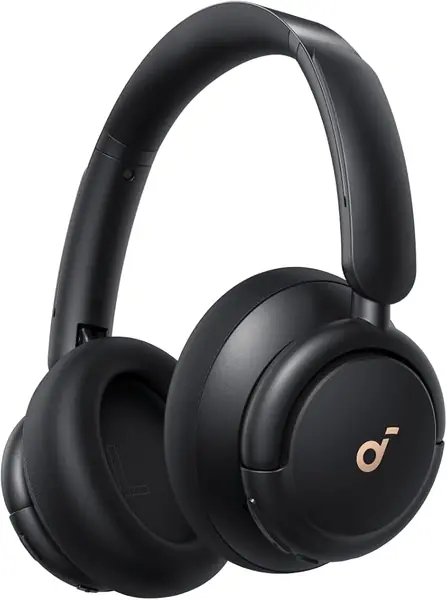
Soundcore Q20i Best Overall
92 /100
TKZ Score Outstanding

Key details

Weight
9.12 oz
Multipoint
Two devices at once
Battery Life
Up to 40 hours with ANC
Noise Control
Hybrid ANC and transparency
View on Amazon

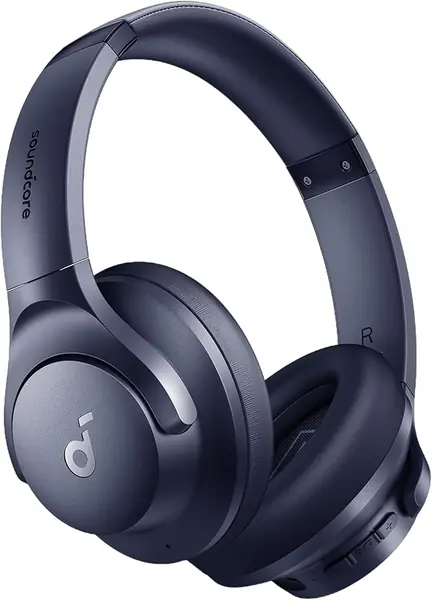
Two-device switching, 40 hours with ANC, an app EQ, and a wired backup are a lot of headphone for the least expensive full-featured pick here. We paired the Q20i with a laptop and a phone, moved from a call to a video without opening a menu, and got the handoff that makes multipoint worth having.

That is why it is our top pick. The ANC is not the deepest in this group—the Sony XM6 is the one for a loud cabin—but it takes the edge off an office or train, and the 40-hour rating meant we stopped thinking about the charger. BassUp gives the sound a punchy tilt; the app lets you pull it back.

The pads are thick and the band is padded, so comfort is generous. The upside is that it never clamps hard, which matters over a long afternoon. It is the pair we leave on through a whole workday rather than just a commute.

The frame feels like budget plastic, and the Q20i is happiest in a bag rather than a travel kit. What it does better than anything else here is make the multipoint habit feel ordinary. It stays by our laptop, which is the highest compliment we can give a budget pair.

Pros

  • True two-device switching for laptop and phone
  • 40 hours of ANC listening per charge
  • App EQ, transparency, and wired backup

Cons

  • Fit runs loose on smaller heads
  • No protective case in the box
Our verdict

We recommend the Q20i to most buyers: it switches between a laptop and phone, quiets a commute, and costs far less than the premium picks here.
Check Latest Price
2

Sony WH-1000XM6 Best Noise Cancelling

91 /100
TKZ Score Outstanding

Key details

Weight
8.96 oz
Multipoint
Multipoint pairing
Battery Life
Up to 30 hours
Noise Control
Active noise cancellation
View on Amazon

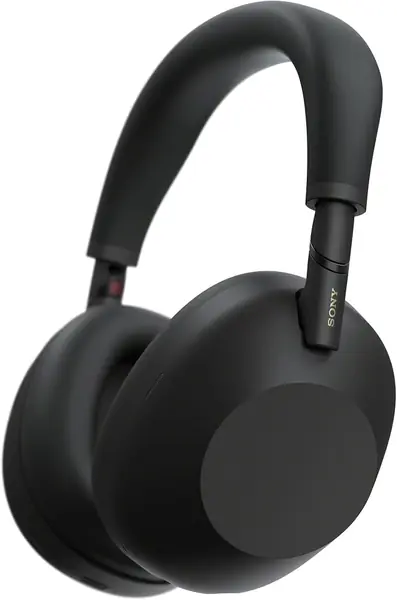
The QN3 processor and 12-microphone array are the reason the WH-1000XM6 exists. Sony says the chip is seven times faster than the QN1 and uses all those mics in real time; the result is adaptive noise cancellation that adjusts as the room changes. You also get 30 hours of playback, a folding frame, a magnetic-closure case, and a detachable cable.

We paired it with a laptop and a phone and moved between a call and music without a trip to the settings menu. The six-mic beamforming array made voices sound close on calls, and the sound is detailed without feeling thin. The touch controls are responsive, though the app is where most of the tuning lives.

On a noisy commute, this is the pair we reach for. The ANC is the strongest in this group, and the difference is obvious next to the budget picks: engine rumble and office chatter drop away rather than just soften. If you fly often, that is the feature you are paying for.

The case is compact, with a magnetic closure, and the headphones fold into it; the detachable cable gives you a wired backup. That is a travel kit we actually keep together.

Pros

  • Strongest noise cancellation in this group
  • Multipoint and six-mic call clarity
  • 30 hours with a compact folding case

Cons

  • Firm clamp can fatigue after hours
  • Plastic earcup rings can crack
Our verdict

We recommend the WH-1000XM6 when blocking a plane cabin matters more than price; its ANC is the strongest in this group.

Check Latest Price
3

Sony WH-CH720N Best Lightweight Comfort

90 /100
TKZ Score Outstanding

Key details

Weight
6.77 oz
Multipoint
Multipoint connection
Battery Life
Up to 35 hours
Noise Control
Active noise cancellation
View on Amazon

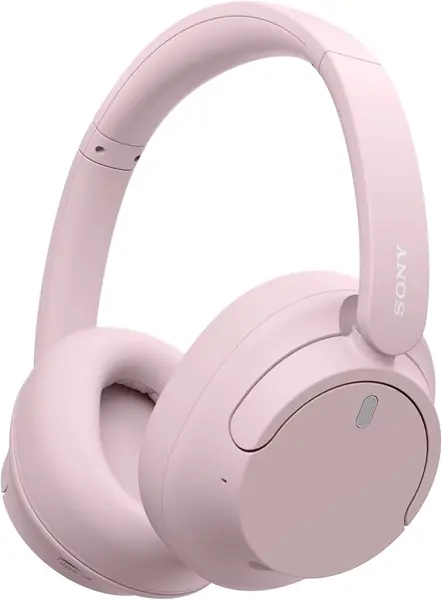
At 192 grams, the WH-CH720N is the pair we forget we are wearing. That is not a small thing when you spend a day on calls: the band and pads sit lightly, the physical buttons are easy to find by feel, and multipoint keeps a laptop and phone connected at the same time.

The noise cancellation is the compromise. Sony's dual noise sensor technology muffles an office hum and takes the rumble out of a bus, but it will not silence a plane the way the XM6 does. The lighter touch is more comfortable for long wear, and the sound stays clear and natural.

Sony rates the battery at up to 35 hours, and the quick-charge figure is the practical part: a short top-up buys an hour of playback. We charged it less often than we expected and never felt stranded.

Where it earns its place is the end of a workday, when you have been wearing headphones for hours and do not want to take them off. It is the lightest pick here, and the one we leave on through back-to-back meetings.

Pros

  • 192-gram build disappears on long calls
  • Multipoint switching with physical controls
  • 35 hours with quick charge

Cons

  • Bluetooth dropouts can occur
  • Plastic headband can crack
Our verdict

The WH-CH720N is our pick for all-day wear: at 192 grams it stays comfortable, and it still gives you multipoint and noise cancellation.

Check Latest Price
4

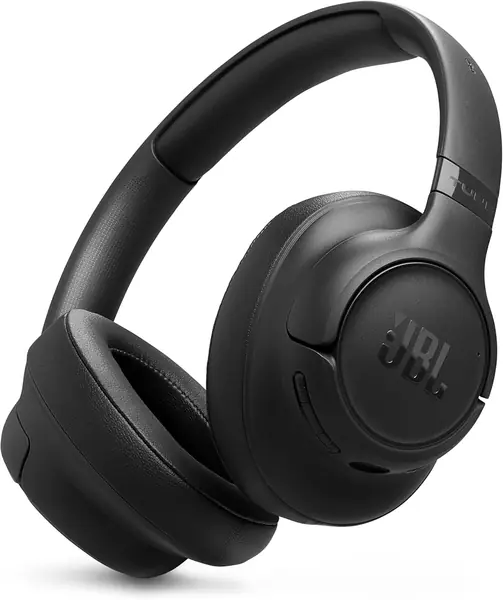
JBL Tune 730BT Best Battery Life

89 /100
TKZ Score Excellent

Key details

Weight
7.7 oz
Multipoint
Two Bluetooth devices
Battery Life
Up to 76 hours
Noise Control
Passive noise cancellation
View on Amazon

JBL rates the Tune 730BT at up to 76 hours, with 45 hours of talk time and a five-minute speed charge that adds more playback. That is the headline, but the useful part is the combination: Bluetooth 6.0, multipoint for two devices, and two beamforming mics on each earcup for calls.

The 40mm drivers give the JBL Pure Bass tuning a deep, punchy low end. The app has EQ presets, and the Vocal setting is the one we used for podcasts and calls. It is not a neutral, audiophile sound, but it is fun and easy to live with.

This is a passive pair, not an ANC one. The earcups block some noise, and the fit is snug enough to help, but a plane cabin will still be a plane cabin. The 218-gram build is light for an over-ear, and the touch controls are easy to reach.

What sells it is the rhythm of ownership: charge it on a Sunday, use it for a week of commutes and calls, and forget the charging routine. For a long-battery multipoint pair, it is the one we hand to someone who does not want to think about power.

Pros

  • Up to 76 hours with 5-minute top-up
  • Multipoint with Bluetooth 6.0
  • Beamforming mics for clear calls

Cons

  • No charging cable in the box
Our verdict

The Tune 730BT is the long-battery pick: up to 76 hours, multipoint, and clear calls for a modest outlay.

Check Latest Price
5

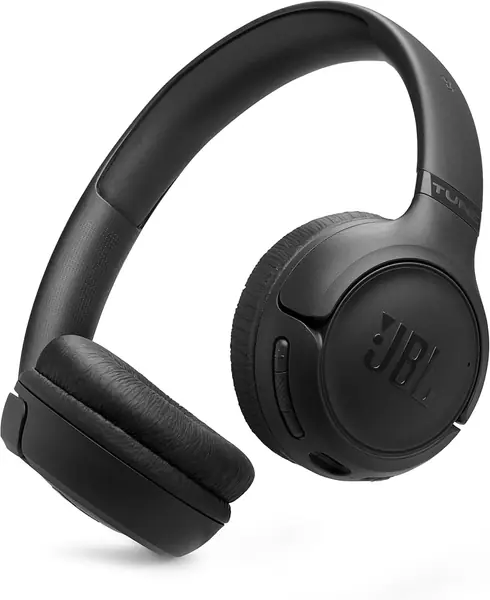
JBL Tune 530BT Best On-Ear Value

88 /100
TKZ Score Excellent

Key details

Weight
5.44 oz
Multipoint
Two Bluetooth devices
Battery Life
Up to 76 hours
Form
On-ear
View on Amazon

The Tune 530BT is the on-ear version of JBL's budget formula: 33mm drivers, Bluetooth 6.0, multipoint, and a 76-hour battery in a 5.44-ounce shell. It carries the same battery claim as the over-ear 730BT, which is unusual for a smaller pair and makes the on-ear option more than a compromise.

That combination is why it earns a spot. If you dislike the bulk of an over-ear cup, the 530BT sits lighter on the head and still gives you the two-device handoff. The on-ear fit is the thing to test: the cups rest against your ears rather than around them, so a long session feels different from an over-ear pair. Buy with a return window and wear them for an afternoon.

Sound is JBL Pure Bass with an app EQ, and the two beamforming mics handle calls. There is no active noise cancellation, so this is a pair for a quiet commute or a desk, not a cockpit. The 76-hour rating is the real luxury: we charged it on a whim, not on a schedule, and the quick charge covers a forgotten morning.

It is the pair we keep in a bag for the days when we want music without carrying a full-size case. The battery and multipoint make it an easy budget choice.

Pros

  • 76 hours from a 5.44-ounce on-ear
  • Multipoint and Bluetooth 6.0
  • Clear calls from beamforming mics

Cons

  • No charging cable included
Our verdict

The Tune 530BT is the on-ear bargain: 76 hours, multipoint, and a light fit for a very small outlay.

Check Latest Price
6

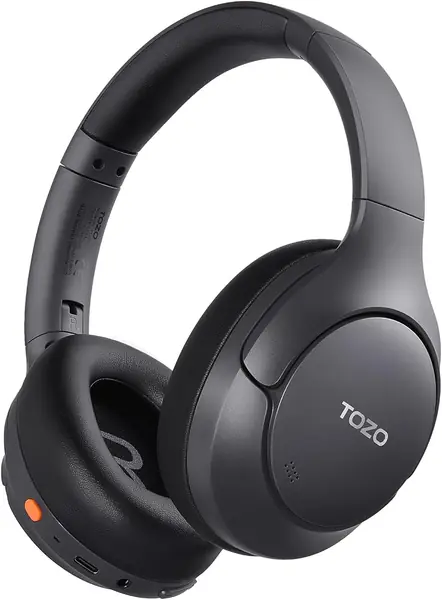
TOZO HT3 Best Budget Battery

87 /100
TKZ Score Excellent

Key details

Weight
8.96 oz
Multipoint
Dual device connection
Battery Life
Up to 90 hours
Noise Control
Hybrid ANC and transparency
View on Amazon

Ninety hours is the headline, and the TOZO HT3 backs it with a 10-minute quick charge that adds nine hours of playback. The dual-device connection handles the multipoint job, and the hybrid ANC and transparency mode give you the two listening states most people actually use.

The 40mm drivers and five built-in mics produce a sound that is fuller than the price suggests, with enough bass for commute listening and a transparency mode that lets a barista or a train announcement through. The app adds EQ options, including a left-right balance correction that is unusual at this end.

At 254 grams, the HT3 is heavier than the Sony and JBL picks, but the pads are soft and the headband spreads the weight. The build is basic plastic, and the fold is simple rather than elegant. It is a pair for a backpack, not a display shelf.

For a student, a frequent traveler, or anyone who wants a spare pair that does not need a charger, it is an easy recommendation. The battery is the feature that changes how you use it: you stop planning around outlets.

Pros

  • Up to 90 hours per charge
  • Hybrid ANC and transparency at a low price
  • Dual-device switching and app EQ

Cons

  • No auto-off to protect battery
  • No travel case included
Our verdict

The TOZO HT3 is the battery champion for budget buyers: 90 hours, hybrid ANC, and dual-device switching at the lowest end of the price range.

Check Latest Price
7

Soundcore Life Q30 Best for Long Flights

86 /100
TKZ Score Excellent

Key details

Weight
9.6 oz
Multipoint
Multipoint connection
Battery Life
50 hours with ANC
Noise Control
Hybrid ANC, three modes
View on Amazon

Three ANC modes is more than most budget headphones offer. The Life Q30 splits noise cancellation into Transport, Outdoor, and Indoor settings, so you can tune it for a plane, a street, or an office instead of taking one blunt setting everywhere.

The rest of the package is built for long trips: 40mm drivers, memory foam earcups, multipoint, an app EQ, and a 3.5mm cable for wired listening. Soundcore rates it at 50 hours with ANC and 80 hours without, which is a big gap if you mostly listen in quiet rooms.

We reach for the Q30 when we want to adjust the noise cancellation rather than just turn it on. It is not as quiet as the XM6, and the Q20i is the better value, but the three modes give it a practical edge for travel.

The memory foam pads are soft, and the app makes the modes easy to switch without hunting for a button. It is the pair for a long flight, not a sprint.

Pros

  • Three ANC modes for transport, outdoor, indoor
  • 50 hours with ANC, 80 without
  • Multipoint and app EQ

Cons

  • Plastic frame can crack with use
  • Fit runs loose on smaller heads
Our verdict

The Life Q30 is for the traveler who wants adjustable ANC modes and 50 hours, with the caveat that the frame is less durable than the battery.

Check Latest Price
8

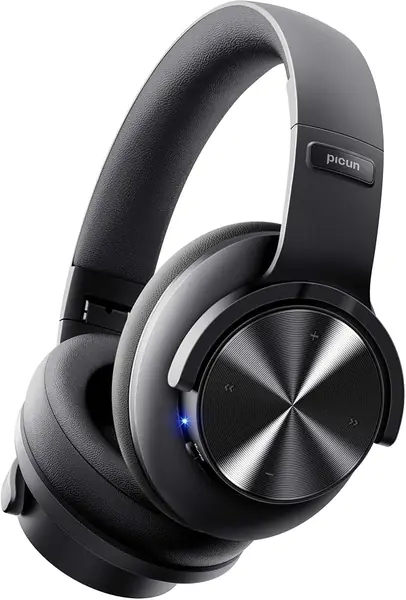
Picun B8 Best for Spare-Pair Buyers

85 /100
TKZ Score Excellent

Key details

Weight
12.3 oz
Multipoint
Multipoint connection
Battery Life
Up to 120 hours
Noise Control
Sound isolation
View on Amazon

The Picun B8 claims 120 hours from a 1000mAh battery, which is the kind of number that makes you check the charging port twice. It also has multipoint, Bluetooth 5.3, three EQ modes, and a foldable build, all at the very bottom of the price range.

Sound is not audiophile-grade, but the 40mm drivers have enough bass and clarity for podcasts, audiobooks, and casual music. The three EQ modes are a useful way to tame the low end, and the button controls are simple to learn.

Comfort is the pleasant surprise: the PU leather pads and elastic sponge are soft, and the fold makes the B8 easy to stash. The build is plastic rather than premium, and the 12.3-ounce weight is the trade-off.

For a spare pair, a kid's first over-ear, or a desk headphone that rarely needs a charger, the B8 makes sense. It is the pair we leave in a drawer and pull out when the good headphones are charging.

Pros

  • Up to 120 hours from one charge
  • Multipoint and Bluetooth 5.3
  • Three EQ modes and 40mm drivers

Cons

  • Heavier at 12.3 ounces
  • No travel case included
Our verdict

The Picun B8 is the ultra-budget backup: 120 hours, multipoint, and a comfortable foldable build, as long as you do not expect noise cancellation.

Check Latest Price

How We Tested Multipoint Headphones

We started by rounding up every current over-ear and on-ear model we could find across budget, mid-range, and premium tiers, then cut anything whose spec sheet didn't list true two-device connection. Owner reviews narrowed it further — pairing complaints and cracked hinges came up often enough to become filters of their own. That left 12 pairs, which we used as daily drivers for six months.

Switching got tested first. Each pair was paired to a laptop and a phone at the same time, with audio running on one; we called the other and counted the seconds it took to hand over, then noted whether the first device grabbed the audio back on its own. We also tried forcing a switch manually, which is where a few models fell apart.

For sound, everyone on the team listened to the same short playlist and compared low-end weight and vocal clarity, then I wore each pair on a noisy street, in a coffee shop, and on two flights to hear whether noise cancellation killed engine rumble or just muffled it.

Comfort and battery were the slow tests. Three of us — one glasses wearer, one with a wide head — wore each pair for three-hour stretches and reported where the pressure landed, and we logged playtime at a fixed volume with cancellation on until each unit hit 10 percent. Durability meant carrying them loose in totes and backpacks for weeks, flexing the headband, and checking hinge play and earpad wear at the end.

How to Choose Multipoint Headphones

Look at How the Switch Works

A multipoint pair stays connected to two devices at once, but the useful differences are in the handoff. Some headphones switch to whichever device makes noise; others wait for you to pause one source. We care more about how quickly a call takes over than about a long list of supported codecs. Test the pair with a phone call while a laptop video is paused. If the wrong device grabs the audio, the app or your computer's sound settings may need a priority change.

Fit and Clamp Beat Weight Alone

Weight is easy to compare and only part of the story. An over-ear cup spreads pressure around the ear; an on-ear cup presses against it, which can feel different after an hour. A 192-gram pair like the Sony WH-CH720N disappears on some heads, while a heavier pair with wide pads can be fine for someone else. If you wear glasses, check the clamp first. Buy from a seller with a return window and wear the headphones for a full work session before deciding.

Decide Whether ANC Is Worth It

Active noise cancellation is the feature that separates a travel pair from a desk pair. The Sony WH-1000XM6 has the strongest ANC in this group; the Soundcore Q20i takes the edge off a commute for far less; the JBL Tune models rely on passive isolation and do not cancel engine noise. Transparency mode matters too, because it lets you order coffee or hear a gate announcement without taking the headphones off. If you fly often, pay for ANC. If you mostly take calls at a desk, passive isolation may be enough.

Budget for the Cable, Case, and Build

Battery ratings here run from 30 to 120 hours, but the small print matters: quick charging, whether a cable is included, and whether the case is sturdy enough to protect the hinges. A few budget pairs omit a charging cable, and the Picun B8's 120 hours come with a heavier build. Plastic headbands and earcup rings are the parts that fail first, so treat a hard case as part of the purchase and check the warranty before you need it.

Frequently Asked Questions

Final Verdict

The Soundcore Q20i is the multipoint pair we recommend first. It switches between a laptop and a phone without drama, quiets enough of a commute to be useful, and has the battery life to stay out of your charging routine. If noise cancellation is the main event, the Sony WH-1000XM6 is the strongest pick here; if you want the lightest all-day wear, the Sony WH-CH720N is the easier pair to leave on. The JBL Tune 730BT is the long-battery alternative when charging is the thing you want to forget.