Best Headphones of 2026

Headphones are one of the few gadgets where the spec sheet tells you almost nothing. Battery figures get measured at half volume with noise cancelling switched off, and "active noise cancellation" covers everything from a faint hush over engine drone to the eerie near-silence of a flagship pair. What you actually live with is different: how the earcups feel in hour three, and whether the Bluetooth holds when you walk from your desk to the kitchen.

My team and I have spent the past eight months wearing 12 pairs — over-ear and on-ear, budget to flagship — on commutes, in open-plan offices, on flights, and on a lot of weekend walks. Price buys better noise cancelling and nicer materials, but not always better comfort. Weight matters more than most people expect, and multipoint pairing quietly becomes the feature you can't give up once you've had it.

What a good pair really fixes is simpler than the marketing suggests: it makes a loud commute quiet and a long flight shorter. These are the ones we kept reaching for after the testing period ended.

The Best Headphones

1

soundcore Q20i Best Overall
94 /100
TKZ Score Outstanding

Key details

Weight
9.12 oz
Battery
Up to 40 hours with ANC on
Noise Cancelling
Hybrid ANC with transparency mode
Wired Backup
3.5 mm audio cable included
View on Amazon

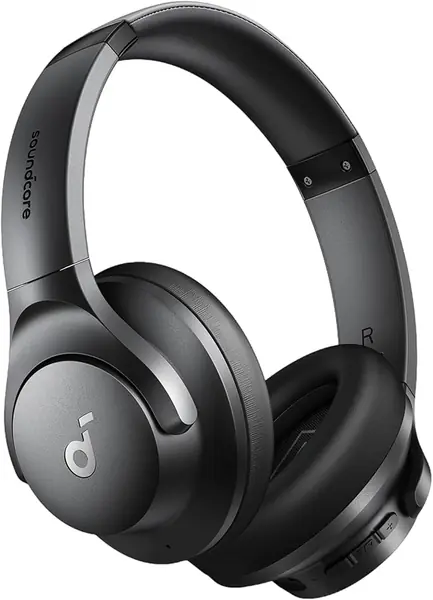
Set the soundcore Q20i beside the priciest pairs on this list and the surprise isn't how much it gives up — it's how little. Four microphones handle the cancelling, the earcups fold flat, and the box includes both a USB-C charging cable and a 3.5 mm audio cable, so a dead battery or an airplane seatback never ends the listening. That completeness is why it's our top pick rather than a budget footnote.

Battery is the part we stopped thinking about. soundcore rates it at 40 hours with cancelling switched on, and a five-minute top-up buys back several hours if you forgot to charge the night before. Pairing is genuinely two-device: a laptop and a phone stay connected at once, and audio moves to whichever one starts playing, which matters more day to day than the Bluetooth version printed on the box. The app is where the sound gets fixed, because the default tuning pushes bass hard and the presets or a custom curve flatten it out in a couple of minutes.

The thing we minded is fit. The clamp is generous, and on a narrower head the earcups sit loose enough to shift when you look down. If you're buying for a teenager, or you know you run small, spend the extra on the Bose, which grips noticeably more. Everyone else gets a pair that lasts a full workday without pinching.

Two small details we didn't expect to care about: the cups fold flat into a bag instead of needing a case, and the controls are real buttons you can find by feel with the headphones already on your head.

Pros

  • Real noise cancelling at the lowest price here
  • 40 hours with ANC plus a fast top-up
  • Two-device pairing and a 3.5 mm cable in the box

Cons

  • Bass-forward until you use the app EQ
  • Earcups warm up over a long session
Our verdict

Our pick for most people: real noise cancelling, two-device pairing, a wired backup and 40 hours of battery, at a price that undercuts every other cancelling pair here.
Check Latest Price
2

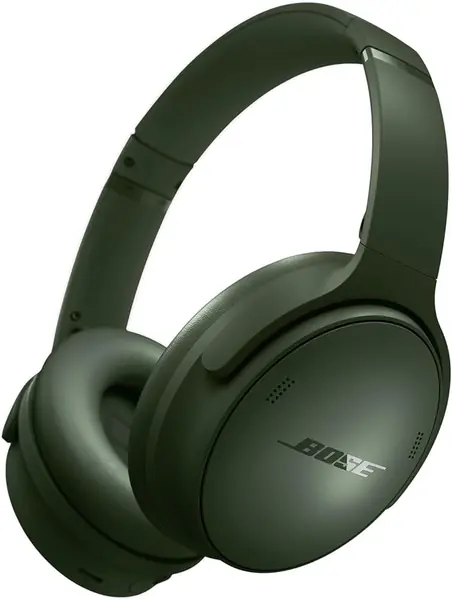
Bose QuietComfort Best for Comfort

93 /100
TKZ Score Outstanding

Key details

Weight
8.4 oz
Battery
Up to 24 hours; 15-minute charge adds 2.5 hours
Noise Cancelling
Active, Quiet and Aware modes
Wired Backup
3.5 mm jack and cable included
View on Amazon

The cushions are the reason to buy these. They're deep and plush enough that your ears sit inside them rather than pressing against the driver, and the padded band spreads 238 grams across the top of your head instead of a single point. Sliding them on after a pair of on-ears feels like taking off a tight shoe.

We rank these first in this group for a long listening session — a full flight, a whole workday, a lecture you're only half attending. Quiet and Aware modes toggle from the earcup, the cancelling is genuinely good at removing engine drone and air-conditioning hum, and the adjustable EQ puts back the bass the flat tuning leaves out. Twenty-four hours of playback, plus fifteen minutes of charging for two and a half more, covers a trip without the wall adapter.

Two things to know before you commit. Bluetooth 5.1 is the oldest radio on this list, and drops and stutters are the flaw that shows up, usually after a year or so and usually cleared by unpairing and repairing. And the money question is real: these cost several times what our top pick does without sounding several times better. What you're paying for is the fit and the cabin quiet, and if neither is your priority, stop at the soundcore.

Pros

  • Best long-session comfort in this set
  • Strong cancelling with Quiet and Aware modes
  • Hard case and 3.5 mm cable included

Cons

  • Older Bluetooth 5.1; drops and stutters appear
  • Costs far more than the value picks
Our verdict

If you wear headphones for hours and hate the pressure, these are the ones we hand over: the plushest fit here, dependable cancelling, and a hard case in the box.

Check Latest Price
3

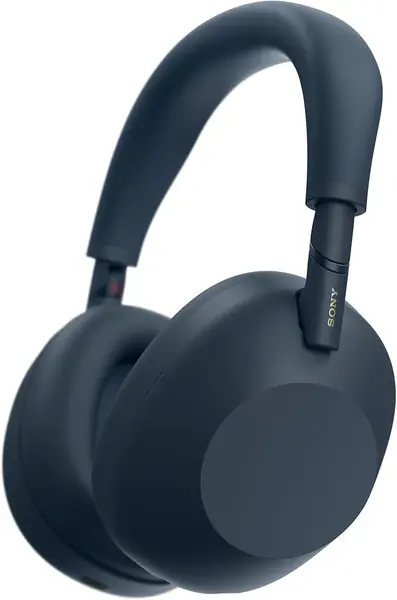
Sony WH-1000XM6 Best Noise Cancelling

92 /100
TKZ Score Outstanding

Key details

Weight
8.96 oz
Battery
Up to 30 hours
Noise Cancelling
QN3 processor with 12 microphones
Case
Folding design with magnetic case
View on Amazon

Sony's claim for the WH-1000XM6 is a noise-cancelling processor seven times faster than the chip in the model it replaces, feeding twelve microphones. The number that matters is what happens in a cabin: engine roar and the low hum of an office drop to a hush rather than a hiss, and a conversation two rows back becomes a texture instead of a distraction.

We put its cancelling at the top of this group. The AirPods Max 2 comes close on steady sound, but the Sony handles the shifting, clattery kind more gracefully — a train door, a coffee grinder, someone starting to talk beside you — and it manages that without the pressure feeling some cancelling creates. The tuning is clean and slightly forward in the mids, a detachable 3.5 mm cable keeps wired listening available, and thirty hours covers a long-haul round trip.

The clamp is what we minded. It's snug out of the box, and with glasses the arms press after an hour, so extend the headband a notch further than feels right and it eases. The folding case with its magnetic closure is the easiest thing to travel with in this group.

What it won't do is justify itself on price alone. If your listening happens at a quiet desk, the soundcore gets you most of the way there for a fraction of the money; the Sony earns its keep in transit, where the extra quiet is the whole product.

Pros

  • Deepest noise cancelling in this group
  • 30-hour battery and a compact folding case
  • Detachable cable for wired listening

Cons

  • Snug clamp, noticeable with glasses
  • Plastic earcup rings can crack
Our verdict

We rank its noise cancelling first in this group, and 30 hours plus a folding case make it the pair to take when the trip is the point.

Check Latest Price
4

Apple AirPods Max 2 Best for Apple Devices

91 /100
TKZ Score Outstanding

Key details

Weight
13.6 oz
Noise Cancelling
Active, up to 1.5x previous generation
Audio Features
Adaptive Audio, Spatial Audio, Live Translation
Chip
Apple H2
View on Amazon

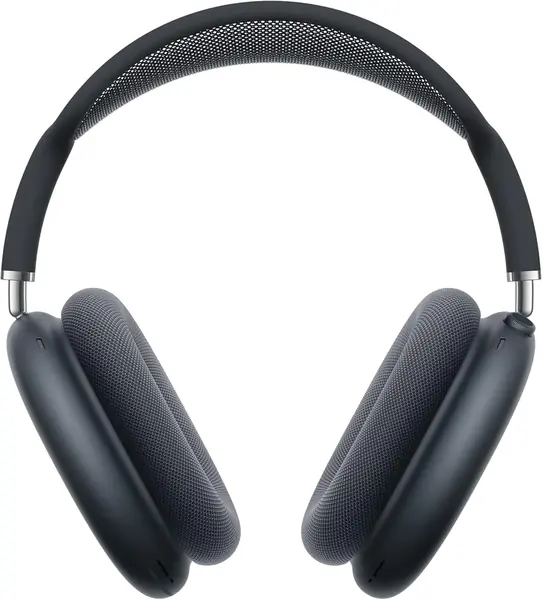
At 13.6 ounces these are the heaviest headphones here, well over half again what the Bose weighs, and you feel it in the first hour rather than the fifth. How much that matters depends on the wearer: at a desk, with the band resting on your head, the weight fades into the background; on a long flight, with a travel pillow pushing up against the cups, it becomes the main thing you notice.

Everything else about them is Apple-specific, and specific is the right word. Pairing is instant and switching between iPhone, iPad and Mac happens without opening a menu. Adaptive Audio rides the cancelling up and down as surroundings change, Conversation Awareness drops the volume the moment you start talking, and Personalized Spatial Audio tracks your head through a film. Live Translation, which needs Apple Intelligence, is either a weekly tool or a feature you forget exists.

The H2 chip's cancelling claim is up to 1.5 times the previous generation, and in practice it handles steady noise about as well as the Bose and a step behind the Sony. Battery is the soft spot: these can drain while sitting idle, so top them up the night before a trip instead of assuming the case keeps them charged. And if you're not already inside Apple's ecosystem, most of what you're paying for goes dark.

Pros

  • Seamless switching across Apple devices
  • Adaptive Audio and Conversation Awareness
  • Personalized Spatial Audio with head tracking

Cons

  • Battery drains between uses
  • Apple-only features on other hardware
Our verdict

Nothing here switches between an iPhone, iPad and Mac as cleanly — go in knowing you're carrying 13.6 ounces and paying the most on this list.

Check Latest Price
5

Beats Studio Pro Best for Lossless Audio

90 /100
TKZ Score Outstanding

Key details

Weight
9.2 oz
Battery
Up to 40 hours
Noise Cancelling
Active with transparency mode
Wired Audio
USB-C lossless and 3.5 mm
View on Amazon

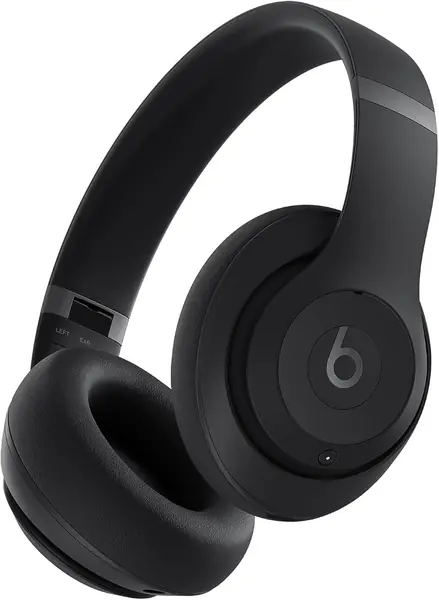
Plug a USB-C cable into the Beats Studio Pro and they take a lossless digital signal straight from a laptop instead of squeezing it through Bluetooth, with a 3.5 mm cable for anything analog. For a household that mixes an iPhone, a Windows laptop and an Android tablet, that is the most useful thing about them: one pair that works with all three, pairs in a single tap on both platforms, and folds into a bag.

Forty hours of playback, active cancelling with a transparency mode, and spatial audio with head tracking make them a good travel companion — films on a laptop feel bigger than an on-plane screen has any right to. Sound is bass-led and lively rather than neutral, which suits pop, hip-hop and action scenes and flatters a string quartet less.

Build is where these give us pause. The headband joint is the weak point, and it is the same break in the same place often enough that we treat the hinge as a design limitation rather than bad luck. If you're hard on gear or you carry one pair everywhere, the Bose or the Sony is the safer long-term buy.

Pros

  • USB-C lossless plus 3.5 mm wired options
  • 40 hours with one-tap pairing on both platforms
  • Spatial audio with dynamic head tracking

Cons

  • Headband hinge is the weak point
  • Bass-forward sound, not neutral
Our verdict

The only pair here that takes a lossless USB-C signal and still pairs in one tap on either platform — our choice for a mixed Apple and Android house.

Check Latest Price
6

JBL Tune 730BT Best Budget Over-Ear

89 /100
TKZ Score Excellent

Key details

Weight
7.7 oz
Battery
Up to 76 hours
Drivers
40 mm dynamic
Pairing
Bluetooth 6.0, two devices
View on Amazon

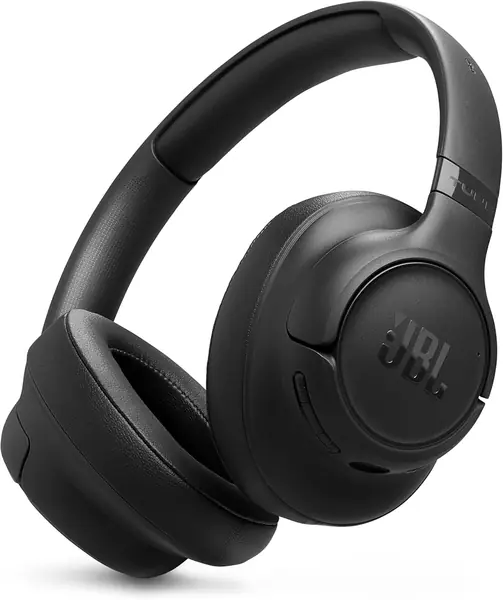
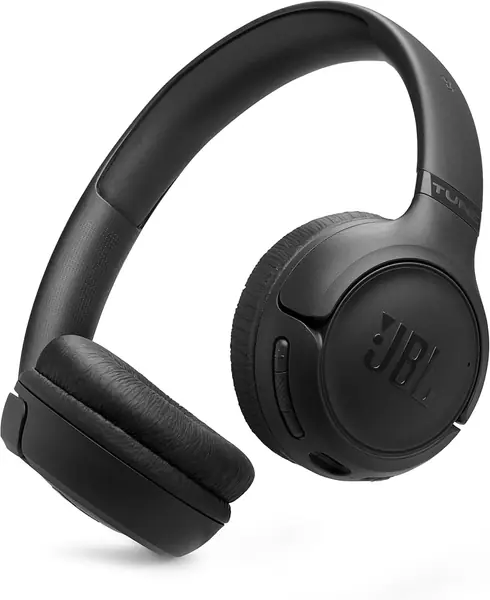
Seventy-six hours is the figure JBL prints, and it isn't a rounding error — that's roughly three weeks of an hour-a-day commute between charges, plus a five-minute top-up that adds a few more. If the charging cable is the thing you always lose, this pair mostly removes the problem.

What you give up is active cancelling. These seal passively, which takes the edge off an office or a bus and does nothing about a plane's low drone, so we wouldn't buy them for flights. We would buy them for everything else: 218 grams is light enough to forget, the 40 mm drivers give JBL's usual punchy low end, and the app's Default, Bass and Vocal presets let you pull the tuning back toward neutral when a podcast needs to be intelligible.

Two devices stay paired at once and calls run through two beamforming mics per earcup. The controls are touch rather than physical buttons, which we found fiddly with cold hands, and there's no 3.5 mm jack — when the battery finally goes, you're waiting for a charge rather than plugging in. Neither is a dealbreaker here; both are worth knowing before you commit.

Pros

  • Up to 76 hours per charge
  • Light 218-gram frame
  • Two-device pairing with app EQ

Cons

  • No 3.5 mm jack for wired listening
  • Ear pads grow uncomfortable over hours
Our verdict

Our budget over-ear: 76 hours, a 218-gram frame and two-device pairing, as long as you accept passive isolation instead of cancelling.

Check Latest Price
7

Sony WH-CH720N Best for All-Day Wear

88 /100
TKZ Score Excellent

Key details

Weight
6.77 oz
Battery
Up to 35 hours; 3-minute charge adds 1 hour
Noise Cancelling
Dual Noise Sensor with V1 processor
Controls
Physical buttons with multipoint pairing
View on Amazon

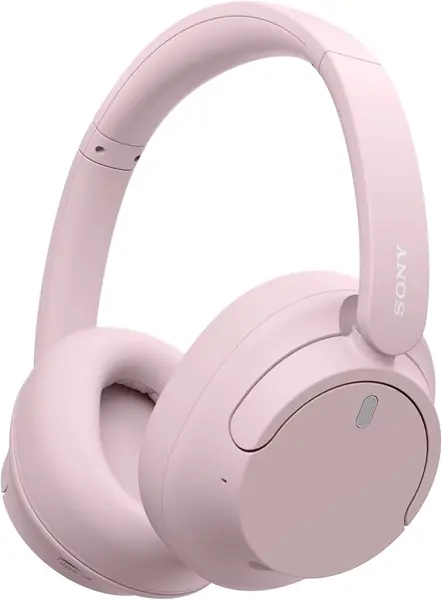
Sony skipped touch controls here, and after a week we were glad. The buttons are physical and separated, so you can find play, volume and the cancelling toggle by feel without taking the headphones off or waiting for a chime to tell you what you pressed.

These are the lightest headphones in this group, and that's the whole pitch: no clamp to speak of, cups that sit around the ear rather than on it, and a band that doesn't leave a ridge across your head after four hours. The V1 processor and dual noise sensors give you genuine cancelling, though it's the mildest here — it softens an office and a train and will not erase a plane.

This is the pair we leave on all day: quiet enough to work under, light enough to forget, and 35 hours with a three-minute charge that buys an hour. Ambient Sound mode is adjustable, and Adaptive Sound Control shifts profiles as you move between a street and an office — the kind of feature that sounds like a gimmick and turns out to be the one we used most.

Two caveats. Pairing with a Mac is the weak spot, so connect it there first and live with it for a few days while you can still return them. And there's no 3.5 mm jack, which matters if you want to plug into a seatback screen on a flight.

Pros

  • Lightest pair here for all-day wear
  • Physical buttons instead of touch
  • 35 hours with a three-minute quick charge

Cons

  • No 3.5 mm jack for in-flight use
  • Mac pairing can fail outright
Our verdict

The lightest pair here, with buttons you can work by feel — we recommend it for anyone who keeps headphones on through a whole workday.

Check Latest Price
8

JBL Tune 530BT Smaller Heads, on-Ear

87 /100
TKZ Score Excellent

Key details

Weight
5.44 oz
Battery
Up to 76 hours
Drivers
33 mm dynamic
Form
On-ear
View on Amazon

On-ear headphones are a fit decision before they're a sound decision. The Tune 530BT presses pads against your ears rather than around them, which keeps the weight at 5.44 ounces and keeps your ears cooler than a sealed over-ear, but it also means the seal, and the bass, depends on how wide your head is. If you already know you like that style, this is the least expensive good version of it here.

The rest is the same playbook as the larger JBL: 76 hours, two-device pairing over Bluetooth 6.0, two beamforming mics per cup and the app's EQ presets, with 33 mm drivers that carry noticeably less low-end weight than the 40 mm models. There's no 3.5 mm jack, and no cable of any kind in the box, so plan on a USB-C lead. Larger adult heads may find the band snug; smaller ones won't.

Pros

  • Light on-ear fit that stays cool
  • 76 hours and two-device pairing
  • Same app EQ as the bigger JBL

Cons

  • Snug on larger adult heads
  • No cable in the box
Our verdict

A light on-ear with the same 76-hour battery and app EQ as its bigger sibling — the one we point to for smaller heads and second pairs.

Check Latest Price
9

Beats Solo 4 Short Commutes, Style

86 /100
TKZ Score Excellent

Key details

Battery
Up to 50 hours
Form
On-ear with flex-grip band
Audio Features
Personalized Spatial Audio
Charging
USB-C Fast Fuel
View on Amazon

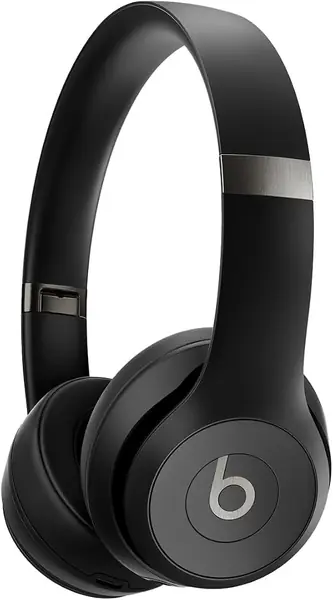
The clamp is the whole story with the Solo 4. Beats uses a flex-grip band that hugs the head, and pressure is what you notice first — fine when you're moving around, less fine four hours into a flight, and genuinely unpleasant if you wear glasses, where the arms get pressed against your skull.

What you get for putting up with it: fifty hours of playback, USB-C Fast Fuel charging, and Personalized Spatial Audio with head tracking that makes a film feel wider than an on-ear has any right to. The sound is bass-forward and energetic, which suits pop and hip-hop and flatters a podcast less.

We think of these as the commute pair rather than the work pair — a short trip is comfortable, a long one isn't. If your listening happens at a desk, the Sony CH720N is lighter on the head and the Bose is softer against the ears. One more thing to weigh: these are the pair on this list most likely to lose an earcup over time, so treat the folding and the case as part of the routine.

Pros

  • Fifty hours of playback
  • Spatial Audio with head tracking
  • Fast USB-C charging

Cons

  • Tight clamp, especially with glasses
  • One earcup can stop working
Our verdict

Fifty hours, spatial audio and the Beats look in a snug on-ear — worth it if you like a firm clamp and mostly listen on the move.

Check Latest Price
10

BERIBES WH202A Best for Spare Pair, Kids

85 /100
TKZ Score Excellent

Key details

Weight
6.35 oz
Battery
Up to 120 hours
Drivers
Dual 40 mm dynamic
Cables
3.5 mm and USB-C included
View on Amazon

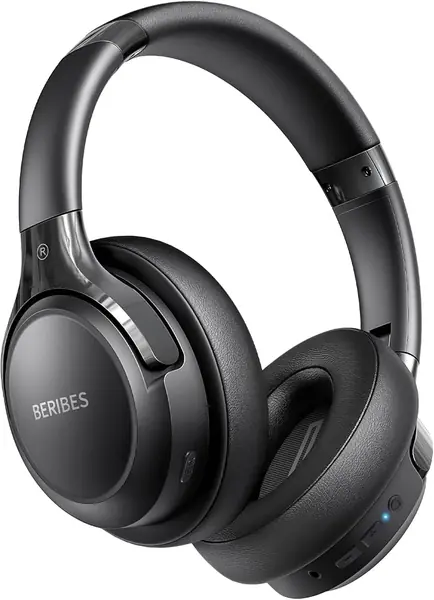
This is the least expensive pair on the list and it isn't close. For that you get a folding over-ear with dual 40 mm drivers, six EQ modes switched from the earcup, a 3.5 mm cable and a USB-C cable in the box, and a battery rated at 120 hours. Nothing else here stretches a charge further.

The catch is the word isolation rather than cancelling. These seal your ears and quiet a room; they don't generate the anti-noise that the soundcore or the Bose do, so an engine or a fan comes straight through. Sound is decent for spoken word and serviceable for music once you find an EQ mode you like, and Bluetooth 6.0 pairs quickly.

Two things to test inside the return window. Video sync is the weak spot — lip movement can run ahead of the audio, which is fine for music and maddening for a show. And the frame is light but the fit runs tight, so anyone with a larger head should expect pressure at the temples. Buy them as a spare, a workshop pair, or a first set for a kid.

Pros

  • 120 hours on a charge
  • Both cables included
  • Folds small and costs the least here

Cons

  • No active noise cancelling
  • Audio can lag behind video
Our verdict

The cheapest pair here by a wide margin, with 120 hours and cables included — buy them for a kid, a workshop, or a bag, not for a flight.

Check Latest Price

How We Tested Headphones

We started by pulling every over-ear and on-ear model with a real following, reading through customer reviews, comparing spec sheets, and cutting anything that duplicated a niche we'd already covered. That left 12 pairs spanning budget to flagship, which we used as our own for eight months.

Testing happened where headphones actually live: a 40-minute subway commute, an open-plan office, two long-haul flights, daily dog walks, and a steady stream of video calls. We ran each pair from full charge to dead at roughly 60 percent volume with noise cancelling on, then compared the hours we logged against the claim. Noise cancelling was judged against subway rumble, office HVAC hum, cabin drone, and a leaf blower on the sidewalk, with notes on whether nearby voices still cut through.

Comfort got three-hour stretches rather than quick tries. We noted clamp force, whether glasses frames got pinched, where the headband pressed, and how hot our ears ran. Every pair was weighed, then we bent over and shook our heads to see if it stayed put. For connectivity, each pair was paired to an iPhone, an Android phone, and a laptop, carried two rooms away, and tested on multipoint by answering a call on one device while audio played on another, counting dropouts.

Durability and reliability came from ordinary abuse: tossed in a tote bag, hinges folded and unfolded daily, listened for creaks, and checked whether the app connection survived a week of disuse. Value had the last word — each pair was measured against the tier above it, and we asked what, specifically, the extra money bought.

How to Choose the Right Headphones

Cancelling, sealing, or neither

Microphone-and-processor noise cancelling earns its money in one situation: low, constant sound you cannot escape, like engines, air conditioning and train rumble. It does much less against speech, which is why every pair here with cancelling also offers a transparency mode for the moments you need to hear. Plain closed-back cups just seal, and an over-ear seals better than an on-ear.

If most of your listening happens in a quiet room, put the savings elsewhere. The JBL Tune 730BT handles that job with passive isolation alone, while the soundcore Q20i is the least expensive way into real cancelling on this list.

The battery number that actually matters

Published playtime usually assumes cancelling is switched off, so hunt for the figure with it on — the soundcore is rated at 40 hours with cancelling active and more without, and that gap is the one you live with. For most people, quick charge beats total capacity: five to fifteen minutes plugged in buys anywhere from one hour to several.

The other quiet upgrade is two-device pairing. A laptop and a phone connected at once means an incoming call interrupts your podcast instead of sending you into a settings menu.

Weight, clamp, and the shape of your head

This list runs from the 192-gram Sony CH720N to the 13.6-ounce AirPods Max 2, and weight is only half the story. A wide padded band spreads pressure; a narrow one concentrates it, and a light pair with a tight band is less comfortable than a heavier pair with a generous one. On-ears press pads against your ears, which is fine for an hour and less fine for four, and glasses make every clamp feel tighter.

Buy somewhere you can return, wear the pair for a full two hours on day one, and let that decide rather than the spec sheet.

Check the box for a cable

A 3.5 mm jack is still the difference between using Bluetooth headphones on a seatback screen and staring at a silent film, and it is your fallback when the battery is empty. Several pairs here ship without one — the JBL Tune models and the Sony CH720N have no jack at all — while the soundcore, the Bose and the Sony flagship all include a cable.

USB-C audio is a different and better thing. The Beats Studio Pro accepts a lossless digital signal over the cable, which nothing else in this group does.

What the extra money actually buys

Climbing this list buys depth of cancelling, nicer materials, a hard case and ecosystem tricks — not automatically better sound. The soundcore Q20i and the Bose QuietComfort are closer in everyday listening than their positions suggest; the gap opens up in a noisy cabin and in how the pair feels after three hours.

Set a ceiling first, then spend it on whatever you use every day: comfort if you wear them at a desk, cancelling if you commute.

Frequently Asked Questions

Final Verdict

Start with the soundcore Q20i. It handles the three things most people actually need — quiet, battery, and a cable for when the battery runs out — and it does them for less than any other cancelling pair here.

Move up only for a reason you can name out loud: the Bose QuietComfort if comfort is the complaint, the Sony WH-1000XM6 if you are in loud places every week, or the AirPods Max 2 if your whole day runs through Apple devices. Everyone else can stop reading and order the soundcore.