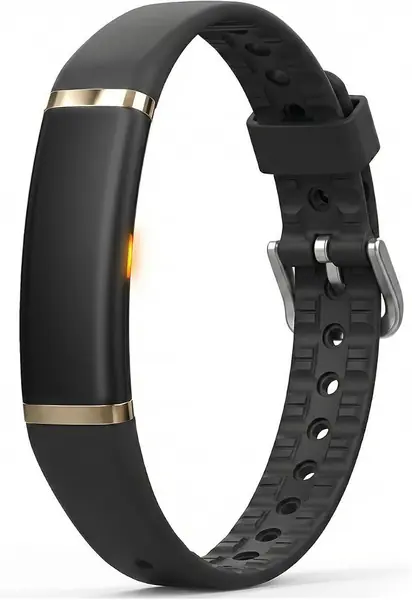
Best Fitness Trackers with Heart Rate Monitors of 2026

Every wrist-worn heart rate monitor works on the same trick: green LEDs shine into your skin and a sensor reads the light that bounces back with each pulse. What separates a good tracker from a frustrating one is what happens once you start sweating and forgetting to charge it. I've watched a reading climb past 170 while I stood still at the kitchen counter, and I've had a watch die two miles into a run.

Looks matter more than people admit, since these live on your wrist at work, at the gym, and in bed. Battery is the spec makers are most generous with — a band rated for three weeks rarely gets there once continuous heart rate tracking is switched on. And the app is where budget trackers quietly fall apart: dropped pairing, sleep data that takes an hour to sync, alerts that never arrive.

My team and I wore 14 trackers over four months — through runs, showers, overnight sleep, and long desk days — timing battery drain and watching whether readings held steady under a barbell or on a treadmill. The picks below run from a screenless band you'll forget you're wearing to a bright AMOLED watch with more sport modes than you'll ever use.

The Best Fitness Trackers with Heart Rate Monitors

1

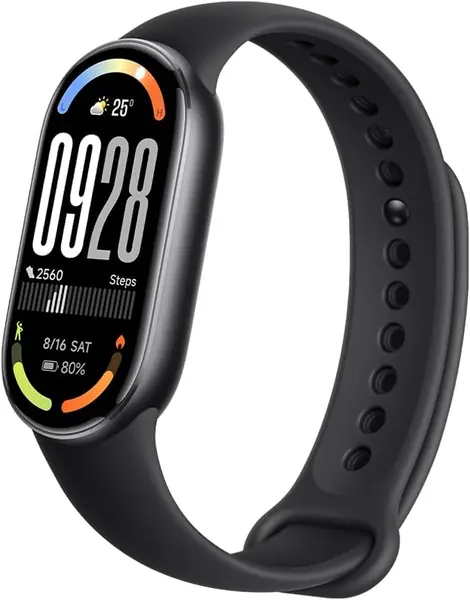
Xiaomi Smart Band 10 Best Overall
90 /100
TKZ Score Outstanding

Key details

Display
1.72-inch AMOLED
Water Resistance
5ATM
Battery Life
Up to 21 days
Heart-rate Tracking
Heart rate, SpO2, and sleep
View on Amazon

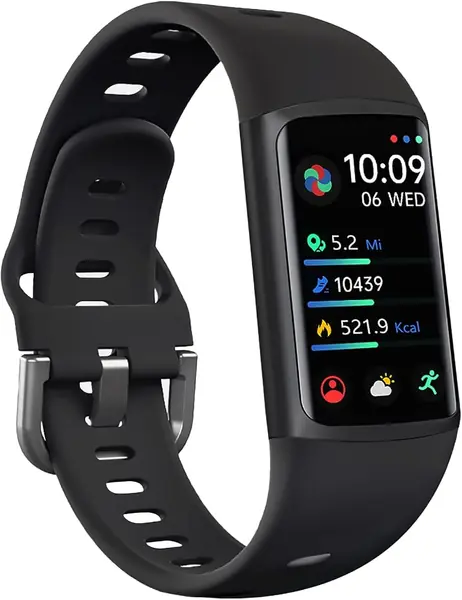
The 21-day battery estimate is the first thing we noticed about the Xiaomi Smart Band 10, and it is the reason the band is easy to live with: you can wear it overnight, track workouts, and still not think about charging every few days. The 1.72-inch AMOLED display is the other daily win. It is bright enough to read outdoors, and it makes heart rate, steps, and sleep stats legible without squinting.

As an everyday activity tracker, the Smart Band 10 covers the essentials well: continuous heart rate, sleep stages, SpO2, and 5ATM water resistance for pool sessions. We like that the screen is large without turning the band into a small phone; the oval case still slips under a cuff. There is no built-in GPS, so outdoor routes rely on your phone, which is fine for walks, gym sessions, and neighborhood runs.

The part we appreciate most is how little maintenance the package asks for. The app pulls the data together, the band is comfortable enough for overnight wear, and the battery estimate gives you room for a missed charge. Compared with the Galaxy Fit 3, the Smart Band 10 is the one that works with either an iPhone or an Android phone, which is why it earns the top spot for most buyers.

Pros

  • Long battery life between charges
  • Bright, readable 1.72-inch AMOLED display
  • Works with iPhone and Android

Cons

  • Distance stays metric only
  • Bluetooth syncing can be inconsistent
Our verdict

We recommend the Xiaomi Smart Band 10 to anyone who wants long battery life, a readable AMOLED screen, and the core heart-rate, sleep, and activity stats without smartwatch extras.
Check Latest Price
2

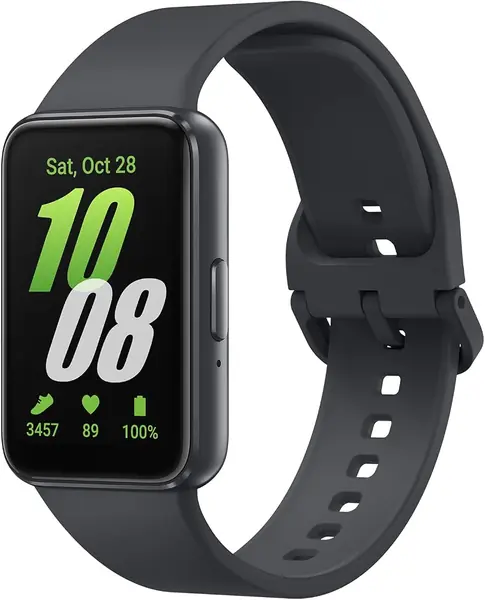
Samsung Galaxy Fit 3 Best for Android Phones

89 /100
TKZ Score Excellent

Key details

Display
1.6-inch AMOLED
Water Resistance
5ATM and IP68
Battery Life
Up to 14 days
Phone Compatibility
Android only
View on Amazon

The Galaxy Fit 3 has one boundary you need to clear before anything else: it is Android only. If you carry an iPhone, this is not the tracker for you, no matter how good the screen looks. That is the first thing we checked, and it shapes everything else about the recommendation.

For Android users, the payoff is a 1.6-inch AMOLED display, 5ATM and IP68 protection, and Samsung Health integration that makes sleep, steps, and workouts easy to review in one place. We think the 1.6-inch screen is the sweet spot in this group: big enough for a clear read, small enough to disappear under a sleeve. The 14-day battery estimate is strong, though heavy sleep tracking and notifications will shorten it.

The Fit 3 also has the comfortable, low-bulk feel we want from a tracker that stays on overnight. Band changes are easy, and the 101+ workout modes cover more than most people need. It is the tracker we reach for when we want Samsung Health without a full Galaxy Watch.

Pros

  • Sharp 1.6-inch AMOLED display
  • Samsung Health integration
  • 5ATM and IP68 swim-ready protection

Cons

  • No U.S. warranty on this international model
Our verdict

We recommend the Galaxy Fit 3 to Android users who want Samsung Health integration, a comfortable AMOLED band, and swim-ready tracking in a compact case.

Check Latest Price
3

MorePro Air6 Best Value for Health Tracking

88 /100
TKZ Score Excellent

Key details

Display
1.52-inch LCD
Water Resistance
IP68
Health Metrics
Heart rate, blood pressure, SpO2
Battery Capacity
230 mAh
View on Amazon

The MorePro Air6 makes its case with a long health-metric list rather than a premium finish. It tracks heart rate continuously, adds blood pressure and SpO2 readings, logs sleep, and covers more than 120 sport modes, all in a 1.12-ounce package. For a value-focused tracker, that is a lot of ground without a lot of bulk.

We found the 1.52-inch LCD easy to read for steps, heart rate, and notifications, though it is not as crisp as the AMOLED screens on the Xiaomi and Samsung. The silicone band is comfortable for all-day wear, and the 230 mAh battery charges in about two hours, so topping it up is not a long interruption. Call and message notifications arrive on the wrist, which is useful when the phone is in another room.

What holds the Air6 back is polish. The app can be slow to load sleep data, and the LCD lacks the contrast of the AMOLED picks. We still think it is the value pick here because it gives you the health metrics most people actually check, plus a comfortable fit, for less than the category leaders. It is the one we hand to someone who wants blood-oxygen and blood-pressure readouts without buying a smartwatch.

Pros

  • Broad health metrics at a value price
  • Light, comfortable all-day wear
  • Clear 1.52-inch LCD

Cons

  • No built-in GPS for route tracking
Our verdict

We recommend the MorePro Air6 for shoppers who want a broad health-metric checklist, comfortable all-day wear, and a value price, as long as they do not need GPS.

Check Latest Price
4

FITVII Slim Best for Small Wrists

87 /100
TKZ Score Excellent

Key details

Display
1.45-inch LCD
Water Resistance
IP68
Health Metrics
Heart rate, blood pressure, SpO2
Notifications
Calls and messages
View on Amazon

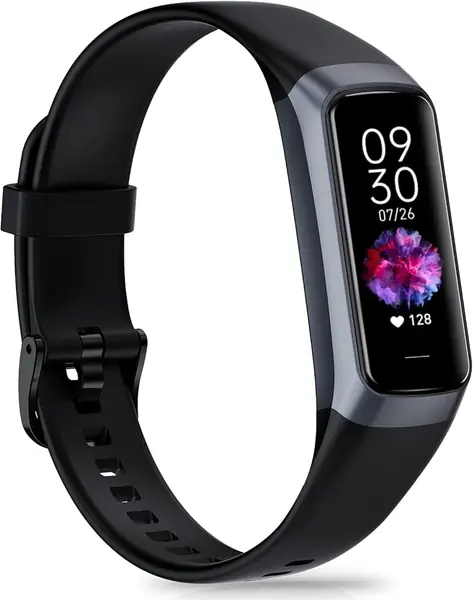
The narrow band and small case are the reason to choose the FITVII Slim. On a smaller wrist, a full-size tracker can feel like a deck of cards strapped to your arm; this one is built to sit closer to the wrist and disappear under a cuff. It still covers 24-hour heart rate, blood pressure, SpO2, sleep, and call and message notifications, so the trim shape does not leave you with a bare-bones tracker. The rectangular case is understated, and the buckle closure keeps the band flat against the skin.

The trade-off is a 1.45-inch LCD that is smaller and less vivid than the AMOLED panels on the Galaxy Fit 3 and Smart Band 10. We see this as a comfort-first pick rather than a display-first one. It is a good first tracker for someone who has found full-size watches annoying to wear overnight, and the IP68 rating means sweat and handwashing are not a concern. If you want a bigger screen for notifications or outdoor readability, the Samsung and Xiaomi are the better fit. It is also the least intrusive way to try overnight sleep tracking if a large watch keeps you awake.

Pros

  • Slim, low-profile fit
  • Covers heart rate, blood pressure, SpO2, and sleep
  • Comfortable for overnight wear

Cons

  • No built-in GPS for route tracking
Our verdict

We recommend the FITVII Slim for smaller wrists and anyone who wants a light, low-profile tracker with the core health metrics, not a big screen.

Check Latest Price
5

aeac Smart Watch Best Smartwatch Extras

86 /100
TKZ Score Excellent

Key details

Display
1.32-inch AMOLED
Water Resistance
3ATM
Battery Life
Up to 10 days
Calls
Bluetooth calling
View on Amazon

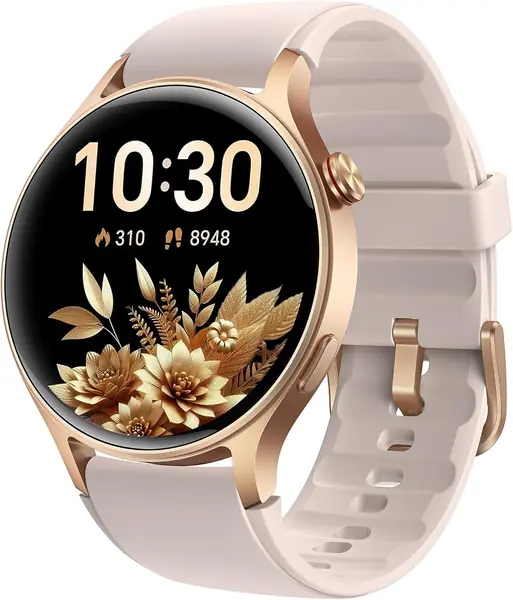
The aeac Smart Watch is the pick here if the word tracker undersells what you want. It makes and takes calls, runs Alexa voice commands, and puts a 1.32-inch AMOLED screen on a round metal case, while still covering heart rate, sleep, SpO2, and stress. That is a different brief from a plain band, and it is the reason this one earns a place in a fitness roundup.

We like the way the round case and metal band make it feel more like a watch than a rubber fitness band, and the AMOLED panel is sharp enough for notifications and workout stats. The 10-day battery estimate is strong for a watch with calling, and the 110+ sport modes cover everything from yoga to strength work. For someone who wants one device for calls and workouts, the aeac makes more sense than adding a separate smartwatch.

The aeac is not trying to be the smallest band on the page. It is for the person who wants a watch face, a speaker, and a microphone on their wrist and is willing to trade some simplicity for that. The round case looks dressier than the sporty bands here, and the battery still runs for days rather than hours. It is the most jewelry-like option in this group.

Pros

  • Bluetooth calling and Alexa
  • Sharp 1.32-inch AMOLED display
  • Up to 10 days battery with watch features

Cons

  • 3ATM is not swim-rated
  • Bluetooth pairing can be inconsistent
Our verdict

We recommend the aeac Smart Watch for buyers who want calling, Alexa, and a polished AMOLED screen alongside everyday heart-rate and sleep tracking.

Check Latest Price
6

Bakoor Fitness Tracker Best for Tight Budgets

85 /100
TKZ Score Excellent

Key details

Display
1.10-inch AMOLED
Water Resistance
IP68
Health Metrics
Heart rate, blood pressure, sleep
Sports Modes
25
View on Amazon

The Bakoor is the smallest and least expensive tracker in this group, and it does not pretend otherwise. The 1.10-inch AMOLED screen is compact, the silicone band is soft, and the whole thing is light enough to forget you are wearing it. If you want a simple step and heart-rate companion, the size is the appeal, not a compromise.

It covers continuous heart rate, blood pressure, sleep, and 25 sport modes, and the IP68 rating handles sweat and handwashing. The screen is bright and easy to read for its size, though notifications are cramped. The charging cable is short, which is a small annoyance rather than a dealbreaker.

We see the Bakoor as a starter tracker or a spare for a bag. It gives you the numbers without the commitment, and the compact screen is easy to hide under a sleeve. Buy it for casual tracking and everyday step goals, not as the centerpiece of a serious training plan. It is the one we reach for when we want the least conspicuous screen on the wrist.

Pros

  • Very compact and light
  • Continuous heart rate, blood pressure, and sleep
  • IP68 water resistance

Cons

  • Step and distance readings can drift
  • No warranty coverage
Our verdict

We recommend the Bakoor for a first tracker or a spare, as long as you treat its step and heart-rate readings as a rough guide.

Check Latest Price
7

RLQA G104S Best for Large-Screen Calls

84 /100
TKZ Score Excellent

Key details

Display
1.83-inch TFT
Water Resistance
IP68
Battery Life
7-9 days
Calls
Bluetooth calling
View on Amazon

A 1.83-inch screen is enormous for a fitness band, and it is the reason to look at the RLQA G104S. The display dominates the case, so steps, heart rate, and notifications are easy to read at a glance. It is closer to a budget smartwatch than a discreet tracker, and that is the point.

The G104S covers 120+ sport modes, Bluetooth calling, IP68 protection, and a 7-9 day battery estimate. The case has a physical button and a touchscreen, and the large face makes the calling feature easy to use. It is a screen-first watch for someone who wants the display to do more of the work.

The G104S is not as polished as the Samsung or Xiaomi, but it covers the basics: steps, heart rate, sleep, and a long list of workouts. The calling feature is the real differentiator; it lets you answer a quick call without digging out your phone. The TFT panel is not as crisp as an AMOLED, but it is bright and large.

We see the G104S as a budget pick for someone who wants a big display and calls more than a slim sleep band. It earns its place on screen size and price, not on subtlety. Just go in knowing the screen is the main event.

Pros

  • Large 1.83-inch display
  • Bluetooth calling
  • 7-9 day battery estimate

Cons

  • 95-gram weight is heavy for sleep
  • Large case can overwhelm small wrists
Our verdict

We recommend the RLQA G104S for budget-minded buyers who want a big screen and Bluetooth calls, and who can live with the extra weight.

Check Latest Price
8

FITVII Screenless Best for Screen-Free Sleep

83 /100
TKZ Score Excellent

Key details

Display
No display
Water Resistance
IP68
Health Metrics
Heart rate, blood pressure, SpO2, HRV
Bands
Small and large included
View on Amazon

The FITVII Screenless is exactly what its name says: no display, no glowing wrist at night, no notifications to scroll. It tracks heart rate, blood pressure, SpO2, HRV, and sleep in the background, and you read the results in the app. For anyone who wants the data without another screen competing for attention, that is the whole appeal.

It is also the least distracting tracker here. The band sits close to the wrist, the small and large straps are included, and the IP68 rating covers sweat and daily wear. Because there is no screen, you are not tempted to check steps mid-conversation or wake yourself up with a bright display at 2 a.m. That makes it a natural overnight tracker.

We see the screenless design as a specific tool rather than a universal upgrade. It suits sleep tracking, resting heart-rate trends, and anyone who finds wrist notifications intrusive. It does not suit someone who wants to check a set-by-set heart rate between lifts or read a text without a phone. If you want live workout feedback, choose a screen model.

The app is where the experience lives, and the setup is subscription-free, which we appreciate for a tracker that already asks you to change how you check it. The band is comfortable enough for overnight wear, and the included two strap sizes help you get a snug fit. We recommend it for the person who wants a quiet health tracker, not a wrist computer.

Pros

  • Screen-free design reduces wrist distractions
  • Tracks heart rate, blood pressure, SpO2, HRV, and sleep
  • No subscription required

Cons

  • No built-in GPS for route tracking
Our verdict

We recommend the FITVII Screenless for sleep and heart-rate tracking without wrist distractions, provided you are happy to check everything in the app.

Check Latest Price

How We Tested Fitness Trackers With Heart Rate Monitors

We started by pulling every tracker we could find that advertises 24/7 heart rate monitoring, then filtered for the things that actually decide whether you keep wearing one: whether the companion app requires a subscription, whether it pairs with both iPhone and Android, screen type, and the waterproof rating. That narrowed the field to 14 units, which we rotated through over four months.

Each tracker went on a three-mile outdoor route and a treadmill session, where we counted our own pulse for 15 seconds mid-run and compared it to the watch reading, then noted how many seconds the number took to catch up when we sped up. We wore them through strength sessions to see whether wrist flexion under a barbell threw the sensor off, and we showered and swam in every one rated for water resistance, checking for fogging and stray readings afterward.

For battery life, we charged each to full, turned on continuous heart rate tracking and phone notifications, and logged the days until it died — a few claims held up, most didn't. We also paired every tracker to an iPhone and an Android phone in the same week and counted the taps it took to start a workout, then timed how long sleep data took to appear the next morning. Measurement settings got their own pass: we switched between continuous and interval sampling and watched how much each one shaved off the battery, and we set zone alerts to see whether they fired at the right moment or a minute late.

Appearance was a judgment call we made by wearing each one to the office and to bed, paying attention to whether the case caught on a sleeve and whether the strap left a mark by morning.

How to Choose a Fitness Tracker with a Heart Rate Monitor

Start With the Heart-Rate Data You'll Actually Check

Continuous heart rate is the baseline, but the useful question is whether the tracker keeps a steady reading through the workouts you do. A loose band lets light leak in; a band clamped too tight is uncomfortable and can still be inaccurate. We look for a snug fit that stays put during arm swings and a display that lets us check our pulse without breaking stride.

Blood pressure and SpO2 are secondary. Treat them as wellness estimates, not replacements for a cuff or a pulse oximeter. If those numbers are why you are buying, choose a model that shows them clearly and do not make medical decisions from a wrist reading.

Match the Tracker to Your Phone

Compatibility is the least glamorous specification and the one that can ruin the purchase. Some bands are Android-only, some work with both iOS and Android, and a few lean heavily on a brand's health app. Check the phone list before you buy, then check whether the app you will use is the one you actually want to open every morning.

If you use a Samsung phone, Samsung Health integration is a real convenience. If you switch between an iPhone and an Android, choose a cross-platform model rather than the best-looking band in the case. The tracker lives with your phone; pairing should not be the hard part.

Decide How Often You'll Charge It

Battery estimates are measured under favorable conditions, so a 21-day estimate does not mean three weeks with sleep tracking, notifications, and daily workouts turned on. Still, the difference between a band that needs a charge every few days and one that runs for a couple of weeks changes how you use it.

If you wear a tracker overnight, pick a model with enough reserve to survive a morning top-up without losing a night of sleep data. We prefer a plain screen and a long charge cycle to a bright display that spends every third evening on the charger.

Size and Comfort Matter More at Night

A tracker that feels fine for a walk can become irritating by 2 a.m. Look at case size, band width, and weight together: a 1.83-inch screen on a 95-gram watch is a different proposition from a slim band with a 1.45-inch display. Smaller wrists do better with a narrow band and a case that does not overhang the wrist.

The sensor bump matters too. A flatter back sits more comfortably when your arm is bent, and a soft silicone or fluoroelastomer band is less likely to trap moisture. If you plan to wear it overnight, comfort is not a luxury feature.

Read Water Resistance Carefully

IP68 covers dust and splashes; 5ATM is the rating to look for if you want to swim with the tracker on. A 3ATM watch is fine for sweat and handwashing but not for laps. The more serious the water activity, the more you should trust the rating over the marketing copy.

Workout modes are a separate issue. A long list of sport modes is useful only if the tracker records the metrics you need for that activity. For most people, accurate heart rate, steps, distance, and sleep matter more than a mode for every racket sport.

Frequently Asked Questions

Final Verdict

For most people, the Xiaomi Smart Band 10 is the easy recommendation: it covers continuous heart rate, sleep, and SpO2, and its long battery life and bright screen make it pleasant to live with rather than a chore to charge. The Samsung Galaxy Fit 3 is the better choice if you have an Android phone and want Samsung Health, swim-ready protection, and a slightly smaller AMOLED display.

If calls and voice control matter more than a pure fitness focus, the aeac Smart Watch is the alternative to consider. It is the pick for someone who wants a watch on the wrist, not just a tracker.