Best Earbuds for Glasses Wearers of 2026

The trouble with earbuds and glasses is real estate: both want the same strip of skin behind your ear. I’ve had buds nudge my frames crooked mid-sentence and arms dig in after an hour. Open-ear designs solve that by moving sound outside the ear canal and away from the spots glasses already claim—at least in theory. The good ones stay put without pinching, sound fuller than their tiny drivers suggest, and let you keep your frames on.

I wear glasses most waking hours, so I’m picky about pressure. Over the past four months, my team and I wore 14 pairs through commutes, runs, gym sessions, desk calls, and long walks with sunglasses swapped in. We judged comfort and fit first, then sound quality, battery life, connectivity, noise handling, reliability, durability, and value. One thing buyers overrate is max volume: open-ear models leak by design, so a secure fit and clear mids matter more. The pairs below earned a permanent spot in my bag—not just on a spec sheet.

The Best Earbuds for Glasses Wearers

1

SoundPEATS UU2 Best Overall
90 /100
TKZ Score Outstanding

Key details

Form
Clip-on open ear
Battery
10H, 42H with case
Water Resistance
IPX5
Weight
4.73 g each
View on Amazon

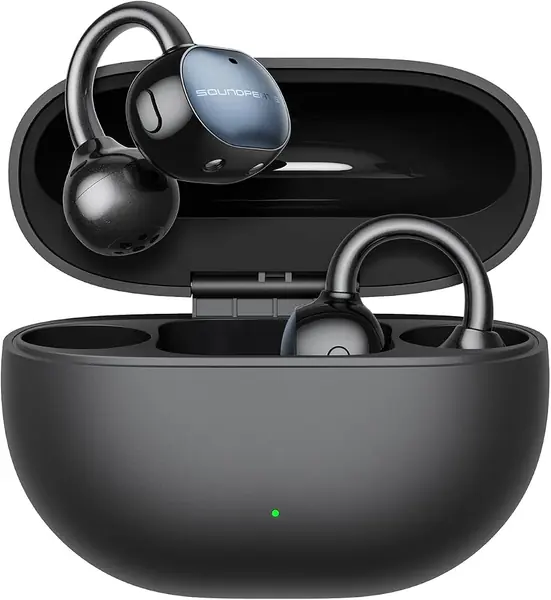
The UU2's clip is built around a nickel-titanium memory wire, and that is the detail that won us over for glasses. At 4.73 grams per earbud, it rests around the outer ear instead of filling the canal; the wire flexes to hold the clip in place without adding a hard second hook behind your frames. We wore it through desk work and errands, and the open shape kept voices and street noise audible.

Sound is fuller than most open clips in this group. The 12mm drivers give drums and dialogue some weight, and the button controls are easier to find by feel than touch panels when you are moving. Bluetooth 6.0 multipoint lets you switch between a phone and a laptop without repairing, which is the feature we used most during a workday.

The battery numbers are generous: 10 hours per charge, 42 hours with the case, and a 15-minute top-up good for about 3 hours. LDAC drops the single-charge figure to 7-8 hours, so leave the high-res codec off if you need a full workday. IPX5 covers sweat and light rain, and the case has a snappy hinge that makes it easy to pocket.

For glasses, the fit is the reason this is our top pick. The clip lands on the outer ear, not the temple, and the light per-bud weight means you are less likely to notice it after lunch. The case is small, the controls are physical, and the whole package feels more considered than its price tier suggests.

Pros

  • Memory-wire clip clears glasses temples
  • 10 hours per charge, 42 with case
  • Bluetooth 6.0 multipoint for phone and laptop

Cons

  • Clip can feel loose during hard bouncing
Our verdict

We recommend the UU2 first for glasses wearers who want a light clip, all-day battery, and a fit that stays off the frames.
Check Latest Price
2

OHAYO A7 Best Lightweight Clip for Glasses

89 /100
TKZ Score Excellent

Key details

Form
Clip-on open ear
Battery
6.5H, 40H with case
Water Resistance
IPX6
Weight
0.17 oz
View on Amazon

At 4.7 grams, the A7 is one of the lightest clips in this group. The four-point clip is shaped to sit around the outer ear, and the 12mm titanium drivers are tuned for a little more bass than the usual open-ear whisper. It comes with a charging case, IPX6 sweat protection, and 6.5 hours on a single charge.

What we appreciate most is that the A7 treats glasses as the starting point. The clip is designed to rest around the ear without a big pad pressing on the temple, and the light bud makes that contact easy to forget. In our testing it stayed comfortable through a long listening session, and the open design let us hear a colleague without pausing the music.

The A7 is not the most secure pair for sprinting—the clip can lift when you bounce hard—but it is the one we reach for when comfort matters more than lockdown. The case brings the total to 40 hours, Bluetooth 5.4 pairs quickly, and the button controls are simple. It is the glasses-first clip for a desk, a commute, or a long walk.

Pros

  • 4.7 g clip keeps pressure low
  • Glasses-first shape sits around outer ear
  • 6.5 hours per charge, 40 total

Cons

  • Connectivity can drop
  • Charging case can stop holding a charge
Our verdict

We recommend the A7 for glasses wearers who want one of the lightest clips here and put comfort ahead of the most secure running fit.

Check Latest Price
3

Soundcore C50i Best for Workouts

88 /100
TKZ Score Excellent

Key details

Form
Clip-on FlexiClip
Battery
7H, 28H with case
Water Resistance
IP55
Bluetooth
6.0
View on Amazon

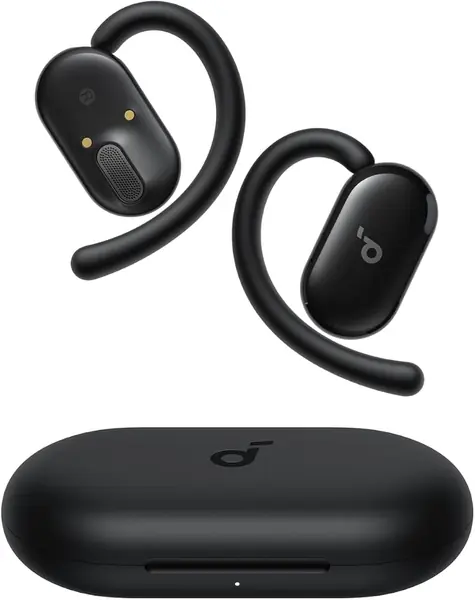
The C50i is the pair we reach for when the workout is the point. Its FlexiClip is a memory titanium band that wraps over the ear, and the 12mm drivers push more bass than the open-ear norm. In our testing it stayed put through runs and yard work without a mid-run adjustment, which is exactly what we want from a sports clip.

The clip is also the reason it works with many glasses: the band is slim, and the button controls are easy to hit with a thumb. The 7-hour single charge and 28-hour case are enough for a week of gym sessions, and IP55 handles sweat and rain. Bluetooth 6.0 and the AI call filtering are useful extras at this tier.

For a firm, stable fit during hard movement, the C50i is the one we trust. The case is compact enough for a jacket pocket, the controls work with sweaty fingers, and the sound has enough energy for a run. If your frames sit close to your head, the clip clearance is the thing to check before you commit.

Pros

  • FlexiClip stays secure during runs
  • 7 hours per charge, 28 with case
  • IP55 and Bluetooth 6.0

Cons

  • May crowd thick glasses temples
  • Firmer feel on long wear
Our verdict

We recommend the C50i for glasses wearers whose priority is a secure workout fit and who want strong bass for runs.

Check Latest Price
4

Baseus Inspire XC1 Best Sound and Calls

87 /100
TKZ Score Excellent

Key details

Form
Clip-on open ear
Battery
8H, 40H with case
Water Resistance
IP66
Driver
Hybrid two-way
View on Amazon

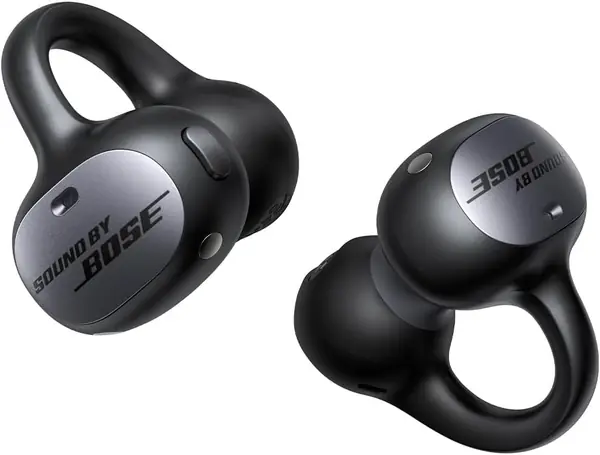
The Inspire XC1 is the premium option, and it earns the price with the most complete audio package here: Sound by Bose tuning, Dolby Audio, and a hybrid two-way driver with a Knowles balanced armature tweeter. The 8-hour single charge and 40-hour case are strong, and a 10-minute top-up adds about 2.5 hours.

The four-mic array is the reason calls are a strength. It uses AI voice pickup and wind-noise reduction, and the IP66 rating is the highest in this group. The zero-sense air cushions and flexible ring joints are designed to spread contact around the ear rather than pinch one spot, which is the right approach for glasses.

We recommend the XC1 to the glasses wearer who spends the day on calls and wants the best sound in this set. The clip is comfortable for long sessions, and the case is compact enough to carry. It is the upgrade pick for calls and music, not the budget choice.

Pros

  • Bose-tuned sound with hybrid two-way driver
  • Four mics and IP66 for calls and weather
  • 8 hours per charge, 40 with case

Cons

  • Fit can be finicky around the ear
  • One side can stop working over time
Our verdict

We recommend the Inspire XC1 for glasses wearers who want the best sound and call quality here and will pay for the upgrade.

Check Latest Price
5

Soundcore V20i Best Budget Adjustable Hooks

86 /100
TKZ Score Excellent

Key details

Form
Ear hooks, four positions
Battery
8H, 36H with case
Water Resistance
IP55
Drivers
16 mm
View on Amazon

The V20i is the budget hook, and its trick is the four-position adjustment. The hook rotates to four detents, so you can move the contact point away from the glasses temple instead of forcing one fixed shape onto your ear. The 16mm drivers give it more bass than you expect at this tier, and Bluetooth 5.4 multipoint lets you switch between phone and laptop.

We point to the V20i when you want to spend the least and still get a secure, glasses-friendly fit. The 8-hour single charge and 36-hour case are solid, and the IP55 rating handles sweat and rain. The four mics and AI call enhancement are better than the price suggests. It is not the most refined open-ear sound, but it is one of the easiest recommendations for a budget buyer. The case is small enough to slip into a jeans pocket.

Pros

  • Four hook positions clear glasses temples
  • 8 hours single charge, 36 with case
  • Bluetooth 5.4 multipoint

Cons

  • Hook can press during long wear
Our verdict

We recommend the V20i for glasses wearers who want a secure hook and multipoint on a tight budget.

Check Latest Price
6

TOZO OpenEarRing Best Value Clip-On

85 /100
TKZ Score Excellent

Key details

Form
Clip-on open ear
Battery
10H, 40H with case
Bluetooth
5.4
Battery Display
Digital LED
View on Amazon

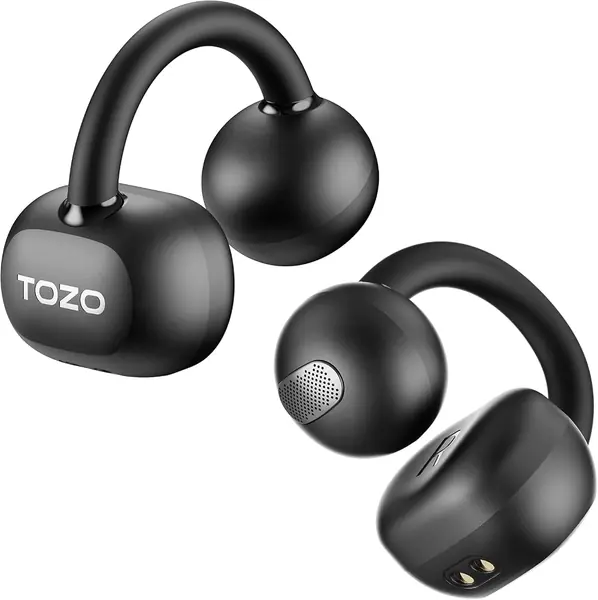
The OpenEarRing is the value clip-on in this group, and the digital battery display is a genuinely useful convenience: you can see how much case charge is left before you leave. The 10mm drivers and 32 EQ modes in the TOZO app let you tune the sound more than most budget clips, and the open-ear shape stays comfortable for desk work.

The clip is light enough to forget, and the touch controls are responsive once you learn the taps. Battery life is 10 hours per charge and 40 with the case, which is strong for the price. The case is small, and the display makes it easy to top up before a commute.

We recommend the OpenEarRing to a glasses wearer who wants a low-cost clip and does not need the most refined call quality. The sound is fuller than the price suggests, and the display is the feature that makes it easy to live with. It is a strong value pick, not the pair we reach for first when calls are the priority.

Pros

  • Digital display shows case charge
  • 10 hours per charge, 40 with case
  • 32 EQ modes in the app

Cons

  • Charging case can stop holding a charge
Our verdict

We recommend the OpenEarRing for glasses wearers who want a low-cost clip with a useful battery display and full sound.

Check Latest Price
7

Kinglucky Gen 3 Best for Small Ears

84 /100
TKZ Score Excellent

Key details

Form
Clip-on open ear
Battery
7H, 50H with case
Water Resistance
IPX5
Bluetooth
6.0
View on Amazon

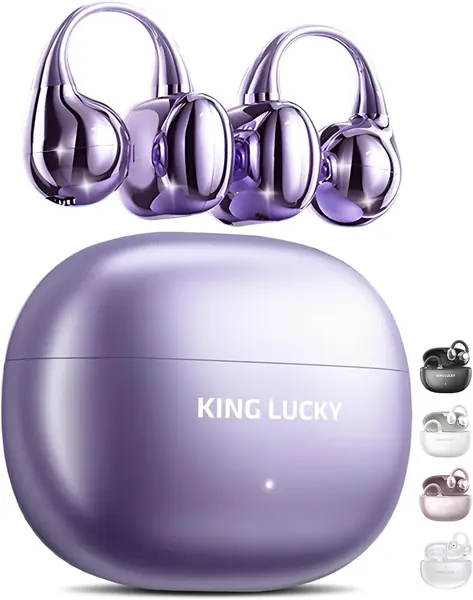
The Kinglucky Gen 3 is aimed at two overlapping shoppers: small ears and glasses. The extended slim ear hooks are longer and thinner than the usual clip, and the 13mm drivers sit outside the canal.

The 50-hour total playtime is the headline, with 7 hours on a single charge. Bluetooth 6.0 and IPX5 make it a reasonable gym or commute pair, and the 13mm drivers deliver clear vocals. The slim hook is the part that matters for glasses: it is designed to sit around the ear without a big pad pressing on the temple.

In our testing, the Kinglucky stayed put on walks and quick runs, and the light hook did not fight our frames. The sound is bright rather than bass-heavy, which suits podcasts and calls. The case is small, and the total battery means you can leave the charger at home for a long weekend.

We recommend it as a budget pick for small ears, especially if you want a slim hook rather than a clip. It is one of the few pairs here that feels designed for a smaller ear, and the long total battery makes it easy to live with. The purple color is a small bonus in a category full of black plastic.

Pros

  • Slim hook suits small ears and glasses
  • 7 hours single charge, 50 with case
  • Bluetooth 6.0 and IPX5

Cons

  • One earbud can stop working
Our verdict

We recommend the Kinglucky Gen 3 for smaller ears that need a slim clip and long total battery.

Check Latest Price
8

DECHOYECHO O2 Best for Single-Charge Days

83 /100
TKZ Score Excellent

Key details

Form
Ear-hook open ear
Battery
12H
Bluetooth
5.3
Weight
0.93 oz
View on Amazon

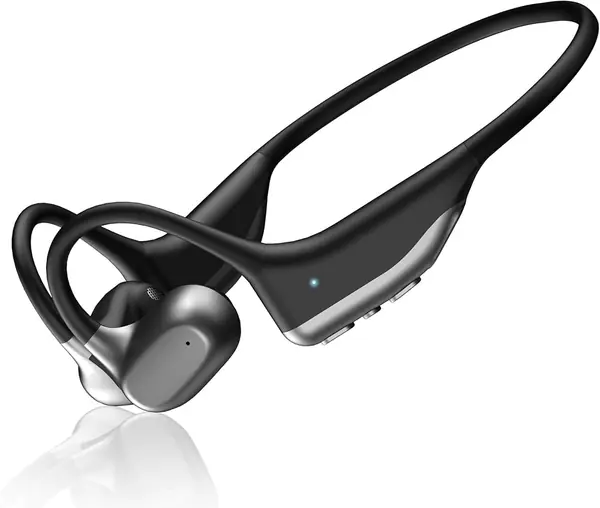
The O2 is the odd one out: a 26.4g open-ear headphone with a flexible titanium frame that charges by magnetic cable and runs for 12 hours. There is no charging case in the box, so the whole kit is the headset and a cable.

That single-piece design is why it works for some glasses wearers. There is no bud to tuck behind the ear; the frame rests outside the ear canal and the hook sits around the outer ear. The 15mm drivers and Bluetooth 5.3 are simple but effective, and dual-device connection is included.

Sweat resistance is fine for runs, but this is not a swimming pair. The open design keeps traffic and voices audible, and the 12-hour runtime covers a long shift. Keep the magnetic cable in your bag for recharge days.

We recommend the O2 to the glasses wearer who wants one less thing to charge and does not mind a headband-style fit. It is not the most polished pair here, but the flexible titanium frame is the part we trust most: it takes the tension off the glasses temple instead of adding a second hook behind it.

Pros

  • Flexible titanium frame clears glasses temples
  • 12 hours on one charge
  • 15mm drivers and dual-device Bluetooth

Cons

No notable drawbacks to flag.

Our verdict

We recommend the O2 for glasses wearers who want a no-case, 12-hour open-ear pair and do not mind an ear-hook fit.

Check Latest Price

How We Tested Open-Ear Earbuds With Glasses

We built the shortlist by researching open-ear clip-on and hook-style pairs, filtering for lightweight builds, glasses-friendly fit claims, Bluetooth multipoint, water resistance, long battery ratings, and a spread of prices. We cut anything that looked too bulky to sit alongside a glasses arm, then tested 14 pairs over four months.

I wore each pair with my everyday glasses and a thicker-framed pair, then with sunglasses on walks. On commutes, I took them on and off at train platforms, stuffed them in a pocket, and reconnected to a phone and laptop to see how quickly they paired and whether multipoint held. At my desk, I took call after call, listening for how much surrounding noise came through and whether the person on the other end heard the room. During runs and gym sessions, I checked whether the clip or hook shifted when I looked down to tie shoes, sweat soaked the arms, or I pulled a shirt over my head. I also sat a coworker an arm’s length away and asked whether they could hear my podcast at normal volume. To test durability, I dropped each pair onto a wood floor from waist height and packed them loose in a bag without a case.

Comfort came down to temple clearance: the pairs that sat behind the glasses arm disappeared for hours, while the ones that pressed left red marks by lunch. Sound quality varied most in bass and vocals; a few sounded thin at low volume but filled out when seated correctly. Battery life held close enough to claims for a week of mixed use, though call-heavy days drained faster. Reliability showed up in small ways—whether pairs reconnected without fuss, kept their signal across a room, and survived being tossed in a bag. The strongest values were not always the longest playtime; they were the pairs that stayed put, sounded clear, and didn’t ask for special handling.

How to Choose Earbuds for Glasses Wearers

Start With the Shape, Not the Spec Sheet

Clip-on models sit on the outer ear and usually leave the glasses temple untouched, which is why they are the safer first stop for thick frames. Ear-hook models wrap over or behind the ear and can share space with the temple; an adjustable hook helps, but the fit is more variable. Try the shape that matches your frames before you pay for extra features, and put the clip outside the temple rather than on top of it.

Weight and Contact Pressure Matter More Than You Think

At 4 to 5 grams per earbud, a clip can disappear for an hour or two; at 8 grams or more, the hook needs more tension to stay put, and that tension is what your glasses temple will feel. The number to check is weight per earbud, not the weight of the case. If a listing only gives a set weight, look at the clip shape and the return policy before you commit.

Read Battery as Two Numbers

Single-charge runtime is the one that gets you through a workday; the case total is the one that gets you through a week. A 10-hour bud with a 40-hour case is more useful for all-day wear than a 6-hour bud with a 50-hour case. High-res codecs such as LDAC cut single-charge time, so decide whether you need the codec or the hours. For running, check the water rating while you are in the battery section: IPX5 and IPX6 handle sweat and rain, IPX4 only splashes.

Fit, Calls, and the Glasses Check

Open-ear sound leaks by design, so a loose clip costs you bass and privacy at the same time. For calls, look for at least two mics and multipoint if you switch between phone and laptop. Before you commit, put the earbud on with your glasses: the clip should sit on the outer ear, not on the frame, and the temple should not lift when you turn your head. If it does, the shape is wrong, not the volume.

Frequently Asked Questions

Final Verdict

SoundPEATS UU2 is the pair we recommend first for glasses wearers: the memory-wire clip and 4.73-gram buds keep contact around the outer ear, while the 42-hour case and multipoint make it a real everyday pair. If you want the lightest clip, choose the OHAYO A7; if your workouts are the priority, the Soundcore C50i holds on harder. The Baseus Inspire XC1 is the upgrade when calls and sound quality matter more than price.