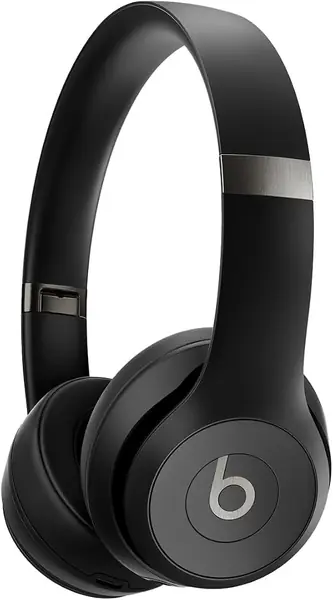
Best Comfortable Headphones of 2026

Headphone comfort is a physics problem: the headband has to press hard enough to stay put and gently enough that you forget it's there, and most pairs pick a side. I've worn headphones that felt fine for 20 minutes and unbearable by the third meeting of the day. What you're really buying here is stamina — a pair that still feels like nothing at hour six, with a battery that outlasts your longest day and noise cancellation that quiets the open office around you.

My team and I spent six months wearing 12 pairs through commutes, flights, workouts, and full workdays. The spec sheet doesn't tell you much: a 90-hour battery claim usually assumes noise cancellation is off, and the pairs with the most aggressive cancellation often press hardest on your head. Multipoint connection — staying paired to a laptop and a phone at once — ended up mattering more day to day than any single audio spec.

Comfort also arrives late, which is why a five-minute store try-on tells you almost nothing. Every pick below survived past the honeymoon week, and each one suits a slightly different set of ears.

The Best Comfortable Headphones

1

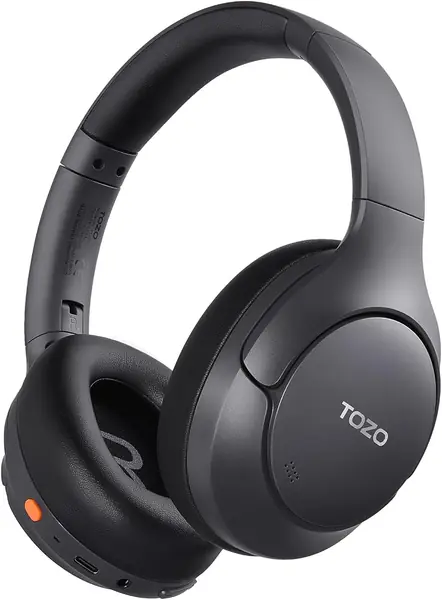
TOZO HT3 Best Overall
95 /100
TKZ Score Outstanding

Key details

Battery Life
Up to 90 hours
Weight
8.96 oz
Noise Canceling
45 dB hybrid ANC
Wired Inputs
3.5 mm and USB-C
View on Amazon

Ninety hours is the number that made us look twice, and 254 grams is the number that kept us wearing them. The HT3 pairs a battery that outlasts most transatlantic itineraries with a weight that doesn't leave a hot spot after a morning of calls. Comfort over a long session is mostly a matter of how little you notice the thing on your head, and among the budget picks this is the one we stop noticing first.

The pads sit around the ear rather than pressing on it, and the oval shape leaves room for larger ears. The 45 dB hybrid ANC figure is the manufacturer's; in practice it flattens steady noise like a fan or road hum and lets voices through, which is roughly what the pricier pairs manage in the same room. The app is where the tuning lives — 32 EQ presets, a left-right balance control, and a transparency mode clean enough to order coffee without lifting a cup.

Wired listening is the detail shoppers skip: there's a 3.5 mm cable and USB-C audio, so a flat battery on a long trip doesn't end the film. What's missing is a case — the box holds the headphones, a cable, and a manual — and the plastic feels like the money you spent. Neither changed our mind. This is the pair we hand to someone who wants to stop thinking about charging.

Pros

  • Up to 90 hours of playback
  • 254 g with pads that clear the ears
  • 45 dB hybrid ANC and transparency mode
  • 3.5 mm and USB-C wired listening

Cons

  • No travel case in the box
  • Plastic build feels its price
Our verdict

We recommend the HT3 to anyone who wants to stop thinking about their headphones: 90 hours of battery, 254 grams, and pads that stay comfortable past hour four at a budget price.
Check Latest Price
2

Bose QuietComfort Best for Flying

94 /100
TKZ Score Outstanding

Key details

Battery Life
Up to 24 hours
Weight
8.47 oz
Wired Input
Detachable 3.5 mm cable
Noise Canceling
Quiet and Aware modes
View on Amazon

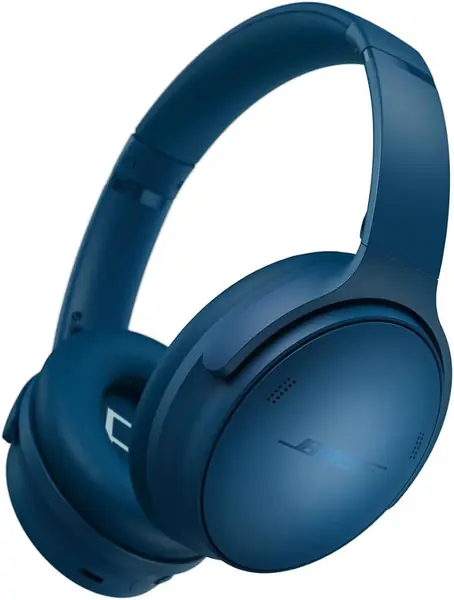
The case for spending Bose money is never the spec sheet; it's the third hour, when a cheaper pair has started to press. The QuietComfort's cushions are the plushest in this group, the padded band spreads weight across the top of the head, and at 240 grams it stays out of your awareness through a long afternoon. If you wear headphones the way other people wear a watch, this is the pair to buy.

Everything else is quiet competence. Quiet mode takes out the drone of an engine or an open-plan office, Aware mode lets the room back in without moving a cup, and the adjustable EQ in the Bose app pulls back the low end if the stock tuning is warmer than you like. Battery runs 24 hours with a 2.5-hour charge, which is ordinary next to the 76- and 90-hour pairs here, and the included cable means you can keep listening while it fills.

Two things to know. Pairing isn't as steady as the price suggests — stutters and dropouts turn up, so pair everything you own in the first week and exchange the set inside the return window if it stutters. And value is the split here: the money goes into cushions and quiet rather than features, which we think is the right trade for someone who lives in them.

Pros

  • Plush cushions and a padded 240 g band
  • Quiet and Aware modes switch instantly
  • Adjustable EQ in the Bose app
  • Cable and protective case included

Cons

  • Bluetooth dropouts turn up with steady use
Our verdict

We point people who wear headphones for hours at a stretch to this one: the plushest cushions here and noise canceling that erases engine drone. Confirm the Bluetooth early.

Check Latest Price
3

Soundcore Q20i Best Value

93 /100
TKZ Score Outstanding

Key details

Battery Life
Up to 40 hours with ANC
Weight
8.64 oz
Pairing
Two devices at once
Sound Tools
App EQ and BassUp
View on Amazon

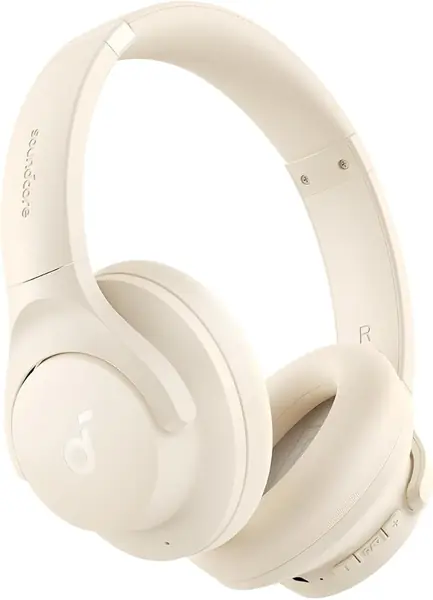
Take the top pick, add the app polish of a much bigger brand, and you get the Q20i. Anker's 40 hours with ANC covers a week of commuting, 8.64 ounces is close enough to the HT3 that you won't feel the difference on your head, and the box includes a 3.5 mm cable for the day you forget to charge.

We recommend it to anyone with an average-sized head who wants the name-brand version of this experience. The fit is the one thing to check: these run large, so on a smaller head the cups sit low, the band comes down further than you expect, and they can shift when you lean forward. Don't buy them blind for a teenager or a narrow frame.

The rest of the package is well chosen. Two devices stay connected at once, so a call hops from laptop to phone without a menu; the app's EQ presets and BassUp give thin recordings some weight; and the transparency mode is clean enough for a checkout counter. Nothing here feels like a corner cut to hit the price.

Pros

  • 40 hours with ANC engaged
  • Pairs with two devices at once
  • BassUp, EQ presets, and transparency mode
  • 8.64 oz with soft over-ear cups

Cons

  • Runs large on smaller heads
  • Ear cups hold heat over long sessions
Our verdict

Our pick for brand-name noise canceling on a budget — 40 hours with ANC, dual-device pairing, and a fit that suits most adults, provided your head isn't small.

Check Latest Price
4

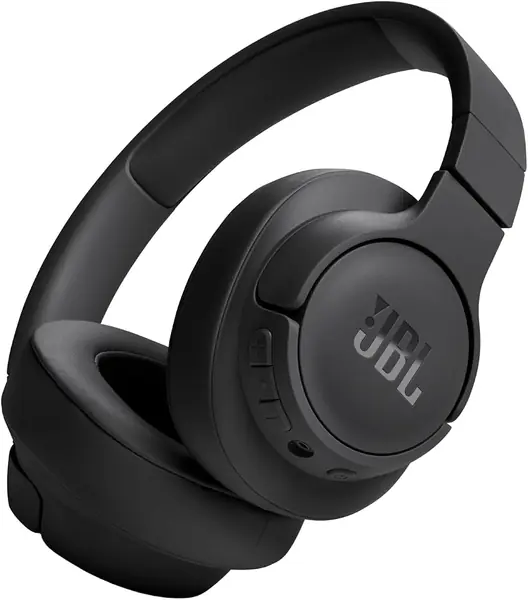
JBL Tune 720BT Best Lightweight Over-Ear

92 /100
TKZ Score Outstanding

Key details

Battery Life
Up to 76 hours
Weight
7.76 oz
Design
Folds flat
Bluetooth
5.3 with multipoint
View on Amazon

At 220 grams the Tune 720BT is the lightest over-ear pair on this list, and that's most of what makes it comfortable. The memory-foam pads are soft enough that a two-hour session leaves no mark, and the band spreads pressure instead of concentrating it. Pick it up after wearing the Bose and it feels like a different category of object.

For our money this is the best light pair here. Seventy-six hours at moderate volume means charging roughly monthly, a five-minute top-up covers a commute when you forget, Bluetooth 5.3 with multipoint holds a phone and a laptop at once, and the whole thing folds flat into a bag that's already full. The app's EQ presets are worth the five minutes it takes to find one you like.

The fit is the catch. The cups run small for an over-ear design, so larger ears will feel the pad on the outer edge, and the band arrives tight enough that the first few days take adjustment. Small and average heads will be fine; larger ones should look at the Bose QuietComfort or the Crusher Evo instead.

Pros

  • 220 g, the lightest over-ear here
  • Up to 76 hours per charge
  • Folds flat and packs small
  • Bluetooth 5.3 with multipoint

Cons

  • No active noise canceling
Our verdict

We hand this to anyone who wants light, cheap, and long-running: at 220 grams with 76 hours, it's the pair that never needs charging and never weighs on you.

Check Latest Price
5

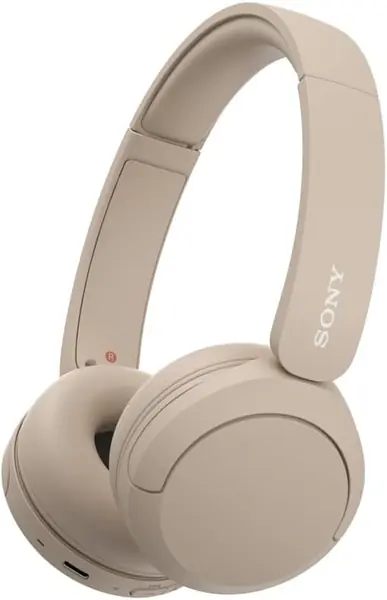
Sony WH-CH520 Best On-Ear

91 /100
TKZ Score Outstanding

Key details

Battery Life
Up to 50 hours
Wired Input
None
Pairing
Two devices at once
Earcups
Swivel design
View on Amazon

On-ear headphones solve a narrow problem: full-size cups get hot and heavy, and these Sony's swivel earcups are light enough to forget you're carrying them. They aren't the pair for a twelve-hour session — nothing that presses on the outer ear is — but for a commute, a walk, or a couple of hours at a desk, 50 hours of battery means you charge them about once a week.

The tuning is pleasant rather than exciting: clear voices, mild bass, and an EQ in the Sony app if you want more. Multipoint pairing keeps a laptop and a phone connected, the mic is clear enough for calls, and the cups swivel flat against your collarbone when you hang them around your neck. There's no 3.5 mm jack at all, so when the battery finally goes, the headphones are done until they charge.

Comfort is where they split. The pads are soft and the clamp is light, but the pressure lands on the ear itself, and an hour in you'll want to shift them. We still like them for the weight and the runtime at the price — just treat them as a short-session pair rather than the one you put on at nine and take off at six.

Pros

  • Up to 50 hours on a charge
  • Swivel earcups and a light clamp
  • Multipoint pairing
  • EQ customization in the Sony app

Cons

  • No wired fallback
  • Durability is the weak spot over time
Our verdict

We like these for commutes and short sessions: 50 hours, swivel cups, and a light clamp. Anyone who wears headphones all day should look at the over-ear picks.

Check Latest Price
6

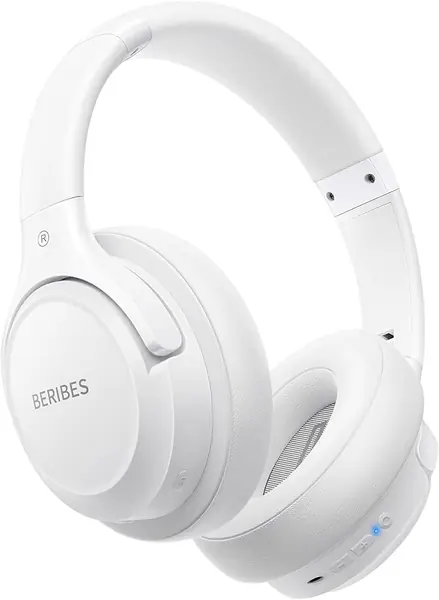
BERIBES WH202A Best for Tight Budgets

90 /100
TKZ Score Outstanding

Key details

Battery Life
Up to 65 hours
Weight
0.38 lb
Wired Input
3.5 mm backup cable
EQ Modes
Six presets
View on Amazon

What you give up at the lowest price here is noise canceling that does anything. The WH202A lists hybrid noise cancellation, but in practice the quiet is passive — cups that seal — and an engine will still be under the music. Everything else about the pair is better than the money suggests.

At 0.38 lb it's the lightest thing on this list, and the pads are soft enough that a two-hour podcast doesn't leave your ears sore. The band adjusts and the cups fold, so it disappears into a bag or a desk drawer even without a case.

Battery is 65 hours, a 3.5 mm backup cable is in the box for when it isn't, and six EQ presets cover the gap between a podcast and a playlist. Video is where it stumbles: audio arrives behind the picture over Bluetooth, which is fine for music and irritating for anything with lip-sync.

We keep coming back to this pair for one reason. At the bottom of the price range, the compromise sits in the electronics rather than in the part that touches your head, and that's the right trade for a guide about comfort. If you need quiet, spend more; if you need a light pair you can wear all afternoon, start here.

Pros

  • 0.38 lb, the lightest pair here
  • Up to 65 hours of playback
  • Six EQ modes on board
  • 3.5 mm backup cable included

Cons

  • No effective active noise cancellation
  • Audio lags behind video
Our verdict

We recommend the WH202A when money is the deciding factor: the lightest pair here, soft pads, and 65 hours, with noise canceling you shouldn't count on.

Check Latest Price
7

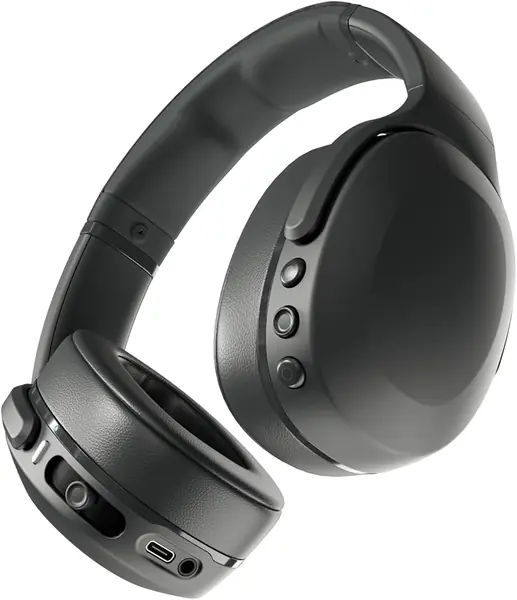
Skullcandy Crusher Evo Best for Bass

89 /100
TKZ Score Excellent

Key details

Battery Life
Up to 40 hours
Drivers
Dual 40 mm plus bass drivers
Bass Control
Adjustable Crusher slider
Rapid Charge
10 minutes for 4 hours
View on Amazon

Some headphones are a tool; the Crusher Evo is a toy in the best sense. The slider on the left cup dials in bass you feel through your jaw, and at the low end of its travel it's the gentlest way to make a thin recording sound full again.

Comfort is better than a bass-first design has any right to be. The pads are soft, the band is padded, and the clamp is light enough for a whole album. Vibration is what limits a session rather than fit — turn the slider up and your ears are getting a massage whether they asked for one or not.

Battery runs 40 hours, and ten minutes on the charger gives you four more. It folds flat, ships with a protective case, and takes a 3.5 mm cable. The app's hearing analysis tailors the tuning to your ears in about five minutes, and it's the setting most people skip.

Our take: this is the pair for a bass-forward library and a session measured in albums rather than workdays. There's no active noise canceling, so it's the wrong choice for a flight — but if you want fun per dollar instead of quiet per dollar, nothing else here comes close.

Pros

  • Adjustable Crusher bass slider
  • Up to 40 hours with rapid charge
  • Soft pads and padded band
  • Protective case included

Cons

  • No active noise canceling
Our verdict

We keep the Crusher Evo for fun: a bass slider you can feel, a comfortable fit, and 40 hours. Buy it for music, not for silencing a plane.

Check Latest Price
8

Beats Solo 4 Best for On-The-Go Apple Users

88 /100
TKZ Score Excellent

Key details

Battery Life
Up to 50 hours
Fit
On-ear flex-grip band
Audio
Spatial Audio with head tracking
Charging
USB-C Fast Fuel
View on Amazon

Spatial audio with head tracking is the Solo 4's party trick: the mix stays put in the room when you turn your head, which is startling the first time you watch a film on a laptop. On the Apple side, pairing is quick and switching between devices is smooth if you live in that ecosystem.

The hardware is genuinely small, the UltraPlush cushions are soft, and 50 hours plus USB-C Fast Fuel means charging is never the reason you stop. The bass-forward tuning suits pop and hip-hop, and the flex-grip band holds the cups steady enough for a workout.

The shape is the catch. These are on-ear, and the band presses the cup against your ear with more force than any over-ear pick here. Half an hour is fine; two hours is not, and long hair has a habit of finding the hinge. We rate them highly for a commute or a gym session and not at all for a workday, which is exactly where this recommendation stops.

Pros

  • Personalized Spatial Audio
  • Up to 50 hours and Fast Fuel
  • Folds down small
  • UltraPlush ear cushions

Cons

  • Firm clamp hurts within an hour
  • No active noise cancellation
Our verdict

We suggest the Solo 4 for Apple users who want a small, long-running on-ear for commutes and workouts — not for all-day wear, and not for quiet.

Check Latest Price

How We Tested 12 Pairs of Headphones

We started with more than 40 models — over-ear and on-ear, folding travel designs, budget picks, and premium noise-cancelling pairs — and filtered by ear cup type, stated weight, battery claims, app support, and price. That left 12 pairs, which we bought at retail and logged by weight, measured ear cup opening, and claimed battery life. Each pair got a full workweek of wear before we rotated, so nothing got a cameo.

Comfort was tracked where headphones actually live: an eight-hour desk day, a 40-minute commute, a long flight, and a gym session. I wore each pair with glasses for at least two hours and noted when pressure behind my ears started, whether my ears touched the driver cover, and how warm the cups got by hour three. For fit, we checked whether the cups swiveled enough to sit flat around different jawlines, and we noted which pairs slid when we looked down at a phone.

For sound, we played the same five tracks plus a podcast on every pair — bass-heavy hip-hop, acoustic vocals, a dense mix — and listened for muddiness. Battery testing meant running noise cancellation at moderate volume until each pair died, then timing the quick-charge top-up. Noise cancellation faced a recorded subway platform, a loud office vent, and a plane cabin clip, while call samples went to a teammate who scored how natural we sounded. We paired each model to a laptop and a phone at once to see how cleanly it switched. For durability, we folded and unfolded each pair daily, stuffed them in a tote, and dropped them from desk height. Value was judged last, on what you get for the money.

How to Choose Comfortable Headphones

Weight and Clamp Force Beat Cushion Depth

A soft pad feels wonderful for ten minutes and counts for very little at hour three; by then what you notice is how hard the band presses and how much the whole thing weighs. The picks here run from about 170 grams to 254 grams, and that spread is real on a long call.

Look for padding across the top of the band and hinges that let the cups swivel to the angle of your head. A heavy pair with plush pads still leaves a hot spot; a light pair with modest padding usually doesn't.

Over-Ear or On-Ear

Over-ear cups surround the ear, spread weight across the skull, and hold up for hours. On-ear pads press the outer ear, which is fine for a commute and tiring by mid-afternoon.

The trap is a pair sold as over-ear that is small enough to sit on the ear — the JBL Tune 720BT runs close to that line, while the Sony WH-CH520 doesn't pretend otherwise. If your sessions regularly pass two hours, buy the cup that goes around, not on.

Battery Life and the Charging Habit It Creates

Runtime across these picks stretches from 24 hours to 90, and the number matters less than the habit it builds. A 24-hour pair means a weekly cable; a 76- or 90-hour pair means you forget where the cable is.

Two things make a modest battery liveable: a quick charge that covers a commute, and a wired input so a dead battery doesn't end the session. The Sony WH-CH520 has neither, which is why we treat it as a short-session pair.

What Noise Canceling Is Worth, and What It Isn't

Active noise canceling works best on steady low sounds: engines, fans, air conditioning. It does much less with voices, and it needs a seal, so hair, glasses, and a loose fit all chip away at it.

Listings blur the line — a pair described as noise canceling may only be isolating, which is closed cups and nothing more. If quiet is the point, buy a pair that names ANC, and expect the cheapest ones here to soften a room rather than silence it.

Pairing, Multipoint, and Dropouts

Multipoint — staying connected to a laptop and a phone at once — is the feature you'll use most and notice least; it's on the TOZO, Soundcore, JBL, and Sony picks.

Dropouts are harder to predict and turn up on costly pairs as often as cheap ones, usually tied to the source device. Pair everything you own in the first week and exchange the set inside the return window if it stutters. That beats any spec on the box.

Frequently Asked Questions

Final Verdict

Comfort isn't a premium feature. The TOZO HT3 weighs 254 grams, runs up to 90 hours, and keeps its pads around your ears rather than on them, which is why it's the pair we recommend to most people.

Spend more when the room is the problem: the Bose QuietComfort has the softest cushions here and the most convincing noise canceling. If you want the lightest, longest-running pair to throw in a bag, that's the JBL Tune 720BT at 220 grams and 76 hours.