Best Carbon Fiber Tripods of 2026

For years I shot on aluminum because carbon fiber felt like a luxury I couldn't talk myself into. Then I hauled a heavy rig up a ridge in the last hour of daylight and spent the good light catching my breath instead of shooting. A carbon fiber tripod doesn't take sharper pictures on its own — it's the one that goes with you instead of staying in the trunk, and it damps vibration while it's there.

My team and I have spent the past eight months with 12 of them, from two-pound travel sticks that fold to the length of a forearm to 40mm-tube stands built for long glass. Everyone compares max load, but the numbers that decide whether you'll actually like one are folded length, leg diameter, and how the locks feel on a cold morning. A ball head that creeps under a telephoto will ruin your afternoon faster than a few extra ounces ever will. The picks below run from hike-all-day light to wildlife-heavy, and each one earned its place on the legs, not on the spec sheet.

The Best Carbon Fiber Tripods

1

K&F Concept O254C2+BH-36 Best Overall
92 /100
TKZ Score Outstanding

Key details

Max Load
17.6 lb
Folded Size
16.3 in
Weight
2.5 lb
Max Height
64 in
View on Amazon

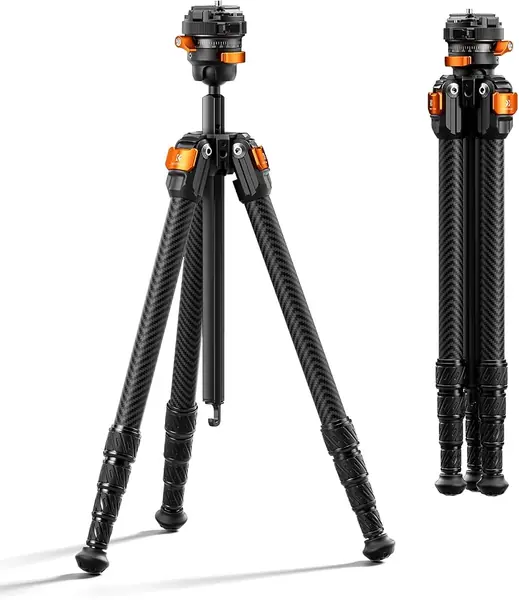
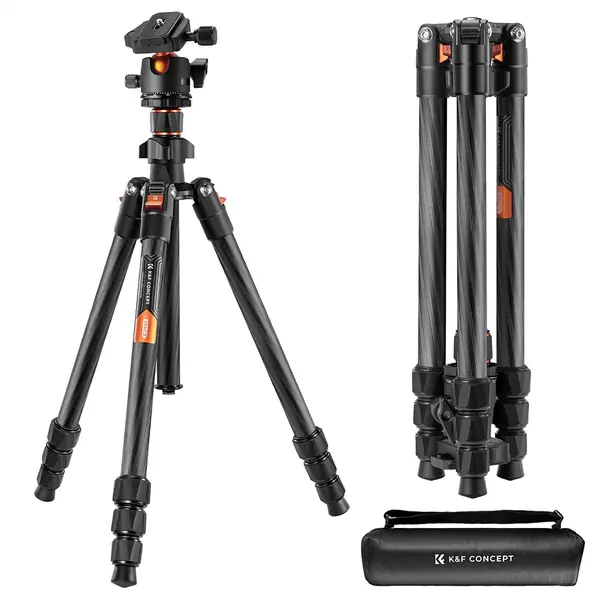
K&F Concept O254C2+BH-36 is the one we hand to a friend who wants a serious tripod without a serious packing problem. The 64-inch top height puts the camera at eye level for most adults, and the 16.3-inch folded length is short enough for a daypack. That combination is why it is our top pick rather than one of the more specialized pods here. At 2.5 pounds, it is light enough to carry all day, and the 17.6-pound load rating leaves room for a mirrorless body, a zoom, and a bracket.

The four-section legs are a sensible compromise: fewer joints than the five-section travel pods, so there is less to fiddle with when you are setting up in a hurry, but it still packs small. We like the 36 mm ball head for stills; it pans smoothly and is easy to level with the bubble. The quick-release plate is standard Arca-style, which makes it easy to move between this tripod and a gimbal or clamp.

We keep coming back to this one because it does not make you choose between height and portability. It is the tripod that stays in the car, goes on the weekend hike, and still handles a full-size camera. For a first carbon tripod, that breadth is worth more than a single standout spec.

Pros

  • 64-inch height with a 16.3-inch fold
  • 2.5-pound carbon body
  • 17.6-pound load for a travel tripod

Cons

  • Plastic ball head is the weak point
Our verdict

For most photographers, this is the carbon tripod we recommend: tall, light, and compact enough to carry daily.
Check Latest Price
2

INNOREL RT90C Best for Heavy Rigs

91 /100
TKZ Score Outstanding

Key details

Max Load
88 lb
Folded Size
23.2 in
Weight
6 lb
Leg Diameter
40 mm
View on Amazon

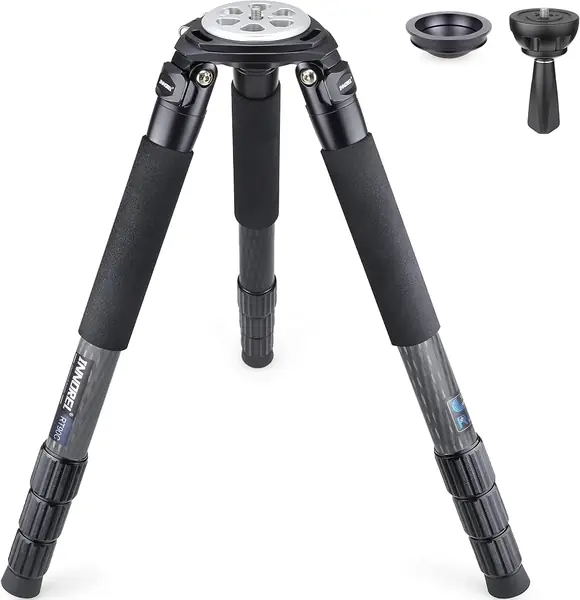
The INNOREL RT90C looks like a travel tripod until you put a hand around one leg. The 40 mm upper tubes and 75 mm bowl are built for a long lens, a gimbal, or a fluid head, and the three leg angles let you drop it low without adding a short column. It is a different class of support from the 22-25 mm travel pods here.

We trust it most when the camera is the heaviest thing in the bag. The 88-pound load rating is far beyond what most photographers need, but the stability is the point: the wider stance and big tubes settle quickly after a pan. The 75 mm bowl is the detail that matters for video because you can level the head without fussing with three legs. The carbon legs are stiff, and the bowl adapter feels substantial.

This is not the tripod we choose for a long hike; it is the one we choose when the shot needs a heavy rig and a solid base. If you shoot wildlife, astro, or video from a fixed position, this is the base that makes a heavy rig feel settled.

Pros

  • Rock-solid with telephoto and video rigs
  • 40 mm legs and 75 mm bowl
  • 88-pound load rating
  • Bowl mount speeds leveling

Cons

  • Six-pound package is a haul
  • Twist locks can be stiff to release
Our verdict

For long lenses, gimbals, and video heads, the RT90C is the heavy-duty base we trust, provided the shoot stays close to the car.

Check Latest Price
3

SIRUI Traveler X-III Best Ultralight Travel

90 /100
TKZ Score Outstanding

Key details

Max Load
22 lb
Folded Size
13.9 in
Weight
2.1 lb
Max Height
59.8 in
View on Amazon

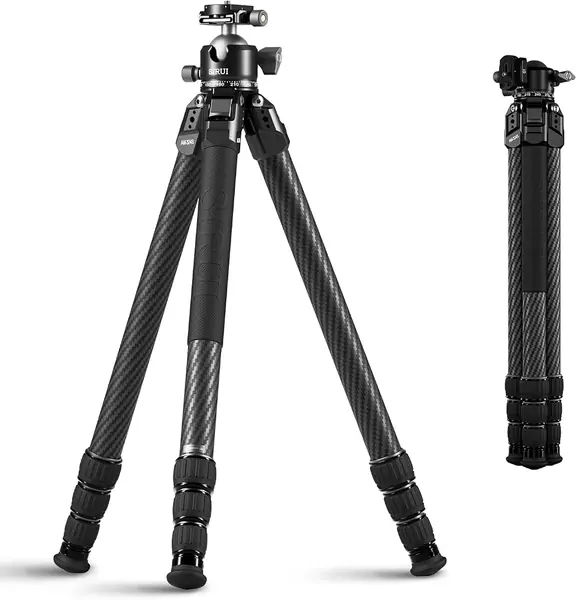
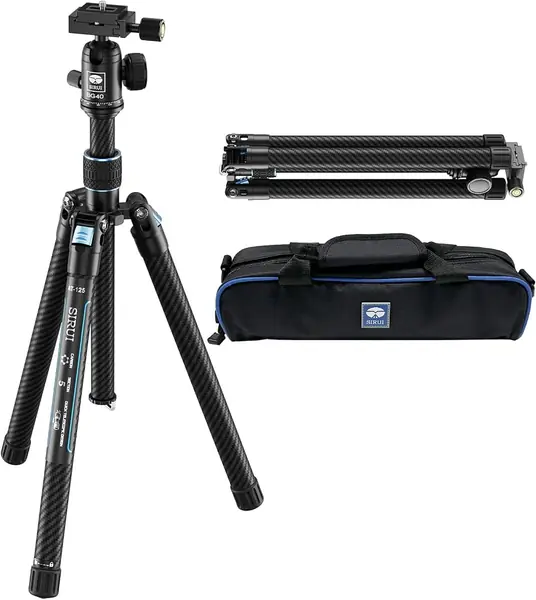
The SIRUI Traveler X-III has one of the cleverest leg systems in this group: a single twist lock releases all five sections, so the tripod goes from folded to full height in one motion per leg. It weighs 2.1 pounds, folds to 13.9 inches, and still reaches 59.8 inches. That is a rare combination for a packable tripod.

The 22-pound load rating is generous for a travel pod, and the 360-degree ball head has a separate panning base, which is useful for landscapes and casual video. We noticed the folded length first because it disappears into a small daypack; the five-section legs are the reason. The carbon tubes feel stiff for their diameter, though the tripod is at its best when you keep the center column down and let the legs do the work.

Where it earns its place is travel where every inch of pack space counts. It is not the most rigid full-height tripod here, but it is one of the easiest to carry, and the one-twist legs make a quick setup feel less like a chore. For a mirrorless kit and a traveler who moves often, that trade is the right one.

Pros

  • 2.1-pound full-height travel pod
  • Folds to 13.9 inches
  • One-twist leg extension
  • 22-pound load rating

Cons

  • One-twist collars can stick
Our verdict

We recommend the Traveler X-III for travelers who value a 13.9-inch fold and a 2.1-pound carry more than ultimate rigidity.

Check Latest Price
4

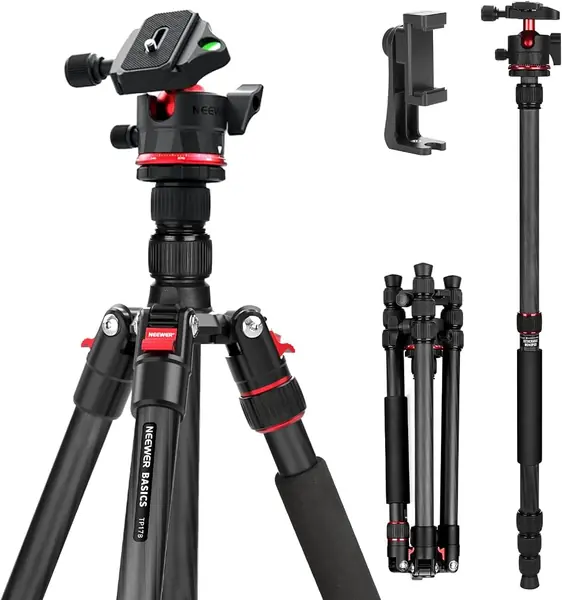
NEEWER TP17B Best Budget

89 /100
TKZ Score Excellent

Key details

Max Load
13.2 lb
Folded Size
16.3 in
Weight
3.2 lb
Max Height
64 in
View on Amazon

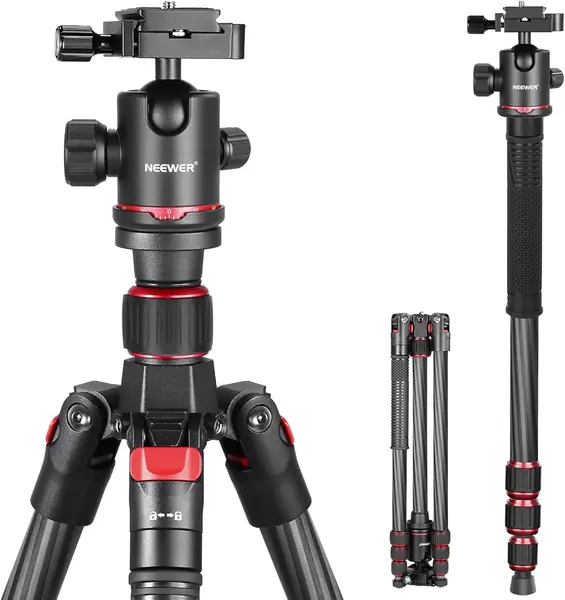
The NEEWER TP17B is the budget option that still gives you a 64-inch working height, a 13.2-pound load rating, and a phone holder in the box. The carbon legs and reverse-folding design bring it down to 16.3 inches, so it fits in a normal backpack. The two-section center column extends to full height or inverts for macro work, which is a useful trick at this end of the market.

We recommend it for phone video, vlogging, and light camera kits where the tripod has to do more than one job. The ball head rotates 360 degrees and tilts 90 degrees, and the Arca-style plate is easy to swap between a camera and a phone clamp. The height and the included phone mount are the reasons to choose it. For a first tripod or a second one for travel, it covers a lot.

Pros

  • 64-inch height at a budget price
  • Phone holder included
  • 13.2-pound load
  • Folds to 16.3 inches

Cons

  • 3.2 pounds undercuts the carbon advantage
Our verdict

For phone shooters and light cameras, the TP17B is the budget pick: tall, easy to pack, and ready for a phone out of the box.

Check Latest Price
5

SIRUI AM-324S+G1 Best for Video Rigs

88 /100
TKZ Score Excellent

Key details

Max Load
44 lb
Folded Size
22.1 in
Weight
3.75 lb
Accessory Ports
6
View on Amazon

The SIRUI AM-324S+G1 has six quarter-inch accessory ports, and that is the first thing we noticed. For a video rig, those ports are more useful than another ounce of weight savings: you can mount a monitor, a mic, or a small light without clamping everything to one magic arm. The 44-pound load rating and 56 mm ball head back up the idea that this is a production base.

The G1 head sits low on the center of gravity, which makes a heavy camera easier to balance, and the carbon legs are stiff enough for a telephoto or a cage. At 3.75 pounds, it is light for its load class. The 56 mm head is smooth for stills, and the panning base is easy to lock down.

We like it for the photographer who is building a rig rather than just carrying a camera. The accessory ports turn the tripod into a small workstation, and the load rating leaves room for a serious lens. It is the one we choose when the camera is only one part of the setup.

Pros

  • 44-pound load capacity
  • Six quarter-inch accessory ports
  • 56 mm ball head with low center of gravity
  • 3.75-pound carbon body

Cons

  • 22-inch folded length
  • Ships with a ball head, not a fluid head
Our verdict

For video rigs and accessory-heavy setups, the AM-324S+G1 is our support pick: huge load room, six mounting points, and a low-profile head.

Check Latest Price
6

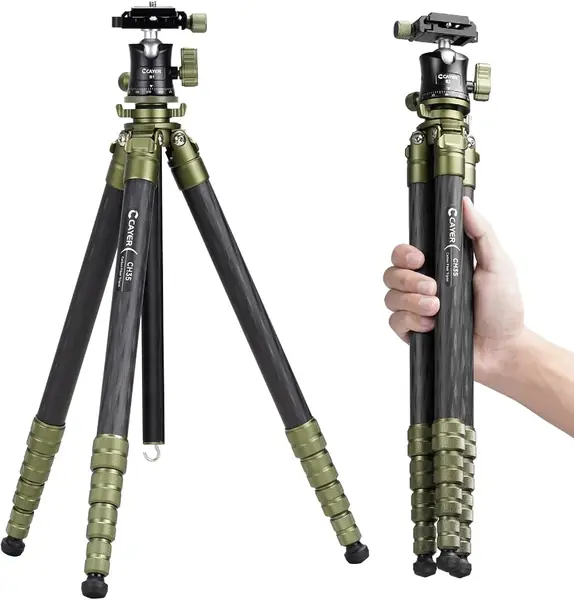
Cayer CH35 Best for Small Camera Kits

87 /100
TKZ Score Excellent

Key details

Max Load
11 lb
Folded Size
17.7 in
Max Height
53.6 in
Ball Head
42 mm
View on Amazon

The Cayer CH35 is a small-kit tripod with a 42 mm ball head, a 17.7-inch folded length, and an 11-pound load rating. The Y-shaped center column lets the legs fold tighter around it, which is why the packed size is shorter than the tripod's height suggests. It comes with a short column, a phone clamp, and a carrying case, so it is ready for a phone or a compact camera without extra shopping.

We like it for travel when the camera is light and the bag is small. The ball head tilts 90 degrees for vertical shots, and the Arca-type plate is easy to mount. The carbon tubes keep the weight down, and the included phone clamp makes it a useful second tripod for a phone-first trip. It is not the pod for a full-frame body with a long lens; the load rating sets that boundary.

Where it earns its place is as the tripod that fits under a daypack lid and still gets the camera off the ground. For a small mirrorless kit, a phone, or a spotting scope, it is an easy recommendation. It is the one we grab when we want support without committing to a full-size tripod.

Pros

  • Very light for a small travel kit
  • Folds to 17.7 inches
  • 11-pound load for compact cameras
  • 42 mm ball head and phone clamp

Cons

  • 53.6-inch top height is short for eye-level shots
Our verdict

For a small camera or phone, the Cayer CH35 is a light, compact travel tripod that folds small and sets up fast.

Check Latest Price
7

K&F Concept A225C2+BH-28R Best for Mirrorless Travel

86 /100
TKZ Score Excellent

Key details

Max Load
13.2 lb
Folded Size
16.5 in
Weight
2 lb
Max Height
60 in
View on Amazon

The K&F Concept A225C2+BH-28R makes a real claim: 2 pounds with the ball head. The body is 920 grams, and the shipped package with the plate, short column, and bag is 2.8 pounds. It folds to 16.5 inches and reaches 60 inches, which puts it in the same travel class as the top pick but with a lighter body.

The load story is the part we paid attention to. The 28 mm head is rated to 13.2 pounds, but the 22 mm carbon legs are intended for mirrorless and entry DSLR kits up to 3.3 pounds. That is an honest split, and it matters: a 70-200 mm f/2.8 or a gimbal is outside what the legs are for, even if the head can hold it. For a Sony A7-style body and a compact zoom, it is comfortably inside the limit.

The 28 mm ball head has a separate panning base, and the clamp is sized for 38 mm Arca plates. Check your L-bracket before you buy, because a wider plate will not seat fully. The two quick-release plates and the short center column are useful extras, and the twist locks are compact. The three-section legs make setup quick and keep the folded length reasonable.

We recommend it for a mirrorless traveler who wants the lightest complete tripod here and does not need to support a big lens. It is the one we choose when the camera bag is small and the hike is long, as long as the kit stays light.

Pros

  • Two-pound body with head
  • Folds to 16.5 inches
  • 60-inch height
  • Two quick-release plates included

Cons

  • Leg-lock security is mixed
Our verdict

For a mirrorless kit, the A225C2+BH-28R is the lightest complete tripod here, with an honest load limit and a compact fold.

Check Latest Price
8

NEEWER N55C Tall Budget Setup

85 /100
TKZ Score Excellent

Key details

Max Load
26.5 lb
Folded Size
22.6 in
Weight
3.5 lb
Max Height
66 in
View on Amazon

The NEEWER N55C is the tall option in this group, with a 66-inch maximum height and a 26.5-pound load rating. The carbon tubes are four-section, and the 360-degree ball head has two locks and a panning dial. At 3.5 pounds, it is not the lightest carbon tripod here, but it is light for the height and load it offers.

We like the height for studio work, event coverage, and anyone who is tall enough to want the camera above eye level. The center column adds reach, and the ball head is easy to adjust for stills. The 26.5-pound rating gives you room for a DSLR, a battery grip, and a long lens, though the center column is best kept down when you need maximum stability.

The N55C is a simple, old-school design: twist locks, a reversible column, and a standard Arca-style plate. There are no accessory ports or monopod conversion here, which keeps the package straightforward. For a tall support that does not cost like a premium pod, it is a sensible choice.

We recommend it for a shooter who needs height and load capacity from a car or studio base. It is the one we set up when the camera stays close to the car and the shot needs a high, stable platform.

Pros

  • 66-inch height
  • 26.5-pound load
  • 3.5-pound carbon body
  • Ball head included

Cons

  • 22.6-inch folded length limits backpack carry
Our verdict

For tall studio or car-based shooting, the N55C offers 66 inches of height and a 26.5-pound load at a midrange price.

Check Latest Price

How We Tested Carbon Fiber Tripods

We started by pulling every carbon fiber tripod with a real following and a spec sheet we could verify, then cut the field on folded length, leg diameter, published load, and what came in the box — bag, plate, spikes, tools. That left 12 tripods across the price and weight range, from sub-two-pound travelers to heavy-duty stands. Testing ran eight months, and they went where tripods actually go: a windy ridge at last light, a carpeted living room, a hotel balcony, and a lot of gravel.

Stability came first. I mounted a mirrorless body with a telephoto zoom, racked each tripod to full height, and shot at a quarter second in a gust, then checked the frames for smear; I also tapped the head and counted how long the rig took to settle. For security, I loaded each one hard and watched the leg locks — twist and lever both — for creep, and tried to twist the camera off every plate clamp by hand to see whether the safety stops held.

Adjustability and ease of use we timed: full setup and teardown solo, legs splayed flat, column inverted for low angles, and on the convertible models, a leg unscrewed into a monopod. We ran every leg section in and out a few dozen times and listened for grit or play at the shoulder, which is where cheaper carbon layups show their age.

Each tripod also went on a kitchen scale with its head, then again packed in its bag, because the claimed weight is rarely the weight you carry. Value came down to what the money actually bought — a panning head that moved smoothly, a bag worth using, a plate that didn't need replacing.

How to Choose a Carbon Fiber Tripod

Start With the Load, Not the Tube Count

A carbon leg set can be strong and still be the wrong match for a heavy zoom. Add up the camera, lens, plate, head, and anything clamped to the rig. The head rating and the leg rating are not always the same: the K&F Concept A225C2+BH-28R has a 13.2-pound head, but its 22 mm legs are intended for mirrorless and entry DSLR kits up to 3.3 pounds. We treat the lower number as the useful limit. If you regularly shoot a 70-200 mm f/2.8 or a video rig, move to larger tubes and a higher load rating.

Packed Length Decides Whether It Leaves the House

Folded length matters more than a few ounces once the tripod has to fit in a daypack or a carry-on. A 13.9-inch fold, like the SIRUI Traveler X-III, slips into a small pack; a 22.6-inch fold, like the NEEWER N55C, is a car or studio tripod unless you have a long gear bag. Measure the longest compartment in the bag you actually carry. More leg sections usually shorten the fold, but they add setup time and another joint to keep clean.

Height Is Only Useful If It Is Stable

Full height is not a number to chase on its own. A five-section travel tripod is most planted with the center column down; raise it only when you need the last few inches. If you shoot at eye level in wind, prioritize leg diameter and a weight hook over a lower packed weight. The INNOREL RT90C's 40 mm tubes are overkill for a hiker and exactly right for a long lens on a fluid head. For travel, a 60- to 64-inch tripod with a modest column is the practical middle.

Check the Head, Plate, and Locks

The head is where a light tripod can give back its advantages. A 36 mm ball head is fine for a mirrorless body; a 56 mm head is easier to trust with a telephoto or a video rig. Check the plate standard before you buy—the K&F Concept A225C2+BH-28R uses a 38 mm Arca clamp that will not seat every L-bracket. Twist locks are compact and secure when clean, but they need a firm twist and occasional cleaning. Flip locks are faster to glance at, though they can catch on a bag.

Frequently Asked Questions

Final Verdict

For most photographers, the K&F Concept O254C2+BH-36 is the carbon tripod to buy. It gives you a 64-inch working height, a 16.3-inch fold, and a 17.6-pound load without the bulk of a heavy-duty pod. The legs and packed size are right for daily carry.

If your camera is a long telephoto or a video rig, the INNOREL RT90C is the better base. If pack space is the hard limit, the SIRUI Traveler X-III folds smaller. Start with the load you actually carry; the rest follows.