Best Audiophile Wireless Headphones of 2026

Going wireless used to mean giving something up. Bluetooth flattened the file, noise cancellation smeared the detail, and the pairs that genuinely sounded good were the ones with a cable hanging off them. That tradeoff has mostly collapsed — the current crop carries hi-res codecs, app-based parametric EQ, and in some cases a USB-C dongle that sidesteps compression altogether — so the differences that actually matter now are tuning, fit, and how much of the music the noise cancellation leaves alone.

I've listened critically at a desk rig for years, so I'm a difficult audience for anything battery-powered. We ran seven pairs through eight months of ordinary life — crowded trains, open-plan offices, long flights, and a lot of back-and-forth against wired references — to find the ones that hold up. The spec sheet won't tell you this, but the tell is whether the sound stays coherent when ANC engages and whether the earcups still disappear by hour three.

The Best Audiophile Wireless Headphones

1

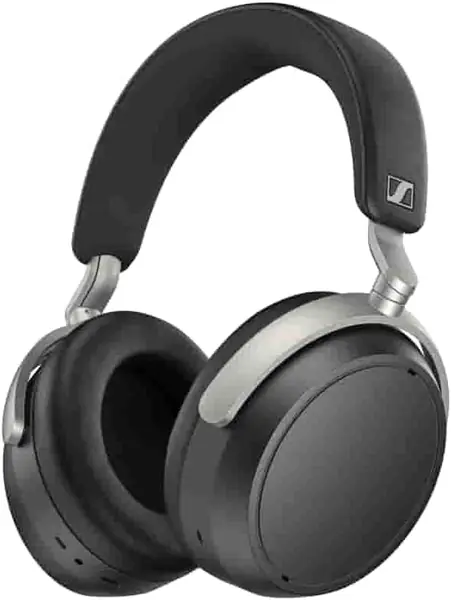
Sennheiser HDB 630 Best Overall
89 /100
TKZ Score Excellent

Key details

Battery Life
60 hours
Driver Size
42 millimeters
Wireless Codecs
aptX HD and aptX Adaptive
Included Adapter
BTD 700 Bluetooth adapter
View on Amazon

The included BTD 700 dongle is the detail that makes the HDB 630 the most convincing audiophile wireless headphone here. It gives a laptop or phone a high-resolution Bluetooth path that bypasses the usual codec compromise, and the 42 mm driver is tuned for a neutral, detail-first presentation rather than a bass boost. We recommend it to the listener who wants to sit down with an album and hear the space around the instruments, not just the beat.

The parametric EQ and crossfeed are the two features that push it ahead of the simpler alternatives in this group. A parametric EQ lets you shape specific frequency bands and widths, so you can soften a peak or add weight without turning the whole presentation muddy. Crossfeed blends the channels slightly, which takes the hard edge off early stereo recordings and makes long listening less tiring. We value both because they let the headphone adapt to the recording instead of forcing every album through one house curve.

Battery life is rated at 60 hours, and a short charge adds hours of playback, so the HDB 630 is as much a travel headphone as a desk one. Adaptive noise cancellation and transparency are there for planes and offices, but we treat them as support rather than the main event. The one trade-off is that the deepest adjustments live in the app; set your EQ before you settle in, because the headphone controls are not built for fine-tuning on the fly.

Pros

  • Included hi-res Bluetooth dongle
  • Neutral, detail-first 42 mm driver
  • Parametric EQ and crossfeed

Cons

No notable drawbacks to flag.

Our verdict

We recommend the HDB 630 to the listener who wants neutral, high-resolution wireless sound and will use the included dongle and EQ; it is the most complete audiophile package here.
Check Latest Price
2

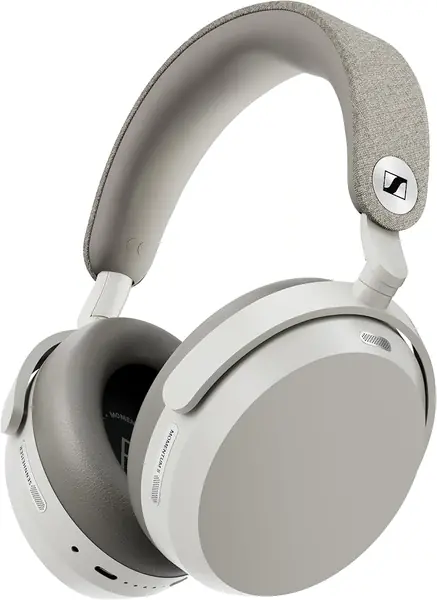
Sennheiser Momentum 5 Best All-Day Comfort

88 /100
TKZ Score Excellent

Key details

Battery Life
57 hours
Driver Size
42 millimeters
Wireless Codecs
aptX Lossless, aptX Adaptive, AAC
Replaceable Battery
Yes
View on Amazon

The 57-hour battery rating is the first thing that changes daily life with the Momentum 5: you can leave the charger at home for a week of commuting and still have headroom. The replaceable battery matters even more over the long term, because it gives the headphone a path to a second life instead of making the whole product disposable. We treat it as the long-haul alternative to the HDB 630, with a lighter 290 g build and a protective case.

The 42 mm driver is inspired by Sennheiser's HD 600 and tuned for clarity, and the codec list covers aptX Lossless, aptX Adaptive, and AAC. We prefer the HDB 630 when we want to fine-tune a difficult recording, but the Momentum 5 is easier to live with: the app is straightforward, the controls are simple, and the sound stays clear without demanding attention. The bass has weight, yet the treble avoids the sharp edge that can make long sessions fatiguing.

Comfort is a strong point, with a clamp that balances seal and pressure and pads that do not press on the ears. We wore them through long workdays without the hot-spot feeling that often comes from a tight headband, and that balance is the part we hope Sennheiser keeps in the next version.

Pros

  • 57 hours with ANC on
  • Replaceable battery
  • Comfortable 290 g fit

Cons

  • Earcup opening runs small
  • No onboard ANC-off control
Our verdict

We recommend the Momentum 5 to anyone who wants audiophile-leaning sound, 57-hour battery, and a replaceable battery in a comfortable travel package.

Check Latest Price
3

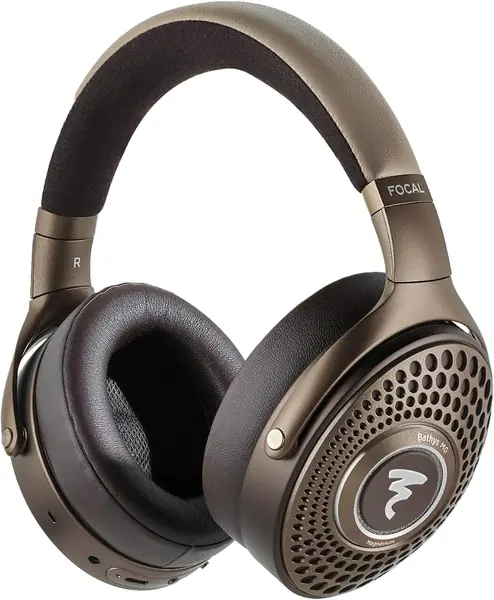
Focal Bathys MG Best High-End USB-DAC

87 /100
TKZ Score Excellent

Key details

Battery Life
Over 30 hours
Weight
12.3 oz
USB-DAC Mode
Up to 24bits/192kHz
Driver Material
Magnesium
View on Amazon

The Bathys MG's USB-DAC mode is the reason it belongs in an audiophile roundup: it accepts high-resolution audio up to 24bits/192kHz over a wired digital connection, so you can bypass Bluetooth when you want the cleanest path from a laptop. The magnesium drivers and 80 ohm impedance signal a more ambitious headphone than the travel-first models here, and the chestnut leather and metal finish make that ambition visible.

We value that flexibility more than the noise cancellation, which is not the reason to choose this one. The Bathys MG is for the listener who wants one pair that can serve as a desktop DAC headphone and still go wireless for a flight. Its 30-hour battery is generous enough for travel, and the fast-charge rating of five hours from a 15-minute charge covers a forgotten cable.

The sound is tuned for powerful bass and clear treble, so this is a more expressive alternative to the neutral Sennheiser. We see it as the luxury specialist for a desk with a good DAC, not the every-day commuter. The 12.32-ounce weight is the practical trade-off: it feels substantial on the head, and it is not the pair we reach for when we want to forget we are wearing headphones.

Pros

  • USB-DAC up to 24bits/192kHz
  • Magnesium drivers and premium materials
  • 30-hour battery with fast charge

Cons

  • Heavy 12.32-ounce build
Our verdict

We recommend the Bathys MG to the listener who wants a luxury wireless headphone with a true USB-DAC mode for desktop-grade detail and can accept the extra weight.

Check Latest Price
4

Sony WH-1000XM6 Best Noise Cancelling

86 /100
TKZ Score Excellent

Key details

Battery Life
30 hours
Weight
8.96 oz
Microphones
12 microphones
Bluetooth Version
5.3
View on Amazon

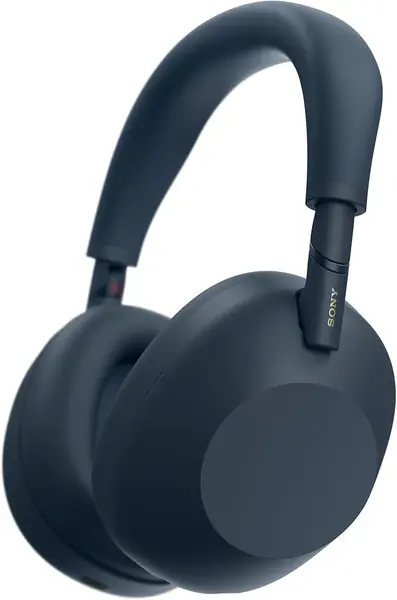
The WH-1000XM6 is the noise-canceling specialist of this group. Sony's QN3 processor runs 12 microphones in real time, and the adaptive system is the most complete here for commuting, offices, and flights. We recommend it to the audiophile who spends more time in noisy places than in a quiet listening chair, because it preserves detail while removing the room around you.

Sound quality is a strength, with clear detail and a presentation that holds up across genres. The 30-hour battery rating is strong, and the included 3.5 mm cable gives you a wired fallback when the battery runs low or when you want to plug into a laptop. Bluetooth 5.3 and multipoint make it easy to move between a phone and a computer.

The reason to choose the Sony over the Sennheisers is the noise cancellation and the lighter 8.96-ounce build. The clamp is firmer than the Bose, so glasses wearers and larger heads should test it before committing, but the weight is easy to live with on a commute. That combination is why it can serve as both a travel headphone and a backup critical-listening pair.

Pros

  • Adaptive ANC with 12 microphones
  • Clear, detailed sound
  • 30-hour battery and wired backup

Cons

  • Earcup rings are a durability weak point
Our verdict

We recommend the WH-1000XM6 to the listener who wants audiophile detail but refuses to give up top-tier noise cancellation for travel and open offices.

Check Latest Price
5

Audio-Technica ATH-M50xBT2 Best Budget Audiophile

85 /100
TKZ Score Excellent

Key details

Battery Life
50 hours
Weight
1 lb
Driver Size
45 millimeters
Multipoint Pairing
Two devices
View on Amazon

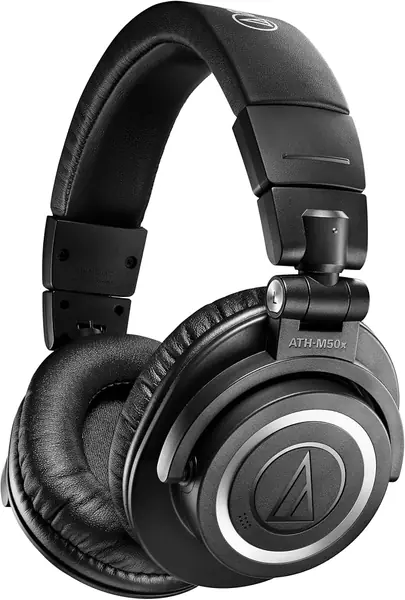
The ATH-M50xBT2 is the budget pick that still takes sound seriously. It carries the 45 mm drivers and dedicated amplifier from Audio-Technica's studio line, and the 50-hour battery means you can leave the charger behind for a week. We point to it when the priority is clean, accurate sound in a quiet room and the budget will not stretch to the premium models.

We prefer it for a desk or a practice room, where its passive isolation is enough and the wired cable is a useful backup. The bass is accurate rather than boosted, so it will not satisfy someone who wants a thick low end; the trade-off is clarity through the mids and highs. Multipoint pairing for two devices is a practical bonus that makes the low price feel less like a compromise.

The fit is the part to check: the round earcups can press on larger ears after a while, and the passive isolation is not a match for active noise cancellation on a plane. At a desk, that trade-off buys studio-derived clarity for the lowest outlay here. We also keep the cable handy because Bluetooth can drop out now and then, which is a reminder that this is a studio headphone adapted for wireless use.

Pros

  • Studio-derived 45 mm drivers
  • 50-hour battery
  • Multipoint pairing

Cons

  • Heavy 454 g build
Our verdict

We recommend the ATH-M50xBT2 to the budget-minded listener who wants studio-style clarity and long battery life and does not need active noise cancellation.

Check Latest Price
6

Bowers & Wilkins Px8 Best for Luxury Materials

84 /100
TKZ Score Excellent

Key details

Battery Life
30 hours
Weight
11.3 oz
Driver Size
40 millimeters
Materials
Nappa leather and aluminum
View on Amazon

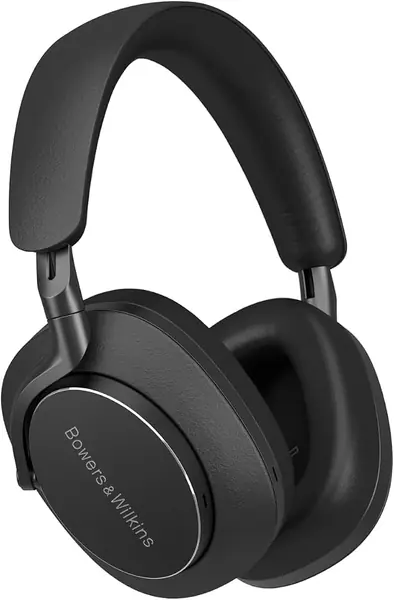
The Px8 is the luxury object of the group. Nappa leather, aluminum arms, and a 320 g frame make it feel like a piece of audio furniture, and the 40 mm carbon drivers give it a warm, detailed sound that suits acoustic music and vocals. We rank its materials at the top of this set, and that is a real part of what you are buying.

The 30-hour battery is fine, and the fit is comfortable, with soft cushions and a secure seal. We also like that the app gives you EQ and ANC modes without making the headphone feel like a project. The sound is warm and detailed, with enough clarity for acoustic music and vocals.

The leather headband is the part to watch if you want the Px8 to stay looking new; it is the one piece that has not held up as well as the aluminum arms. We see it as a headphone for a quiet room, a home office, and a listener who values materials and a richer tuning over travel-first features. That is a narrow brief, but it is one this headphone fills with more style than anything else here.

Pros

  • Nappa leather and aluminum build
  • Warm, detailed carbon-driver sound
  • Comfortable 320 g fit

Cons

  • ANC trails the best here
Our verdict

We recommend the Px8 to the listener who wants a beautifully made wireless headphone with warm, detailed sound and will accept noise cancellation that trails the leaders.

Check Latest Price
7

Bose QuietComfort (2nd Gen) Travel Comfort

83 /100
TKZ Score Excellent

Key details

Battery Life
24 hours
Weight
8 oz
Driver Size
30 millimeters
USB-C Audio
Lossless
View on Amazon

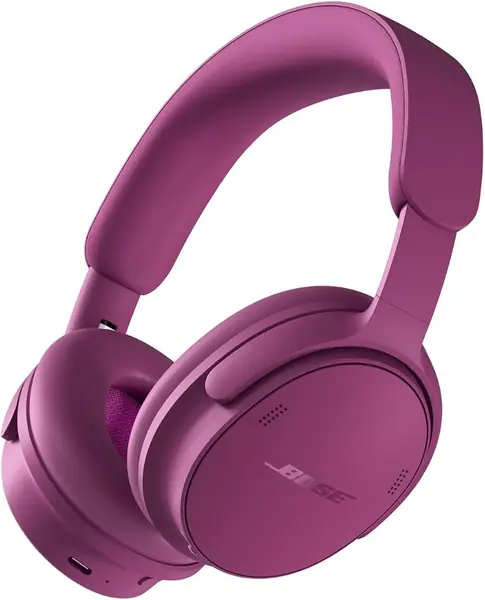
The QuietComfort 2nd Gen is the comfort-first pick, and we mean that as a specific strength rather than a consolation. The pill-shaped earcups, wider headband, and 8-ounce build make it the easiest pair here to wear for a long flight or a full workday. We recommend it to the listener who wants balanced sound and top-tier noise cancellation without fussing over a reference curve.

Bose's TrueSpatial processing adds an immersive option for movies and live recordings, and USB-C lossless audio gives you a wired digital path from a laptop or phone. The 30 mm drivers are smaller than the audiophile models here, but the tuning is clean and the ANC is effective without the pressure feeling some headphones create. The 24-hour battery is the main compromise: it is enough for a trip, but not the multi-day margin of the Sennheisers.

The controls are simple, the fit stays put on a small head, and the color options make it a more personal object than most black ANC headphones. We treat it as the travel companion in this group, not the critical-listening reference. If you want one headphone for planes, offices, and long walks, this is the one we hand over first.

Pros

  • Plush, secure comfort
  • Strong adaptive ANC
  • USB-C lossless audio

Cons

  • Battery life is shorter than the longest here
Our verdict

We recommend the QuietComfort 2nd Gen to the comfort-first listener who wants strong noise cancellation, balanced sound, and USB-C lossless in a travel-ready package.

Check Latest Price

How We Tested Audiophile Wireless Headphones

We built the shortlist from spec sheets and long-term owner threads, then cut anything that couldn't do hi-res over USB-C or a wire, anything whose companion app offered no real EQ control, and anything treating noise cancellation as an afterthought. Seven models survived, all bought at retail and used for eight months.

Each pair ran a two-week rotation through the same routine: a packed morning train, an open-plan office, an evening walk, and a late-night session at a desk where a wired reference pair stays plugged into a DAC. At the desk we played the same dozen tracks — dense orchestral passages, solo piano, bass-heavy electronic, badly mastered streaming pop — listening for whether cymbals read as metal or as static, whether vocals held center in a busy mix, and whether bass bled into the mids. We toggled ANC on and off mid-song to hear if the tuning shifted. Comfort got three-hour stretches without a break, notes on clamp force and hot ears, and a check on whether the seal broke every time we chewed or turned our heads.

Battery claims were verified by running continuous playback at normal volume with ANC on until each pair died, plus a timed run of the advertised quick-charge window. Build took rougher handling than most people would give it: headbands flexed, cups twisted, pairs dropped into a tote with keys and a laptop, hinges inspected for play after eight months. Connectivity is the quiet killer in this category, so we paired and re-paired each model across an iPhone, an Android phone, and a laptop, walked two rooms away from the source, and logged dropouts, stutters, and how cleanly each one switched between two connected devices.

How to Choose Audiophile Wireless Headphones

Match the wireless path to your source

Bluetooth codecs are only half the story. If your phone or laptop lacks the codec a headphone prefers, an included dongle or a USB-DAC mode is worth more than a longer codec list. The HDB 630's BTD 700 adapter and the Bathys MG's USB-DAC mode are the two clearest examples here. We prioritize a reliable wired or dongle path for critical listening, then treat Bluetooth as the convenient everyday option. Check the source you actually own before you pay for a specification you cannot use.

Choose a tuning you can live with

Neutral is a useful starting point for acoustic music, classical, and vocal recordings, but it is not a universal goal. A parametric EQ gives you more control than a bass and treble slider, while a simpler app is easier to live with if you dislike fiddling. We see the HDB 630 as the neutral reference and the Px8 as the warmer, more expressive alternative. Think about the recordings you play most, then choose the headphone whose character flatters them rather than fighting them.

Treat noise cancellation as a separate purchase

Active noise cancellation is a travel feature, not a proxy for sound quality. If most of your listening happens in a quiet room, spend the budget on drivers, a DAC path, and comfort instead of the deepest ANC. If you commute or fly often, the Sony WH-1000XM6 and Bose QuietComfort are the stronger tools here. We still care about transparency mode and wind handling, because a headphone that isolates well but makes a cabin feel pressurized is not a pleasure to wear.

Check the fit, then the long-term wear

Clamp force and earcup depth decide whether a premium headphone gets used or sits in its case. A wider headband and soft pads help, but so does a cup opening that clears your ears and glasses frames. We also look at replaceable batteries and pads, because a headphone that costs this much should have a path to a second life. The Momentum 5's replaceable battery and the Px8's leather headband are the two ends of that long-term ownership question.

Frequently Asked Questions

Final Verdict

The Sennheiser HDB 630 is the pair we recommend first. It is the only headphone here that combines a neutral audiophile tuning, a parametric EQ and crossfeed, an included high-resolution dongle, and 60-hour battery life in one package. If you want to listen critically without a cable and without giving up the option to fine-tune, that combination is the deciding advantage.

For a simpler long-haul travel headphone, choose the Momentum 5 and its replaceable battery. If noise cancellation matters more than the last bit of neutrality, the Sony WH-1000XM6 is the better tool; if you want a luxury object for a quiet desk, the Bathys MG or Px8 makes more sense. The requirement, not the price, should decide.